"You always need to balance desire, capability, and resources" | FreeS Fund 2021 US-China Venture Forum Transcript

Startups or Investing: A Game of "Truth or Dare" at the Intersection
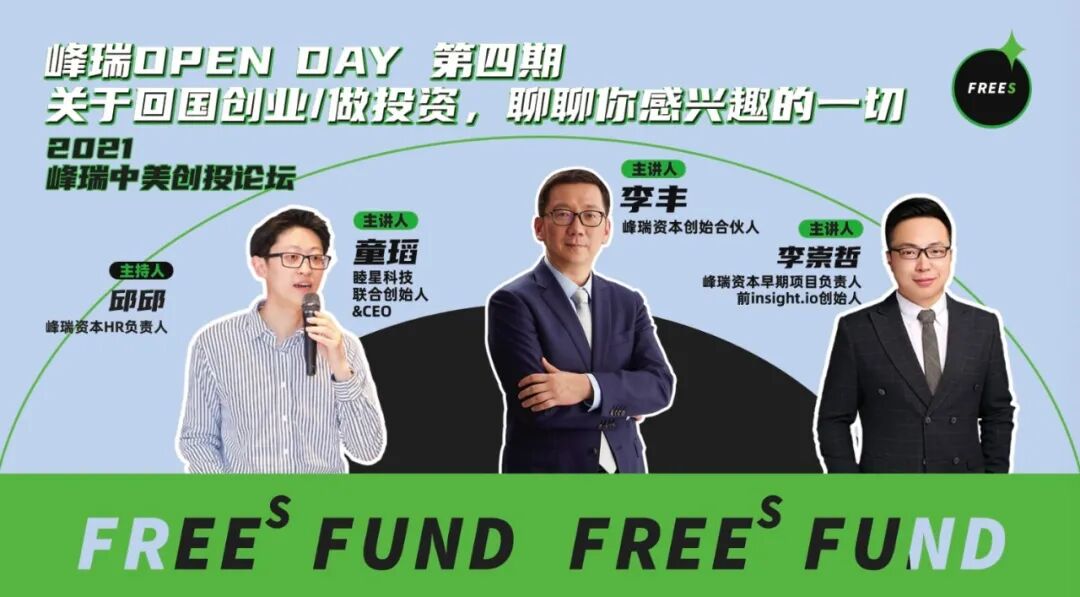
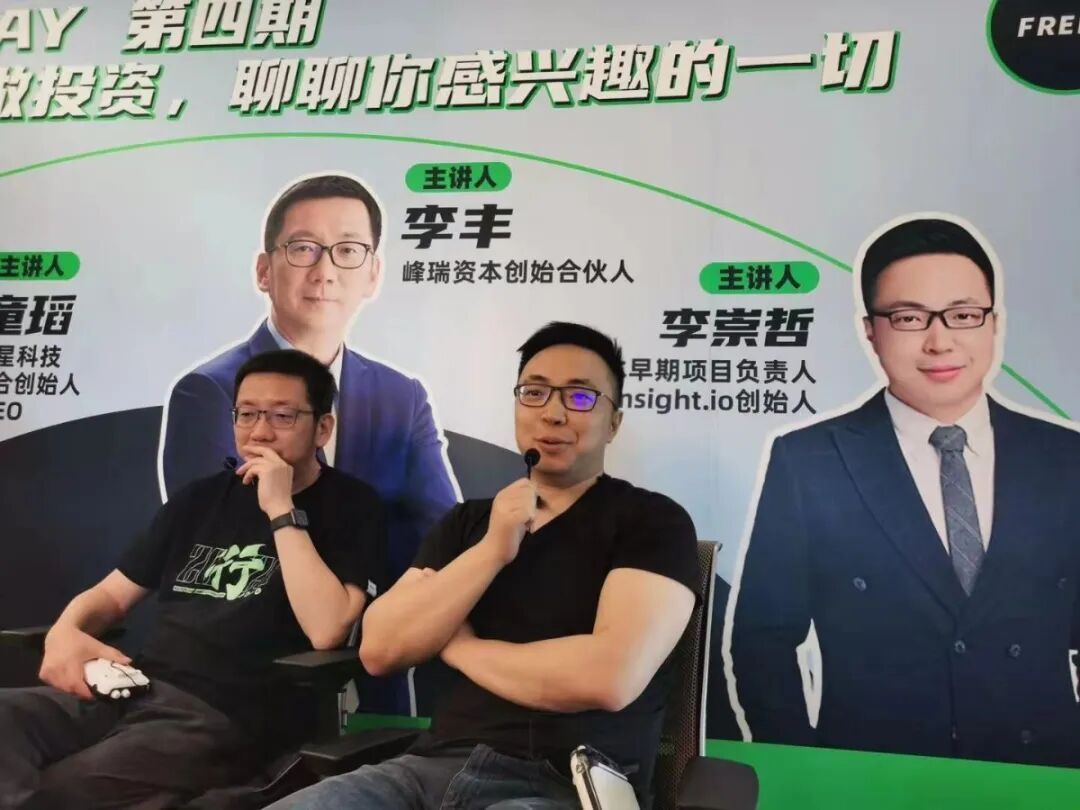
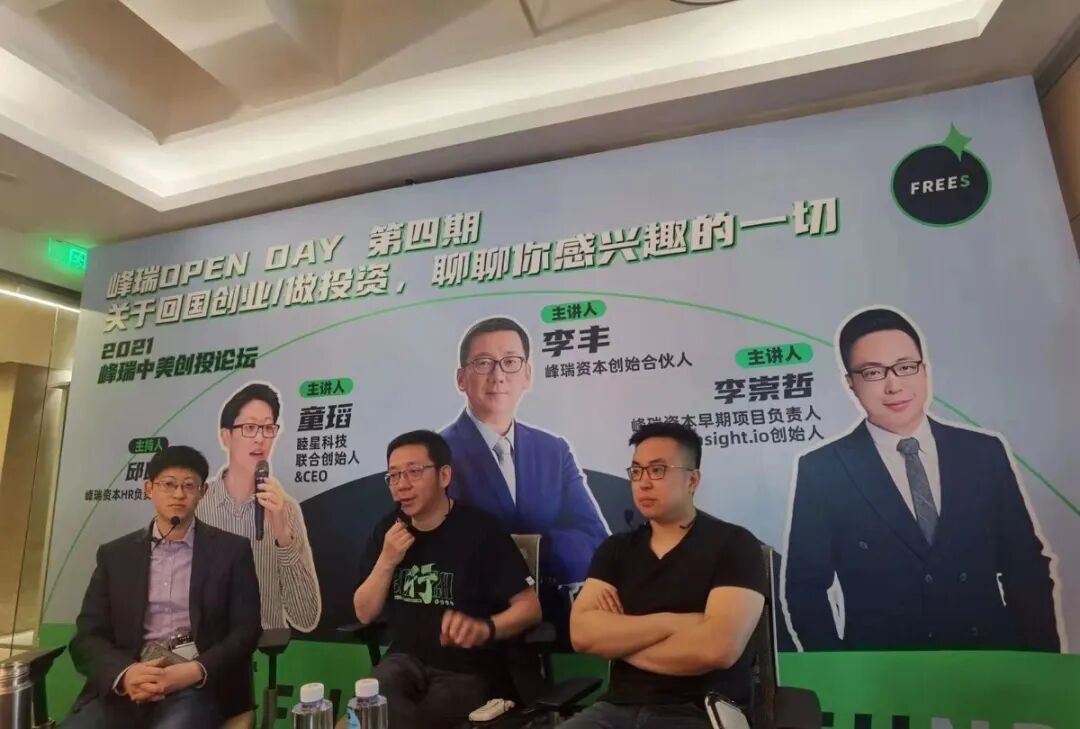
On the morning of May 9, the fourth installment of FreeS Fund's 2021 US-China Venture Capital Forum series, titled "Seizing New Opportunities in China's Era" — "FreeS OPEN DAY" — went ahead as scheduled. "Uncle Feng" (Li Feng) sat down for a candid and thoughtful conversation with Tong Tao, co-founder and CEO of Muxing Technology, and Li Chongzhe, a FreeS Fund early-stage project lead and former founder of insight.io.
For anyone interested in entrepreneurship or investing, Tong and Li's backgrounds are particularly illustrative. Tong co-founded Muxing Technology and serves as its CEO. He started out building companies in Silicon Valley, then joined FreeS as an entrepreneur-in-residence for a stretch, spent some time on the investing side, and ultimately returned to founding. Li previously founded insight.io, a Silicon Valley enterprise software company acquired by NYSE-listed Elastic. After the exit, he switched to investing and now covers tech-oriented early-stage deals at FreeS.
Both have crossed between investing and founding, and that hybrid experience has given them deeper insight into what each role means and the challenges each entails. Here's what they discussed:
- How should you choose between entrepreneurship and investing? What's different about the two lives?
- What's it like having your team in the US and your customers in China? Is it better to put R&D in the US or China? What other headaches does cross-border tech entrepreneurship bring?
- Why should founders care about the macro picture instead of just minding their own patch?
- How big is the China-US chip technology gap really?
- How should entrepreneurs properly think about policy tailwinds?
- How does "involution" (cutthroat competition) affect startups?
- How should startups fight skirmishes against platform giants?
- What were the most memorable moments along the way?
We've excerpted portions of the conversation to share, in hopes they might offer some useful perspective.

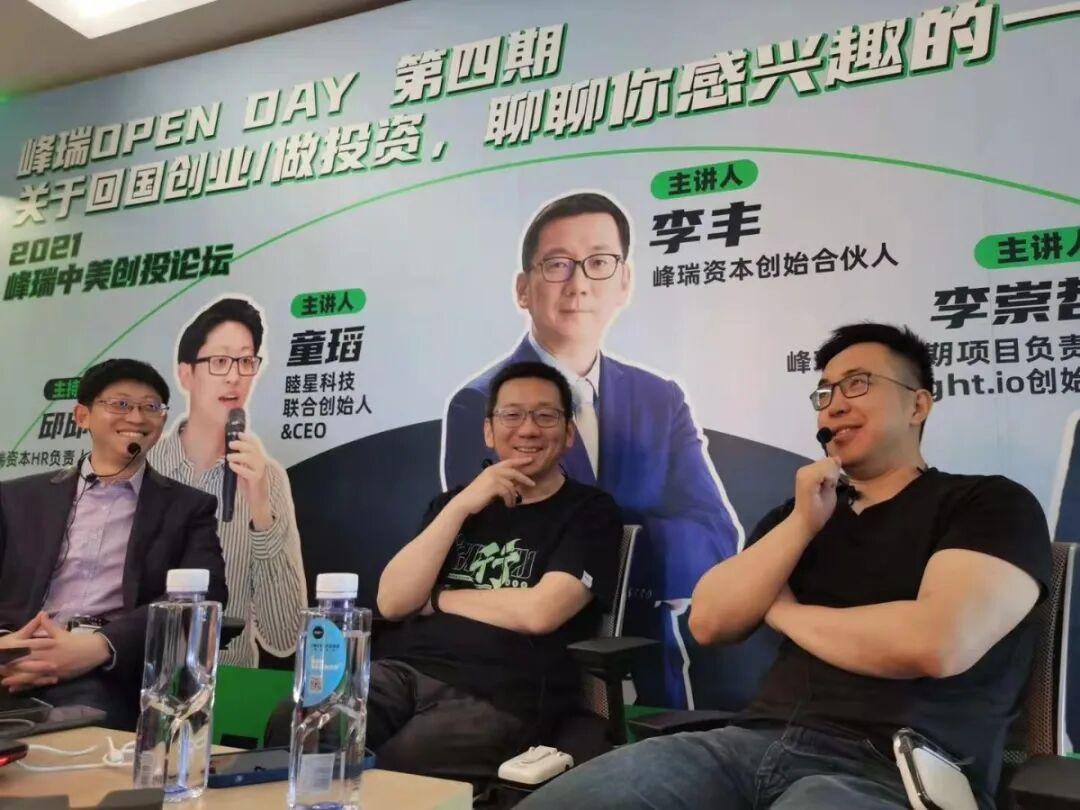
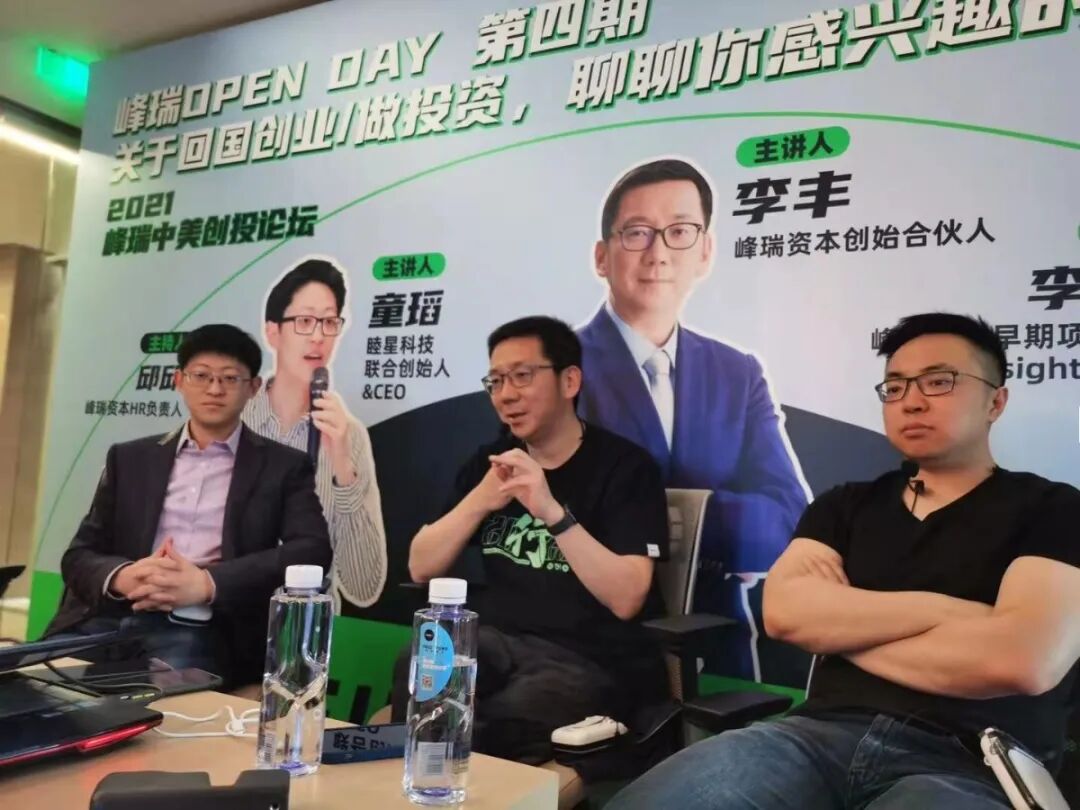
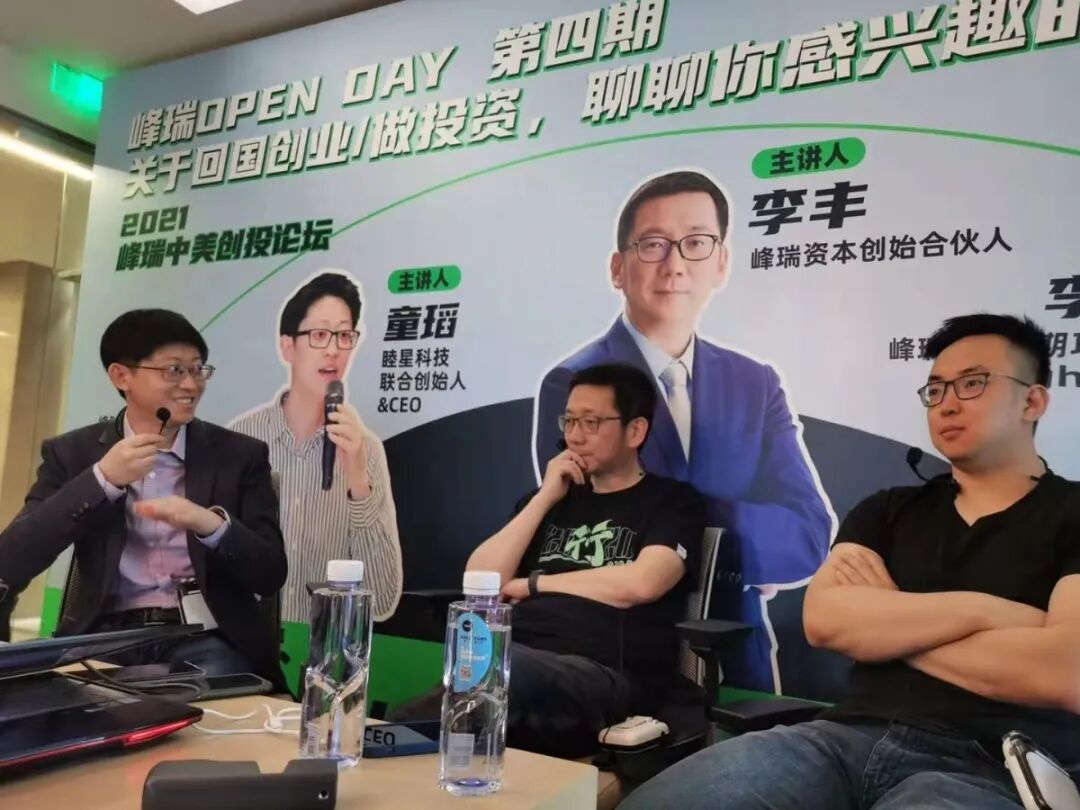
Swipe to see more 👉
01
Investing and entrepreneurship are two different ways of understanding the world
Li Feng: Back when you spent a brief stint in investing at FreeS before returning to entrepreneurship — what drove that decision?
Tong Tao: I met Uncle Feng while I was still a PhD student at Harvard. At the time, my co-founder and I had started a chip company in California. That company has done well since — it supplies Samsung and Xiaomi. Not long after meeting Uncle Feng, I joined FreeS's young entrepreneur-in-residence program. One advantage at FreeS was getting exposure to many different things. But I ultimately decided to leave because I still had plenty of entrepreneurial ideas of my own. Investing is mainly about providing capital and resources; you can't get on the field yourself. When you have good ideas, you can only stand backstage and fret. Then I came across a project I felt strongly about and wanted to get back behind the wheel, personally pushing something forward.
Li Feng: I still remember when the Muxing team first pitched. They said their technology could dramatically improve existing GPS positioning performance — either 100x better accuracy or 100x lower power consumption. After you did your research, how did you assess feasibility?
Tong Tao: Going back to 2016, from first principles it seemed achievable.
Li Feng: Chongzhe's path was the mirror image — he joined FreeS relatively recently, after spending over two years founding.
Li Chongzhe: Investing and entrepreneurship are fundamentally different ways of understanding the world. It's like wanting to explore the world: you can use Google, or you can pick a destination and go trekking. Neither approach is inherently better. The choice depends on your preferences and which suits you better at your current stage.
Li Feng: What do you see as the biggest difference between the two?
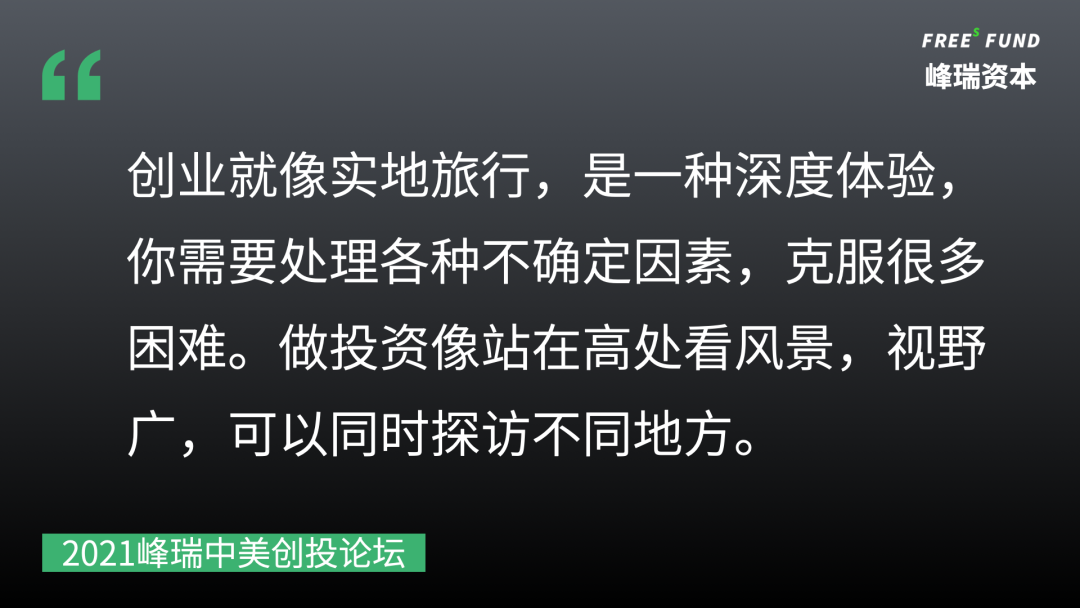
Li Chongzhe: To extend that metaphor: entrepreneurship is like traveling on the ground — a deep, immersive experience. You have to handle all kinds of uncertainties along the way and overcome many difficulties. Investing, by contrast, is like viewing scenery from a height. Your field of vision is broader; you can visit multiple places simultaneously. Entrepreneurship gives you deeper knowledge of one particular destination.
Li Feng: I'm curious — after just over a year of founding, you quickly received an acquisition offer. How did you think about it? Keep going and potentially earn more down the line, or take the money now and solve a slice of financial freedom?
Li Chongzhe: I definitely hesitated. At the time, considering the project's condition and input from various parties, the acquisition seemed like the right call.
Li Feng: If you could do it over, would you still choose to sell?
Li Chongzhe: If the choice were entirely mine, I might have held on a bit longer.
Li Feng: What if someone offered you $300 million to acquire right now? Tong Tao, would you sell?
Tong Tao: No.
02
Enterprise software in China: spring, or still winter?
Li Feng: Chongzhe went through something during his founding journey that might be helpful for people here. His R&D team was in the US, but his main customers were in China, so he was constantly shuttling back and forth. The challenges of having customers in China include finding them, their willingness to pay, payment terms, and so on. How did you think about the team-in-US, customers-in-China setup?
Li Chongzhe: Starting with the team. Although our R&D began in the US, after some time we shifted a large portion of it to China and started hiring there. There was a very practical reason: we founded in 2016, when the market was at its hottest. Hiring a fresh CS graduate in Silicon Valley cost at least $100,000. But back in Beijing, that same $100,000 could get you a very seasoned person.
Li Feng: With that experience now, do you think putting R&D in the US or China made more sense at the start?
Li Chongzhe: Personally, I think China has significant engineer dividends, so the emphasis should be there.
Li Feng: On the business side, while China's market is large, many customers have low willingness to pay for enterprise software. The US market is more mature, but not necessarily easy to break into.
Li Chongzhe: At that particular moment, we were building a developer-facing tool, so cultural differences mattered less. Compared to other industries, developers tend to be more receptive across the board. Our product could be sold in both markets with one build. But some products have huge gaps between China and the US — then you have to choose. As a Chinese team, you're naturally better positioned building for the Chinese market.
That said, in 2015–2016 when I was founding, China's SaaS coverage was inadequate. People today may still complain about why Chinese SaaS hasn't developed well — it was many times worse five years ago. But the long-term trend is positive.
Li Feng: Now that you're investing, from that vantage point: for enterprise software, is it early spring, pre-spring, or already spring?
Li Chongzhe: This industry is definitely different from consumer-facing businesses. If you're looking for a specific moment or标志性 event that triggers sudden qualitative change, that's unrealistic. It will improve gradually.
Li Feng: If you had to judge: is the industry before Chinese New Year, or after?
Li Chongzhe: Probably past New Year's. This track can at least produce companies valued at one billion RMB. And companies like ByteDance are making industry acquisitions — that's a good sign. So I'd say it's past New Year's.
Li Feng: I've remained fairly cautious. I haven't been troubled by spring; we've always invested as if it's winter. Of the dozen-plus enterprise software projects FreeS has invested in, four have been acquired, so we've made money so far.
03
The headaches of cross-border tech entrepreneurship
Li Feng: One fairly unusual aspect of your founding experiences was having part of the R&D team in the US while business was 100% in China, and working on advanced technology like chips. So with every funding round, you faced choices: foreign or domestic investors, onshore or offshore structure, capital kept in China or abroad, and if abroad, regulatory compliance. These are dilemmas many cross-border tech investments encounter.
Tong Tao: You'll definitely run into these issues. We still take the long view — which capital market is more friendly, which side makes it easier to hire. But when you're mapping out the overall path, you also face some practical constraints. Say you're hiring for R&D and happen to interview a suitable candidate in the US. Would you not hire them just because they're in the US?
Li Feng: Using your company as an example, if you were to restructure, how would you adjust hiring across China and the US from an R&D perspective?
Tong Tao: If needed, we'd recruit in both China and the US, but with specific plans based on needs — what kind of people we want in China, what kind in the US. We'd place more of the chip business domestically; that's a choice based on the policy environment. Beyond that, at this stage we focus more on finding the right people to solve our product R&D problems, and care less about where they are.
04
Founders should stay attuned to macro trends
Li Feng: Chongzhe, you've founded companies and now invest in tech. What advice do you have for people currently hesitating about returning to entrepreneurship?
Li Chongzhe: You still need deep conviction in what you're doing. A lot of things don't have absolute right or wrong answers. Whether you should be in the US, in China, set up R&D in China for the US market, or set up R&D in the US for the China market — I don't think there's an absolutely correct answer. It depends on the specific project.
But based on my own experience and that of founders around me, one piece of advice is: beyond tending to your own patch of land, pay attention to macro trends. These may not be your usual focus, but at critical junctures they can significantly impact your project — things like US-China relations, China-India relations.
Li Feng: You can pay attention, but it's actually very hard to predict whether next year will be better or worse.
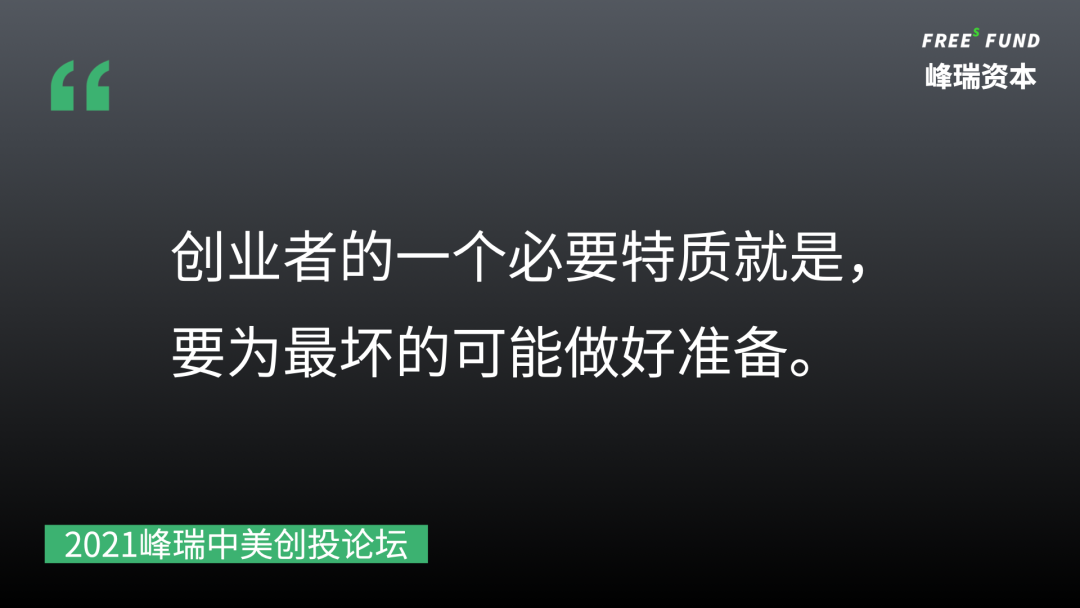
Li Chongzhe: I think a necessary trait for founders is preparing for the worst possible scenario. Like India's ban last year — that was genuinely sudden. I know the US relatively well, and from 2017 to 2019, you could clearly see some founders making preparations.
Li Feng: Compare investing and founding in China versus Silicon Valley.
Li Chongzhe: This is an age-old question, and the wisdom of crowds is basically right. The foreign summary is: "great mountains, great water, great scenery." If you're inside a company, definitely abroad — work-life balance is much better, pressure is lower, and hierarchical relationships are more casual and relaxed. In China of course there's more good food and drink, but work pressure is higher.
There's another important point. In China, you feel like you're part of mainstream society. Abroad, it's hard to have that feeling. Though some people care about this, and some don't.
05
How big is the US-China chip gap really?
Li Feng: Tong Tao works on chips, and chips currently command extremely high attention in China. The debates essentially center on three questions: Is China's chip industry and supply chain viable? Can it catch up in five or ten years? Is there enough talent? You've worked on US chip public companies and are now in the China market — what's your view?
Tong Tao: The gap is clearly substantial. Can we catch up? I believe we definitely can. In every细分领域, some may lag further, some less so. With sustained investment, sound market guidance, and down-to-earth effort, we can absolutely catch up. Without major disruptive variables, catching up is just a matter of time.
Li Feng: Over the past four or five years, FreeS Fund has invested in roughly 20 chip-related companies, about 70% of them before June 2019 — before Huawei was sanctioned, when chips weren't nearly as hot as now. Tong Tao's founding experience is similar: he started when the market was completely cold, then lived through the market boiling over since 2019, a normalization in 2020, and then renewed heat in 2021 due to supply chain autonomy concerns. Having gone through this hot-and-cold cycle, what changes have you seen in China's chip industry over the past five years?
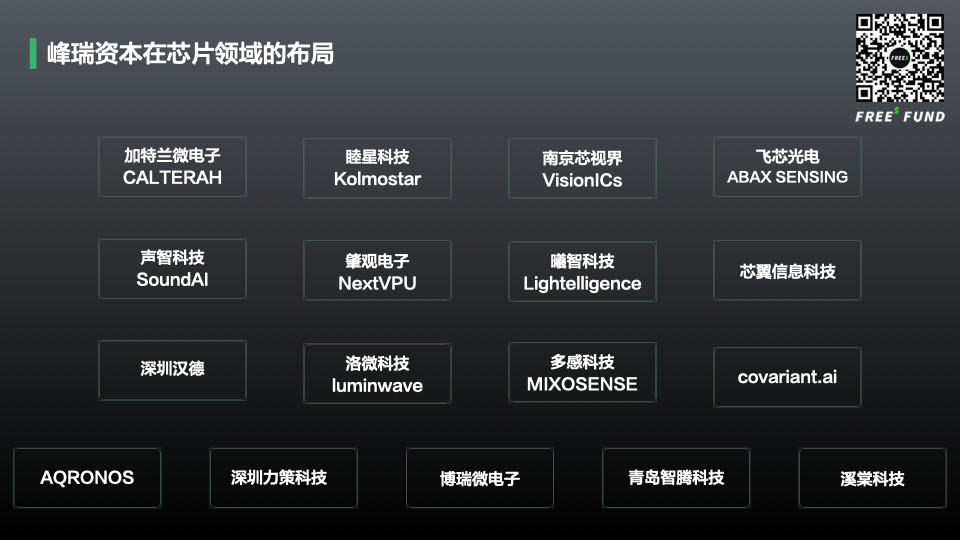
Tong Tao: There have definitely been very positive changes. On one hand, capital investment has increased. On the other, at the market application level, there are more and more customers. These customers previously used foreign chips and are now willing to give domestic chip companies more opportunities. These two factors have promoted the industry's development. Because of this, more and more technology is being transferred into the domestic chip industry.
The supply side too. We can see more and more startups in every direction, trying to solve "chokepoint" problems and import substitution work — these are all very positive changes. Among these companies, some will definitely emerge and gradually establish themselves. Once established, they can go toe-to-toe with foreign industry leaders.
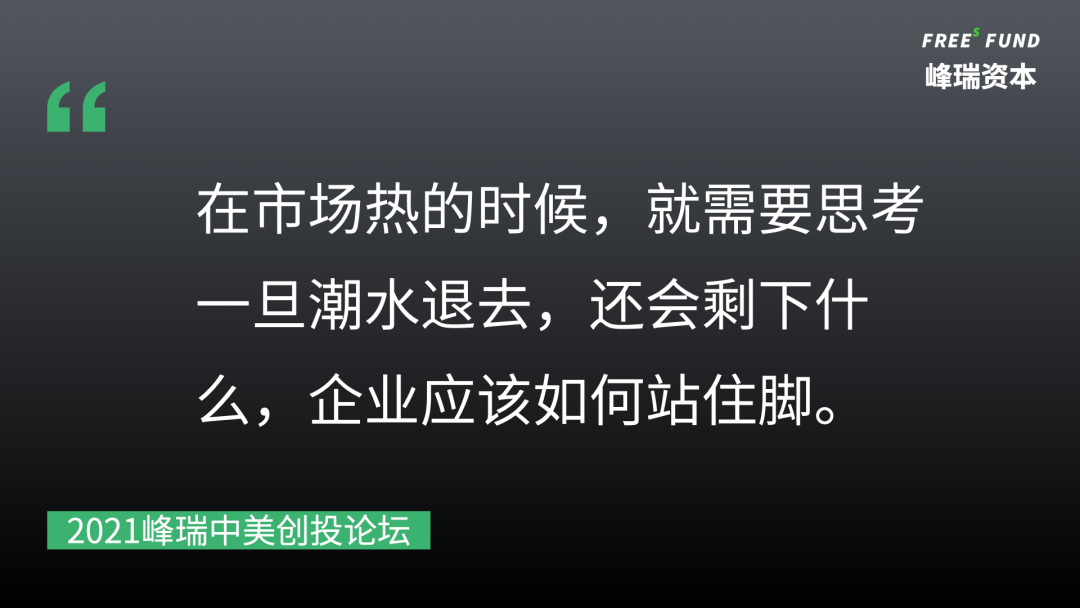
The future is relatively clear, but bubbles are inevitable along the way. For ourselves, when the market is hot, we need to think about what will remain once the tide recedes, and how companies should establish themselves.
Li Feng: Being in the industry yourself, can you feel how these alternating hot and cold cycles change the industry?
Tong Tao: For our specific segment, the impact hasn't been that large. The main reason is that China's BeiDou industry has been developing for quite a while, and won't suddenly spawn more BeiDou chip companies just because of policy adjustments in the past couple years. At the macro level, at least looking at the global market as a whole, the incremental market is still relatively limited, so competition is extremely fierce — even competition among domestic companies is very intense.
Finally, at the company level, what we've consistently emphasized is what value we actually provide. This value could be that your product is good — perhaps customers using our chips to make watches gain more consumer favor; or perhaps I'm solving supply chain security. Put all these on the same table for comparison, and you can distinguish which things may be affected by policy changes and which won't.
06
Behind "involution": one cause is too large a demographic dividend, with employers in a dominant position
Li Feng: We mentioned SaaS earlier. Chongzhe, why do you think China's enterprise service market has been in winter for so long?
Li Chongzhe: There are many small reasons, but the most important is still that China's demographic dividend is too large.
Li Feng: Cheap labor.
Li Chongzhe: Right. Actually this is also behind "involution" [neijuan, hyper-competitive stagnation]. In the overall job market, employers are in a stronger position. While improving employee efficiency or work experience is important, employers don't have that much motivation to do so, so getting them to pay isn't that easy.
Li Feng: In the business development process, what's the most frustrating thing you've encountered?
Li Chongzhe: It ultimately comes back to the demographic dividend I just mentioned. For example, you build a tool, and the management person making the purchasing decision might say: why should I pay for these tools to improve employee efficiency when I can just have them work overtime? You can see many companies are very "involuted" — everyone's scrambling for projects. Once you have projects, you can expand your team and get more resources. He'll think: is this thing good? Yes. But pay for it myself? Not my problem. Some simply build their own team to do it.
Li Feng: Let's assume enterprise services have now reached Spring Festival and are about to enter spring. What would change the obstacles you just described?
Li Chongzhe: The demographic dividend is relatively disappearing. Whether from labor costs or demand for high-end talent, companies are gradually gaining motivation to improve these people's work efficiency and experience. If you look at sales, marketing, operations and other departments, as the proportion of post-90s and post-95s "digital natives" grows higher, they'll favor information-based tools more and push for digital enterprise service adoption from the grassroots level.
07
How should startups fight encounter battles with platform companies?
Li Feng: In enterprise services, domestic startups also face the trouble that several giants including ByteDance have both consumer-facing networks and B-facing toolsets offered for free. This means they've done all three layers: person-to-person networks, business-to-business connection networks, and infrastructure like cloud. It's not like this abroad — Amazon does cloud but doesn't do instant messaging or have massive consumer-facing networks. How do you think this competitive landscape affects China's enterprise paid software market?
Li Chongzhe: This problem exists both domestically and abroad. For example, Microsoft also made Teams, which beat Skype quite badly, and Skype was eventually sold. Amazon and Google are also constantly penetrating other areas. But I admit domestic giants relatively lack a sense of boundaries. This probably still relates to domestic labor being too cheap. It's also related to "involution" — as a giant company employee, to get more resources, I need to find a breakthrough point, which might well be an area not that related to the core business.
This actually returns to the question everyone used to ask: what if Tencent does it? Actually, a product made by one team inside a large company may not have the investment people imagine. Before a project gets upgraded to strategic status, maybe a dozen or so employees are working on it with limited budget; the large company won't pour all traffic and resources into that project. So this large-company-small-team's combat power and resources may not match an established startup team in this field, and in execution capability, startups definitely outperform large companies. Of course, if you're up against a giant's strategic project, it gets much harder.
Li Feng: The largest, most visible platform-level opportunities are generally occupied by giants that startups can hardly dislodge, so founding teams are best off starting from small, concrete, vertical, not-yet-visible domains, then seeing whether they can eventually build a medium or small platform.
Chongzhe Li: I completely agree. When it comes to strategy, big companies tend to be relatively slow on the uptake. Take Zoom, for example — during the pandemic, remote work became hugely popular, but when Zoom was founded, that direction wasn't hot at all. So the question is, do you have the vision, execution capability, and technical strength that the Zoom team had back then?
08
Li Feng: The chip industry has been so hot lately — was hiring easy? How much did average salaries rise?
Tong Tao: Hiring wasn't easy. Salaries went up by two to three times. But I want to emphasize that policy-driven dividends won't last forever. What people should care about is: if I join this startup, can I actually learn something? If in five years the dividends aren't as big as they are now, can this company still stand out?
Li Feng: The chip industry has been extremely hot for the past two and a half years. How much longer do you think it will stay hot? The first phase was everything being hot. If it continues to be hot, what will the next phase look like?
Tong Tao: In basically every sub-sector, a few clear leaders will emerge. Those that aren't among the top will basically get acquired or consolidated. This path is similar to Europe and the US. There aren't many chip companies left in Europe and the US now, and the mergers are all massive. In the long run, it's hard for small chip design companies to compete with large ones. M&A and consolidation is a trend, and it's healthy for the industry overall.
Li Feng: Looking further ahead, what capabilities do startups need to grow into large companies?
Tong Tao: Semiconductor R&D cycles are relatively long, and right now the capital market is relatively patient. Plus with policy support, some large companies will definitely emerge. Stay grounded, take it step by step, rely on the domestic supply chain, and genuinely solve customer needs — the future is bright.
Li Feng: Over the past year or so, because chips have been so hot, we've seen too many startups starting from zero that quickly reached valuations of one to two billion RMB, then raised two or three more rounds and shot up to five billion, while many of these companies hadn't even completed their tape-out design at those high valuations. As an industry practitioner, how do you view this phenomenon of teams with fancy pedigrees commanding sky-high valuations right out of the gate?
Tong Tao: I think there's some rationality to it — it's a premium paid for a special environment. From the capital market's perspective, it's reasonable. Because in these large sectors, there simply aren't that many teams with sufficient capability to build big chips.
09
The biggest challenge for chip companies is getting the market to recognize the value of your product
Li Feng: What advice do you have for chip startups?
Tong Tao: You absolutely have to fight to be in the top three of whatever sector you're in. Otherwise, it's going to be a very tough battle.
Li Feng: Many chip companies now aren't doing pure chip design — they're hardware-accelerating algorithms and selling that as a product. This type of startup is becoming more common, and it's a pretty good direction. How do you see the future development of this direction?
Tong Tao: A major challenge is whether customers recognize the product's value. The sector we're in is a relatively mature market — phones, watches, they all need GPS, and the market is huge. So the problem we need to solve is making higher-performance products, like helping watches last longer on a charge, or measuring distance more accurately when you're running. For us, this is somewhat like a regulated competitive sport — you just need to compete on who's faster.
New algorithms, whether or not they're hardened into hardware, all need to go through a market value validation process. Because the chip industry itself has a very long supply chain, and getting through that chain takes time. Setting aside the specific product form, what matters more is whether you can solve real problems for real customers and users.
Li Feng: Does convincing the first adopter take a very, very long time?
Tong Tao: What customers care about is whether using your product can solve many practical problems at the R&D level, whether it can improve user experience, which aspects of user experience it improves, and ultimately whether it can expand their sales. Because competition in consumer electronics is extremely fierce. Domestic customers are actually more willing to try new things — if something can bring huge performance or experience improvements and meet their requirements, there will be strong internal motivation to push it forward.
Li Feng: Back to Chongzhe — were there any particularly memorable moments when you were starting your company?
Chongzhe Li: I don't think there was anything particularly, particularly difficult. Of course you encounter many setbacks in the startup process — your mindset can swing back and forth multiple times in a month. For example, sometimes you'd been in contact with a customer for a long time, and in the end the customer still decided to develop it themselves. But looking back, none of it was especially difficult — you just keep moving forward. If I had to name something hard, the decision to sell the company was quite difficult.
Li Feng: After going through one startup, you have a lot of lessons learned. If you start a second company in the future, what lessons would you most want to avoid, what detours would you not take again?
Chongzhe Li: I'd probably pay more attention to market and sales. Our founding team was still relatively idealistic — it was very much the classic Silicon Valley story of a few people starting something in a dorm room, and we relatively neglected market conditions at the time. If I did it again, I'd take a more comprehensive view.
10
Judging technology isn't just about metrics — you also have to consider commercial application
Li Feng: What about you — any special moments?
Tong Tao: Doing our first demo for an IoT customer. In Shenzhen, it was pouring rain that day. We held umbrellas and stood on the customer's roof to do the demonstration, testing our product's positioning performance. That was our first customer demo, and it left a very deep impression. Though I was somewhat nervous during the test, the results turned out pretty well.
Li Feng: Suppose you stop being an entrepreneur later and come back to being an investor, investing in the chip industry. What aspects of a project would you focus on?
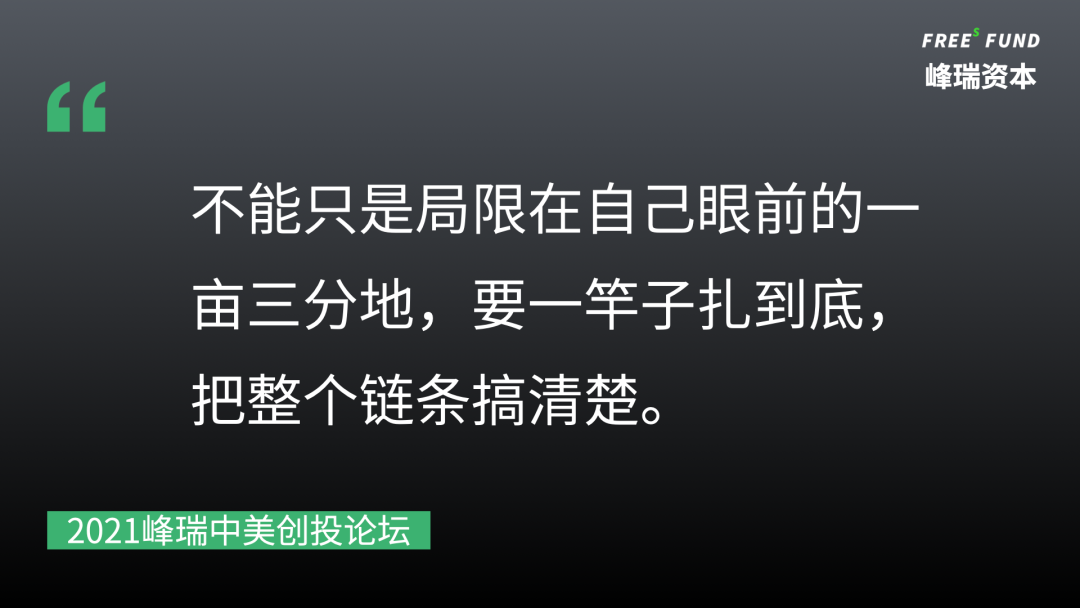
Tong Tao: For innovative projects, as a founder, you have to dig deep enough into the product. The electronics supply chain is very long — from chip to module to finished product to brand; and on the communications side there are carriers and so on. Doing innovative chips, you can't just focus on one link and only consider the value to your direct downstream customer. You need to see further. People can't just be confined to their own little patch of land — you have to go all the way down, figure out the value across the entire chain.
Li Feng: Over these four years, were there any especially difficult times?
Tong Tao: I think there were many difficult times. For example, hiring was especially hard. When you hit R&D barriers, how do you reconfigure your resources, including communicating with investors and partners.
Qiuqiu (FreeS Fund HR Lead): If at a moment like this you had to choose between investing or starting a company, what advice would you give?
Li Feng: This is a very contradictory question. If you're someone with a personality like mine, who likes to think problems through as far as possible, making sure the logic is rigorous and causality is sound, you might tend to be too rational when starting a company, which makes you hesitate and leads to some judgment errors. But when starting a company, you also can't be too emotional — diving right in without careful thought. I think entrepreneurship is when you've thought through the general direction about fifty or sixty percent, and at the same time you're excited about this direction — meaning ideals, conviction, or desire accounts for the other thirty or forty percent — then you can act.

Qiuqiu: All three of you here today have had both entrepreneur and investor identities. In the process of selecting entrepreneurs and teams, what do you tend to value? If you were an investor, who would you invest in? If you were a CEO, who would you choose as your partner?
Tong Tao: At our company, we've always hoped people can be hands-on and deliver. The team style we currently like is: whether you're an engineer or in sales, you know what goal you need to achieve, you know how to achieve it, and you can independently solve various problems well. On this foundation, if you're interested in management, you can gradually become a manager.
Chongzhe Li: From an investor's perspective, first, at the early stage, after investing, you need to walk this path together with the founder. I personally appreciate founders who are grounded and can do anything.
Second, an important trait at the early stage is being resourceful — somewhat like improvising solutions as challenges arise. Because in entrepreneurship you'll encounter many unforeseeable situations, especially early on. Founders need the ability to quickly resolve difficulties, even in areas outside their expertise. This capability is quite important.
Third, on the emotional level that Uncle Feng mentioned — you can sense their passion for what they're doing, rather than them saying they're doing this because it's a hot trend, because it's popular.
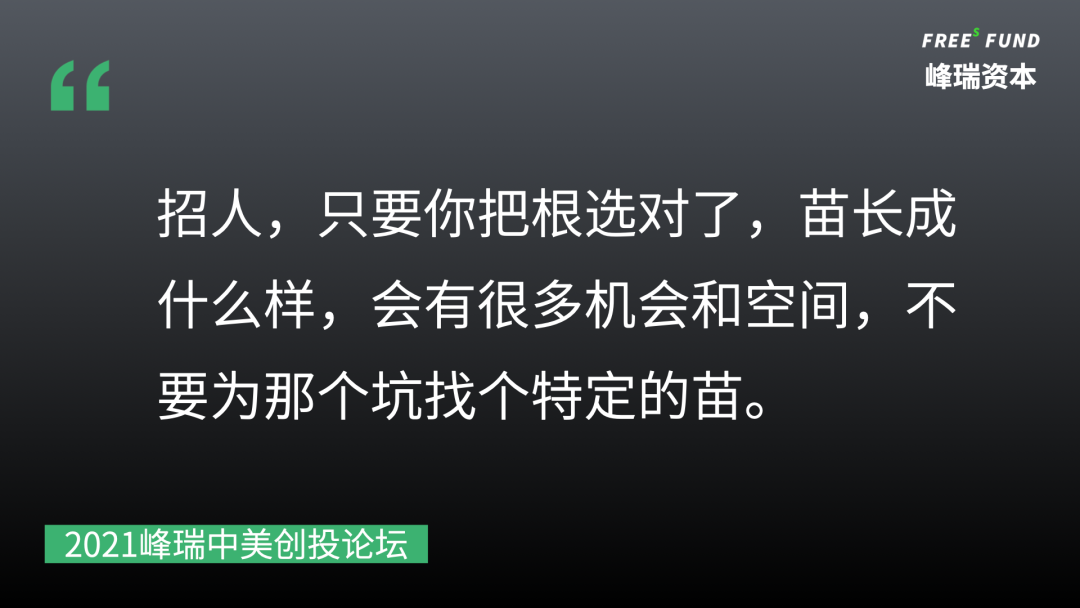
Li Feng: On hiring, I think the principle is: as long as you choose the right root, there will be many opportunities and room for how the shoot grows afterward — rather than finding a specific shoot to fit a particular hole. Similarly, choosing partners based on difference or complementarity isn't necessarily a good starting point. Something for everyone to consider.
Audience member: For young people, should they start a company first or go into investing first?
Li Feng: I don't think the order matters for young people — don't make absolute assumptions. For example, telling yourself "I'll do three years of investing first, accumulate resources, then I can start a company."
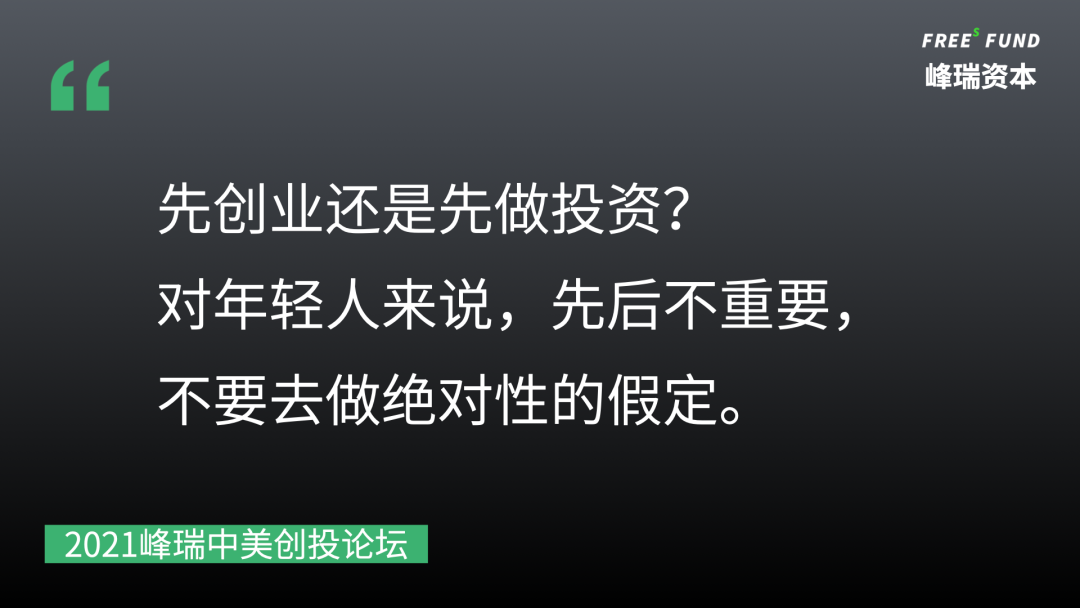
Tong Tao: Should you start a company or go into investing? If you haven't tried either, just pick one and begin. Starting a company is probably a bit harder — you need to spot the right opportunity and raise funding. In some sense, investing might be easier to get into. But whenever someone asks me this, I usually throw the question back: why are you forcing a choice between the two? I have many friends who are doing extremely well at major tech companies. The resources they can mobilize there are often greater than what they'd have at a startup.
Li Chongzhe: Elon Musk had a great line recently that answers this question — you may have heard it. Someone asked him on Clubhouse, what encouraging words do you have for entrepreneurs? He said, if you need encouragement, you're probably not suited for entrepreneurship. When you're still asking whether to start a company or go into investing, at least in this moment, you're not particularly suited to be a founder.
Qiu Qiu: Chongzhe, I'm curious — what's been the biggest obstacle for you working at FreeS Fund?
Li Chongzhe: The obstacles are mostly internal. I'd been around the VC world before and had some grasp of how things work. From an entrepreneur's perspective, investing seems relatively straightforward — you just make judgments. But once you actually become an investor, you realize there's a service and sales component to it. Because the best founders aren't short on capital. How do you convince them that taking your money is the better choice? That comes down to your value as an investor.
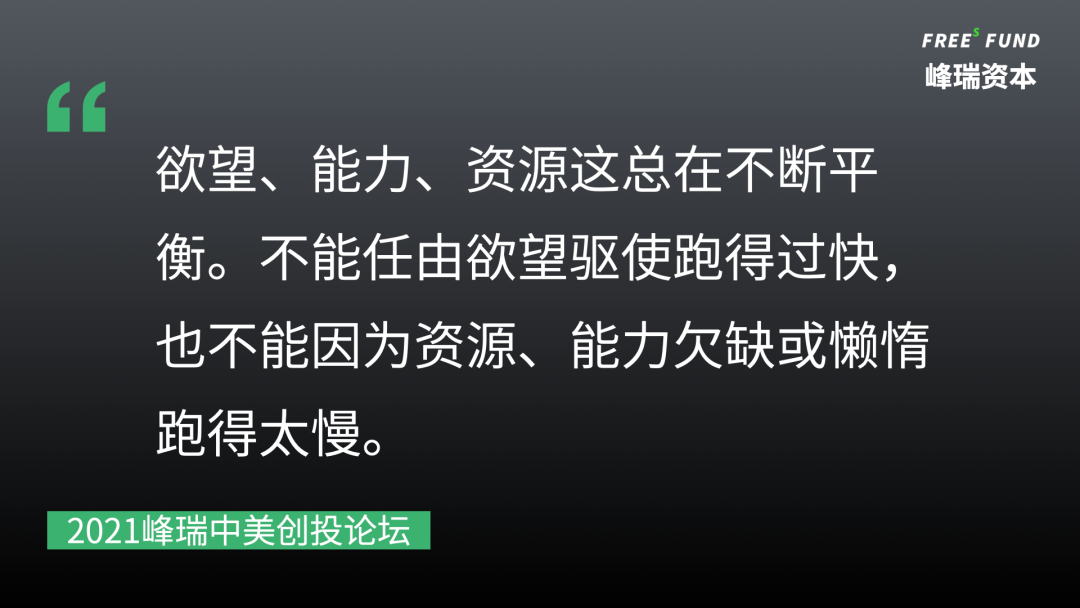
Audience member: I'm curious — what does a challenging moment look like for you, Feng Shu?
Li Feng: It's when desire, capability, and resources are out of alignment. Since we're in finance, you can't let desire drive you to run too fast, nor can you let insufficient resources or capability — or plain laziness — make you run too slow. These three things are constantly being balanced. You need to stay clear-headed about what's actually driving you at any given moment, and what you're genuinely lacking.

What's It Like Doing Venture Capital in China? | 2021 FreeS Fund China-US VC Forum Transcript
Do Returnee Entrepreneurs No Longer Have an Edge? | 2021 FreeS Fund China-US VC Forum Transcript
Join Us
We're currently hiring investors in Beijing, Shanghai, and Shenzhen focused on biotech, deep tech, and consumer/TMT. If you have an industry background and an interest in investing, we'd love to hear from you — and we welcome referrals of outstanding candidates too. (For full job descriptions, please click the "read more" link at the end of this article.)
Please send your resume to hr@freesvc.com
*Email subject line: Application for "[Biotech / Tech / Consumer] Investor" — "[City]"
We're also seeking interns for investment research, legal, finance, HR (portfolio support), and video content operations. Interested students are welcome to apply. (For full job descriptions, please click the "read more" link at the end of this article.)
Internship duration: 3–5 months, 3–5 days per week on-site. Beijing-based candidates preferred.
Please send your resume to hr@freesvc.com
*Email subject line: Position — Name — School — Major — Minimum internship commitment of X months — X days per week — Earliest available start date