What's It Like Doing Venture Capital in China? | 2021 FreeS Fund China-US VC Forum Transcript
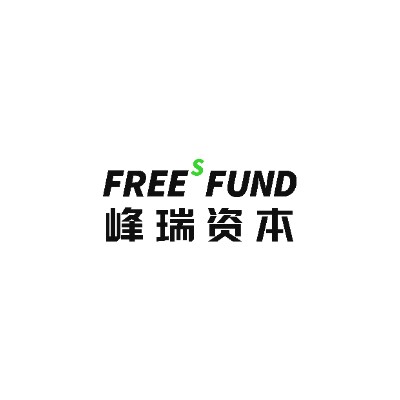
How do you know if you're cut out for investing? What challenges will you face along the way?
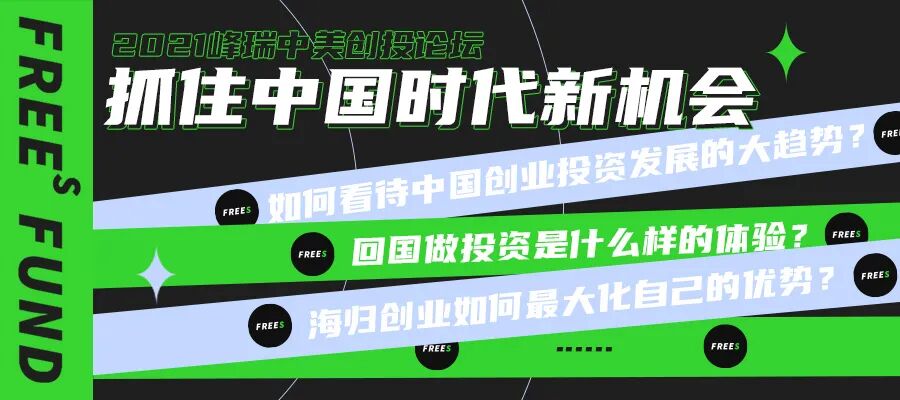
On April 11, the second session of the 2021 FreeS Fund China-US Venture Capital Forum series, titled Seizing New Opportunities in China's Era, went live. Centered on the theme "What's It Like to Do Venture Capital in China," two investors from FreeS Fund had a candid conversation covering the following topics:
- What prompted their transition from industry to venture capital? Where do investors find their sense of purpose, and what challenges do they face?
- What's the most interesting or moving experience they've had doing VC in China?
- For those considering a switch from industry to investing, how can you tell if you're cut out for it? What preparation is needed, and what challenges await?
- For those who've lived overseas for years and are considering returning to China, what advice would you give?
- Which sectors and areas are you most bullish on in 2021, and what's the logic behind those convictions?
The two guests and moderator for this session were:
Rui Ma, Executive Director at FreeS Fund. Ma focuses on investments in materials, environmental protection, and biotechnology, seeking underlying innovations in materials and biochemical technologies that can drive sustainable commercial growth. Before joining FreeS Fund, Ma spent three years at the Ministry of Environmental Protection's Environmental Planning Institute (now the Ministry of Ecology and Environment), deeply involved in developing national environmental policies and plans. With over ten years of research experience in nanotechnology and environmental chemistry, Ma holds a PhD in Civil and Environmental Engineering from Carnegie Mellon University and an MS in Environmental Chemistry and a BS in Engineering from Tsinghua University.
Pengqi Liu, Vice President of Investment at FreeS Fund, covering enterprise services and deep tech. Before joining FreeS Fund, Liu worked as a software engineer at Microsoft headquarters, focusing on search advertising algorithms, and led the big data department at Dmall. He holds a BS in Electronic Engineering from Tsinghua University and an MS in Computer Science from Carnegie Mellon University.
Weili Dong, Head of FreeS Fund North America, focusing on technology-enabled commercial services. Before joining FreeS Fund, she worked at Royal Bank of Scotland, developing the bank's global automated options trading system. A CFA charterholder, Dong has years of investment experience in London and on Wall Street. She holds an MBA from Stanford Graduate School of Business and a BS and MS in Civil and Environmental Engineering from Imperial College London. She previously served as co-president of the Chinese Entrepreneur Organization (CEO) in Silicon Valley and founded the Chinese Entrepreneurs Alliance (CEA), whose board members include representatives from Harvard, Stanford, MIT, and UC Berkeley, among other North American universities.
Below are excerpts from their discussion. We hope you find them helpful.
Upcoming Livestream
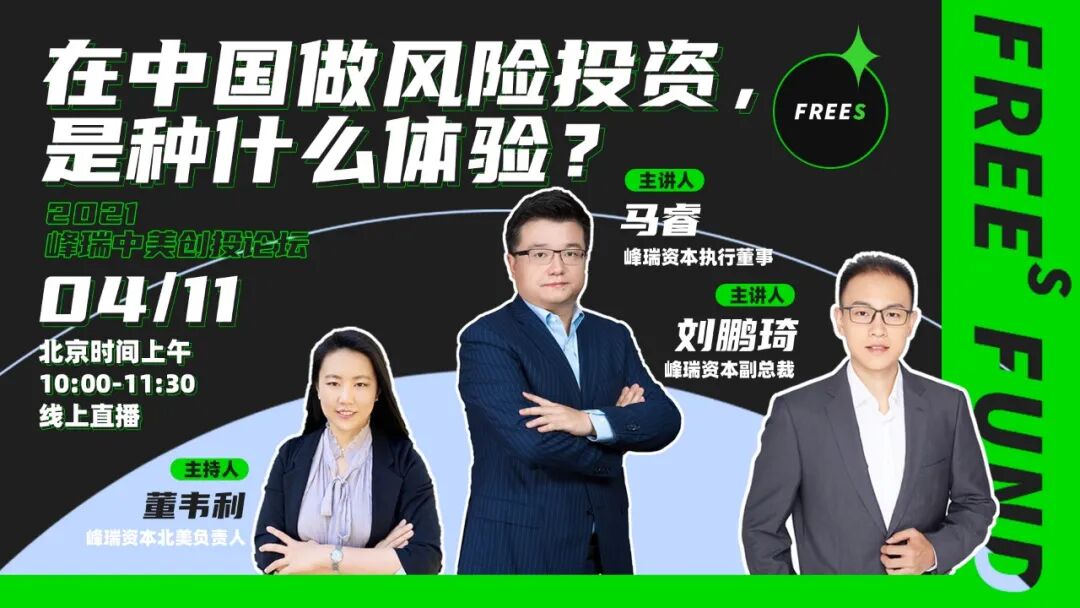
The third session of the 2021 FreeS Fund China-US Venture Capital Forum series, How Can Returnee Entrepreneurs Maximize Their Advantages?, will go live at 10:00 AM on April 18.
Wan Xiaobo, co-founder and CEO of FreeS portfolio company ChemMind, and Wang Can, founder and CEO of PatPat, will share their perspectives on: the advantages and challenges of returning to China to start a company; how to better find a team and direction; and how to adapt to the domestic entrepreneurial environment.
If you're interested in joining the Zoom webinar or registering for our May 9 offline event "FreeS Open Day," please scan the QR code below.
Scan to register

Why Transition from Industry to Investing?
Weili Dong: What initially led both of you to switch to investing?
Rui Ma: For over a decade at Carnegie Mellon and Tsinghua, I was doing research in environmental chemistry and nanomaterials. Later, at the Ministry of Environmental Protection, I was still essentially doing research — providing decision support for national environmental legislation, policies, and planning.
The most important reason I switched to investing was wanting to broaden my horizons. Beyond environmental protection, I wanted to understand more fields, and I also wanted to be closer to the economic mainstream. After joining FreeS, I now spend about 80% of my time looking at biotech and healthcare projects, with the remaining time on carbon neutrality-related new energy and materials. The视野 is wider, and the challenges are greater.
Second, beyond my own focus areas, at FreeS I can also engage with finance, consumer, industrial, and technology sectors. This gives me not just the ability to judge industry trends, but also deeper understanding of specific projects.
Third, at FreeS, we regularly interact with many exceptional, passionate, and persistent entrepreneurs. As investors, we're not just investing — we're also learning from these outstanding founders.
Pengqi Liu: My feeling is similar. Since college, including after returning to China, I've been in entrepreneurial circles, and I was quite drawn to investing work. In 2016, when I was facing a new career choice after a year of entrepreneurship back in China, I evaluated myself. Compared to continuously honing my technical skills, I probably preferred trying something that combined technology and business. Investing was a great fit — it offered a bigger platform, a broader perspective, and faster learning opportunities. Though at the time, I also had the idea of using investing to help figure out my future entrepreneurial direction.
Weili Dong: Graduation season is approaching, and some friends in North America are considering returning to China once the pandemic situation improves. Do you have any advice for them? How has your previous industry experience helped and challenged your investment work?
Rui Ma: Industry experience is very helpful for investing. In the environmental field, I've basically done research, engineering, and policy work, so I have a certain understanding of the industry — that's important for investing. Second is research methodology. During my PhD, we emphasized asking the right questions and knowing how to do research. Investing is the same — when you encounter a new field, how do you ask the right questions, and how do you go from novice to expert as quickly as possible? The research and learning abilities developed previously are indispensable. Third, in biology, more and more technologies are being introduced, massive amounts of new data are being generated, and people are starting to adopt engineering frameworks for biology. My previous engineering training helps me better understand these changes.
Pengqi Liu: Indeed, the good thing is that previous industry experience helps us learn new things faster. On the other hand, having worked at both large companies and startups, I can take a relatively comprehensive perspective when evaluating some enterprise service projects — judging whether these services truly deliver tangible value to customers.
For me, the challenge lies in the shift in mindset. In industry, your thinking tends to be more engineering-oriented, very goal-directed, with relatively clear problem definitions. The solution you find may not be optimal, but at least it solves the problem. In investing, there isn't really a particularly clear goal — there's a lot of uncertainty in between. You may need to constantly search for directions and projects; the investment decision process faces a lot of incomplete information; and after investing, you have to see how the project actually performs and whether it gives you enough feedback.
Rui Ma: Right, sometimes even if you understand something, you may not necessarily be able to invest in it.
Pengqi Liu: Seeing too much can also make one overly conservative.
Why FreeS Fund?
Weili Dong: Many entrepreneurs have told me privately that they find FreeS's atmosphere excellent, that it's one of their favorite VC firms. I'd like to ask why you both chose to join FreeS?
Rui Ma: I first met Li Feng probably over a decade ago. At that time, he was constantly traveling between China and the US, frequently appearing at various university events in America, scouting for early-stage investment opportunities. I felt then that he had bright ideas, held views on things, and could judge people well. His approach was also principled — someone worth following. After joining FreeS, I discovered it's a very research-driven organization with enormous internal learning and research volume. My years at FreeS have felt like getting a second PhD — very rewarding.
Second, FreeS's value is "do what's right, not what's easy." That means finding the right thing and persistently sticking with it, rather than always looking for shortcuts or speculating for quick money. This sounds a bit like chicken soup, but the underlying truth runs deep — it's like rolling a big snowball down a very long slope. I deeply identify with this value.
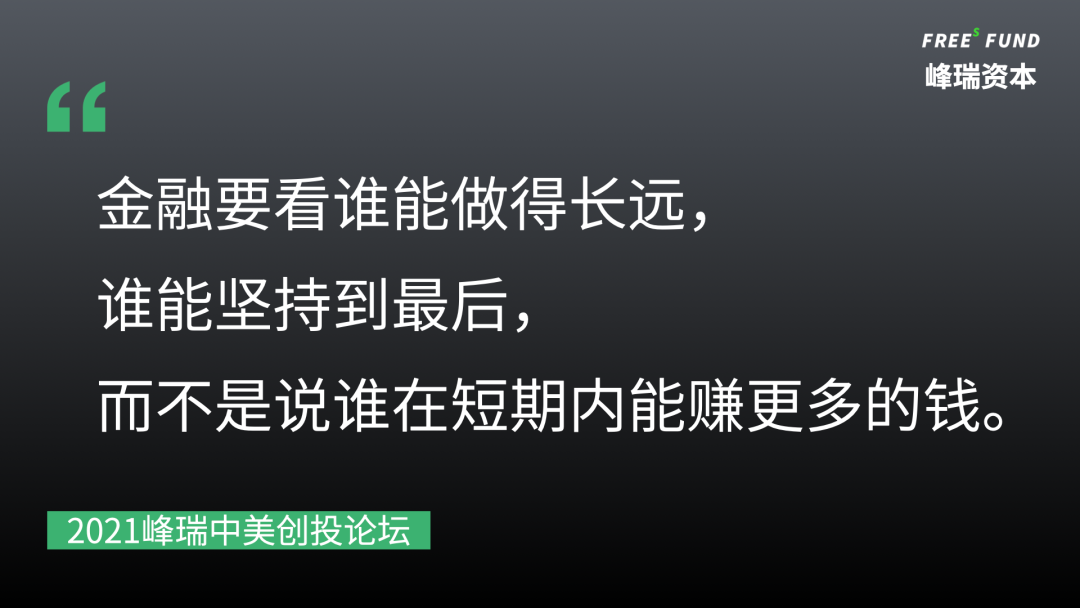
Pengqi Liu: Yes, I completely agree about not taking shortcuts or chasing quick money. In fintech, an area I focus on, we always emphasize that in finance, what matters is who can go the distance, who can persist to the end — not who can make more money in the short term. So the value system Uncle Feng established has attracted many like-minded people, creating a very harmonious atmosphere and environment throughout the organization.
Another point: FreeS is among the VC firms most committed to early-stage investing. What attracts us to early-stage investing is that this isn't just a process of financial investment and judgment — we actively dig up projects ourselves, and after investing, we stay with them through their growth. Witnessing a company's ups and downs from zero is quite different from joining at other stages.
Weili Dong: Let me summarize the key points for everyone:
First, if you're interested in new things and new people, and enjoy growing alongside excellent individuals, VC is a good career direction.
Second, if you have previous industry experience, that's a plus for investing — it helps you understand industries and discover opportunities faster and better.
Finally, if you identify with FreeS's value of "doing what's right, not what's easy," and prefer a research-driven investment approach, coming to FreeS would be an excellent choice.
"You See Cutting-Edge Things, and You Breathe with Founders"
Weili Dong: Next, let's talk about something new. Many friends in North America are curious about VC work styles and content. Could one of you describe what a typical week looks like for a venture capitalist?
Pengqi Liu: Generally, the week starts with regular meetings. If you have projects that need to go to committee, including term sheet and investment decision applications, you prepare materials in advance and bring them to the meeting for group discussion. If not, you can participate in discussions about others' projects — everyone learns about different directions together.
Other times are fairly flexible. I'd roughly divide them into two parts. About half the time goes to meeting new projects and entrepreneurs. The remaining half can be further split: one portion goes to more detailed due diligence on projects you intend to deeply follow up on, plus related industry research. Another portion may be more fragmented — for example, regular communication with projects you've already invested in and are managing, seeing what they need.
That's roughly how a week passes. Of course, often you also need to travel for business.
Weili Dong: Next, please share: what's the most interesting thing you've experienced doing VC in China?
Pengqi Liu: There are quite a few interesting things. The most fascinating is that through this platform, you can explore genuine knowledge. When I first started investing, I unexpectedly looked at many agtech projects. For someone who grew up in the city, through project visits and research, I went to rural areas all across China — to Guangxi to see dragon fruit cultivation, to the Northeast to see endless black soil, to Hubei and Anhui to see rice cooperatives. In this process, I got to communicate with frontline farmers, cooperative staff, and government agriculture officials, seeing the differences, limitations, and opportunities in agricultural industries across different regions of China. This was a very interesting experience for me.
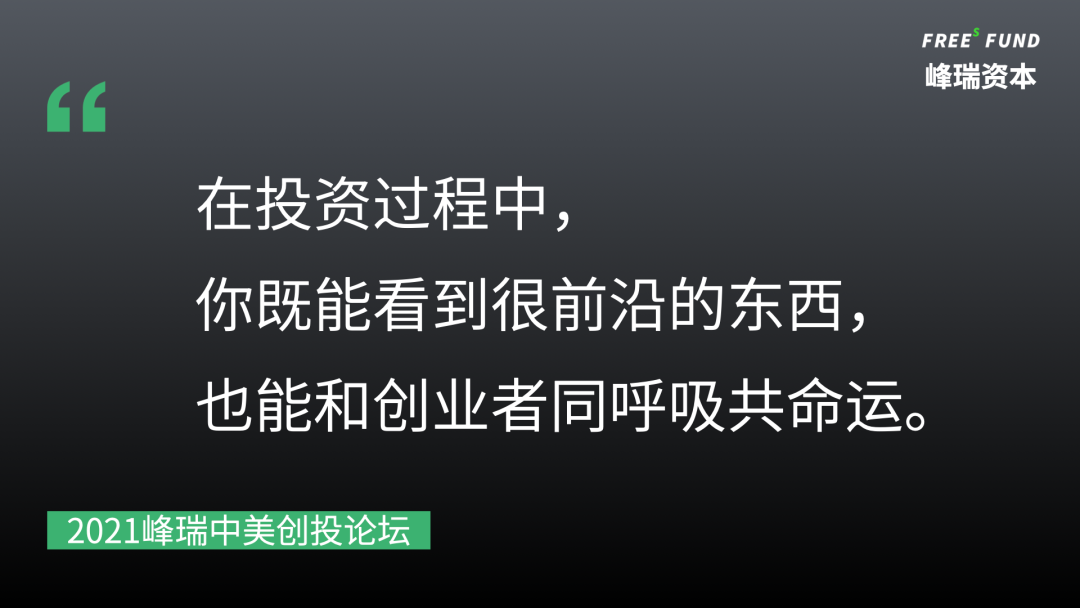
Rui Ma: Mainly two aspects. In the investment process, you both see cutting-edge things and breathe with founders through their struggles. Let me share two examples.
First example: before COVID, I went to Boston mainly to look at mRNA and nanoparticle-based iron delivery platforms — the technology that Moderna later used for its vaccine. I saw several projects then; honestly, my conviction level wasn't that high, so I didn't invest. Later, because of the pandemic, some of those projects may have reached tens of billions in market cap. So investing does put you in contact with very frontier technologies. It's possible that an entrepreneur you're talking to now could, in two or three years, build a very large company — opportunities like this are relatively rare in other industries.
Second example: I previously invested in three companies that are all doing very well now. But two or three years ago, as I was about to board a plane, the founders of these three companies called me in succession. One asked to borrow money to pay salaries. One said he was preparing to mortgage his house for a company loan, but the mortgage wouldn't arrive before the next funding round. The third company had taken on an environmental operations project that was extremely difficult, with daily exceedances of standards. The relevant department warned that if they exceeded standards again, people would be arrested. The day he called me, they had exceeded standards again. I still remember my blood pressure spiking as I boarded that plane.
Of course, all three companies are very successful now. But as an investor, you know what difficult situations they emerged from. The entrepreneurs you encounter face very concrete difficulties daily, enormous pressure, and brutal competition. For me, accompanying them through problem-solving, overcoming difficulties, and achieving breakthroughs is a very meaningful process.
Weili Dong: Investors witness these founders going from 0 to 1, then from 1 to 100. There must be moments that move you along the way.
Pengqi Liu: What truly keeps me up at night are the projects we've invested in. But rather than results like how much funding they raised or revenue they generated, I want to highlight their process of effort and persistence — a process that ultimately brings them rewards.
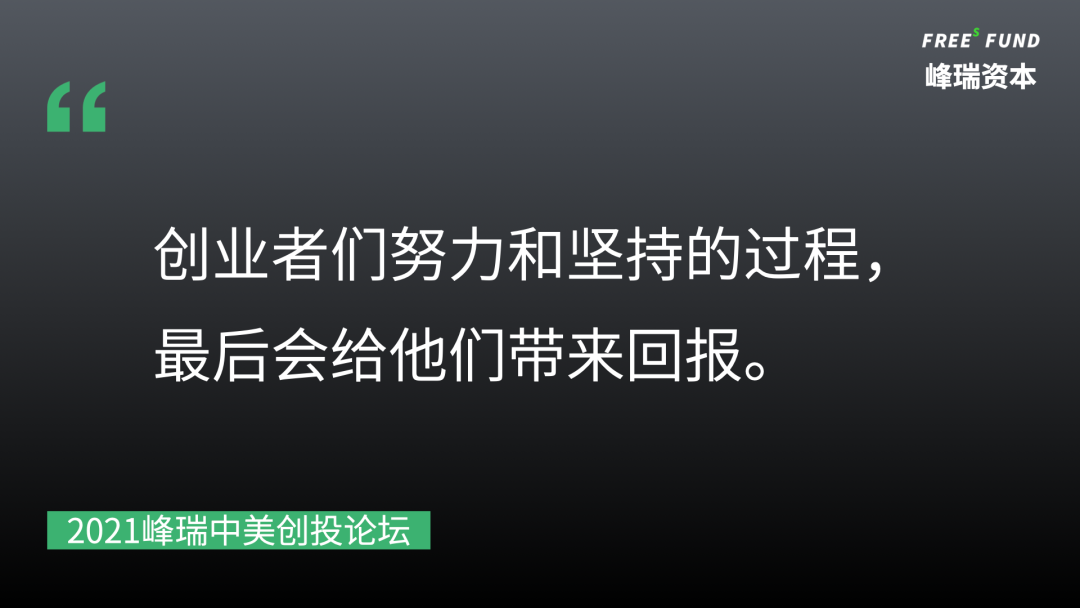
For example, a fintech company I invested in that mainly serves bank clients. A few months after founding, they visited a bank client, but were shown the door after just three minutes of conversation. This felt worse than a closed door. The founder reflected that the problem probably lay in their capabilities. So they went back to hone their skills.
Two years later, their product had matured and they had some landed clients, but they never gave up on that original bank. Through persistent effort, they finally got an in-person meeting. What was scheduled as an hour ended up lasting nearly three hours, and they reached a cooperation agreement.
Rui Ma: We at FreeS invest in many healthcare projects. When we see the healthcare companies we've invested in actually helping patients clinically, it's very moving.
For example, one brain science company we invested in focuses on addressing autism and related conditions. Some severely autistic children may still be unable to fully care for themselves even in their twenties. This company uses technology and platform approaches to help these autistic patients with detection, followed by intervention treatments, and some patients show clinical improvement. Once, when we were doing due diligence at a hospital, we saw patients voluntarily recommending themselves to doctors to participate in clinical trials. We were deeply moved at that moment.
The Biggest Challenges in Investing
Weili Dong: We just talked about moving moments. Now I'd like to ask you to share: what are the biggest challenges as investors?
Pengqi Liu: I've been investing for over four years now. I think the challenge lies in personal growth. Can you make new progress every year? It's quite difficult.
Why is it difficult? Investing actually involves many stages: finding projects, judging projects, accompanying projects through growth, exiting. Just looking at the project judgment stage — it's essentially a decision-making process. Improving decision-making ability requires accumulating substantial experience and feedback. But the challenge of early-stage investing is that feedback cycles are relatively long, and the amount of feedback isn't large. You can't invest in every project on the market or examine them all one by one. Even when you get some feedback, it may not be genuine — it may be mixed with a lot of environmental factors.
For instance, if you invest in a project and it performs well, is it because of your judgment ability, or because it just got lucky? Or if you invest in a project and its performance falls short of expectations, or underperforms at some stage, should you question yourself — did you think something wrong somewhere — and therefore change some of your project judgment principles?
These are challenges we face in our growth process. Of course, this includes both cognitive aspects — continuously improving your cognitive abilities — and psychological aspects: constantly cultivating yourself to not be too influenced by external markets, but rather to strip away the layers, see the essential problems, and沉淀 them as your own积累.
Rui Ma: I very much agree. Early-stage investing has long feedback cycles. From building positions to holding, to verification and then feedback, it may take 7 to 10 years. During this process, both the company and the market go through many twists and turns, with many variables叠加 together — it's genuinely difficult to judge.
For me personally, the biggest challenge was transitioning from environmental engineering to an entirely new field — biotech and healthcare. The backgrounds of FreeS's healthcare team colleagues are all very strong, so there's pressure both internally and externally. You need to supplement substantial knowledge to enhance your professionalism. More than others' recognition, whether you can build confidence in a new field yourself is probably more critical. But on the other hand, an unexpected realization is that investing sometimes precisely requires breaking out of established patterns. When you're on reasonable logic but not too bound by traditional paths, you may instead gain some unexpected收获. Of course, this process is also full of challenges.
"The Most Important Things in Investing's First Stage Are Curiosity and Learning Ability"
Weili Dong: Currently, some friends who've lived overseas for many years are considering returning to China — perhaps to start companies or to invest. What advice do you have for them?
Rui Ma: For me, returning to China was definitely a very valuable decision. Of course, I've also seen many entrepreneurs hesitate and repeatedly weigh their options. I actually think they should be more decisive. As long as you're clear on the big direction, you don't need to hesitate because of many specific issues. Once you've made the decision and calmed your mind, many detailed problems can be properly handled — when to move your family, whether you return first or your partner does, whether to start a company or join a VC upon return — these can be decided gradually. After my PhD, I returned to China after working only a short time. I had some anxiety then — what would I do upon returning, would I lose opportunities in the US. But over these years, I'm quite certain that returning to China has given me far more opportunities than staying in the US.
Pengqi Liu: My experience is similar. I firmly returned to China after working in the US for only a short time. Before returning, I actually hadn't figured out what I would do. So as you can see, I've done both entrepreneurship and investing. But what can be certain is that in China, there are far more possibilities than in the US.
If some friends with industry backgrounds want to return but haven't yet figured out specifically what to do, they can also join FreeS's Entrepreneur in Residence (EIR) program. We can look at projects together. In this process, you can see what you're actually suited for. If you discover a good entrepreneurial direction, you can go do it yourself. If you find investing suits you better, you can switch to investing.
Of course, from my personal experience, broadly speaking, if you're a relatively optimistic person, entrepreneurship may suit you better. If you're relatively cautious, investing may be more suitable.
Weili Dong: Many friends are curious: how do you judge whether you're suited for the VC industry? If you're currently working in industry but interested in VC, what preparation should you do?
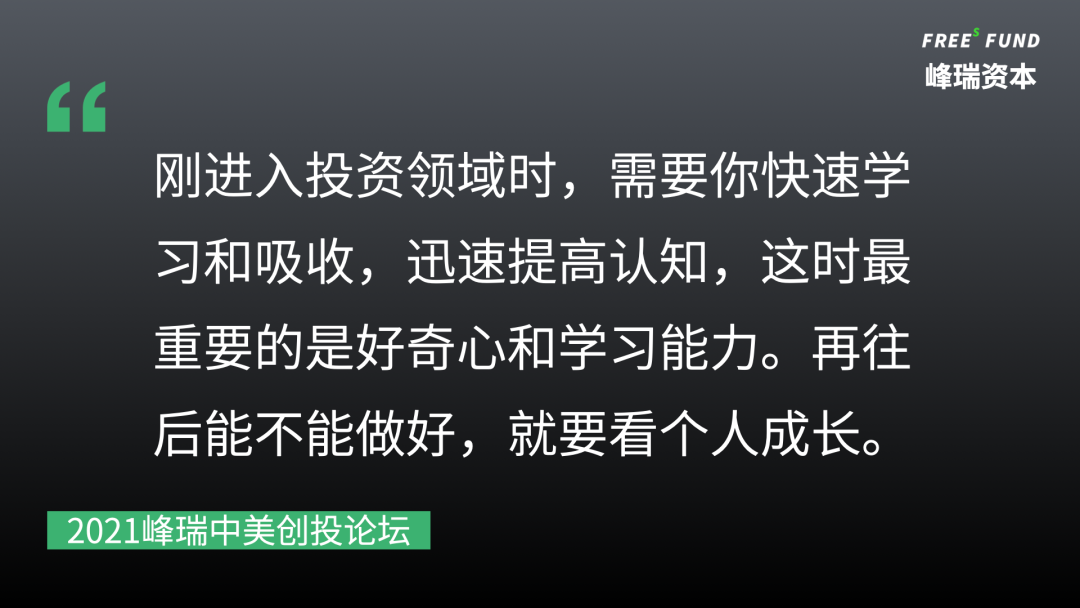
Pengqi Liu: We can actually divide investing into two stages. The first stage is most importantly about curiosity and learning ability. Just entering the investment field requires you to quickly learn and absorb, rapidly raising your cognition. Whether you can do well later depends on personal growth. Another point: different VCs have different styles, and the emphasis on required abilities may differ, plus the values we mentioned. Everyone can research and understand more.
Rui Ma: I have a few specific suggestions: First, talk to your friends in VC to build an understanding of the industry. Second, do you know the top ten companies in your industry inside out, with your own judgments about their current state and prospects? Are you usually inclined to research companies and industries? You can do a self-test first.
Industry Insights on Biotech and Deep Tech
Weili Dong: Finally, I'd like to ask you both to share your investment logic for 2021 and industry insights on your respective focus areas.
Rui Ma: After the pandemic, I've mainly been looking at biotech and healthcare, focusing on underlying materials and biochemical technology innovations that can bring sustainable commercial growth. The pandemic accelerated this industry's development. Perhaps before the pandemic, a technology might have made little progress for over a decade, but after the outbreak, many technologies went through clinical trials within a year. Vaccines are the obvious example.
Over these years we've also invested in frontier biotech projects, such as various tools to improve R&D and clinical efficiency and effectiveness — for example, high-throughput single-cell sequencing tools, spatial genomics sequencing tools, and so on. Meanwhile, with broader datafication achieved, this data can be used for computation — areas like AI drug discovery are also key focus directions for FreeS.
We're now gradually transitioning from the data world to the real world. After you've read the code of the biological world, to achieve further intervention you need its original components — such as DNA synthesis, protein design, protein synthesis, RNA synthesis, delivery vector optimization and design. From an engineering perspective, these are directions we quite like. At the same time, we're also looking at new materials, new energy, carbon neutrality, and other directions.
They may seem scattered, but the underlying logic is often interconnected: you need a technology that can combine with industry to produce good products. FreeS generally invests in companies that have technological substance and can actually落地.
Pengqi Liu: On my side, I look at tech-focused tracks, including software, hardware, and their combination with different industries. Many projects themselves are interdisciplinary. For example, Ma Rui and I sometimes look at biotech projects together, where technology mainly plays a tool role. Technology can serve many industries. So whether hardware or software, the underlying essence is platform technology opportunities.
From the deep tech direction, we started布局 in semiconductors and other industries from 2016. At this point in time, we'll continue along this direction while gradually paying attention to more physical-world directions. Taking semiconductors as an example, we may start looking upstream, including manufacturing, processes, materials, and other directions — these will have more opportunities in the future.
Of course, our focus won't be limited to so-called "import substitution," because that's itself just one driving force. The underlying logic is that new scenarios are催生ing new demands. We'll further assess whether certain directions truly possess commercial value, rather than being short-term effects driven by policy or sudden events.
Meanwhile, in automation-type tools, we'll also look at areas like machines replacing human labor, and so on. In the financial sector, though policies keep changing, the underlying logic is that both on the supply and demand sides, demand for new asset types, especially equity assets, continues to strengthen. Whether there are new opportunities here, we'll judge from a long-term trend perspective.

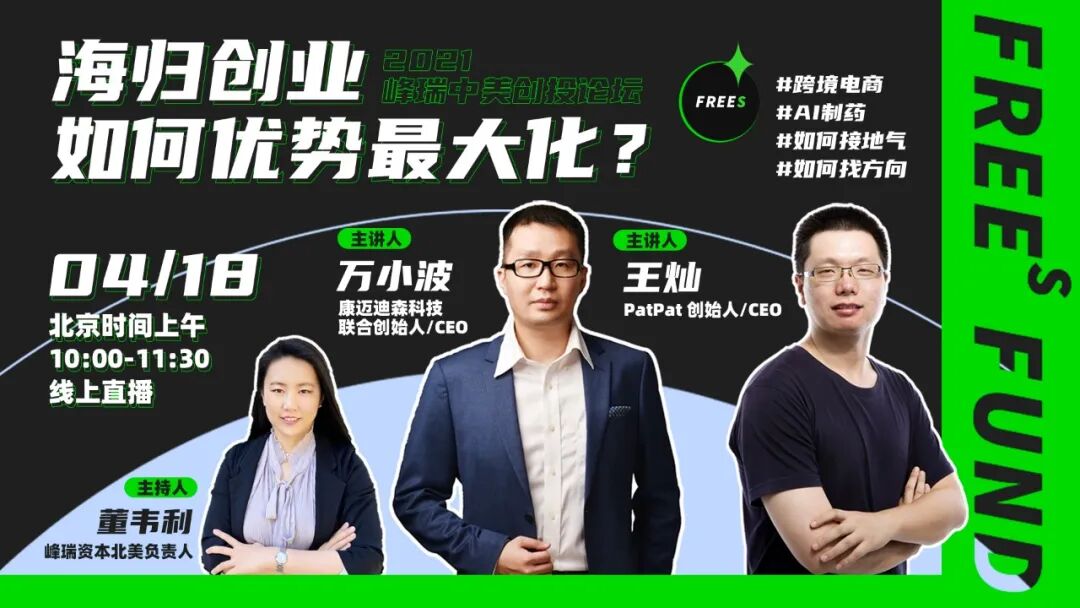
The third session of the 2021 FreeS Fund China-US Venture Capital Forum series, How Can Returnee Entrepreneurs Maximize Their Advantages?, will go live at 10:00 AM on April 18.
Wan Xiaobo, co-founder and CEO of FreeS portfolio company ChemMind, and Wang Can, founder and CEO of PatPat, will share: What are the advantages and challenges of returning to China to start a company? How to better find a team and direction? How to adapt to the domestic entrepreneurial environment?
Welcome to watch the livestream on FreeS's video channel, Baidu, 36Kr, Sina Finance, and Sina Tech! Send the keyword "03直播" in the backend of the FreeS Fund WeChat official account to get the livestream link with one click.
If you're interested in joining the Zoom webinar or registering for our May 9 offline event "FreeS Open Day," please scan the QR code below.
We are currently seeking biotech, deep tech, and consumer/TMT investors in Beijing, Shanghai, and Shenzhen. If you're interested in joining, we especially welcome you to register for our offline Open Day. To participate: scan the QR code above. Of course, you're always welcome to send your resume directly to hr@freesvc.com.