FreeS Fund 2021 Outlook ② | Three Trends in Biomedical Innovation

The Biopharma Industry Enters the "Three Fast" Era

FreeS Fund's 2021 Outlook
2021 will be the year when things begin to shift from "uncertain" to "certain."
The systemic uncertainties that kept us on edge for over a year — the pandemic, US-China relations, the international landscape — have started to become clearer in recent months. Having weathered the storms of 2020, we now enter 2021 with our blades ready to strike.
In the coming weeks, we'll publish a series of articles reviewing 2020's venture capital hotspots (covering consumer, macroeconomics, biomedicine, hard tech, and more), mapping out the directions and sectors we're bullish on, and the future trends we see emerging. The point of looking ahead isn't to predict the final outcome — it's to maintain a state of constant thinking and forward motion.
2021 won't be easy, but it probably won't be harder than 2020. Together, holding our ticket to China's era of opportunity, we'll discover value, drive innovation, and move steadily toward the distance.

2020 was an extraordinary year for everyone, but especially so for those in biomedicine. Together, we witnessed history.
Looking back, the industry saw three milestone events: the AI system AlphaFold 2 successfully predicted protein structures; mRNA delivery technology was rapidly validated through COVID-19 vaccines; and all domestic PD-1 drugs entered China's national reimbursement list, with prices dropping dramatically.
These signature events signal something important: breakthroughs in foundational science are coming faster, technology translation and commercialization are accelerating, and the speed at which innovation reaches the public is increasing.
In this article, we'll trace the key events in biomedicine during 2020 and explore the innovation opportunities within them.
Before diving in, three preliminary takeaways:
- Inflection points in technological breakthroughs often arrive unexpectedly. The rapid iteration of technology owes much to cross-disciplinary collaboration — the convergence of biomedicine with AI, semiconductors, and other fields.
- More and more researchers are becoming entrepreneurs. The translation of innovative technology to clinical and market applications is speeding up. Some once-underestimated technologies are achieving阶段性 results and finding rapid market application.
- Healthcare reform is delivering tangible benefits to the public. We're optimistic that reform will reshape the industry ecosystem, and innovative drugmakers will be among the beneficiaries.
We hope this offers fresh perspectives. You're welcome to reach out to the author, Jiong Shen, at shenjiong@freesvc.com.

Contact Us & Join Us
FreeS Fund continues to watch for investment opportunities in biomedicine. Business plans welcome at bp@freesvc.com. You can also reach out to Feng Xiaorui on WeChat (ID: freesfund).
We're hiring investors in biomedicine, deep tech, and consumer/TMT across our Beijing, Shanghai, and Shenzhen offices. If you have an industry background and an interest in investing — full-time or internship — we'd love to hear from you. Referrals welcome too at hr@freesvc.com (resumes encouraged).
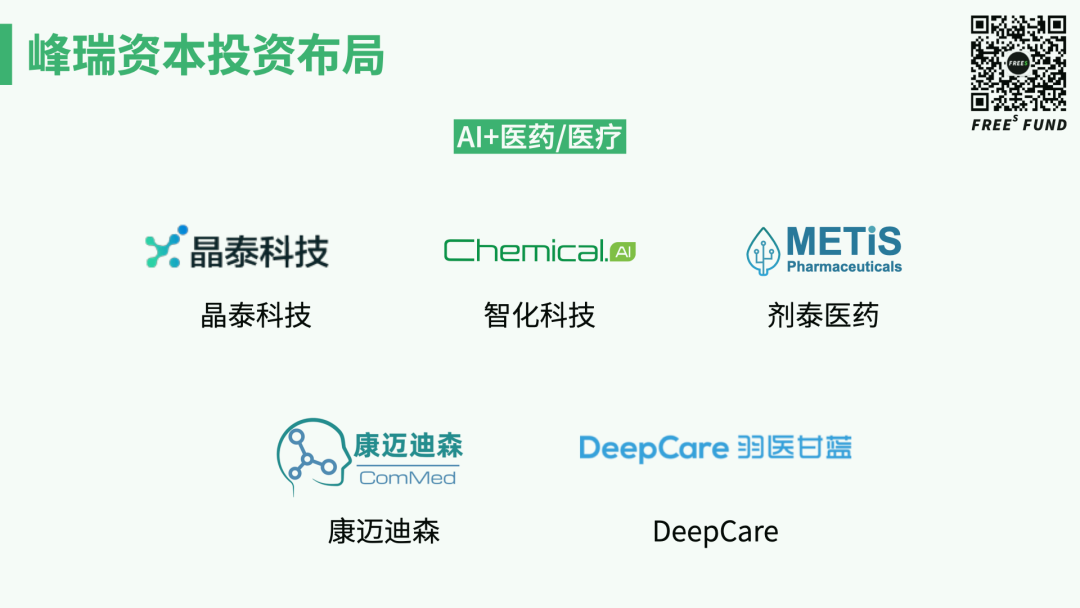
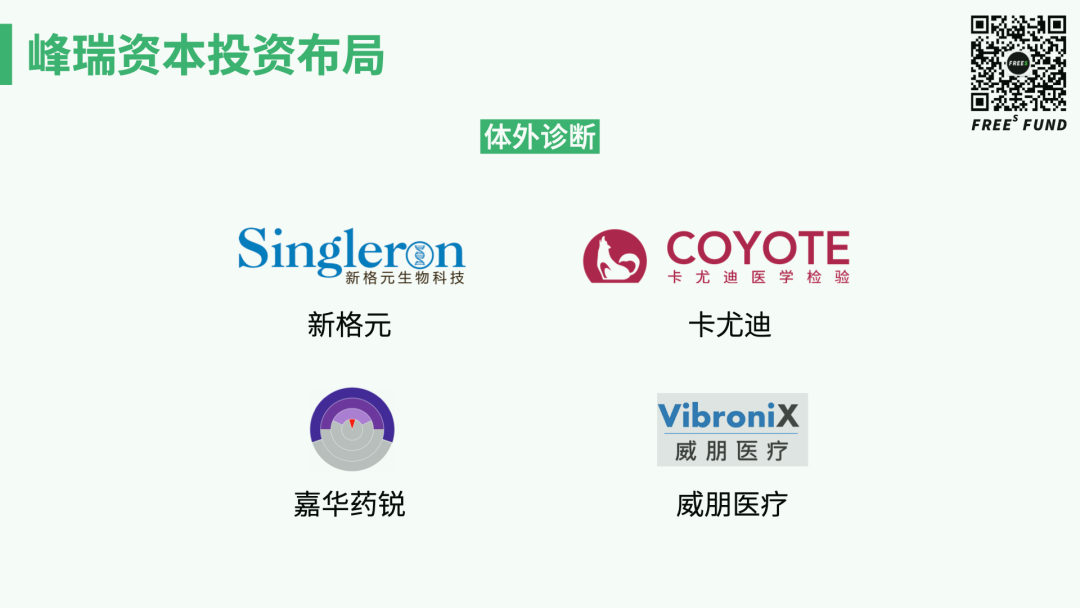
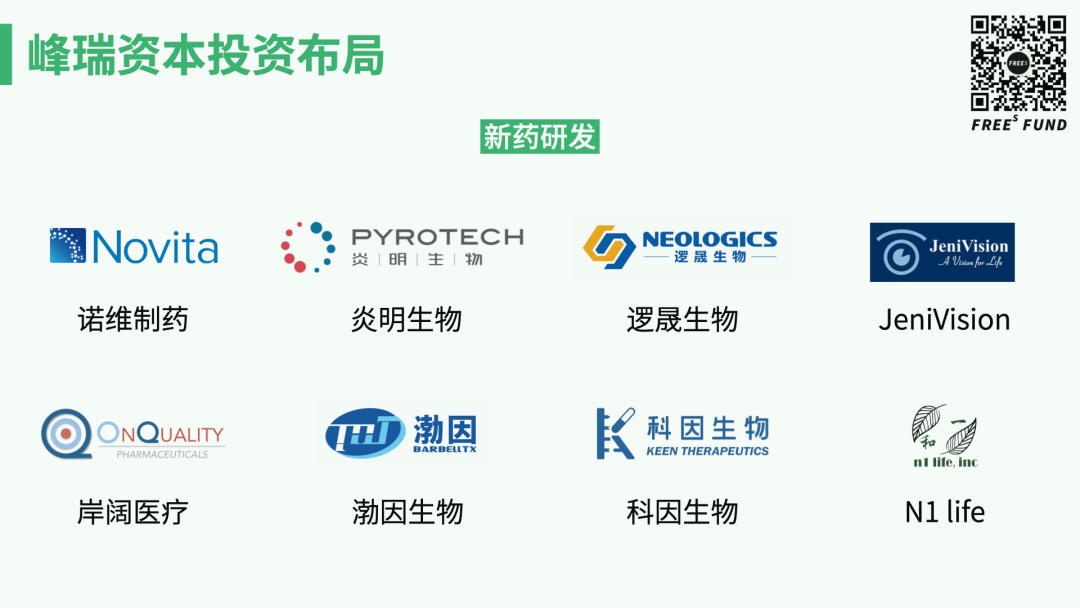
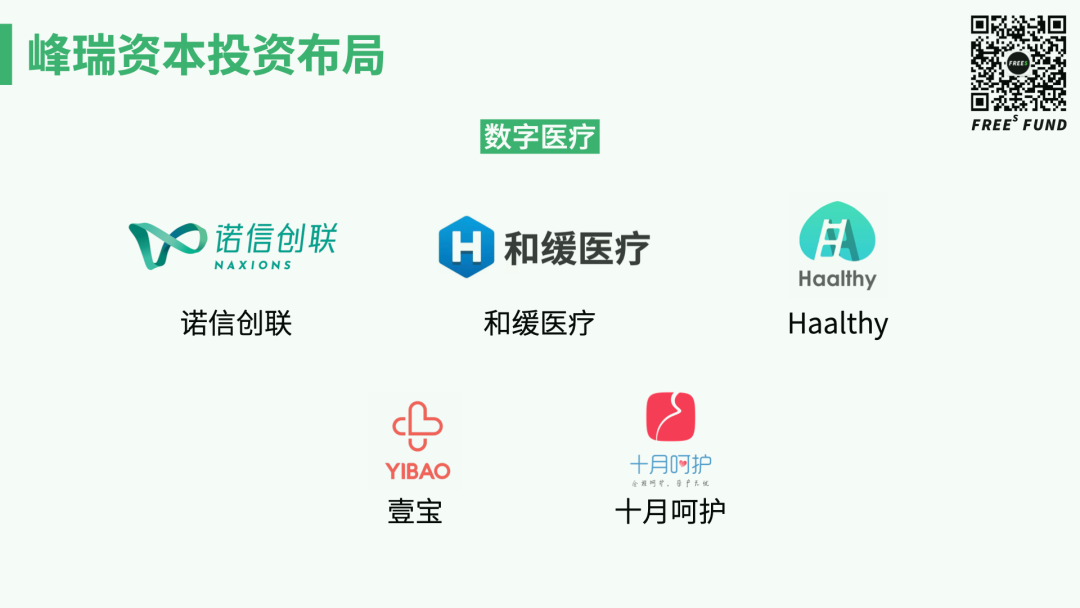
FreeS Fund's Biomedicine Investment Portfolio (Swipe to see more 👉)
/ 01 /
Cross-Disciplinary Collaboration Drives Foundational Innovation, and Breakthroughs Are Coming Faster: AlphaFold 2's Successful Protein Structure Prediction
Google DeepMind's deep learning algorithm AlphaFold 2 scored nearly 90 in the 2020 CASP (Critical Assessment of protein Structure Prediction) competition, with predictions approaching experimental accuracy. This was a milestone — unprecedented progress in predicting the 3D structure of proteins.
Since American scientist Christian Anfinsen proposed in 1972 that "a protein's amino acid sequence should fully determine its structure," we've known this puzzle would eventually be solved. Yet even nearly 50 years later, in 2020, the breakthrough still felt electrifying.
We can clearly feel technology advancing faster. Much of this rapid iteration comes from cross-disciplinary convergence — biomedicine merging with AI, semiconductors, and other fields, each reinforcing the others. That's why inflection points in technology so often arrive when least expected.

Over the past year, the once-skeptical field of AI-driven drug discovery has exploded. Investors and major pharma companies have poured heavy capital into the space. FreeS Fund was among the earlier Chinese firms to bet on cross-disciplinary approaches and AI pharma.
Our 2016 investment, XtalPi, has grown into a domestic leader in AI drug discovery. In 2020, XtalPi closed a $318.8 million Series C — a global record for AI drug R&D funding. Meanwhile, METiS Pharmaceuticals, focused on AI-assisted formulation, and Chemical.AI, specializing in AI-assisted retrosynthesis, both raised multiple rounds from prominent investors in 2020. On January 25, 2021, French CRO company NovAliX announced a strategic partnership with Chemical.AI in AI for drug discovery.
Beyond AI + biotech, we believe collisions between different disciplines will yield more breakthroughs. FreeS-backed Neuracle, for instance, is tackling brain diseases through cross-disciplinary science. Built on over a decade of neuroscience breakthroughs at Harvard Medical School, the company takes an interdisciplinary approach spanning signal processing, computation, electromagnetic waves, and hardware-software integration — offering a pipeline from understanding brain disease mechanisms to detection, diagnosis, and treatment. In 2020, Neuracle launched its "Individual Precision Brain Function Platform" based on core proprietary technology.
/ 02 /
Innovation Translation Is Accelerating: mRNA Delivery Technology Rapidly Validated Through COVID-19 Vaccines
In 2020, as COVID-19 swept the globe, the tragedy and disruption had a flip side: fighting the virus became the largest biotech stress test in human history.
On the race to develop vaccines, multiple technological approaches flourished. At the start of 2020, few genuinely believed in mRNA as a new technology. Yet within less than a year, mRNA vaccines passed clinical trials and received emergency approval — far exceeding most expectations. Normally, validating such vaccines takes three to four years or longer.
The speed of mRNA's arrival was certainly driven by the relentless pressure of the pandemic. But we also note that the translation of innovative technology to clinical and market applications has genuinely been accelerating in recent years.

For example, within just three years, FreeS-backed Singleron Biotechnologies evolved its single-cell sequencing technology from pure research to antibody drug development for COVID-19 and other diseases. In 2020, FreeS portfolio company Coyote Bioscience deployed its core molecular diagnostic technology for nucleic acid testing, becoming China's first approved rapid nucleic acid detection system — playing a significant role in the global pandemic response.
Another example of technology translation: FreeS-backed Bluepha, an early player in synthetic biology in China, has developed PHA (polyhydroxyalkanoates, a class of biodegradable plastics) that has entered large-scale industrial production. With plastic restriction and ban policies taking effect across multiple countries and regions globally, we're optimistic about Bluepha's long-term prospects.
/ 03 /
Medical Innovation Reaches the Public Faster: Domestic PD-1 Drugs Enter National Reimbursement, Making "Miracle Drugs" Affordable
At the end of 2020, a round of national reimbursement negotiations brought multiple cancer drugs into the national formulary. PD-1 drugs — domestic "miracle" cancer treatments on the market for only two years — entered reimbursement and became affordable, with the lowest annual cost dropping below RMB 30,000, more than ten times lower than a year prior. The speed at which a blockbuster drug class could reach more patients is a concrete benefit of healthcare reform.

Some worry that centralized procurement's relentless price pressure will challenge companies' ability to sustain innovation investment. But the goal of reform is precisely to reshape the industry ecosystem, forcing drugmakers to continuously improve their innovative capabilities. Savings from reimbursement and the development of commercial health insurance encouraged by the state will become profit sources for innovative drug companies.

Moreover, as reform deepens, only when low-level repetitive production and kickback-driven sales are cleared out will innovative drug companies truly flourish.
FreeS-backed NeoX Biotech is a beneficiary of this reform. The "two-invoice system" and separation of medicine from healthcare squeezed premiums on drug accessibility; volume-based procurement sent prices plummeting, further compressing margins. NeoX uses "data + technology" to provide customized digital marketing solutions for pharma companies, helping doctors — especially at the grassroots level — understand drugs and improve clinical capabilities. It is precisely the deepening of reform that has made the market recognize NeoX's tremendous value in empowering pharma companies and doctors through technological innovation.
/ 04 / Biomedicine Enters the "Three Fast" Era
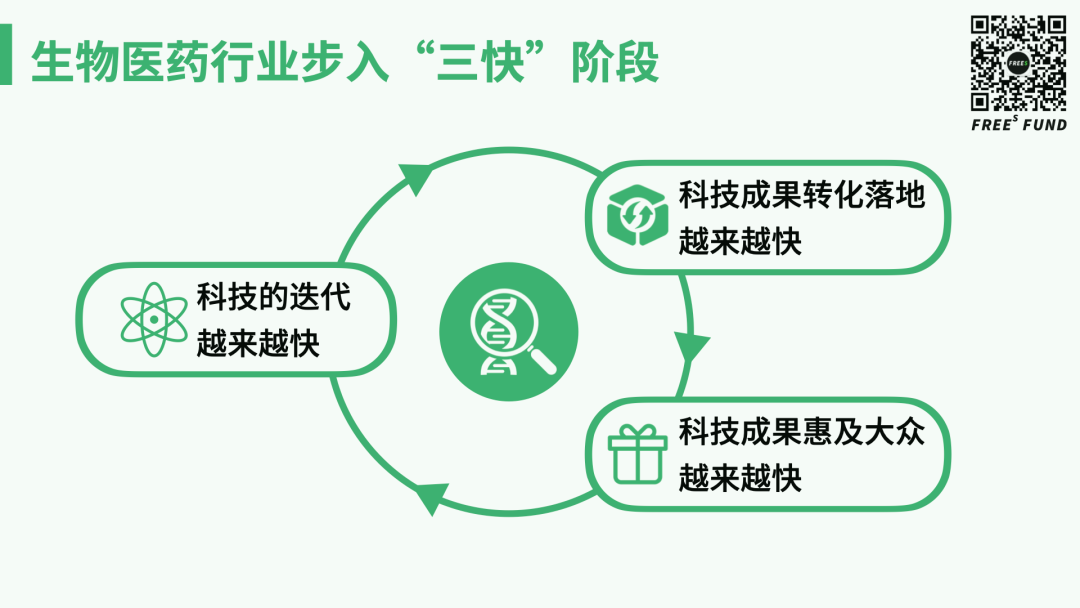
2020 was a banner year for biomedicine. The historic events of that year showed us that technology is iterating faster, innovation is translating faster, and the benefits of science are reaching the public faster.
We live in linear time, but we're experiencing an era of exponential technological development — both opportunity and challenge for entrepreneurs and investors alike.
Over the past five years, FreeS has had the fortune to invest in a number of projects founded by academicians and professors, all of which have made excellent progress. We're also heartened to see more and more researchers becoming entrepreneurs, armed with genuine foundational innovation. We'll continue to stand firmly with them in exploring the mysteries of life.
A final thought: looking back, we're only one-fifth of the way through the 21st century. Biomedical innovation will remain evergreen.


FreeS 2021 Outlook ① | 8 Trends in Consumer Entrepreneurship
Why Is AI Pharma So Hot, and Why Now? | FreeS Biomedicine VC Summit Transcript
Standing at the Forefront of Gene Therapy | FreeS Research Institute
FreeS Report 15: Life's Gamble — The Adventurous Journey of Drug R&D | FreeS Research Institute