How to Invest in Biotech in 2023? | FreeS Research

Data-driven, cross-disciplinary, bearing fruit — the most certain direction amid uncertainty

After two years of sprinting ahead in 2020 and 2021, the biotech and healthcare sector went through a major correction in 2022. Standing at the start of 2023, we want to explore with you: what does the future of biotechnology look like?
Here are the key takeaways, offered from a slightly different angle:
- As Chinese pharma R&D companies deliver more license-out deals and First-in-Class drugs, we can expect biotech and healthcare investment to gradually warm up in both primary and secondary markets in 2023. But unlike the previous wave driven by Hong Kong's 18A listing regime and the STAR Market, this recovery will likely place greater emphasis on new product development powered by novel technologies and new supply.
- From the perspective of biotech development trends, we believe biotech and healthcare problems are fundamentally data problems. The digitization of biological systems and processes represents the biggest opportunity for biotech innovation. From an industry standpoint, China and the US have different industrial divisions of labor, are at different development stages, and place different weight on platforms versus products. From an investment standpoint, it's particularly important to back innovative infrastructure and cutting-edge interdisciplinary biotech in China.
- Over the past decade, thanks to advances in measurement tools and cross-disciplinary approaches, biological systems have been rapidly digitized — from DNA, RNA, and proteins to components and their interactions, from cells and microorganisms to the brain. IT-BT fusion ("IT" for information technology, "BT" for biotechnology) has begun in earnest; biotech is iterating rapidly across tools, computing, and components, with innovation emerging constantly — both technological breakthroughs and scalable commercial applications; and biotechnology can serve as a foundational layer radiating outward to multiple industries (pharma, health, agriculture, forestry, energy, environmental protection, materials), creating new opportunities for each. By boosting total factor productivity from the supply side, biotechnology has become a long-term driver of value that extends even beyond the biopharma industry itself.
- Biotechnology is also evolving from systems biology that seeks to understand the world, to synthetic biology that seeks to remake it. To build a company in synthetic biology, a founder must be professor, factory manager, top salesperson, and financier all at once.
- China and the US differ significantly in healthcare systems, payment capacity, clinical needs, and capital markets — you can't simply copy-paste investment approaches. Beyond judging the technology itself, you need to closely examine whether new supply created by technological transformation can address China's market needs and pain points. We believe that over the next 5-10 years, there will be major shifts and opportunities arising from the convergence of biotech breakthroughs + surging incremental demand in China and innovative demand overseas + iterative development of China's industrial chain.
Happy reading, and Happy New Year.
If you're interested in biotechnology topics or building a company in this space, feel free to reach out to Rui Ma, partner at FreeS Fund (marui@freesvc.com).

Giveaway
Share your thoughts on biotechnology in the comments. The 6 most thoughtful commenters will receive a copy of Keep Sharp.


How to Invest in Biotechnology in 2023?
By Rui Ma (marui@freesvc.com) and Li Feng (feng@freesvc.com)
01
Biotech and Healthcare: Adjustment in 2022, Recovery in 2023
After two years of sprinting ahead in 2020 and 2021, the biotech and healthcare sector went through a major correction in 2022.
Numerous biopharma companies in both China and the US experienced varying degrees of funding difficulties, project suspensions or restructuring, or layoffs.
The US XBI index fell for 70 consecutive weeks, dropping 64% from its 2021 peak to levels last seen in 2016. Hong Kong-listed biotech companies frequently broke issue price and declined.
Rough estimates suggest that in 2022, biotech and healthcare investment in China's primary market halved, with much of the remaining capital flowing into earlier-stage projects. According to National Bureau of Statistics data, from January to November 2022, China's pharmaceutical manufacturing revenue was 2.59 trillion RMB, down 1.7% year-on-year, with cumulative profits of 388.2 billion RMB, down 28.4% year-on-year. The profit decline ranked among the worst in manufacturing — only slightly better than paper manufacturing (-38.6%), chemical fiber production (-65%), petroleum and coal processing (-74.9%), and ferrous metal smelting and pressing (-94%), which were squeezed by both commodity prices and demand.
As we analyzed in our mid-2022 dialogue article, "How to Think About Biotech Opportunities Over the Next Decade? | A FreeS Fund Dialogue", the main drivers of this US biotech correction were the deflation of valuation bubbles and macro factors (rate hikes, inflation, regional conflicts). In China, this was compounded by price pressure from volume-based procurement and national health insurance negotiations, plus the economic impact of 2022's COVID policies.
For the US, the "science-innovation-commerce" linkage hasn't broken in any fundamental way. Large pharma continues to make and spend record amounts: multinational pharmaceutical companies generate over $700 billion in annual drug sales, with roughly $200 billion-plus flowing back into R&D and pipeline replenishment. Meanwhile, while the growth rate of US primary market funding slowed in 2022, the absolute amount remained substantial — first-half 2022 investment was second only to the all-time high of 2021.
In 2022, globally, new therapies and key drug development made significant progress, with the FDA approving 37 new drugs across small molecules, antibodies, and various modalities. Dr. Wenjun Wu provides a more comprehensive summary in "Pharma Notes 2022". What particularly struck me:
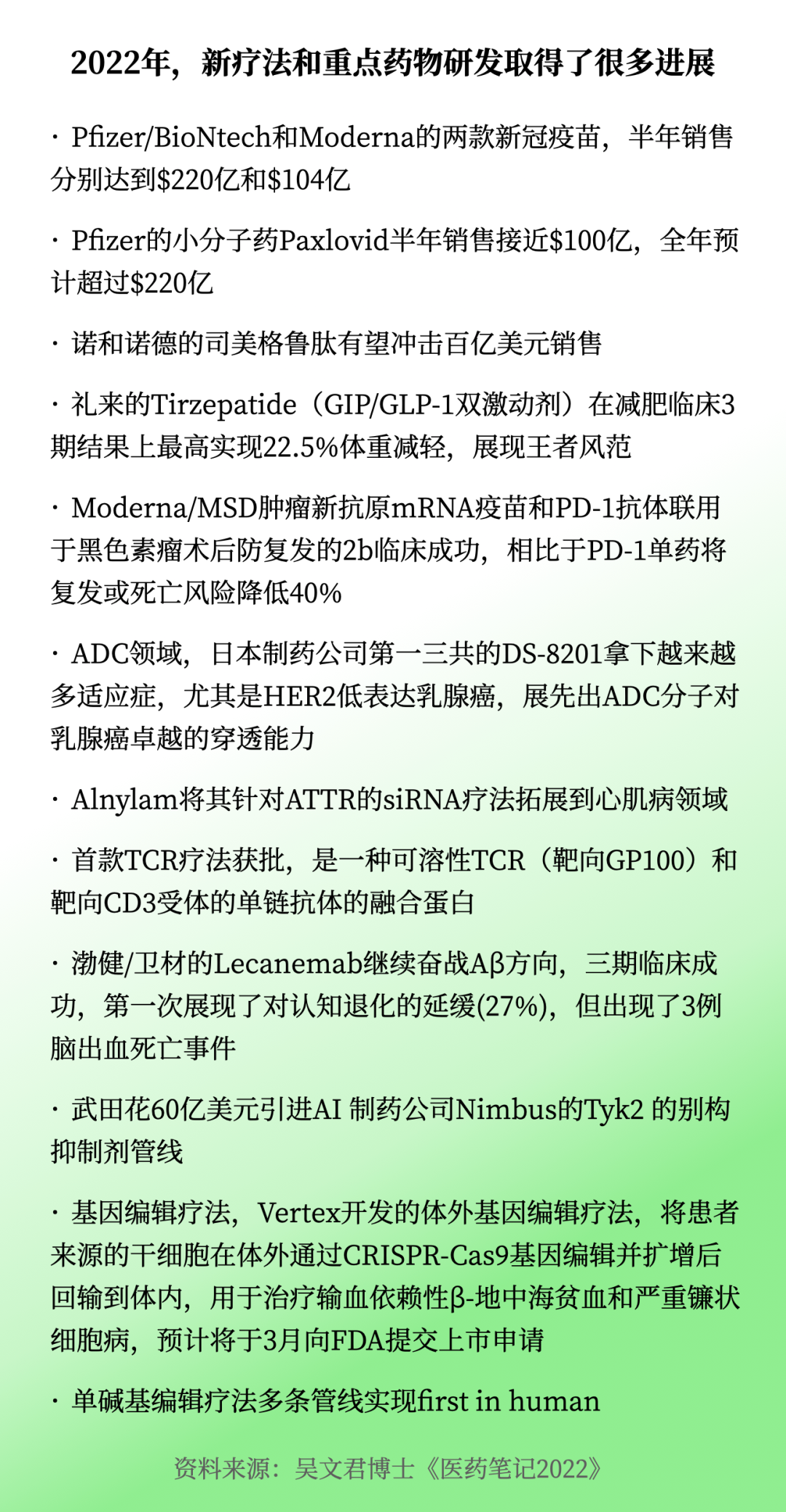
So even from today's vantage point, while US stocks may be in what's called a "winter," the commercial fundamentals from research to product in the US remain sound.
In 2022, China's NMPA approved over 50 new drugs (versus 32 in 2021), 75% of which were small-molecule chemical drugs, plus more than a dozen antibodies and antibody-drug conjugates (ADCs). For China, the challenge remains insufficient innovative supply, and new technologies falling short on commercialization and implementation. Overall, we're in a painful reform period and a supply shift adjustment phase, requiring continued investment and persistence.
Encouragingly, despite the challenging capital markets environment, FreeS Fund's portfolio companies in biotech and healthcare have shown considerable resilience. Looking just at fundraising: Shize Bio, AnchorDx, Jiahua Pharma, N1 Life, ChemMind, METiS, Koin Pharmaceutical, Anyspectrum, Cerebral Dome, Bluepha, Yanwei Technology, Synbio Technologies, Heliosyntek, and others all completed at least one funding round in 2022.
In the final one to two weeks of 2022, as COVID restrictions eased, the long-depressed biotech and healthcare sector rebounded alongside the consumer sector. In the last month of 2022, we saw positive signals such as license-out deals from Kelun-Biotech and Akeso's pipeline — transactions and signals that supported a rebound in pharma and related CRO sectors beyond mere oversold recovery.
In 2023, as Chinese pharma R&D companies may produce more First-in-class drugs and license-out deals, we can expect biotech and healthcare investment in primary and secondary markets to gradually warm up. However, unlike the 2019-2021 boom — which was driven by the capital market dividends of Hong Kong's 18A and the STAR Market — this recovery will likely place greater emphasis on new product development powered by novel technologies and new supply, as those earlier dividends have largely been realized.
02
The Underlying Logic and 3 Major Trends of Biotech Development
From the perspective of biotech development trends, we believe biotech and healthcare problems are fundamentally data problems. The profound and persistent uncertainty that has characterized biotechnology, and the high-risk nature of drug development, both stem from our insufficient measurement, digitization, and understanding of biological systems and processes.
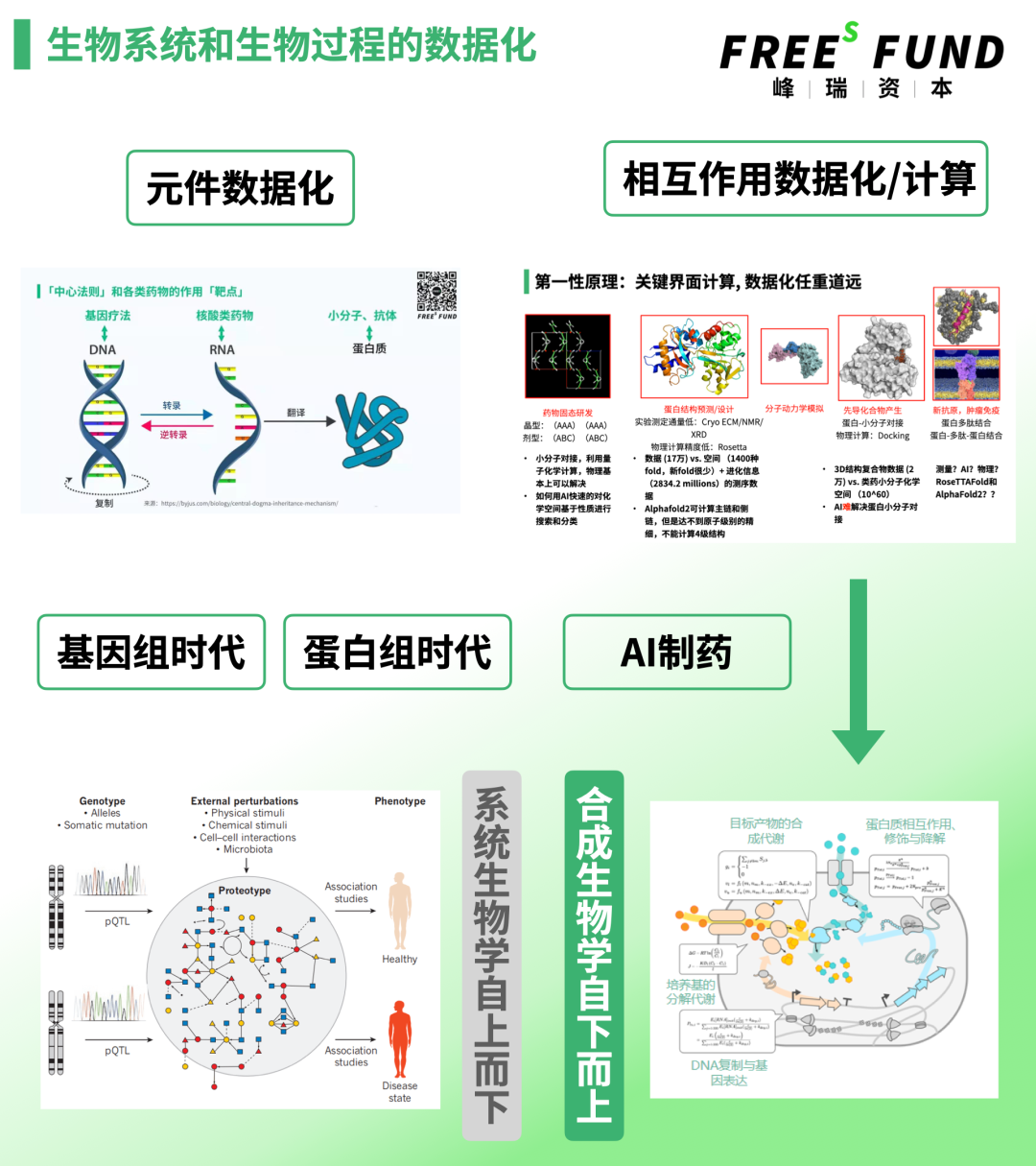
As detailed in the linked article A Visual Guide to Biotech Innovation Opportunities, we believe that digitizing biological systems and processes represents the greatest opportunity for foundational innovation — and this digitization is also the prerequisite for AI+Biology and engineering biology.
By digitization, we mean better measurement, characterization, and computation of biological systems or processes. This encompasses not only sequencing, quantification, and structural analysis of DNA, RNA, and proteins, but also the measurement and computation of interactions between targets (biomolecules) and modalities (small molecules, nucleic acids, peptides, antibodies, cells). It further includes research into signaling pathways and regulatory mechanisms, investigation of drug formulation process parameters, and characterization of biological system performance (efficacy, safety, immune response), among other dimensions.
Over the past decade, advances in measurement tools and cross-disciplinary technologies have enabled increasingly rapid and high-quality digitization of biological systems. This deeper understanding of biological mechanisms has in turn allowed us to develop more tools for even faster, better data acquisition — forming a virtuous IT-BT cycle. And this technological progress in biotechnology has translated into tangible advances in innovative drugs and novel therapies.
▍Following the central dogma, using measurement and computation to investigate molecule-structure-function relationships has yielded substantial progress in component-level digitization.
At the DNA level, sequencing a human whole genome cost $1 million in 2007; today it costs just a few hundred dollars. The fruits of the Human Genome Project pointed the way for drug discovery.
Before the 1980s, most drugs were discovered largely by accident, with their protein targets typically unknown. Even until 2001 (when the first draft human genome was published), fewer than 50% of drugs had clearly identified targets. In a 2020 Nature paper, Ulrik et al. noted that starting around 2010, the use of more genomic data and GWAS studies dramatically improved drug R&D efficiency, breaking Eroom's Law — the decades-long trend (per FDA data from 1950–2010) where the number of drugs produced per $1 billion spent halved every nine years. Drug development success rates improve 2–8 fold when targets have genetic evidence. Genomics-guided targeted therapies have contributed multiple generations of blockbuster drugs. More fundamentally, the rapid and deep digitization in sequencing has laid a solid foundation for digitization at the protein and RNA levels.
At the protein level, AlphaFold2 in 2020 solved the structure prediction problem for individual proteins/domains (predicting structure from known protein sequence). AlphaFold2's (hereafter AF2) triumph was built on highly — even excessively — engineered systems, decades of protein folding research, and thorough digitization of protein structures and sequences.
This digitization manifested not only in the gradually expanding database of protein structures (thanks to the tireless measurements of structural biologists over decades), but also in a critical input: multiple sequence alignment (MSA), which incorporates evolutionary sequence information from homologous proteins (made possible by the tremendous abundance of sequencing data).
AF2 proved several things: AI models can outperform physics-based models; neural networks with millions of parameters can surpass classical force fields or empirical energy functions with dozens to hundreds of parameters; and AI has learned what protein-like structures look like.
AF2's high-accuracy structure predictions achieved or approached experimental resolution, granting computational results equal standing with experimental data for the first time. DeepMind released the source code in 2021, and in 2022 AlphaFold predicted structures for 214 million proteins across 1 million species (35% highly confident, 45% sufficiently reliable). The focus of structure prediction has since shifted to how proteins bind small molecules or other molecules, protein-protein complex structures, antibody-antigen interactions, and the effects of point mutations on structure and function.
More excitingly, in 2022 the inverse problem of protein structure prediction — protein design — advanced rapidly. Protein design means inferring sequences from desired functions or structures. This brings us closer to on-demand deployment of this powerful biological component, nearer to application and translation. We can now design molecular machines that don't exist in nature, as well as novel binding proteins, vaccines, nanomaterials, and enzymes customized for specific reactions.
The Rosetta design platform, built over two decades by protein design pioneer David Baker's team to fold proteins based on physical energy, was already remarkably powerful. In de novo binding protein design, its successes included small proteins that neutralize SARS-CoV-2 and others that bind various cell surface receptors — both achieving picomolar to nanomolar binding affinities. It also successfully designed potassium ion channels (alpha-helices) and transmembrane proteins (beta-barrels).
Furthermore, a Rosetta-designed multivalent nanoparticle COVID-19 vaccine (SKYCovione) was approved in South Korea in 2022. Phase 3 clinical trial data from 4,037 people showed it generated 3x higher neutralizing antibodies than AstraZeneca's vaccine. And due to its high stability, this vaccine requires no cold-chain transport.
However, Rosetta's energy calculations for all sampled conformations make it slow; it struggles with designing large proteins and protein complexes (molecular machines composed of multiple proteins); and complex protein design success rates are low. Yet these complex molecular machines are often crucial for disease and biological function. AF2 found a mathematical formula linking 1D sequence to 3D structure, inspiring new deep learning-based protein design methods. Analogous to the evolution from structure prediction and protein folding, protein design has progressed from Rosetta design's energy-function optimization to a new paradigm leveraging deep neural networks (AI). Rough estimates suggest design success rates have improved 10-fold — like fitting a nuclear warhead to an ICBM.
In 2022, David Baker's team rapidly iterated protein design technology on a months-long cycle, building on large models and generative AI algorithms.
They introduced deep hallucination design, using generative AI to generate proteins (similar to OpenAI's DALL-E 2 generating images from text descriptions). This method not only enables rapid search and traversal of protein space, but can also fill in remaining protein structure based on given functional sites — applicable to designing enzymes, binding proteins, and antigen epitopes.
In September, they unveiled the AI-driven next-generation protein design engine ProteinMPNN, which could rescue many proteins that AlphaFold or Rosetta had failed to design, reducing de novo protein design time from months to seconds.
In December, they introduced a diffusion model-based generative protein design model. This protein generator offers greater directionality and efficiency than hallucination design, truly integrating generative diffusion models with structure prediction models like AlphaFold/RoseTTAFold. It can generate proteins according to specified shapes, sizes, and even specific requirements.
In short, we may be underestimating the disruption that generative AI-driven de novo protein design is about to bring to drug discovery and life sciences. Consider these scenarios: generating entirely new antiviral molecules and antibodies from scratch based on COVID antigens with specified epitopes; using AI to generate novel functional proteins for gene editing; designing nanopore proteins from scratch for fourth-generation sequencing; systematically designing, simulating, and scanning different Aβ oligomers to better elucidate Alzheimer's mechanisms, and so on.
Finally, consider RNA components. RNA is an extremely important molecule. The elucidation of guide RNA's critical function in gene editing earned Emmanuelle Charpentier and Jennifer Doudna the 2020 Nobel Prize. The two mRNA-based COVID vaccines, accelerated by the pandemic, reached market in one year and topped drug sales charts in 2022. siRNA and RNA-targeting small molecules are also becoming increasingly hot drug modalities.
RNA tertiary structure prediction may be even more important than protein structure prediction, since understanding RNA structure is indispensable for developing nucleic acid drugs, RNA-targeting small molecule drugs, and understanding non-coding region function. Yet RNA structure prediction lags far behind proteins. Beyond structure, our understanding of RNA function and how to build gene circuits using RNA components remains very limited.
In the future, through ultra-high-throughput screening + AI + RNA design methods, clarifying RNA components and mastering the language of RNA programming will enable us to precisely regulate RNA component stability, targeting, self-replication, immunogenicity, and translational behavior — bringing more precise, effective, and intelligent programmable medicines.
▍From simple components to interaction digitization, from focusing on single genes and single proteins to bottom-up systems biology and top-down synthetic biology; physics, quantitative, and engineering approaches are increasingly applied to biological problems, with digitization helping us deploy biotechnology at more holistic and complex levels.
When confronting complex diseases like cancer, metabolic disorders, immune conditions, and neurodegenerative diseases, researchers found that the "one gene determines one disease" framework couldn't accommodate complex biological processes. By introducing omics concepts and methods — from studying one gene or one protein to studying all genes, all proteins, and focusing on the signaling pathways and networks they form — systems biology gained prominence:
- Understanding shifted from partial to holistic, from components alone to interactions and their networks;
- Methods evolved from qualitative to quantitative descriptions of biological networks using nonlinear kinetic equations, linked to biological function;
- Conceptually, greater attention to evolution;
- Therapeutically, from correcting single genes to regulating entire networks.
Academician Ouyang Qi proposed that quantitatively describing biological kinetic and thermodynamic processes and discovering general laws in biology is an important task for interdisciplinary physicists. We can see digitization deepening: proteomics and multi-omics, protein-protein interactions, sequencing at the cellular level (single-cell sequencing) and imaging (high-resolution spatial omics), and organoid-level simulation are all current and future hotspots.
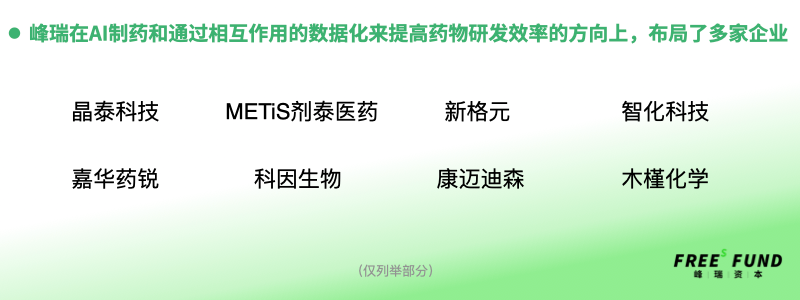
FreeS Fund has also invested in multiple companies in AI drug discovery and interaction-digitization for improved R&D efficiency: DeepKinase, Singleron, ComMedX, ChemMind, Hibiscus Chemistry, METiS Pharmaceuticals, XtalPi, Coing Biotechnology, and others. They have become novel CROs, providing new supply for drug discovery and biotechnology.
On the other hand, biotechnology has evolved from systems biology — focused on understanding the world — to synthetic biology, which is about engineering it.
Beyond reactions catalyzed by single or multiple enzymes, the typical paradigm of synthetic biology involves building from the bottom up: assembling a dozen to several dozen proteins into a pathway, inserting it into a living organism, and constructing a cellular factory to execute the desired function.
Synthetic biology is naturally more complex. Beyond optimizing nucleic acid and protein components, you must build metabolic pathways and carefully balance material metabolism (bottlenecks), energy metabolism (ATP and reducing power), and cellular physiological metabolism (stress responses). When actually bringing a product to market, you also need to consider feedstocks, energy sources, atom economy, process development, manufacturing, separation and purification, modification, customer requirements, sales, and competition.
Over the past decade, the synthetic biology industry has developed steadily. Not only have technologies seen major breakthroughs — including protein design, gene editing, multi-gene simultaneous regulation, protein scaffolding, dynamic gene regulation, and high-throughput screening — but products have also begun to emerge: various vitamins, farnesene, lactic acid, diacids, L-alanine, 1,3-propanediol, 1,4-butanediol, PHA, and various natural products. These products have demonstrated the cost efficiency, low-carbon sustainability, and safety advantages of biosynthesis over chemical synthesis. The industry has reached an inflection point. While current penetration remains low, the coming decade should see explosive growth as technologies scale and more products reach market.
Synthetic biology is also a key focus area for FreeS Fund. We have invested in Bluepha, Yanwei Technology, and Hesheng Technology, as well as upstream and downstream enablers such as Xinsu Technology and Maihai Technology.

Such a field demands tremendous capabilities from entrepreneurs. Founders must not only be accomplished synthetic biologists with industry experience, but also possess exceptional learning agility and the ability to shift mental models. In other words, the founder must simultaneously be a professor, a factory manager, a top salesperson, and a financier.
The path to profitability — sustainable profitability — for synthetic biology companies is long and arduous. But regardless, the fact that over one-third of the molecular world awaits reconstruction represents infinite possibility. After all, whichever nation primarily controls raw materials, molecules, commodities, and manufacturing will control inflation, interest rates, and finance.
▍As complexity increases further and biological functions emerge, we gradually approach the core of biological questions. When studying the brain with its 86 billion neurons, new measurement techniques will bring critical advances — brain and neuroscience have also reached a turning point.
In neuroscience, at the micro scale, we care about how biomolecules enable neurons to transmit information through molecular biological mechanisms, and how neurons connect informationally via synapses. At the meso scale, we care about how neurons link into circuits and networks to form different brain regions. At the macro scale, we care about brain structure, function, and how neural activity integrates to produce mind, consciousness, and cognition — this question of functional emergence at the macro level remains one we cannot yet adequately answer.
Protected by the skull, dura mater, and other tissues, sampling from the human brain is undeniably difficult, impeding our research. Historically we have relied on dissection and non-invasive imaging tools to observe the brain, but these remain far from sufficient.
Over the past 20 years, structural and functional imaging, patch clamping, fast-scan cyclic voltammetry, optogenetics, neural electrode computer simulation, and gene editing have all advanced considerably. These technologies have been progressively applied to brain and cognitive science.
These interdisciplinary approaches and R&D tools span from the micro level (molecules, cells) to animal models, to the meso level (neural circuits, brain regions, brain atlases), to the macro level — encompassing various new large-scale, multi-channel, high-resolution imaging techniques and novel imaging tools. They enable better measurement and digitization across multiple levels and scales: genes-proteins-neurons-neural circuits-animal models-living brains, triggering new mechanistic discoveries and hopefully catalyzing new diagnostic and therapeutic approaches. (For more, see our research report on neuroscience: FreeS Report 24 | Embracing the "Smartest" Frontier: Investing Boldly in Brain and Neuroscience)
Brain-computer interfaces, as the technology matures, may become the ultimate solution for measuring the brain. (For more, see The Body's "Smartest" Organ: How to Explore It Further? | FreeS Research Institute)
Driven by the convergence of aging populations, frontier biotechnology, and advances in brain and cognition, neuroscience has reached a turning point. The next decade will be a golden period for developing innovative drugs and therapies for central nervous system (CNS) diseases. Most causative and risk genes for CNS diseases will likely be identified. Using gene editing and non-human primate animal models, human understanding of disease mechanisms will deepen continuously. More brain disease-related brain networks and neural circuits will be mapped, and new targets for circuit modulation will be discovered. New neural biomarkers will also help stratify patients with heterogeneous manifestations of the same disease.
Moreover, novel therapeutic modalities including gene therapy, stem cells, digital therapeutics, and neuromodulation will be introduced to brain diseases. New targets, more precise patient stratification, plus new treatment modalities will bring incremental advances to CNS disease diagnosis and treatment. FreeS has also invested in this space, backing projects including NeuBabel, Kunmai Medical, Dome Medical, and Shize Biotechnology.

From the three analyses above, we can see that biological systems — from DNA, RNA to proteins, from components to interactions, from cells and microorganisms to the brain — are undergoing rapid digitization. IT and BT are beginning to deeply converge. Biotechnology is iterating rapidly across tools, computation, and components, with innovation emerging constantly: both technological breakthroughs and scalable commercial applications that can actually land. And biotechnology can radiate outward as an underlying layer to multiple industries — pharmaceuticals, health, agriculture, forestry, energy, environmental protection, materials — bringing new opportunities to each. By improving total factor productivity from the supply side, biotechnology becomes a fundamental driver that benefits the sector long-term, even beyond the biopharmaceutical industry itself. The bioeconomy promises to lead us onto a path of high-quality development.
03
New Technologies + New Demand + New Supply,
Will Drive Us from "Following" to "Leading"
We all know that investing in biotech companies originated in the US. This platform-based biotechnology investment model has also gone through cycles there. For a long time, most biotechnology was led by the US and other countries, with us following. In certain areas, such as synthetic biology, we believe China can lead in the future.
FreeS Fund has also actively helped scientists with translation and entrepreneurship from Boston and the Bay Area in recent years. However, there are substantial differences between China and the US in healthcare systems, payment capacity, clinical needs, and capital markets — biotech investment cannot simply be copied. Beyond judging the technology itself, what may matter more is observing whether new supply driven by technological transformation can meet China's needs and address China's unique pain points.
So, specifically, what are the distinctive demands and challenges China faces in biotechnology and biomedicine?
▍Addressing population aging. China has entered a stage of aging that is large in scale, deep in degree, and fast in speed.
On one hand, the aging rate is increasing rapidly. In 2020, China's population aged 65 and above reached 190 million (25% of the global total), accounting for 13.5% of the total population. By 2057, China's population aged 65 and above is projected to peak at 425 million, representing over 33% of the total population. China's transition from an aging society (7% aged 65+) in 2001 to a deeply aging society (14% aged 65+) took only 21 years — far shorter than France (126 years), the UK (46 years), and Germany (40 years). And because the largest baby boom starting in 1962 is entering old age, aging will further accelerate after 2022.
On the other hand, advances in science and medicine have dramatically extended average lifespan. Age-related declines in cognitive, motor, and sensory function, as well as nutrition and mental health issues, are becoming increasingly prominent. Over 78% of elderly people suffer from at least one chronic condition. The number of disabled elderly will continue to increase. CNS diseases and chronic conditions such as cardiovascular and cerebrovascular diseases create enormous unmet clinical needs and healthcare burdens. The need to prevent and treat neurodegenerative diseases will become increasingly urgent. COVID-19's impact on elderly populations highlighted the additional pressures and challenges that aging societies face from sudden outbreaks and diseases. Addressing aging will require public health investment; accelerated application of new drugs, therapies, and high-end medical devices; and new healthcare services targeted at aging populations.
▍The sweeping supply-side reform in biomedicine underway aims to provide incremental, high-quality medical supply. A major pain point in Chinese biomedicine is insufficient supply.
Over the past few years, the pressure on the industry from the "three medical linkages" reform has, in a sense, been aimed at creating space and restructuring with decisive force — achieving supply-side clearance: removing costs beyond clinical value for innovative drugs and medical devices as much as possible; standardizing pricing, paying for outcomes, and controlling total volume in medical services; and making room for technological and innovative products and services.
New supply — whether products, services, or payment mechanisms — will inevitably be driven by technological innovation and shaped by digitization and intelligence. Looking ahead, vigorously advancing the adoption of innovative products; strengthening primary care and tiered diagnosis to create a proper pyramid of healthcare service delivery; enabling commercial insurance to effectively supplement public health insurance; and developing consumer medical products that cater to health and consumption upgrades — these will all become long, snow-covered slopes with enduring opportunity.
▍Enhancing self-sufficiency and controllability in high-end biomedical equipment and upstream raw materials, ensuring security and stability across industrial and supply chains, and broadening the innovation chain are strategic imperatives for China.
The 14th Five-Year Plan for the Development of the Medical Equipment Industry calls for solidifying foundations, including mastering advanced basic materials, core components (chips, sensors, optical elements), critical parts, advanced basic processes, and industrial technological infrastructure. It emphasizes leveraging China's comprehensive manufacturing ecosystem and industrial advantages to promote the integration of medical equipment manufacturing with smart manufacturing, next-generation information technology, biotechnology, new materials, and other fields — creating innovation that runs through the entire industrial chain. There is clear, sustained demand for self-sufficiency and controllability in directions including medical imaging equipment, endoscopes, sequencers, mass spectrometers, chromatography media, culture media, and biological reagents.
04
Closing Thoughts
For the biotech and biomedical industries, the chill in funding and sentiment may not thaw quickly in 2023. Still, we believe conditions will improve over the course of the year.
Standing at the beginning of 2023, we believe that over the next five to ten years, applying engineering frameworks, cross-disciplinary technologies, computational assistance, and data-driven iteration to biology will steadily raise biotech's productivity. The bioeconomy promises to lift us out of technological "great stagnation" and become one of the key drivers of high-quality industrial and national development.
We urgently need new healthcare supply. This cannot happen without technological breakthroughs, widespread adoption of innovative products, or informatization and intelligence. On the demand side, as noted, China's demographic structure and disease profile are undergoing irreversible, large-scale shifts. Unmet clinical needs are numerous and pressing in areas related to aging and chronic diseases such as CNS disorders. Moreover, against the backdrop of U.S.-China strategic competition, China increasingly requires self-sufficiency, gap-filling, strengthening, and extension across the biomedical industrial chain.
Overall, the next five to ten years will bring a convergence of major shifts and opportunities: biotech breakthroughs, surging incremental demand in China alongside innovative demand globally, and iterative development of China's industrial chain. FreeS Fund remains committed to the digitization of biological systems, and will continue investing in and building positions across innovative infrastructure, frontier cross-disciplinary biotechnologies, and excellent products.
Engagement Giveaway
We welcome your thoughts on biotechnology in the comments section. The six most thoughtful commenters will each receive a copy of Keep Sharp.

▲ FreeS Report 24 | Embracing the "Smartest" Frontier: Investing Boldly in Brain and Neuroscience
▲ The Body's "Smartest" Organ: How Can We Explore It Further? | FreeS Research Institute
▲ How to Think About Biotech Opportunities Over the Next Decade? | FreeS Fund Dialogue