Welcoming a New Cycle, Discovering New Paradigms | FreeS Fund 2023 Annual Investor Summit Recap

How Should We Understand Cycles, Technological Innovation, and Early-Stage Investment
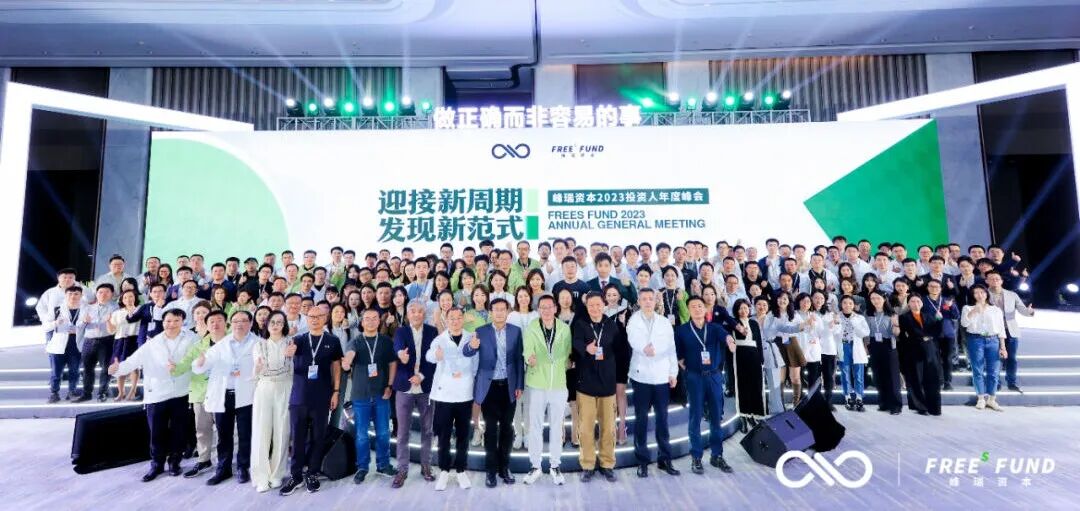
Not long ago, while the warmth still lingered in Guangzhou, we hosted FreeS Fund's 2023 Annual Investor Summit. FreeS Fund's investors, founders of portfolio companies from the past two years, and the FreeS team gathered to explore how to "Embrace the New Cycle, Discover the New Paradigm."
From new dimensions for understanding the microscopic world, to new species born from interdisciplinary convergence, to industrial reshaping in the generative AI era; from China's distinctive digital infrastructure, to biotech and healthcare pressing forward against headwinds, to China's path of leapfrogging — we examined these six investment themes, seeking fresh perspectives on cyclical change, technological revolution, and early-stage investing.
As Uncle Feng noted in his annual meeting remarks: "Over the past two years, numerous internal and external events have intersected and resonated, shaping how the outside world views China and how we view ourselves. 'One should take a long view of the landscape.' If you look with a slightly longer timeframe — at most, placing it in historical context — you'll find that the world follows its own patterns, and China exists within these patterns. If you believe this, you'll likely feel much better."
Those who choose to dive in and build companies today are largely future commercial explorers with sound intentions and genuine capabilities. We hope to continue walking alongside them, and look forward to seeing their once "non-consensus" directions become tomorrow's new trends.
We're sharing perspectives from these founders and FreeS Fund investors, hoping to offer fresh angles for consideration.
Click the video above to watch highlights from the summit 👆
Engagement Giveaway: What new challenges and opportunities do you see in your industry? Share your thoughts in the comments.
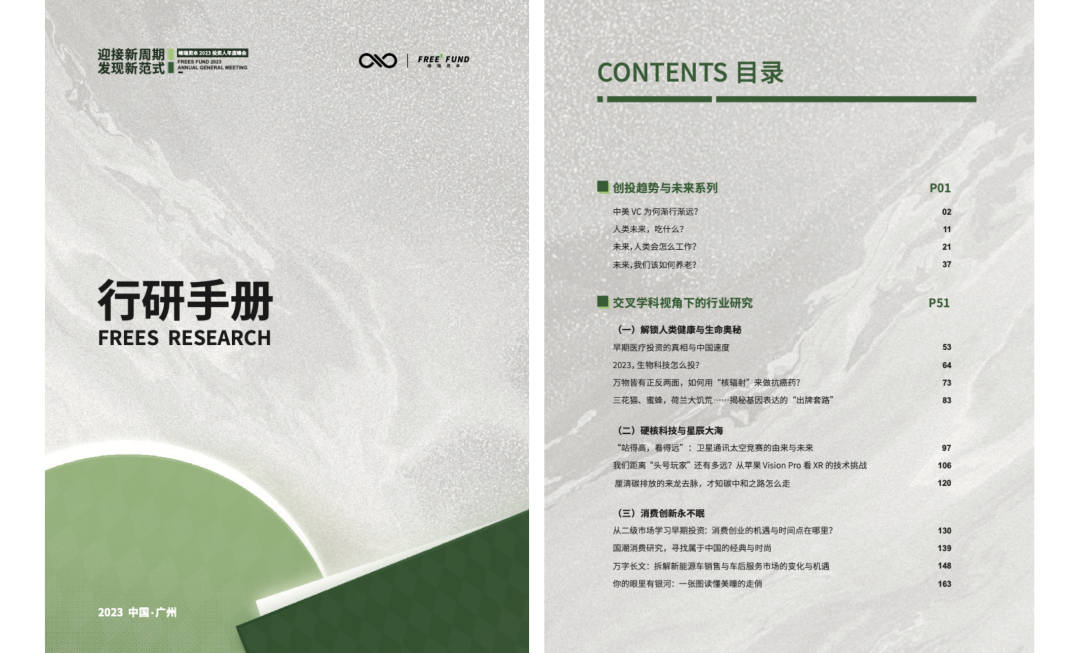
By 17:00 on December 27, the 8 most thoughtful commenters will receive an industry research handbook compiled by the FreeS Fund team. Since our founding, we've regularly published internal research reports on FreeS Fund's WeChat official account. We've selected and compiled 15 reports from the past three years into this handbook.



Traditional robots are machine-centric, making it difficult to meet the demands of diverse and complex scenarios. General-purpose robots are human-centric — the optimal vehicle for AI in the physical world.
AI replaces human decision-making; robots replace human movement. The core of robotics lies in locomotion capability. AI doesn't directly help robots move; rather, it enhances environmental perception to improve robotic locomotion.
Software algorithms based on perception-driven motion control represent the critical technical barrier for general-purpose robots. We urgently need teams that have mastered core technologies to complete the industrial loop.

China's high-end analytical instruments have high import dependency, but domestic substitution is advancing rapidly. We stand at a new starting point.
How does instrumentation become an industry? It typically follows this chain: scientific discovery → underlying principles → key components → technological invention → instrument → industrial deployment.

Why should we pay attention to the brain disease market? On one hand, the burden on patients and families is heavy — brain diseases rank first among all disease burdens. On the other hand, treatment demand is substantial, with numerous clinical diagnostic challenges: how to locate brain functional areas, how to identify brain disease lesions. Kunmai Medical focuses on developing autonomous helium-free quantum magnetoencephalography, effectively addressing gaps in traditional diagnostics.

We focus not just on the instruments themselves, but on the people who use them. We're using technology to make instruments intelligent, breaking down traditional barriers so more people can explore and enjoy music.
The key to developing a tech brand lies in finding the intersection of product innovation, cross-disciplinary technology, and brand marketing.

The aerospace industry is entering a new development cycle. We have both stable, sustained policy support and transformative demand-side changes — global constellation deployment is underway, and commercial space has become a worldwide trend. People expect the industry to achieve low-cost, reusable, high-frequency launches, further advancing the commercialization of commercial space.


New productive forces create new generations of great powers. Emerging powers typically adopt expansion strategies early on, connecting themselves to the world through trade or war. When a great power's expansion reaches its limits, productive forces gradually develop in other regions and countries, leading to the rise of competing powers. When the previous generation of great powers faces development pressures, they may take measures to obstruct the spread of productive forces.
History has proven that past great powers attempting to hinder the development and application of productive forces have failed. Rather, such attempts have often marked the beginning of their decline — or resulted in passing the baton to the next generation of powers.
Over the past two years, numerous internal and external events have intersected and resonated, shaping how the outside world views China and how we view ourselves. "One should take a long view of the landscape." If you look with a slightly longer timeframe — at most, placing it in historical context — you'll find that the world follows its own patterns, and China exists within these patterns. If you believe this, you'll likely feel much better.


Today, the scientific and technological revolution has entered the microscopic paradigm, with emphasis on computing, measuring, controlling, and manufacturing microscopic particles.
The last technological revolution began in semiconductors, quickly moving into computers, the internet, and mobile internet, then extending to AI. These were largely innovations in the digital world. Following the theory of spiral ascent, the next technological revolution probably won't rely solely on AI technology. It may need to return from the digital world to the atomic world — or more likely, achieve deep integration of both.
Once innovation in the atomic world becomes necessary, the focus shifts to computing, measuring, controlling, and manufacturing microscopic particles. One thing is certain: the low-hanging fruit is gone. We need more interdisciplinary perspectives, at microscopic scales, to find bigger, more frontier innovations and commercial opportunities.

Although we appear to provide customers with motion stages or controllers, what's truly core is automation — nanoscale automation control algorithms. These algorithms fundamentally differ from previous micrometer-scale electromagnetic motor control algorithms. This is our real moat.
For a long time, industry primarily used "force" for processing. For lathes and machining centers, micrometer-level motion precision was sufficient. Currently, top-tier machine tool processing precision is roughly at this level. However, people won't be satisfied with processing, inspection, and sensing using "force" alone. When we begin using light, ion beams, and electron beams for processing and detection, our demands for motion control precision reach entirely new levels. Looking further ahead, the trend toward hundred-nanometer, ten-nanometer, and one-nanometer motion precision is almost certain. Duochang Technology hopes to contribute its part.

Humanoid robots are experiencing a development boom, moving from laboratories toward industrialization. Dexterous manipulation capability is the core element determining whether humanoid robots can achieve commercial deployment.
Three development trends for core robotic components: miniaturization, integration, and flexibility.

Three major pain points in gene therapy: non-repeatable dosing, limited drug loading capacity, and high production costs. Boyin Bio aims to become a company in the DNA space akin to Alnylam and Moderna, building gene therapy solutions that cover the entire lifecycle.
Compared to traditional lithography, nanoimprint lithography can form nanostructures on functional materials in a single step. It also bypasses expensive light source systems, offering better cost performance. Additionally, it can produce sufficiently small nanostructures with higher resolution.
In certain fields such as biochips, patterned sapphire substrates, and micro-nano optics, nanoimprint lithography can already serve as a complement or alternative to traditional lithography. However, applying nanoimprint lithography to logic circuit manufacturing in semiconductors still has a long way to go.
Speaking of China-US comparison, both the rising United States and present-day China leveraged new infrastructure, new technology, and contemporary new demand for development. On these foundations, both combined new demand with technology to empower traditional industry chains, creating new products and new species. Whether our technological development ultimately succeeds depends largely on whether new species like smartphones and new energy vehicles succeed, because the primary outlet for technology is consumer markets.
Enhanced Recovery After Surgery (ERAS) is an emerging discipline being promoted globally. This field emphasizes comprehensive patient treatment through surgery, nutrition, nursing, and anesthesia, enabling faster recovery while reducing complications and mortality.
The market has taught us in serious medicine: despite our original intention to focus on medical nutrition, we shouldn't overlook the power of the consumer end.
The carbon fiber industry is on the eve of market explosion. After more than 50 years of development, carbon fiber technology has matured, capable of achieving equivalent mechanical performance to traditional metals with less material. If carbon fiber can be deployed at scale, it will bring revolutionary innovation to manufacturing. For example, high-speed carbon fiber rotors in electric vehicles significantly improve drive motor electrical performance while reducing overall costs.
The pandemic combined with accelerating global aging has prompted growing attention to daily vital signs monitoring and elder care markets. However, there aren't many medical-grade or consumer-grade intelligent monitoring products available. We want to enter through sensors and algorithms to build a medical-grade biosensor technology platform for comprehensive detection of full-body medical vital sign data.
Next-generation leading medical-grade wearable products must be built on foundational hardware and software innovation.
A new abstraction layer is forming. AI is becoming our primary tool for understanding and transforming the world.
The paradigm for how new technology takes root and develops in China: widespread adoption becomes new supply; new supply creates new demand; new demand drives iterative product and technology upgrades, forming new species; new species catch up from behind and export outward.
Startup companies must dare to operate in non-consensus spaces, doing what's right rather than what's easy. Go to difficult places. Chew on the tough bones.
Before AI emerged, humans, the physical world, and information systems operated well together, with various interactions. But after AI's arrival, we need to reconsider what kind of system we're in, and how to face AI as a new species.
People will still need software in the future, but software won't necessarily be written by humans.
If your application chain is very short, you may fall within the range that large models can sweep. The longer your application chain and the more tightly integrated with specific scenarios, the relatively safer you are.
The human genome consists of 3 billion base pairs. Genes, like human language, obey certain natural patterns — a genetic coding language. If we master this genetic coding language, we can fundamentally understand all biological phenomena and accelerate genetic drug development. Generative AI technology can enable "faithful, expressive, and elegant translation" from protein drugs to RNA drug sequences, and even "freely create" RNA drug sequences that don't exist in nature, addressing unmet medical needs.
Today, our development of new infrastructure indicates we're transitioning toward a digital economy. The key to the digital economy lies in achieving comprehensive digitalization of Chinese industry. In this digitalization process, we must achieve leaps across at least three levels: factor datafication, digital productive forces, and digital production relations.
In the datafication process, we're certain of two things: first, the transition from mechanization to automation must pass through datafication. Second, enterprises won't pay for "datafication" as a concept — you must have a product that solves a core problem for them, thereby advancing datafication.
New energy has reshaped the entire electricity production and consumption system. Decentralized development and large-scale expansion of distributed energy have become mainstream, and comprehensive digitalization of the distribution and consumption infrastructure is the starting point for new power infrastructure.
Industrial software directly represents a country's capability and level in integrating industrialization and informatization. As China's IT technology and industrial capabilities continue improving, new demands have emerged in industry for adjusting product design processes, manufacturing processes, and more. Domestic industrial software is welcoming new development opportunities.
The capital downturn is merely "surface appearance." The industry is moving in a more rational direction, and we're at the starting point of a new cycle: numerous new technology platforms have achieved mechanism-to-clinical validation internationally; gradually opening policy environments and regulatory approval systems; China's continuous increase in innovation investment for basic research; large-scale return of overseas talent.
At the macro level, we hope to capture more structured, future-oriented major opportunities — projects that innovate based on first principles, possess platform technology potential, or are driven by interdisciplinary convergence aligned with industrial development trends. At the micro level, we need to assess which stage of the "observe-control-manufacture" chain a related technology has reached, and whether a project has sufficient competitiveness at its transformation inflection point.
Most biological experiments still rely on well-plate automation systems. These systems have over a century of history and may not be compatible with AI-driven biological R&D paradigms. Biological R&D has entered the era of data-driven high-throughput experimentation, and molecular chips are the infrastructure for high-throughput biological research.
As brain science enters a period of technological explosion, it has been designated as strategic technology by the United States, the European Union, China, and other countries and regions. Brain science may become the next "chokepoint" field. Neuromodulation technology is the final link in closing the loop from "reading" the brain to "intervening" in it, with significant clinical value and broad commercial prospects.
Compared to other drugs, small nucleic acid drugs have relatively high druggability rates. Traditional small molecule drugs have roughly a 6% probability of crossing the "valley of death" and ultimately reaching market. Even with new technologies improving druggability to 10%, it's still a nine-deaths-one-survival scenario. However, nucleic acid drugs have over 60% druggability rates — 10 times higher than traditional drugs.
In the chip industry, due to external "chokepoint" pressures, we've expended tremendous energy and money on import substitution, doing everything possible to play catch-up as high-tech "followers." While achieving one success after another, we should also recognize that following in the "leader's" footsteps should only be the mid-game for China's semiconductor development. Independent innovation, leapfrogging, and maintaining leadership are our true mission. Only then can we thoroughly bid farewell to the fate of being "choked."
How can we bring photonic computing chips to a stage where they can compete alongside electronic chips? As the AI era unfolds, a new leap in computing power is urgently needed. Photonic computing has significant advantages over "electronic" approaches and represents the optimal computing paradigm for next-generation AI. Moreover, many may not realize that China's photonic computing supply chain is highly mature — from design to manufacturing to final packaging and testing, we can complete everything domestically. Our supply chain isn't lagging behind; it even has "anti-chokepoint" potential.
Biomanufacturing is genuinely a China-style leapfrogging opportunity. We already lead globally in many aspects including talent, technology, and equipment. However, our industrialization bottleneck lies in market demand and industry-internal competition. We must value both market and technology. Scientists and engineers need to go to the countryside, enter the field, and stand behind the counter — breaking through bottlenecks in process scale-up and application development.
Engagement Giveaway: What new challenges and opportunities do you see in your industry? Share your thoughts in the comments.
By 17:00 on December 27, the 8 most thoughtful commenters will receive an industry research handbook compiled by the FreeS Fund team. Since our founding, we've regularly published internal research reports on FreeS Fund's WeChat official account. We've selected and compiled 15 reports from the past three years into this handbook.
FreeS Fund's 8th Anniversary: You're Invited to Join Us on a Longer Journey
Star the FreeS Fund WeChat official account for timely business insights