Congratulations to "Yifei Technology" on its listing on the Hong Kong Stock Exchange — FreeS Fund's third Hong Kong IPO of 2026.
"All Spark" — the "spark source" from *Transformers*
On May 18, 2026, Yifei Technology (06871.HK) officially listed on the main board of the Hong Kong Stock Exchange, becoming the first light-industry full-category robotics company to go public under Chapter 18C of the Listing Rules.
Yifei Technology's founder and chairman, Sai Zhang, is a "mecha-obsessed boy" out of Tsinghua University. At the company's headquarters showroom in Jinan, one entire wall is dedicated to his Transformers collection. He named the project to take the company public "All Spark" — the "Spark of Life" from Transformers.
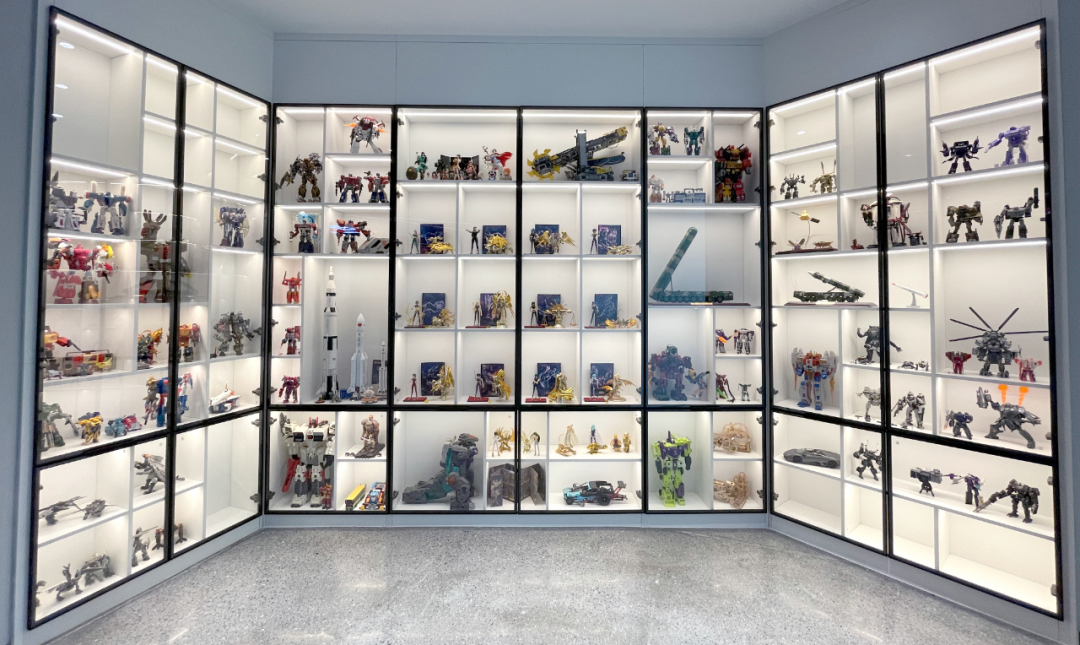
The Transformers collection wall at Yifei Technology's Jinan headquarters showroom. Image source: Yifei Technology
During the IPO subscription period, Yifei's public offering was oversubscribed by 14,855 times, attracting more than 330,000 individual investors and setting a new record for oversubscription of Hong Kong main board IPOs. This partly reflects the market's recent attention to hard-tech targets, and also owes something to the overall buoyancy of Hong Kong's IPO market lately.
Notably, less than a month earlier, on April 28, Lightelligence (01879.HK), a portfolio company of FreeS Fund, also listed on the Hong Kong Stock Exchange, with its share price surging over 380% on the first trading day (Congratulations to Lightelligence, an early FreeS Fund portfolio company, on its successful IPO...). Last Wednesday, May 13, METiS Pharmaceuticals (7666.HK), another FreeS Fund portfolio company, listed on the Hong Kong Stock Exchange, raising over HK$2.1 billion — the largest Hong Kong healthcare IPO by fundraising amount so far in 2026 (Congratulations to METiS Pharmaceuticals on its Hong Kong Stock Exchange listing; FreeS Fund invested in four consecutive early rounds).
FreeS Fund was the lead investor in Yifei's Series A round, accompanying Yifei for a full decade. According to the prospectus, by 2025 revenue, Yifei Technology ranks as the fourth-largest light-industry industrial robot and solutions provider in China.
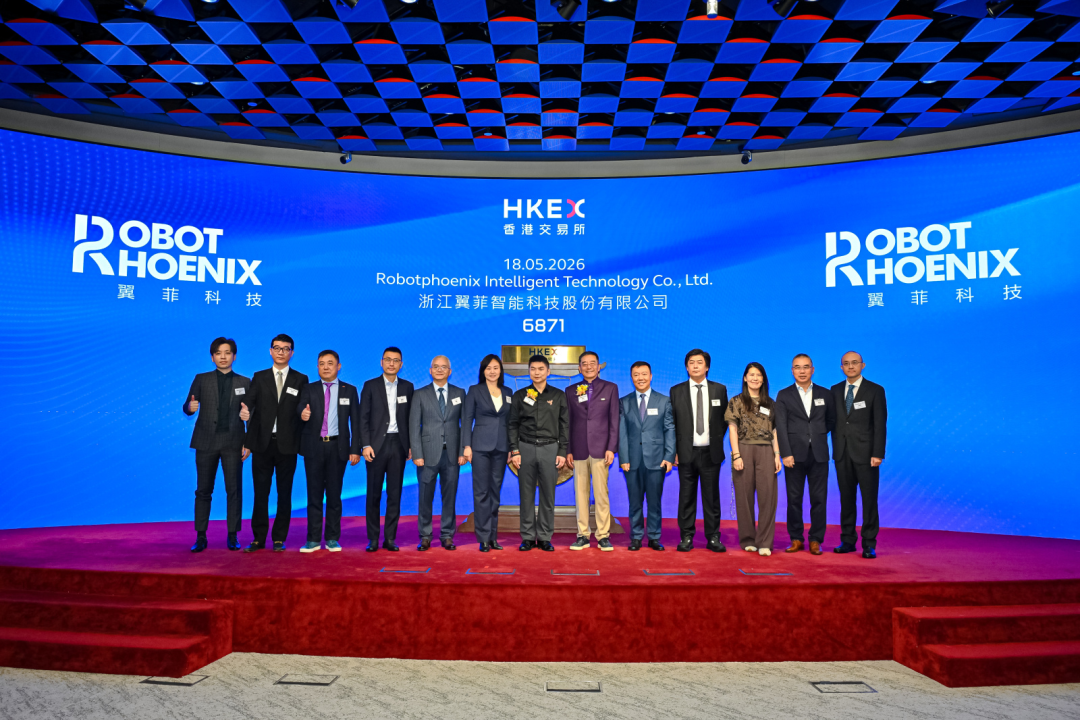
Yifei Technology listing ceremony photo. First from left: Qianhang Yan, Vice President of FreeS Fund. Image source: Yifei Technology
Before the listing, Feng Li, founding partner of FreeS Fund, recorded a congratulatory video for Yifei and Sai Zhang. "Over the past ten years, we've been fortunate to accompany Yifei, to accompany President Sai, all the way through," he said in the video. "Today's Hong Kong listing is a well-deserved milestone for the Yifei team after experiencing all kinds of difficulties and setbacks."

/ 01 /
An Encounter Ten Years Ago
FreeS Fund first met Yifei and Sai Zhang in 2016. At that time, Yifei's business model was shifting toward non-standard, customized solutions centered on parallel robot bodies — which aligned with our read on the industrial robot market trend: in China, this was a promising direction.
Back then, Sai Zhang had just been through an extremely difficult period, but FreeS decided to invest anyway. That year, FreeS led Yifei's Series A round. Feng Li recalled the investment: "It turned out he still had his own rather resolute entrepreneurial drive and problem-solving ability. He climbed out of that last difficult entrepreneurial phase and got back on the path of growth."
/ 02 /
Sai Zhang's Fourteen Years × China's Robot Decade
When Qianhang Yan, Vice President of FreeS Fund, first visited Yifei, he noticed an old car parked in the company lobby. It was the small car Sai Zhang had driven when he first started the business — it had accompanied him to countless client sites, through Yifei's earliest and hardest years. Later, when the car was "covered in battle scars" and honorably retired, Sai Zhang kept it as a memento.
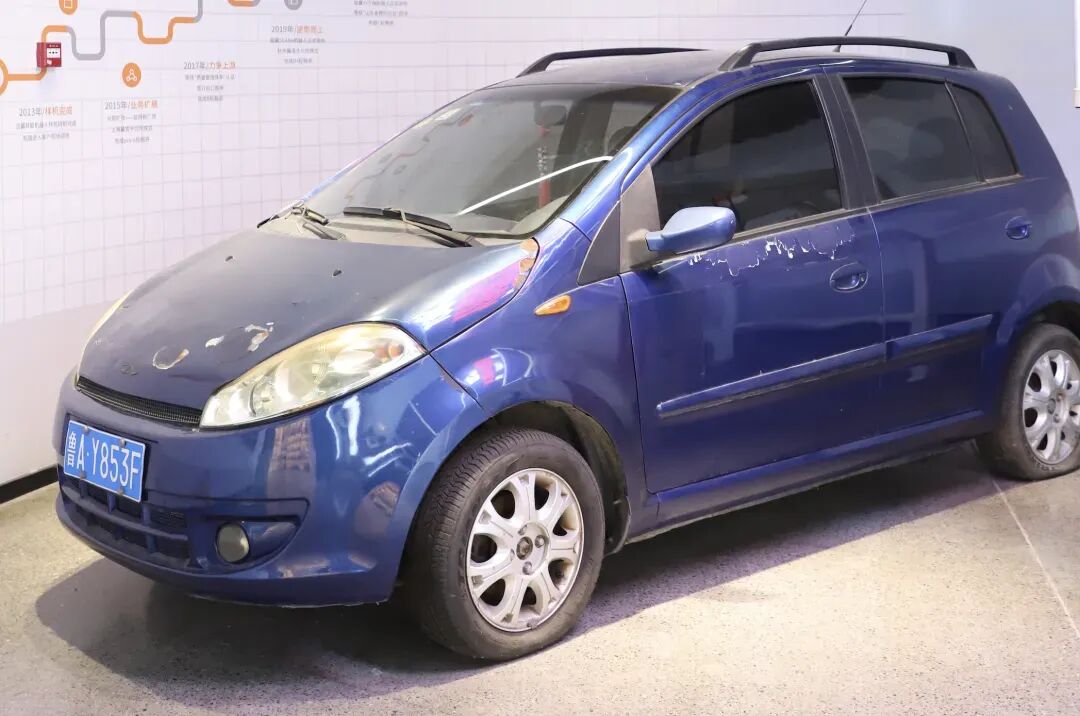
The small car that witnessed Yifei's journey from zero to one. Image source: Yifei Technology
Yifei's story begins in 2012. That year, Sai Zhang registered and founded Yifei Automation in Jinan.
At the time, only three companies globally were making parallel robots, and none were based in China. What dominated the robotics industry were six-axis serial robots; domestic players like STEP, Estun, Efort, and SIASUN were all focused on serial robots. Sai Zhang later recalled: "We were very bullish on the robotics track back then, striving to become a leading brand. But as a bootstrapped startup, if we went straight into competing in serial robots, we didn't have much chance of winning. Based on various factors, we didn't choose that track."
Parallel robots were a road less traveled: they required even more customization than serial robots, and the market hadn't yet developed many productized or commercialized scenarios. This left breathing room for startups to grow, but it also dramatically raised the technical and service barriers for entrepreneurs entering the market.
In 2013, Sai Zhang's three-person team built their first parallel robot in an 8-square-meter office — but no one would buy it. Sai Zhang pitched everywhere under the banner of "Tsinghua + Columbia," drove that small car to Zibo, and told Qidu Pharmaceutical: "You don't have to pay. Try it first, and buy it if it works."
The client actually agreed.
On delivery day, the team crammed themselves plus the robot all into that small car. That trial robot is still running normally today.
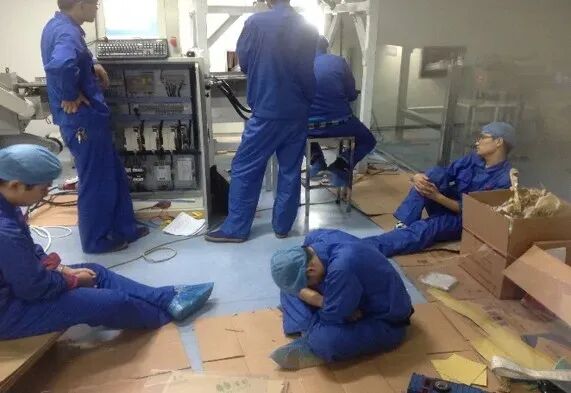
After installing the first trial robot at Qidu Pharmaceutical, already past midnight, the Yifei team slept on the floor. Image source: Yifei Technology
In 2014, Yifei sold its first truly meaningful parallel robot unit. In 2015, Yifei established its first branch office in Shanghai — and it was also in this year that Yifei set its sights on Unilever, a Fortune 500 multinational that rarely accepted domestic robots.
This became a sales story told and retold: to convince the client to use robots, Yifei rented a factory next to Unilever's Shanghai Jinshan plant and built a 1:1 replica of a production line. To accurately simulate the line's speed, they even hired several cleaners to manually place bottles on the conveyor belt, so the robots could fill seasonings for the client to see.
In the end, the Jinshan plant manager was convinced, and Unilever brought Yifei into its group-wide supply chain. From then on, Yifei robots appeared on packaging lines for the group's chicken bouillon, MSG, stock cubes, and other products. Around the same time, Yifei also broke through with major clients like Dong-E-E-Jiao and Lens Technology.
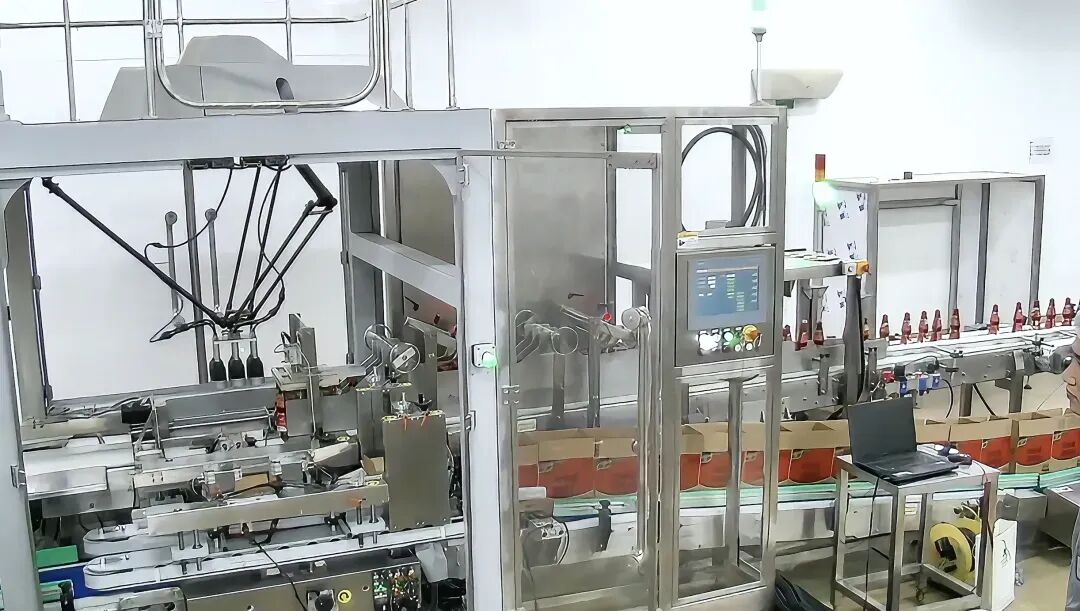
The replicated production line Yifei built in a rented space next to Unilever's Jinshan factory. Image source: Yifei Technology
During the 2020 pandemic, Yifei temporarily shifted to producing mask-making machines. Across the long span of fourteen years, this may be a small episode in Yifei's development, but it speaks volumes about Sai Zhang's principles and sense of responsibility.
At the time, masks were in severe shortage. Yifei used high-speed parallel robots at the core, combined with conveyor tracking and visual recognition technology, to achieve automated, efficient mask packaging. But Sai Zhang insisted on pricing at around 400,000 RMB, refusing to jack up prices like the market speculators who pushed them to one or two million. In June that year, Yifei was named to the Ministry of Industry and Information Technology's list of "AI enterprises with outstanding performance in science and technology support for the COVID-19 response."
In 2023, Yifei undertook an important brand upgrade. Sai Zhang described this as a moment of reflection: "At the time, almost all of Yifei's robot products were bundled and sold to clients as 'turnkey solutions.' Clients were buying the 'result,' not just the 'robot body.' This created a problem: people started thinking of Yifei as a 'systems integrator,' and even forgot that we were one of the earliest companies in China to make parallel robots."
So in 2023, Yifei spun out its industrial robot segment into a subsidiary, "Yifei Robotics," and upgraded "Yifei Automation" to a sub-brand under the "Yifei Technology" umbrella. From then on, the company began systematically producing standard products: robots of the same model manufactured in batches, delivered in standardized fashion — whether for a phone factory or a bread factory, they looked identical.
In 2024, Yifei signed its first overseas distributor. It was also around this time that China's industrial robot production and sales both officially became number one globally.
Placed on a longer time scale: in 2013, China's industrial robot consumption first became the world's largest; another decade later, both production and sales became the world's largest. Sai Zhang and Yifei happened to follow this curve the whole way.
The previous generation of industrial robot "Big Four" — Japan's Fanuc and Yaskawa, Switzerland's ABB, Germany's KUKA — all emerged in post-WWII Europe and Japan, pushed up together by labor shortages and precision manufacturing demands in postwar reconstruction. In recent years, domestic industrial robot market share has risen from the 14% when Sai Zhang started his business to one-third, with China accounting for 45% of global industrial robot consumption. Sai Zhang previously noted on the "High Energy" podcast: the "Big Four" are now feeling the heat in China, and Chinese brands are beginning to conquer overseas markets.
In 2025, Yifei launched R&D into embodied intelligence robots.
Sai Zhang says this isn't following trends — the decision to pursue embodied intelligence came from industrial needs, after thinking through the underlying logic. In his view, for simple tasks like "moving boxes" or "tightening screws," industrial robots already do them well; there's no need to step backward and redo them with humanoid or embodied forms. What Yifei truly wants to tackle are the "hard bones" that industrial robots struggle with — such as flexible assembly, soft material handling, and complex production line scenarios of "multiple varieties, small batches, frequent line changes."
From 2012 to 2026, fourteen years. The growth curve of a Chinese industrial robot company happens to overlap with the curve of a nation's industrial robot industry. As Uncle Feng put it: the era makes the enterprise, and good people can make money.
/ 03 /
Why Have We Always Believed in Industrial Robots?
Looking back at that 2016 decision to invest in Yifei, it wasn't fundamentally about seeing just this one company — it was about seeing a path of industrial upgrading.
Feng Li believes the previous generation's "Big Four" industrial robots grew out of postwar Japan and Europe, essentially in response to manufacturing upgrading and labor shortages. China today is walking a similar path: manufacturing climbing from low-end OEM toward precision manufacturing, demographic dividend fading, labor costs rising, industrial upgrading pressure bearing down on the supply side. We believe that in this industrial robot track, a true "Chinese Big Four" will be born.
Even within a direction that's correct over the long term, industrial robots are a tough business: the industry is highly fragmented, scenarios need to be educated, demand needs to be precisely identified, and payment cycles are usually long. Yifei has been feeling its way across multiple industries for years.
Precisely because this track is grueling, the demands on entrepreneurs are high. Yifei's entry into Lens Technology was extremely difficult. Lens is one of the world's largest mobile phone glass panel producers; its first trial order to Yifei was for loading a certain process glass, requiring 2,500 pieces per hour within a 2×2 m² footprint, with zero scratches or contamination.
Glass was an industry Yifei hadn't entered before, so the team immediately organized engineers, produced a new design in two days, completed procurement and production in three days, and delivered two new units to Lens's Changsha factory before the client's final deadline. The first order: 16 units, several million RMB; the second order, six months later: tens of millions.
It wasn't just Lens Technology. Over more than a decade, Yifei has accumulated many different types of precision manufacturing leaders, such as BYD, as well as healthcare and consumer electronics leaders like Dong-E-E-Jiao, Bloomage Biotech, and Goertek.
Seen from this process, building an industrial robot company in China requires founders to have both comprehensive technical backgrounds capable of providing integrated hardware-software solutions, and strong sales and service instincts. Sai Zhang has both.
From Industrial Robots to Embodied Intelligence Robots
Beyond industrial robots, there's another layer to consider today: embodied intelligence.
If betting on Yifei and industrial robots ten years ago was a bet on China's manufacturing upgrading, then our particular optimism about embodied intelligence robots today stems largely from their massive potential in addressing future labor shortages and service economy needs. Moreover, embodied intelligence involves not only complex hardware manufacturing supply chains but also advanced software and AI — this "software + complex hardware" combination happens to be a direction where China has significant advantages. (Welcome to read: The Hotter the Robotics Track Gets, the More We Need to Respect the Fundamentals)
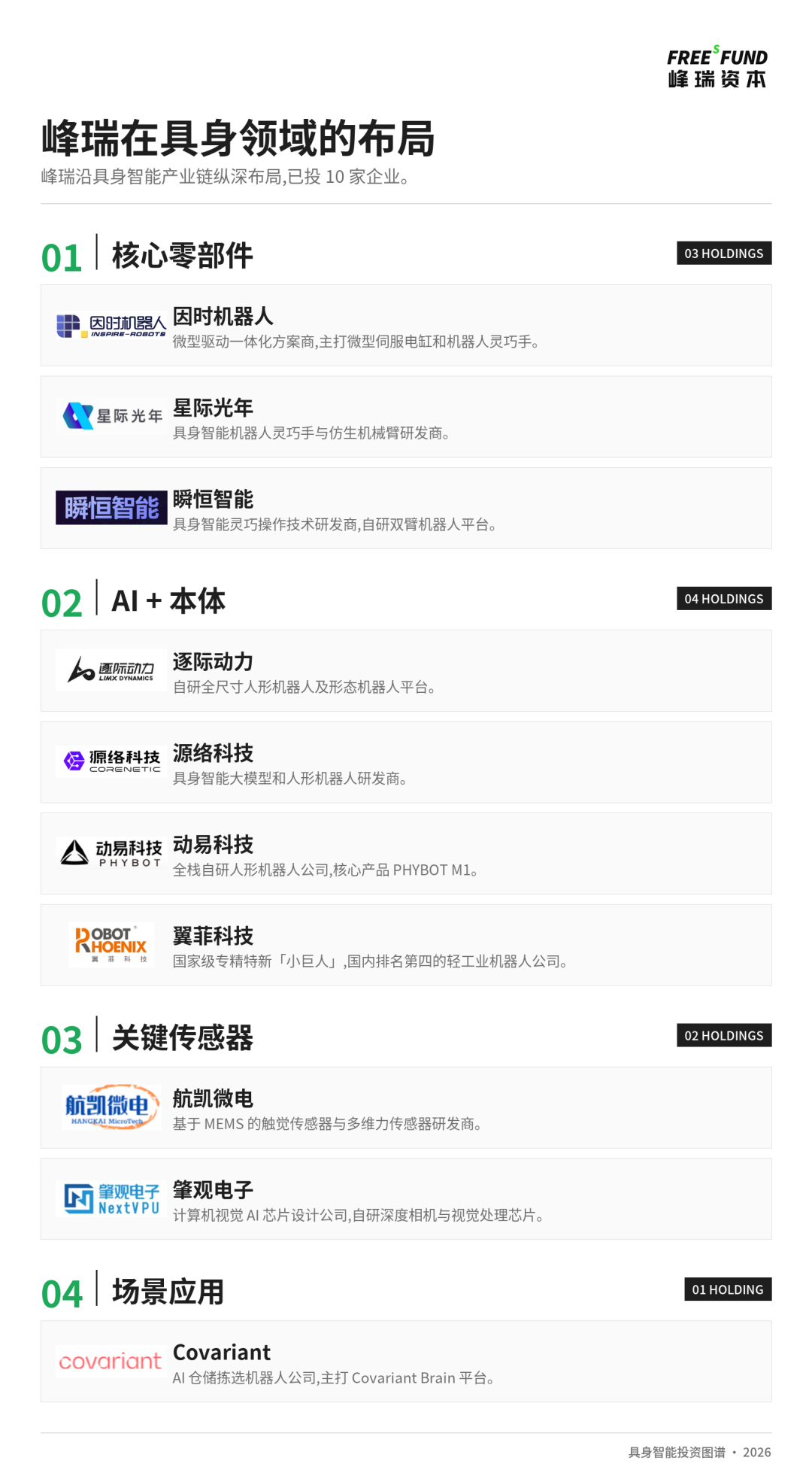
FreeS Fund has been making sustained, systematic investments in the embodied intelligence track. Covering four segments — core components, AI + robot bodies, key sensors, and scenario applications — we have currently invested in more than 10 related companies:
Closing Words
From an 8-square-meter office in Jinan, 3 employees, and that small car that witnessed Yifei's journey from zero to one, to the Hong Kong Stock Exchange bell-ringing ceremony in 2026 — this is fourteen years for Sai Zhang and the Yifei team, and also the decade of China's industrial robot rise.
Congratulations to Yifei Technology on its successful listing. Sai Zhang said something interesting about the IPO in a recent conversation with Qianhang Yan, which reads quite fittingly today: "The listing process may become the flame that leads Yifei forward. We've encountered many problems that seemed 'unsolvable.' But as long as we want to keep building the company well, we can always find solutions."
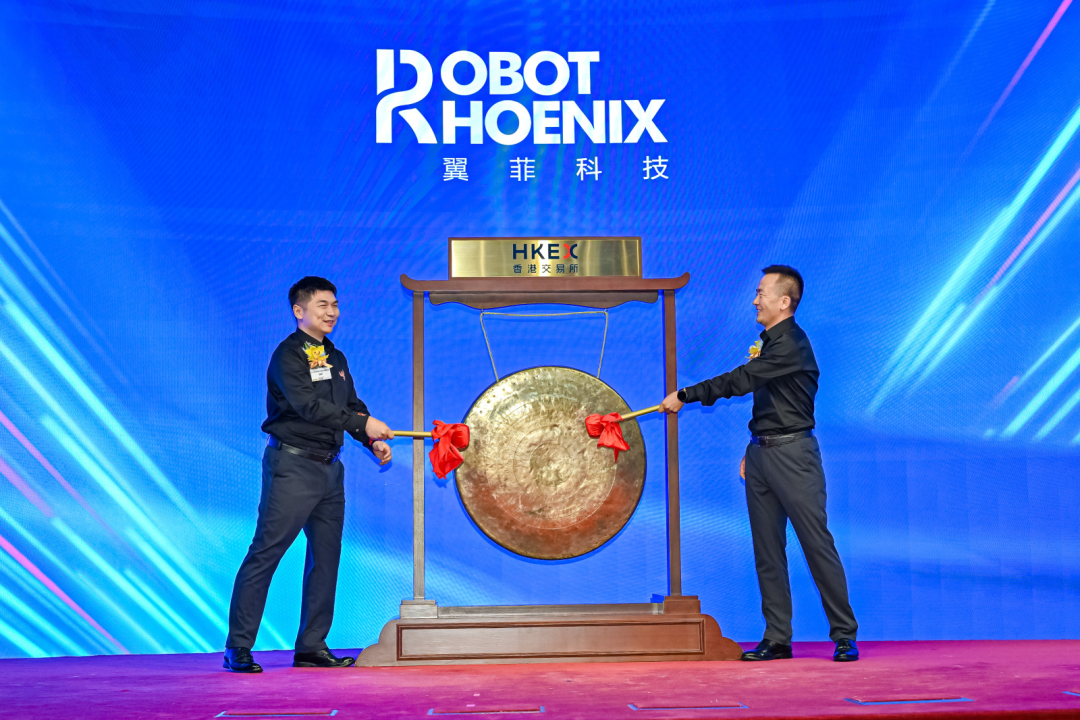
Yifei Technology listing bell-ringing ceremony. Image source: Yifei Technology
All Spark — that "Spark of Life" from Transformers — is probably exactly this meaning. It's a starting point, a source that gives energy and possibility to those who persist.
Standing at this new starting point, we hope Yifei can continue to do what is right rather than what is easy: make the slow business of industrial robots last long, make the new business of embodied intelligence solid, and continue to be the person who "finds real demand at the client's site."
- Sai Zhang's Oral History of 13 Years in Robotics Entrepreneurship: The Rise and Fall of the "Big Four," Persistence to the End, and Bets on Embodied Intelligence and Going Global
- From 1/10 to 1/3 Market Share: How Did Domestic Industrial Robots Achieve Explosive Growth? | FreeS Fund Venture Dialogue
- How to Invest in Industrial Robots? | FreeS Research Institute — Learning from Investment
- Public Good, Calling, Principles, and Temptation: A Case Study of How a Startup Responds to Public Events | FreeS Business School