FreeS Report 21: In Search of China's Classics and Fashion — A Study on Guochao Consumption | FreeS Research Institute

Every category will see the rise of influential guochao brands.

2020 was a breakout year for guochao — the "China chic" movement. We remain firmly bullish on the birth and growth of guochao brands, even in the high-end luxury segment where Chinese brands have historically been absent.
Why is now the moment for Chinese high-end luxury brands to emerge?
First, against the backdrop of rising national economic strength and ethnic pride, the beauty of traditional Chinese culture is being re-examined. Numerous guochao brands built around Chinese cultural elements are finding their inflection points. The brand dividend within a Chinese aesthetic and contextual framework has become one of the biggest opportunities in consumer entrepreneurship today. On the demand side, the consumption preferences of China's hundreds of millions of new middle-class consumers will largely shape the future trajectory of global high-end consumption. On the supply side, while the absence of Chinese high-end luxury brands is undeniable, it also means the market remains wide open — there's still room for startups to break through and expand.
In this piece, we analyze the overall landscape of China's luxury market and consumer psychology, trace the pivotal moments and key strategies in the birth and early development of Western luxury brands like LV, Chanel, Dior, and Tiffany, and summarize the patterns we've found:
- Luxury brands are often born during periods of great societal transformation.
- The premium content they carry resonates powerfully with upwardly mobile social classes.
- The rise of a nation's luxury brands is closely tied to its economic prosperity and cultural confidence.
- A country's historical and cultural depth significantly shapes the texture and aesthetic philosophy of its luxury brands.
- The birth of a luxury brand is never built on thin air — it requires both creative genius and the most exacting craftsmanship.
Based on this understanding and conviction, FreeS Fund invested in the guochao luxury brand Duomu Liangjin. We hope to invest in more guochao brands, and welcome entrepreneurs and industry experts in the consumer space to connect with us (shenying@freesvc.com). We also welcome those with industry backgrounds and an interest in consumer investing to join our team (hr@freesvc.com).


Guochao Research: In Search of China's Classics and Fashion — High-End Consumption Research
By Shen Ying (shenying@freesvc.com)
**/ 01 / **
China's Massive New Middle Class Is Reshaping the Global Luxury Market
Turn the clock back 2,000 years, and Chinese silk — a major high-end consumer good — was transported overseas via the 7,000-kilometer Silk Road. The nobility of Central Asian states coveted it, dubbing China the "Land of Silk." In Europe, silk once traded at prices equivalent to gold. During the Tang and Song dynasties, as Chinese porcelain was widely exported via the Maritime Silk Road, China became renowned as the "Land of Porcelain." European heads of state and aristocrats used porcelain as a symbol of wealth and prestige. Silk, porcelain, lacquerware, tea — these high-end Chinese consumer goods delivered exceptional experiences to consumers in the ancient West.
Today, the distinctly Chinese luxury goods that once reached Central Asia via camel caravans departing from Chang'an during the Han Dynasty have returned to this land in new forms. China has become the world's largest market for the luxury industry, and its rising new middle class has become the key force driving continued growth in global luxury consumption.
According to McKinsey & Company's 2019 China luxury report: "In 2018, Chinese consumers spent 770 billion RMB on luxury goods at home and abroad, accounting for roughly one-third of global consumption. In 2019, mainland China's luxury market grew 26% overall, exceeding 200 billion RMB. Globally, Chinese consumers contributed 90% of the sustained growth in the global personal luxury goods market in 2019."

A 2020 China luxury market study by Bain & Company and Tmall Luxury noted: While global luxury market transaction volume plummeted 23% year-over-year due to the pandemic, mainland China luxury consumption surged 48% to 346 billion RMB. China Customs statistics showed that in 2020, China became the world's largest market for Swiss watches for the first time; Hainan's offshore duty-free sales reached 27.48 billion RMB for the full year, up 103.7%, with 4.484 million actual duty-free shopping trips, up 19.2%. On the retail front, Beijing SKP — which had held the title of China's top-performing mall for ten consecutive years — achieved sales of 17.7 billion RMB in 2020, up approximately 15.69% year-over-year, surpassing Britain's iconic luxury department store Harrods for the first time to become the global "store king."
The growing importance of Chinese consumers to the global luxury market reflects the massive, rising new middle class behind them.
McKinsey's 2020 China Consumer Survey showed that China's middle-income population currently exceeds 300 million and will continue rising, expected to surpass 500 million by 2025. China will form an enormous "olive-shaped society" and become the world's largest high-end consumption market.
Globally, China's new middle class has grown rapidly and already occupies a significant position. The Credit Suisse Research Institute's 2019 Global Wealth Report showed that from the 60th to 95th percentile of global wealth distribution (the 95th percentile meaning income in the global top 5%), China had the highest population share. Looking ahead, China is expected to further expand its presence in the 80th to 100th percentile range of global wealth distribution.
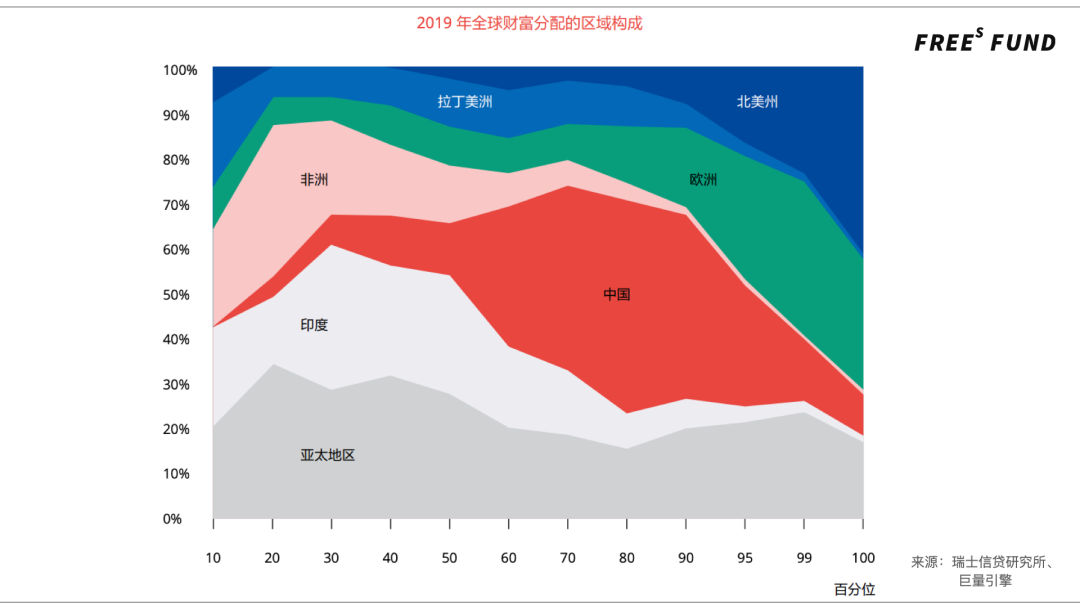
We can confidently infer that the consumption preferences of China's new middle class and newly wealthy will largely shape the future direction of global high-end consumption.
So what is the brand essence of luxury goods, the representative of high-end consumption? What are consumers actually consuming when they purchase luxury goods? And can China birth its own luxury brands?
**/ 02 / **
The Essence of "Luxury" Is Actually "Refined Craftsmanship"
The Chinese term shechi pin (奢侈品) is a translation of the English "luxury," which derives from the Latin Luxus, originally meaning "extraordinary fertility." Due to this translation, "luxury" carries somewhat negative connotations in Chinese — suggesting greed, extravagance, and waste. But the substance of luxury is jingpin (精品): exquisite products and beautiful experiences crafted with a spirit of relentless refinement. Just as Chinese silk and porcelain once represented luxury to the Western world, today's branded luxury goods represent exquisite products and beautiful experiences in consumers' minds.
**/ 03 / ** The Psychology of High-End Luxury Consumption
High-end luxury brands are merely vessels. What are consumers actually pursuing and expressing?

As summarized above, we believe that consumers' multiple internalized experiences and external value needs together drive high-end luxury consumption.
And the luxury brands that emerged and rose to prominence in various eras were those that captured the high ground in consumers' minds during one or more periods. These brands typically adopted a premium positioning strategy from inception, crafting an image of superior quality and high price that inspired consumer aspiration.
**/ 04 / ** The Secrets Behind the Birth and Rise of Western Luxury Brands
How did brands like Louis Vuitton, Tiffany, Chanel, and Dior — which now occupy the high ground in Chinese consumers' minds — originally emerge and grow? Though each was founded in a different era and context, and in vastly different categories, our research uncovered certain common secrets in their early development:
- Luxury brands are often born during periods of great societal transformation.
- The premium content they carry resonates powerfully with upwardly mobile social classes.
- The rise of a nation's luxury brands is closely tied to its economic prosperity and cultural confidence.
- A country's historical and cultural depth significantly shapes the texture and aesthetic philosophy of its luxury brands.
- The birth of a luxury brand is never built on thin air — it requires both creative genius and the most exacting craftsmanship.
We selected several representative brands — Louis Vuitton, Tiffany & Co., Chanel, and Dior — for individual analysis:
▍Louis Vuitton: Rising with the European Aristocratic Travel Culture After the First Industrial Revolution
The First Industrial Revolution dramatically transformed European aristocratic lifestyles in the 19th century. Benefiting from the invention of steam trains and steamships, aristocratic travel evolved from short carriage journeys to long-distance and even transoceanic voyages. This transformation in travel scenarios rendered the round-topped leather trunks of the era unsuitable for stacking and handling on long journeys. Nobles needed travel trunks that were stackable, portable, waterproof, and durable.
It was at this moment that Louis Vuitton — a 16-year-old country boy who had left his hometown far behind to come to Paris and pack luggage for aristocrats —敏锐地洞察到了这一需求. In 1854, he founded the Louis Vuitton brand and began exploring new forms of travel trunks. After years of meticulous research and iteration, Louis Vuitton revolutionized the market in 1858 by introducing a flat-topped canvas trunk that was stackable, lightweight, and waterproof. This design stood in stark contrast to the round-topped leather trunks then in common use, dramatically meeting the needs of aristocratic travel's new scenarios and laying the groundwork for the modern suitcase.
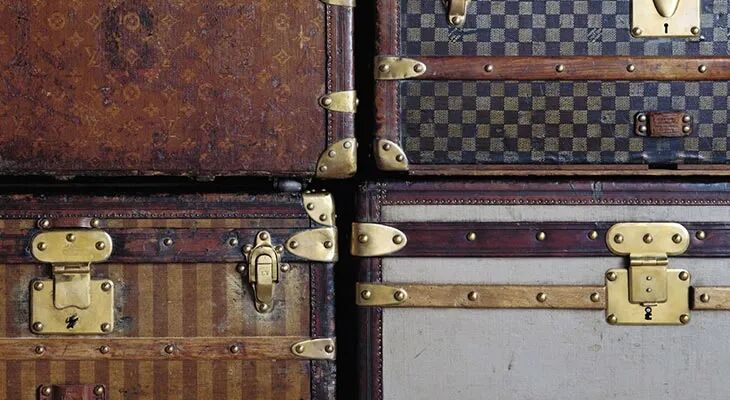
▲ An early Louis Vuitton travel trunk. Image source: mvcmagazine
From our perspective today, Louis Vuitton's innovations in travel trunks may seem somewhat "ordinary," but in his era, they were remarkably striking — the pinnacle of fashionable content for that time.
The results speak for themselves: this trunk, so perfectly aligned with the aristocracy's new lifestyle, quickly won the favor of the era's foremost fashion KOLs — the French royal family. The Louis Vuitton brand grew increasingly beloved among European nobility, spreading rapidly as they traveled.
As the Industrial Revolution advanced and international travel became more commonplace toward the end of the 19th century and into the early 20th, Louis Vuitton's customer base expanded further. When Louis Vuitton's son, Georges Vuitton, took the reins, he launched the brand's most iconic Monogram canvas trunk collection and extended into bags and leather goods.
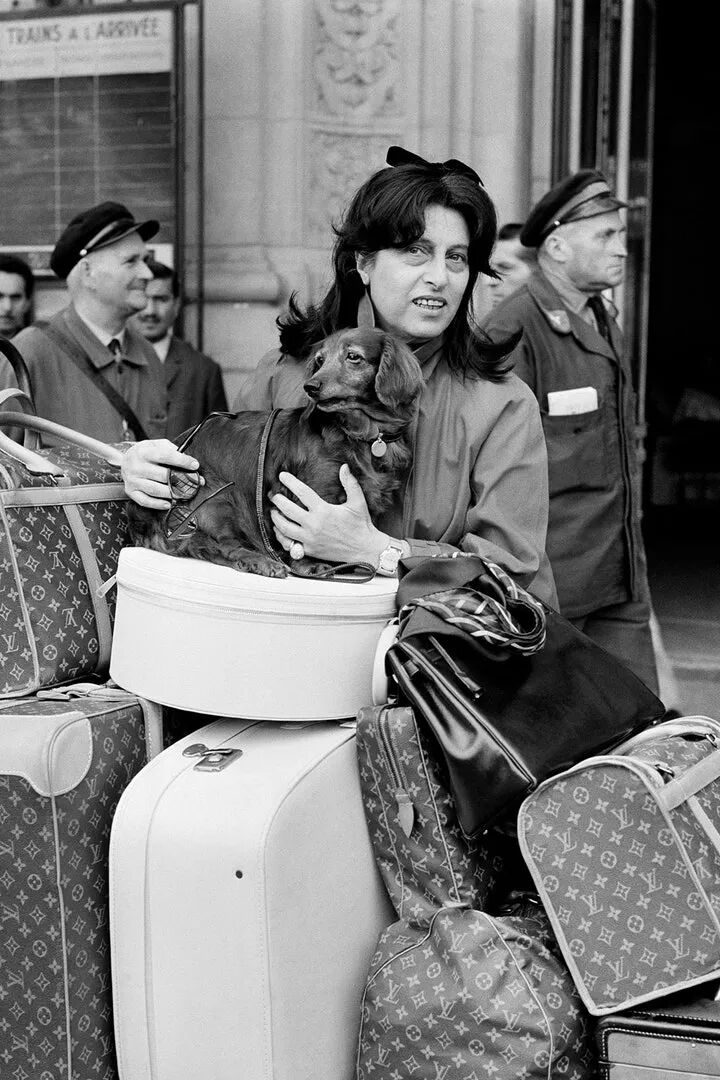
▲ Image source: Vogue
It is fair to say that the Louis Vuitton brand敏锐地抓住了 the era's opportunity presented by the transformation in travel following the First Industrial Revolution.
▍Tiffany & Co: The American Nouveau Riche's Thirst for Identity Made Tiffany
Founded in the 1830s, Tiffany began as an unassuming boutique in Lower Manhattan, New York.
Charles Tiffany, one of the three founders, gained control of the company in 1853. Driven by his passion for jewelry and accessories, he transformed it into a jewelry-focused business, gradually winning early customers in New York.
After the Civil War ended, America entered a period of economic leaps. Charles Tiffany perceived the demand for high-end jewelry among the country's newly wealthy and began acquiring European royal jewels that had flowed into private hands, exhibiting and selling them in America.
In 1886, after decades of accumulated expertise in the jewelry industry, Charles Tiffany introduced the classic six-prong diamond engagement ring: the Tiffany Setting. Through ingenious design, its six-prong base elevates the diamond high above the band, as if suspended in midair, maximizing the stone's brilliance and allowing it to shine with full radiance. This ring was a design masterpiece and quickly became the engagement ring of choice for America's nouveau riche. A century later, the Tiffany Setting remains the global standard for engagement rings. By the end of the 19th century, Tiffany's standing rivaled that of European jewelers, with a clientele that included European royalty and tycoons. Founder Charles Tiffany was dubbed "The King of Diamonds" by the American press.
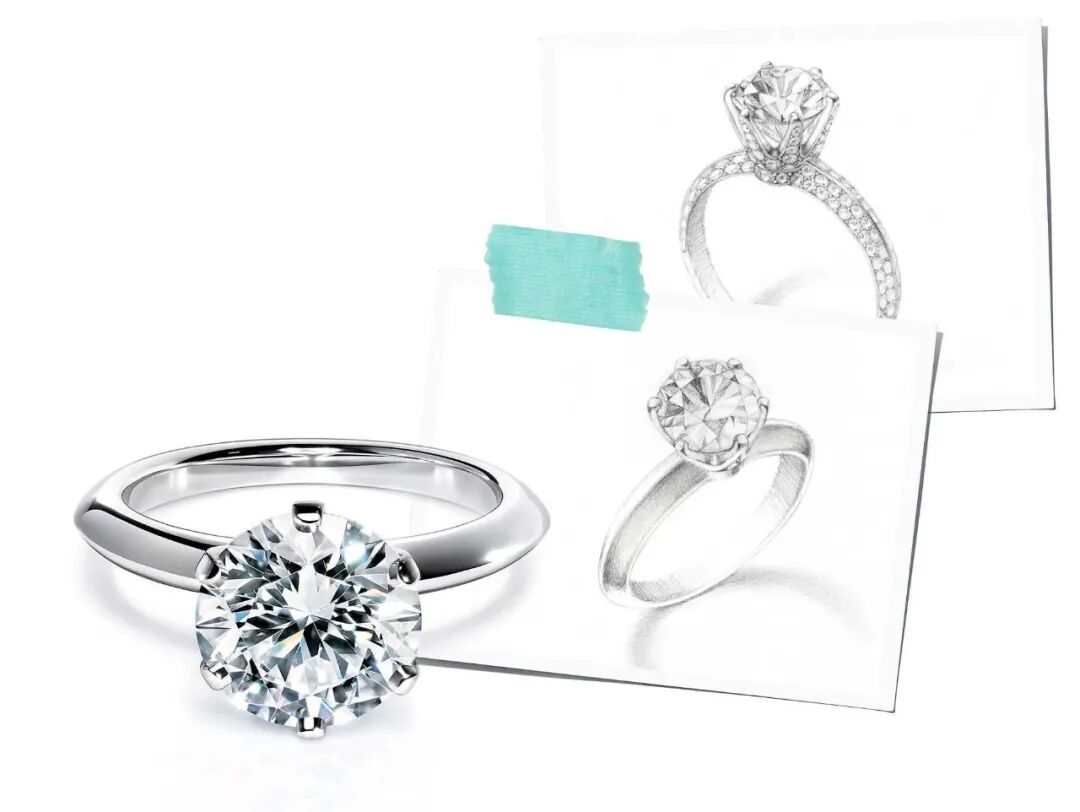
▲ Image source: Tiffany official website
To summarize: Tiffany & Co.'s classic designs and superior quality satisfied the desire of increasingly affluent late-19th and 20th-century Americans to display their social status through jewelry. Tiffany gradually became the representative of American luxury brands.
▍Chanel: Coco Chanel Embodies the Timeless Spirit of the Independent Woman
Chanel founder Coco Chanel was a legendary independent woman. Born in the late 19th century in a small town in central France, she was the child of an impoverished unmarried couple. At age 12, her mother died, and her father abandoned her at a convent. In this world of black and white, she learned to sew and developed the aesthetic foundation of a monochromatic palette. The hardships of her early years forged her strong, independent character, which she then channeled into her designs.
In Europe before and after World War I, the material lives of the urban middle class grew increasingly rich, and consciousness of women's equality gradually awakened. Against the backdrop of women entering the workforce and achieving economic independence, Chanel became a pioneer in championing female independence and equality.
She believed that "women do not dress to please men; their own feelings should be at the core." She firmly held that clothing should not be strictly divided by gender, revolutionizing womenswear by incorporating extensive menswear elements and formally introducing trousers into women's fashion.
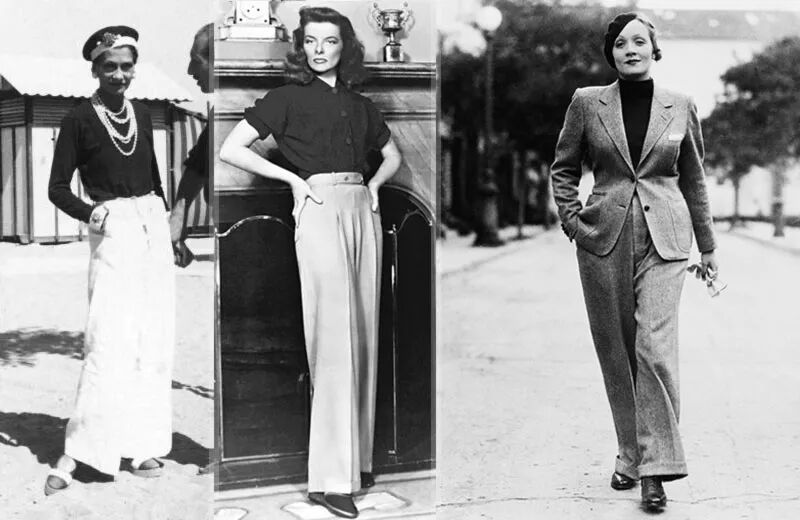
▲ Image source: Rita Candida
Later, Mademoiselle Chanel launched the deeply personal Chanel No. 5 perfume and the Chanel suit, which became a new classic of modern women's dressing. Her design philosophy resonated with the dressing and styling demands of women in the post-WWI era of independence, and she built the Chanel brand into a timeless symbol of the independent female spirit.
"I don't do fashion, I am fashion" — this was Chanel's self-assessment. Through her brand, she brought consumers her philosophy of beauty and the independent female spirit.
▍Dior: Reviving the Missing French Elegance After WWII
If the end of World War I made Chanel, then the end of World War II made Dior. The trauma and economic depression wrought by WWII left Europeans dispirited; women's clothing consisted mainly of simple workwear designed for practicality. The fashion industry had been devastated by the war, with even top couture houses like Chanel suffering blows. The market urgently needed new fashion houses to bring fresh style.
At this juncture, Monsieur Dior, already past forty,敏锐地洞察到了 the postwar absence of elegant beauty and embarked on his venture into women's fashion. He founded the House of Dior in 1946 and unveiled his first collection in 1947 (later dubbed the "New Look"). Using expensive fabrics and design elements that emphasized feminine nobility and grace — soft shoulder lines, cinched waists, abundant pleats, and enormous, voluminous skirts that swept the floor — he created something extraordinary.
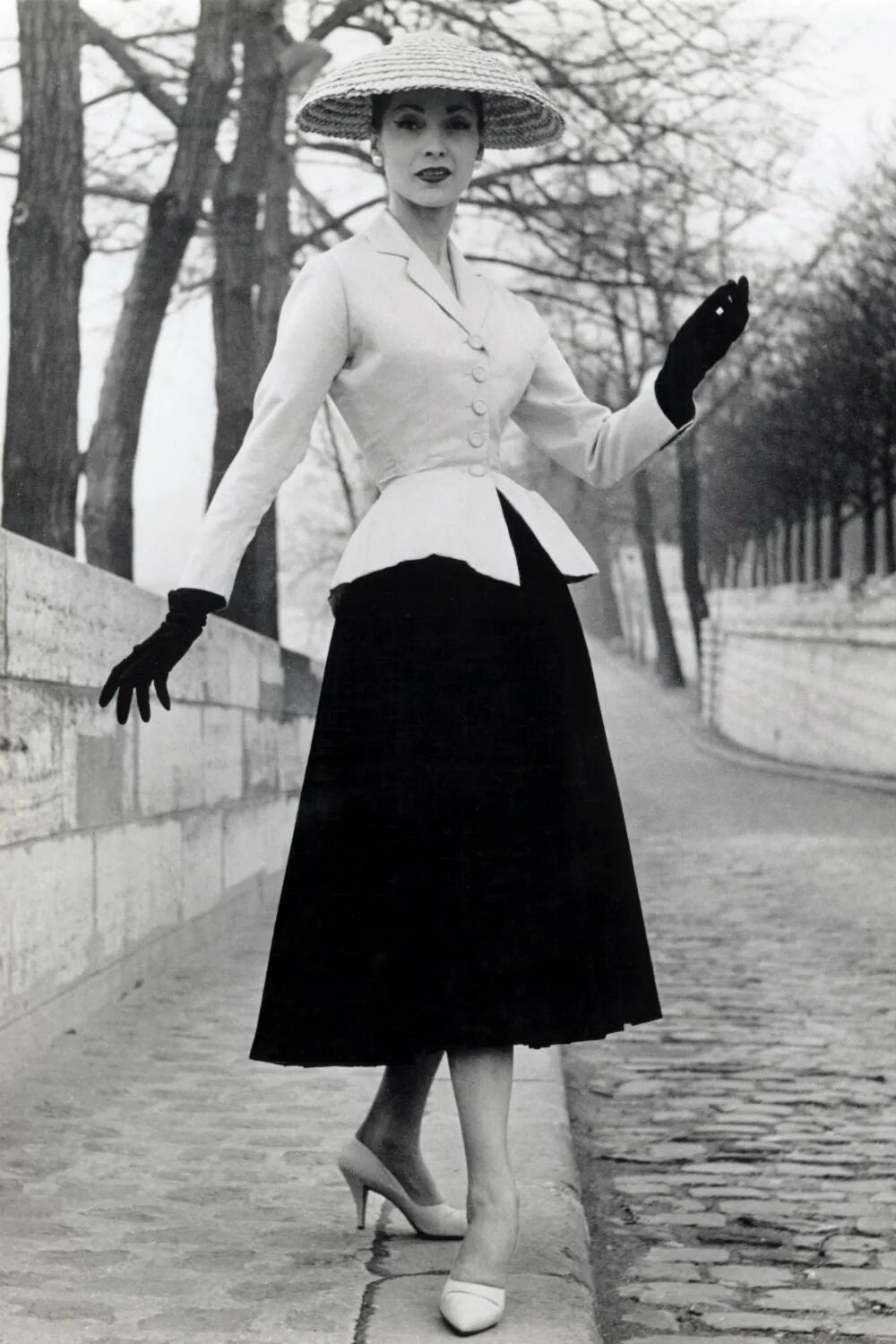
▲ Image source: Marie Claire
Though these designs sparked controversy among some feminists, for the people of 1947, Dior brought far more delight and liberation. "We had just emerged from an era where poverty made frugality a virtue, where ration books and clothing coupons still ruled daily life. Naturally, I adopted this new form as a rebellion against the growing impoverishment of the imagination," Monsieur Dior later wrote in his autobiography.
Dior's French elegance freed people from the bleak, gray aesthetics of the war years, satisfying the postwar hunger for new fashion and new beauty. It was this resonance that allowed the House of Dior to stand shoulder-to-shoulder with established names like Chanel from the very moment of its birth.
The founding stories and early trajectories of these four iconic houses reveal a shared logic. Each was born amid great historical transformation; each keenly seized the new demands of its era, creating top-tier content that resonated powerfully with the rising social classes of the time. It was this era-defining content that shaped their spiritual core and infused these brands with formidable momentum.
The distinct cultural foundations behind these brands provided diverse soil for their growth, giving rise to markedly different aesthetic sensibilities across nations. French houses became known for opulent elegance; American brands championed a clean, natural minimalism; Japanese labels carried the wabi-sabi mood of refined restraint and yūgen — profound grace and subtle mystery.
In Search of Chinese Classicism and Fashion
Under the catalysis of economic prosperity and cultural confidence, will China once again give rise to world-class luxury brands?
We are inclined to believe the answer is yes.
Against the backdrop of the guochao (China chic) movement, a major opportunity for Chinese brands lies in drawing inspiration from the deepest layers of Chinese civilization rather than replicating Western aesthetics. "The more classic, the more fashionable" — the classic beauty embedded in Chinese history and culture carries tremendous potential energy.
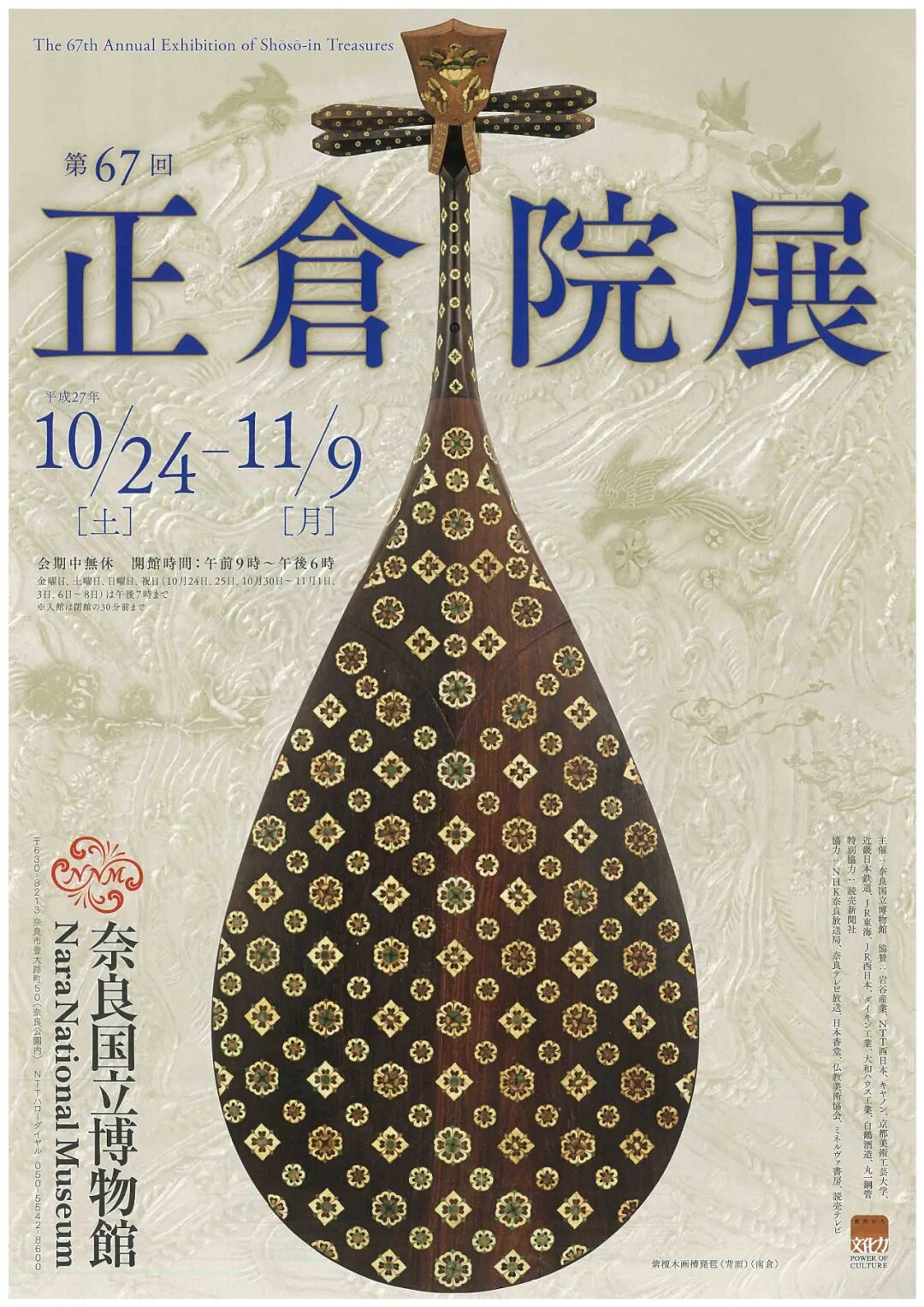
Surrounded as we are by Western luxury houses, we may find it difficult to perceive the contours of traditional Chinese aesthetics. Yet it has existed for millennia; it does not need to be invented, only awakened. Consider the Tang-dynasty Chinese lute (pipa) unveiled in 2015 by Japan's Shōsōin Repository.
In November 2015, the Shōsōin — the world's richest treasury of Tang-era art — displayed for the first time a red sandalwood lute inlaid with intricate designs. Legend holds that this was a gift from Emperor Xuanzong and his consort Yang Guifei to Japan's Emperor Shōmu.
▲ Image source: China Global Television Network
Whether in its color palette or its patterns, this Tang-dynasty lute bears striking resemblance to Louis Vuitton's classic Monogram. The LV Monogram was born in the late 19th century, when Japanese aesthetics swept through Europe. Georges Vuitton, son of Louis, drew inspiration from Japanese family crests (kamon), simplifying complex motifs into the now-iconic four-petal flower and four-pointed star enclosed within circles.
And Japanese family crests, along with broader Japanese design, were themselves deeply influenced by China's Tang-era arabesque patterns (tangcaowen). During the High Tang period, master craftsmen merged Tang and exotic aesthetic styles, using honeysuckle, peony, and lotus motifs to create richly layered, fluidly repeating patterns that later generations would call "Tang arabesques." These patterns were lush, dynamic, and exuberant — a quintessential Tang aesthetic. Beyond the patterns, the lute's fine wood marquetry represented the pinnacle of Tang-era craftsmanship, demonstrating the extraordinary heights of ancient Chinese artisanal technique.
Through this single instrument, we can trace a millennia-spanning path of aesthetic transmission: from Chang'an in the High Tang to Kyoto in Japan, then to Paris in the modern era, and finally out to the world. China's most glorious age has been quietly nourishing humanity's aesthetic evolution all along.
Returning to the present: in 2020 alone, across mass consumer goods, we have already seen traditional Chinese culture and aesthetics gain increasing recognition, with numerous guochao brands rapidly finding their market inflection points. Oriental makeup brand Florasis and To Summer, which specializes in Eastern botanical fragrances, have both won market validation.
Yet in the high-end consumption sphere, Chinese luxury brands representing classical Chinese aesthetics remain conspicuously absent.
In 1994, "Shanghai Tang" was founded in Hong Kong and became a symbol of Chinese luxury going global, only to be acquired by Richemont shortly after its establishment. "Shang Xia," born with a silver spoon in 2008, was created through collaboration between a Chinese designer and French house Hermès. Both of these early Chinese luxury brands, having joined the camps of Western luxury conglomerates, leveraged powerful shareholder resources to establish stores in top-tier retail locations in China and abroad. In recent years, however, both Shanghai Tang and Shang Xia have encountered challenges, with their ownership changing hands among Western financial groups multiple times.
In our view, the market needs new guochao brands with deep understanding of Chinese aesthetics and keen insight into the increasingly sophisticated demands of Chinese consumers. In this direction, we encountered Duanmu Liangjin (端木良锦), which has spent years navigating between Chinese classical aesthetics and traditional craftsmanship.
Duanmu Liangjin's founder, Qi Tian, holds a bachelor's degree in architecture from Tsinghua University and a master's in architecture from the University of Pennsylvania. From childhood, he harbored a passion for traditional Chinese culture and collecting. Upon returning from his studies in the United States, rather than pursuing architecture, he launched a business from his personal hobby.
In 2011, he founded Duanmu Liangjin in Beijing — the name meaning "upright wood, fine brocade" — creating custom packaging for collectibles. In 2015, Qi faced two turning points: frustration that his bespoke packaging for collectors typically languished on shelves, and profound awe at the Tang-dynasty marquetry lute displayed at the Shōsōin.
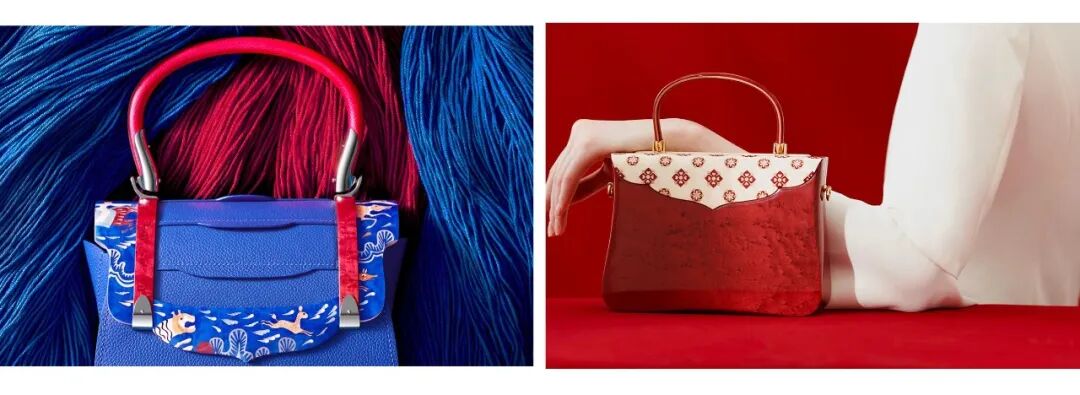
"Fine wood marquetry," which flourished during the Tang dynasty and gradually vanished during the Song, Yuan, Ming, and Qing dynasties, survived only in limited applications within European luxury watches and automobiles. Through dedicated research and repeated experimentation, Qi and his team pioneered an entirely new category: wooden handbags. They revived the fine wood marquetry technique used on the Tang-dynasty lute, applying modern CNC and modular process controls to successively launch pure wood clutch bags, wood bags with metal hardware, and the "Lingbo" bag where leather and wood coexist in intricate, conversation-sparking designs.

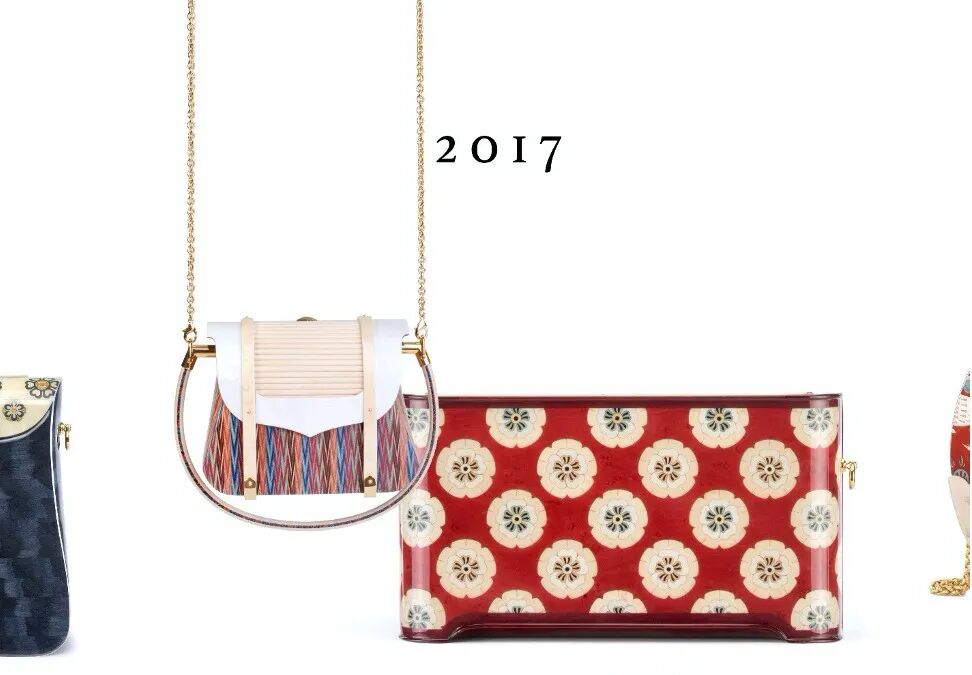
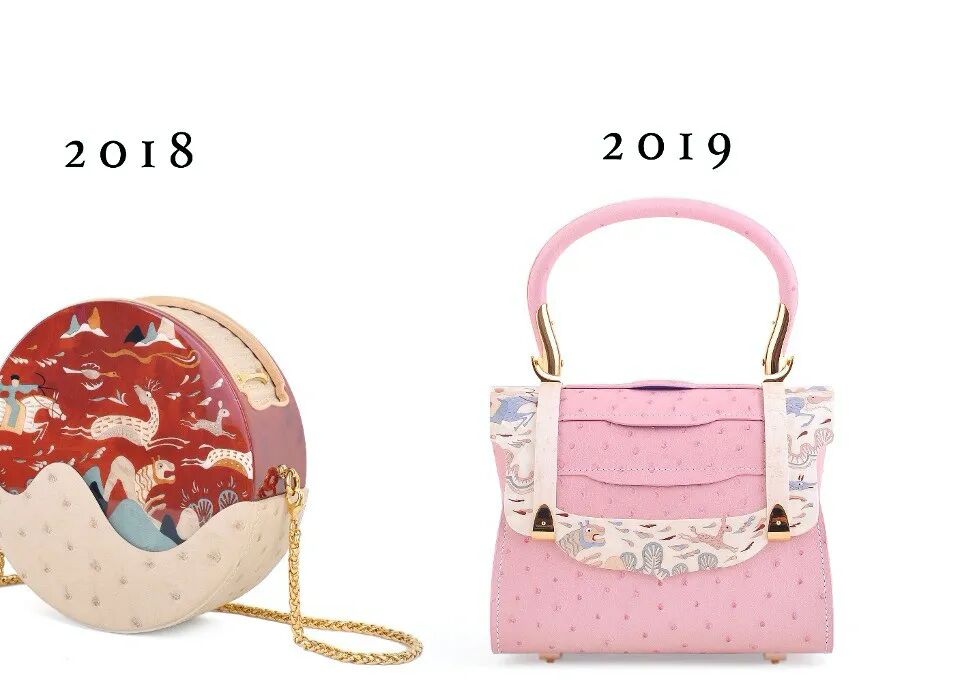
Duanmu Liangjin pioneered a new category: wooden handbags (Source: Duanmu Liangjin) (Swipe for more 👉) To date, Duanmu Liangjin has developed over 200 SKUs, focused primarily on handbags — tote bags, shoulder bags, and evening bags — with prices concentrated in the RMB 20,000–40,000 range. The brand also maintains accessory lines encompassing silk scarves and card holders, as well as lifestyle products including jewelry boxes, mirrors, and prints.
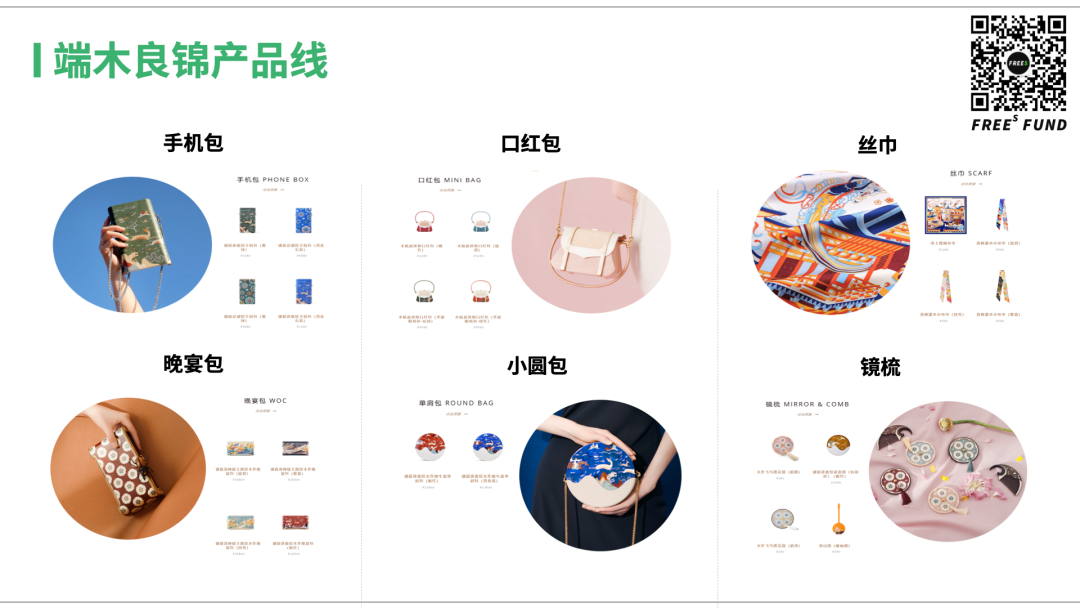
Beyond its roots in traditional Chinese craftsmanship, Duanmu Liangjin also seeks aesthetic inspiration from Tang-dynasty treasures, Dunhuang grottoes, and Han-dynasty pictorial bricks. In some respects, it favors art forms from the Tang dynasty and earlier. Founder Qi Tian believes that pre-Tang and Tang-era culture was more open and pluralistic. Duanmu Liangjin seeks artistic inspiration from these highly cosmopolitan, globally integrated periods to communicate its brand values.
Duanmu Liangjin is carving out its place in the top-tier handbag market long dominated by international luxury houses. Since 2018, it has opened three Beijing stores at China World Mall, Wangfu Central, and 798 Art District. In early 2021, Duanmu Liangjin became the first Chinese brand invited to occupy the first floor of Shanghai's Grand Gateway 66. At Christie's handbag auctions in Shanghai and Hong Kong, it has been the sole Chinese brand appearing alongside Hermès, Louis Vuitton, and Chanel. Consumer demand has been so robust that many products at Duanmu Liangjin stores require 90-day advance booking.
Overall, as China's economic and cultural confidence continues to rise, we believe guochao is entering a new phase of opportunity — in both mass consumer goods and high-end luxury.
Yet opportunity and challenge coexist. Just as five or ten years ago, few could have foreseen China producing world-class smartphone brands, it may now be equally difficult to imagine China giving rise to world-class luxury houses. With Western brands' dominant market position, Chinese luxury brands still face bottlenecks including shortage of design talent, incomplete supply chains, production capacity constraints, and Western luxury groups' monopoly over offline retail channels.
Fortunately, against the backdrop of China's continued economic development, accumulating national wealth, and rising cultural confidence — both present and future — the overall growth of China's consumer market is converging with consumers' growing gravitation toward domestic brands. Combined with improving supply chain efficiency, evolving media formats, and the rising momentum of Chinese brands expanding overseas, these factors are providing kinetic energy for the birth and growth of Chinese brands. New guochao brands grounded in Chinese context and Chinese aesthetic frameworks will have the opportunity to lead industry development. We look forward to walking alongside entrepreneurs in this space, jointly witnessing the rise and enduring success of guochao.
Summary
-
China is home to a massive and rising new middle class. The consumption preferences of this demographic, along with those of the newly wealthy, will largely shape the future direction of global luxury spending.
-
At its core, luxury is about "fine goods" — exquisite products and exceptional experiences crafted with a relentless pursuit of perfection. High-end consumption is driven by consumers' multifaceted internal experiences and their external needs for social value.
-
Premium brands share common developmental patterns: they tend to emerge during periods of great historical transformation; they carry top-tier content that resonates deeply with ascending social classes; their rise is closely tied to their home country's economic prosperity and cultural confidence; a nation's historical and cultural heritage significantly shapes the texture and aesthetic philosophy of its fine brands; and the birth of such brands requires both genius-level creativity and the ultimate craftsmanship.
-
Against the backdrop of guochao's rise, a major opportunity for Chinese brands lies in drawing inspiration from the deepest wellsprings of Chinese civilization, rather than replicating Western aesthetics.

The third installment of FreeS Fund's 2021 China-US Venture Capital Forum series, "Seizing New Opportunities in China's Era" — titled "How Can Returnee Entrepreneurs Maximize Their Advantages?" — will go live on April 18 at 10:00 AM.
Founders from FreeS portfolio companies Wan Xiaobo, co-founder and CEO of ChemXon (康迈迪森), and Wang Can, founder and CEO of PatPat, will share their insights: What are the advantages and challenges of returning to China to start a business? How do you build a team and find the right direction? How do you adapt to the domestic entrepreneurial environment?
If you're interested in joining the Zoom webinar, or signing up for our offline event "FreeS Open Day" on May 9, please scan the QR code below.
We are currently seeking investors focused on biotech, deep tech, and consumer/TMT in Beijing, Shanghai, and Shenzhen. If you're interested in joining us, we especially encourage you to register for our offline Open Day. To participate: scan the QR code above. Of course, you're always welcome to send your resume directly to hr@freesvc.com.