Li Jian of New Spicy Way: 22 Years, 3 Startups, Crossing Mountains and Seas — 6 Principles | FreeS Fund Business School
The "Ordinary Path" of a Restaurant Industry Veteran


"Who am I?" We've all asked ourselves that.
For Li Jian, founder of Sundia Group and CEO of Xinliangji — a three-time entrepreneur — the answer is: "I am the sum of everything I've experienced."
From this perspective, entrepreneurship is a good thing no matter how it turns out. It packs into a short span the storms most people never face in a lifetime, helping us forge our own values and methodology, and emerging a little different from who we were before. That's a blessing.
We love his comeback story, but sometimes overlook the internal logic that made it possible.
At a recent "CEO Talks" event co-hosted by FreeS Fund and Baichanghui, Li shared his journey from selling boxed lunches to bankruptcy and depression, then building a fish hotpot brand with annual sales exceeding 1 billion RMB, and now founding Xinliangji, a food supply chain company. Beyond the inspiration, his six insights on entrepreneurial logic, self-management, and company management deserve attention. We hope this article offers you a fresh perspective.

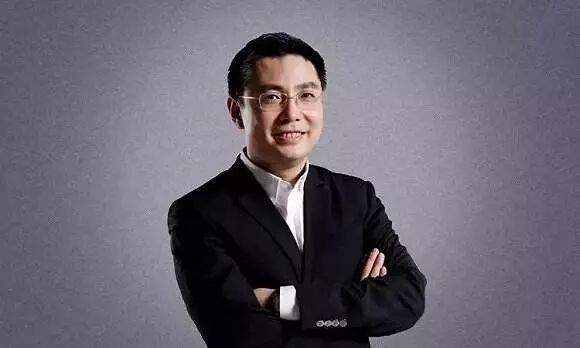
Xinlaodao's Li Jian: From Boxed-Lunch Bankruptcy to 1 Billion RMB in Sales — Management Lessons Learned
As told by / Li Jian, Founder of Sundia Group and CEO of Xinliangji
Source / Baichanghui, WeChat: baichanghui666
Edited by / Baichanghui, FreeS Fund
300 Million in Two Years: The Secret Is Seeing Farther Than Others
A company leader can lack any trait except one: seeing bigger and farther than everyone else. Especially in the early stages, you must have a dream.
If I sold malatang at a Beijing stall, how much could I make?
In 1995, I graduated from the Chinese department of a teachers college in Linyi, Shandong.
Before graduation, the provincial Party committee's organization department came to recruit outstanding students as deputy township heads for science and technology. As student council president, I was high on their list. But I refused the assignment. I remembered the skyscrapers I'd seen during a summer trip to Beijing in high school, and the resolution I'd made: see more of the world, go abroad and see what other countries looked like.
So the day after graduation, I came to Beijing alone with my bedding and 5,000 RMB. I rented a basement room with roommates and enrolled in a TOEFL class at Beijing Foreign Studies University. Beijing rent was brutal — one room cost nearly what a same-sized place back home would for two years. How to survive in this city? That was my immediate problem.
The following Spring Festival, I didn't go home. I stayed at a friend's place to watch his house. That's when I met a Sichuanese woman — the first person to sell malatang in Beijing. At a market in Dongbalizhuang, I tried her malatang and found it incredible. I wanted to learn from her.
She refused at first, calling it a secret family recipe. To win her over, from New Year's Day to the Lantern Festival, I went to her stall every day, helping skewer ingredients while making my case. I told her I lived far away in the western third ring road, and would set up my stall there without competing. She finally relented, took 900 RMB, and taught me everything.
After the holiday, I rented a storefront behind BFSU with a partner. They sold clothes by day; I sold malatang by night. I was making 300+ RMB daily, roughly three to four thousand a month. Soon I had enough to improve my life — moved above ground, stopped the TOEFL classes.
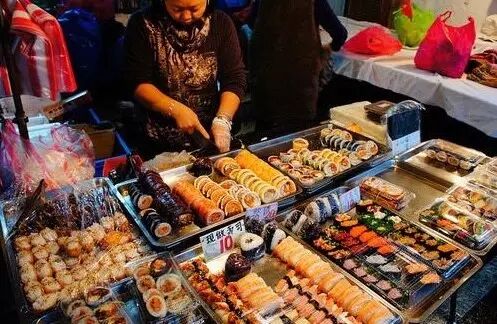
▲ The 900 RMB malatang recipe was the beginning of serial entrepreneurship.
If I sold 10,000 boxed lunches daily, how much could I make?
Before long, I started a midday boxed lunch delivery business for companies.
The catalyst was an air purifier company next to my malatang stall. One day their front desk asked if I could supply 40-50 boxed lunches. I agreed without hesitation.
I had no kitchen, so I found an ingenious solution: the cafeteria at Minzu University of China. Close to BFSU, it enjoyed ethnic minority subsidies — dishes cost 0.30 RMB there versus 1 RMB elsewhere. With enough cafeteria cards, I sent students with trays to buy twice-cooked pork, cabbage, and such, then assembled them into boxed lunches back at my shop. At 4 RMB cost, selling for 8 RMB, I made a few hundred daily.
If I could sell 10,000 lunches a day, how much would that be? I did the math and immediately started advertising everywhere for the boxed lunch business.
If I managed cafeterias for all Beijing office buildings, how much could I make?
While distributing flyers at Zhongke Building in Zhongguancun, security caught me. Seeing I was a college student, glasses on, bookish — they didn't hassle me. Instead, they offered the underground mezzanine free for my lunch operation.
In 1996, Beijing's first office building employee cafeteria opened in Zhongke Building's underground mezzanine. Meals sold for 10 RMB. I made prepaid cards — 220 RMB for 22 boxes, stamped per visit. With 800+ employees in that building, I quickly collected over 200,000 RMB in prepayments, netting 60,000-70,000 RMB monthly.

▲ From street stalls to office cafeterias — first taste of success at 26.
I started knocking on doors, even renting a car with a driver for appearances. I'd tell property managers my company specialized in office cafeteria management. They loved it — developers rarely bothered with employee dining, yet good cafeterias made buildings more attractive to tenants. They offered renovation, saying just bring my team. It was an absolute seller's market.
Soon I managed 60+ office building cafeterias, serving nearly 100,000 white-collar workers, generating 300 million RMB annually.
300 Million for One Lesson: When the Captain Jumps Ship, It Sinks
Beat the odds, lost to greed and fear.
At 26, the office cafeteria business made life comfortable. I started living large — traveling with suitcases, trying everything I wanted, including gambling.
Knowing I could never outsmart the house intellectually, I devised a system: double down. 1 becomes 2, 2 becomes 4, 4 becomes 8 — after every loss, double the bet; after any win, start over. Eventually, I'd always recover previous losses.
Logically sound, but it failed the test of greed and fear. For nearly a year, I kept winning. Boredom set in — why not start at 2, or 4, to make more? After a few doubles, the stakes became astronomical. One loss meant sleeping on the streets.
Fear crept in. I hesitated, hands trembling at bets, sometimes skipping a round. By the 2002 World Cup, I'd entered a vicious cycle: teams won when I didn't bet, lost when I did. Consecutive losses wiped out years of winnings plus cafeteria prepayments. I owed serious money.
Then I finally understood: cash flow management is crucial. Don't assume prepayments on your books are truly yours — when cash flow breaks, the company collapses.
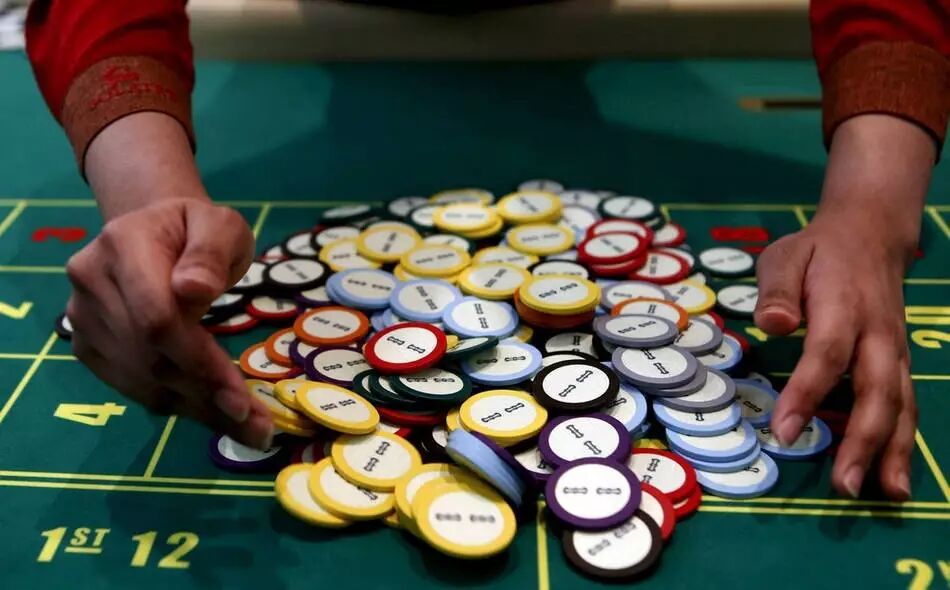
▲ Gambling's real challenge is testing human greed and fear.
When risks hit, if the leader abandons ship, it definitely sinks.
By 2003, the crisis exploded. Payment delays stretched at every cafeteria. Then one day, 100,000 Beijing white-collar workers came down for lunch to find no food. Property managers, police — everyone was looking for me.
I hid in a remote mountain in Guangdong. Fear's first instinct is escape. No one is a saint; I was no exception.
After some time in the mountains, I kept asking myself: Do I hide here forever? The answer was no.
I returned to Beijing to settle debts, selling off locations. Three to a pork vendor, four to a beef vendor, keeping two. The company had effectively collapsed.
This was my 300 million RMB lesson: businesses always face risks, but whatever happens, the leader cannot run. When the captain jumps, the ship sinks. If you step up to face it, investors gain confidence, employees gain confidence. A CEO's experience, values, and mental state determine how far a company can go.
Find something you truly love, and give yourself completely to it.
The following spring, SARS ravaged Beijing. I found joy elusive. In a health magazine, I took a 10-question psychological test; nine answers indicated depression. At Beijing Sixth Hospital, the diagnosis was severe depression — medication prescribed.
Only my daughter's birth brought gradual recovery. Love heals everything, transforming me from a depression patient into someone consistently happy and optimistic. This experience taught me much about life.
My core conclusion: To be happier, we must find something we truly love and devote ourselves completely to it.
Finding the Perfect Partner: Your Life's Quality Depends on Who Surrounds You
In 2004, visiting Chengdu, I happened upon a stunning dish and asked to speak with the owner. I shared grand visions — come to Beijing with me, expand fish hotpot nationwide, make him a billionaire. He heard "franchise fee: 100,000 RMB." But I wanted us both to invest, to build this together. He threw me out on the spot. "Get lost."
Yet I was relentless about making this owner my technical partner. For the next six months, I visited Chengdu nearly every week, painting the future again and again. For his birthday, I bought flowers for this man more than a decade my senior. Finally, one day, he agreed — signed, sealed, came to Beijing. Jokingly, I think he wasn't convinced, just worn down.
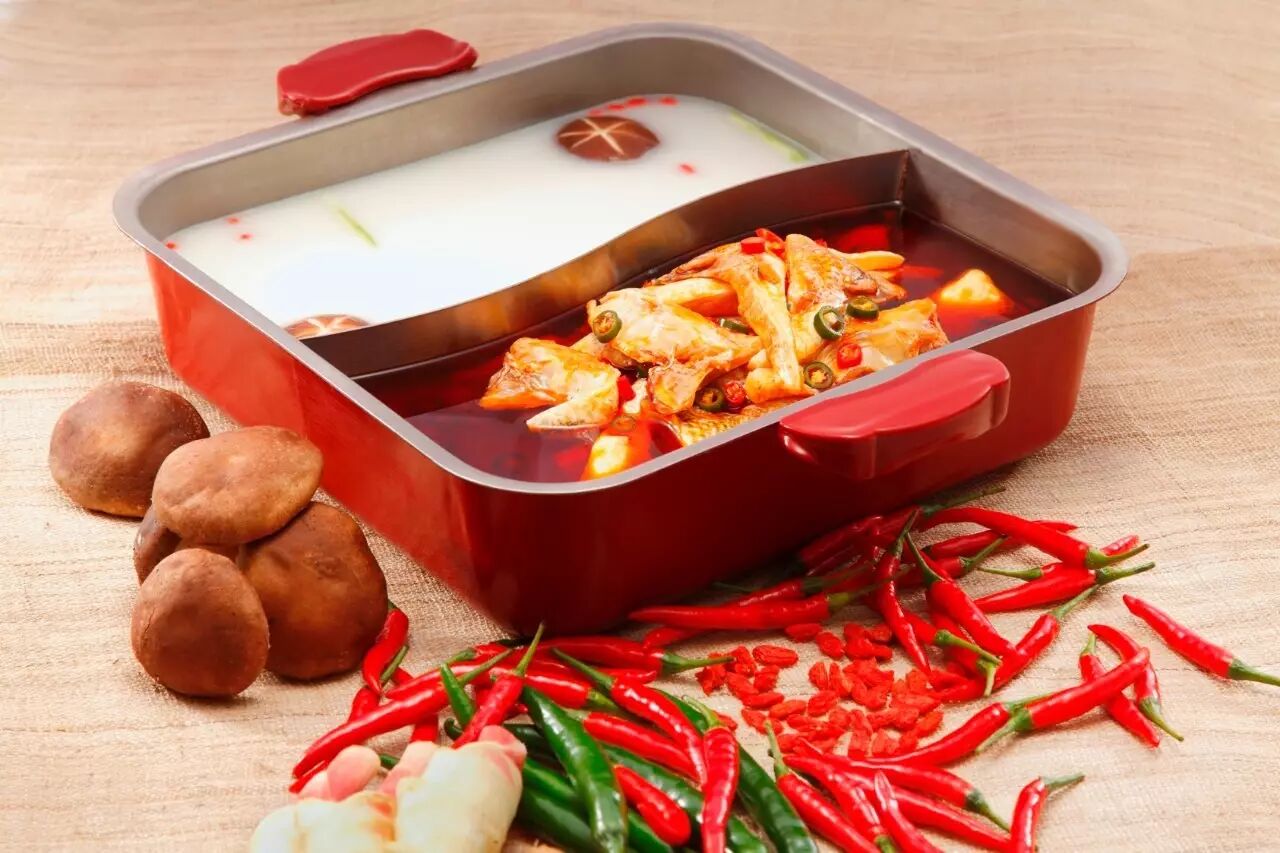
▲ Six months, multiple visits — finally, the perfect partner.
That owner is now my partner Xu Bochun, and that stunning dish was the Suobian fish hotpot now served at Xinlaodao.
Old Xu, dragged along by me through it all, for over a decade. We've never argued, both friends and partners, genuinely happy. Xinlaodao made money; I delivered on my promise — his paper wealth exceeds 100 million. Yet neither of us considered cashing out; we have bigger goals.
Now Old Xu and I have founded Xinliangji. In just over six months, it's raised two funding rounds — Pre-A from FreeS Fund, followed by a round led by Eastern Bell Capital with FreeS Fund participating.
My conclusion: all business is people's business. Your life's quality is intimately tied to those around you. You spend roughly eight hours daily with your partner. If they put you in hell, you're in hell. For greater happiness, invest in high-quality close relationships. Many neglect this, letting pots clash with pans — more intimacy, more conflict, while remaining polite with strangers. This is wrong.
Management is knowing, believing, acting, and understanding.
Management Against Human Nature Is Wrong
A basic fact: management is a practical science — you can't master it through lectures alone.
My shareable management experience comes down to four points:
▍First, management's core is knowing, believing, acting, and understanding.
Our problem is rarely knowing too little; it's acting too little.
Personal example: after losing at gambling, I recognized my past thinking and behavior were wrong, and quit. Meanwhile, my depression doctor insisted I quit smoking. Trying to abandon everything, I couldn't sustain it — relapsed six or seven times.
For someone determined to quit then relapsing, the deepest damage isn't physical but psychological. Each relapse devastated me — unable to control even this desire? Only after complete cessation did I feel immense inner strength.
▍Second, management begins with self-interest, builds on altruistic action, achieves mutual benefit.
All management starts selfishly, but pure self-interest prevents growth. Within the闭环 of government, employees, suppliers, investors, and customers, companies must benefit others while benefiting themselves.

▲ Management: book knowledge only goes so far.
▍Third, managing people is like managing water — work with human nature.
People seek benefit and avoid harm. Don't avoid this reality, just as you can't avoid water flowing downhill. Management against human nature is necessarily wrong. Of course, management isn't simply letting water flow unchecked — build proper dams, channel it to irrigate fertile fields.
▍Fourth, manage yourself, influence others.
Management's influence comes from self-discipline, down to what time you arrive at the office. Last year I told my employees I'd develop six-pack abs. For a year, I've risen at 6:30 for the gym; now four are faintly visible. Never just talk.
We can't reach Jinan in one step,
But We Can Walk Eight Hours Daily, Forty Kilometers
▍Three key questions for leading teams: Where are we going? How do we get there? What happens when we arrive?
Walking together, the destination matters. Moving toward an exciting goal gives team walking meaning. Whatever the industry, a leader's first task is continuously articulating this vision, making employees feel you're daily advancing toward it, every action serving it. And this vision must be ambitious — not quickly achieved with nothing left to do.
Employees follow because they believe you see farther. But they may lack your conviction, needing concrete images to aspire toward. So next, break the vision into tactical milestones.
Suppose we're walking to Jinan — many might laugh at the impossibility. But divide 400-500 kilometers into stages: eight hours daily, forty kilometers, with breaks for skewers and drinks, waiting for stragglers, celebrating fast walkers. Two weeks, goal achieved.
Then what in Jinan? As the saying goes, those without long-term worries have near-term troubles. If the destination disappoints, the pond nearly dry — have contingency plans, anticipate surprises.
▍Religious organizational wisdom merits study.
I'm not Buddhist, but during my management studies I encountered an interesting phenomenon: companies face complaints about overtime. Yet religious organizations have persisted millennia — some forbidding marriage, children, or meat — with not a single complaint. Instead, believers voluntarily evangelize, persuading others to join.

▲ Religions achieve voluntary belief and spontaneous evangelism — organizational management lessons exist here.
This is organizational management victory. We don't worship, but can learn with cautious openness. Companies must have their own values, worldview, philosophy. Entrepreneurs who don't think this through won't go far. Religious ritual, teaching systems, rules, and self-innovation mechanisms contain wisdom to gradually unearth. Personally, Tao Te Ching greatly helped, profoundly influencing my thinking.
Don't Try Training Pigs to Climb Trees,
Focus Energy on Finding Exceptional People
▍Training: Every restaurant company should learn from McDonald's.
McDonald's has 30,000+ restaurants, millions of employees, worldwide — yet regulations are thoroughly implemented, training systems most comprehensive. From a US headquarters office, the CEO ensures that at any McDonald's globally, employees ask, "Hello sir, would you like to try our new burger?"

▲ Worldwide McDonald's follow unified, process-driven operational standards.
My training insights:
First, training's foundation is hiring. In management, don't waste energy educating the especially slow. Don't train pigs to climb trees; invest hiring energy in finding exceptional people.
Second, training is an asset, not sunk cost. Good companies train instead of manage, train while doing, replacing "I supervise you" with "I teach you." At McDonald's, new employees feel they're learning skills, that mastery enables promotion.
Third, training progresses: philosophy, knowledge, skill, practice. Picture a tree: philosophy is roots, knowledge the trunk, skills the leaves, practice the fruit. Design different curricula for each position.
Fourth, systematic training requires: culture, organization, tools. Build training culture where training completion becomes necessary for promotion.
▍Employee motivation: talk dreams, talk mission, and talk money.
On motivation, I share these insights:
First, no motivation fails; only motivation also fails. Motivation solves "I'm willing," not everything.
Second, motivation is mobilization — getting everyone to stand up, overthrow the landlords, redistribute land. Before motivation, effective organization must exist so excited employees follow discipline — squad leaders, regiment commanders in place. Motivation and organization: both essential.
Third, good companies talk dreams, mission, and money. Don't create negative energy; cultivate employee pride.
Finally, the best way to learn management is practice. Everything I've said comes from my practice. You'll develop your own methods through yours. Eighty-four thousand dharma doors, all paths to cultivation. Be a person of integrity, then follow your "way," your values and methodology, to achieve.
(Source: Baichanghui. Contact original author for reprint. Welcome to share to Moments.)
About Baichanghui (WeChat: baichanghui666)
Baichanghui is a sharing-economy platform for short-term event venue rentals. Users can book gathering and event spaces nationwide via mobile. Whether you need an art museum for a product launch, a private villa for a colleague gathering, or an off-site to spark inspiration — find your venue here, precisely and quickly.

Li Feng x Li Jian: Behind Crayfish's Nationwide Craze, a 10 Billion+ RMB Business
Three Squirrels' Zhang Liaoyuan: Six Things I Did in My First Startup Year