Channel Penetration Is Just the Beginning: How to Capture New Retail Opportunities in 2,860 County-Level Cities | FreeS Talk

Two years selling cars, and word of mouth still works better than anything else.


Two Questions About New Automotive Retail:
Consumer purchasing power in third- and fourth-tier cities has been steadily rising, yet China's retail sector has developed unevenly over the past several decades. A distribution system cascading from national general agents to provincial agents, then down to municipal, county, and township levels covers 2,860 districts and counties. For some brands, goods get marked up at each tier — the more remote the location, the higher the price. Other brands simply haven't had time to extend their reach downward.
New retail models need to reduce transaction costs and improve transaction efficiency. So how can we meet the needs of lower-tier city consumers with lower prices and better quality, while building competitive moats?
Today, we've invited Zhiyuan Zhao, VP at FreeS Fund, and Pengyun Chen, founder of Huasheng Haoche (花生好车), to discuss this using car sales as an example. Some details in this conversation may surprise you:
- Even though lower-tier cities have become the main growth market for new vehicles, 4S stores are scarce, and finding a suitable car remains difficult;
- Despite how developed mobile internet has become, the most effective customer acquisition methods are still field marketing and word-of-mouth through social networks;
- For young consumers, a car is not an asset but a consumer product;
- For channel下沉, the most important lesson is learning to manage supply chains and inventory.
We also have some questions we'd like to explore with you — feel free to share your thoughts at the end:
▍ If 4S stores, which have been dominated by joint-venture brands, eventually become a thing of the past, what kind of distribution system will emerge in the mid-range car market for all but a handful of the most important brands?
▍ How will automotive retail in lower-tier cities evolve over the next 10 years? Will the Automobile Sales Management Measures that took effect on July 1 trigger an explosion of multi-brand stores?

After the Golden Decade, First- and Second-Tier Car Markets Approach Saturation
Zhiyuan: When we invest in consumer finance companies, we focus more on whether they can effectively capture offline channels and consumer pathways. Only by capturing consumption scenarios can there be any possibility of extending upward into financial services. Huasheng Haoche has been operating since June 2015 — about two years now. Why did you choose cars as an entry point for consumer finance? And how did you decide on new cars rather than used cars?
Chen: I had previously founded a company in internet finance. Considering rising traffic costs and financial risks, I had been searching for a closed-loop model with both funding sources and asset origins. Starting from late 2015, our company repositioned from pure finance to consumption-first, finance-second. Even now, we continue strengthening our consumption attributes while weakening our finance attributes.
It's foreseeable that consumption upgrading will create significant growth space for consumer finance. The asset side of this industry roughly takes the forms of housing, vehicles, and cash loans. Cars and houses are similar — both are low-frequency consumption. But compared to housing, which is vulnerable to policy fluctuations and involves excessively large single transactions, car consumption better fits the characteristics of small, dispersed amounts.
Meanwhile, auto finance currently has only 20% penetration in China, compared to 80% abroad — a large gap that gives us time to enjoy growth dividends.
Cars can be divided into new and used, and by price into luxury, mid-range, and A-segment vehicles. We ultimately chose new cars and the A-segment.
This is because used cars are basically "one car, one condition" — if your monthly sales target is a thousand units, that means each of those thousand cars needs to be physically shown to consumers, creating enormous pressure on logistics and inventory. You also need teams with vehicle condition assessment and valuation capabilities. New cars are standardized products — consumers don't need to see the exact car they're buying, they can just look at display samples and place orders. The barrier to entry is lower when starting with new cars.
That said, we'll gradually increase our used car ratio over time. While most current customers are buying their first car, since our first customer placed an order in August 2015, nearly two years have passed. Slowly, customers will have needs to upgrade to better vehicles. Accordingly, we'll open up used car trade-in categories, letting customers sell us their existing vehicles and trade up for new ones.
Zhiyuan: Which cities do you currently have stores in? What specific services do they provide? How are they different from traditional 4S stores?
Chen: We now have stores in nearly 200 cities nationwide, concentrated mainly in second- and third-tier cities. We'll continue下沉 channels this year, opening stores in fourth- and fifth-tier cities.
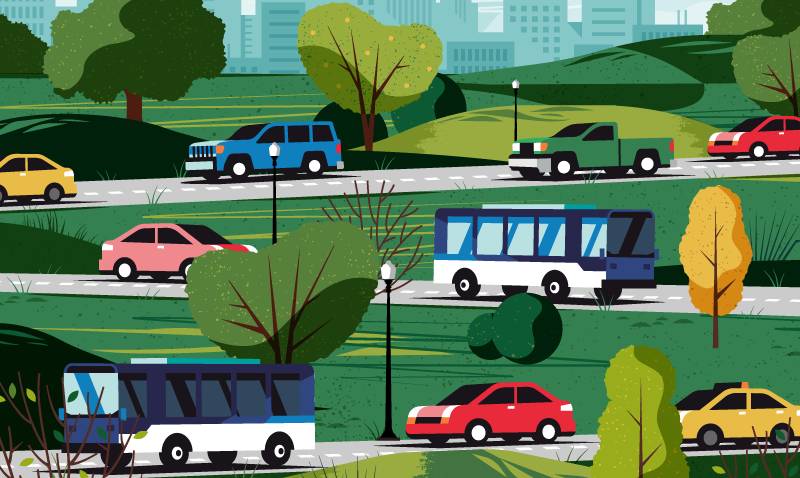
▲ Traditional car sales systems struggle to effectively penetrate third- and fourth-tier cities.
Our store format has undergone one transformation — the biggest change visible from the outside. In our early finance business days, customers came to stores to apply for installment loans, so offices were basically in commercial buildings. Later, when we moved into auto consumer finance, customers came to buy cars. Finance is intangible, but cars are physical products — we had to let customers see the vehicles, so stores needed display functions.
Now, each store averages about 300 square meters, able to display 3-5 cars simultaneously. Around the entire car-buying process, stores also have lounges, consultation rooms, and signing rooms. Here, we borrowed from Lianjia's concept — Lianjia stood out among numerous real estate agencies partly thanks to standardized management and service across 5,000+ directly operated stores in 24 provinces and cities.
Strictly speaking, our stores fulfill 2S responsibilities — no after-sales, only pre-sales and sales. In each region, we select a few repair shops with good cost-performance ratios as recommended after-sales service points for our customers to go to for maintenance.
Zhiyuan: Why did you choose third- and fourth-tier cities?
Chen: The existing car retail system mostly targets first- and second-tier cities. This system began in 1999 when GAC Honda opened China's first 4S store, and went through a golden decade. Especially from 2000-2005, there weren't many models to choose from — mostly joint-venture cars — and overall supply fell short of demand; sometimes you needed connections just to buy a car.
From 2010, as car brands and models kept increasing, supply gradually exceeded demand. First- and second-tier city markets began approaching saturation. Of China's roughly 20,000+ 4S stores, 70-80% are in first- and second-tier cities.
From the supply side, third- and fourth-tier cities generally have weaker vehicle supply than first- and second-tier cities, relying mainly on secondary dealers and local auto trading companies — we can open up new consumption space here.
Risk Control in an Acquaintance Society: Willingness to Repay Trumps Ability to Repay
Zhiyuan: The "direct lease" financing model you use — how does it differ from currently popular auto finance? During sales, do customers accept direct lease? Is there a cognitive barrier?
Chen: The characteristic of direct lease is that throughout the customer's entire vehicle usage cycle, the car remains under company name, only transferring to them after all rent payments are completed. Traditional auto finance has customers buy the car first, then mortgage it to the bank for installment loans. With the car under company name, the asset is safer. And because risk is lower, there's no need for high down payments to secure safety — down payment ratios can be reduced to 10-20%.
Currently, customers accepting direct lease are already the majority. There's a gradual process of shifting consumption concepts. When we started in 2015, very few people understood it. But we had already seen the trend from European and American auto consumption markets: full payment, installment loans, and financing leases each account for roughly one-third. The domestic market definitely has huge growth space.
Zhiyuan: After customers raise finance needs, how do you conduct risk control and screening?
Chen: Our current overdue repayment rate is very low, for three reasons: first, the direct lease format is inherently low-risk; second, we focus on cars priced 60,000-150,000 RMB, which are less likely to be targeted by financial fraud groups; third, customer mobility is low in small cities — most customers are locals in an acquaintance society, and they won't relocate their entire family just to default on a 100,000 RMB car.

▲ Within acquaintance networks, car buyers have stronger repayment willingness.
Our core risk control logic is anti-fraud. Stores conduct preliminary review, verifying document authenticity; headquarters conducts final review through big data analysis. In our risk control model, willingness to repay is more important than ability to repay — as long as customers aren't here to scam cars, it's fine.
Low-priced cars don't create much monthly repayment pressure, generally 2,000-3,000 RMB, which matches the repayment capacity of consumers in third- and fourth-tier cities who want to own a car. Even if overdue non-payment occurs, since the car remains under company name, we can quickly recover it for secondary sales.
Zhiyuan: Through customer and potential customer contact over these two years, you must have gathered considerable credit records. Since third- and fourth-tier cities relatively lack credit systems, do you have plans to further utilize this credit data?
Chen: We have the idea, but implementation won't come so quickly. What we can do now is when a customer buys their first car from us and wants to upgrade in a few years, they don't need secondary credit checks — the system already has complete credit records, including early documentation and later repayment records. Based on this trust relationship, we'll recommend car-related products to customers in the future. We won't extend to other categories for now.
Small Showrooms, Cross-Brand: The Future Belongs to Automotive Supermarkets
Zhiyuan: The auto finance market has developed considerably these two years — Yixin from Bitauto, as well as trading platforms like Uxin, Renrenche, and Guazi have all gotten into finance. How do you view the industry's overall development? And as competitors using cars as an entry point for consumer finance, how do you view the challenges they pose?
Chen: What's obvious is that everyone recognizes the traditional 4S store-centered distribution system needs reform.
4S stores have several problems. First, single-store investment is too large — from 10 million to tens of millions of RMB, caused by manufacturer-dominated high brand investment in the past. High investment also means 4S stores in small cities can't achieve ideal returns on investment and won't下沉 to third- and fourth-tier cities.
Second, under manufacturer requirements, 4S stores are all single-brand operations — customers need to visit 4-5 stores to select a suitable model. For 4S stores themselves, it's also hard to capture existing customers' consumption upgrading needs for profit, because customers often try a new brand when trading up. Whether from the new policy taking effect in July (Automobile Sales Management Measures) or from customer needs, the single-brand operation status quo needs to change.
The final problem is that currently 4S stores have low finance penetration rates. Some 4S stores already sell vehicles below procurement price, needing finance penetration to improve profitability while also reducing customer purchase costs.
Since everyone sees these existing problems, the next thought is: what will the next generation of automotive retail terminals look like?
Our approach was to look for answers in mature foreign markets. China's market conditions over the next 10-20 years may approximate Japan and America's current state: automotive retail terminals appearing in the form of multi-category comprehensive car supermarkets.

▲ Cross-brand comprehensive car supermarkets will become an important store format.
From the price perspective, we believe growth points will come more from A-segment cars, in the 60,000-150,000 RMB price range. Much higher than that, growth rates are relatively lower.
Examining Japanese and American markets, we observed several phenomena:
First, small showroom marketing — selecting a 300-500 square meter space in busy commercial districts with heavy foot traffic, putting pre-sales and sales functions there, while moving after-sales maintenance to the suburbs to reduce costs.
Second, cross-brand operations — small stores segment by customer groups, aggregating different brands' models accordingly. For example, a store targeting 30-35 year-old customers might have Volkswagen and other brands matching that age group's characteristics; new and used cars are also placed together, because customer needs ultimately come down to buying a suitable car at a suitable price through comparison, not necessarily having to buy new or used.
Peers are all developing in this direction, with different paths, but everyone will eventually converge on cross-brand, new-and-used-car integration. Uxin and Guazi's approach is grafting new cars onto used car channels; we and UCAR are adding used cars to new car channels.
Automotive new retail is a product of this specific era — a new ecosystem emerging after the supply-demand balance between manufacturers and consumers was broken. This era is like the previous e-commerce era, naturally giving rise to a batch of companies that can scale very large.
Zhiyuan: How do you acquire customers in third- and fourth-tier cities? How do consumption habits differ from first- and second-tier cities? What adjustments have you made for these differences?
Chen: When we conducted customer research, we asked customers who bought from us when they had originally planned to buy a car. Most chose 2-3 years later. The reason was they didn't have enough money to buy outright, and loans weren't convenient — many had incomplete credit records, making it hard to get reasonably sized loans from 4S stores or banks. Now, Huasheng Haoche lets them buy cars without saving up that much — that's the biggest change.
As for strategic adjustments, the most obvious was changing customer acquisition methods. I hadn't expected that despite how developed the internet is now, online customer acquisition in third- and fourth-tier cities actually works poorly; instead, the old methods still work better — reaching them through offline activity venues. So we changed from the original wait-for-customers-to-come dealership model to field marketing, having store managers go out to stations, communities, and malls, acquiring customers through various activities.
Currently, our offline customer acquisition outperforms online, and the most productive channel is referrals from existing customers. That is, third- and fourth-tier city customers' acceptance of new consumption concepts depends more on community relationships than the internet — community传播 works much better than online advertising.
Zhiyuan: This is a good thing. Because for building a new brand, whether you can get consumers talking about you is the best measure of reputation. This benefits long-term brand value building.
Chen: Many people ask: if large institutions or capital establish stores in third- and fourth-tier cities, how will we respond? My answer: we already have first-mover advantage here. A 2-3 year first-mover advantage may not mean much in big cities, but in small cities that rely on existing customer word-of-mouth for acquisition, it's enough to prevent us from being overtaken by latecomer big brands.
Of course, we'll gradually increase our online customer acquisition ratio in the future, including opening stores on Tmall, JD.com and other e-commerce platforms, continuously driving traffic to auto finance products.
Zhiyuan: Which models have sold well these two years? Have there been changes?
Chen: Our core logic for model selection is making hits — currently only about a dozen SKUs nationwide, with selection criteria being top-5 ranked models in each category. Since we mainly do A-segment sedans in the 60,000-150,000 RMB range, we selected models like Excelle GT, Lavida, and Sylphy, plus some SUVs — Haval H6, Trumpchi GS4, and Boyue all sell well.
We took some detours here. Early on, we launched many categories at once, but later found too many categories actually created choice paralysis for customers, and account managers couldn't deeply understand each model, greatly diminishing their presentation effectiveness. Later we focused only on hits. This was an important transformation.
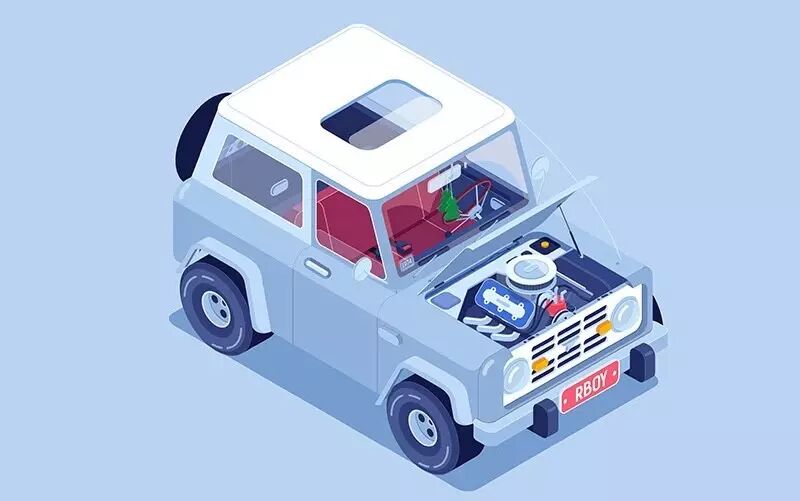
▲ SUVs satisfy customers' "bigger is better" consumption psychology.
Starting this year, we'll gradually increase SUV ratio while decreasing sedans. We've observed that in third- and fourth-tier cities, especially in the southwest and northwest, consumers don't particularly care about brands — they care more about car size, believing bigger is better, bigger is more face-saving, bigger is more convenient for travel.
Compared to post-70s and post-80s generations, for young customers, a car is more like a consumer product than an asset. Treating it as a consumer product means they know they can't drive one car their whole life, replacement frequency will increase, and they care more about what they can see and touch right now — sunroofs, big screens, leather seats. They're not particularly concerned with factors demonstrating quality like chassis and engines.
Additionally, road conditions in third- and fourth-tier cities have very high requirements for vehicle passability (the ability of a car, at a certain load, to travel at sufficiently high average speeds over various poor roads and roadless areas and overcome various obstacles), which SUVs also suit well.
Supply Chain Is the Hard Part and the Moat
Zhiyuan: Through which channels do you procure vehicles? How do you cooperate with OEMs? Do you encounter situations where they're relatively dominant?
Chen: Vehicles are procured directly from manufacturers — bypassing intermediate first- and second-level dealers to get goods straight from the factory is one of our advantages. First, it ensures reliable vehicle sources with manufacturer three-guarantee warranty policies; second, it ensures stable supply, avoiding dealer supply fluctuations due to off-peak seasons or other factors; third, it provides price advantages on vehicle sources, creating some margin to pass savings to end consumers.
In the 60,000-150,000 RMB price range, basically every brand has corresponding models, and competition among manufacturers is fiercest — as a channel, our bargaining power is relatively higher. Manufacturers' previous channels were more in first- and second-tier cities; now to penetrate third- and fourth-tier cities, they're willing to give us better prices. Plus, our cars are registered to company accounts, their cars to individual accounts — these are two completely different consumer markets. We won't affect their price system, so we haven't encountered strong resistance so far.
Zhiyuan: In building offline channels, to improve user experience and increase user trust, you must have taken on certain inventory and supply chain pressures, also making the model relatively heavier in form. What was your thinking at the time? What challenges did you encounter?
Chen: In the beginning, we had very little inventory. When customers placed orders, we'd have manufacturers ship cars, with a one-month to one-and-a-half-month wait in between — very poor customer experience. Customers often complained about paying but cars arriving late, and some customers were lost. For the customer acquisition costs we had paid, this also created waste.
Now, we first predict next month's sales and order cars from manufacturers in advance. While this brings certain inventory costs, it improves customer experience and reduces attrition rates — overall, it's still quite cost-effective.
To build the warehousing system, we brought in an executive who had previously been responsible for national logistics coordination at a logistics enterprise. The early approach was equipping each store with a small warehouse, shipping cars to stores in advance to sit in small warehouses. But this had problems. Store development was unbalanced early on, making it hard to accurately predict next month's sales — some stores had inventory but no orders for 2-3 months, while others grew faster than expected, having orders but no cars.
Later, we set up central warehouses in 10 major cities nationwide by region, centrally allocating inventory for surrounding 10-20 stores. This reduced overall inventory ratio on one hand, and on the other hand eliminated constant coordination between stores — unified turnover through central warehouses improved operational efficiency.
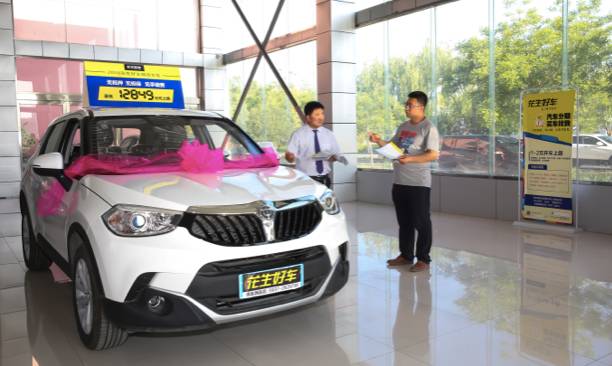
▲ A warehousing system built around stores can improve operational efficiency and enable rapid vehicle delivery.
Zhiyuan: Huasheng Haoche's model is quite solid — after our investment, you raised two more rounds, gaining recognition from both strategic and financial investors. Opening stores early, inventory allocation, and building your own supply chain require large human and capital investments, making things difficult and progress slower. But once achieved, it immediately becomes an unrepeatable advantage. As we often say, "do what's right, not what's easy" — this is precisely where the greatest value lies.
Having discussed advantages, we know every startup goes through very difficult periods. So in these two years, what was your biggest challenge? How did you solve it?
Chen: Our difficulties came from team issues brought by rapid store expansion. We're a labor-intensive company. Opening a new store, hardware investment requirements are very simple — just site selection and renovation. What's truly difficult is finding suitable store managers and sales account managers, building complete recruitment and training systems. We didn't pay enough attention to this initially, and spent tremendous effort on team building this year, building a training system at headquarters and establishing "Huasheng University" to ensure every new employee undergoes training and certification before starting work. Beyond hardware, store talent teams also need to achieve standardization.
(Feel free to share to Moments. For reprinting to other official accounts, websites, or mobile apps, please reply "reprint" to learn reprint rules and contact "FreeS Fund" for authorization. Copyright belongs to FreeS Fund.)


▲ Zhiyuan Zhao X Ning Rui: China's Biggest Market Is Right There, But You Can't See It

▲ 15 Minutes to Know What the Best Fintech Entrepreneurs Are Thinking?