Jiang Nanchun: 30 Years of Business Warfare — Winning Companies Plant a Single Word in Consumers' Minds | 2018 FreeS Fund CEO Annual Summit Recap

Whoever captures the 500-million-strong middle class captures the future.
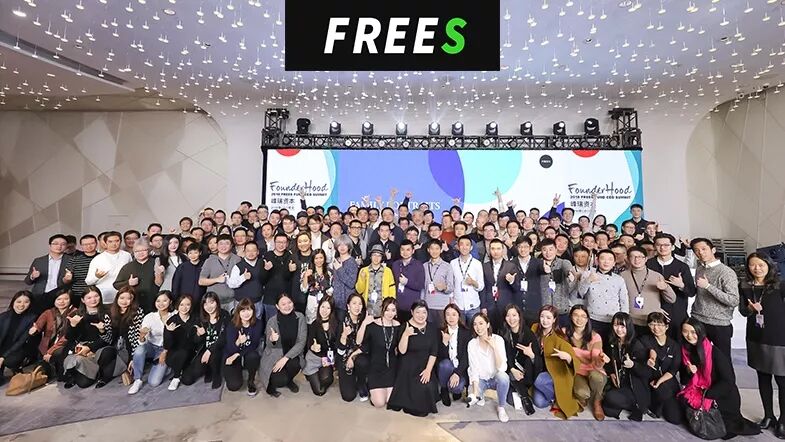
Entrepreneurship is about opening up new worlds, but it's also about living in an arena. Once you start, you're permanently at war. On January 19–20, 2018, in Shanghai, nearly a hundred CEOs from the FreeS Fund family gathered at the "2018 FreeS Fund CEO Annual Meeting" to reflect on 2017 and set out on the road ahead for 2018.
That day, FreeS Fund's longtime friend, Jason Jiang — founder and chairman of Focus Media — delivered a keynote on "Winning Hearts Matters More Than Winning Traffic." He noted that in recent years, 18 out of 26 consumer categories in China had shown signs of upgrading. In this transformation, startups need to find differentiated positioning, seize the time window, and capture consumer mindshare. By 2020, China's broadly defined middle class would surpass 500 million. "Whoever captures these 500 million people captures the future."
We've compiled his insights on consumer mindshare into this piece. We hope it offers some inspiration.

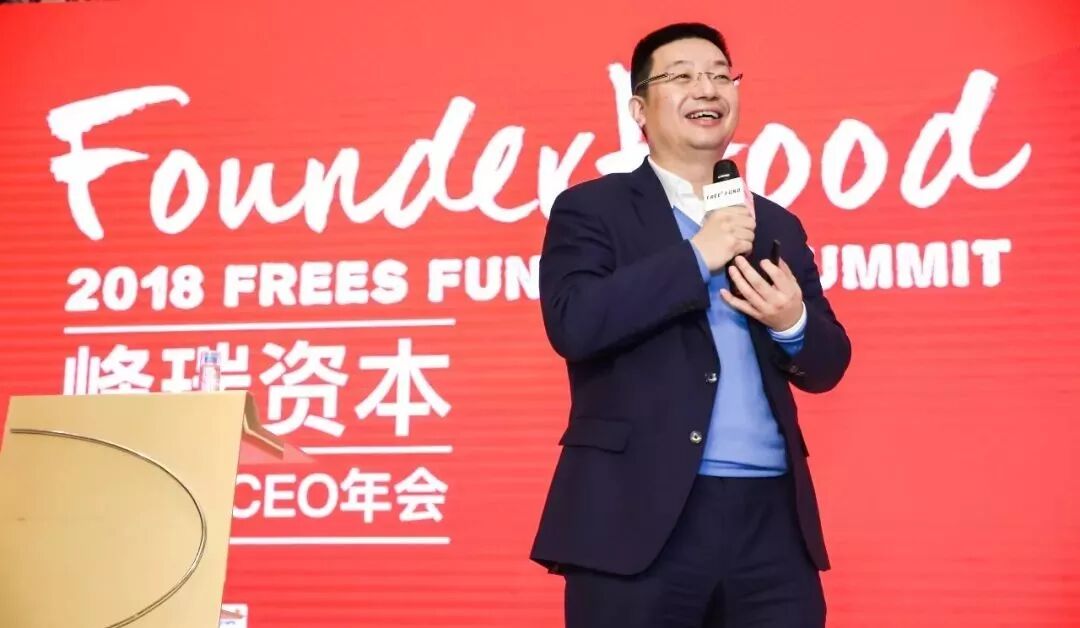
Jason Jiang: Winning Hearts Matters More Than Winning Traffic
Source: Jason Jiang's speech at the 2018 FreeS CEO Annual Meeting
I studied Chinese literature in college. From then until now, the book I've read most often is The Art of War. Sun Tzu had very low risk tolerance — he sought victory, not battle. He would only commit troops when his "calculations" ensured he could win. This "计" (jì) isn't about schemes or tricks; it's about calculation.
How do you calculate your odds of winning? Sun Tzu's answer comes down to five factors: Dao, Tian, Di, Jiang, Fa. "Dao" is the hearts of the people — "those who gain the people's support gain the world, those who lose it are abandoned." "Tian" is timing, the celestial window when each company rises and succeeds. "Di" is channel layout. "Jiang" is the team. "Fa" is operational efficiency and incentive mechanisms.
Among these five, Dao carries the greatest power — it can change Tian, Di, Jiang, and Fa.
For example, before JDB launched Wang Lao Ji, it conducted research in several cities and found low acceptance of the name "herbal tea." Shanghainese thought it meant overnight tea; Beijingers worried it would cause stomach pain. The conclusion at the time: herbal tea could never break out of Guangdong. For the next four years, JDB sold only about 100 million RMB annually, all within Guangdong.
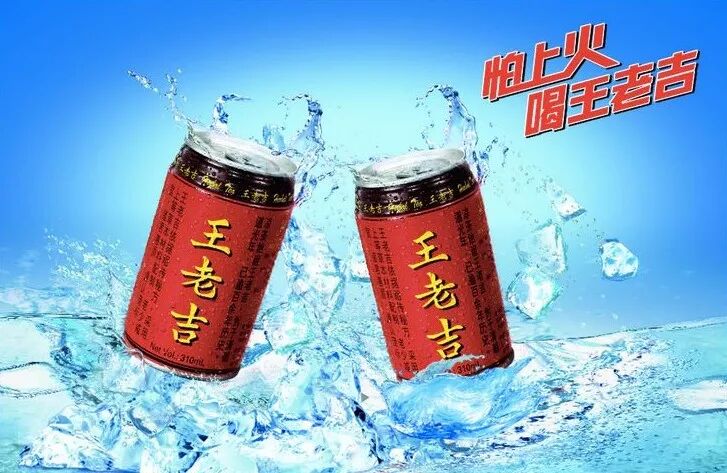
▲ Before tapping into people's fear of "getting inflamed," herbal tea struggled to leave the Guangdong market.
The turning point came when Mr. Deng Delong of Trout & Partners wrote the line "Afraid of getting inflamed? Drink Wang Lao Ji." The next year, sales jumped to 1.2 billion. A decade later, that number broke 25 billion, surpassing Coca-Cola and Nongfu Spring. The core reason: it captured people's fear of "getting inflamed." Once the power of human psychology is activated, it unleashes enormous energy.

Three Decades of Business Warfare: What Do Successful Companies Share?
Looking back at China's business wars over the past 30 years, we can roughly divide them into three stages.
Stage One: Early industry development, when the core battleground was supply and production. Companies that could control R&D and manufacturing quality won.
Stage Two: Those who mastered channels won. Wahaha, for instance, once blanketed over 2.5 million retail outlets to push its bottled water.
Stage Three: As shortage economy gave way to surplus economy, the era of consumer sovereignty arrived. Channels became increasingly weak. Consumers could only remember differentiated products. The battlefield shifted to the consumer's mind.

▲ In the surplus economy era, channels weaken and the battlefield shifts to consumer mindshare.
In this third stage, whether users have a clear brand perception of your company becomes a critical dimension for evaluating business performance. Only with brand recognition can you be chosen by consumers. This explains why some companies, despite showing losses in revenue and profit, still command high market caps. They have mindshare among consumers, and converting that recognition into profit is only a matter of time.
From another angle, many companies love to talk about cost-performance ratio. But unless you can permanently maintain cost advantages, the cost-performance path doesn't go far — sooner or later, you'll end up in price wars, traffic wars, and promotional wars.
In fact, a company's greatest cost isn't factories, personnel, or distributor channels — it's the cost of consumer cognition. Consumers have inertia in their choices; cultivating new habits isn't easy. So companies must occupy a simple, clear word in the consumer's mind. In autos, Mercedes-Benz means prestige, Jeep equals off-road, Tesla is synonymous with electric. In phones, Oppo excels at photography, Vivo is the Hi-Fi music phone, Gionee offers super battery life, Xiaomi delivers great value, Apple is for the fashion-conscious, Huawei is preferred by business professionals...
Every brand plants a simple word in consumers' minds, and the clarity of that word can even determine a company's profit margins.
Four Ways to Find Differentiated Positioning
How do you find the right word for yourself — one that can capture consumer mindshare?
Type One: Own the category. When there's no leading brand in your industry, you must establish a conditioned reflex in consumers' minds as fast as possible, making your brand synonymous with the category and becoming the number one player.
Take UCAR as an example. In 2010, the car rental market was still early; consumers barely had "car rental" in their mental vocabulary. Several players existed — eHi had roughly 1,200 cars, Top1 had about 1,000, and UCAR had 600, half of eHi's fleet.
Charles Lu, UCAR's chairman and CEO, did one thing right: he launched the slogan "For car rental, choose UCAR." This established clear recognition in consumers' minds at maximum speed. We discussed where people who rent cars would likely be — apartment buildings, office towers, airports. He then allocated 80 million RMB to penetrate these three scenarios with this slogan. By UCAR's 2014 IPO, it had over 91,000 vehicles, 1.5 times the combined total of the second- through tenth-largest players.
Type Two: Own a characteristic. When there's already a leader in your industry, you need to find another path and differentiate. In beverages, facing giants like Master Kong and Wahaha, Wang Lao Ji claimed the "prevent inflammation" characteristic, while Red Bull focused on mental boost with "Tired? Drink Red Bull."
If the industry leader plays defense, the number two must play offense — turn the leader's strength into a weakness. In the US car rental market, Hertz and Avis were the top two. Hertz had virtually no weaknesses, making Avis's challenge difficult. But Avis ran a clever airport ad: "We're number two, so our lines are shorter" — transforming Hertz's advantage into a disadvantage in that specific scenario.

▲ Brands must establish conditioned reflexes in consumers' minds at maximum speed — either becoming synonymous with a category or owning a specific characteristic.
Another familiar example: when Ele.me competed with Meituan Waimai and Baidu Waimai for the white-collar delivery market, it faced disadvantages in funding, traffic, and brand awareness. But these weaknesses could also become strengths. First, less money meant more focus — spreading yourself thin dilutes attention. Ele.me could emphasize doing only food delivery; the more focused, the easier to claim favorable mindshare. Second, less traffic meant going straight for "mindshare detonation" — high-traffic platforms tend to funnel traffic to themselves, potentially missing the time window. Third, Ele.me had a great name. For startups, a good name can be fundamental to success.
Type Three: Focus your business. VIP.com, for instance, positioned itself as "a website specially dedicated to flash sales."
Type Four: Create a new category and land in unoccupied territory. Guazi Used Car Direct Sales Network pioneered the "sell directly person-to-person, no middleman taking a cut" model.
In short, on the entrepreneurial journey, no technology is permanently leading, and no business model is uncopyable. Leading technology and new business models only give you a time window.
Looking at successful companies in China, we find they either possess irreversible intellectual property or "mindshare property rights." The former — like Qualcomm, Huawei, Intel — invest massively in R&D, which most Chinese companies cannot replicate. For most companies, then, to achieve exponential growth means finding a highly differentiated position, seizing the time window, and planting a word in consumers' minds.
Good Ad Slogans: Customers Believe It, Salespeople Use It, Competitors Hate It
Once you've found that word, the next step is crafting the slogan. I once directed commercials, and I have three small tricks: pressure the boss, find the top salesperson, find loyal customers.
Specifically: first, make the boss state in one sentence why consumers should choose you — forcing the boss to subtract and simplify. The resulting sentence is usually right. Second, the best slogans are sentences people actually use. Go to your stores and find your top salesperson — observe what they say to close deals. Or find loyal customers who recommend your product and hear how they describe it in word-of-mouth.
If customers believe it, salespeople use it, and competitors hate it — you've got a good slogan.
So how do you make consumers believe what you say? Here are some methods for reference:
- Best-seller appeal. 80% of consumers follow the crowd — leverage this. Example: "Xiang Piao Piao milk tea — 1.2 billion servings consumed annually."
- Opinion leader endorsement. DingTalk, during its launch phase, recruited executives from numerous internet companies: "We're all using DingTalk — stay focused on work."
- Leadership or expert brand. Example: "Guazi Used Car Direct Sales Network — national sales far ahead." "Sensodyne — the anti-sensitivity toothpaste dental experts recommend." Consumer minds have limited capacity, dislike complexity, and crave security. So slogans should use simple sentences, claim the top one or two positions, and write "trust certificates" through expert recommendations and award endorsements.
- Long heritage. Example: "Simmons — 146 years of scientific research for your eight hours of comfort."
- Pioneer status. Example: "Mercedes-Benz — 125 years! The inventor of the automobile."
- Manufacturing method. Example: "Angel A6 water purifier — Dow filter element, imported from the USA."
In short, companies must win this battle for recognition first. Otherwise, losing profit is only a matter of time, and you'll eventually fall into price wars and traffic wars.
Whoever Captures the 500 Million Middle Class
Captures the Future
Finally, I'd like to share some observations on trends in China's consumer market.
In recent years, China's consumer market has changed dramatically — what I call "fire and ice." From 2012 to present, 18 out of 26 consumer categories have shown continuous premiumization. The wave of consumption upgrading is unmistakable. It's quite evident: yogurt sellers and pet product vendors are doing quite well, while beer and instant noodle makers face serious challenges.
In this environment, what kinds of companies tend to succeed? We can reference a study by WPP Group, "BrandZ Top 100 Most Valuable Brands." It found that among successful brands, 40% were ultra-premium positioned and 24% were premium positioned. Among failed brands, ultra-premium and premium positioning accounted for only 5% and 9% respectively.
Who is driving this increased consumption? The answer: high-income, highly educated, high-ranking "three highs" individuals. They value innovation and trends, are willing to pay premiums for brand and quality, and are more receptive to user-centric products. They are the origin point of consumption upgrading.

▲ High-income, highly educated, high-ranking individuals are the origin point of consumption upgrading.
What do these middle-class consumers love, fear, and lack? My observation: they love beauty, play, and health; fear death, aging, and loneliness; lack love, mood, and stimulation. If your business can satisfy these three loves, three fears, and three lacks, you're starting from a good position.
This middle class is often heavily influenced by psychological factors when consuming. Shopping becomes emotional release; travel is psychological compensation; movies are emotional repair; running has become a fashion label for the middle class — whether it damages your knees doesn't matter, since people like Pan Shiyi and Yu Liang are doing it anyway.
In this group's eyes, low-price products increasingly fail to stand up — they're defeated by quality, brand, and the psychological satisfaction offered. Necessities are increasingly replaced by tasteful, stylish, self-labeling alternatives; utilitarian products are defeated by those offering emotion, atmosphere, and scenario; must-haves are replaced by wants and trends. Products must not only provide function but, more critically, soothe the soul and emotions.
To connect with the middle class, companies have roughly two approaches. One is to satisfy their need for self-reward after hard work. DiDi's copy, for instance: "If reality demands everything, at least find peace in the car. You who give your all — ride a little better today," offering the middle class psychological compensation. The second direction is what Yonghao Luo describes: becoming a better self. The middle class pays for salads, running, book clubs, and "Dedao" subscriptions — even if they never listen later, the moment of payment already achieves a leap in personal identity.
Today, China has 225 million middle-class people in the broad sense; by 2020, this number will surpass 500 million. Whoever captures these 500 million middle-class consumers captures the future.
(Feel free to share to Moments. For republication on other official accounts, websites, or mobile apps, please reply "republication" to learn the rules and contact FreeS Fund for authorization. Copyright belongs to FreeS Fund.)

Explore, Strive, Persist | 2018 FreeS CEO Annual Meeting Recap