3D Printing at 40: How Far From Niche Tech to Mass Adoption? | FreeS Report 31

Which industries are actually being transformed by 3D printing?

More than a decade ago, 3D printing was riding a wave of hype. In 2012, Time magazine ranked the 3D printing industry among "America's 10 Fastest-Growing Industries." That same year, China's 3D Printing Technology Industry Alliance was formally established, with multiple cities building 3D printing industrial parks. In 2013, Germany unveiled its Industry 4.0 development strategy, aimed at advancing smart manufacturing — and 3D printing was a critical piece of that vision.
After fading from public view, 3D printing never stopped advancing. In 2019, General Electric developed the world's first turboprop engine to use 3D-printed components. In 2022, bioprinters produced cardiac tissue with capillaries. In 2023, Meta (formerly Facebook) announced it was developing a 3D-printing robot equipped with the latest OpenAI artificial intelligence. This month, a Chinese research team used stem cell isolation, industrial-scale cultivation, and tissue engineering to grow a cell-cultured, large yellow croaker fillet that mimics real fish tissue.
How has 3D printing evolved over the past several decades? Where is it being applied today? And where is it headed? In this report, we focus on 3D printing and explore the following questions:
- How can 3D printing integrate with the latest AIGC technologies?
- Why did 3D printing first take off in aerospace and dentistry?
- What happens when biotechnology and 3D printing converge?
- Why is hybrid manufacturing considered the future of 3D printing?
- What are the strengths and weaknesses of 3D printing?
We hope this offers fresh perspectives. If you also follow 3D printing or are building a startup in frontier tech, feel free to reach out to the author: Qianhang Yan, Vice President at FreeS Fund (qianhang@freesvc.com).

Reader Giveaway
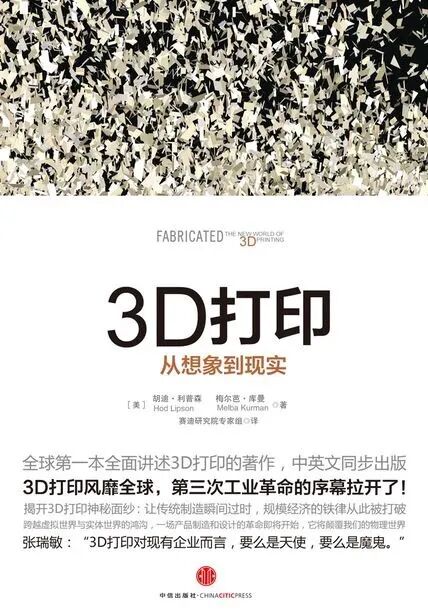
What new opportunities do you think 3D printing will create? Share your thoughts in the comments. The 5 most thoughtful responses will receive a copy of 3D Printing: From Imagination to Reality, which chronicles the breakthrough developments in 3D printing technology. Looking forward to your contributions~

/ 01 / 3D Printing Gives AI a Pair of Hands
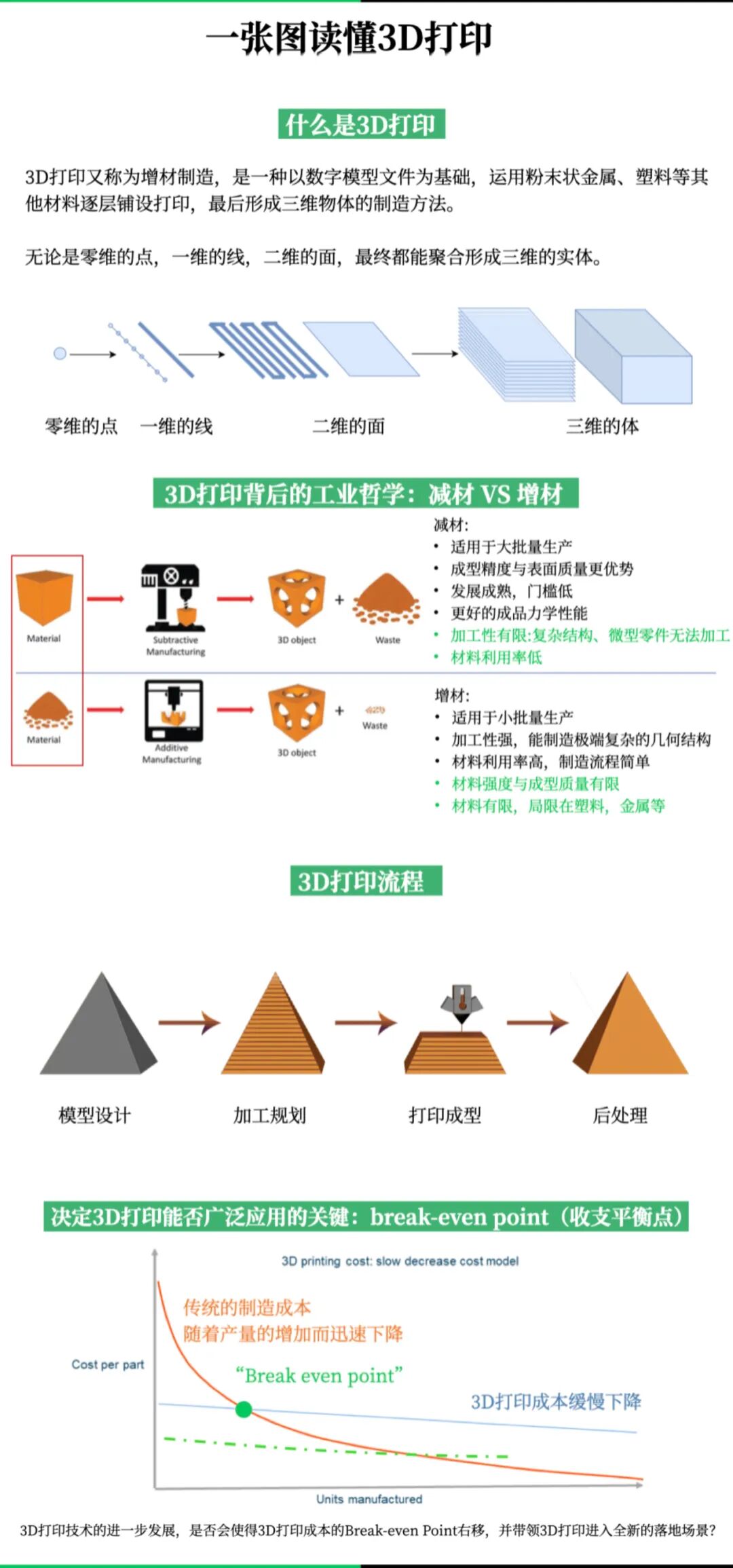
We can think of 3D printing as "building a mountain from grains of sand." Also known as additive manufacturing, it's a process that builds three-dimensional objects from digital model files, laying down successive layers of powdered metal, plastic, or other materials. Whether starting from zero-dimensional points, one-dimensional lines, or two-dimensional planes, everything ultimately aggregates into a 3D solid.
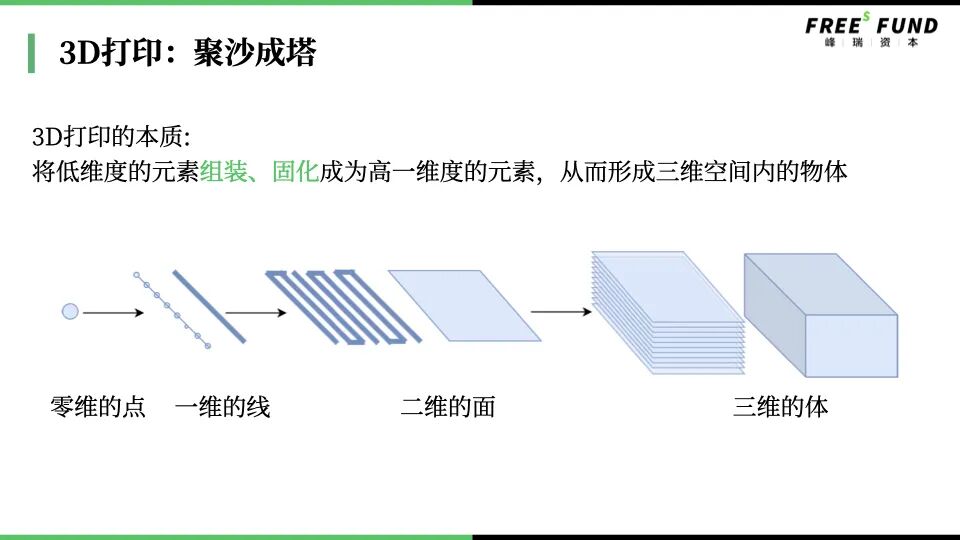
In everyday life, children pile sand to build castles and snap together blocks to create shapes. Think of sand as zero-dimensional points — through continuous accumulation and stacking, it becomes three-dimensional. 3D printing starts with a digital model and ends with a physical object. It's essentially a real-world mapping from geometric model to tangible thing. This makes 3D printing highly compatible with today's popular large models. People can output design models through large models, then have 3D printers manufacture the items. If AIGC and large models have given AI a paintbrush, 3D printing has given AI hands that can conjure physical objects into existence.
In December 2022, OpenAI released Point-E, a model capable of generating 3D assets from text in just seconds. In May 2023, OpenAI followed up with the upgraded Shap-E, which produces higher-quality models. Through 3D printing, these AI-generated assets can be automatically transformed into real-world physical objects.
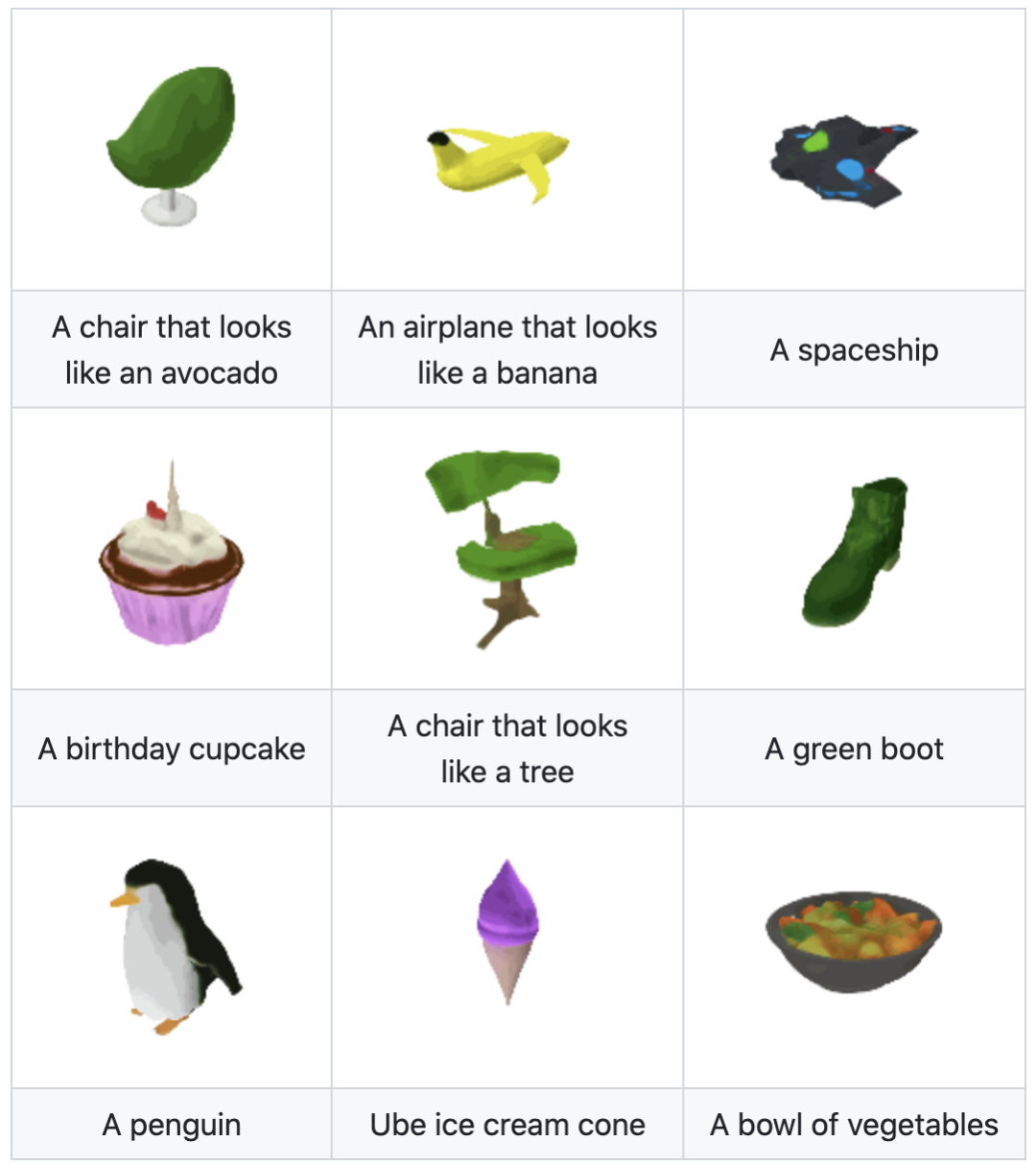
▲3D assets generated by OpenAI's upgraded Shap-E model. Image source: GitHub
Meta (formerly Facebook) also announced in 2023 that it was developing a 3D-printing robot equipped with the latest OpenAI artificial intelligence.
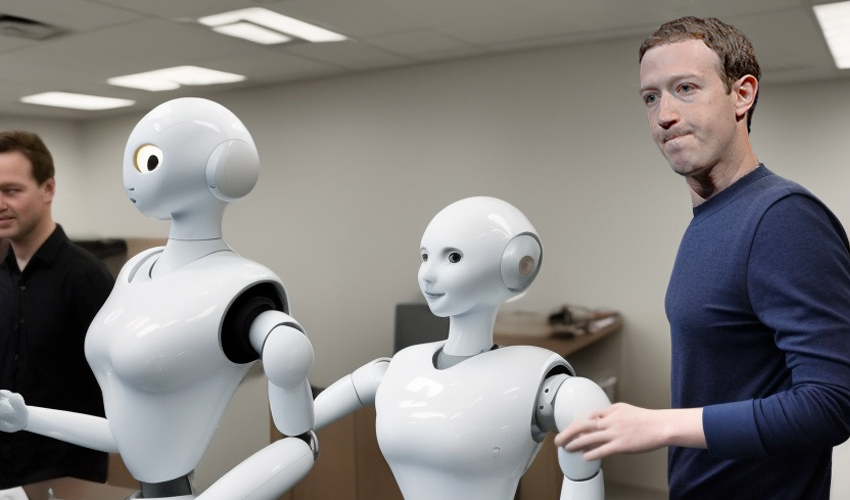
▲Image source: 3dnatives.com
Discussions about 3D printing have gradually shifted over recent years — from three decades of manufacturing and materials science perspectives toward entirely new domains. The rapid application of AI in 3D printing is challenging traditional 3D modeling workflows, which have largely depended on the expertise of designers and engineers. With AIGC and AI 3D scanning and reconstruction applications, even novice users can easily create large libraries of personalized 3D model assets. Meanwhile, the rapid rise of large language models like ChatGPT, with their reasoning capabilities, suggests the possibility of achieving 3D printing workflows through simple conversational interaction. These models are even showing significant potential in traditionally complex 3D printing process programming. In the future, such large language models could become reliable "master craftsmen" for users' 3D printing needs.
AI and 3D printing have opened people's imaginations about the future. Yet compared to borrowing new technologies from other fields, the core process challenges facing 3D printing itself — such as limited mechanical properties and insufficient surface precision — still need to be solved by 3D printing technology on its own. These challenges represent opportunities for new technological innovation. Whether from an entrepreneurship or investment perspective, capturing new technologies that can address current 3D printing process and application limitations may be the ticket to success.
/ 02 / The Industrial Philosophy Behind 3D Printing: Subtractive vs. Additive
Where does modern 3D printing technology come from?
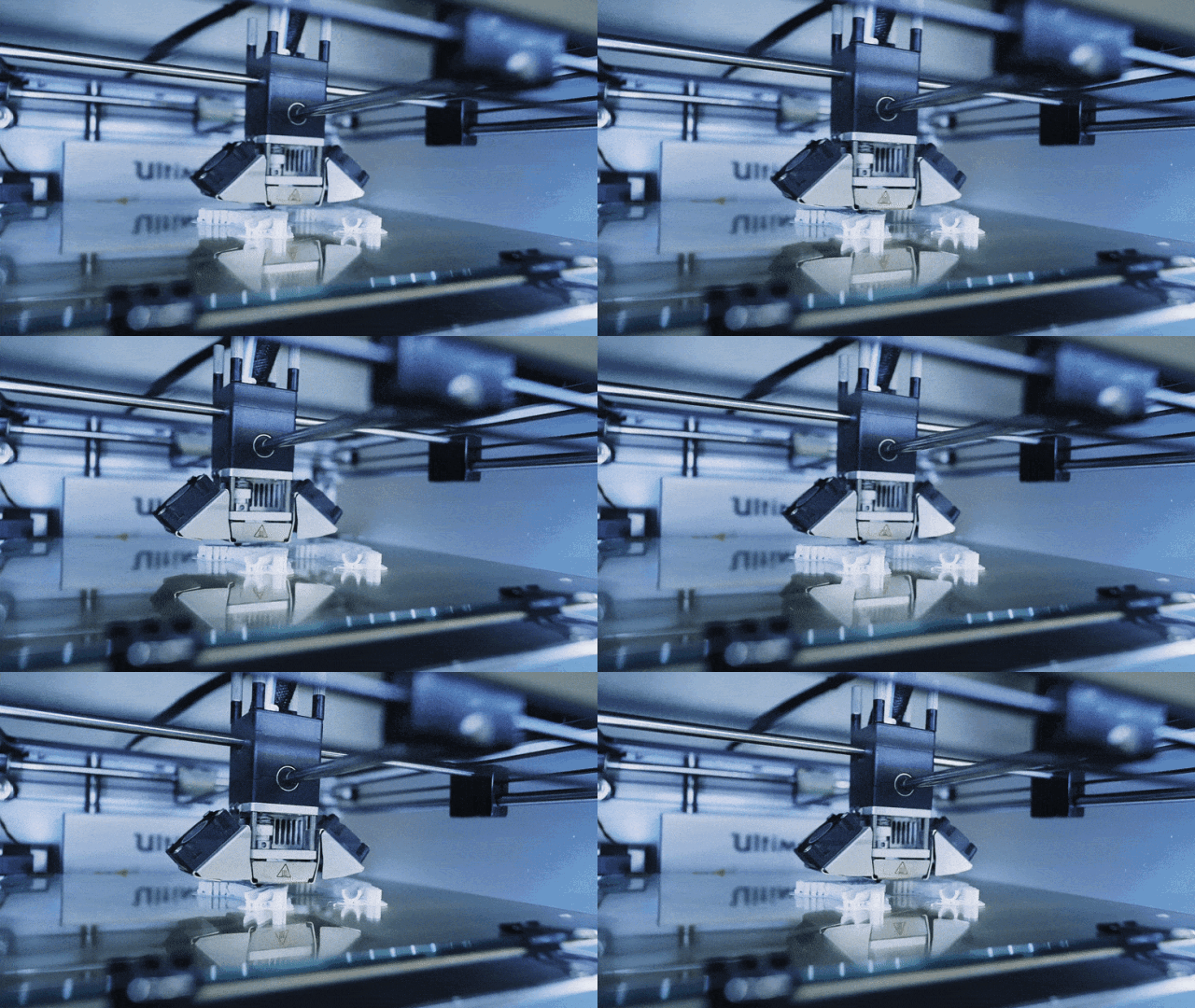
▲Image source: SciTechDaily
Hideo Kodama at Japan's Nagoya Municipal Industrial Research Institute invented an additive manufacturing method for 3D models using vat photopolymerization. In May 1980, Kodama filed the first patent related to this technology. In 1983, American Chuck Hull successfully invented SLA (Stereo Lithography Appearance) printing, using lasers to catalyze photosensitive resin into solid form and create 3D-printed parts. In 1986, Hull founded 3D Systems Corporation based on SLA technology. In 1987, the company launched the world's first commercial 3D printing system.
Over the following two-plus decades, various new 3D printing technologies emerged (FDM, SLM, CLIP, and others), and the base materials expanded from photosensitive resin to metal powders, bio-inks, concrete, and more.
As early as 2003 — before 3D printing technology became a household name — clear aligners were already using 3D printing to manufacture dental models. Clear aligners were among the earliest civilian sub-sectors to adopt 3D printing for mass production. We'll explore in detail below why dentistry became one of the first fields where 3D printing saw widespread application.
In 2008, someone wore a 3D-printed prosthetic (knee, foot, joint, etc.) in public for the first time. In 2012, 3D Systems launched Cube, the world's first out-of-the-box 3D printer.
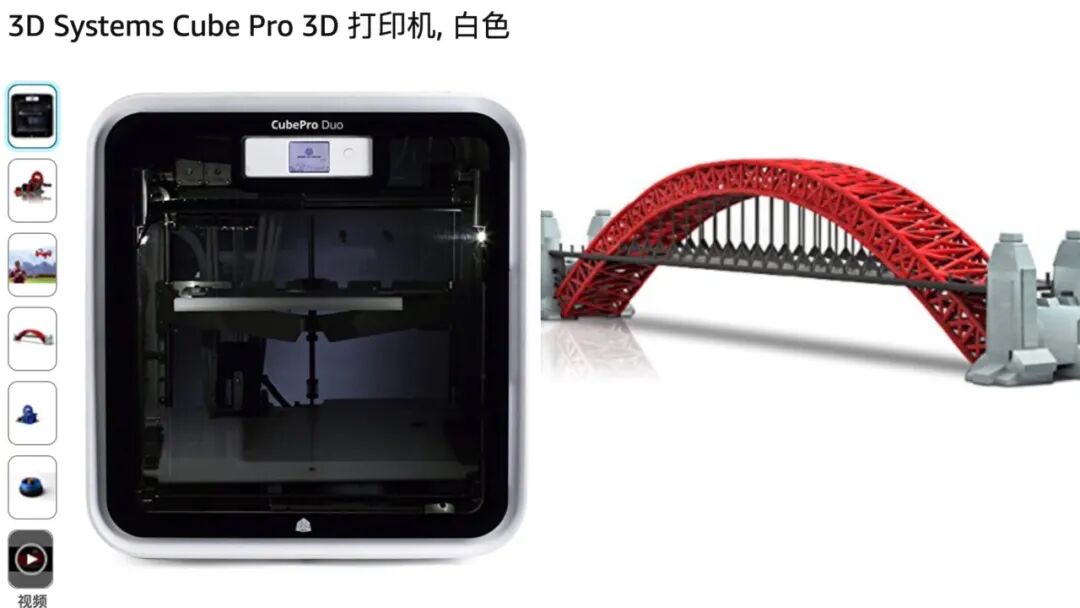
▲Cube printer & printed objects. Image source: Amazon
As key patents for FDM expired in 2008 and for SLA in 2013, the underlying technologies gradually became open-source, bringing a wave of new entrants to the consumer 3D printing market and pushing the technology into the mainstream for the first time. On the hardware front, starting around 2014, a consumer 3D printer boom took hold. Companies like Creality and 3D Systems launched more affordable and user-friendly products, and people began envisioning a future where 3D printing would find its way into every industry and every home. A manufacturing revolution poised to upend everything was in the making. AI-driven intelligence and steady hardware advances made a 3D printing explosion look imminent.
And yet, over the past decade, 3D printing has remained something of a niche commodity, appearing only in certain specialized industrial sectors and in the workshops of overseas hobbyists. Questions about print quality, materials, user experience, and limited application scenarios have persisted—but they haven't stopped the technology from advancing. In dentistry and aerospace, 3D printing has made steady, tangible progress, delivering real cost reductions and efficiency gains for these industries.
As we noted earlier, 3D printing goes by another name: additive manufacturing. Industrial manufacturing broadly follows two approaches. One is subtractive manufacturing; the other is additive manufacturing.
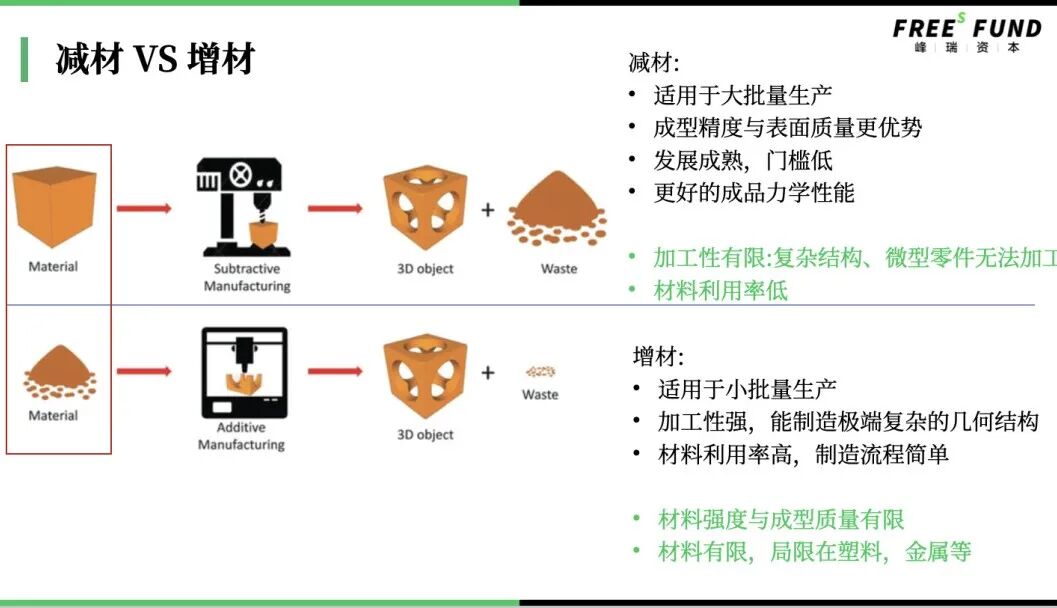
Subtractive manufacturing originated in the Industrial Revolution. Trains, ships, electric motors, and automobiles—all traditional mechanical products—are its offspring. Subtractive manufacturing produces parts and tools by cutting and removing material from a raw workpiece. Material is lost in the process. Modern metalworking techniques like turning, milling, planing, grinding, and drilling are all examples of subtractive manufacturing.
In 3D printing, by contrast, material is added layer by layer to form an object—the exact opposite of subtractive manufacturing—hence the name additive manufacturing.
At its core, the fundamental difference between the two lies in decoupling versus coupling. Subtractive manufacturing decouples material from the forming process, while additive manufacturing couples them together. Coupling and decoupling are concepts commonly used in systems engineering. Coupling describes the degree of interconnection between components: in a highly coupled system, parts depend heavily on one another; in a loosely coupled system, they operate independently. Decoupling means transforming a highly coupled system into a more loosely coupled one.
When producing items through subtractive methods, regardless of the forging or processing techniques used, the material's mechanical properties and strength remain largely unchanged from raw material to finished product. Take the manufacturing of a gearbox gear: the material starts as a gear blank forged from gear steel, which is then machined into the final product. The gear's mechanical properties are determined primarily by the blank.
Additive manufacturing is a coupled process. The final mechanical performance and microstructure of a printed object are intimately tied to the forming process itself. Orthopedic implants are a classic example. By adjusting material porosity, engineers can tune implant strength to better match different types of human tissue—something conventional metalworking techniques struggle to achieve.
Each approach has its own strengths and weaknesses.
Subtractive manufacturing excels at mass production; it offers higher forming precision and better surface quality; the technology is mature and accessible; and products made through subtractive methods generally have superior mechanical properties.
Its downsides: it's poorly suited to complex or micro-scale parts, and material utilization is relatively low. In aerospace manufacturing, for instance, producing a single aircraft frame component might require roughly 3 tons of raw blank material to yield a 150 kg finished part.
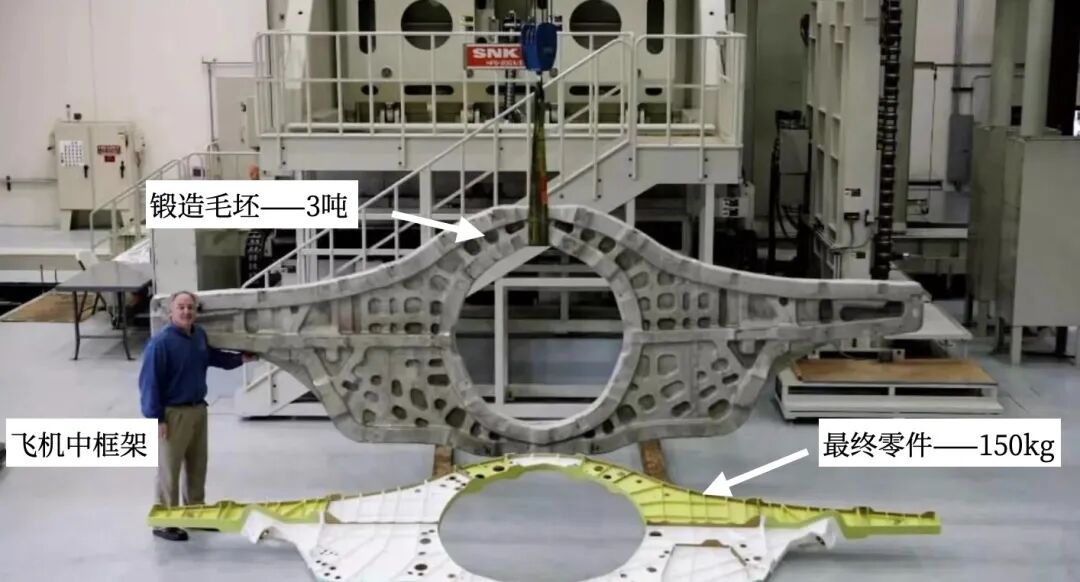
▲ Image source: NC Military Business Center
Additive manufacturing is better suited to low-volume production; it offers strong processability and can fabricate extremely complex geometries; material utilization is high; and the manufacturing workflow is simpler.
In orthodontics, for example, producing dental models, artificial crowns, and veneers through traditional methods typically takes six to seven days. With 3D printing, that drops to mere tens of minutes.
But additive manufacturing has clear limitations too. The mechanical strength of printed parts may be limited, and overall quality may not match subtractively manufactured products. Common aircraft engine blade metals, for instance, are difficult to realize through 3D printing. Engines operate in punishing high-temperature environments and require specialized materials like single-crystal titanium alloys, formed through subtractive processes to meet performance demands.
Understanding the underlying logic of additive and subtractive manufacturing helps clarify why 3D printing still has certain shortcomings, why it has found traction in specific industries, and why broader adoption remains elusive.
The 3D Printing Workflow
Having covered the history, let's turn to the actual 3D printing process. Compared to traditional manufacturing, the workflow is relatively straightforward, comprising four main steps: model design, process planning, print forming, and post-processing. Through these steps, 3D printing maps the digital world onto the physical one.
Model Design
In the model design phase, 3D printing primarily leverages generative design. Built on topology optimization, generative design generates complex structures that meet specified objectives—such as lightweighting or improved heat dissipation—directly from design goals. Such intricate structures, with internal lattices that maintain strength while reducing weight, would be nearly impossible to achieve through traditional subtractive manufacturing. Today, 3D printing solves these problems.
Startups are already emerging in the 3D printing and industrial design software space. Ujiesolution, a FreeS Fund portfolio company, is one of the few domestic firms independently developing a next-generation intelligent design topology optimization SaaS platform.
Process Planning
In process planning, the 3D model must be progressively "sliced" into layers, breaking down the manufacturing process and generating print path planning. Support structures must also be designed to maintain stability during printing.
Print Forming
Once process planning is complete, a series of machining codes are sent to the printer. There are numerous printing technologies: selective laser sintering (SLS), selective laser melting (SLM), stereolithography (SLA), and others (see chart below for details).
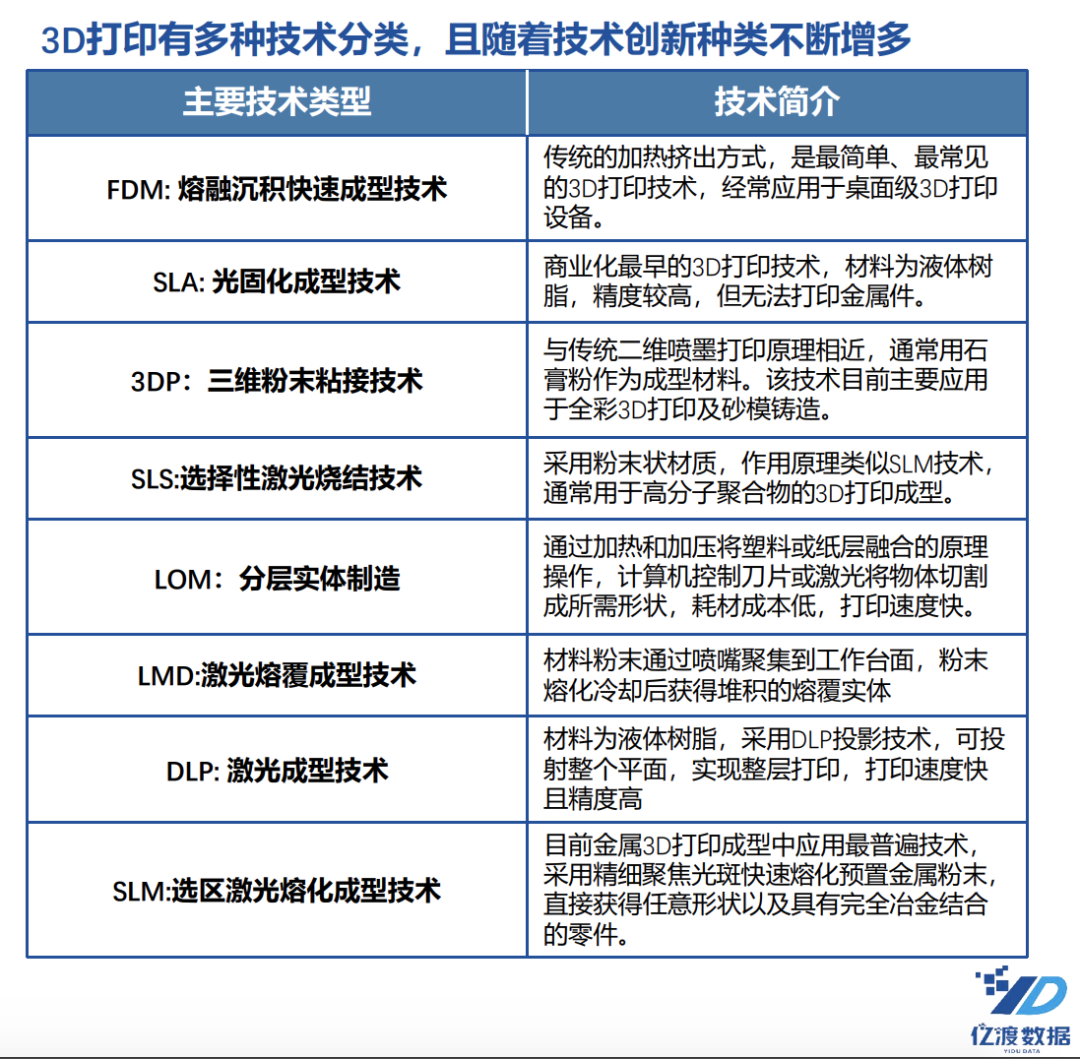
▲ 3D printing technologies. Image source: Yidu Data
Post-Processing
Print forming isn't the end. Extensive post-processing follows: removing supports, coloring, finishing, polishing, and more. This stage primarily compensates for inherent limitations in 3D printing itself, improving the precision and surface quality of finished objects.
Advantages of 3D Printing
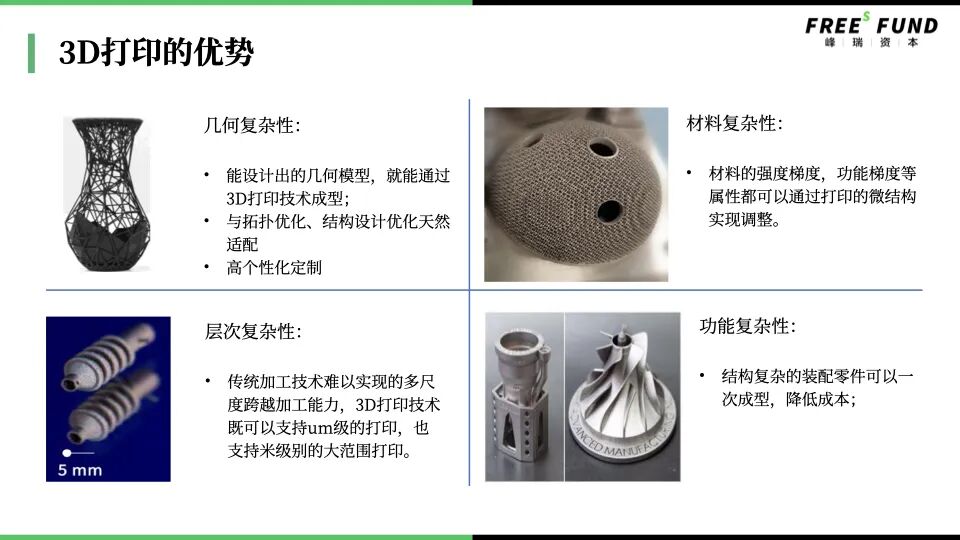
Geometric Complexity
3D printing increases manufacturing flexibility and enables highly personalized customization. It can realize designs with complex geometries that would otherwise be unmanufacturable.
Material Complexity
Through 3D printing, multi-porous structures or multi-material composites can be fabricated, creating gradients in strength, functionality, and other properties across a single object.
Scale Complexity
Traditional processing struggles with multi-scale manufacturing. 3D printing spans enormous ranges, using the same fundamental technology to cover manufacturing from micro to macro scales.
At the micro scale: in 2016, scientists used two-photon lithography—a 3D printing technique—to create the world's smallest endoscope for gastrointestinal examination.
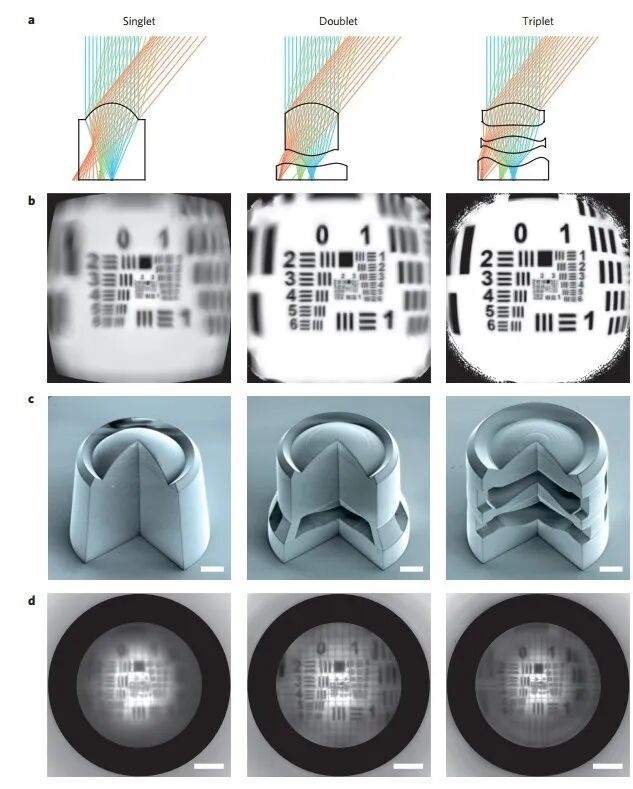
▲ Image source: Gewuzhe
At the macro scale: in 2020, a team at Hebei University of Technology printed a 28-meter-long modern version of the Zhaozhou Bridge.

▲ Full view of the 3D-printed Zhaozhou Bridge at Hebei University of Technology. Image source: Hebei Daily
Functional Complexity
In industrial applications, complex structures traditionally require individual parts to be machined separately and then assembled. Integrating complex parts into single, unified components is where industrial demand for 3D printing is strongest.
Disadvantages of 3D Printing
What limitations does 3D printing currently face? What shortcomings prevent its use in certain fields, or force additional costs to compensate for defects where it is applied?
First, limited mechanical performance.
▲ Image source: 3D Printing Technology Reference
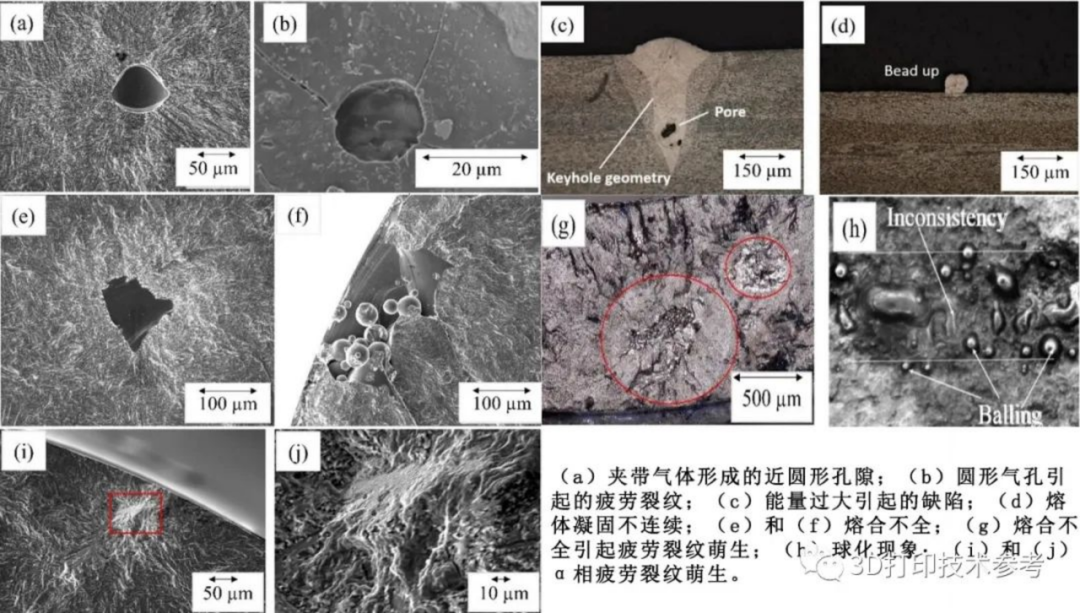
3D-printed parts may suffer from defects like unmelted powder, microcracks, and porosity on surfaces and internally. Consequently, mechanical properties—including strength, wear resistance, and fatigue resistance—tend to fall short of subtractively manufactured parts. To ensure adequate performance, manufacturers must use expensive raw materials and adopt more conservative process designs, driving up costs and extending production times.
Second, insufficient surface precision.
Subtractive techniques like turning, milling, and grinding yield higher surface precision. With 3D printing, post-processes like manual polishing or chemical finishing are needed to achieve comparable results—but these add cost.
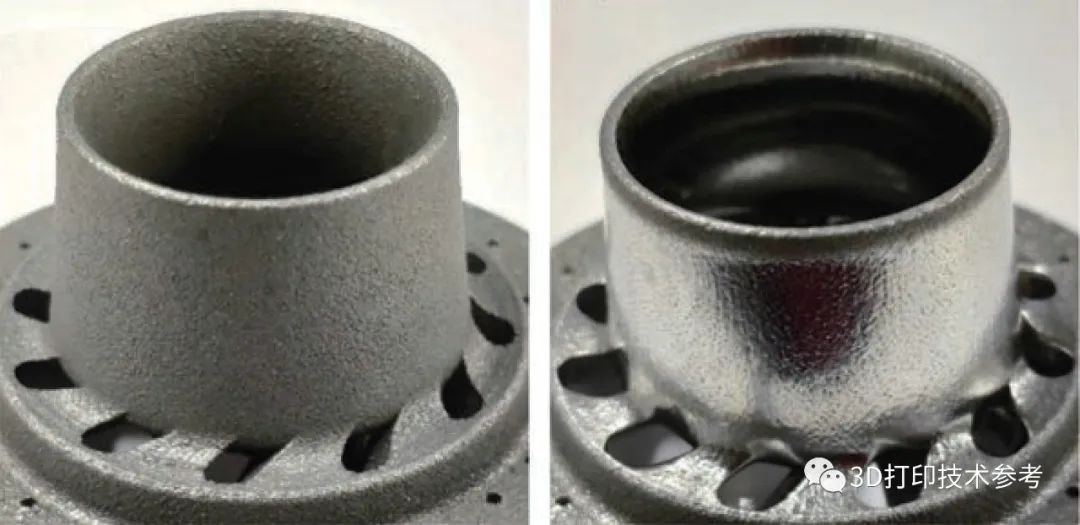
▲The left image shows an item directly formed by 3D printing; the right image shows the same item after post-processing. Image source: 3D Printing Technology Reference
These two limitations — constrained mechanical performance and insufficient surface precision — have restricted 3D printing's adoption in other fields. For the technology to expand into more applications, these drawbacks must be addressed, or the efficiency of post-processing workflows must be improved.
Why Did 3D Printing First Take Off in Aerospace and Dentistry?
Today, 3D printing appears across healthcare, aerospace, automotive, and sporting goods. But it has seen particularly widespread use in aerospace and dentistry — two classic high-value, high-price-point industries where 3D printing can significantly accelerate product development and manufacturing.
Aerospace
Since the 20th century, nearly every cutting-edge manufacturing technology has found its first application in aerospace. CNC machining (Computerized Numerical Control, which uses digital systems to direct machine tool movements and machining processes) did fifty years ago, and 3D printing is doing so now. Why does aerospace so readily embrace new technologies?
Aerospace is a textbook case of high value, high price points, low volumes, rapid iteration, and extensive SKU variety — a single part can cost hundreds of thousands or even millions of dollars. The industry's demands for lightweighting, single-step forming of complex geometries, material savings, and flexible design validation align almost perfectly with 3D printing's inherent strengths. The "hammer" and the "nail" fit together precisely, making aerospace arguably the most active industrial domain for 3D printing applications.
In 2019, for instance, GE Aviation developed the world's first turboprop engine to incorporate 3D-printed components. The engine's central frame assembly had previously consisted of over 300 individual parts. Through structural optimization, GE consolidated this into a single component, produced in one piece via 3D printing. The process reduced weight while also lowering manufacturing costs.
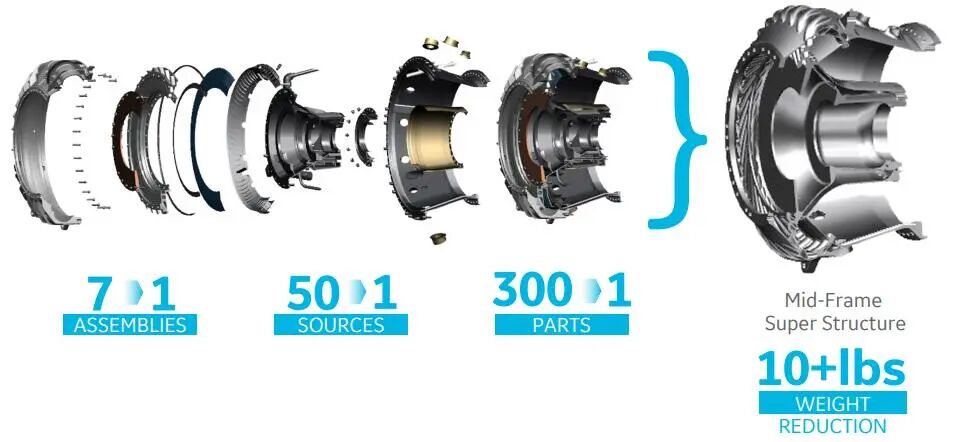
▲The central frame assembly of a turboprop engine, optimized from 300 parts down to one. Image source: 3Dprint.com
NASA has also leveraged 3D printing to manufacture rocket engine nozzles, successfully test-firing one in 2014. As NASA engineers noted, "With traditional manufacturing, you'd need to make 163 separate parts and assemble them. With 3D printing, it's just two parts — saving time and money, while producing components that improve engine performance and reduce failure risk."
Dentistry
Beyond aerospace, 3D printing has found extensive application in dentistry. Dental needs are highly individualized, especially in orthodontics, where teeth shift at every stage of treatment, requiring customized, phased technical solutions. In this field, metal wire braces have gradually faded from mainstream use, replaced by clear aligners.
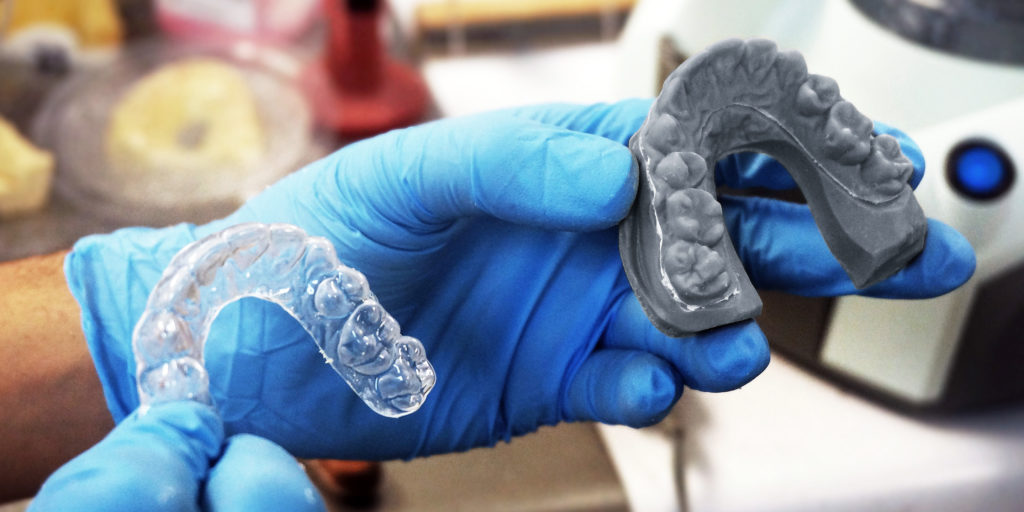
Clear aligner technology is a quintessential interdisciplinary field, drawing on oral medicine, computer science, biomechanics, 3D printing, and materials science. Multiple stages of clear aligner production rely on 3D printing: dentists use 3D dynamic design software to plan corrections, and 3D printers to fabricate dental models.
▲Image source: Creality
Traditional orthodontic model-making requires multiple rounds of impression-taking, fabrication, and adjustment, with inevitable precision errors. 3D printing, through digital modeling, minimizes these errors and enables the production of more accurate dental models.
We noted earlier that 3D-printed items have limited mechanical properties — so how has the technology gained such traction in dentistry and aerospace?
In dentistry, printed models don't contact patients directly; they serve as molds to help orthodontists fabricate aligners. Most aligners are made from polymer materials thermoformed over these models. 3D printing solves an intermediate need in the workflow. That said, a small number of providers are now using more advanced 3D printing techniques to produce aligners directly.
The same logic applies in aerospace: 3D-printed materials are generally not used for components with extreme precision requirements. And many rockets, after all, are single-use.
Bioprinting: Technology Beyond Human Imagination
Beyond aerospace and dentistry, 3D printing may see broader application in bioprinting — the use of cell-laden mixtures as base materials to print living tissues and organs.
Most bioprinting applications remain exploratory. According to a framework developed by Zhejiang University scholars including He Yong, bioprinting can be categorized into four levels:
- Level 1: Fabricating structures with no biocompatibility requirements, such as the 3D-printed models now widely used for surgical planning;
- Level 2: Fabricating biocompatible but non-degradable products, such as titanium alloy joints and silicone prosthetics for defect repair;
- Level 3: Fabricating biocompatible and degradable products, such as bioactive ceramic bone and degradable vascular stents;
- Level 4: Narrowly defined bioprinting — the manipulation of living cells to construct biomimetic 3D tissues, such as cell models for drug screening and mechanistic research, liver units, skin, blood vessels, and more.
In the biological domain, organoids are considered among the best technologies for simulating in vivo microenvironments. Organoids are miniature organs generated in vitro from primary tissue, embryonic stem cells, or induced pluripotent stem cells under specific culture conditions.
Researchers have created organoids representing the liver, pancreas, stomach, heart, kidneys, and even breast tissue, applying them to cancer research, drug screening, and precision medicine. Yet organoids only simulate the in vivo microenvironment within a small, directionally cultured tissue fragment — falling short of larger-scale emulation.
If we could directly print hearts or livers using 3D printing technology, these too could be used for drug testing and pharmaceutical R&D. In 2016, bioprinting company Organovo partnered with Roche on a drug toxicity study demonstrating that 3D-printed liver tissue could distinguish toxicity levels across multiple compounds.
Compared to diminutive organoids, these biomimetic organs replicate biological tissue at a larger scale, providing richer feedback on in vivo environmental simulation.
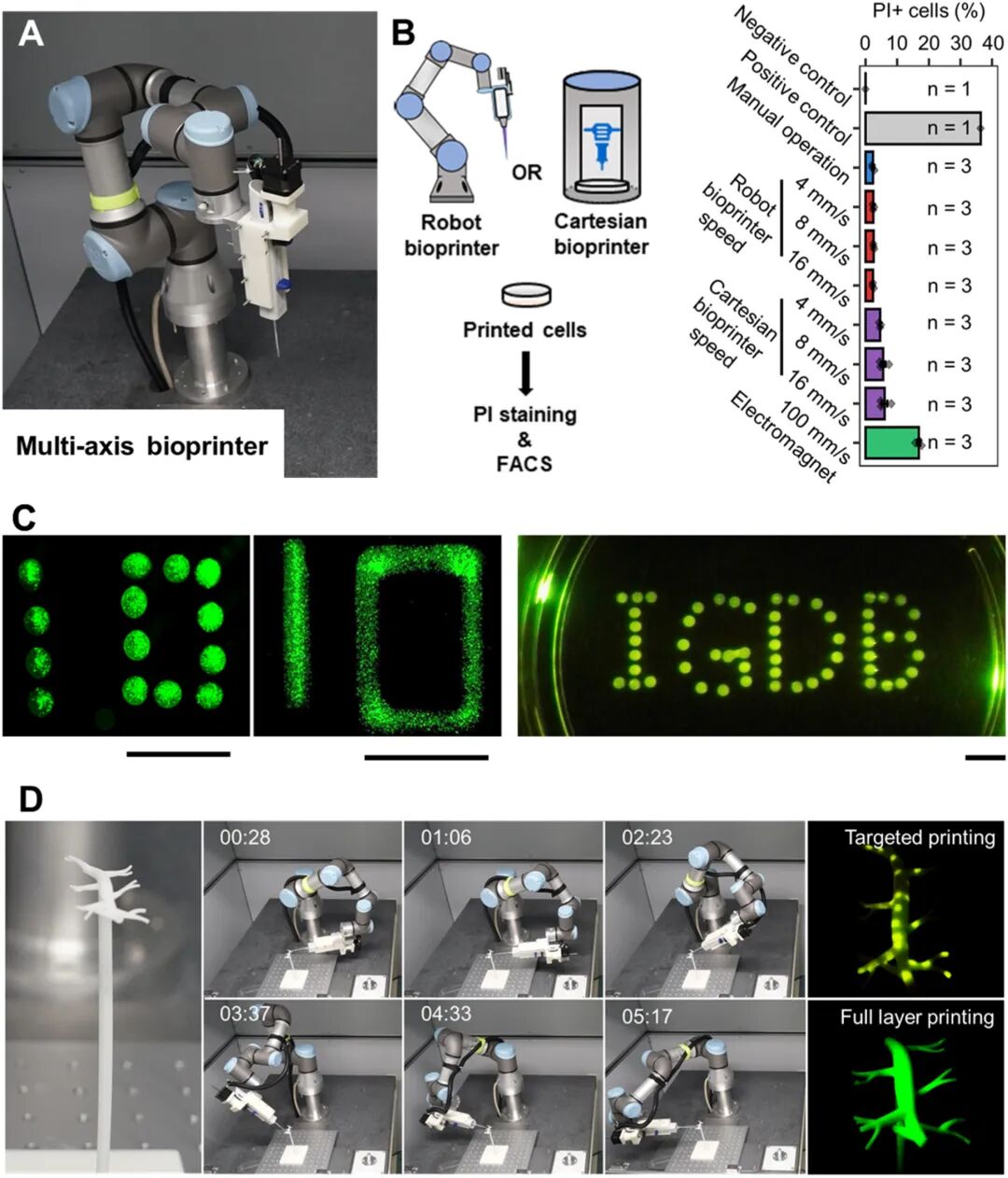
▲A laboratory using a modified six-axis robot to print blood vessels and cardiac muscle tissue. Image source: Bioactive Materials
Research published in Bioactive Materials reported that in 2022, a laboratory converted a six-axis robot into a bioprinter and produced cardiac muscle tissue. The tissue was interlaced with capillaries and maintained pulsation in vitro for six months.
If laboratories achieved this capability in 2022, 3D-printed biological organs may find wider use in drug testing in the future.
But the potential extends beyond pharmaceutical development — 3D printing could benefit the entire biological field and feed back into biotech R&D more broadly.
In 2019, research published in Micromachines described how scholars used improved bioprinting techniques to produce sensory neurons — a key component of the peripheral nervous system. As more types of neuronal cells are successfully printed, researchers will be able to more directly observe the effects of brain science techniques, paving the way for more precise brain science therapies.
The Future of 3D Printing: Hybrid Manufacturing
Even today, 3D printing's application domains remain relatively narrow.
Because 3D technology struggles to achieve scaled production, it is mostly used for product design experimentation or small-batch manufacturing.
Online manufacturing platform HUBS published a 2022 report surveying how people apply 3D printing:
62% of respondents used it for prototyping, 17% for single-batch part production, 11% for multi-batch production, 8% for industrial manufacturing fixtures, and 2% for aesthetic design such as shoe printing.
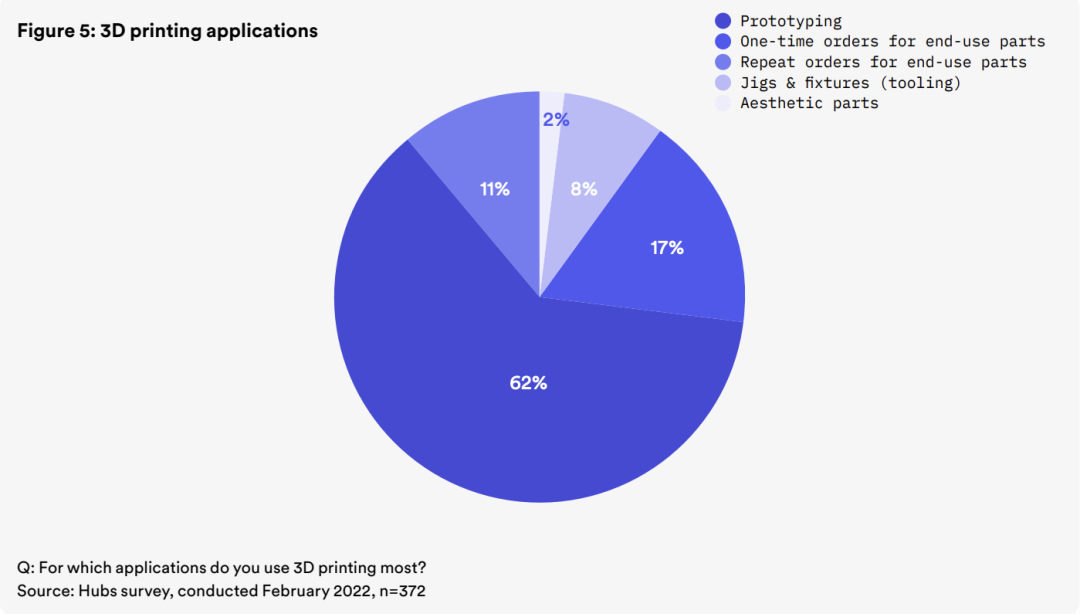
▲Image source: Online manufacturing platform HUBS
On cost, 3D printing diverges sharply from traditional metalworking. Conventional processes benefit from economies of scale — as volume increases, marginal costs drop very low. The rate at which 3D printing costs decline is far slower than the marginal cost reduction achieved through traditional processes at scale.
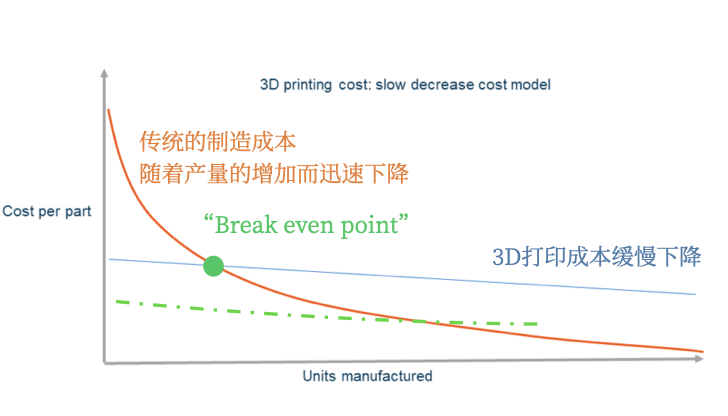
The chart shows two lines: orange for traditional manufacturing costs, blue for 3D printing costs.
Their intersection is the break-even point. For production volumes to the left of this point, 3D printing holds the advantage. To the right, conventional machining is more cost-effective.
This explains why, beyond aerospace and dentistry, 3D printing has not seen mass adoption.
Nearly every industry has such a break-even point. Some have begun experimenting with 3D printing, but widespread use remains elusive.
In smartphone manufacturing, Motorola announced a partnership with 3D Systems in 2013 to use 3D technology for smartphone components. In apparel, MIT researchers developed a new 3D printing method in 2020 aimed at reducing the cost of printed textiles.
Looking ahead, could advances in 3D printing technology drive down overall costs, shifting the break-even point to the right — the green line in the chart — and open up new application areas?
We've observed that hybrid manufacturing may be one promising path toward improving precision and reducing costs in 3D printing.
Hybrid Manufacturing
Hybrid manufacturing refers to completing two different processing mechanisms on a single machine — for example, combining 3D printing with CNC machining, or electrical discharge machining with ultrasonic machining. Subtractive manufacturing offers high surface quality on finished parts, while additive manufacturing excels at flexibility and complex geometries. Hybrid manufacturing combines the strengths of both.
In October 2020, the U.S. Commerce Department added six emerging technologies to its Export Administration Regulations control list, including hybrid additive manufacturing, lithography software, and 5nm production technology. Hybrid additive manufacturing covers both hardware manufacturing equipment and computer numerical control software.
The fact that the U.S. grouped hybrid additive manufacturing with semiconductor technology speaks to how strategically important these technologies are considered.

▲ Image source: U.S. Department of Commerce
Achieving hybrid manufacturing requires simultaneous progress in both hardware and software. Existing hybrid technologies include CNC + 3D printing combinations, and laser polishing + 3D printing combinations.
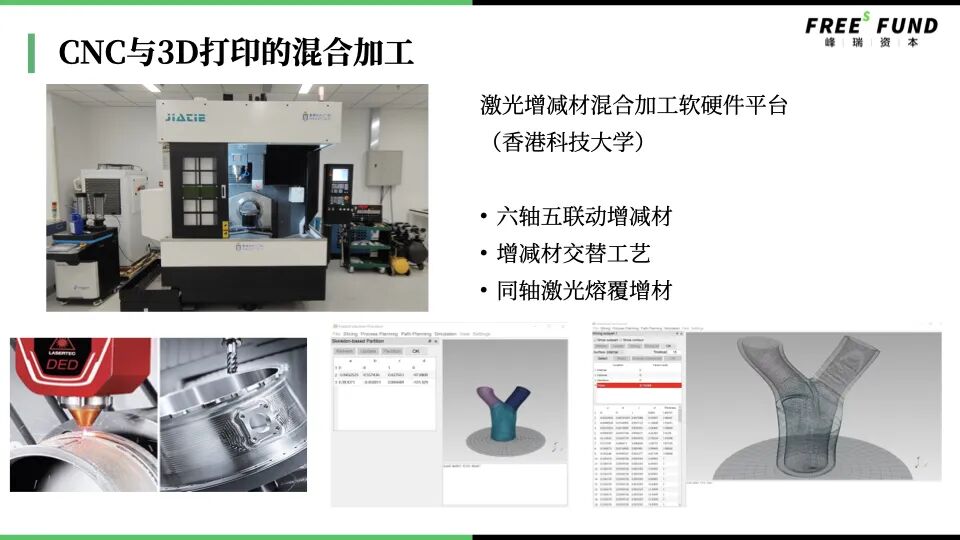
The 3D printing lab at The Hong Kong University of Science and Technology is among China's leading research facilities in this field. The lab currently uses CNC-integrated 3D printing to build a laser additive-subtractive hybrid manufacturing platform capable of alternating between additive and subtractive processes.
The team has integrated a metal print head into a dual-spindle five-axis machining center. While conventional 3D printing primarily uses x, y, and z axes, five-axis联动 enables far greater printing freedom, allowing for more complex geometries and advanced support-free printing.
The machine alternates between printing and cutting in repeated cycles, ultimately producing mirror-smooth surface finishes — something extremely difficult to achieve with traditional 3D printing alone.
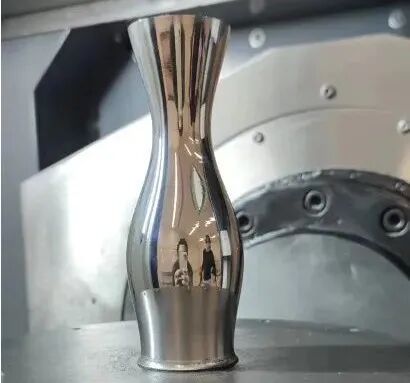
▲ Image source: The Hong Kong University of Science and Technology
Global machine tool leader DMG MORI has pursued a similar strategy. The company has developed the hardware capabilities for hybrid manufacturing, but lacks mature process software to match. Currently, DMG MORI can only achieve independent CNC and 3D printing operations — still some distance from true integrated hybrid manufacturing.
A key question for the industry is whether this new convergent technology can replace standalone 3D printing and CNC subtractive manufacturing as an entirely new processing paradigm.
In medical devices, a typical 3D printing application is internal channel structures, such as surgical catheters.
When surgical catheters reach micron- or millimeter-scale dimensions, traditional manufacturing methods struggle. Using 3D printing alone produces rough surfaces that require costly chemical polishing as post-processing.
Hybrid printing, however, can ensure smooth internal channel surfaces while reducing costs.
The industrial sector is generally optimistic about hybrid manufacturing's potential. By integrating multiple processes into a single machine, it delivers both the geometric capabilities of additive technology and the flexibility of subtractive methods — at lower cost.
Summary
At its core, 3D printing is a digital abstract model mapped into the physical world. Going forward, it will be a critical bridge between virtual and reality in the execution layer downstream of AI.
If large models like GPT are to meaningfully interact with the physical world, they will need 3D printing as their hands.
Among application areas, aerospace and dentistry lead the pack. Both industries sit to the left of the cost break-even point, where demand aligns perfectly with 3D printing's characteristics. The technology enables full-process manufacturing cost advantages in these niches.
Future growth in 3D printing will come from fundamental technical innovation, driving new applications and shifting the cost break-even point rightward.
We haven't enumerated numerous incremental technologies across sub-sectors in this report because most have yet to fundamentally alter manufacturing cost structures in their industries. We're looking for technologies that can open new scenarios or bring scaled incremental gains to existing ones.
We're particularly focused on paradigm-shifting directions like additive-subtractive hybrid manufacturing and bioprinting. The former extends 3D printing into more civilian applications within traditional manufacturing — cars, furniture, and beyond. The latter sits at the intersection of biology and manufacturing, accelerating pharmaceutical testing and feeding back into biotech research.
Join the Conversation
What new opportunities do you think 3D printing will create? Share your thoughts in the comments. The 5 most thoughtful responses will receive a copy of 3D Printing: From Imagination to Reality, which chronicles the breakthrough developments in 3D printing technology. We look forward to your contributions~

Li Xiang × Li Feng: Why Did ChatGPT Emerge Today? What Happens Next? | Li Feng Column
Everything Has Two Sides: How "Nuclear Radiation" Becomes an Anti-Cancer Drug | FreeS Report 29
A Debate: Two Investors From Different Directions on GPT | FreeS Research Institute
On AIGC: How Can Vertical Players Find Opportunity in This AI Wave? | FreeS Fund Dialogue
After the ChatGPT Boom, Where Does AIGC Go From Here? | FreeS Report 28
Star the FreeS Fund WeChat account for timely business insights