400,000 Mom-and-Pop Shops Join Internet Finance: How to Capture China's 3 Trillion Rural Opportunity | FreeS Talk

A Serial Entrepreneur's Truth or Dare.


What setbacks do you have to endure to build something meaningful in rural China?
For centuries, farmers — the lifeblood pulsing through China's capillaries — have lived by a simple rhythm: borrow in spring, repay after harvest. They may be the most credit-accepting demographic in the country, and arguably the most underappreciated consumer force in finance.
According to a 2016 report by the Chinese Academy of Social Sciences, the "agriculture, rural areas, and farmers" (三农) finance sector offered entrepreneurs at least 3 trillion yuan of untapped opportunity.
FreeS Fund has long tracked founders building deep in rural China. In 2015, the firm led Shima Finance's $10 million-plus Series A, and continued investing through its Series B and B+ rounds in 2016.
Founded in January 2015, Shima Finance started with electric bikes and motorcycles, offering consumer finance to rural populations and supply chain finance to the vehicle industry. Today it covers 31 provinces with over a million users.
You've probably heard plenty of startup success stories — the rocket-ship growth, the impressive numbers. But as anyone who has built something knows, the faster you grow, the more problems you have to solve.
Today, we want to flip the script and talk about the obstacles that high-growth companies must clear. FreeS Fund VP Zhiyuan Zhao and serial entrepreneur Ning Rui, founder of Shima Finance, discuss how Shima tackled challenges over two years of rapid expansion while better serving rural financial needs. We hope their conversation offers something different.
What you'll learn in this conversation:
- Rural China was once an internet backwater; now diners at ordinary township restaurants pay with WeChat Pay or Alipay.
- 400,000 mom-and-pop shops play a critical role in pre-loan verification and post-loan collection.
- Risk control can be distinctive — beyond credit scoring and precision models, it can mean frontline operators who speak the local dialect.
- Category expansion is tempting, but overreach scatters your resources.
- Carrots alone make management a soft trap.
↓ Read on ↓

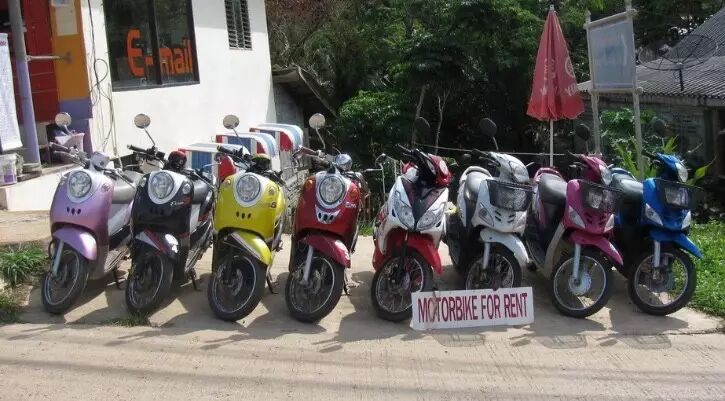
When 400,000 Mom-and-Pop Shops Meet Internet Finance
▍Zhiyuan Zhao: Rural finance has always been a tough nut to crack. Most farmers have no credit history, limited education, and are difficult to communicate with — few financial institutions want to touch this market. Shima has been working on consumer and supply chain finance for electric vehicles in rural areas for over two years. We talked in 2015 about the realities and opportunities in rural finance. How has your understanding of rural customers' financial behavior changed since then?
▍Ning Rui: China has nearly 800 million rural residents — 46% of the population — yet most financial institutions and entrepreneurs are accustomed to serving urban users and look down on this market. Shima entered from the "margins," doing the dirty, grinding work of "digging food from the soil." It's exhausting and unglamorous. But that naturally keeps most potential competitors at bay.
We grew from one or two thousand partner outlets two years ago to 50,000 today, and expect to reach 60,000 by year-end. These are concentrated in financially underdeveloped southwestern and northwestern rural regions — Xinjiang, Yunnan, Guizhou, Sichuan, Guangxi, Hunan, Hubei, Jiangxi, Shanxi, and others across 31 provinces, cities, and autonomous regions, mostly at the county and township level. The vast majority are locally run mom-and-pop shops. We estimate roughly 400,000 such shops exist nationwide.
Our model is "B to small-B (mom-and-pop shops, small merchants) to C." Our first consideration is how to maximize the value of these "small-Bs." They typically have limited formal education but extraordinary grit. After two years working with them, we've found many work 9 AM to 9 PM, 365 days a year except for a few days during Spring Festival.
On the consumer side, over a million users have applied for installment financing through our outlets to buy electric bikes and motorcycles. The age range is wide — from twenties to forties and fifties. Two-wheeler and motorcycle buyers skew younger; three-wheeler buyers older. Their average household income is 73,000 yuan. More men than women. Our channel distribution means more western users than eastern ones.
One major shift among these users stands out. The rapid penetration of mobile internet has reached people we once assumed would never be users. When we entered the market in 2015, most didn't have smartphones, or weren't comfortable using them — we had to walk them through installing our app.
By this spring, when I visited rural markets again, I found that even at ordinary township restaurants, people were paying with WeChat Pay or Alipay. E-commerce growth has slowed in tier-one and tier-two cities, but in townships there's still massive room to grow. This has made our business expansion easier and opened possibilities for diversification.
We're now in a phase of rapid growth and have achieved full profitability. We disburse over 30 million yuan daily — roughly what we did in a month last year. User growth has been so fast that sometimes our merchant payouts take longer than before.
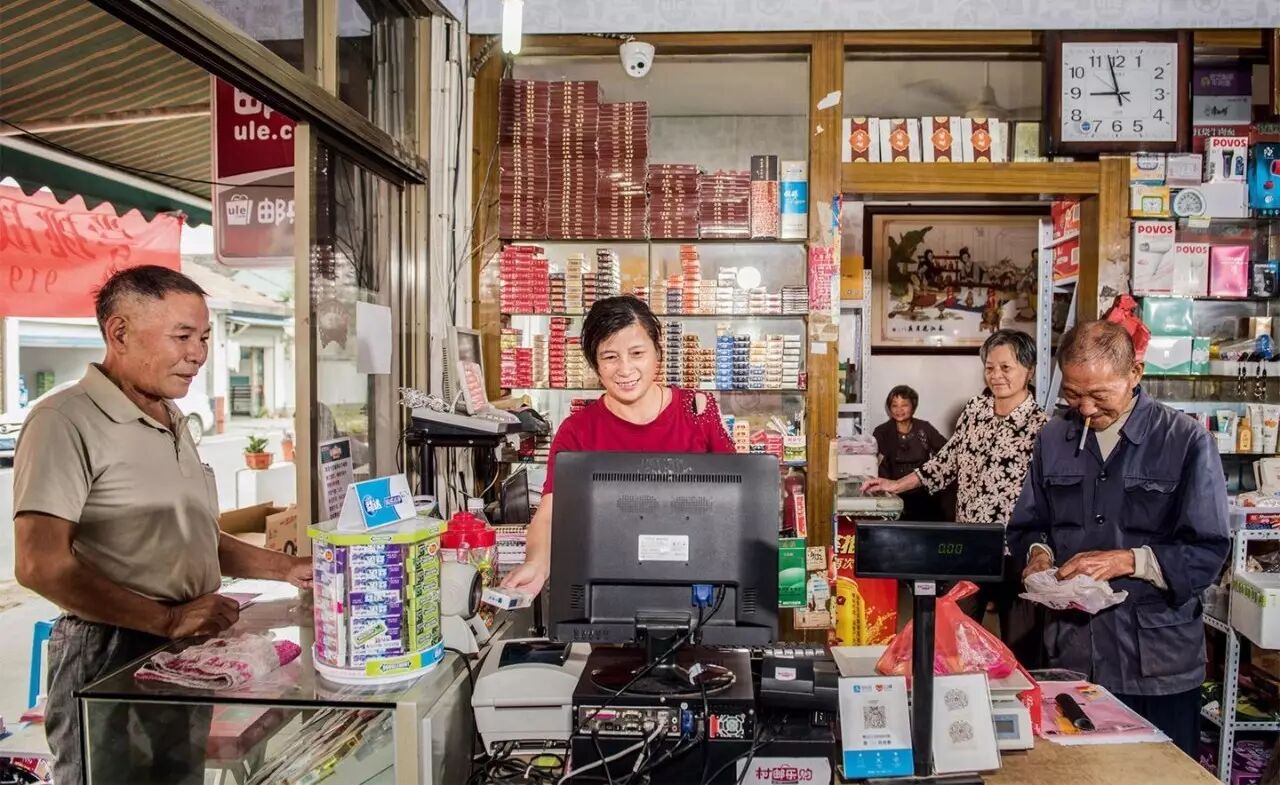
▲ The spread of mobile payments opens new possibilities for rural finance. (Image source: Wired, photographer: Stefen Chow)
▍Zhiyuan Zhao: How did these tens of thousands of mom-and-pop shops operate before you existed? What changes does your service bring them?
▍Ning Rui: Rural consumers generally don't have credit cards. Previously, they could only afford special-offer vehicles priced at 2,000–3,000 yuan. With motorcycles averaging seven to eight thousand yuan, they had to buy on credit — sometimes 80% of a shop's retail volume.
Many merchants had stacks of IOUs hidden away. If they didn't extend credit to farmers, they couldn't move inventory. They had to split monthly income across living expenses, restocking, and expansion. Sometimes upstream brand manufacturers pressured them to take more inventory to keep their dealership rights, even when they couldn't absorb it, squeezing their cash flow.
Before working with us, they either covered everything with their own capital or shifted some pressure to the vehicle brand manufacturers.
Now, we provide supply chain financing with directed credit lines — they can use these to order from specific brand manufacturers. We also offer installment financing to farmers buying vehicles, so farmers can afford vehicles they previously couldn't. Merchants no longer have to issue their own IOUs, solving their sales velocity problem and freeing up working capital.
What we've been doing is trying to help these merchants earn more and save more through efficient service, keeping them on Shima's platform.
▍Zhiyuan Zhao: Shima works with tens of thousands of merchants across a wide, deeply penetrated geography. What role do they play in your business model?
▍Ning Rui: The rural vehicle merchant market exceeds 400,000, nearly 80% of which are mom-and-pop shops. We've only captured a little over 10% — huge room remains.
Our collaboration with merchants works on several levels. First, we use their channels to collect user data. Second, they participate in pre-loan verification, post-loan collection, and other steps, leveraging their role in the local acquaintance economy to help us recover loans.
Rural finance is fundamentally an acquaintance economy. These shop owners are locals; they know the people buying vehicles. They typically know the general circumstances of over 500 nearby rural households — meaning one outlet covers 500 families. Accounting for overlap, 50,000 outlets can reach over 10 million rural households. They can play a substantial role in the credit chain.
Given that the vast majority of rural merchants and users don't speak Mandarin, yet much of our operations including risk control require phone verification, we established dozens of self-operated regional service centers by area. Each has dozens of employees, functioning as Shima's local office for that region.
We tried centralized operations at headquarters before, but dialect barriers made it unworkable. Now with these regional centers, we can hire locally, manage locally, and serve locally. Sichuanese speak Sichuan dialect; Xinjiang people speak their dialect; Yunnanese speak theirs. It's more relatable and improves risk identification.
The centers also keep us close to merchants and users. From retail experience, we know visit frequency determines merchant affinity and trust. Our center staff now visit merchants weekly.

▲ Frontline operators who speak local dialects can communicate more effectively with rural populations.
▍Zhiyuan Zhao: What measures constrain these merchants?
▍Ning Rui: We built a channel rating system. Based on their Shima credit tier, each merchant has different monthly order quotas and approval rates per order.
It's somewhat like Taobao's seller rating system. New partners have tight daily limits; over time we adjust up or down based on performance. High-credit merchants enter priority channels and receive bonus incentives. Poor performers get suspended. A merchant doing 3 orders daily this week might drop to 1 next week.
When brand manufacturers choose partners from tens of thousands of outlets, they consider our ratings too. So merchants know they need to maintain good standing with Shima.
Two Years Building in Rural China: A Serial Entrepreneur's Honest Words and Big Bets
▍Zhiyuan Zhao: You discussed channel evolution and control. Looking inward, how has Shima itself changed? Any category adjustments?
▍Ning Rui: Entrepreneurship is constantly encountering and solving problems. I joked with colleagues that I've noticed a pattern: if you hear good news today, two pieces of bad news are coming right after.
We got distracted by category expansion. Early on, we kept wondering: if we only do one thing, isn't the upside too limited? So for a while we spread ourselves thin across multiple categories. Fortunately we recognized the problem quickly and corrected course.
Scattered resources mean unfocused execution — you do nothing well. Startups inevitably face this temptation during growth, but we need to define ourselves clearly within our capabilities. Once you settle down, you realize the "limited upside" was just a failure to see things with the right methods or fresh perspective. Adjust your lens and you find gold everywhere in this industry.
▍Zhiyuan Zhao: So how do you deepen expertise in one area while maintaining the right category expansion rhythm?
In the first half of 2017, we set a strategy called "100 meters wide, 1,000 meters deep."
"100 meters wide" means that after deep channel penetration, we can experiment with scenario-native growth — insurance-like products, deeper mining of user financial data, etc. But this time, we won't stretch the battle line too long.
For example, we're already trying insurance-like services. With over 200 million electric bikes and motorcycles on the road, growing by 40 million annually, it's hard to imagine that almost no owners previously bought such coverage. We launched accidental injury and theft protection services. Merchants earn commission on each policy sold. For users, these are inexpensive and provide protection — so uptake has been strong.

▲ Leveraging tens of thousands of mom-and-pop shop channels to expand into insurance-like services.
"1,000 meters deep" means we'll go deep and specialized in the vehicle category over the next one to two years.
We currently do consumer finance downstream for farmers, and some midstream business for small-Bs and brand manufacturers, but haven't fully penetrated either.
By our calculations, these two segments each represent roughly 300 billion yuan in annual market capacity — 600 billion combined. Add upstream business like brand and parts manufacturer procurement, motor factory factoring, etc., and the total market is about 1 trillion yuan.
If we penetrate this thoroughly, we'll become the irreplaceable dominant player in this vertical.
▍Zhiyuan Zhao: For finance companies, risk control is critical. How have your risk methods and resulting NPL rates changed compared to earlier?
▍Ning Rui: For roughly two to three months in 2016, our risk control faced challenges. We quickly adjusted overall strategy and monitoring dimensions, reanalyzed regional issues like third-party cash-out schemes and dealer fraud, and upgraded our risk system methodology. Today, Shima Finance's risk control is "traditional risk control as foundation, big data as assistance, quality channels as guarantee."
In retrospect, we're grateful for that episode. Without it, we might have assumed our old system was fine — and faced catastrophic, unmanageable risk later.
Now, with nearly a million loan records accumulated, we have highly precise risk models. Farmers need only an ID card and a debit card — just two documents instead of four — to learn within 3–5 minutes whether they qualify and for how much. From "four documents" to "two documents": simpler process, lower NPLs through systematic risk capability improvement.
Operationally, risk control evolved from being solely the risk department's responsibility to "all-hands risk control." Risk signals can appear at any stage — pre-loan, mid-loan, post-loan — and departments including underwriting, credit review, customer service, phone collection, and HR all encounter them.
We also built a formidable nationwide security team, mostly from public security backgrounds, police academies, or related fields. When risk signals emerge, they immediately screen key merchants, spot potential risks from multiple information sources, and apply high-pressure measures.
▍Zhiyuan Zhao: Shima grew from dozens to hundreds to over a thousand people. What's changed in management behind that rapid growth?
▍Ning Rui: Early on we had a few hundred people; we quickly reached over 1,000. The most direct feeling was departments multiplying — fourteen or fifteen of them — and many faces I didn't recognize. People passed each other daily, colleagues and strangers at once.

▲ Rapid team expansion poses challenges for startups in maintaining direction and cohesion.
Early in 2017, we reviewed our rapid hiring and identified several areas for improvement. We took them seriously, solved them one by one, and the company is now in excellent shape.
First, human efficiency. When headcount grows by 200 people monthly, company efficiency stays flat. Shima's 0-to-1 step was built through creating a rural financial system with brand manufacturers and merchants — a high-efficiency logic. If we spread too wide, endlessly adding people without efficiency gains, we betrayed our original intent.
This year we held a "100 Days of Hard Work" rally. The company shifted to "lean" mode, making efficiency gains a strategic priority at every level. It worked — modest technical investments in each segment meant what once needed five people now takes two. Performance didn't drop; it accelerated. Morale returned quickly.
Second, innovation. As we grew, rules and procedures became more standardized, but innovation opportunities shrank. Any small innovation might span two or three departments, leading to buck-passing.
I admire Tencent's bottom-up culture. Two or three people can bring unexpected transformation. We borrowed a biological concept: reproductive isolation (closely related groups that don't interbreed in nature, preventing defective offspring).
We set aside a dedicated office to incubate new strategic projects. Teams of three to five can break organizational boundaries and development processes to do the most innovative work. The efficiency has proven extraordinary.
On management, Xiaofeng (Chen Xiaofeng, Chairman of Shima Finance) previously ran larger enterprises and had considerable wisdom. I learned much from her. For example, management needs both "carrot and stick." If you only have carrots, management becomes a soft trap — employees may just chase benefits and compensation. The "stick" makes employees aware of their problems. Rules are rules; when you need to be tough, be tough.
Now HR runs a "Bald Date" program — informal sessions where I meet one employee at a time, tell them their strengths, but more importantly speak frankly about their weaknesses, then chart a path for improvement.
▍Zhiyuan Zhao: Looking ahead, what are Shima's plans? What kind of company do you want it to become?
▍Ning Rui: In micro and inclusive finance, whoever truly controls channels and builds close, lasting relationships with them will go furthest.

▲ Shima Finance aims to become a rural channel service provider, making hundreds of thousands of "small-B" merchants feel it's worth their while.
Since this year, we've communicated that Shima's development thinking must shift: we want to become a rural channel service provider. That means importing financial products, quasi-financial products, and incremental services to give "small-Bs" revenue opportunities — helping a boss who made 200,000 yuan annually gradually earn 300,000, 400,000. Making them feel that working with Shima pays off — that's the most basic business logic. If we achieve this, stickiness with our "small-Bs" follows naturally. That's our real moat.
In fact, over the past year, multiple companies outside the electric vehicle and motorcycle industry — including top-tier domestic internet firms — have approached us to leverage our channels for下沉 their products. They value the tens of thousands of "small-Bs" in our network.
Currently, 50,000 "small-Bs" have seen substantial profit increments from our financial services, and Shima Finance's profitability has improved further. Only when "small-Bs" make money do we make money.


Zhiyuan Zhao, VP at FreeS Fund
Investment focus: Internet finance
Email: zzy@freesvc.com
From starting as an electric vehicle brand to entering the relatively unfamiliar financial sector, the Shima Finance team has learned and grown remarkably fast. Over the past two years, Shima achieved effective allocation of capital and assets, built a unique risk control system proprietary to itself and to rural populations, and extended its deep vehicle industry experience and scenario mastery into insurance-like services — all exceeding my imagination and expectations.
When we evaluate teams, we may overweight an entrepreneur's milestone achievements relative to others. Yet for a company, daily operations and employee development are the real foundation for sustained growth and strategic soundness. As a serial entrepreneur, Shima Finance's founder has demonstrated excellent day-to-day management capabilities.

Zhiyuan Zhao x Ning Rui: China's Biggest Market Is Right There, But You Can't See It
15 Minutes to Know What the Best Fintech Entrepreneurs Are Thinking?