"Pain Comes From Identifying Problems, Joy Comes From Solving Them" | FreeS Fund's 5th Open Day Recap

Frontier Tech Entrepreneurship: Not a Sprint, Not a Marathon, but a Maze

On the morning of August 5, FreeS Fund's 5th Open Day arrived as scheduled. Over 40 attendees gathered in person with CEOs of FreeS portfolio companies and investors. Centered on entrepreneurship and investment in the new cycle, this Open Day featured one keynote and two panel discussions, where guests shared industry insights and practical experience. Among them, the panel "Opportunities and Challenges for Frontier Tech Entrepreneurship in the New Cycle" invited two founders from FreeS-backed companies — Wei Zhang, founder of LimX Dynamics, and Xin Zhao, founder of Xinsu Technology. Both Zhang and Zhao hold PhDs from top American universities and spent years working in academia in the US. In 2019 and 2021, they respectively decided to return to China and dive into interdisciplinary innovation and entrepreneurship. Currently, LimX Dynamics focuses on the R&D and manufacturing of general-purpose legged robots, committed to achieving widespread application of general-purpose, all-terrain mobile manipulation robots, with core products being quadruped and humanoid bipedal robots. Xinsu Technology's vision is to develop molecular chips to drive the semiconductor-ization of biotechnology, dedicated to high-throughput synthesis and detection of DNA, RNA, and proteins, applying the technology to critical fields such as synthetic biology, biomedicine, and DNA information storage.
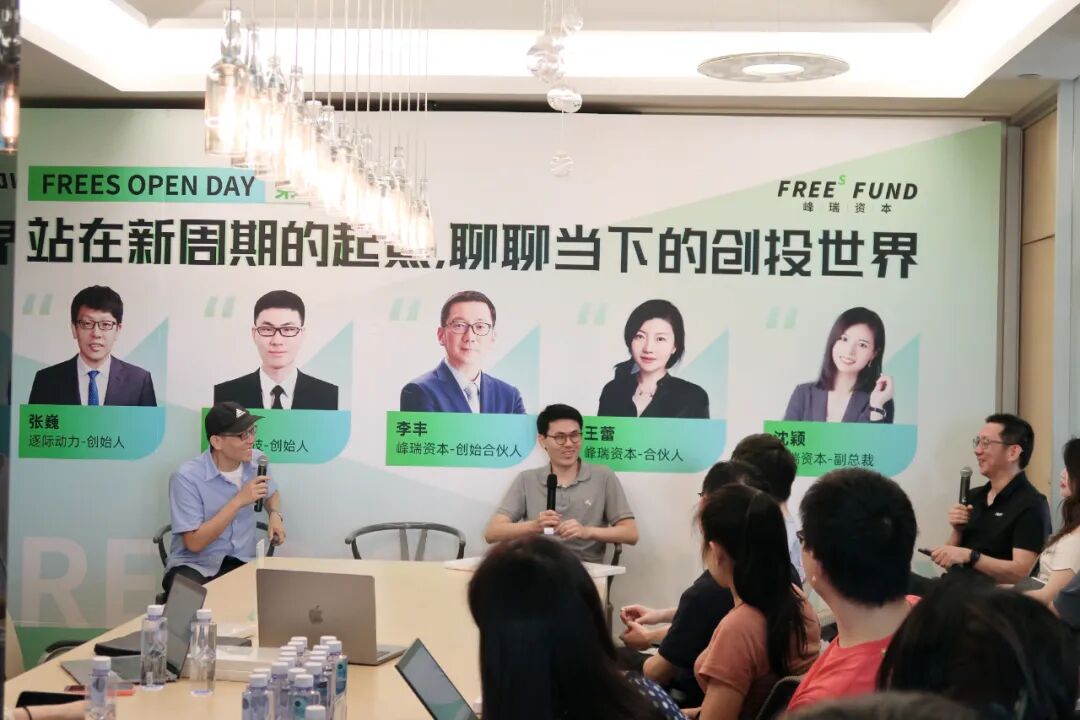
▲ At FreeS Fund's 5th Open Day. Far left: Wei Zhang, founder of LimX Dynamics; center: Xin Zhao, founder of Xinsu Technology; far right: Feng Li, founding partner of FreeS Fund.
Operating in frontier sectors that have attracted considerable attention lately, Zhang and Zhao shared firsthand industry observations from their respective fields. They also discussed the thinking behind their life choices — from academia to industry, from staying in the US to returning home. Finally, drawing from their shared experience in interdisciplinary entrepreneurship, the two founders exchanged lessons on fundraising, product development, and company management.
This article excerpts portions of the panel discussion, hoping to offer fresh perspectives.
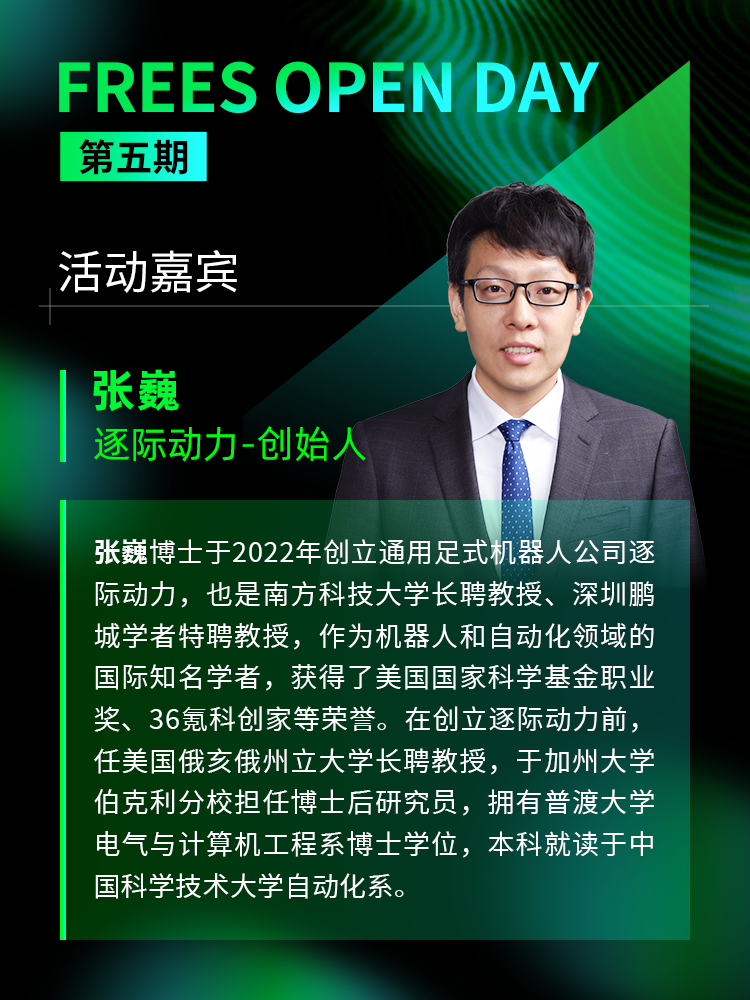
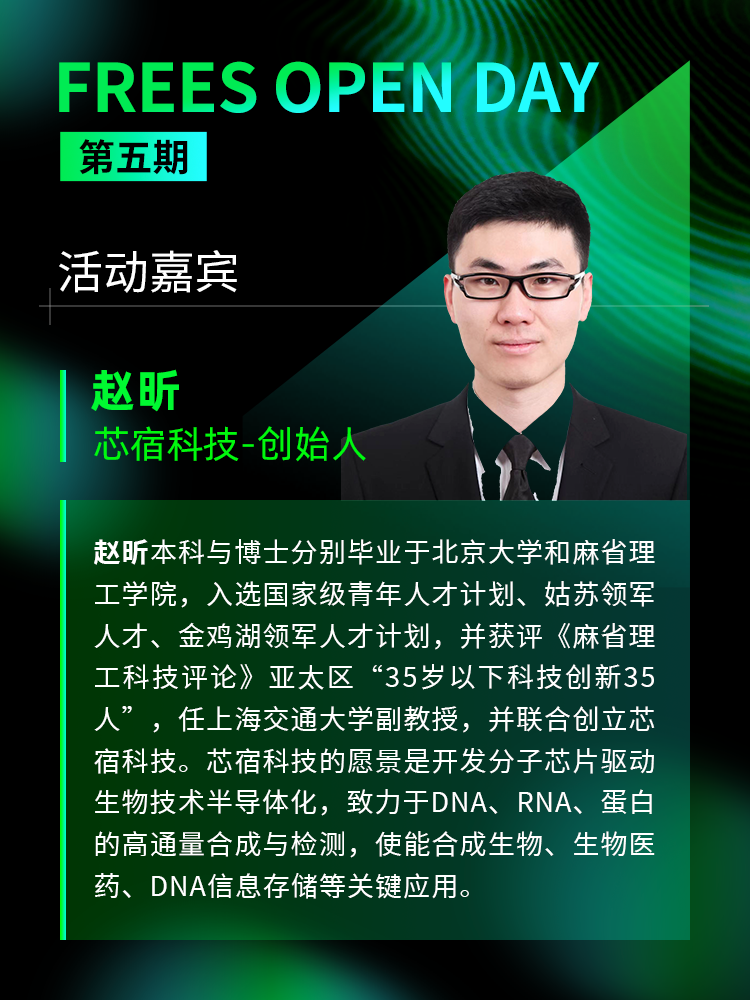
Swipe to view panelist introductions
Interactive Giveaway
What cross-disciplinary tech innovation opportunities have you noticed recently? Join the conversation in the comments. By 5:00 PM on August 18, we'll give Dedao App gift cards worth 200 RMB to the 2 users with the most likes and the 3 users with the most thoughtful comments.

/ 01 / Those Who Understand the Application Side Know Where the Market Is
Xin Zhao: Hello everyone, I'm Xin Zhao, founder of Xinsu Technology. I did my undergraduate studies at Peking University's physics department from 2006 to 2010, then went to MIT to research semiconductor devices and processes, spending about 10 years in the US. Currently, my main research and commercialization direction is the long-term application of semiconductors in healthcare.
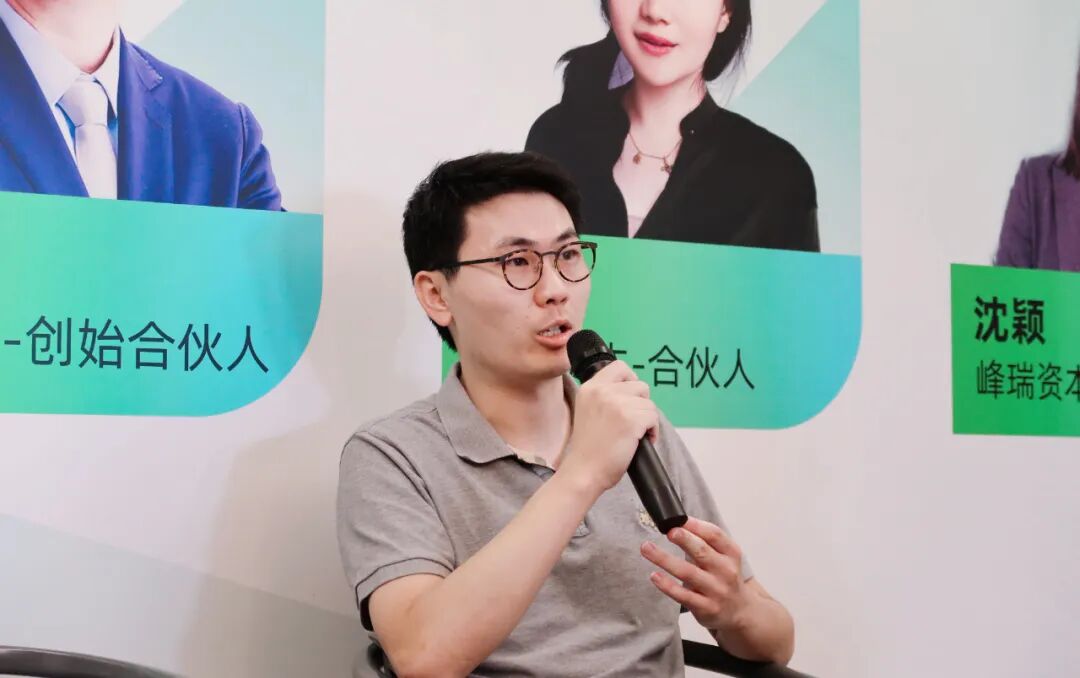
▲ Xin Zhao, founder of Xinsu Technology.
The applications of semiconductors in healthcare are broader than we might imagine. Specifically, what I'm working on now is using integrated circuits to synthesize biological macromolecules. In the future, we may complement this with high-throughput sequencing to achieve industrial-scale integrated synthesis and detection. Starting in 2021, our company was fortunate to receive support from FreeS Fund, and by this year our commercialization has begun to take shape.
Feng Li: Let me start with some challenging questions for Xin Zhao. Xinsu Technology's business model has evolved over the past few years. From when Zhao first came back and pitched us with a large notebook, to today doing DNA synthesis on chips, there's been a shift — but the core competitiveness hasn't changed. Zhao's earliest direction was relatively easy to understand, but today's direction seems like we can understand each word individually, yet struggle when they're strung together. So, across four funding rounds over the past year and a half, having engaged with over a hundred investment institutions, how many do you think truly understood what you're doing?
Xin Zhao: Honestly, not many.
Feng Li: How did you raise money when people couldn't figure you out?
Xin Zhao: That's an interesting question from Uncle Feng. From a traditional disciplinary perspective, we span a long chain of over a dozen fields — from integrated circuit design, semiconductor processes, microfluidics, to mechanics, electronics, embedded software and hardware, to organic chemistry, electrochemistry, molecular biology, quality control, and more. No single person can master all of them, and that includes myself. As someone from a physics background, I've been constantly learning to better understand biology.
Our technology may be difficult to grasp, but when it comes down to product form and business model, the essence is using new technical means to do DNA synthesis — the very upstream of molecular biology, and also a mature industry that has developed over a long time. This year, we mapped out the development trajectory of this industry in China and the US over the past 20 years, and indeed, China has reached a moment where technology-driven innovation is possible.
Interdisciplinary work has its difficulties in fundraising, but also its fun aspects. For instance, healthcare investors want to learn more about semiconductor technology, while semiconductor investors may want me to elaborate more on the biology side. Without question, FreeS Fund is among the institutions I've encountered with the deepest understanding of interdisciplinary work. In terms of interdisciplinary investment directions, very few people got started as early as Uncle Feng, and today this has led a very positive trend. Gradually, we've also found that investors are becoming more professional, especially regarding the intersection of semiconductors and biology — their understanding is deepening.
Feng Li: Internally at FreeS Fund, we do a lot of cross-functional collaboration, with members responsible for different domains jointly participating in project research and decision-making.
So among the investors you've encountered, do those with healthcare backgrounds find it easier to understand semiconductors, or do semiconductor investors find it easier to understand healthcare?
Xin Zhao: This is our first year of commercialization, still at an early stage. So far, healthcare investors find it easier to understand and recognize what we're doing. Those who understand the application side know where the market is. Even if they haven't fully developed an intuitive judgment about the cross-disciplinary technology itself, they at least know this thing is useful.
Feng Li: This observation is very meaningful — it was the same when we invested in AI drug discovery back then. In directions that people couldn't immediately understand, the investors who were ultimately interested and made decisions were those who understood the future application direction of the endeavor.
Xinsu Technology represents the convergence of semiconductors and biology. In this direction, where does your company currently stand globally? And within what timeframe will these two disciplines achieve large-scale integration?
Xin Zhao: Our work is mainly divided into four parts: chip design, chemistry, biology, and quality inspection. An interesting phenomenon is that currently, none of these four points faces supply chain "chokepoints." On the semiconductor process side, we don't yet need 3nm or 5nm chips for biological applications. And in areas like chemical and biological reagent supply chains, mechanical equipment, and so on, China is actually more mature.
So, without supply chain chokepoints, if we can leverage China's industrial foundation and engineer dividend well, it's actually possible to iterate on technology and products faster here than abroad. Our current goal is to become world-leading in using chips for biological macromolecule synthesis.
/ 02 / Why Are Robots So Hard to Build, and Where's the Moat?
Wei Zhang: I graduated from the University of Science and Technology of China (USTC), went to the US in 2003, and spent 16 years there. Starting in 2017, I planned to return to China, and formally came back to start a business in 2019. I was always on the academic track — at USTC I focused on studying and didn't receive much business exposure. Later I did my PhD at Purdue University, postdoctoral work at UC Berkeley, and stayed in the US as a faculty member.
In 2017, I received tenure. In American academia, there's a saying: before tenure, do what you're good at; after tenure, do what you love. So I began following my passion and chose to return to China and start a business.
My entrepreneurial direction is general-purpose legged robots, like the bipedal and quadruped robots you've seen from Boston Dynamics. We hope to combine China's supply chain system and massive market to build a commercially more successful robotics company. Recently, as robotics and AIGC have become closely linked, this track has started heating up.
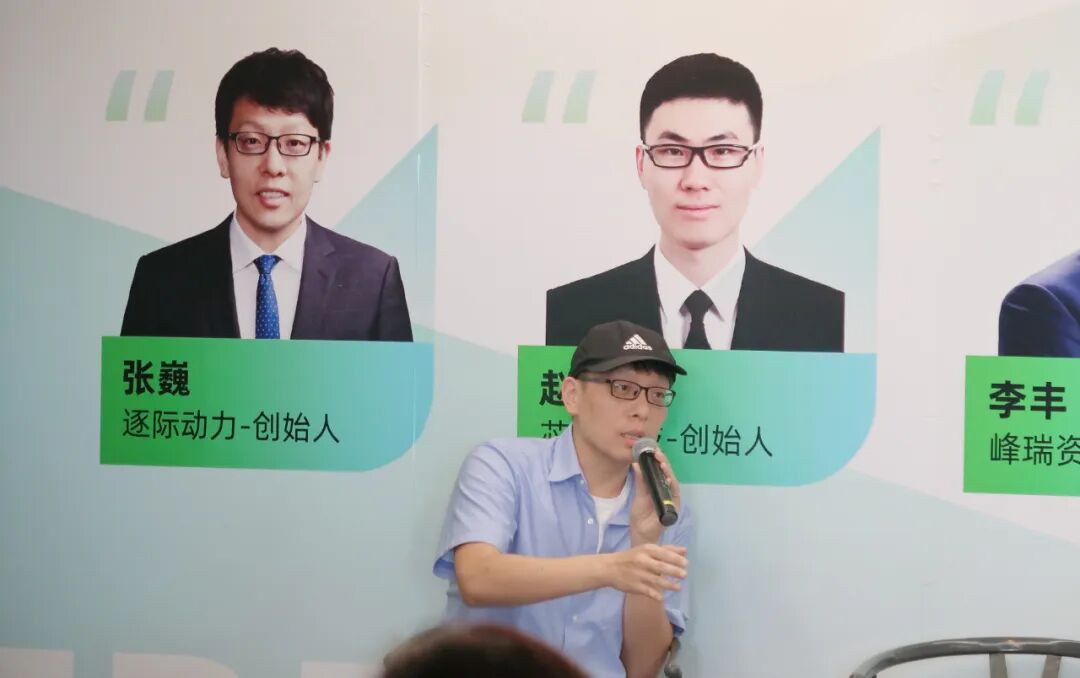
▲ Wei Zhang, founder of LimX Dynamics.
Feng Li: Legged robots require significant innovation in both software and hardware. Among these, which nodes currently offer China supply chain advantages?
Wei Zhang: Definitely hardware. Elon Musk is also laying out robot hardware supply chains in China.
Feng Li: For the legged robot sector, on one hand the field seems to have low cognitive barriers, but truly understanding the technical difficulties isn't easy; on the other hand, legged robots have gone from receiving little attention to being relatively hot lately.
Why are robots super, incredibly difficult?
For robots, one difficult scenario is cross-plane movement — going up and down stairs, crossing thresholds, navigating pits, and so on. For example, when one foot steps onto a stair, you first need to judge whether to step up, then judge whether you've stepped on it, whether it's solid, whether it can bear weight. If not, angles and forces need to be redistributed in real-time between both feet, then try again.
In this scenario, the robot needs to see while judging, judge while moving, move while controlling, and control while balancing. Seeing, computing, predicting, feedback, controlling, balancing — doing all these simultaneously, that's where the difficulty lies.
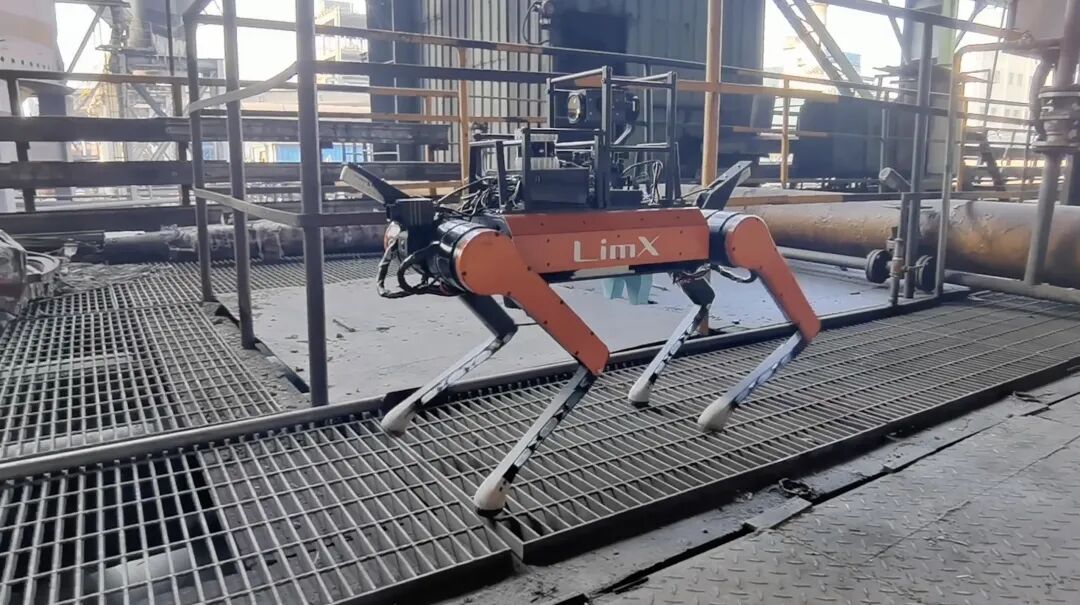
▲ LimX Dynamics quadruped robot prototype.
Image source: LimX Dynamics
Wei Zhang: It's not quite "super, incredibly" difficult yet. I think it's because there's still a gap between people's expectations for this field and current technical boundaries. The difficulty is that the functions robots can achieve don't meet everyone's expectations. Many people imagine robots as all-capable. Elon Musk also said global demand for humanoid robots will reach 10 to 20 billion units, with every household having one. I think this is still extremely difficult. First, it's hard because of scene openness. The field's technological development hasn't reached a level where robots can adapt to such complex environments.
Some people conflate robots with AI, thinking a conversational smart speaker is also a robot. But in my view, AI replaces human decision-making; the essence of robots is replacing human movement. AI conversation doesn't produce movement. Anything that doesn't produce movement — we don't consider it to have the core technology of robotics, which is the most basic motion control capability.
Feng Li: So in your view, is the biggest gap in software or hardware?
Wei Zhang: Currently, the main moat isn't in hardware but in software algorithms. Hardware is relatively mature today — though that doesn't mean hardware has no moat, everyone still needs to do it well. A robot is a strongly coupled system; hardware and software need to iterate together. But whether things work out going forward depends on software algorithms. Many domestic robots can now dance and do backflips, but their difference from Boston Dynamics isn't in hardware — it's in the "cerebellum."
Feng Li: This is what I wanted to discuss next. In building robots today, do we need to first get the "cerebellum" plus hardware right, before reaching the "brain" level?
Wei Zhang: Right, I think the essence is about movement. One advantage today is that with large language models, "brain" development has advanced significantly. Previously, people felt every step in robotics was difficult — even for simple tasks like "pick up a cup," the "brain" completing decision-making, navigation, and so on was very challenging. Now, once you achieve motion control from zero to one, large models' generalization capabilities can help robots complete more complex tasks in the future — that's from one to a hundred.
Xin Zhao: In entrepreneurship we often mention Minimum Viable Product. From this perspective, what do you think will be the first application in legged robots that can achieve certain scale?
Wei Zhang: That's a great question. Early on, legged robot applications weren't as productivity tools but as research and education tools — that's a stock market. Another application is simply for "novelty." If we exclude both of these, in the future, when legged robots truly serve as productivity tools, large-scale applications will first emerge in relatively closed B2B scenarios, solving problems that existing robots can't solve.
For example, wheeled robots can't adapt to varied terrain, and terrain adaptability is a key technical advantage of legged robots. Where can this capability demonstrate value? In relatively complex and dangerous industrial scenarios, replacing humans in hazardous operations.
The industry calls this "the DJI of the ground." DJI initially solved aerial stabilized filming; what we want to do is all-terrain movement from point A to point B. Currently, our first落地 scenario is solving movement problems; the next落地 scenario is mobile manipulation, where AGI (Artificial General Intelligence) will play a driving role in the future.
From Academic to Entrepreneur: Our Journey
Feng Li: Professor Zhang, if you were an investor now, what question would you ask Professor Zhao?
Wei Zhang: Why did you choose to start a business?
Xin Zhao: Actually, when I finished my PhD, I chose to do research rather than start a business. I believed my research direction had tremendous future potential — something truly worth深耕 for 20 years, 50 years, even a lifetime without regret. To figure out what suits you, you need to look at what you're good at, what you love, and what the world needs — the intersection of these three is what you should consider.
Later, I co-founded the first MIT-CHIEF (MIT China Innovation and Entrepreneurship Forum) and gained some understanding of entrepreneurship. Meanwhile, I observed in the US that semiconductors were already a very mature industry — since the 1990s, there have been few systematic semiconductor investment opportunities, with绝大多数 innovation happening in large companies and academia. At the hardware level, taking an innovation from idea to industrial落地 requires 11-15 years, a timeline startups can't bear. But in some cross-disciplinary applications of semiconductors, there are反倒 systematic opportunities, with biology being a prominent example.
I still hoped to see new technologies drive industrial progress. From this dimension, compared to academic research, choosing to start a business in a direction that seems somewhat niche to pure semiconductor people gives me greater satisfaction.
Feng Li: If you hadn't been investigated due to professional sensitivity back then, would you have chosen to return to China and start a business? What were your feelings during that investigation period?
Xin Zhao: To the first question, my answer is yes. Although I returned full-time relatively late, I had some understanding of China's venture capital environment earlier. Starting from 2013-2014, I would spend time in Suzhou every year, and experienced the darkness before dawn of domestic semiconductor entrepreneurship.
Professor Zhang just mentioned that for hardware-biased industries, China has better development prospects — I knew I would return eventually. It's just that without US-China tensions, I might have returned later. The timeline at that point forced me to make the choice sooner. So regarding the investigation, I had no practical pressure, but psychologically, making the decision still involved considerable pressure.
Feng Li: I'll ask Professor Zhang a question too — from being a professor to becoming a company's core founder, what's the biggest difference in how it feels?
Wei Zhang: Many professor philosophies don't align with entrepreneurship, and some even contradict it. For example, professors tend to make "good-faith assumptions" about people — they won't reject someone upfront but will cultivate them. But entrepreneurship requires strict control in hiring, finding the right people for the right positions. Also, academic innovation requires divergence, trying all kinds of wild ideas, while product development requires focus. Finally, a paper's academic成果 doesn't equal technology, technology doesn't equal product, and having a product doesn't mean you can sell it — there are many hurdles along the way.
But on the other hand, as a professor founding a company, my technical advantages in this赛道 can play a long-term role. If consumer entrepreneurship is a sprint, competing on speed — who can discover needs faster, iterate products faster — then our field isn't a sprint, or even a marathon, but navigating a maze. You need to find a suitable path to achieve commercialization. If you choose the wrong turn, you might lose a lot of money and deliver products that can't be shipped. For path selection, my accumulated academic experience is very helpful.
Recently I've had another realization: professor entrepreneurs often tend to "hold back for the big move," but entrepreneurship requires "small steps, fast running." Influenced by my previous research work, when I first started the company, I always hoped to wait until the technology and product were mature enough, reaching my high standards, before bringing them to market. But startups may need to engage customers early — on one hand, market feedback helps correct product design and strategic planning; meanwhile, sales revenue can better support the team's long-term R&D plans.
Xin Zhao: I have similar experience with "small steps, fast running." We officially entered commercialization this year, but actually started gradually engaging the market last year. The sales process has also helped me understand customers better.
Feng Li: Yes. Product development and product sales are connected in the long term, but not necessarily directly related in the short term. In early stages, what you want to build and what the market needs may differ. So whether the product you're selling now is a version you're satisfied with isn't the most important thing for now.
Wei Zhang: Speaking of which, I'd also like to exchange with Professor Zhao about your sales strategy.
Xin Zhao: We're mainly B2B now. My experience is that large B is more Sales-oriented, small B is more Marketing-oriented.
Feng Li: For sales from zero to one, founders still need to get personally involved, take responsibility, and through practice find the path suitable for their company.
Entrepreneurship Is "Painful Yet Happy"
Feng Li: Let me ask two questions you may both face. First, academically smart people often face the challenge of not being patient enough with people, or being somewhat picky. Second, for interdisciplinary startups involving teams with two or more different technical backgrounds, everyone needs to understand multiple different disciplines — this is no easy feat. What insights do you each have on these two issues?
Xin Zhao: The first question hasn't troubled me too much. I generally try to understand everyone's ideas individually, then guide them.
For the second question, I've also been exploring. During R&D, there are inevitably times when results don't meet targets. When this happens, our minimum requirement is: no passing the buck. When people don't understand each other's specialties, they may "throw" mistakes to others. So at the soft culture level, we use various methods to help people get more familiar with each other and build mutual trust. Meanwhile, in performance design, we share results.
From a long-term perspective, I think the more critical thing is having everyone learn disciplines outside their own expertise. So we've also organized many training sessions internally, encouraging people to act as teachers and explain their fields clearly to others. In execution, this is not easy but quite interesting.
Wei Zhang: The first question hasn't affected me much either. I believe your judgment of people depends on your role and position. Previously in school, when hiring faculty or recruiting students, I'd look for the best athlete, valuing people's future development potential — sometimes even if there wasn't a suitable position temporarily, I'd bring talent in and cultivate them slowly. Now running a company, I think what's more important than being smart is professional competence — whether someone can meet the core skill requirements of a specific position. Transforming a person isn't necessarily the company's responsibility; now I need to maximize each person's strengths through organizational management.
To use an analogy, I think tech entrepreneurship is like having advanced weaponry, but having weapons alone isn't enough — you also need to cultivate a military unit that can coordinate and use the weapons well. Cultivating an elite force is equally important as having advanced weapons.
For the second question, whether different teams pass the buck — in some humanoid robot companies, software and hardware teams sometimes blame each other. In my view, the essential reason is that the handoff points in between aren't clearly defined. Why do interdisciplinary collaborations more easily have friction? Because each party's task boundaries haven't been clearly defined, and there are no industry standards yet. From a team leader's perspective, you need to first establish a set of standards yourself; it doesn't need to be perfect and can iterate gradually in practice. Perfectionism is the most terrifying thing.
Feng Li: The next question is relatively emotional. As CEOs, you've certainly experienced many internal or external grievances in the entrepreneurial process, grievances you can only bear alone. When facing such grievances, how did you cope at the time?
Xin Zhao: The examples that left deeper impressions were mainly related to teamwork. When encountering difficulties and grievances, we'd choose to sit down together, think about why we originally wanted to do this, what our purpose is, what external pressures the company faces. Compared to external pressure, what do we ourselves hope to gain from this journey, what can we bring to everyone. Through communication and reflection, we can resolve many disagreements. Ultimately, these experiences and discussions become distilled into the company's mission and values.
Wei Zhang: In my view, the core of entrepreneurship is understanding people. Once you have technology, how to organize people — this is very mentally consuming, especially for researchers without much management experience. Combined with being in an interdisciplinary industry, needing to mobilize teams from different backgrounds to jointly accomplish a goal, there's great difficulty in organizational management.
Sometimes, I find dealing with these issues extremely painful — most CEOs I've met are also very lonely. So many people suggest making more CEO friends; with shared experiences, we can better understand each other.
But at the same time, I think anyone who enjoys entrepreneurship is experiencing pain and happiness together. If you've experienced "foot massage," you might understand — only with pain can there be pleasure; without pain, there's no pleasure. So entrepreneurship is like constantly getting "foot massages" in life. People suited for entrepreneurship are those who like solving problems — they'd rather face difficulties than live a平淡 life.
Xin Zhao: I'd also like to respond to Professor Zhang's feeling. From my perspective, pain comes from seeing the current state — the existence of problems causes you great pain; happiness comes from solving problems — this process is quite joyful. I've also deeply experienced this emotional shift.
Wei Zhang: Yes, in the process of solving problems, emotion is the most terrifying thing. Entrepreneurship is choosing your lifestyle for this lifetime — fundraising or going public isn't the endpoint. The investors and entrepreneurs I know, despite their respective pressures, all very much enjoy this lifestyle, constantly cultivating themselves, gradually becoming able to handle problems with ease — this is also self-cognitive improvement.
Feng Li: What kind of culture and atmosphere do you think your companies have? What kind of people are you looking for?
Xin Zhao: The organizational culture I hope to create is one that has both strong execution power and a relaxed, innovation-encouraging atmosphere. Our ultimate goal is to become one of the first domestic hard-tech innovation enterprises in the life health field, making some contribution to human health. This road will be long; if you identify with this mission, enjoy the innovative atmosphere, and can also handle execution pressure, then welcome to join us. At this stage, from a professional skills perspective, we very much need talent with chemistry and sales backgrounds.
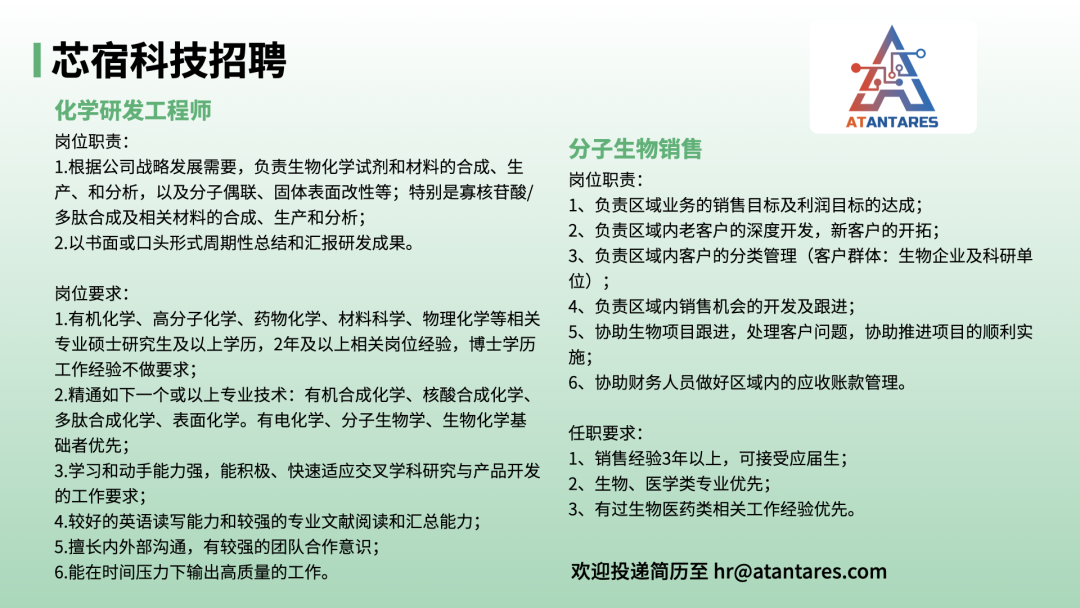
Wei Zhang: I hope to attract people who aren't just in it for the money, but truly recognize our goals and mission, are open-minded, and have big-picture thinking. I hope this person can "focus on the matter, not the person" — handle issues without emotion, can learn from and collaborate with colleagues less senior than themselves. Actually achieving "focus on the matter, not the person" is quite difficult; it requires inner confidence — only the weak fear making mistakes. From the company's perspective, we currently more need people who recognize the robotics赛道, understand business, and have sales and organizational management skills to join.
Interactive Giveaway
What cross-disciplinary tech innovation opportunities have you noticed recently? Join the conversation in the comments. By 5:00 PM on August 18, we'll give Dedao App gift cards worth 200 RMB to the 2 users with the most likes and the 3 users with the most thoughtful comments.

Do Returnee Entrepreneurs No Longer Have Advantages? | 2021 FreeS China-US VC Forum Transcript
What Happens When Hottest Tech Tracks Intersect? | FreeS Chip Series
Star FreeS Fund WeChat Official Account for timely business insights