The 6 Questions Young People Care About Most: We Asked 17 Founders | FreeS Fund Youth Festival & Graduation Season Special
Passion and conviction are what carry you through the darkness.

"Confidence and hope are the prerogatives of youth." This line from French writer Alexandre Dumas captures the sparkle of young people.
With graduation season approaching, young people today—navigating an uncertain environment—may have all kinds of thoughts and questions: Which industry should I choose? Should I join a big tech company or a startup? Study abroad or stay domestic? If I want to start a business, what should I watch out for?
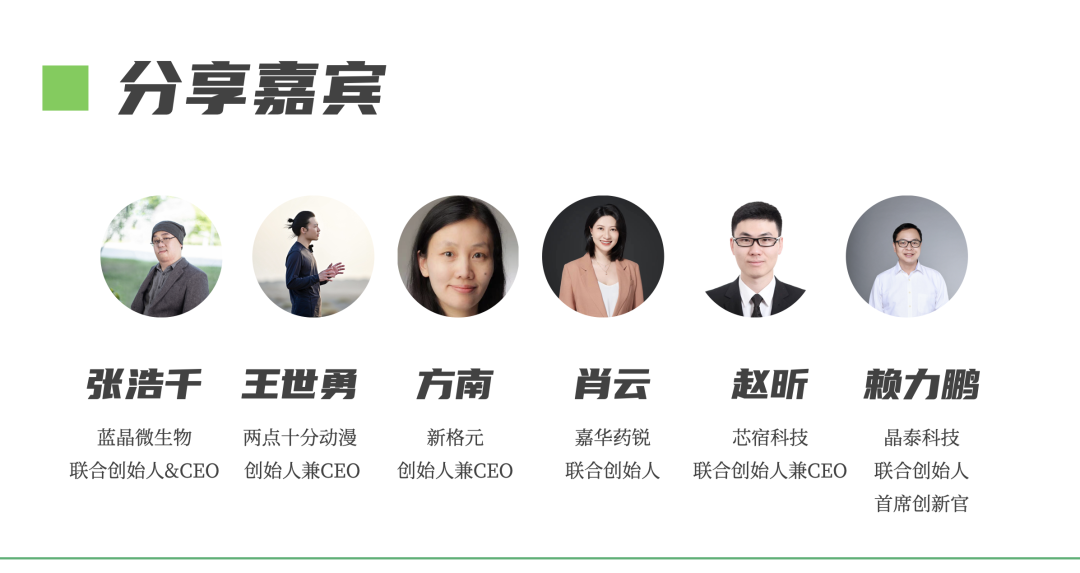
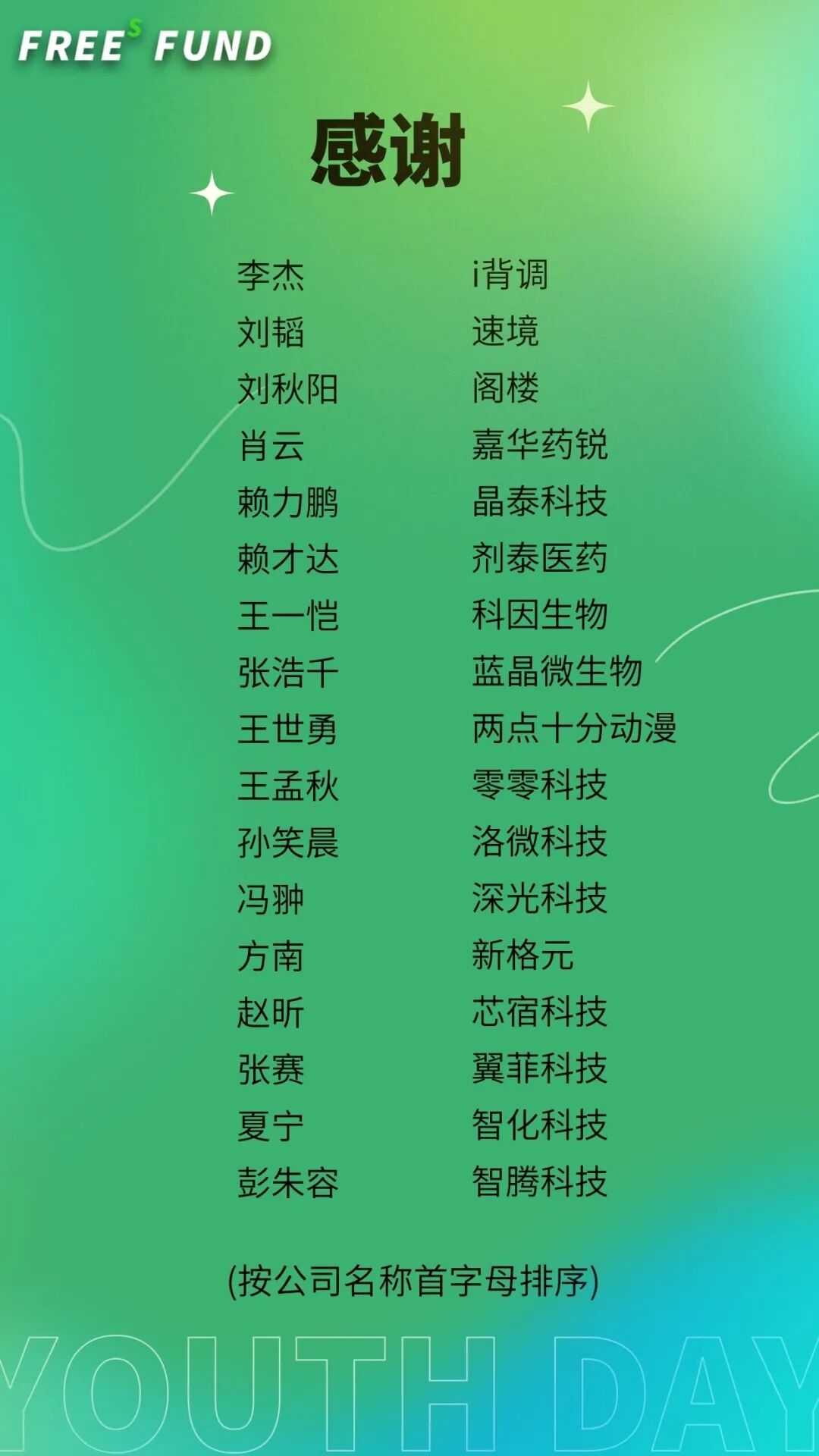
We gathered questions young people care about from platforms like Bilibili and Xiaohongshu, and conducted small-scale surveys at Peking University and among international students. We distilled six core questions covering three themes: education and early career preparation, career direction, and future development. For Youth Day, we invited 17 founders to share their thoughts.
Education and Early Career Preparation
- What did university teach you? What realizations have you had about school and work?
- Domestic vs. abroad—how to choose?
Career Direction
- How should young people choose which industry to enter?
- After graduation, big tech company or startup?
Future Career Development
- What should young people pay attention to when starting a business?
- What kinds of work can ChatGPT not replace?
Among these founders, some started businesses right after graduation; others honed their skills at big companies first; still others began their entrepreneurial journeys at startups. They work across biotech, hard tech, consumer, and TMT—diving deep into synthetic biology, molecular diagnostics, AI drug discovery, mental health consulting, robotics, LiDAR, enterprise services, animation, consumer drones, and more.
Behind their answers, you'll see vibrant young people in full force:
- "I believe we're at an inflection point for technology, and I want to be part of it."
- "I wanted to start a company, and joining this firm might be my last step before 'pulling the trigger.'"
- "Passion and conviction are what get you through the dark times."
- "If you see a transformative opportunity, don't hesitate to start a business."
- "When you truly become someone confident and at peace with yourself, things naturally fall into place."
We hope this offers some inspiration. Stay young, stay upward.
Giveaway
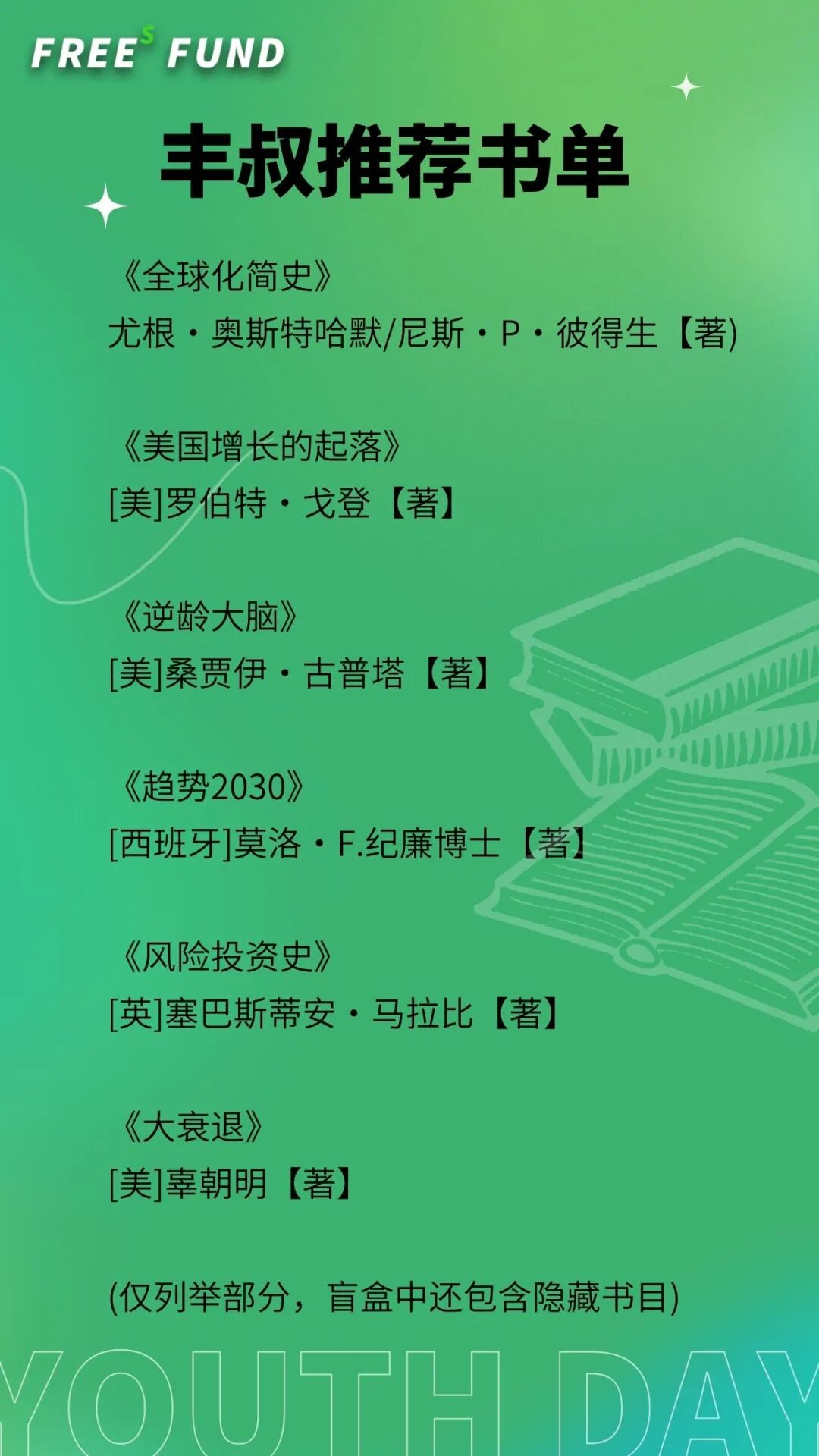
Share your thoughts on careers, employment, or entrepreneurship in the comments. The 8 most thoughtful commenters will receive a book blind box curated by Feng Shu (2 books per box, shipped randomly).

Haqian Zhang, Bluepha
While still in school, we need to undergo a value transformation—to develop personal value aspirations. I strongly recommend The Shanghai Jiao Tong University Survival Manual, written by TSP founder Xiaodi Hou and a classmate during their undergraduate years.
The manual makes an important argument: as an institution, the university's job is to hit its research KPIs. It has no obligation to ensure your personal success. Only you are responsible for that. We shouldn't obsess over GPA; instead, we should find what we love.
During university, improving cognition matters far more than improving capability. There will always be endless courses to take. You need to clarify your goals. When I clearly realized I wanted to make something of myself in research, biostatistics and linear algebra—courses I'd previously dreaded—suddenly had meaning. I had to master them. I didn't follow the university's schedule completely. I dropped University Chinese and took Aesthetics Principles instead. For the final paper on "What is beauty?" I scored just over 60, and my GPA "crashed." But my understanding of design and aesthetics today probably grew from that experience. I also took Philosophy of Science and Technology, which gave me clarity on how technology evolves. Why do I want to start a business? Because I believe we're at an inflection point for technology, and I want to be part of it.
I also read many "unrelated" books at Peking University's library, like Tocqueville's The Old Regime and the Revolution. As Steve Jobs once said about "connecting the dots," these studies gave me a composite background and rich cognition, helping me understand what the world looks like and what I should do.
Shiyong Wang, 2:10 Animation
In college, a teacher told me: "The meaning of university is that it gives you time and space to think independently—not to do other things." When you know what you want, you know what to study. I disliked my major, so I taught myself animation.
Don't wait until after four years of school to choose what kind of life to lead. If your goal is employment or entrepreneurship, actively engage with the workplace and business world. Take various courses, find your passions. Through real-world experience, you'll discover where you fall short.
Interpersonal dynamics in school differ greatly from society. In school, if you stand out slightly in academics, looks, or family background, your social circle changes dramatically. But in society, someone who can take one thing to the extreme gains tremendous recognition.
Nan Fang, Singleron
I did my undergraduate at USTC—my father's alma mater. In the 1980s, he told me that going to college was about joining a "circle of classmates." Though I didn't actively socialize much during college, I later felt the help and support of USTC alumni during my PhD, work, and entrepreneurship.
In college, I didn't particularly realize what I loved. I spent lots of time reading novels. One reason I chose biology was that it made it easier to study or work abroad. It was during my PhD that I truly fell in love with biology, focusing on cultivating independent thinking and problem-solving skills. Using various methods and resources to solve problems—that process matters.
Yun Xiao, Canaan Biotech
I did my undergraduate at Peking University, choosing biology through the Yuanpei program. My classmates were so strong that I constantly felt stupid, incapable, and timid in social interactions.
But later, I suddenly shifted my mindset. I realized that having such brilliant people around me might be one of the luckiest things in my life. I should learn from them rather than constantly compare myself. Once I calmed down, I stopped being twisted up and freed myself from extreme self-doubt.
Early in my career, I also felt at a loss. I kept learning from excellent colleagues around me, adapting faster to the workplace. When you truly become someone confident and at peace with yourself, things naturally fall into place. Even when things don't go well, you won't torture yourself over them. If we retire at 60, we still have long careers ahead with plenty of opportunities. I hope we can all walk the path ahead well. Keep going.
Xin Zhao, NeoX Biotech
In 2010, I went to MIT for my PhD. In 2011, as vice chair, I organized the MIT CHIEF forum, which later became an important gathering for the Chinese hard tech community in North America. Through this, I learned a lot about entrepreneurship, met Feng Shu and FreeS Fund partner Rui Ma, and continued following the VC world.
I studied semiconductors, constantly thinking about where the field was heading. I was fortunate to co-found a company with a senior labmate, witnessing the full arc of a hard tech startup—immensely helpful for my own venture later.
Entrepreneurship is extraordinarily complex, involving technology, business, strategy, and more. Sufficient IQ ensures learning ability to tackle problems. But to do it well requires deep industry accumulation.
Lipeng Lai, XtalPi
School and work differ quite a bit.
First, in school your goals are clear: which courses to take, how many credits, when to graduate. Everyone moves at roughly the same pace. But in the workplace, no one gives you a clear career plan. Your medium- and long-term goals stay fuzzy, and standing still means falling behind. You need to learn proactively—keep your head down working, but don't forget to look up at the road ahead.
Second, the workplace is more complex. You'll receive massive amounts of information and encounter setbacks and difficulties beyond your control. You need to subtract, filter information, and focus on what's most core and helpful. Once you clarify your goals, you'll realize many difficulties are irrelevant to your core objectives—no need to be overly discouraged by them.
Third, the workplace emphasizes teamwork, whereas in school you only need to be responsible for your own learning outcomes. More scenarios require a group dividing labor toward a shared goal—achieving self-worth by helping others succeed. This involves all kinds of external communication and collaboration. You need empathy, to grasp what leadership actually needs, and to offer constructive solutions rather than blindly "answering the question."
Before entering the workplace, two capabilities matter. First, learning ability. In school I tried different research directions, enjoying combining knowledge across fields to solve more challenging and innovative problems. Second, sense of purpose. This helps you find the right direction and persevere when you encounter difficulties or confusion.


Mengqiu Wang, Zero Zero Robotics
My path was a bit unusual — I only spent one semester at a domestic university before applying to study abroad. I didn't want to follow the conventional track; I wanted to see more of the world. I'd already gotten a taste of what Chinese universities were like, so it felt like I had little to lose.
Everyone's situation is different, and the environment overseas isn't as welcoming as it was ten or twenty years ago. But for young people who want to start a business or have lots of ideas, I'd still recommend getting out and moving around as much as possible. You learn so much from the school of hard knocks. If you're already abroad, pay close attention to personal safety and try to travel with others.
I previously worked at tech companies in Silicon Valley like Twitter, and you could really feel the peer pressure. You want to be one of them, so you hold yourself to very high standards. What people care about is: is what you're building cool? Is it impressive? If you can work at a major company like Google, Meta, or Pinterest for four or five years, that really helps when you're looking for your next good opportunity.
If your goal is to eventually start a company, you need to think about how to accumulate resources along the way — connections, channel partners, supply chains, and so on. But for Chinese people abroad, building up social resources can be somewhat harder.
Yikai Wang, Keyin Biotech
My decision to go abroad was relatively "blind" — back then, many science graduates were going overseas, so I applied too. Looking back, if there are good opportunities now, I'd still recommend young people go abroad.
First, to learn advanced technology. In high-tech fields, the gap between us and Europe and America is still significant. Studying abroad gives you the chance to access cutting-edge technology during your education and develop deep expertise in a specific area.
Second, to learn advanced management concepts, methods, and process systems. If you can work at a European or American research institute or large company, even starting as just a "cog in the machine," you'll gain firsthand experience observing and learning from within.
Third, to learn ways of thinking. Critical thinking and the ability to ask questions are crucial for future career development. If you pay attention, you can pick these up from classmates and colleagues.
For long-term development, if you approach things with a problem-solving mindset and are willing to face and overcome challenges, you might be well-suited to return to China. Of course, whether to come back is a major decision with no right or wrong answer — once you choose, walk that path with conviction.
Sai Zhang, Yifei Technology
After graduating from Tsinghua University, I received an offer from Columbia University and chose to go abroad. I wanted to broaden my horizons, to see Western education systems, local customs, and technological development firsthand.
After graduating from Columbia, I returned to China without hesitation. This wasn't a hasty decision. I grew up in a military family, and from childhood I was taught to return home after completing my studies and serve my country. I joined a Hong Kong-listed company, and in 2012, I founded Yifei Technology.
We are descendants of Yan and Huang. I hope students who go abroad can "learn from the barbarians to strengthen ourselves," applying what they've learned to building up our motherland. At the same time, we need to actively expand into overseas markets and secure more partners and business opportunities.
Yun Xiao, Kinova Pharma
A person's knowledge system is shaped by their vision, experience, and upbringing. Being able to see and feel different cultural forms firsthand can have a profound impact on your entire life.
If you're considering employment overseas, you need to think long-term — not just about your twenties and thirties, but all the way to your sixties and beyond. If your financial situation allows, your family is supportive, and you can land a good offer from a foreign company, I think it's a great opportunity. In my field of biomedicine, for instance, gaining experience at a major American pharmaceutical company or biotech firm can be extremely valuable.
Qiuyang Liu, Gelo
If young people have the opportunity to go abroad, you'll experience different cultures and learn many new things, especially regarding technology and consumer products.
If you integrate well overseas and encounter good opportunities, staying abroad might be a good option. But after studying abroad, I still chose to return to China.
There were several reasons. First, I don't think I'm someone who integrates easily into American culture. Second, my parents and relatives are all in China, and family considerations played a role. Third, when I returned, the country was promoting "mass entrepreneurship and innovation," and I was somewhat inspired by that entrepreneurial enthusiasm.
Ning Xia, Chemical.AI
Going abroad had an enormous impact on my life. It allowed me to look at the same issue from two different, even opposing perspectives, which is very beneficial for young people's growth and judgment.
Being abroad cultivates self-reliance. Young people overseas can't depend on their parents — they can only rely on themselves to manage their lives and work well.
I recommend that young people study abroad at least once. At this point in time, going abroad may have even richer significance. China currently faces some technological blockades from overseas; if we can study abroad and access advanced technical information, it will make us more competitive.
Shiyong Wang, 2:10 Animation
The choice between domestic and overseas, to me, comes down to this: do you focus on the local, or embrace multiculturalism? The foundation for this choice lies in what problems we want to solve.
If we want to address issues of national governance or culture, we may not necessarily need to go abroad. Our time and energy are limited, so we can first focus on local cultural content.
Western governance and management experience is quite popular, but the thinking of ancient Chinese sages may cut more directly to the essence. Abstract things transcend time and space; concrete things trend quickly. The abstract thinking of the sages can live on forever. If we want to solve problems in technology, we may need to go overseas to absorb experience.

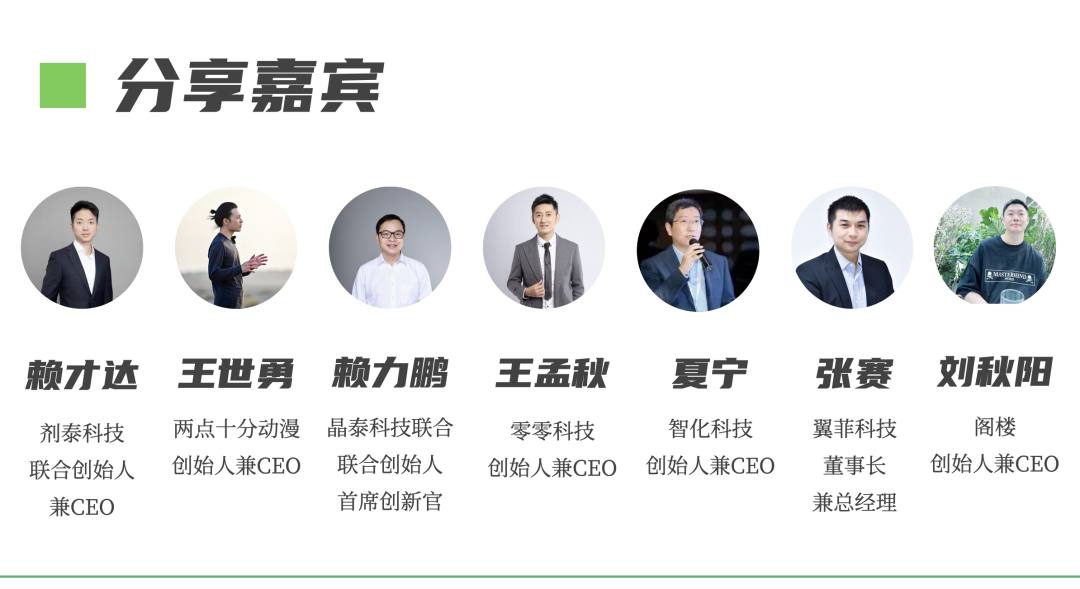
Caida Lai, METiS Pharmaceuticals
I remember asking myself this question over a decade ago when I was in university: "In this era of technological innovation and rapid iteration, how should I choose my academic and career path?"
At the time, I applied the "first principles" thinking that Elon Musk advocates, considering which industry directions truly address humanity's fundamental needs.
I identified three areas. First, biomedicine — people want to be healthier, to not age, and perhaps one day to edit themselves like code: regulating muscle growth, enhancing intelligence.
Second, renewable energy technology. If we can obtain energy more economically, harvest solar power more efficiently, or crack nuclear fusion, people might have access to inexhaustible low-cost energy, which would fundamentally transform human productivity.
Third, information technology. An interconnected world of everything generates massive amounts of data, far exceeding what the human brain can process. If we can use AI to empower humans to use big data more effectively and dramatically amplify "brainpower," it would be revolutionary.
With this in mind, during my PhD at MIT, I positioned myself across these three directions. I realized that combining AI with biomedicine and energy resources would be a huge opportunity. So in my first venture, I combined AI with water reuse. In my second, I combined AI with biomedicine.
As long as you believe your chosen direction creates value for humanity and you're genuinely interested in it, keep pushing forward. Time will prove you right.
Shiyong Wang, 2:10 Animation
I've been thinking about whether to do things right, or to do the right things. We must do what we love, or we'll have regrets.
If you extend the time horizon, I don't think there are really any truly bad industries. Ten years ago, real estate might have been the best industry; now it's among the most difficult. Every ten to twenty years, different industries go through cycles and may present good opportunities. The question is: are we prepared to seize that moment?
Lipeng Lai, XtalPi
Merck Group founder George Merck once said that medicine should be for the patient, not for the profits — the profits will follow. In my entrepreneurial journey, I've also felt that purpose determines scope. Rather than chasing trends, it's better to persist in doing what you find meaningful. If you use technology to bring positive improvements to people's lives, especially in health, your success benefits everyone. You'll gain support from customers, shareholders, partners, and earn the respect of your peers.
I find pharmaceuticals deeply meaningful — there are still many diseases in the world without effective treatments. We want to use computational methods to scale up and improve the efficiency of drug discovery.
Since founding the company in 2014, the AI drug discovery industry has grown rapidly amid fluctuations, with exciting innovations emerging constantly. The wave continues. We're honored to have the opportunity to be surfers at the frontier of this field. I believe truly AI-discovered innovative drugs will soon reach the market, continuously reaching patients, extending human life while improving our quality of life.
Mengqiu Wang, Zero Zero Robotics
Previously I worked in technical roles at Silicon Valley tech companies, dealing with big data daily. I wanted to prove my technical strengths, so for my first venture, I returned to China to work on distributed computing. Our approach was flawed — we had a hammer and were looking for nails, without clearly thinking through the application scenarios for our technology.
For my second venture, I created Hover Camera, a foldable portable drone, with much more conviction. This venture is now nine years old, and I've thoroughly enjoyed the process.
First, hardware is tangible and real — the engineering knowledge I'd accumulated could be fully applied. Second, entrepreneurship is complex, involving team management, finding supply chains, channels, sales, marketing, communications, and more. In this process, you bring every skill you have to bear, and it makes life feel worthwhile, without regrets.
Ning Xia, Chemical.AI
I studied chemistry but was interested in programming, so I looked for an intersection between these two interests — cheminformatics. But at the time, there were very few corresponding job openings on the market; it was practically a blank space. In the end, I found a startup in this direction through my own online research.
I entered the cheminformatics industry very early and accumulated many years of experience. Initially, the industry didn't pay well and opportunities were scarce. But with recent breakthroughs in big data, digitalization, and AI, our industry has become quite hot. Because I enjoy it, I invest more energy and time to make it work. So when opportunity came, I was at an advantage.
Sai Zhang, Yifei Technology
When choosing an industry, I focus on two main points: first, market demand exists; second, I have the capability.
The industry you choose must be meaningful, valuable, and have a market. After all, starting a business isn't pure research — companies need to be profitable. If something looks appealing but is beyond your capabilities, don't blindly dive in. Once you have a certain foundation, expanding into unknown territory will go more smoothly.
As for how to judge whether you've chosen the right industry — see if your personal or company's development matches your expectations. If you're happy, your skills are growing, and every day you're becoming a better person, you've probably chosen the right direction. Once we've chosen an industry, with long-term goals unchanged, we should persist in going with the flow while continuously adjusting our path.
Qiuyang Liu, Gelo
I chose the mental health industry for two reasons. First, I've always had a genuine interest in it, which connects to some personal experiences. Years ago, I saw a therapist, and during that process, I realized the user experience in mental health could be vastly improved. Second, mental health is poised to become a major market. The world will only grow more complex, people will face more challenges, and mental health awareness will keep rising. Mental health is a medical-adjacent field, and while China's healthcare system has developed rapidly overall, mental health has lagged behind. Coming from a product and tech background, I'm relatively good at uncovering user needs. I wanted to approach this industry from a unique angle and change it.
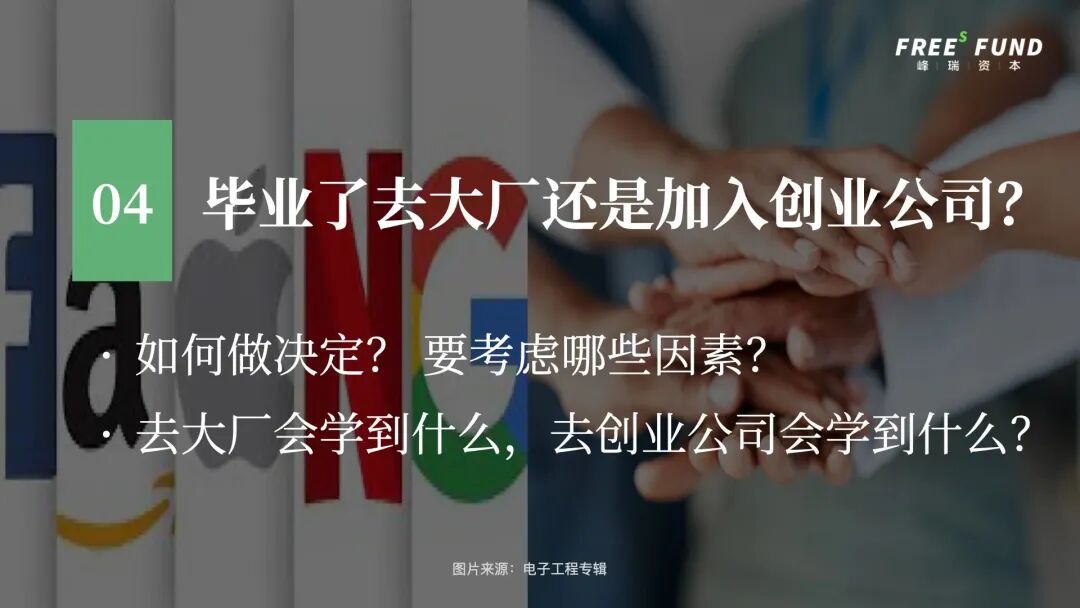
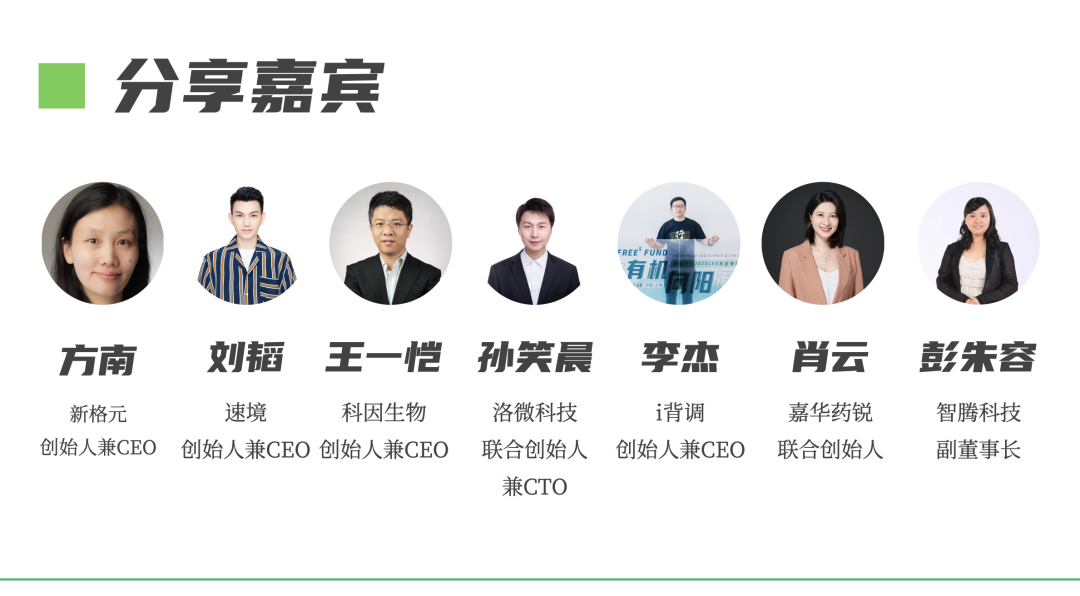
▍Singleron, Nan Fang
My first job was at the headquarters of QIAGEN, a leading molecular diagnostics company. During internal training, the HR lead was candid: you absolutely want to get experience at a major company's headquarters. There, you can see how a mature, well-developed corporate system operates, and how different functions collaborate. There's relatively more office politics at big companies — recognizing the complexity of workplace dynamics early on isn't necessarily a bad thing.
On the other hand, when you first join a big company, you tend to be more of a cog in the machine, with a narrow scope of responsibility. If you want to learn about other areas, you have to proactively reach out and collaborate with other departments.
If you join a startup right after graduation, the upside is that you get deep exposure to different functions from day one. You might not just do R&D — you'll also support marketing and sales. A lot of things you just have to figure out on your own. On one hand, it's interesting, never monotonous. On the other hand, you might feel frustrated. Your company probably isn't well-known, and when dealing with clients and partners, you need a strong mindset.
▍Speediance, Tao Liu
Whether to join a big company or a startup? I think you need to be clear on three things: first, what are your interests; second, what competency model do you want to build; third, what's your career plan — do you want to become an executive at a big company, or do you want to start your own business?
I joined a startup right after graduation, working at EHANG, XAG, XGIMI, and FITURE. In 2014, choosing between grad school and drones, I picked the latter. I'd loved model airplanes since I was a kid, and I'd been a DJI user since 2012. So I joined EHANG before it was even officially registered.
Later, wanting to strengthen my product skills, I went to XGIMI. At the time, both Tencent and Kuaishou said they wanted to do IoT products, but neither had a clear direction. XGIMI's products, though only on the market for two years, were growing 3x annually.
After XGIMI, I faced two choices: Alibaba offered me the head of Tmall Magic Screen (a projector product), and FITURE offered me head of hardware products. FITURE meant a brand-new team, direction, and market. Because I desperately wanted to eventually start my own company and build products I believed in, joining FITURE felt like the final squeeze of the trigger before I started my own thing. So I chose FITURE without hesitation, even though Alibaba offered higher pay.
▍Coing Bio, Yikai Wang
Whether you choose a big company or a startup, you need to understand who you're actually working with. That may matter more than which company you go to or what your salary is.
If you join a big company, understand who you report to directly, and even one or two levels above. If you join a startup, the CEO and founding team essentially are the company's ceiling. Observe whether the CEO and management team have the determination and vision to build the company step by step from small to large.
When I first returned to China, I worked at the National Development and Reform Commission, then went to WuXi AppTec, and before starting my own company, joined FreeS Fund. I was fortunate to meet excellent managers and colleagues. Working in that kind of environment gave me the chance to accumulate experience and grow alongside others.
Before joining FreeS, I asked Feng a few questions. The first was about how much decision-making authority I would have in final investment decisions. Many institutions aren't willing to give newcomers investment authority. But FreeS was willing to let young people get their hands dirty in projects and make mistakes — that's rare.
The second was about FreeS's philosophy. I deeply resonated with Feng's long-term thinking and investment philosophy, and I bought into FreeS's culture: "Do what's right, not what's easy."
▍LuminWave, Xiaochen Sun
The year I finished my PhD, we happened to hit the 2008 financial crisis. Previously, most of my senior lab mates joined big companies like IBM. But our cohort saw hiring freeze at the big firms. So I just joined a startup, working closely with the CEO and CTO every day. Beyond technical skills, I learned a lot about project management and organizational management, which helped me quite a bit when I later started my own company.
Later I dove directly into entrepreneurship. LuminWave is the second company I've founded. I've never joined a big company, but I frequently talk with classmates who have. Big companies do give you more systematic training. If you can make it to management, you'll gain more experience in technical management.
But your exposure may be narrow at the beginning at a big company. If you leave to start a company too early, you may have significant gaps. If you reach director level before leaving, you'll have advantages in both experience and resource accumulation.
There are successful examples whether you choose big company first or startup first. What matters most is accumulating experience. My first startup took many detours; if I'd had relevant experience beforehand, I could have avoided many mistakes.
▍iBackCheck, Jie Li
After graduation, I went to Huawei headquarters. The business philosophy, corporate culture, and professional skills I learned at Huawei were tremendously helpful for my later entrepreneurship.
If a company becomes a big firm, there's always a reason. Huawei often emphasizes "focusing all strength on a single point" — concentrating on core business and core赛道. This inspired me to persist in my chosen direction later and resist the temptation of other hot trends. Huawei also frequently stresses "sitting on the cold bench for ten years" and "the bird that survives the fire is a phoenix." The enterprise services赛道 I was in particularly demands long-termism — don't do things for quick gains. Many entrepreneurs who came from Huawei have remarkable resilience.
In management philosophy, Huawei often cites "raise glasses together in victory, fight to the death to save each other in defeat," emphasizing team cohesion and combat effectiveness. The core members of our company in the early days went through storms together, and we remain united.
▍Kinova Pharma, Yun Xiao
Choices differ greatly at different life stages. I left a foreign company to start my own business several years ago. Some former colleagues who made it to senior leadership live very comfortably — they've truly achieved work-life balance. As long as you make choices based on your true self, there's joy in lying flat and joy in striving.
What matters most is being clear about what kind of person you want to become, and how you want to cultivate your long-term competitiveness. Do you want to become a big company executive, or do you want to change the world with an outstanding startup team?
If someone excels at精细化管理 and thrives in process-driven companies, they may feel everything is off at a startup. But if you have the ability and courage to take risks, working at a startup may rapidly elevate your capabilities. Decide carefully, then go all in once you've decided.
▍Zhiteng Technology, ZhuRong Peng
Startups have a hard time recruiting. Many fresh graduates prioritize big companies, state-owned enterprises, research institutes, or civil service exams. Joining a big company, you might start out just "tightening screws." But at a startup, you may quickly find yourself in the "engine" position.
Most graduates care about employer brand and are reluctant to join risky startups. But big companies may require overtime too, and from hiring through later management, they may have even higher淘汰 rates and fewer promotion opportunities. Companies that have completed Series B or C funding have fairly strong prospects and确定性, and offer quite competitive salaries. I hope investors like Feng and executives from listed companies can visit campuses more often to share the latest perspectives on career choices with students.
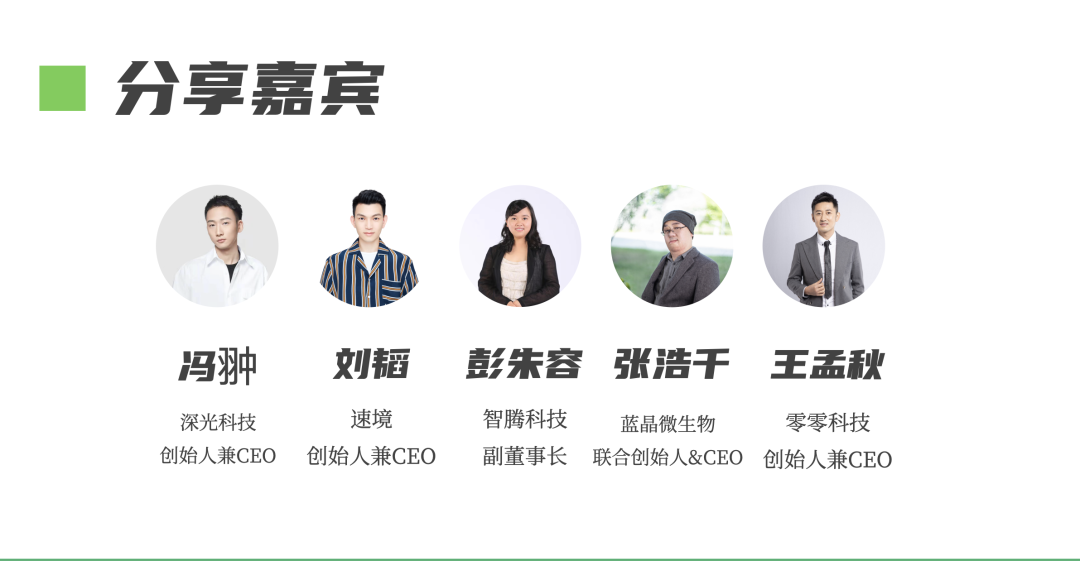
▍DeepLight Technology, Chong Feng
At 22, after a tech competition, I decided to start a company. The pros and cons of young entrepreneurship are both obvious. The upside: you gain a more comprehensive, higher-dimensional understanding of society earlier, and recognize the responsibilities you should bear. If you spot a transformative opportunity, you can dive in without hesitation. The downside: starting too early may make you overly focused on your own thing, losing opportunities for further education. If you start at 30 or 40, your starting point may be higher.
During university, diversify your information channels. You also need role models — regularly read perspectives from renowned entrepreneurs and investors, and align your thinking with their insights, such as Bill Gates and Mark Zuckerberg abroad, and Feng and others domestically.
How to avoid pitfalls in entrepreneurship? You need to constantly learn to see problems from different perspectives. We need four perspectives. First, a technical perspective. You also need user and sales perspectives to deeply serve real users in the industry.
As the company grows, you also need a capital markets perspective — viewing things from primary and secondary market angles. In entrepreneurship, you also need to manage relationships with factories, suppliers, distributors, and marketers. Treat them as investors, practice empathy, and work together toward a shared vision.
▍Speediance, Tao Liu
Entrepreneurship is a means, not an end. Look at what your motivation is, and how entrepreneurship serves it. For me, I couldn't achieve my long-term goals through my existing work, so I started a company.
The driving force of entrepreneurship is love and belief. Without them, don't start a company. Love and belief are what get you through the dark times. Whether you fail or succeed, you gain experience — just different kinds.
It's best to have gone through zero-to-one and understand what entrepreneurship is about before starting your own company. To learn about entrepreneurship, follow more WeChat public accounts, listen to podcasts (there are many entrepreneur shares recently), and attend various offline events.
▍Zhiteng Technology, Penny Peng
Entrepreneurship isn't for every young person. Going straight from graduation to founding a company is rare. For most young people, joining the workforce or a large company first to gain experience and skills, to build your capabilities and management quality, will improve your odds of success. Founders need resilience, big-picture thinking, and an understanding of how to distribute benefits so the team shares in the fruits of the venture. For scientist-founders in particular, team management and interpersonal skills need attention.
▍Bluepha, Haoqian Zhang
I believe young people absolutely should start companies. Why?
First, the default color of entrepreneurship is failure. It's not even nine deaths for one life — it's ninety deaths for one life. In the process of building something, you'll suddenly realize how much responsibility you've taken on. You can examine yourself through failure and keep improving.
Second, young people today were born into the internet era. Their ability to access information is strong. We can't simply use age as a linear metric to assess someone's experience and capabilities. You have to believe time is on your side. As long as you can endure, as long as you don't leave the table, you will achieve something.
▍Zero Zero Robotics, Mengqiu Wang
If you treat entrepreneurship as a destination, it will exhaust you.
First, whether to start a company depends on your personality. In the process, do you feel anxiety or joy? It's like surfing — is your mindset oriented toward welcoming the big waves, or are you more afraid of them, shrinking back? People who fear challenges, who are too prone to anxiety, may not be well-suited for entrepreneurship.
Second, a founder is essentially one person bearing all the risk and responsibility of the entire company. Everyone may save the hardest problems for you. You must have independent thinking ability to make decisions, and enough perseverance and endurance to face setbacks and failure. In short, entrepreneurship is a long and complex journey. It requires patience and grit.
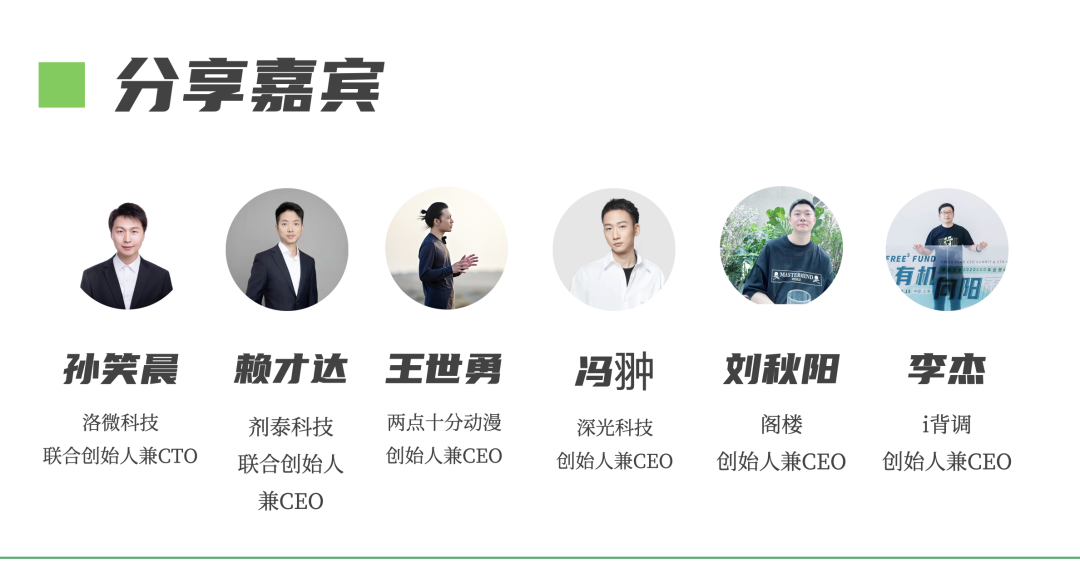
▍LuminWave, Xiaochen Sun
ChatGPT is actually empowering individuals. It doesn't have to replace an entire job's workload — it plays a supporting role, letting you focus on more core work.
I use ChatGPT to write copy frequently now. Facing ChatGPT, I'm like a product manager. I define the requirements, and get ChatGPT to gradually reach the goal I want.
We need the ability to abstract and define what a piece of work specifically entails. When you break down a complex job into clear processes and steps, ChatGPT can more easily meet your needs.
ChatGPT doesn't threaten humanity. We always have to learn and adapt to new tools. Every time a computer upgrades its system, we feel like it's worse, but after using it for a while, it becomes more intuitive and efficient. What I care more about is data fairness and controlling AI output, especially dangerous content. As a tool itself, ChatGPT isn't something to fear.
▍METiS Pharmaceuticals, Caida Lai
What jobs can't ChatGPT replace? When personal computers became widespread in the 1980s, people were asking the same question: "What jobs can't computers replace?"
Back then many people also worried about unemployment. Later people discovered computers brought unprecedented new opportunities — globalized supply chains, the internet revolution, and so on. In reality, people who knew how to use computers replaced people who didn't. We may face a similar situation in the future: people who master ChatGPT will replace people who haven't.
So in the near term, what jobs are less easily replaced by ChatGPT?
First, truly original innovation. Our company, METiS Pharmaceuticals, uses AI technology to design drug delivery vehicles. We developed a PhatGPT model to more efficiently design lipids and develop various complex nano-formulations. But the original innovation for these delivery vehicles still comes from gifted scientists. AI can empower scientists to improve R&D capability, but it can't replace human innovative thinking.
Second, work that involves interacting with the physical world. A lot of labor that requires "doing" with your hands — AI may not do well. At MIT, some friends specialize in making the "heart" of robots, but simple tasks like folding a quilt or folding clothes are very difficult for artificial intelligence to achieve. The human body itself has a vast array of rich "sensors." The coordination of touch and vision, and the control of muscle strength, far exceed AI.
Third, work involving interaction between people. For example, managers, psychologists, lawyers — these jobs require professional knowledge to make judgments, and also require complex communication.
Of course, in the long run, people who know how to use ChatGPT will have productivity improvements by orders of magnitude. I also believe ChatGPT will create more job opportunities that people today can't even imagine.
▍2:10 Animation, Shiyong Wang
Perhaps what we need to consider isn't just whether ChatGPT can replace human work. If we extend the time horizon to 50 to 80 years, we can see industry changes and job changes more clearly.
In the animation industry, Disney initially believed hand-drawn animation was the only orthodox method. Pixar, which used 3D software, was just a "heretical path." But later Disney had to transform, using computers to create animation.
We're an animation company. I often talk to colleagues about what AI means for us. Perhaps we're now at the inflection point Disney faced back then — moving from 3D rendered animation to generating animation by setting keywords. We and AI aren't in a relationship of replacement. We must master new production tools. Otherwise, the more repetitive the labor, the more it will be replaced by more efficient tools.
We need to think clearly about the relationship between humans and tools, and also see what makes human beings human. AI doesn't experience birth, aging, sickness, and death. Steve Jobs once said: if a person doesn't face the threat of death, they can't cherish life. Without compassion, we might find it hard to have deep emotional expression, let alone create good art. The emotions we perceive AI expressing are just models we've set up.
▍Shenguang Technology, Chong Feng
For now, work that's not easily replaced by ChatGPT has two characteristics:
First, areas with relatively low commercial value density, where tech giants won't invest heavily.
Second, directions that aren't what large language models are good at. Current large language models perform poorly on execution — for example, even with algorithms, robots struggle to imitate human joint movement.
Specifically, I think physical work like food delivery and street cleaning will be hard to replace with AI. Also, work that bears major responsibility is hard to replace — medical and legal work, for example. It's difficult to make AI accountable for outcomes.
▍Gelou, Qiuyang Liu
Psychological counselors are hard to replace with GPT. Psychological counseling is a process that requires accumulated time, not an overnight result. Healing methods like meditation and mindfulness depend on how long each person persists and the effort they put in. A psychological counselor doesn't just give an answer — they help people find solutions by building emotional connections with them. In the short term, machines will find it hard to establish deep emotional bonds.
▍iBeidiao, Jie Li
From a specific scenario perspective, if it involves lawsuits or legal disputes, judges and lawyers are hard to replace with ChatGPT, but stenographers are easily replaced.
Judges and lawyers require relatively high professional standards, empathy, and judgment. But basic work like text entry has a high degree of replaceability. In the computer industry, some basic programming algorithms can already be completed with tools like GPT, more efficiently than average programmers.
Giveaway
We'd love to hear your thoughts and experiences on careers, employment, and entrepreneurship in the comments. The 6 most thoughtful commenters will receive a blind box of books recommended by Feng Shu (each containing 2 books, shipped randomly).

A Debate: Two Investors in Different Directions on How They View GPT | FreeS Research Institute
Every Brain Is Its Own Little Universe | FreeS Fund's World Autism Awareness Day Special
How to Invest in Biotech in 2023? | FreeS Research Institute
Star the FreeS Fund WeChat Official Account for timely business insights.