After 618: What's Next for Consumer Brands | FreeS Fund Business School

After 967.4 billion in cumulative GMV, who is swimming against the current?

In 2020, China's consumer market, battered by recurring COVID outbreaks, was shrouded in uncertainty. As the biggest promotional event since the pandemic began, 618 served as a barometer for whether consumer spending was recovering. Tmall's 618 gross merchandise volume reached 698.2 billion yuan. JD.com's hit 269.2 billion yuan. Combined, the two platforms neared the trillion-yuan mark — 967.4 billion.
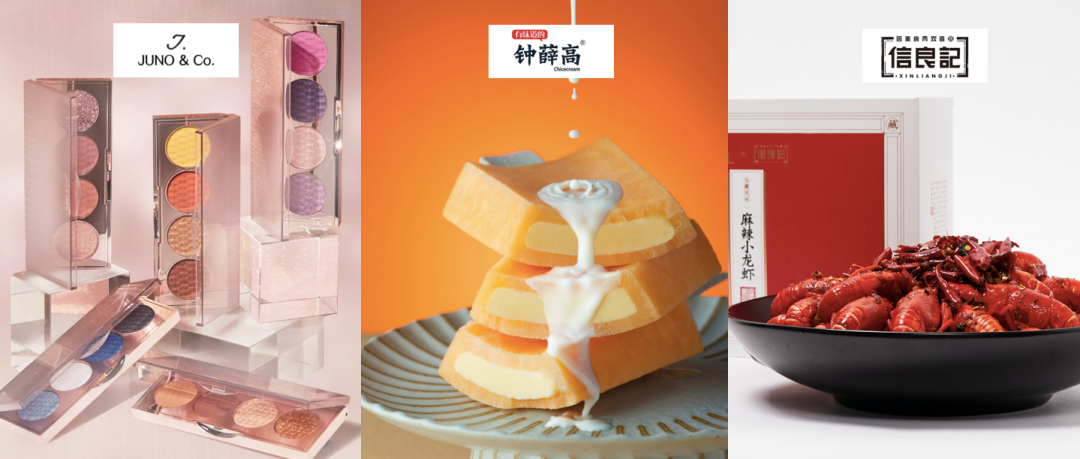
Beyond the numbers, consumer brands' insights into users and their industries deserve attention too. We invited three founders from the FreeS Fund family — Lin Sheng of Chicecream, Li Jian of Xinliangji, and Kyle Jiang of Juno&Co. — to discuss consumption amid the pandemic, the just-concluded 618 festival, and their thinking on product, brand, and traffic.
618 meant something different for each of these three companies:
- Chicecream surpassed competitors across every data dimension, becoming the undisputed leader in the ice cream category;
- Xinliangji experienced its first 618, having pivoted from offline to online and from B2B to B2C since the outbreak began;
- DTC beauty brand Juno&Co. capitalized on the "mask makeup" trend, launching its first product designed specifically for Chinese users' needs and price preferences, doubling down on the China market.
 (Swipe left or right for more 👉)
 (Swipe left or right for more 👉)
 (Swipe left or right for more 👉)
 (Swipe left or right for more 👉)
 (Swipe left or right for more 👉)
 (Swipe left or right for more 👉)
Here are their reflections, which we hope you'll find insightful. New consumption and new brands are priority investment areas for FreeS Fund. We look forward to ongoing exchanges with entrepreneurs and industry experts — add us on WeChat (ID: freesfund) to connect.

01 Chicecream's Lin Sheng: Chasing GMV Alone Is "False Prosperity" — Focus on Quality of Growth
Stacking GMV is manual labor; sales volume isn't the only right answer
This year's 618 marked a new starting point for Chicecream.
Since March 2019, Chicecream had been gaining leading positions in individual metrics. This June, we surpassed competitors across all data dimensions, becoming the undisputed number one in the ice cream category: first in followers, first in growth rate, first in sales volume.
Compared with last year's 618, Chicecream grew — slightly faster than the overall e-commerce market, basically in line with our expectations.

▲ Chicecream's 618: a new starting point.
Chicecream didn't release any specific numbers. We simply put "No. 1" on our 618 poster, with a lit match. We wanted to remind ourselves: we're still just a small flame, with a long way to go.
In the past, brands loved to flaunt their battle reports. Showing off GMV was mainly about generating buzz. Starting this year, more and more brands stopped talking up GMV. Everyone's becoming more mature and rational. Indeed, for brands, growth isn't the only metric that matters, and sales volume isn't the only right answer.
Especially this year, with livestreaming exploding during the pandemic, driving up GMV became almost trivial — even "manual labor." To put it bluntly, if a new brand did a thousand livestreams a year, it could stack up "scary" GMV numbers. Or on 618 itself, it could book several top-tier streamers and stage a so-called comeback. Raw numbers don't mean much anymore. Brands don't need to chase GMV to create "false prosperity."
Instead, people are paying more attention to the quality of growth, not the quantity. Many metrics can't be revealed through a single event: repurchase rates, profit models, ROI. These crucial dimensions are a brand's "underwear" — not often put on display.
Taking care of everyone, returning to work proactively
Controlling a pandemic is entirely beyond any single company's capacity. The only thing we could do was take care of our employees and partners while we still had the ability to do so. There's no need to spread panic or intimidate others. Pure fear or blind arrogance solve nothing.
The day after the official outbreak announcement, Chicecream held an emergency remote management meeting. We prepared for a prolonged pandemic with extraordinarily detailed division of labor.
Stockpiling supplies: We designated specific people, allocated 100,000 yuan, and spared no expense buying masks, disinfectant, and alcohol. Once secured, we shipped them to employees and to core distributors and suppliers. We also stockpiled enough protective equipment at our offices for three months of use after returning to work.
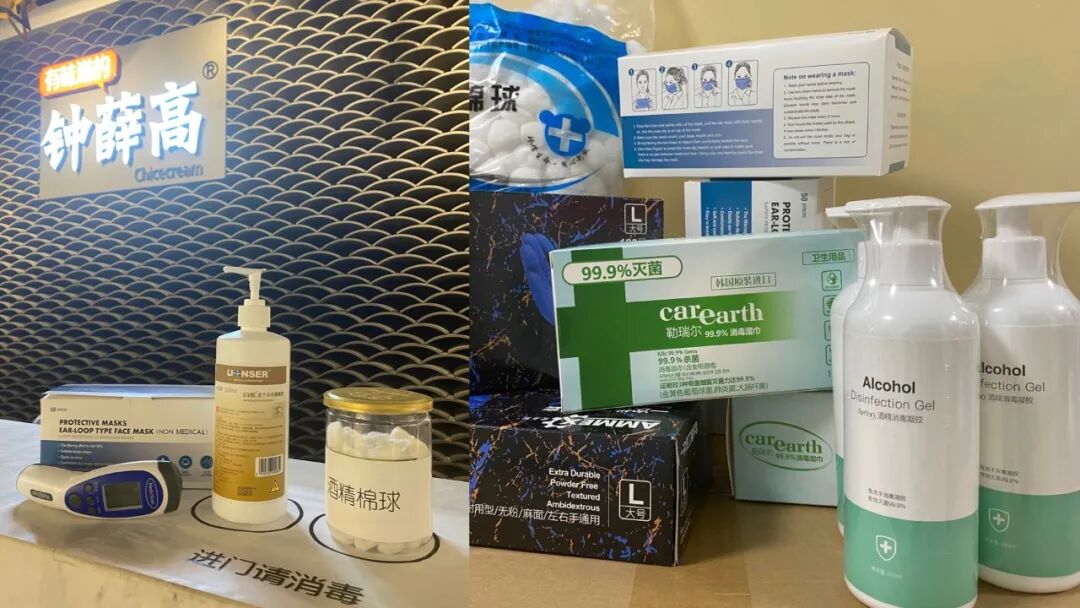
▲ Some of the epidemic prevention supplies Chicecream prepared at its offices.
Internal management: A dedicated person tracked and reported every employee's whereabouts daily, compiling reports for me each evening.
Supply chain communication: A dedicated person communicated daily with our factories, warehouses, and suppliers, understanding their situations and when workers could return. We did this every single day, constantly updating information.
Chicecream was among the earliest companies in the ice cream industry to resume operations. We returned to work on February 12.
We thought we were well-prepared, but we still underestimated the pandemic's impact.
From March through June, Chicecream's production capacity was insufficient, with constant stockouts. On one hand, sales growth exceeded our expectations.
On the other hand, raw material transportation was disrupted. Chicecream sources roughly 40 to 50 ingredients from 13 overseas countries. In some cases, shipments had already departed, but couldn't dock when they reached foreign ports.
At that moment, we felt it acutely — if the pandemic drags on, its impact doesn't distinguish between online and offline. Because every online merchant and brand has a supply chain. The pandemic's effects ripple through the entire chain. It's terrifying.
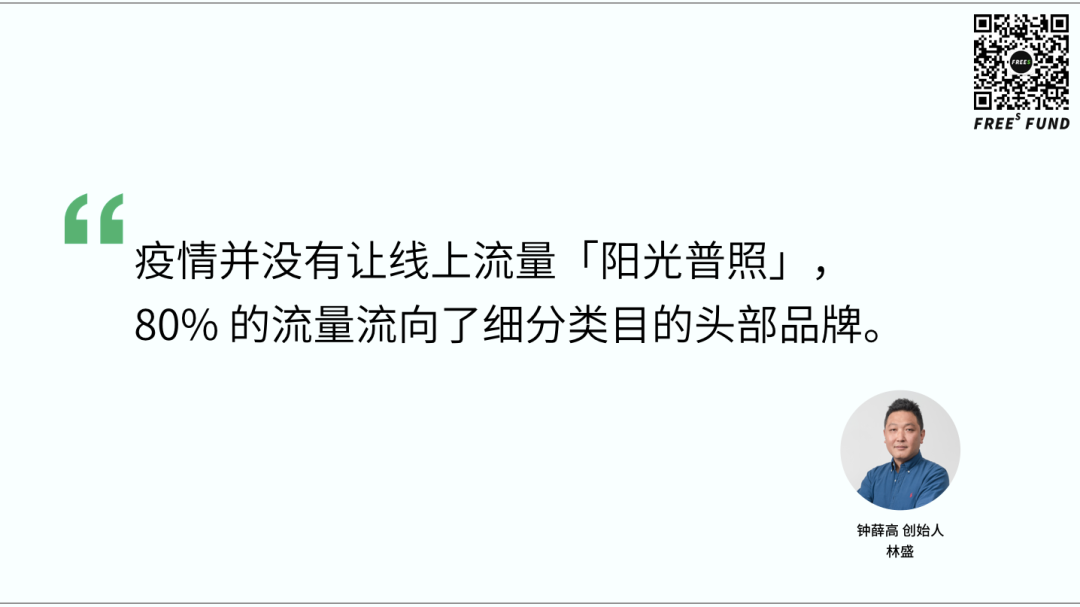
The pandemic didn't bring "sunshine" to all online traffic — 80% of traffic flowed to category leaders
The pandemic is merely a catalyst, not a decisive factor. We shouldn't overstate its impact. For most businesses, by around May, the pandemic's effects were far less severe than when it first broke out. I traveled to a fourth- or fifth-tier city a couple days ago — people were eating, drinking, and going about life as usual.
For the ice cream industry, the pandemic pushed the offline ice cream season back by a full month. In previous years, ice cream would start hitting shelves right after Lunar New Year; this year, it was a month later. But manufacturers and distributors worked overtime to produce and distribute, trying harder than usual to make up for that lost month.
During the pandemic, online growth for ice cream clearly accelerated. But I noticed that while online traffic increased, it wasn't "sunshine for all" — not everyone grew. About 80% of that incremental traffic went to the top brands in niche categories, to brands that were already doing things right. So this is a mutually reinforcing dynamic.
Chicecream's strategy for this year's 618 was similar to last year's — launching new products at the normal time, coordinating with all of Tmall's resources to connect with users.
But the real difference was that with traffic slightly lower than last year's 618, our overall product conversion rate improved by roughly 3x. That's where our growth came from.
Also, while livestreaming was very hot this year, it contributed relatively little to our sales this 618 — that was an active choice on our part. When we do livestream, we care more about brand than sales.
Offline retail has been tough this year, but Chicecream's plans to expand offline won't change. Online and offline are complementary. Online purchasing is highly efficient, but the barrier to purchase is also high. Online, ice cream is typically sold in sets, usually costing several dozen or even over a hundred yuan.
But in offline markets, the experience barrier drops immediately. Users can spend around ten yuan to try a product they had their eye on but couldn't bring themselves to buy online. If they like it after trying it, their repurchase won't be limited to offline — they might buy online too. It's a cyclical process.
02 Xinliangji's Li Jian: National-trend collabs, KOL livestreams, and the first 618 while pivoting to C-end
Two major shifts during the pandemic: moving online, moving to C-end
For the consumer industry, the pandemic's negative impacts mainly fall into three dimensions: physical space constraints, spending power, and consumer psychology. The hardest to deal with is consumer psychology. People may not have lost spending power — they might be earning the same as before — but they feel the economy isn't doing well, that the future isn't as perfect as they expected, so they save their money and only buy necessities.
Of course, the pandemic also created some new opportunities for consumer companies. Many companies that were entirely offline, whether passively or actively, shifted online, releasing growth potential in the digital space.
Xinliangji is a fairly typical example of this offline-to-online transition. During the pandemic, Xinliangji's online business grew rapidly.
Before the pandemic, Xinliangji was primarily offline, supplying pre-made crayfish, sauerkraut fish, and other products to physical restaurants.
This pandemic caused China's restaurant industry to nearly halve from January to June. I personally estimate the elimination rate in the restaurant industry is no less than 50%. With so many restaurants "dying," my customers were "gone" — Xinliangji's B2B business took a major hit.
We discussed internally: do users still want to eat good products? Besides restaurants, are there other channels for consumers to access our products?
We mapped out consumption scenarios. Even if people went to restaurants less, they still had to eat at home, and they weren't necessarily eating instant noodles and steamed rice — they might still want crayfish and sauerkraut fish. We listed several channels for users to purchase Xinliangji products, including community group buying, livestream commerce, e-commerce platforms, and even supermarkets that saw renewed popularity because of the pandemic.
The pandemic accelerated Xinliangji's shift to the C-end, though we had made some preparations in 2019. This year, we accelerated multi-channel deployment, quickly getting our products out there so consumers could encounter our brand. The result: we "hot-started" and sold very well. Users who previously had no opportunity to experience Xinliangji's pre-made dishes came to know and try our products for various reasons, liked them, and we made it onto their purchase lists — that first step of user mindshare was established.
In a company's lifecycle, you'll always encounter one or two natural disasters
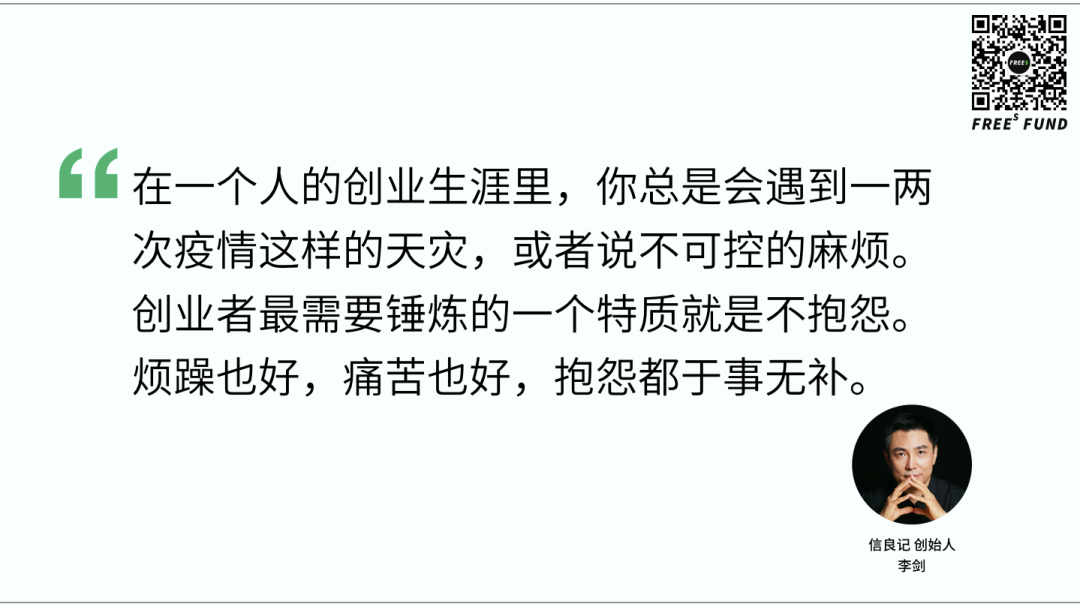
In an entrepreneur's career, you'll always encounter one or two pandemic-like natural disasters, or uncontrollable disruptions.
In 2003, SARS broke out. I was in my previous-previous venture — running an employee cafeteria. Beijing was virtually "locked down," the cafeteria had no business, and I stayed home for about three months with zero company revenue.
The US-China trade war in recent years also affected Xinliangji's exports.
Xinliangji previously had over 200 million yuan in annual export business, shipping shrimp and other products to Europe and America. Because of the trade dispute, Chinese aquatic exports were hit with heavy tariffs, and layer upon layer of inspections made this business much more complex. Throughout 2019, Xinliangji's overseas export business severely contracted. From what I understand, China's exports of similar products to the US during the same period all dropped at least 80-90%.
We had to focus, going all-in on developing the domestic market to make up for the contracted overseas consumer market.
Then on top of that, we hit this pandemic. So you see, in just over ten years, I've encountered these kinds of contingencies two or three times. It pains me, but I don't complain. Fundamentally, I'm a pessimist, but I also harbor a revolutionary optimistic spirit hidden within me. These two coexist rather contradictorily in me, as they do in many other entrepreneurs.
I remember one entrepreneur saying that in his decades of running a business, only a few days were smooth sailing. That's more or less the reality.
In the course of development, companies inevitably encounter challenges. If your growth is particularly good, you might find management capabilities can't keep up, talent is insufficient, supply chain has problems. When you feel the company is running like clockwork, you might find the pace of business can't keep up.
The trait entrepreneurs most need to hone is not complaining. Whether anxious or in pain, complaining doesn't help.
Xinliangji's first 618: national-trend collabs, learning new C-end playbooks
This year was Xinliangji's first 618 while transitioning to the C-end market. We had no experience running consumer-facing promotions, we just took this shopping festival more seriously than before.
For this 618, we collaborated with CCTV's National Treasure IP to launch "Treasure Crayfish." We also worked with many major KOLs including Joker Xue, Yuan Hong, and Qiao Xin, promoting this product through livestreams. Tmall also gave us traffic support to promote a brand with this national-trend character.
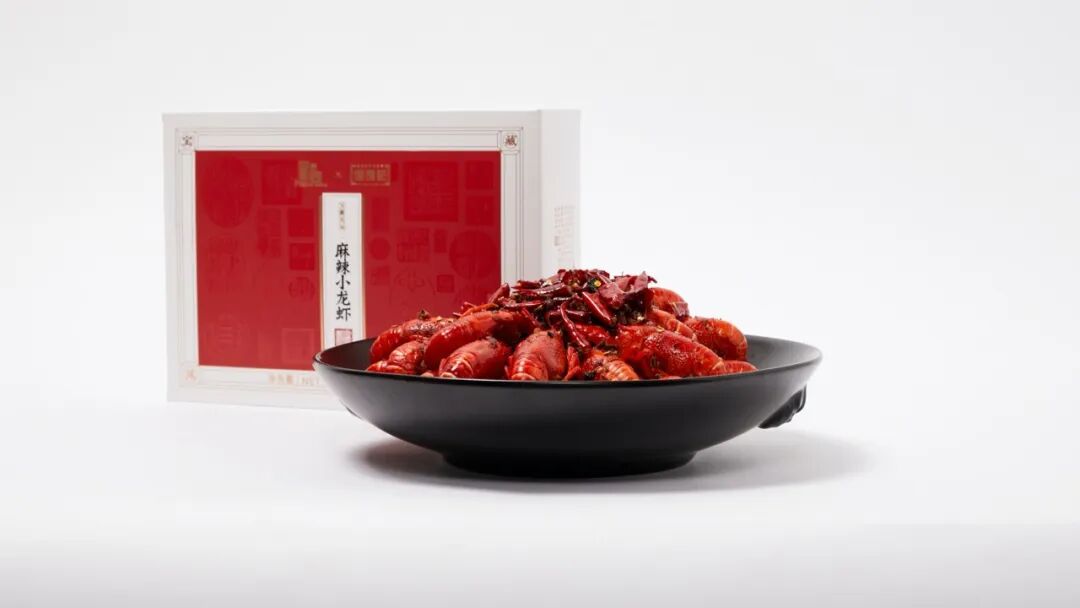
▲ Xinliangji collaborated with CCTV's National Treasure to launch "Treasure Crayfish."
For another shopping festival this year — Double 11 — we'll also take very seriously, though we probably won't feature crayfish as the main product (May-September is peak season). Instead we'll push year-round popular products like sauerkraut fish. By this year's Spring Festival, we'll also work to add dishes to users' family reunion meals.
Since we're now focused on the B2C market, we'll try both very traditional and very new B2C playbooks.
Strengthening C-end brand output through short video and livestream, facing consumers directly
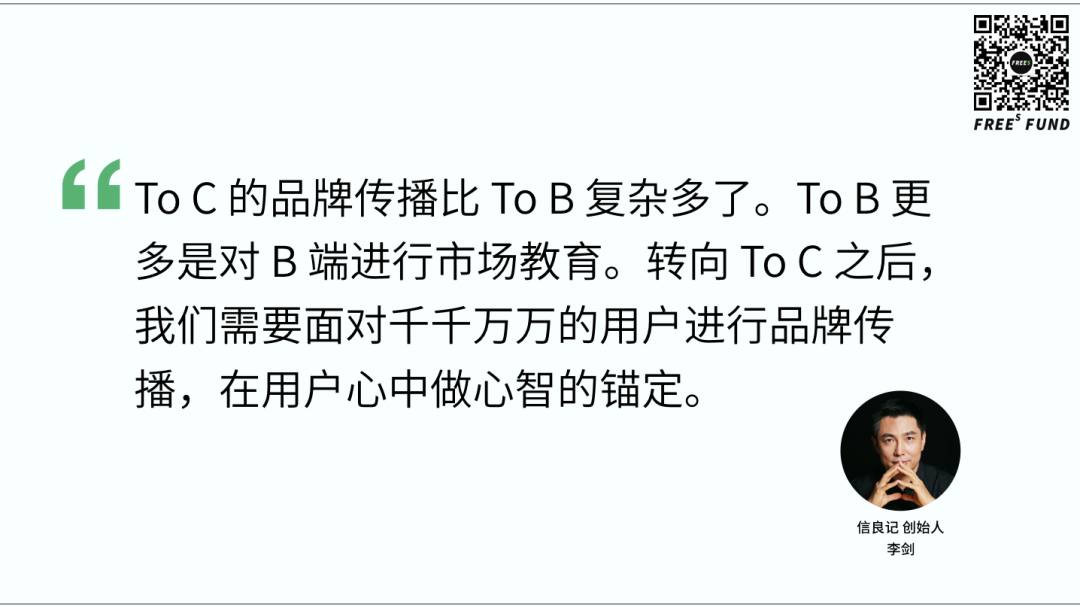
B2C brand communication is much more complex than B2B. B2B brand building is mostly about market education for business clients. After shifting to B2C, we need to conduct brand communication with millions of users, anchoring mindshare in their minds.
Facing the C-end, we actually need to figure out how to build capabilities to continuously launch and strengthen our brand in the short video space. To this end, we've built a team and also work with external companies, planning scripts and filming video content ourselves.
We've found that anyone can create short videos — they may not need to be so polished, audio quality doesn't have to be great, but they need to be authentic. That's becoming users' new focus. We're consciously making efforts in short video to strengthen our C-end brand output.
Of course, what we value more is livestream within the short video space, which has both sales and brand attributes. During the pandemic, when almost all other sales channels were blocked, livestream became the primary consumption pathway.
We also firmly seized the livestream dividend during the pandemic. Compared to other channels, livestream accounted for a large share of sales this year. Whether it was Yonghao Luo's livestream, or Viya's, or Joker Xue's, they all gave us good brand exposure and brought considerable sales.
However, from a medium- to long-term perspective, livestream won't necessarily stay as hot as it is this year. It will become a regular, necessary channel for companies to sell products. There are two main reasons: one, livestream efficiency isn't particularly high — spending one to two hours to buy one or two items is the norm; two, livestream involves some rather blind "lowest price on the entire internet" dynamics that actually harm brands. Additionally, many things including product selection and fee structures need to be adjusted and elevated in directions more favorable to consumers.
This April, after collaborating with Yonghao Luo on a livestream, Xinliangji also experienced a "public opinion crisis." What happened was that after an order explosion, delivery timelines inevitably stretched out, and some users complained. I believe this is a lesson every company must learn — it's just a matter of what kind of "crisis" it is.
We mainly did three things:
First, communicate sincerely. Whether you genuinely didn't do well or were wrongly accused, don't panic first — communicate sincerely: "We were indeed wrong here, we genuinely didn't do well." Or: "There's some misunderstanding about this matter, here's what actually happened..."
Second, on the basis of sincere communication, leverage authoritative media voices more — industry professional media, professional associations, experts, opinion leaders. With their assistance, it's much better than a company speaking alone. Users tend to trust opinion leaders in public discourse.
Third, you must take remedial measures, not just apologize. For example, we gave users additional red envelopes or products, and users could feel our sincerity.
Going through this kind of crisis isn't entirely bad — it actually gives the brand one more opportunity to communicate with consumers. When users complain about you, they're already paying attention to your brand. They hope you can improve, and if you genuinely improve and elevate, they might give you another chance to earn their business.
Juno&Co.'s Kyle Jiang: Responding quickly to market trends, echoing new user needs
"Mask makeup," "at-home beauty" on the rise, greater pursuit of cost-performance ratio
The pandemic's impact on consumer markets has been enormous, dealing a particularly severe blow to traditional retail venues — an effect that persisted globally for three to six months. In recent months, the scene users know best has been home. Consumer confidence was repeatedly eroded by the tension of fighting the virus; even young users and young families, typically prone to impulse purchases, saw their savings rates rise significantly year-over-year.
That said, spending centered on "home" and "health" has increased — from kitchenware and furniture to supplements and fitness equipment. I'm based in California, and one interesting thing: it feels like all the dumbbells in America sold out. A while back, I checked ten stores and couldn't find a single dumbbell. Amazon was sold out too.
Meanwhile, users are pursuing higher cost-performance products with decent quality, while demand for mid-tier and premium brands has dropped substantially. Not long ago, Neiman Marcus, the luxury-focused high-end department store chain, filed for bankruptcy.
In China, the beauty and skincare industry has trended downward overall since 2020, especially offline channels. Previously, from 2012 to 2019, China's total cosmetics retail sales had posted a compound annual growth rate of 8%. Under pandemic pressure, Q1 2020 cosmetics retail sales above the designated threshold fell 13.2% year-over-year.
The good news: as the pandemic came under effective control, the beauty industry has been working hard to recover. By mid-April, the industry had bounced back to 60-70% of year-ago levels. During the pandemic, our colleagues in both China and the US maintained high productivity, and we finalized plans for a large-scale entry into Target — America's largest beauty retailer and lifestyle supermarket.
Because the pandemic kept most beauty-loving post-90s and post-95s generation cooped up at home for so long, new trends like "mask makeup" and "at-home beauty" created fresh demand in personal care. And "pandemic prevention" itself made them more aware of health's importance. Users kept asking our customer service: "Will this cause allergies?" "What ingredients does this use?" We've observed that several US beauty brands focused on natural, healthy ingredients "sold like crazy," but China still doesn't have many brands in this category.
These two topics users care about — "healthy skin" and "natural makeup looks" — gave JUNO fresh inspiration. Take the eyeshadow we launched for this year's 618 shopping festival. Because of the pandemic, we immediately improved our "Starry Eyeshadow Palette," adding antioxidant ingredients so the makeup applies more smoothly and doesn't feel suffocating. We also accelerated R&D on our skincare line, with the direction being to build a healthier skincare foundation for color cosmetics. Our new skincare products are expected to launch this August.
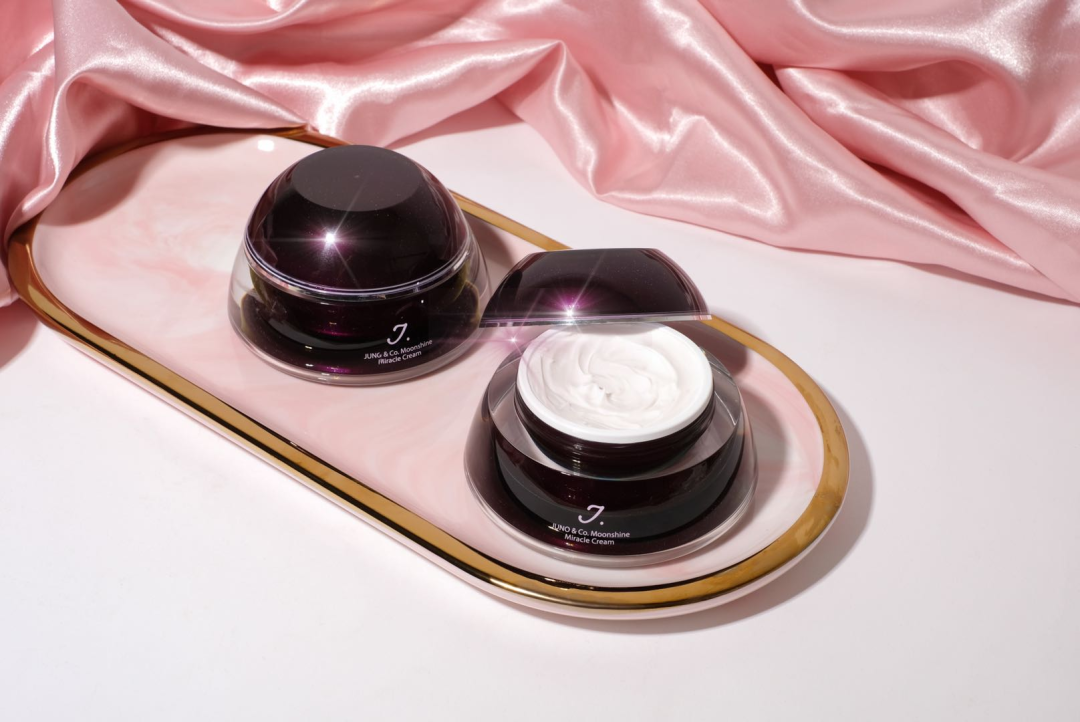
▲ JUNO's Moonlight Primer, featuring healthy ingredients.
Our original intention to build color cosmetics and skincare products with healthy ingredients for users has gotten a positive market response. Since the pandemic began, the Moonlight Primer we launched last year has received unprecedented attention at home and abroad, with sales surpassing 150,000 bottles between February and June this year. This product combines skin-nourishing benefits with makeup performance — its third-largest ingredient, avocado, makes up 3% of the formula. Avocado is high in Vitamin E, offering antioxidant properties alongside staying power and comfort, advantages that made it hugely popular as users grew more health-conscious.
"1.5x innovation on products the market already considers good"
For 618, Juno&Co. concentrated all our marketing resources in the week before the event through new media operations and private traffic monetization strategies. Before the pandemic, we had planned to launch a wave of lip glosses, lipsticks, and other lip products for 618. But because of the new trend the pandemic brought — mask makeup — in February we adjusted our product launch timeline: delaying cheek and lip colors and prioritizing the eyeshadow palette.
The cycle from seeding to conversion for eyeshadow palettes is very short. Within two weeks of launch, our eyeshadow palette was nearly sold out. For a DTC brand, our flexibility advantage became even more apparent during the pandemic.
The "Starry Eyeshadow Palette" is JUNO's first product designed specifically around Chinese users' needs and price preferences.
Previously, JUNO products typically considered the US market first, then China. To launch eyeshadow in America, you'd need at least ten or so palettes with all kinds of colors, because there's so much ethnic diversity and skin tone variation. For this 618, the eyeshadow palette we launched features five color combinations, each tailored to young Chinese consumers' preferences.
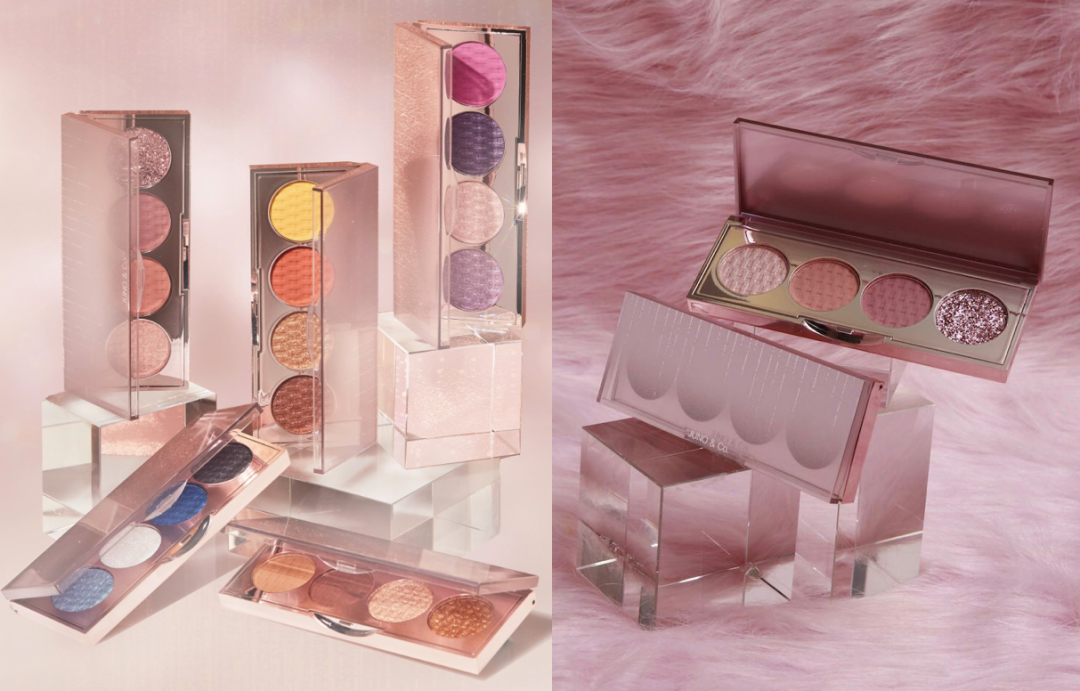
▲ The "Starry Eyeshadow Palette," JUNO's first product designed specifically around Chinese users' needs and price preferences.
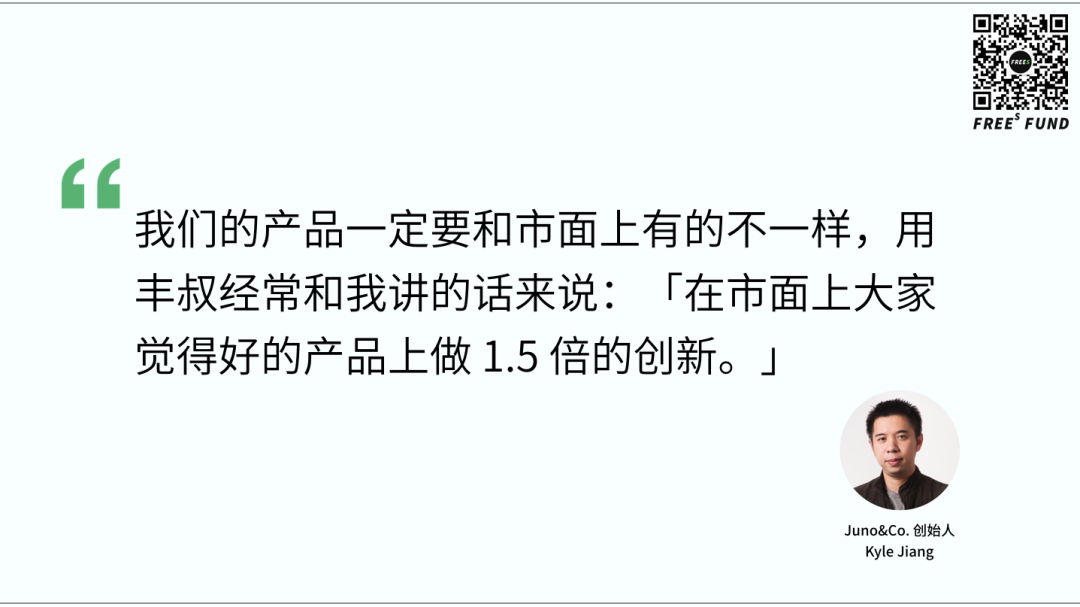
For example, one shade called "Extra Sweetness" is very beautiful — as soon as it launched on Tmall, Xiaohongshu, and other platforms, it quickly sold out. This color was actually data-sifted. We look at data from Chinese e-commerce platforms to see which eyeshadow colors sell well; even for the same color, different depths and shades, we'll buy them all and test them one by one. We also combine this with trends we observe abroad, then innovate on the product. It absolutely needs to be different from what's on the market. As Feng Shu often tells me, it needs to be "1.5x innovation on products the market already considers good."
Besides being colors Chinese users like, these shades themselves aren't too heavy, and the pigmentation when applied is deliberately not too intense. If this eyeshadow palette were built for American users, the colors would need to be at least twice as deep, with strong payoff from a single swipe.
I studied statistics myself, and I believe data helps us enormously with product analysis. I require the R&D team to analyze data from e-commerce platforms like Tmall, then dig out user needs. Starting a business in China, there's a convenience in terms of data.
Abroad, e-commerce platforms don't have as much data, and most are independent sites where many data details aren't public. Chinese e-commerce platforms break down data extremely finely — down to which eyeshadow colors sell well, how foundation demand splits into segments — which provides extremely important reference for operations and R&D.
Now and going forward, JUNO's entire company R&D core and product core will be China-market-first, with focused attention on Chinese market needs. All products will launch in China first, then in other countries. Indeed, in terms of overall pandemic control, China has done the best.
How to review 618?
This was Juno&Co.'s first 618, and we laid out our plans in advance for major traffic entry points. For this 618, livestream traffic accounted for one-third, and Austin Li has recommended JUNO products almost every month. And in the weeks before 618, we concentrated on launching new products.
Operationally, we split 618 into two phases from June 10, and based on first-wave data, Juno&Co. adjusted product bundle formats for the second wave, timely introducing sets. Previously we mainly pushed individual items. Because in the US, promotions are mainly threshold discounts — like $10 off $50 or $5 coupons. But Chinese promotions lean more toward bundle sets and various free gifts, making users feel they're getting great value.
After our adjustments, second-wave conversion increased 4x compared to the first wave, and average order value also rose. For future major promotional events, we'll also introduce more product bundles to activate users' spending potential.
Because masks during the pandemic only reveal the eye area, Juno&Co.'s eyeshadow was extremely well-received by users after launch. If we had launched the eyeshadow two weeks earlier and stocked more inventory, sales would have increased substantially.
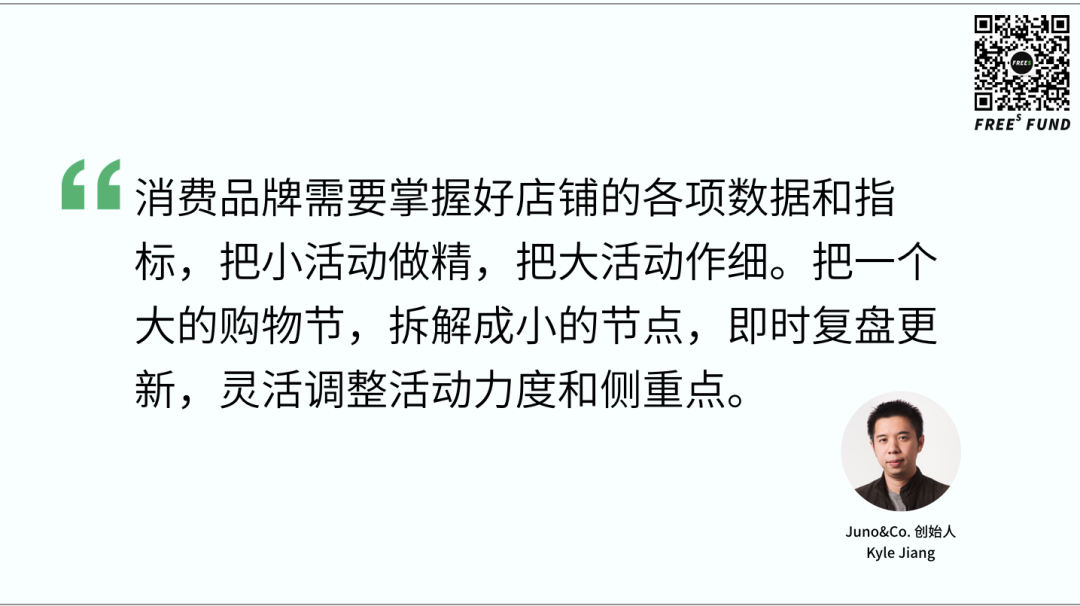
Finally, to share some personal thoughts: consumer brands need to master all store data and metrics, executing small events with precision and large events with granularity. For example, break down a major shopping festival into smaller nodes, with immediate review and updates, flexibly adjusting event intensity and focus.
Discussion Questions
Q: What core factors should consumer goods companies consider when doing cross-brand collaborations? Feel free to hit "Like" at the end of this article, and reply "618" in the WeChat official account backend to learn Chicecream founder Lin Sheng's perspective. In recent years, Chicecream has done many collaborations with brands like Three Squirrels, Xiaomi, Wahaha, Luzhou Laojiao, Roewe Auto, Nayuki, and Xiaoxiandun.
Reader Giveaway
Readers who made it to the end, feel free to share your thoughts on consumer brand entrepreneurship in the comments. We'll randomly select 8 readers with the most thoughtful comments to receive either a Juno&Co. "Starry Eyeshadow Palette" or a Xinliangji "Treasure Crayfish." (Contest ends 9:00 PM, July 6.)

2020: Consumer Brand Building Enters the Era of Multiple, Simultaneous Growth Drivers | Frees Fund
The Category Logic Behind the Hype — Using Coffee Industry Investment as an Example
Breaking Through as a New Brand: From Traffic Thinking to Content Thinking | Frees Fund
Where Is the Endgame for E-Commerce Livestreaming? | Frees Fund