What Happened to China's First Wave of '90s Founders? | FreeS Fund 2020 CEO Annual Meeting

"When you're young and truly believe in something, you'll give it everything you've got."
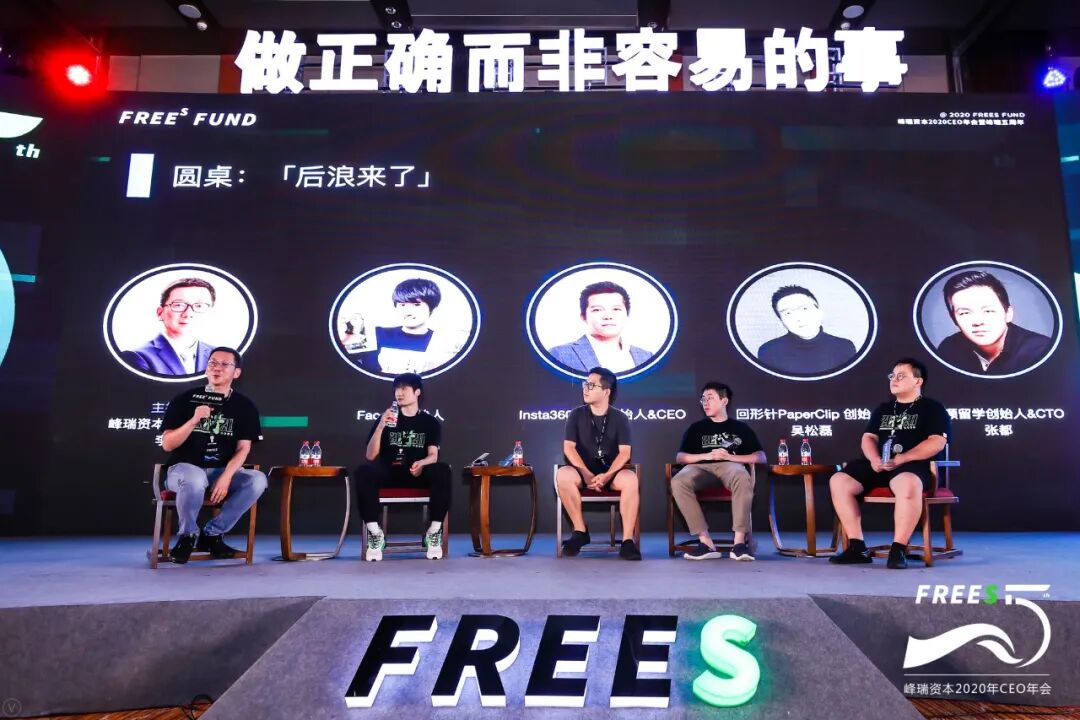
On August 15, in Shanghai, nearly a hundred CEOs from the FreeS Fund family gathered at the "FreeS Fund 2020 CEO Summit & FreeS Fifth Anniversary." That day, we invited four entrepreneurs — then and now the vanguard of the post-90s generation — to join attendees in exploring the surprises, growth, exploration, and challenges of young people starting companies. They were:
- Guo Lie, founder of FaceU
- JK, founder of Insta360
- Zhang Du, founder and CTO of Shunshun Liuxue
- Wu Songlei, founder and CEO of PaperClip
"When the world was very young, onions, carrots, and tomatoes didn't believe that pumpkins existed. They thought it was pure fantasy. The pumpkin said nothing, and just kept growing quietly." This line from When the World Was Very Young seems to mirror these post-90s entrepreneurs.
Michael Mao, founding partner of FreeS Fund, moderated the roundtable. He was also among the earliest investors in China to bet on this new generation of post-90s founders. Looking back now, among that cohort of young entrepreneurs he led investments in from 2012 to 2015, some have reached the NYSE (Bilibili, for instance), some have been acquired by giants (FaceU-Meme, Shunshun Liuxue), some are still on the entrepreneurial path, and of course, many have exited.
There are always young people coming up. Right now, more post-90s and even post-95s are joining the entrepreneurial ranks (PaperClip, for example).
Michael Mao sat down with them to discuss:
- Did that first wave of post-90s entrepreneurs actually make money? What do they look like seven or eight years later?
- Looking back, what were the benefits and drawbacks of starting a company in your early twenties?
- What carried them through the most important and most difficult phases of their journey?
- What are their goals ten years out?
- With these upright, kind, and hardworking young people, what will China look like in ten years?
We've compiled their candid reflections to share with you, hoping they offer some inspiration and value for your own entrepreneurial path.
Contact Us We're always looking to meet more innovators. Send your pitch deck to bp@freesvc.com. And if you're interested in joining our investment team, reach out at hr@freesvc.com.

/ 01 / Did That First Wave of Post-90s Entrepreneurs Actually Make Money?
Michael Mao: In 2012, I was still at IDG. The first young-person's startup I invested in was Bilibili. On Bilibili, user bullet comments would cover the video itself. At the time, we struggled to understand — why would anyone watch a video they couldn't actually see?
To understand young people's lifestyles and preferences back then, we conducted a systematic study and produced a heavily scrutinized and controversial report: The Post-90s Internet Survival Guide. In 2014, IDG launched a provocative and influential "IDG Post-90s Fund," investing in over twenty companies tied to youth lifestyles.
FaceU founder Guo Lie, Insta360 founder JK, and Shunshun Liuxue founder Zhang Du were all part of that wave. These are three "later waves" who have either made it to shore or are getting there now.
Guo Lie was born in 1989 — technically pre-post-90s, but close enough. In 2018, ByteDance acquired his company FaceU for $300 million.
JK was born in 1991. When he first started out, he built an app called "Elite School Live," with an end-to-end system for video capture, editing, and streaming. Two years ago, Insta360's panoramic cameras launched in Apple Stores globally, becoming the first panoramic camera brand ever to enter Apple's retail ecosystem.
Zhang Du was born in 1995. In 2014, we met at the airport, talked for about twenty minutes, and decided to invest in his startup Shunshun Liuxue. Later, we helped Shunshun pivot and brought in additional team members. A year and a half after founding, in 2016, Shunshun Liuxue was acquired by TAL Education Group.
Actually, the year Shunshun was acquired, Zhang Du was only 21 — and had already made a substantial fortune on his own. I want to ask Zhang Du a particularly worldly question: What was life like after getting rich at 21? What did it feel like? What was your state of mind?
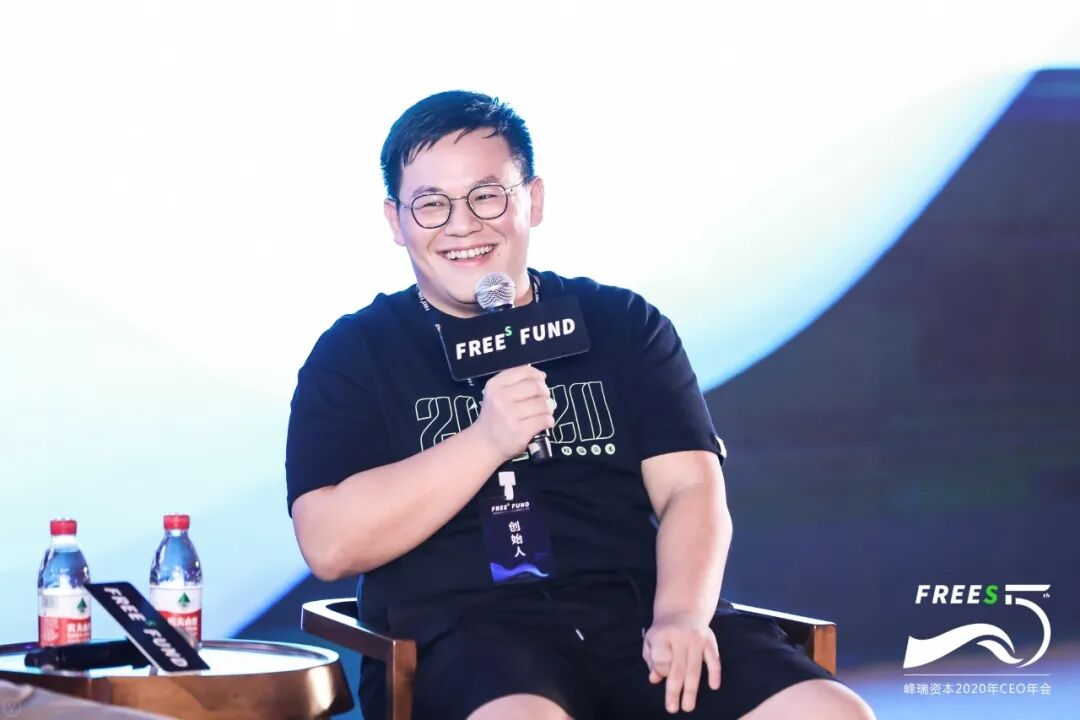
Zhang Du, founder and CTO of Shunshun Liuxue
Zhang Du: At first I was happy, a bit at a loss. Then came a period of confusion, some pressure. Eventually I got used to it. On one hand, I treated the money as a foundation for my future career. On the other, I saw it as a learning opportunity — using those resources to make some investments, as a way to test and validate my own thinking.
It was a very meaningful process of reflection.
Michael Mao: How long did the happiness last?
Zhang Du: Honestly, about a few days.
Michael Mao: How long did the unhappiness from getting rich last?
Zhang Du: At least a year.
Michael Mao: Same worldly question for Guo Lie. Your company was acquired by ByteDance for $300 million, you successfully exited, your net worth is in the hundreds of millions — what did that feel like? How long were you happy, and how long did it hurt?
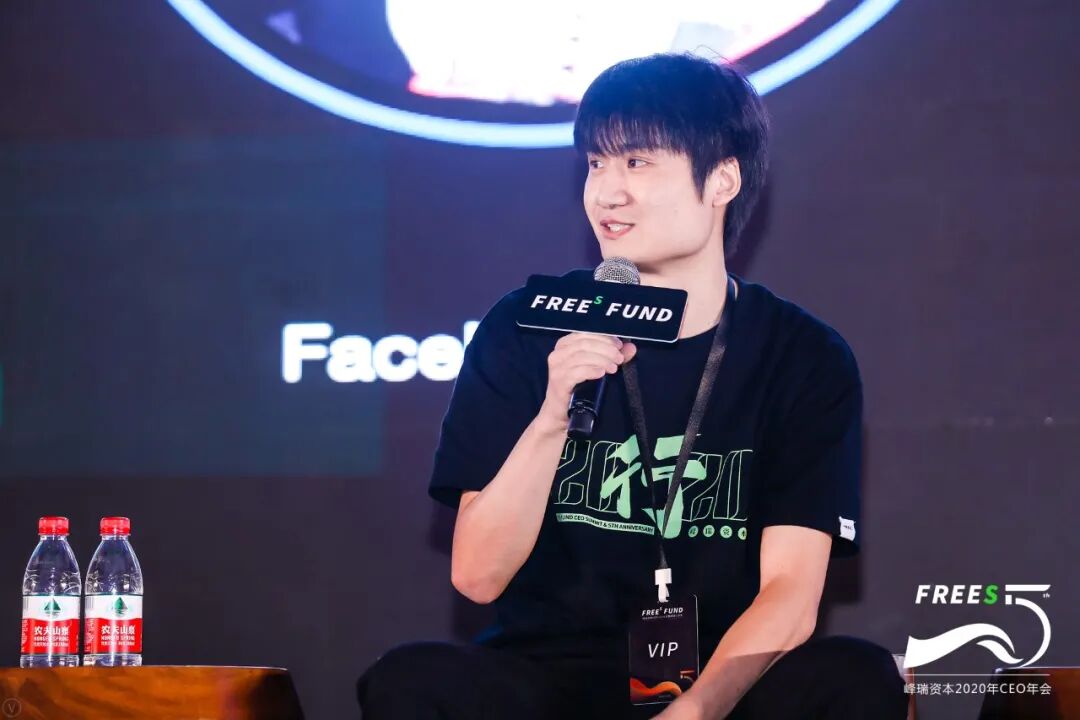
Guo Lie, founder of FaceU
Guo Lie: This is how I've felt recently. There definitely was a shift in my mindset. When the acquisition first happened, I was actually pretty down. Nobody wants to sell their company — it always feels like you didn't do well enough. After about a year, I started thinking maybe being acquired was actually fine, the team was developing well, big companies have more resources after all.
For me personally, things changed too. When I first started out, there was this teppanyaki restaurant called Dayu — about 200 yuan per person. I'd stand at the door hesitating, wondering whether to go in. Now, I have a lot less mundane pressure.
Thinking back, I really enjoy building products, making things. Money mostly just helped reduce some of my worries, so I felt lighter, less pressure.
But at the same time, like Zhang Du, there was a period of confusion. I found that nothing really excited me, nothing I wanted to work hard for. Honestly, that wasn't as happy as standing outside Dayu wondering whether to go in.
Michael Mao: Guo Lie's team built three different products for young people. Without massive external push, all three hit #1 on the overall App Store rankings, each staying there for over a month.
When Guo Lie, JK, and Zhang Du were young, I had the chance to spend years with them. I can say in good conscience: they are all exceptionally upright and kind people.
Michael Mao: JK, you're about to enter the "boring" life too. What do you anticipate psychologically, and how will you handle it?
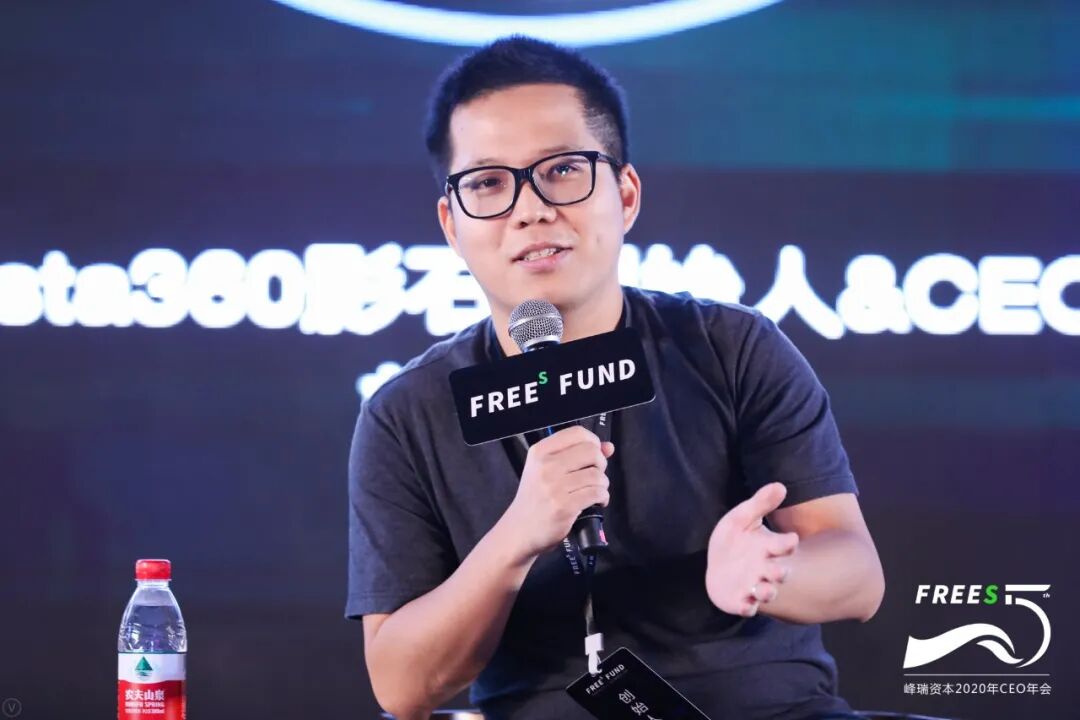
JK, founder of Insta360
JK: So far, I'm not quite financially independent yet, but I've already been "boring" for a while. When I started my company, I was relatively "light" — my family had taken care of a lot of things for me.
After founding, as the company evolved and grew bit by bit, I suddenly realized something important: if you add up a person's lifetime consumption — buying houses, cars, eating, drinking, having fun — the total is actually relatively limited. Basically, nine figures in RMB can already let someone live very well. But if you're running a company, you have to allocate capital, invest in R&D, marketing, sales, and so on — these outlays far exceed personal consumption.
So my feeling is, on the personal consumption level, there is a sense of "boredom." But gradually, my attention shifted to building a good company itself. Since entrepreneurs or founders can't actually spend that much money in their lifetime, and you can't take it with you when you leave this world, I slowly started thinking: how can I use this money well, to make good things, or interesting things, or especially fun things.
Michael Mao: Let's turn to Wu Songlei of PaperClip. Wu Songlei was born in 1994. PaperClip's breakout hit was "Everything About COVID-19." In fact, before that video, the team had already been building for over two years. Now they have tens of millions of followers across platforms.
Having heard from these three peers who have made it or are making it, please describe your current state and feelings.
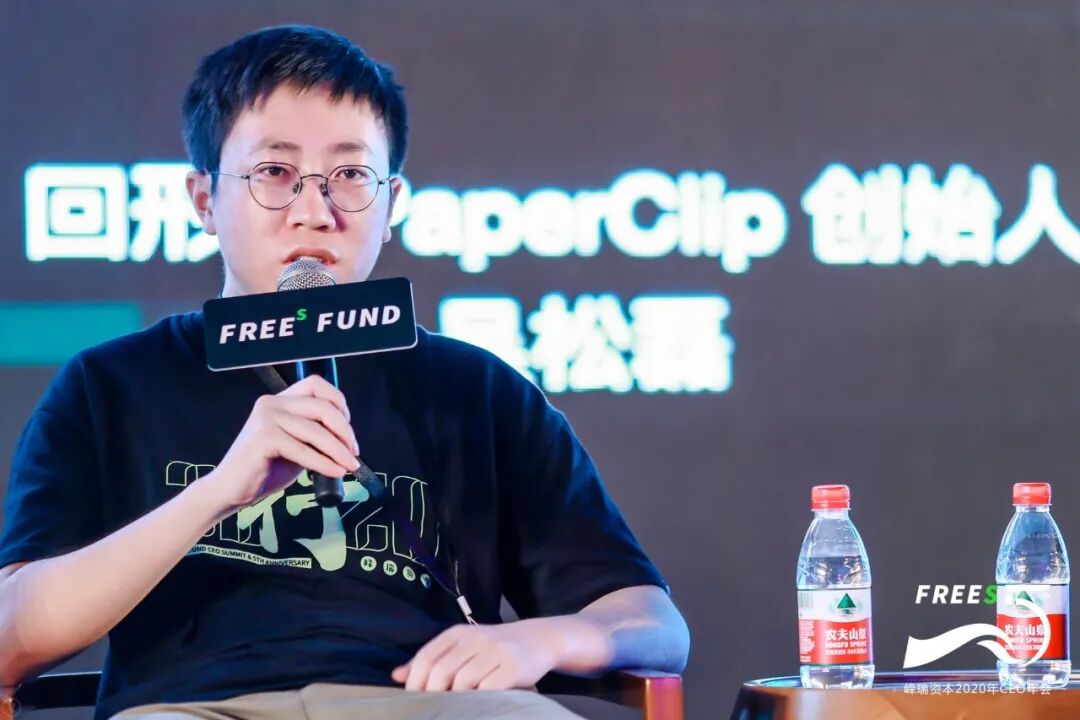
Wu Songlei, founder and CEO of PaperClip
Wu Songlei: Compared to three financially independent young people, I still feel immense pressure — figuring out how to use limited resources to do all the things we want to do. Of course, I'm a bit envious of my peers' "boring" state. We haven't gotten there yet.
Michael Mao: Why did I ask everyone about "what happens after getting rich"?
First, to satisfy my own curiosity.
Second, from past investments in youth lifestyle projects, when I met these young founders, I had a major uncertainty: if some of them succeeded early, or got wealthy early, what kind of people would they become?
After hearing these three responses, I found that despite having weathered their first major or minor life upheavals, they're fundamentally the same people I met six or seven years ago. The integrity, kindness, sensitivity, and drive they had in their youth haven't changed much, nor have their lifestyles.
/ 02 /
"When you find something worth working toward, that period of anticipation and effort is the most precious, most enriching time of your life."
Li Feng: Guo Lie started his company seven years ago, and two and a half years ago, it was acquired. During those five years, Guo Lie went through tremendous ups and downs.
Can you describe what specifically happened during those five years? And what did you learn from going through all this at such a young age?
Guo Lie: When I first started out, it was kind of like a college student project. I'd only worked for a year and a half before leaving Tencent to start my own company. I thought raising money would be easy. Turns out, I spent an entire year working alone from home, with team members pitching in part-time after work or on weekends.
During that time, I lived on ¥20,000 for almost a year, rent included. I thought it was incredibly hard. I stuck it out for that year — the hardest year of my entire entrepreneurial journey.
When I got the angel investment from Feng Shu and IDG, suddenly entrepreneurship didn't seem so difficult anymore.
Looking back now, the amount wasn't even that large, but it meant my teammates and I could work full-time, and we even bought Apple computers. That felt completely different from the early days, when we'd borrow friends' iPhones to test our product, running down to their apartment buildings to try things out. That was the toughest period.
Starting with Facemoji, our products got pretty good. Later we developed FaceU. Every new product goes through a startup phase, but none were as hard as that first year.
Let me also share some thoughts about the acquisition process and what came after.
For the whole team, the acquisition was positive — being inside a larger company gave everyone more room to grow. Financially and materially, the returns were good. But spiritually, emotionally, I wasn't as happy as when I was building something from scratch.
If I had to summarize my biggest takeaway from starting a company until now: spiritual wealth matters most. When you find something worth working toward, that period of anticipation and effort — that's the most precious, most enriching time of your life. That's my biggest realization since becoming an entrepreneur.
/ 03 / "The hardest part of entrepreneurship is constantly expanding your capability stack. Things you couldn't do before, you force yourself to become capable of doing."
Li Feng: With Guo Lie, JK, and Zhang Du — for all three, we pretty much decided we wanted to invest after just one conversation, in a very short amount of time.
JK went through a particularly difficult entrepreneurial process, including shifting the business model from "soft" to "hard," and so on. How hard were the hardest moments in that process, and how do you look back on them now? How did being young affect your experience of this process — what advantages and lessons did it bring?
JK: We started out making image processing software for phones, live streaming apps. Around 2015, we pivoted to hardware — things like 360° cameras and action cameras.
The transition from software to hardware was genuinely difficult.
Feng Shu invested in us for the software business, but that money wasn't enough to fund hardware development. After researching hardware, we built our own prototype and went out to raise the next round to support our hardware pivot. But our team had all come from outside the hardware world, so our prototype was unstable.
Once, we took the high-speed rail from Beijing to Shanghai to meet investors. On the train, the camera broke. Fortunately we'd anticipated this and always carried three things: a soldering iron, a screwdriver, and hot glue. So we repaired the camera right there in the dining car.
Soldering on a high-speed train is incredibly difficult. You're about to touch the solder to the joint, the train takes a curve, your hand shakes, and you probably ruin the perfectly good joint next to it. We worked until 4 or 5 in the morning before getting the prototype working again. We successfully demoed it and closed our Series A.
But the truly hard part came later.
Our company was originally in Nanjing, but Nanjing didn't have particularly good, abundant hardware talent. Shenzhen, on the other hand, is an ideal place for hardware — tons of talent in chips and related fields. We made an extremely difficult decision: convincing more than twenty people on the team to relocate the company from Nanjing to Shenzhen.
After moving to Shenzhen, we spent an enormous amount of time mapping out the organizational structures of the city's top hardware companies, finding good people, and building out our team.
The even harder part: our first product wasn't very successful, and some units were recalled. Overall, since starting the company, we've made more than ten products, some of which have done fairly well.
In July 2019, I visited our supplier Sony.
Walking through Sony's building and seeing their company history really struck me: since its founding, Sony has gone through numerous transformations — roughly every six to seven years, their core business changed.
I had a very deep realization, connected to my own experience: probably nothing in entrepreneurship or product development can be done continuously for ten or twenty years. As economic cycles and consumer habits shift, what you're doing needs to change every so often.
For entrepreneurs, what's particularly important — and particularly difficult — is constantly expanding your capability stack. Things you couldn't do before, you force yourself to become capable of doing. Only then do you have the opportunity to pursue new businesses and transformations.
Over the past few years, the company has developed reasonably well, but we've basically reinvested most of our earnings into new businesses, new technical capabilities, and building out market capabilities.
With these new explorations, we also go through difficult transition processes — can't hire the right people, suppliers don't understand what we're doing, and so on. But for a company that wants to operate sustainably, this is something we must do, a process we must go through.
/ 04 / "Mistakes may happen, or we may be misunderstood. This is still what we want to do — something that no one else will do if we don't."
Li Feng: During the pandemic, Paperclip gained massive public recognition for its COVID video. A little over a month later, it went through a wave of controversy over the "map" incident and stopped publishing for a month. For young people, going through something like this is a huge challenge. After two years of quiet work, suddenly recognized by the whole country overnight — then overnight, viewed from a different angle by the whole country.
Wu Songlei, can you talk about what this psychological process was like, experiencing such dramatic ups and downs?
Wu Songlei: We started working on knowledge-based short videos at the end of 2017. When we first began making this type of content, we didn't know whether the market would embrace it. What we make isn't light or humorous content — it's relatively serious, high information-density knowledge content aimed at adults.
We spent two years validating that this direction could work. Before our COVID video, we already had substantial followership. We were quite happy about that, because it meant there were young people like us who recognized this approach to video.
Earlier this year, we made the COVID video because I personally cared deeply about the situation and felt some sense of social responsibility. We were genuinely surprised that this short video gained so much attention.
But perhaps contrary to what many people might imagine, after publishing the COVID video, we weren't particularly happy. Instead, we were constantly in a state of tension and anxiety. Our biggest worry was that there might be inaccuracies or errors in the video that could mislead viewers or have negative consequences.
And then the "map" issue happened.
We actually felt that our mistakes would eventually catch up with us in some form. So when it happened, I thought: this is what we truly have to face.
After the "map" incident, we became more certain that what we want to do is knowledge-based short videos. Mistakes may happen, or we may be misunderstood. But this is still what we want to do — something that no one else will do if we don't.
So after going through these twists and turns, our team has a clearer direction and more resolute vision. We've thought through what kind of company we actually are, and what kind of content company we want to become.
/ 05 / "Whether you can actually accomplish something is the 1. What share you own is the 0. Without that '1,' all those '0's have no value."
Li Feng: Though these folks all sound "old beyond their years," can you still detect some youthful spirit in them?
Zhang Du went through a somewhat different entrepreneurial process. When we first invested in Shunshun Liuxue, the overseas education company he founded, he was leading a young team and wasn't even twenty years old yet. Later, we had him integrate with a somewhat older team.
After the management restructuring, Zhang Du quite proactively accepted shifting from being the single largest founder to the second-largest founder, and significantly reduced his equity stake. After the teams integrated, Shunshun Liuxue developed well over the following year and was acquired by TAL Education Group.
For a young person, both the management restructuring and the acquisition were relatively unusual experiences. Zhang Du, what were your takeaways from going through these changes and adjustments at age twenty?
Zhang Du: I really admire the other three people here — what they've done is groundbreaking. Guo Lie was the first to combine AI with cameras, JK needs no introduction, and Paperclip has made enormous innovations in content.
My experience was quite different. What Shunshun Liuxue did was closely tied to traditional industry from the very beginning. In 2014, with a surge of passion, I tried to change an industry that had been developing for fifteen years. The overseas education industry has giants, established players, and a lot of fixed industrial structure.
So for me, being introduced by Feng Shu to partner with a more experienced colleague was a natural choice.
And I wasn't even 20 yet, so I didn't really have a handle on things. HR told me I needed to set KPIs for new hires, and I had to ask what a KPI was — I even looked it up on Baidu to learn about it. I really admire Feng Shu for having the guts to invest in me back then.
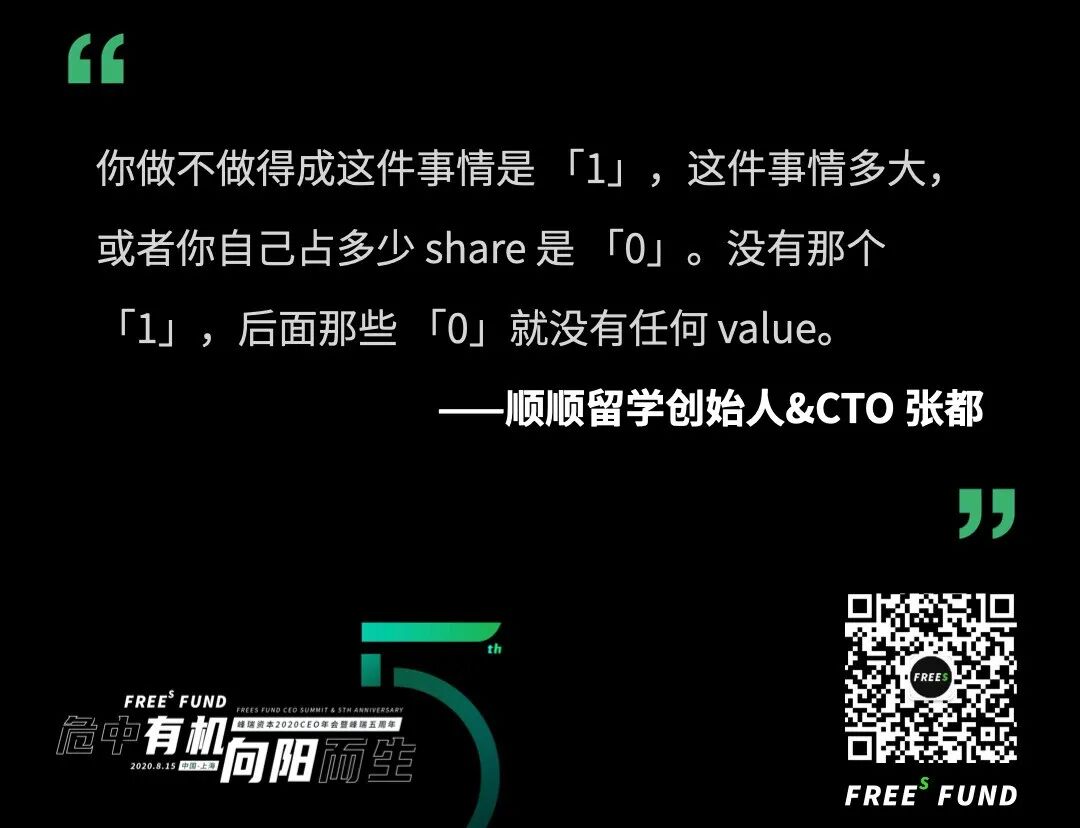
Through the adjustments, I made decisions mostly on instinct. The main thing was just wanting to make this work. In my view, whether you can actually pull something off is the "1"; how big that thing is, or what share you own, those are the "0"s. Without that "1," all those "0"s have zero value.
Li Feng: To be honest, at 19, being able to balance so many things and manage your own emotions and other people's — that's extremely rare.
/ 06 / "When you're young and you believe in something, you'll give it everything you've got."
Li Feng: Please choose one of these two questions to answer.
The first is about being young. Looking back, what were the advantages and disadvantages of starting a business in your early twenties?
Or the other one: during the most important and hardest phase of entrepreneurship, what was the one thing you kept thinking about that got you through?
Guo Lie: There was a period when I worked overtime for several days straight to release a new version. One day, while working late, I felt like I was about to drop dead, so I quickly had a colleague call 120. In the ambulance, I thought: "I haven't gotten married yet, I haven't had kids." "If I work myself to death making an app, will I be in the newspaper tomorrow?"
That was probably the hardest time. For me, when you're young and you believe in something, you'll give it everything you've got.
Now I feel like I need to take care of more people — not just the team, but family too. I think about a more complete life, rather than taking such an extreme approach.
Li Feng: I didn't know about this before. Hearing Guo Lie talk about how, when you're young, you'll give everything for something you want to do — that almost brought me to tears.
JK: I'll take the first question, about the pros and cons of being young.
Personally, I think the downside of being young is that you don't own anything. You don't have resources, experience, skills, knowledge, capital, or anything like that.
But what's the upside of being young? It's that you're willing to give things up, or willing to put something on the table as a bargaining chip.
In my five or six years of entrepreneurship, being young has had more positive effects. I may have sacrificed some time and some things, but I got more in return.
Even when I'm in my thirties or forties, and by conventional standards no longer young — my definition of youth won't change. I can still give up some things and choose others.
Wu Songlei: I'll talk about the hardest time.
It's different from what many people imagine. The hardest time for Paperclip wasn't when the company wasn't running well, or business was struggling, or when we hit a public opinion crisis.
Our work requires researching one unfamiliar topic after another. The hardest part is running into questions we can't understand.
For example, when we studied 3D models, we needed to understand how a model is designed, how a line is drawn on a computer. You need to define that line in space using functions, which involves concepts like "non-uniform rational B-splines."
To understand these concepts, we had to read a lot of books on computer graphics. We bought a used book, a graduate textbook published by Tsinghua University. Several colleagues read it for days on end, and finally we more or less figured out the concept.
We've had many moments like this. If we didn't figure out these particularly difficult questions, we couldn't make our videos.
Zhang Du: The hardest time for me personally was when the company was growing rapidly and I was suddenly given enormous responsibility.
After Shunshun Liuxue's transformation, my first role was managing all online operations, including all advertising spend, tech development, and online platform R&D. I still remember to this day, the first time I saw the team's budget report — it was roughly eight figures. I can't even describe how shocked I felt.
I just had to accept that shock. I had to submit this budget, get it approved by the investment committee, and then spend that much money over the next six months without making mistakes. In that moment, that was very hard for me.
But once I actually started doing it, it felt pretty good. I quite enjoyed it.
For me, throughout the whole process, there was always this feeling of discovering how different reality is from what you imagined, how much fluctuation and uncertainty there is in reality. You have to, in that moment, kick yourself off the cliff and fly — and learn to love it. That, for me, was the hardest and most enjoyable process.
/ 07 / Ten Years Later: What Will the Next Generation Be Doing?
Li Feng: Guo Lie, JK, and Zhang Du have all been through their first startup. I'd like to ask them: ten years from now, what do you imagine yourself will be like? What will you be doing?
Guo Lie: Nowadays, more and more Chinese companies are making international products. I hope that in ten years, the products I work on will have not just Chinese users but international users too. I hope the product quality and overall technological innovation can make Chinese products proud. That's my goal for ten years from now.
JK: My thinking is similar to Guo Lie's. Our company mainly makes imaging camera products. Japan has world-class imaging brands like Sony, Nikon, and Olympus that represent Japan. I hope that in ten years, our company becomes one of the world-class imaging brands that can represent China.
Zhang Du: Similar to Guo Lie and JK, I hope that in the next ten years, I can strive to be number one globally in one or two niche segments.
Li Feng: I'd like to ask Wu Songlei — what do you think Paperclip and you will be like in five or six years?
Wu Songlei: I hope that in five years, Paperclip can become a truly knowledge-based, educational visual content product serving the next generation of young Chinese. Whether in technology, humanities, psychology, anthropology, or sociology, there will be genuinely good, high-information-density visual content products serving the next generation.
Li Feng: Many people have asked me, after about six or seven years, whether that wave of post-90s entrepreneurs actually made money. What have they become today? As for whether they made money — whether it's Bilibili, or Guo Lie, JK, or Zhang Du, they can all answer that question.
What's most important is that from the sharing of these twenty-somethings, we can hear what China's young people are like, what China's young entrepreneurs are like.
We hope that at least two out of these four people can achieve their ten-year dreams. If their dreams come true, it will more or less mean that this stage of China, relying on young people like them, will become something in ten years.
Reader Giveaway
Share your observations and thoughts on young people starting businesses in the comments section. By 9 PM on September 15, the 5 most thoughtful commenters will receive a FreeS Fund custom notebook.
Now Hiring: Investment Professionals | Beijing, Shanghai, Shenzhen, Three Focus Areas
We are seeking investment professionals in Beijing, Shanghai, and Shenzhen for three focus areas: biotech, deep tech, and consumer/TMT. We welcome candidates with industry backgrounds who are interested in investing, and we welcome referrals of outstanding candidates. Please send your resume to hr@freesvc.com. *Please specify in the email subject: Application for "[Specific Position Name]" - "[Work Location]" Click the link for full job details: Moving Forward, Year Six: FreeS Fund Hiring Investment Professionals | Doing What's Right, Not What's Easy

FreeS Fintech Venture Summit 2020: What New Opportunities Will Emerge in Fintech?
FreeS Fund Healthcare Open Day: Entering the Great Era of Biomedical Innovation