A Conversation with Liaoyuan Zhang (Part 1): Three Squirrels' Comeback Battle | FreeS Fund Business School
What is the right path when a company's growth stalls?
100 million RMB in 9 minutes and 26 seconds — the only snack brand among 30 brands that broke 100 million in transaction volume within half an hour; 682 million RMB in single-day GMV, a record high, and number one in the industry for seven consecutive years; from the start of pre-sales on November 1 to the end of November 11, sales grew 41% year-over-year.
These were Three Squirrels' results on Singles' Day 2018. Once the numbers froze on the screen, the headquarters in Wuhu erupted in celebration — joy mixed with a sense of having survived a disaster.
Behind these figures lay the most uncomfortable year in Zhang Liaoyuan's seven years as a founder. A year earlier, on Singles' Day, Three Squirrels' growth momentum had flatlined for the first time — growth nearly stalled. Before that, media reports of mold exceeding safety limits in one product had also dealt the company a blow. After six years of sprinting, Zhang Liaoyuan realized for the first time: the company had a problem.
From identifying the problem, to seeing its essence, to fully waking up, to finding the right path — over the past year, Three Squirrels had internally gone through product overhauls, organizational restructuring, value upgrades, and business model adjustments... In places outsiders couldn't see, Zhang Liaoyuan led Three Squirrels through a grueling turnaround battle.
Very few companies manage to lift their heads again after growth stalls. The day after Singles' Day ended, we sat down with "Squirrel Dad" Zhang Liaoyuan. Over 4 hours and 23 minutes, he shared what Three Squirrels had been through in the past year, and as CEO, his difficulties and his confidence. He also deeply reviewed what Three Squirrels, which had sold 16 billion RMB in snacks, had gained and lost over those seven years.
The entire interview was brilliant and candid. We're sharing it in two parts. In this first part, Squirrel Dad discussed the following topics:
- When a company's growth stalls, what is the right path, and how do you find it?
- What is the secret to achieving reverse growth? How do you solve problems of people, organization, direction, positioning, products, and traffic?
- On the road of development, every company takes detours. During difficult times, how does a CEO reflect and grow?
Bonus: the article is a bit long, so we've sprinkled in some golden quotes from Squirrel Dad (those painful realizations)!
In the next part, you'll read:
- Over the past seven years, from e-commerce to omnichannel, from nuts to snacks, from selling goods to making goods — what did Three Squirrels do right, and where did it stumble?
- Three Squirrels grew for seven consecutive years. What did it do to escape the fate of Taobao-native brands?
- From brands like Apple, 7-Eleven, Muji, Want Want, Chacha, Li-Ning, and Uniqlo — what did Three Squirrels learn?

Reverse growth is hard for any company. If a company can achieve it, it must have done something right — it must have found a new path at a new stage. I call this a second startup.
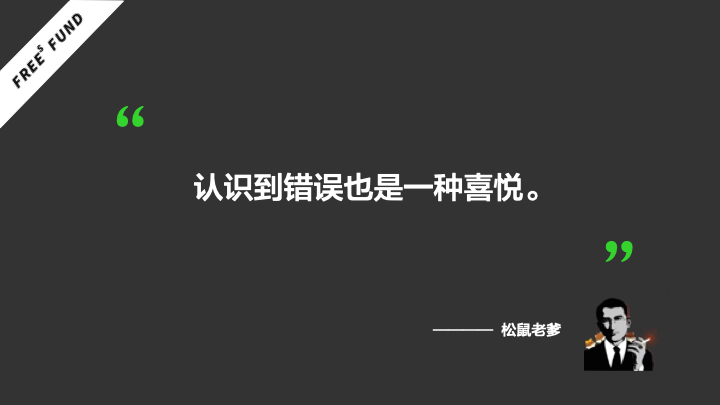
This year my joy is genuine. Last year I felt terrible, though you could call it another kind of joy — recognizing your mistakes is also a kind of joy.

"Growth masks problems. People tend to look for surface-level causes."
What did we go through in the past year and a half?
Before the end of August 2017, our growth was still good. In August, media reported that one of our products had excessive mold. In September, our growth stalled, continuing through Singles' Day and even into the New Year's shopping season.
It was easy to connect these results — to assume this was what caused the growth stall. Until around May this year, including myself, we all thought this way.
But the real reason wasn't this. When people examine their mistakes, they like to look for surface-level causes. Or rather, at the time, they don't realize these are only surface-level causes.
We did many things to try to restore our image in consumers' minds. But reason told me that consumers are actually rational — they knew our products, company, and brand were still very good. I also felt that something was definitely wrong inside the company. This problem likely appeared earlier than the Singles' Day growth stall.
Because starting in 2017, the company's growth wasn't as fast as before. It's just that before the incident, growth solved everything and masked everything. Once growth stopped, the problems were exposed.
Realizing there's a problem is one thing. Finding the root problem is very difficult. For a long time, I read many books and studied the development histories of domestic and international companies. The conclusion was that any company will definitely have problems after reaching a certain point. The annoying thing is, we sometimes don't know where the problems lie.
Over the past year-plus, I went through a lot — starting with clarifying values, then clarifying people, clarifying organization, then thinking about the essence of business, until I finally woke up in July 2018. There were no shortage of detours along the way, but fortunately we turned around relatively quickly.
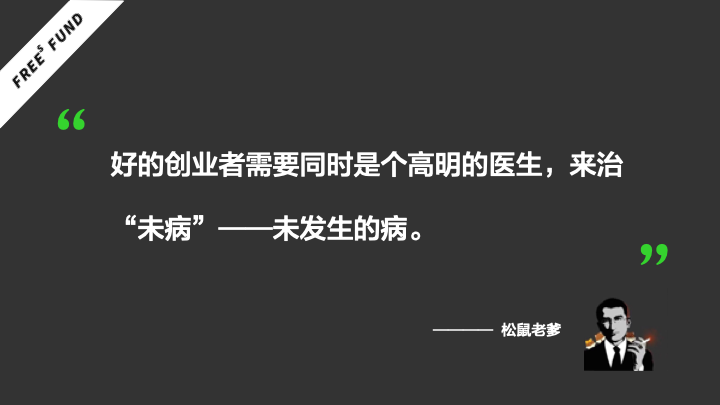
Running a business means that when things are going well, you can never imagine the worst times. When you first spot bad signs, you tend to dismiss them. A good founder needs to be an excellent doctor who treats "not-yet-illness" — diseases that haven't happened yet. What diseases might come in the future, you need to treat now.
"Rethinking organization, business, and values"
One trigger that made me realize there were internal problems: to develop our "feeding stores" (experience stores), we had developed many peripheral products. In March-April 2018, I saw a pile of stuff that just looked wrong — poor quality, but high procurement prices. I checked prices on 1688, then checked inventory, and got a shock: the inventory we'd built up in one or two months, at the then-current sales rate, would take decades to sell. I immediately felt the company had a problem.
Because peripheral products are something a normal company should be able to do well, but we couldn't. The reason was simple: everyone was proud inside, their mentality inflated when working.
My first thought was that values were the problem. Then we spent a lot of time internally on values. Looking back now, that wasn't correct. When are values important? Very important in the early startup stage, still important in the mid-stage, but in the mid-stage they're not the core — they should be a foundation.
How big did values become internally at that time? To put it bluntly, we were a values-oriented company — if your values were upright, you were loyal to the company, your attitude was good, you could get promoted. Performance wasn't the most important thing. Because for a long time, performance mainly relied on e-commerce dividends, and business kept growing. People easily fell into the misconception that business growth was their own ability. Over time, some people who weren't actually that capable did quite well.
After reflecting, I realized values are the cornerstone; business orientation is the core. When shifting from values-focused to business-oriented, the first thing I did was try to energize people. However, we jumped a bit too far — we briefly implemented a "micro-business unit" model, similar to the Amoeba Management method.
I wanted to turn the company into an entrepreneurship platform. We put forward many slogans, like making everyone a striver. The idea itself wasn't wrong, but there was a prerequisite — employees must have strong business capabilities. This is extremely important.
In May this year, I canceled it. The reason was simple: this model didn't work at our company. First, some employees were highly motivated but didn't know what to do — like if you give farmland to a farmer who doesn't know how to hoe, the land goes fallow. Second, because this micro-business unit model required delegating power to the smallest business agents, communication up and down became difficult. In the end, neither advancing nor retreating worked.
This experiment failed, and it was mainly my problem. My personality may emphasize innovation too much; I don't like traditional business management methods. But mainstream management methods that have existed for hundreds of years have their reasons. What should it be like? People are in competitive relationships, driven by promotion. Traditional, but effective.
After this shift in thinking, I kept pondering one question: why should people work at your company? One driver is interest — I want to earn more money; how to earn more, that's through promotion. On this chain of interests, values come into play; otherwise they're empty.
Under the new organizational system, we internally released something called the "Thirteen Chapters of Organization." Company-wide salaries increased substantially, some by as much as 40%. You don't need to think about it — if someone used to make 100,000 a year and now makes 150,000, giving them a raise will definitely make them work harder. If their capabilities don't improve, they'll be iterated out themselves.
This year we also vigorously brought in many external talents. Positions included product R&D, IT technology, sales... Some came from Alibaba, some from Metro, and others from well-known companies in related industry chains.
We benchmarked against relatively large companies, bringing in people with five to ten years of experience. We offered very competitive salaries, and immediately decided to establish a presence in Nanjing. The entire organization transformed from a closed or regionalized organization into a nationalized one.
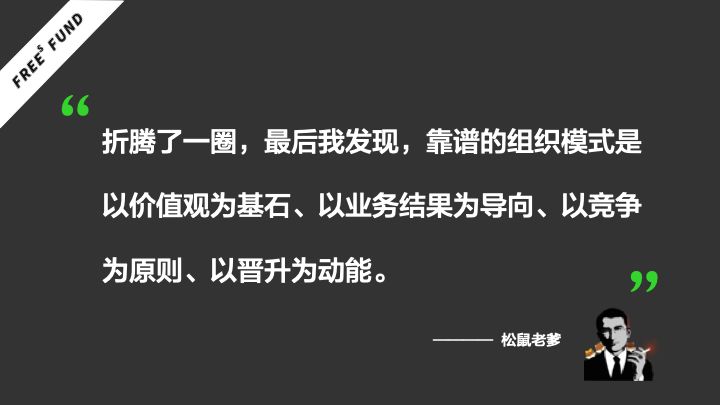
Now, our entire organizational model is: values as foundation, business results as orientation, competition as principle, and promotion as driver.
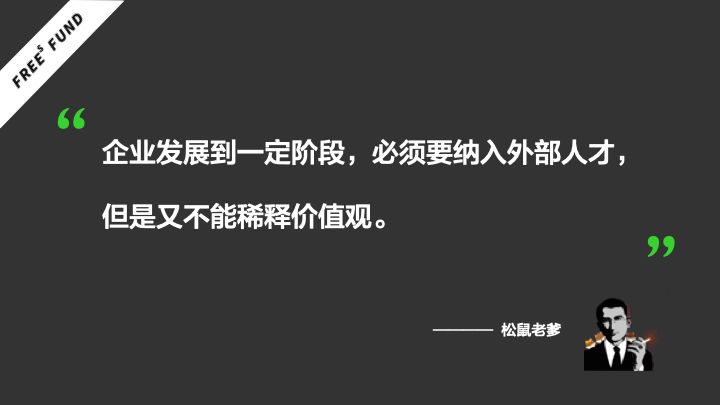
Before this year, I was very unwilling to bring in mature talent from outside. I overly believed in the company's growth system, and was enthusiastic about making ordinary people extraordinary.
There were many misconceptions here too.
Early on, not bringing in external talent was correct. E-commerce as a new tool — external talent didn't understand e-commerce well either. There were no mature talents outside to bring in; using our own "homegrown troops" was better.
But when we switched to another channel, the market changed, and the competitors we benchmarked against became stronger. At this point, the speed of talent cultivation likely couldn't keep up with the speed of business development, so we had to leverage external forces.
Maybe in a few years, when we enter a third stage, key positions will need to be filled by homegrown talent again. It all depends on what stage the company and industry are at.
Take Alibaba as an example. Alibaba's early growth relied on its 18 founders and internet dividends. They沉淀出了 this company's most important genes and values. After its tenth year, if it had still relied on those 18 founders to keep going, there might be no Alibaba today.
What Jack Ma did very correctly in the talent iteration process was iterating mid-level talent. The people Alibaba heavily uses now, when they joined, were probably not VPs but mid-level general managers.
The benefit of mid-level talent: they're brought in from outside, so they definitely have business capabilities. On the other hand, they have veterans above them and veterans below them, so their values can be influenced. After seven or eight years of training, they have both business capabilities and values binding.
In my view, it's theoretically unlikely for someone to join a company right after university and work their way up to CEO and chairman, because that person would definitely become insular.
"When a company's growth stalls, what is the right path?"
Another realization: when a company encounters difficulties and stops growing, don't first think about cutting costs — think about opening new revenue streams. Cost-cutting definitely means death; opening new streams is the only way to survive. Cost-cutting means the CEO has lost confidence in the future. The biggest problem is that people's minds change — morale and fighting spirit disappear.
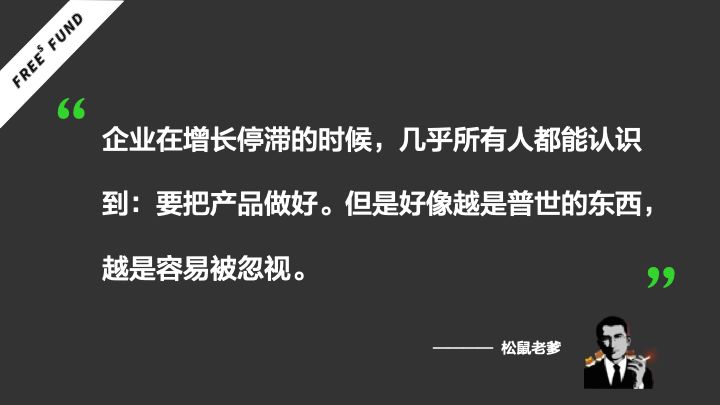
So what exactly is the right path? Until May this year, we still hadn't made innovative products the company's most important thing. Sometimes, the more universal something is, the easier it is to overlook.
At that time, I positioned myself as a retailer — whatever sold well, I'd sell, competing with others on speed of new product launches. Under this orientation, when growth stalled, we brought in a strategy internally called the "T9 Strategy" — creating 9 blockbuster products, launching as fast as possible. From May to end of July this year, we launched a pile of new products. Many didn't sell well; some I didn't even think were good.
I felt something was wrong. These things we were doing were all easy things. Is running a business this easy? This definitely wasn't right. Was the previous problem just that our new product launch speed was too slow? Today we issue an order, everyone gets products going, and that's it? That seemed too easy too. However I thought about it, it wasn't right.
Then I kept thinking about the simplest question: what is the essence of business?
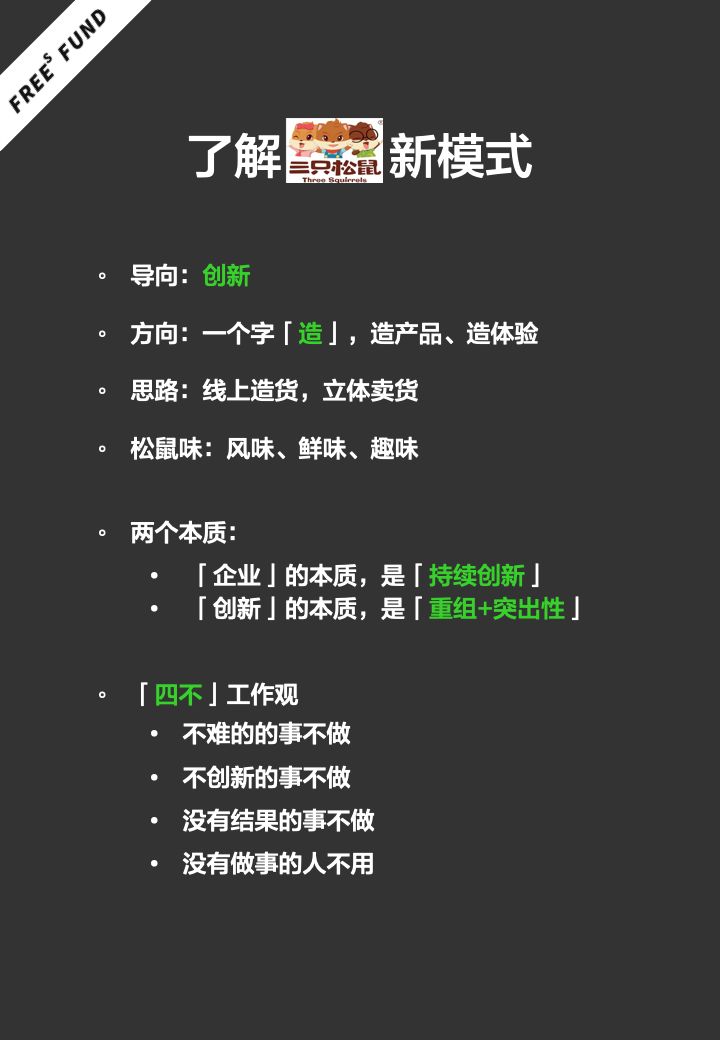
After thinking in circles, I finally concluded that the essence of business is innovation. What is a business, what is a company? It's a group of people organized together. What is the meaning of these people's existence here? Isn't it innovation?
Then I started reflecting: were we innovating? It seemed not really. Was model innovation called innovation? No. E-commerce was model innovation, that wasn't innovation — e-commerce is just a tool. What did we ultimately want to do? My answer was: sell products. So had our products innovated? It seemed not much — just taking others' things, changing them slightly, and selling them.
I finally realized: here's where the problem lay.
We researched consumers and looked at reviews. The feedback was that Three Squirrels' products were decent, user experience decent. Fun, tasty, good user experience — when you talked about it, you knew about the nut opener, the clips, these small details from before. But we hadn't had similar distinctive touches in recent years.
When I thought through to this point, I understood: the most important reason our growth had slowed was that we were losing our core capability. This didn't mean we had regressed, but that consumer demands had progressed — which equaled us regressing. So we said we should return to our original aspiration, to make our core capability great again.
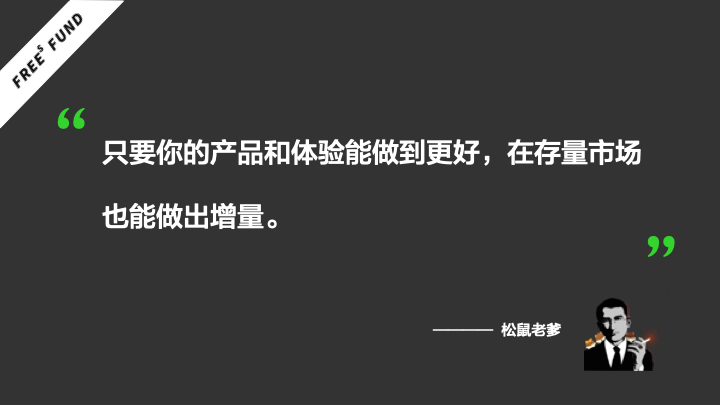
Second, why had sales stalled? Simply put, the demographic dividend was gone. The market had shifted from incremental to stock. Of course there's business to do in a stock market, but a stock market requires you to take from others' bowls and put in your own pocket. Taobao has 600 million users; only 120 million buy snacks, and 480 million don't. How do you develop?
Thinking this way, I realized our products and user experience still weren't good enough. Only when you're truly better can you definitely create incremental growth even in a stock market.
When positioned as a retailer, we thought about expanding channels, or getting more products to sell. For a period, I particularly hated that — as if we couldn't sell our stuff. We used to be a very cool company; if you wanted to stock from us, we might not even agree. But around April-May this year, when anxious, we'd enter any channel. Channels contributing tens of thousands in revenue — we'd enter. I felt this was a big problem; the company was losing its taste.
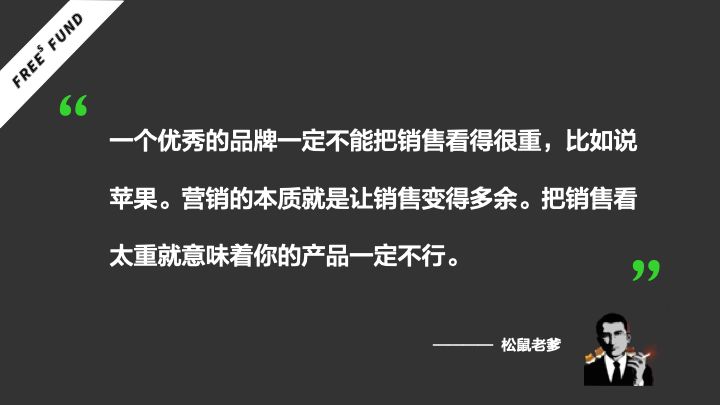
An excellent brand definitely doesn't focus heavily on sales. Take Apple. Focusing too much on sales means your products definitely aren't good enough. My definition of marketing is: the essence of marketing is making selling products redundant.
It wasn't until July this year that I fully woke up. We need to return to our original aspiration. Three Squirrels should be a brand company, not a retailer. We need to innovate, with product as the logic. Our core capability is the ability to design products and user experiences.
"New R&D, new manufacturing, making goods, making experiences"
With direction clarified, we focused on "making" — specifically "making products and making experiences." Around this "making," our annual planning and company culture changed. We proposed the "Four No's" work philosophy: don't do things that aren't hard, don't do things that aren't innovative, don't do things without results, don't use people who don't do things.
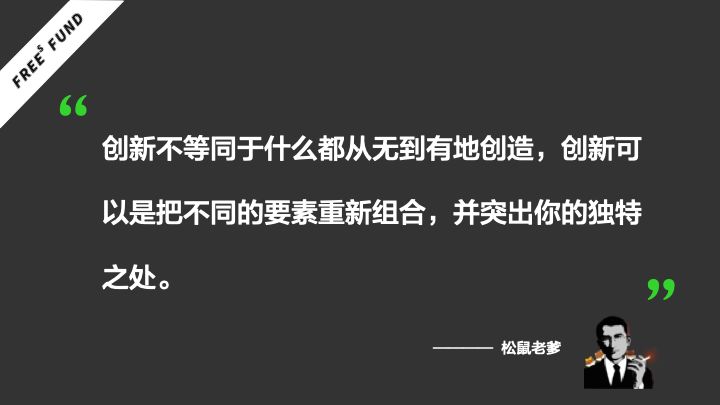
We're becoming a completely innovation-oriented company. However, innovation doesn't equal creating from nothing. The essence of innovation is recombination of various elements, greatly highlighting uniqueness.
Moreover, our innovation must be marketing-based. I believe all product innovation is driven by marketing thinking. Steve Jobs was like this. Apple computers, for ultimate thinness, even removed the USB port.
When we made the "Trembling Noodles" product, its unique characteristic was numbing (ma), but we redefined "numbing" — so numbing your lips tremble, and named it "Trembling Lips Soup Noodles." We amplified the "numbing" point greatly, even sacrificing other aspects in the entire formula.
Speaking of making and innovation, one thing you can't avoid is deeply cultivating the supply chain, participating in product R&D and manufacturing. This is also what 7-Eleven and Muji did when they encountered growth crises.
In the past I didn't deeply engage with the supply chain, didn't talk about open collaboration — one, it didn't fit my personality; asking me to go beg people, very hard. But a few years ago, Three Squirrels' volume was still small; even if I went to beg, they might not pay attention. Today it's different. For example, AAK, a world-leading specialty vegetable oils producer — now we can collaborate. Because our volume is large enough to drive their revenue.
In July this year, I spent over two weeks visiting 20+ supply chain companies. Going around, I discovered that the supply chain has innovation foundations. The biggest complementary relationship between us and factory ends is: they have foundations, but they haven't used them well, or rather, they haven't enjoyed the benefits of product innovation. What the supply chain lacks is brand momentum and traffic capability — and we have these.
In three to four months, collaborating with the supply side, we created a batch of very innovative products. These new products sold 50 million RMB on this year's Singles' Day.
Connecting with factory ends wasn't enough. Going further down, we researched the general technology layer — they can be called food infrastructure. For example, DuPont, focused on nutrients, does research on the three nutritional components: protein, fat, carbohydrates. Another example: Givaudan, the world's largest flavors and fragrances company, and the aforementioned AAK. We signed strategic cooperation agreements with these global companies possessing food general technologies.
Connecting factory ends, general technology layer companies, and digitizing the entire supply chain process — on "making goods," we've formed a new model: first, we have the world's top general底层技术 partners; second, we have quality supply enterprises from across the country; third, we have the most members and traffic. When these several things stack together, they form our new competitiveness.
Going forward, what I can do is: for example, a bread — we and the supplier form a project team, making the bread's R&D, process, formula, and quality control into standards, then the supply chain executes. It can be detailed to: this bread has Yihai Kerry flour, AAK oils, maybe Givaudan flavors and fragrances.
Thinking back, early 2018, I talked with Alibaba's Zeng Ming. He told me: today's companies have a two-year "fool period," a five-year "dividend period," and generally a seven-year cycle. Quite reasonable — I calculated, Three Squirrels was exactly at year seven. I also thought of Xiaomi; 2016 was Xiaomi's seventh year. Around 2015-2016, Xiaomi had almost no growth. Under great pressure and external doubt, what did Lei Jun do? The answer was also: deeply cultivate the supply chain.
Now our model is very clear: collaborate with the supply chain, build an industrial community, with the core goal of motivating every partner to jointly do product innovation.
To achieve this goal, we can't be a procurement and sales relationship. We hope that through supply chain digitization, we make raw materials transparent, processing costs transparent, and our Three Squirrels sales transparent too. We adopt a revenue-sharing model. After products launch, we push to market — losses are shared, profits are split 50-50. What's mine is yours, what's yours is mine; no甲方乙方之分.
Achieving this goal takes time, possibly several years. But once this industrial community is built, it's basically unstoppable.
To summarize: in 2018, we tossed and turned, changed and changed again. The biggest gain was clarifying Three Squirrels' direction, positioning, model, and organizational form. All companies in transformation need to rethink these questions. Another major realization: before finding the right path, there will definitely be detours to take.
Feel free to share to your Moments. For reprinting to other official accounts, websites, or mobile apps, please reply "reprint" to learn reprint rules, and contact "Feng Xiaorui" (id: freesfund) for authorization. Copyright belongs to FreeS Fund.

Three Squirrels' Zhang Liaoyuan: In My First Year of Entrepreneurship, I Did 6 Things
▲ Why I Opened a Physical Store in the Retail Winter | Exclusive Dialogue with Zhang Liaoyuan
▲ Li Feng × Zhang Liaoyuan: The Most Famous E-commerce Brand "Three Squirrels" Is Opening Physical Stores