A Conversation with Zhang Liaoyuan: Two Years After IPO, How Is Three Squirrels Thinking About What's Next? | FreeS Fund Interview

What is Zhang Liaoyao's ultimate battleground for brands?

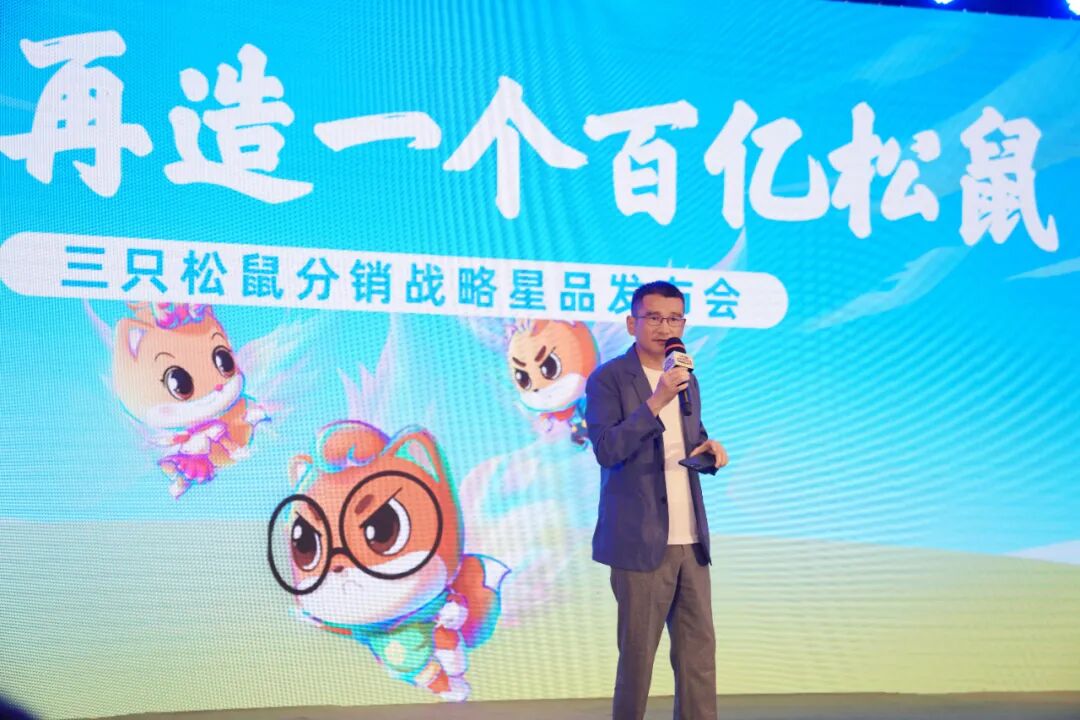
Here's the story. A 36-year-old entrepreneur spent seven years building a multi-billion-yuan snack food brand. Yet, entering the post-billion era, this publicly listed company CEO found himself constantly grappling with a new question: how to make the leap from billions to tens of billions. At the company's ninth anniversary celebration on June 19, 2021, he set a deadline for his grand vision — 2030.
That man is Liaoyuan Zhang. The enterprise aiming for this trillion-yuan target is Three Squirrels.
As a victor of the traffic era, how would Zhang support his trillion-yuan ambition amid the decentralization of traffic? As an internet-born food company, why did he resolutely bid farewell to the past — "contracting" his battle lines, focusing on nuts, moving beyond e-commerce, and instead pushing into offline distribution? Under the spotlight, doubt and challenges were inevitable. But when it came to what needed to be done now, Zhang was absolutely certain.
On October 15, 2021, at the Tianjin Autumn Sugar & Wine Fair, FreeS's Xiaorui sat down with Zhang for a conversation, attempting to dissect his new thinking on strategic transformation and brand value. Before diving in, here are a few points from "Squirrel Dad":
- A common entrepreneurial mistake: when survival becomes habitual, growth gets neglected. In fact, growth is the long-term endeavor.
- In the centralized traffic era, whoever could most efficiently capture channel dividends would succeed — meaning merchants had to constantly extend their brands and sell more things to their consumer base. But in the decentralized traffic era, people's product demands have become increasingly specialized and refined. If a brand's positioning is too broad and unfocused, it cannot establish user mindshare, and thus cannot build long-term brand value.
- To measure a brand's long-term value, look at how much your brand can represent a specific category — when consumers have demand for a particular category, do they think of your brand first? So the ultimate battlefield of commerce is not channels, not traffic, but consumer mindshare.
- The most advanced brand model is the tree model, like Coca-Cola — deep roots, lush branches, strong enough individual products to represent categories, with the brand continuing to subdivide as it grows, spawning more sub-brands that represent even more niche categories. To build a multi-brand model like Coca-Cola's, you first need a trunk brand. The method: make your strongest even stronger, keep amplifying your advantage, until you become a powerful brand that can dominate user mindshare in a particular category.
- Building a brand from zero to one is most efficient online. But most of life's radius is still offline; to take a brand from one to ten, you have to go offline. Private-label retail models are effective in special stages, but in an era of specialized division of labor, they become inefficient. Compared to building your own channels, the optimal solution is leveraging socialized efficiency.
- The new brand strategy model: from 0-1 online, from 1-10 offline. First, leverage the internet's direct-to-user characteristics to ensure good quality at good prices, build brand through sales, and rapidly create a brand online. After achieving brand breakthrough from zero to one through the internet, then rely on brand momentum to enter mainstream offline distribution terminals, completing the one-to-ten leap. Remember: e-commerce is not everything. The internet is traffic, and supermarkets are also traffic.
- Many companies cannot achieve true omni-channel reach because they lack the ability to manage conflicts between different channels, forcing them to choose. If you want to go full-channel, your product lines need to be differentiated according to channel characteristics and functional positioning — visible in specifications, packaging, and so on.
Below is a selection of highlights from Squirrel Dad's sharing. We hope they offer some inspiration.
Contact Us We always look forward to meeting more innovators in the consumer space. Pitch us at bp@freesvc.com. We're also looking for people interested in consumer investing to join us at hr@freesvc.com.

/ 01 / Strategic Transformation: Bidding Farewell to the Traffic Business, Deepening the Brand Business
Xiaorui: Three Squirrels' recent brand strategy transformation — including focusing on nuts, multi-brand development, and pushing into distribution — has drawn considerable curiosity. As an internet-era viral brand, why is Three Squirrels making these adjustments?
Zhang: Enterprises always need to solve two problems: survival and growth. A common mistake is that when survival becomes habitual, growth gets neglected. In fact, growth is the long-term endeavor.
Three Squirrels became a multi-billion-yuan snack food brand in seven years. A key backdrop to our business growth was centralized traffic. When channels offer dividends, companies that can most efficiently capture those dividends will succeed.
The sales playbook for channel brands was essentially this: under centralized traffic, extend the brand and sell more things to your consumer base. This had a consequence — the market became flooded with categories, yet genuine brands were hard to establish. Most were just miscellaneous players.
As traffic decentralization progressed, the channel brand playbook became ill-suited. The essence of traffic decentralization is that people's product demands are becoming increasingly specialized and refined. This is an irreversible trend. Different stages call for different plays — this is determined by market models.
For example, anyone who's sold on Douyin knows that brands representing single products have the greatest advantage. As AI algorithms become more widespread, the more precisely a branded product targets its audience, the easier the system can identify it.
In this context, the old traffic-era playbook leads to positioning that's too broad. The consequence of not focusing is that the user mindshare you've built gets constantly eroded. The more things you sell, the broader your category coverage — if users can't remember who you are, your brand has no value. But when your brand is sufficiently specialized and users can remember what you do, then no matter how platforms fragment, your brand's long-term value remains solid.
So, to measure a brand's long-term value: look at how much your brand can represent a specific category. When consumers have demand for a particular category, do they think of your brand first?
Xiaorui: So this transformation means bidding farewell to the traffic business and instead deepening the brand business?
Zhang: Yes. The most essential difference between brand business and traffic business is this: in traffic business, price factors matter more; in brand business, user mindshare matters more. So the ultimate battlefield of commerce is not channels, not traffic — it should be consumer mindshare.
Xiaorui: What impact does internet interoperability have on Three Squirrels?
Zhang: It's definitely positive for us. Because with interconnectivity, brands become more important, and head effects become more pronounced.
/ 02 / Brand Strategy: Single Focus, Multi-Brand Alignment, Becoming the Procter & Gamble of Food
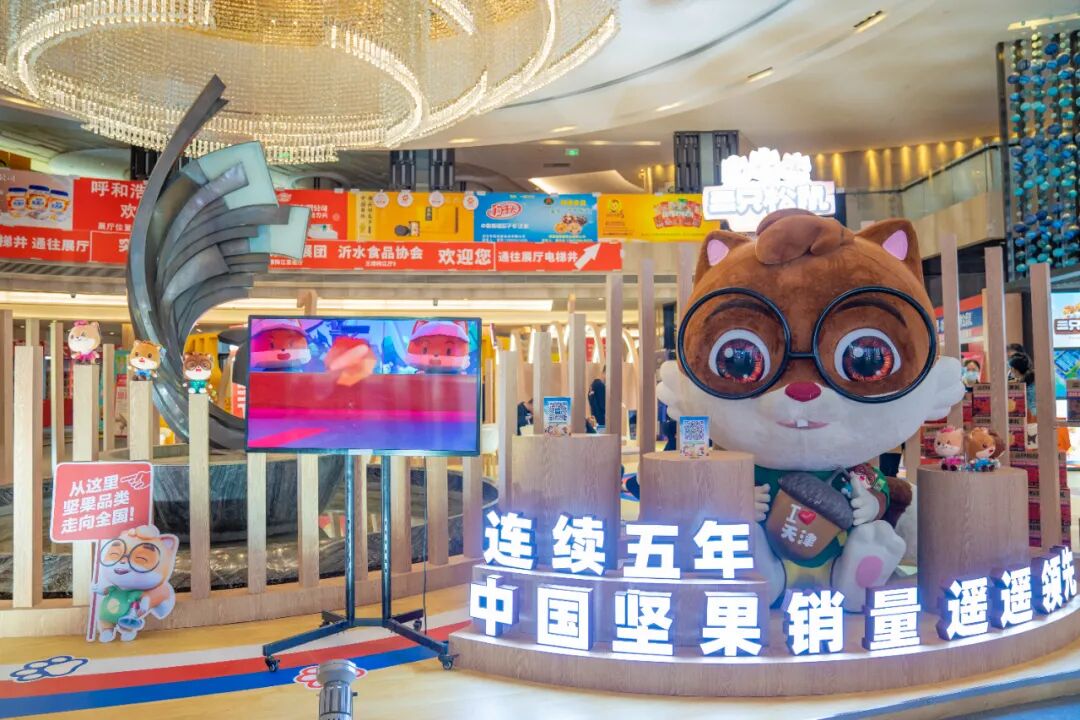
Xiaorui: To return to product-brand attributes, what specifically needs to be done?
Zhang: Currently there are two main brand models in the market. One is the umbrella model, represented by Wahaha. The other is the tree model, represented by Coca-Cola or Procter & Gamble. What Three Squirrels wants to build is the tree model.
Xiaorui: Why not Wahaha, but Coca-Cola or Procter & Gamble?
Zhang: Wahaha represents the umbrella model. One brand with brand extensions beneath it — from AD Calcium Milk to bottled water, and so on. Wahaha was particularly successful in channels, and strong channels were a key factor in the success of many domestic brands during the rapid growth period of supermarkets. When channel capability is strong, the brand itself isn't the most critical factor. In the e-commerce era, Three Squirrels' success fell somewhat into this "trap." Why did we sell so many products? Because we were strong in online traffic. But this is problematic. As we said above, the ultimate battlefield of commerce is occupying consumer mindshare.
Coca-Cola or Procter & Gamble represent the tree model. Take Coca-Cola: the trunk brand is Coca-Cola, with product lines including Fanta, Mirinda, Sprite, and so on. P&G is the same — P&G can't represent shampoo, but it uses Pantene and Rejoice to represent smoothness, and Head & Shoulders to represent dandruff removal.
The tree model is a more advanced brand model — deep roots, lush branches, with strong enough individual products to represent categories. As the brand grows, it continues to subdivide, producing more sub-brands that represent even more niche categories. Once multi-brand is achieved, the imagination space is enormous.
Three Squirrels' future is to become the Procter & Gamble of China's food industry. Based on this, our latest brand strategy is adjusted to "single focus, multi-brand alignment." Of course, the practical reality is that winning through brand is much harder than winning through channels. Many companies can't achieve this. So our transformation is choosing the harder but correct path.
Xiaorui: How does Three Squirrels plan to build its own "tree model" multi-brand system? How is this different from previous multi-brand strategies?
Zhang: To build a multi-brand model like Coca-Cola or Procter & Gamble, you first need a trunk brand. So we need to think clearly about several questions: What is Three Squirrels' "Coca-Cola"? What is Three Squirrels in consumers' minds? What category can Three Squirrels truly excel at?
At this stage, there's only one answer — nuts.
There's no doubt that nuts are Three Squirrels' strongest advantage. Currently, China's entire tree nut market (excluding peanuts and sunflower seeds) is nearly 70 billion yuan in scale — roughly 20 billion online and 50 billion offline. We're relatively leading online, with about 20% share, though our overall share in the national 70 billion market remains relatively low.
So after focusing on nuts, our first step is to use brand momentum to bring the brand back to nuts. Our goal is to make our strongest even stronger, continuing to amplify our advantage until we become a powerful brand that can dominate user mindshare in the nut category — forming a brand logic where Three Squirrels equals nuts.
Three Squirrels' starting point of success was our discovery that the "nut" category held enormous opportunity on the internet, so we spared no effort to surpass everyone and become number one online. That was our boldness back then, and we maintain that same boldness now as we push into offline distribution. The nut industry still has huge and enduring growth space ahead. According to Ries Consulting data, by 2030, China's nut market is expected to triple to roughly 200 billion yuan.
Currently, I see the nut market as divided into four segments: bulk, pre-packaged, gift, and flavored nuts. Pre-packaged is what we currently do well. Bulk currently accounts for half of the offline 50 billion market. The significance of bulk lies in consumer popularization — if nuts are to grow into a hundred-billion-yuan market, it must be through nuts completing the transformation from healthy snack to nutritional dietary component. Gift serves to educate the category, as gifting is the most efficient utilization of brand mindshare. As for flavored nuts, personally I feel the timing isn't right yet.
Xiaorui: Bringing the brand back to nuts, to some extent means contracting battle lines.
Zhang: Indeed. Gaining weight is easy, losing it is hard — but it's imperative. Currently, of Three Squirrels' billions, nuts account for 50%, with the remaining 50% being general snack foods. Three Squirrels' past representation of full categories has already begun gradual subtraction. By end of 2021, our previous hundreds of SKUs will be reduced to roughly 70, with a retention threshold set at the tens of millions level. These 70 SKUs, next year we'll continue to drive internal incubation, further optimizing individual product vitality, until the standout products among them are batch-incubated as sub-brands. Of course, under the guidance of "single focus, multi-brand alignment," we'll also launch other sub-brands in the nut space going forward.
Xiaorui: Many industry giants are expanding into new markets and categories, and various niche category new consumer startups are bustling with activity. Three Squirrels seems to be going the opposite direction?
Zhang: Yes and no. The more it's like this, the more each company's approach differs. The best times are often also when problems are most hidden. Even among top snack brands, everyone used to look very similar; now increasingly less so.
If you look closely, during the decade from 2000 to 2010, early on everyone was doing traffic business on the internet. Traffic business is simple — the logic is there's abundant traffic, so I use one store to sell more things to the same group of people. But starting from 2018-2019, everyone shifted toward brand business. Most surviving brands are all doing subtraction. When traffic business becomes user-driven and brand-driven, the number of things goes down.
Brand Strategy Model: From 0-1 Online, From 1-10 Offline
Xiaorui: The market keeps changing, and you've been constantly adjusting.
Zhang: Yes. Another key battle is ensuring omni-channel reach. For a brand born on the internet like us, we need to not only ensure consumers think of us first when consuming a category, but also see us and buy from us first.
Three Squirrels' past phased success proved one thing: we can completely build brand awareness through internet-based selling. Our infant and children's food brand "Deer Blue Blue," incubated last year, further validated that our "build brand through sales" model for zero-to-one brand building works.
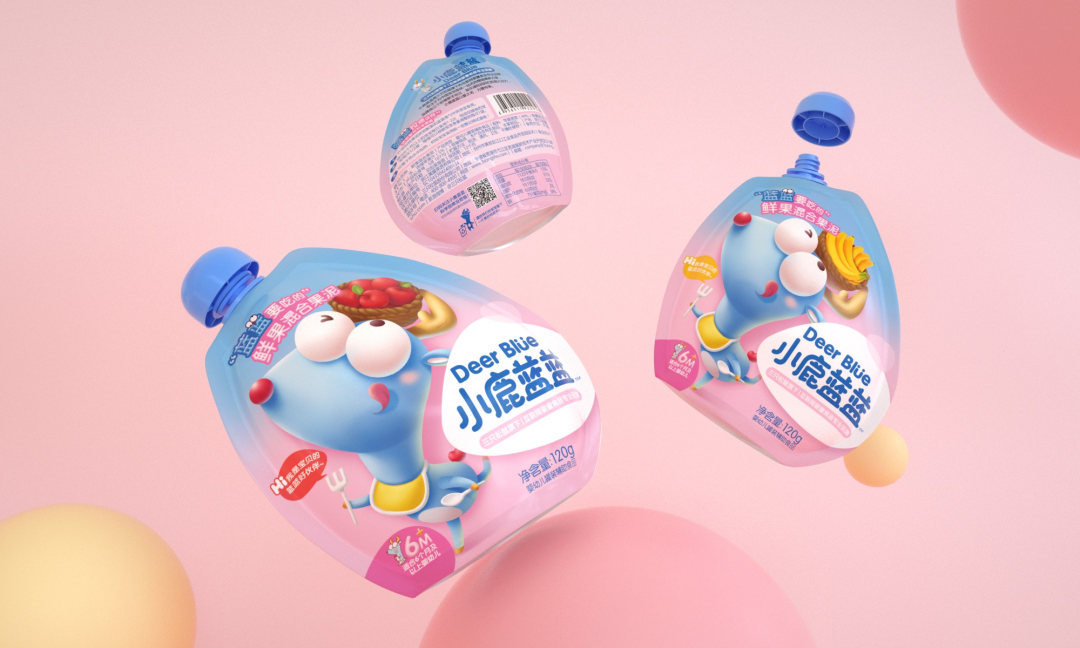
Xiaorui: Was there anything inevitable about Deer Blue Blue's success?
Zhang: First, category-wise it falls under snack foods — our traditional advantage. Second, this category was at a tipping point, enjoying the largest windfall among the four projects we incubated. Compared to instant noodles and ready-to-eat foods, which had already become a red ocean with pandemic-driven short-term dividends fading, the baby snack category was just getting started.
Xiaorui: This strategic adjustment includes not just focusing on nuts, but also focusing on distribution. Three Squirrels began developing offline channels in 2017. How do you understand the importance of offline?
Zhang: It's not just Three Squirrels — many brands formed through full-media internet strategies face a common problem: none have fully occupied user mindshare. We've formed brands, but haven't yet become truly national brands.
One important reason is that for a long time, everyone had a gap in mainstream offline channels. These past two years, amid channel fragmentation and media fragmentation, emerging brands have不约而同地 been铺设 offline at the fastest speed. Behind this is a consensus: from zero to one, online efficiency is highest because what you see is what you get — match consumer demand, sell to them, they recognize you. The brand can be somewhat rough, it doesn't matter. But people's life radius is still mostly offline; to take a brand from one to ten, you have to go offline. Going offline — everyone has been exploring this in recent years.
Xiaorui: Three Squirrels has explored offline extensively — you've done "Feeding Stores" and alliance stores, and now propose pushing into distribution. Why?
Zhang: Private-label retail models are effective in special stages, but in an era of specialized division of labor, the optimal solution is leveraging socialized efficiency.
Having survived the community group-buying wars and pandemic these past two years, the distributors that remain are the strong ones. We'll adopt a mutually beneficial model, hoping to establish channel rules through brand momentum. These rules won't be one-sided — they'll be based on efficiency improvement and cost optimization, ultimately leading to the brand's omni-channel consumer reach and offline distribution.
For example, last year we launched an innovative dessert product "Grandma's Sweetness," pre-packaging desserts like mango pomelo sago and sago with coconut milk. After operating and promoting this single product on Douyin, Xiaohongshu, Taobao and other internet channels, reaching tens of millions in sales, if we then introduce this product into millions of distribution terminals, working closely with regional supermarkets,铺货 region by region, and increasing advertising investment at the right time, it could very likely reach hundreds of millions in single-product volume.
Xiaorui: Sounds exciting.
Zhang: Yes. Our distribution head even said, I've never seen a company reach 10 billion without having done offline distribution. The logic and pattern of offline category development is: from 0 to 1 is very hard — you need to consider the category, then form the brand; once the brand is formed, entering a channel and摸索 3 to 5 years to achieve 1-to-10 replication is relatively easy.
The logic and pattern of online category development is: from 0 to 1 is easy, but from 1 to 10 is hard. Because online, the sales floor and media are unified, making 0-to-1 relatively simple, but the 1-to-10 scenario ultimately lies offline.
So what we need to do is merge advantages. Our brand strategy will have two directions going forward: first, focus on the internet's direct-to-user characteristics, ensure good quality at good prices, build brand through sales, and rapidly create brands online; after achieving zero-to-one breakthrough through the internet, then rely on brand momentum to enter mainstream offline distribution terminals, completing one-to-ten.
I believe Three Squirrels has the capability and responsibility to输出 a new solution to the industry: create new brands through internet 0-1, then complete 1-10 through offline distribution models.
For enterprises to achieve sustainable development, they must maximize replication of their smallest success factor. In the past, our company's minimized success factor was building brands from zero to one online. So next, we hope to continue发力 in the latter half,打通 the development path from one to ten offline. If we can跑通 the latter half within the next year or two, more quality brands can be incubated, and we'll have the opportunity to achieve the leap from billions to tens of billions.
Brand Moat Comes Down to Two Things: Occupying Mindshare, Occupying Mainstream Channels
Xiaorui: At the Autumn Sugar Fair distribution strategy star product launch, you proposed the target of "5 billion in 3 years, 10 billion in 5 years," with "no upper limit set for this goal." One can feel Three Squirrels' determination to focus on distribution.
Zhang: Brand moat comes down to two things: occupying mindshare, occupying mainstream channels. So the first stop of our nut focus is focusing on distribution. Taking it nationwide through distribution channels,铺ing a larger market around users, and突击 entering nut category competition.
After focusing on distribution, we have two major strategies:
▍Occupation
First, occupation. Currently 85% of China's food business is still offline, because food categories, especially snack foods, are impulse-purchase goods — customers are willing to pay for convenience.
Distribution channels have a pre-packaged nut market of over 20 billion. Though competitors entered earlier than us, we have our own advantages. According to consumer surveys, 60-70% of respondents consider Three Squirrels their top nut brand in mindshare. The main battlefield offline lies in our millions of offline terminals — in the next 1-2 years, once distribution发力, this blank space will be rapidly filled. What we need to do is satisfy this consumer demand and rapidly occupy this offline market.
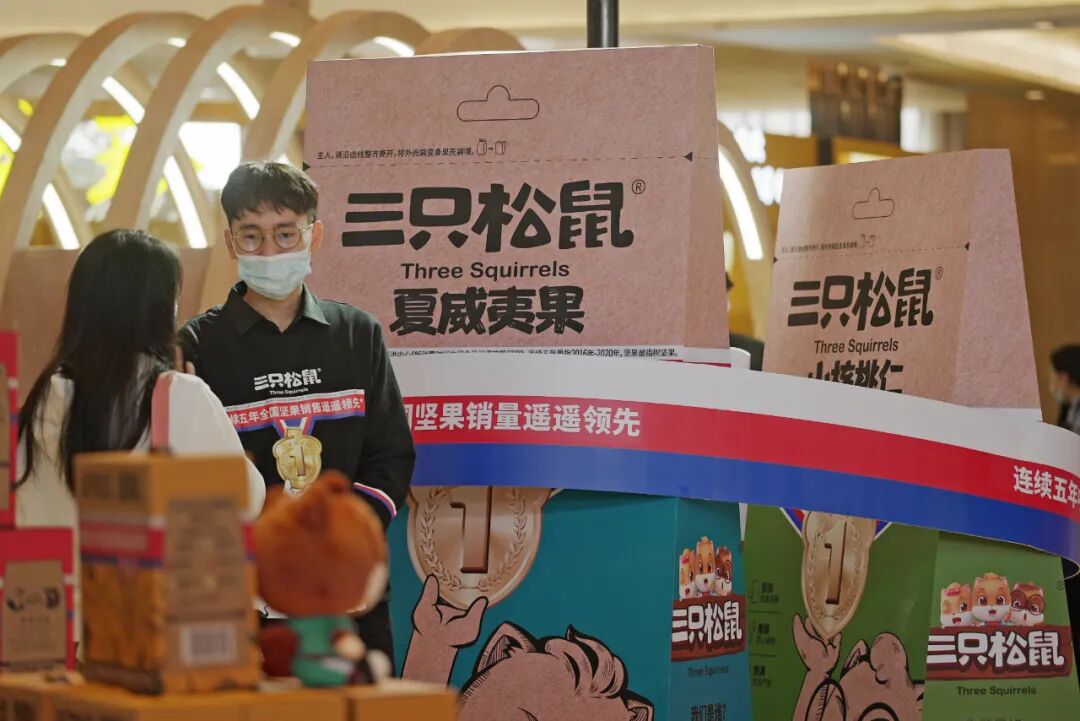
Perfect consumer reach must be omni-channel reach — for example, they can see you at their neighborhood gate, see you when buying snacks at highway service areas, see you when taking kids shopping on weekends... Consumers can conveniently access your products, while improving brand reach efficiency and optimizing costs.
▍铺货 in One Hand, Mindshare in the Other
Second,铺货 in one hand, mindshare in the other. "铺货" means building up quality terminals; "铺心智" includes new products prepared for distribution, new packaging, new communications — a series of resource matches to establish and strengthen consumer mindshare that Three Squirrels is the number one nut brand.
Currently, across the entire nut market, our offline share is only 2%; online plus offline, it's roughly 8%. To be an absolute leader, we need to reach at least 20%.
Now is also a good time for us to enter offline. Because today's hypermarkets also need to upgrade their products to compete with emerging channels. There was a period when hypermarkets were very强势; now they all have strong self-driven motivation to improve their product offerings. And our brand momentum happens to be sufficient.
Xiaorui: Here's a very practical question. With so many online and offline channels, how do you balance and choose?
Zhang: Indeed, many companies cannot achieve true omni-channel reach because they lack the ability to manage conflicts between different channels, forcing them to choose when they have no alternative.
For example, entering offline terminals may create a problem of inconsistent pricing. E-commerce is the platform with optimized channel costs, while offline distribution chains or channel costs are higher than e-commerce. So after going full-channel, our product lines will definitely be differentiated according to channel characteristics and functional positioning — visible in specifications, packaging, and so on.
Xiaorui: Specifically, how should online and offline products be differentiated?
Zhang: For example, online is typically planned purchasing — users tend to think, since I'm placing an order anyway, I might as well buy more at once. Based on this stockpiling psychology, bulk packs are suitable for online. And the online e-commerce model is one terminal reaching tens of millions of consumers, so this terminal should be放大 — not only selling nuts, but also other snack categories. Just like when you eat at a restaurant, grilled fish may be their signature dish, but that doesn't mean they only sell grilled fish.
Xiaorui: The company's offline stores are divided into Feeding Stores and Squirrel Alliance stores. How should products and positioning be differentiated among Feeding Stores, Alliance stores, and distribution?
Zhang: Feeding Stores are直营 stores, brand experience venues that emphasize brand IP and experience. Their main function is brand experience.
Alliance stores will focus on multi-brand collection sales under the umbrella, leaning toward group buying and key account services.
For distribution, we emphasize fewer SKUs. The company has one to two hundred SKUs; currently distribution does about twenty, highlighting only nuts, and focusing on distribution terminals we consider worthwhile.
Xiaorui: What rules are common between doing online and doing offline distribution?
Zhang: For example. Three Squirrels has a value of "authenticity." Three Squirrels achieved some success because of the integrity brought by internet commercial technology. This integrity is: when two people don't know each other, you give me money, I give you goods.
On the distribution battlefield, authenticity is equally important. We don't bribe, we only talk business and cooperation. Looking ahead, if we want to build another billion-yuan Squirrels in the next 5 years, we cannot get authenticity wrong. True business, viewed only short-term, is speculation; viewed medium-term, it's demand; viewed long-term, it's trust — and trust is built on authenticity.
This Issue's Interactive Benefit
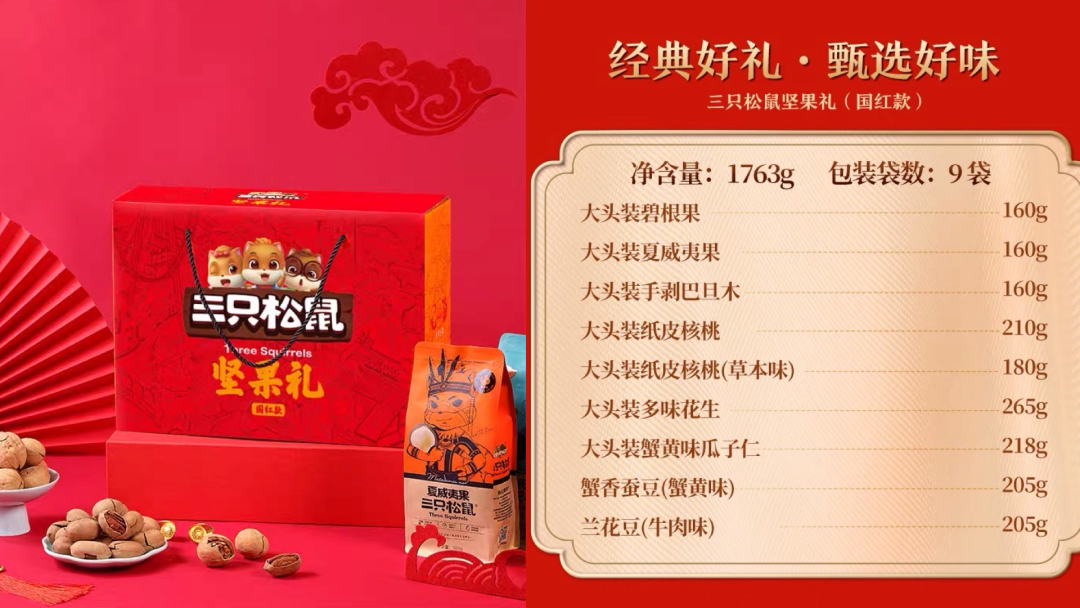
In his sharing, Dad mentioned: "When survival becomes habitual, growth gets neglected — in fact, growth is the long-term endeavor." So, in your view, how can new consumer brands achieve long-term development? We especially welcome you to share your observations and thoughts in the comments. By 9 PM on October 30th, the 6 users with the most thoughtful comments will receive Three Squirrels gift packs.
Contact Us We always look forward to meeting more innovators in the consumer space. Pitch us at bp@freesvc.com. We're also looking for people interested in consumer investing to join us at hr@freesvc.com.

FreeS Report 24 | Embracing the "Smartest" Tipping Point: Bold Investment in Brain and Neuroscience
Feng Li in Conversation with Liaoyuan Zhang: Reflections on the Occasion of Three Squirrels' IPO
Conversation with Liaoyuan Zhang (Part 1): Three Squirrels' Reversal Battle | FreeS Business School