A Trip to the US Revealed New Opportunities in 6 Consumer Sub-sectors | FreeS Research

Prosperity and Challenges: Observations and Reflections on the 2023 US Consumer Market

As the world's largest consumer market, the US resembles the Amazon rainforest in its staggering biodiversity — legacy giants too big to fall, while new brands emerge in endless succession. Keeping a close eye on the American market helps us understand the complexity and emerging trends in consumer markets. According to a 2022 study by Shanghai Securities News, among global markets, the US ranks fourth in the number of listed consumer goods companies, but ranks first in total market cap, total revenue, and total profit.
In Q2 of this year, FreeS Fund Vice President Ying Shen returned to the US after three years away, observing the overall state of the American consumer market and writing this overseas field report. She combines the latest macro data, industry research, and personal experience to reconstruct the American consumer market as she perceived it from multiple dimensions. Before joining FreeS Fund, Shen worked at Bank of China New York Branch for seven years on cross-border M&A and project financing, and previously worked at Goldman Sachs headquarters in New York. She has over ten years of experience in China's consumer goods industry. Shen holds a bachelor's degree in economics from Renmin University of China and a master's degree from Wake Forest University. She focuses on early and growth-stage investments in consumer goods, going global, and interdisciplinary fields, with notable investments including Duanyu Liangjin, Uah, and Speediance.
This article focuses on the new changes and opportunities in the US consumer market post-pandemic, and what Chinese entrepreneurs can learn from them. The article is divided into two main parts. The first part focuses on macro trends,梳理ing US rent increases, food and energy inflation data. These macro indicators help us understand the underlying backdrop of the US consumer market — the consumption boom fueled by excess savings, and labor shortages accompanying service inflation. The second part examines segmented consumer markets, introducing new changes and opportunities in cross-border e-commerce, consumer electronics, smart fitness hardware, pet products, beauty and skincare, and food.
Based on our observations of the US consumer market, we see the following opportunities:
- In cross-border e-commerce, competition among existing players is fierce. New entrants need to think clearly about product positioning, look beyond popular categories like apparel and home goods to find more niche opportunities, and work to expand into new online and offline channels.
- In consumer electronics, US users generally have strong purchasing power. China has significant supply chain advantages, and a small number of smart hardware brands have already established deep presence in the US. Whether it's smart hardware for fitness or smart pet products, there are more opportunities for innovation.
- In beauty and skincare, competition is similarly intense. In the US beauty market, brands have already started "involuting" around cutting-edge technologies like AI, computer vision, and 3D. Beauty retail channels themselves are also evolving. To capture a share of the US beauty market, brands need to become all-around players and shore up their weaknesses.
- In food, two preferences coexist — trading down and pursuing natural, premium products — pointing entrepreneurs in two directions: either achieve universal affordability, or truly deliver on quality and health.
We hope this offers fresh perspective. If you're an entrepreneur or professional in the consumer space, you're welcome to reach out to the author Ying Shen at shenying@freesvc.com.

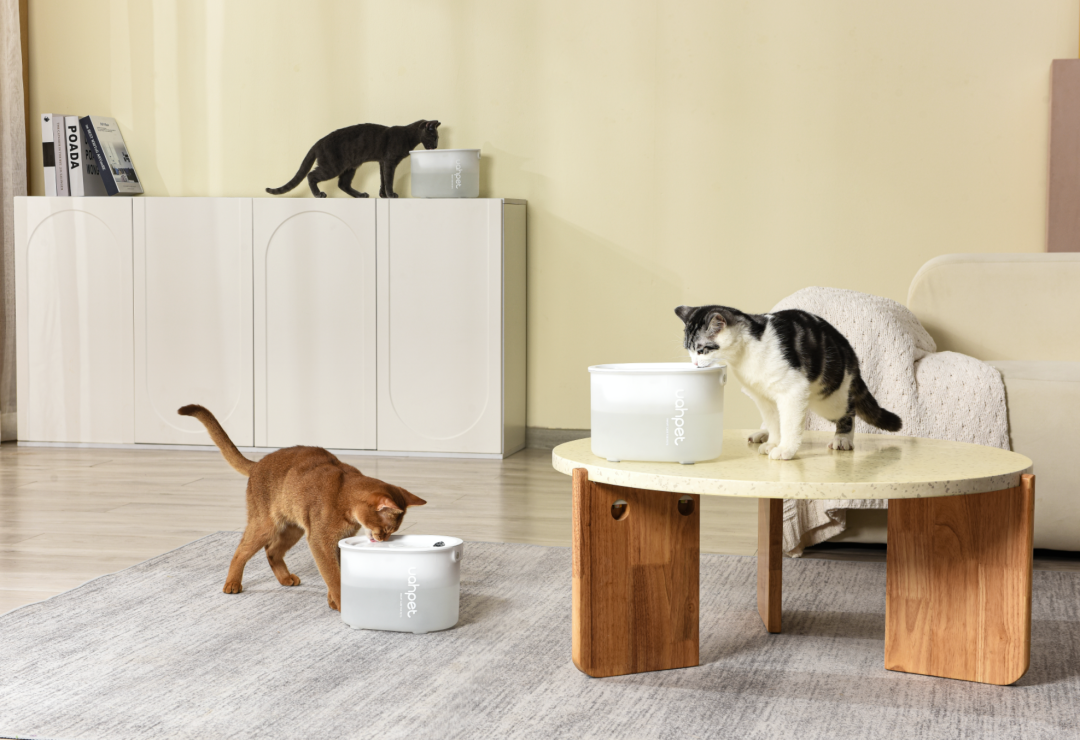
Engagement Giveaway: What new changes have you observed in consumer markets at home or abroad? We look forward to hearing your thoughts in the comments. By 17:00 on August 25, the three users with the most-liked comments will receive a wireless pet water fountain from Uah Technology; the three users with the most thoughtful comments will receive 200 RMB in Dedao app credit.

/ 01 / The US Consumer Market's Dilemma: Service Inflation and Labor Shortages
Before the pandemic, the US had maintained relatively low inflation for nearly three decades. Particularly between 2010 and 2020, American prices were relatively stable, especially in food, clothing, and consumer electronics. According to data from the Bureau of Labor Statistics, US CPI (Consumer Price Index) remained below 4% throughout this decade. In 2015, CPI even dropped to 0.7%.
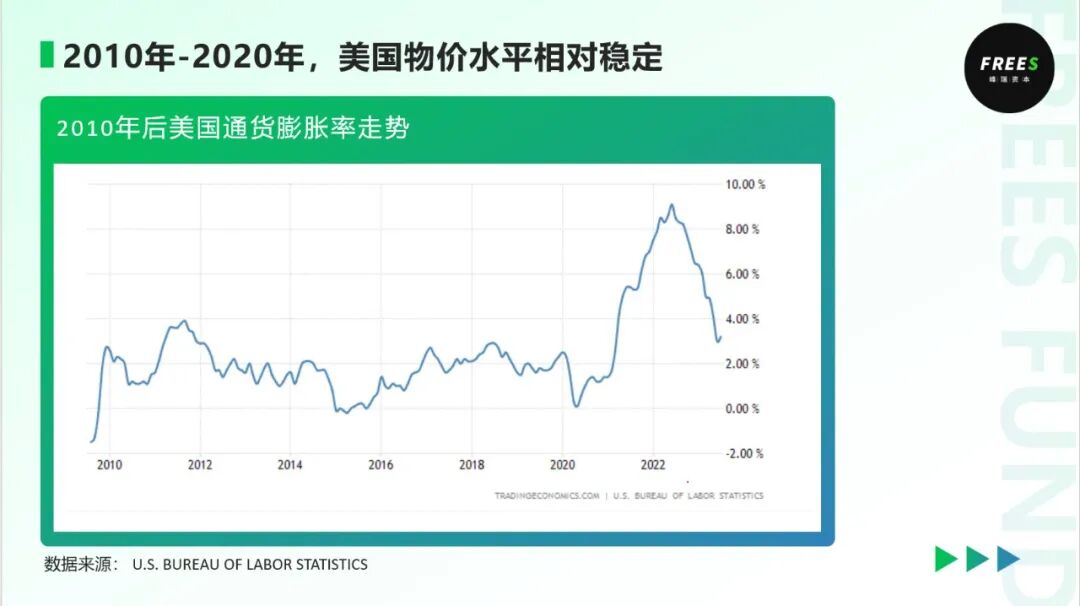
Behind this price stability lay America's cooperation with other countries. The US leveraged supply chains from China to import high-value goods, while using Latin America as a source of cheap labor and agricultural produce. Additionally, America held pricing power and voice in energy, and its shale oil and gas reserves saw reduced extraction costs through technological innovation. All of this helped the US maintain stable price levels for an extended period.
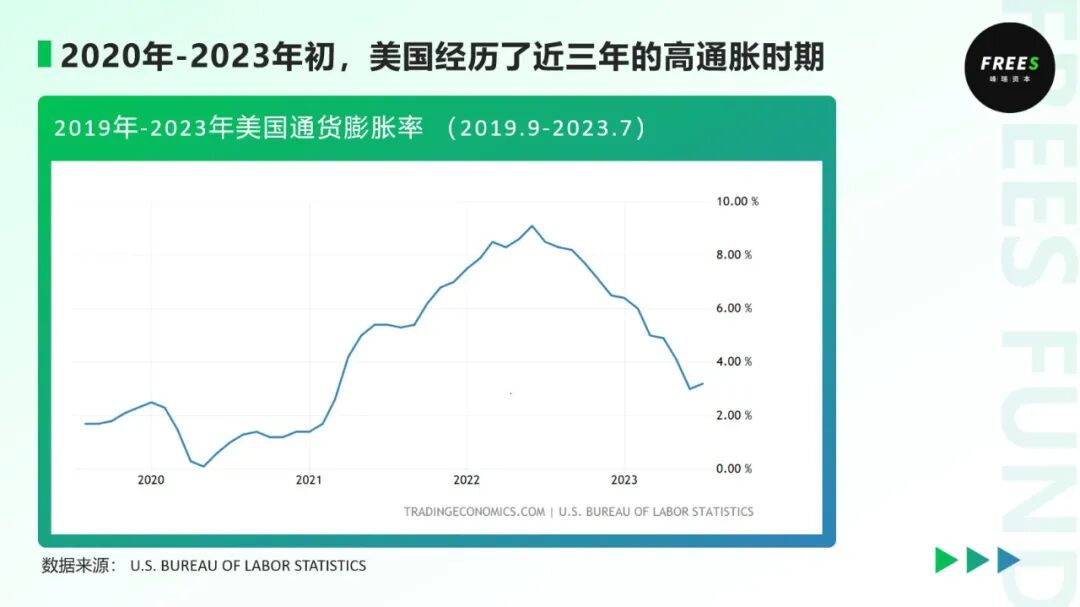
From 2020 to early 2023, however, the US experienced nearly three years of high inflation. In 2023, returning to the US after three years away, I thought I understood the inflation situation before arriving, but experiencing it firsthand still exceeded my expectations. Recently, though, US inflation has eased. According to The Wall Street Journal, US CPI rose 3% year-over-year in June 2023, far below the recent peak of 9.1% in June 2022 and the lowest level in over two years. In July 2023, US CPI ticked up slightly to 3.2%.
▎High Rent Increases
Rent carries the heaviest weight in inflation calculations, accounting for roughly one-third.
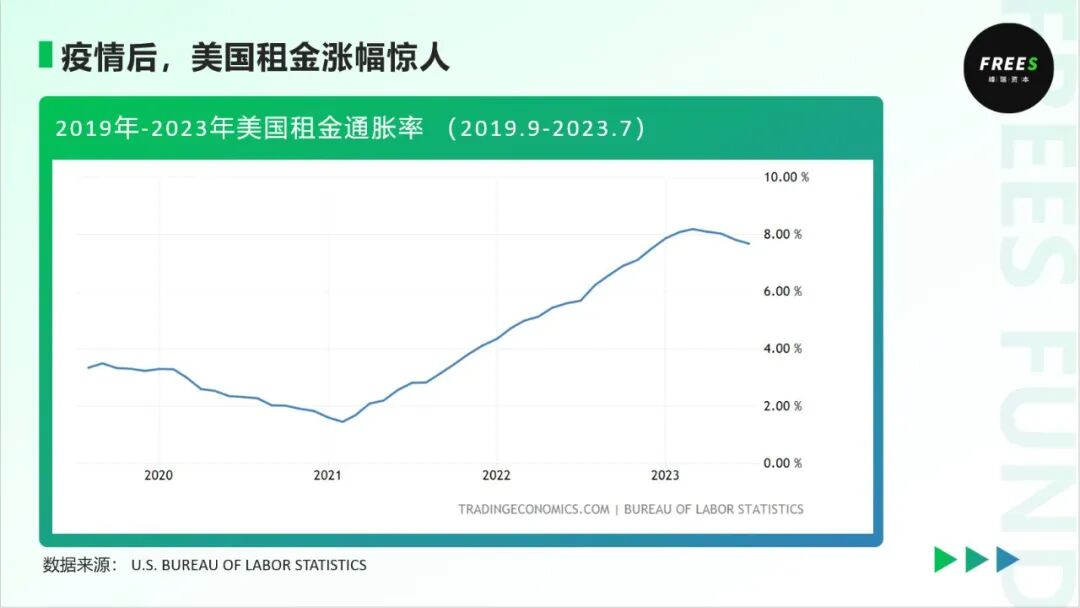
US rent inflation declined early in the pandemic before rising steadily, exceeding 8% in early 2023. According to Bloomberg, the median asking rent in the US reached $2,038 in July, just $16 below the record set in August 2022. Currently, overall housing cost inflation accounts for 90% of US CPI.
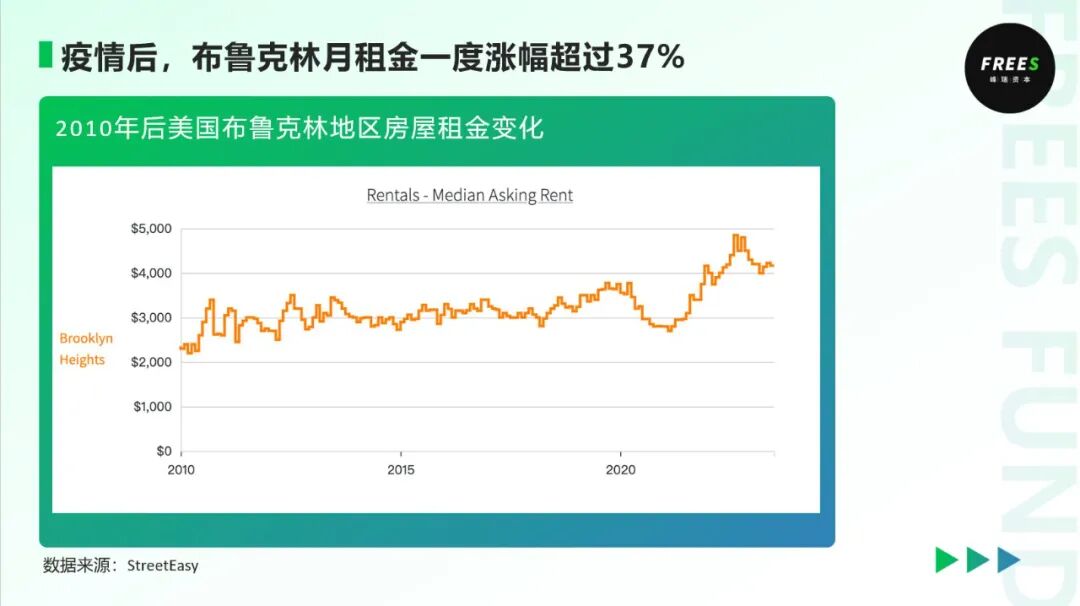
Take New York as an example. According to data from real estate information site StreetEasy, from March 2020 to September 2022, the median monthly rent in Brooklyn Heights soared from $3,526 to $4,850, an increase of over 37%. By July 2023, the median monthly rent in Brooklyn Heights had fallen back to $4,166.
▎Food Inflation Rose Then Fell
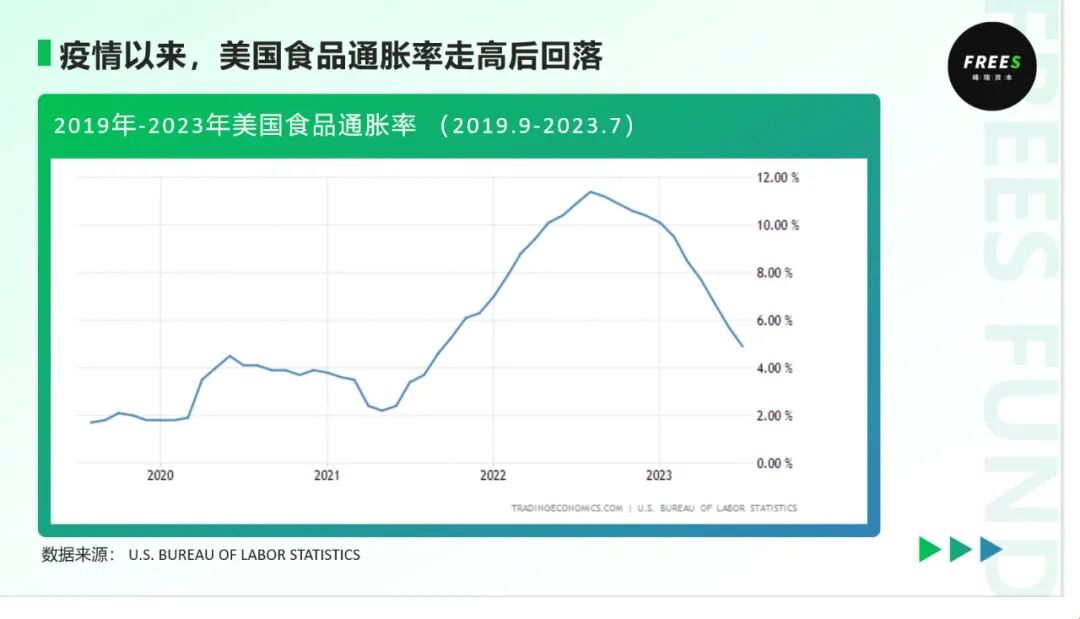
Mass-market food in the US was once known for being both good and cheap. During the pandemic, however, many items in consumer supermarkets saw sharp price increases. Food inflation directly raised living costs for ordinary residents. In 2022, US food inflation peaked at 12% before adjusting downward, falling below 6% by August 2023.
▎Energy Inflation's Rollercoaster Ride
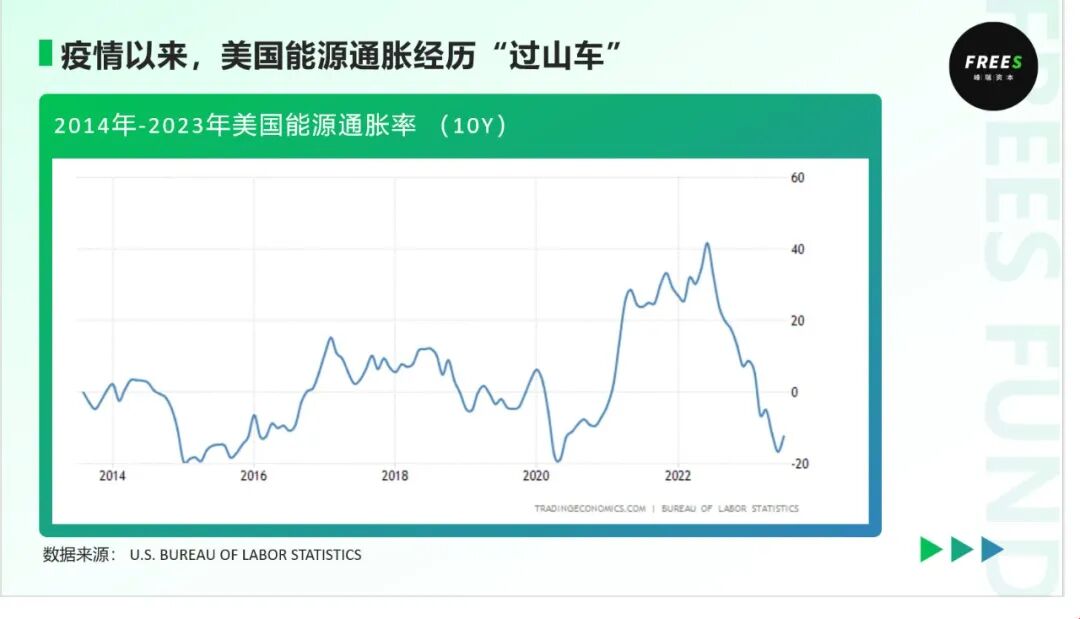
From 2020 to 2023, US energy inflation experienced a rollercoaster — climbing throughout 2020, peaking in 2022, then falling rapidly. Currently, US energy prices have largely been brought under control.
▎US Excess Savings and the Consumption Boom
During COVID-19, the US conducted multiple rounds of direct "monetary over-issuance" to consumers and businesses. According to Moody's, cumulative excess savings on the US household side reached approximately $2.6 trillion by the end of 2021. Over the past two and a half years, excess consumption drawn from this excess income has helped sustain this wave of prosperity in the US consumer market. Excess consumption means people are spending more than they did in comparable periods.
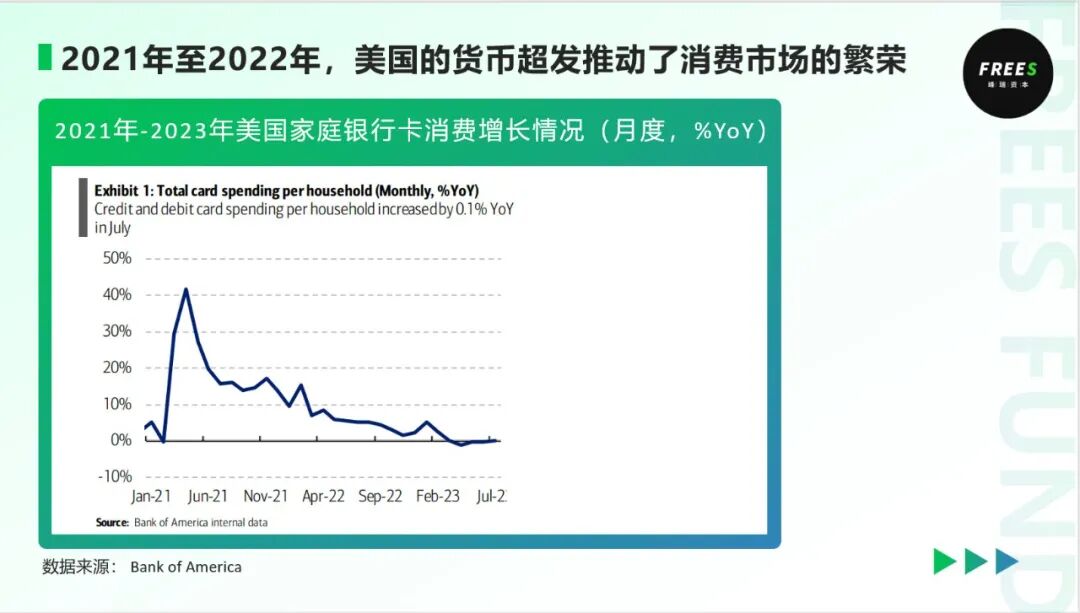
According to Bank of America data, from 2021 to 2022, month-over-month growth in total US household credit card spending was mostly positive, with a sudden 40% spike in the first half of 2021. Those two years also marked a period of rapid growth for cross-border e-commerce companies. But American households' excess savings are now largely depleted. In May 2023, data from the San Francisco Fed showed that total excess savings had fallen from $2.1 trillion in August 2021 to $500 billion. By June 2023, Fed research indicated that excess savings had been essentially exhausted. Additionally, the US Department of Education announced that COVID-19 student loan relief policies will end this year. Student loan interest will resume on September 1, with payments due starting in October — which will also impact overall US consumption.
▎Retail Sales: Volatility, Adjustment, Then Recovery
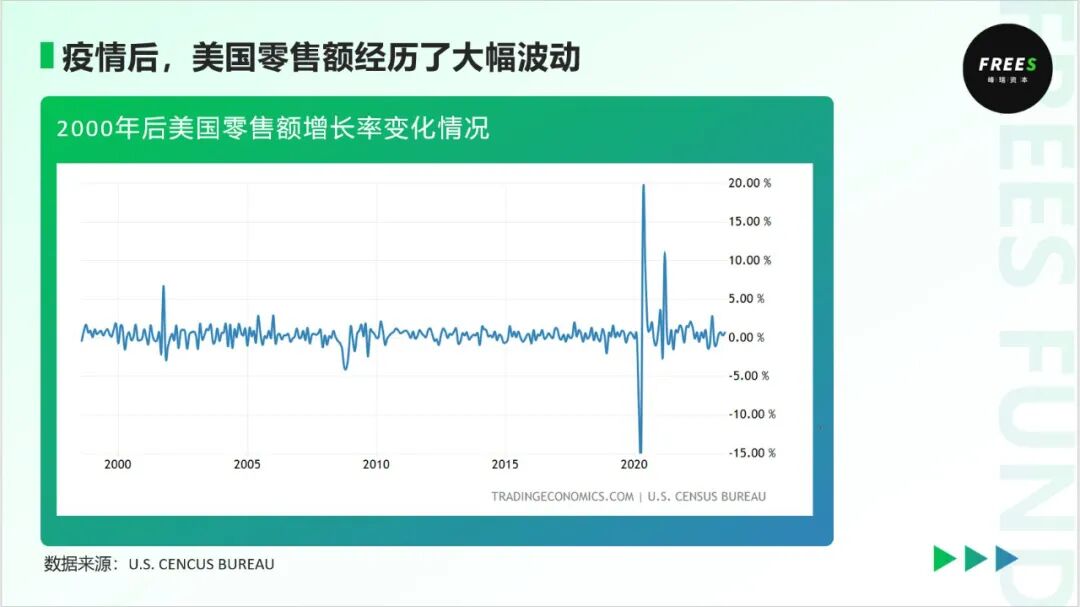
Post-pandemic, US retail sales growth experienced significant fluctuations. According to data from the US Census Bureau, the US saw month-over-month declines exceeding 15% during the pandemic, as well as surges above 10% and nearly 20%.
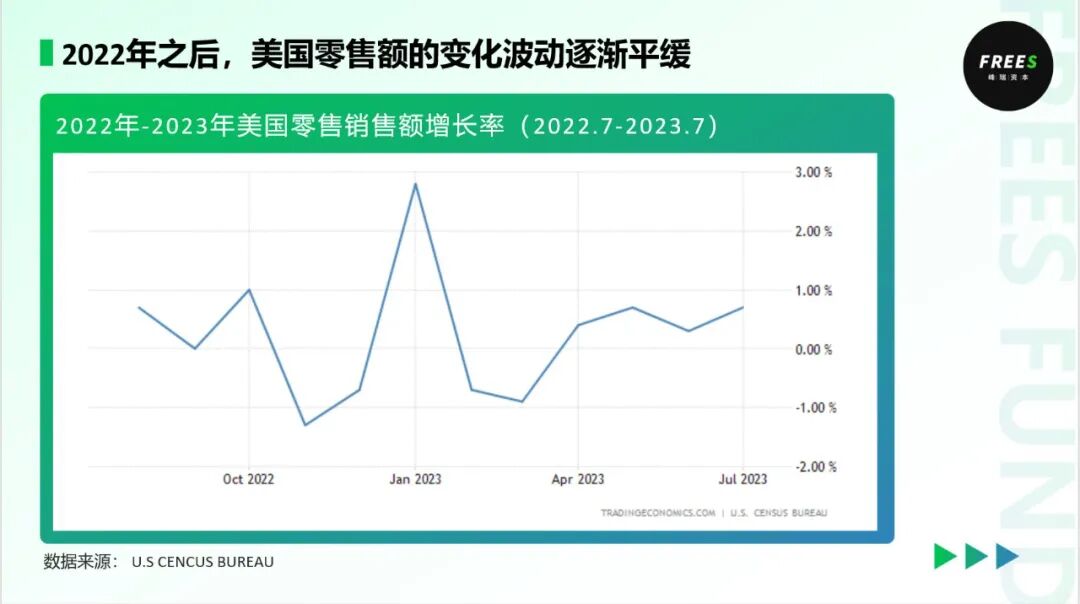
After 2022, volatility in US retail sales gradually subsided. In March 2023, retail sales fell 0.9% month-over-month, declining for a second consecutive month. From April to July, retail sales posted positive month-over-month growth. On August 15, a Commerce Department report noted that "consumers spent heavily on hobbies, sporting goods, and apparel, underscoring the resilience of the US economy despite the Fed's aggressive rate hikes to curb inflation."
▎US Labor Shortages Likely to Persist
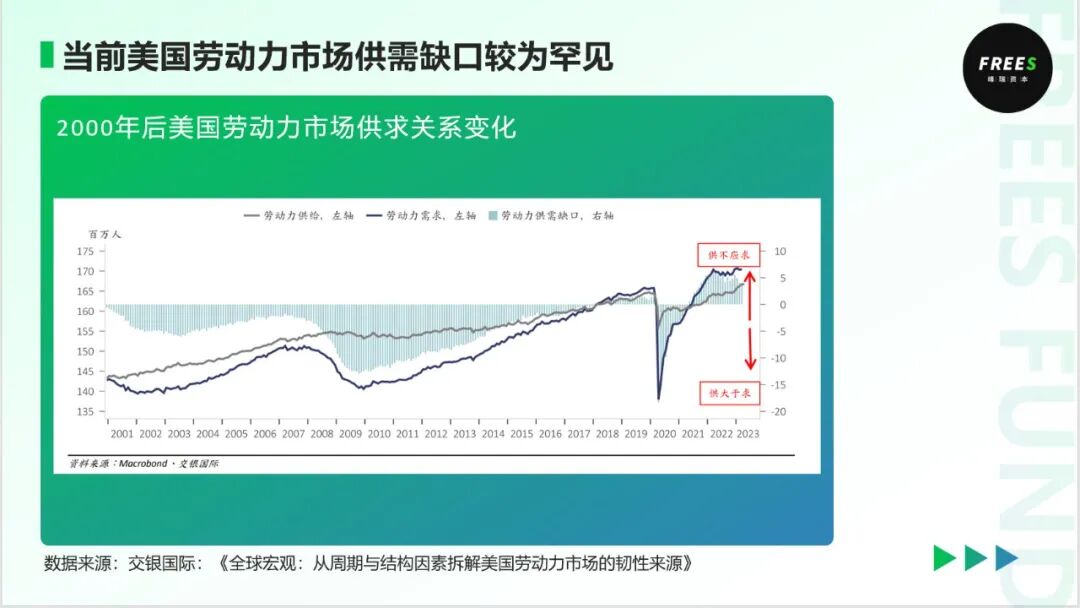
In the decade before COVID-19, the working-age population share in the US was already trending downward. Labor force participation was also under pressure. Compounded by the pandemic-era "Great Resignation," the US Department of Labor recorded 47 million voluntary quits in 2021. This was particularly pronounced in services, where large numbers of low- and middle-income workers quit to live on government subsidies. Low labor force participation was especially notable among workers aged 55 and above. Research shows that during the 2008 financial crisis, labor force participation among Americans 55+ rose 1.1%, whereas during the COVID "Great Resignation," it fell 1.9%. According to BOCOM International analysis, current US labor demand (employed workers + non-farm job openings) stands at roughly 170 million, while labor supply (civilian labor force) is about 166 million — a gap of approximately 4 million workers.
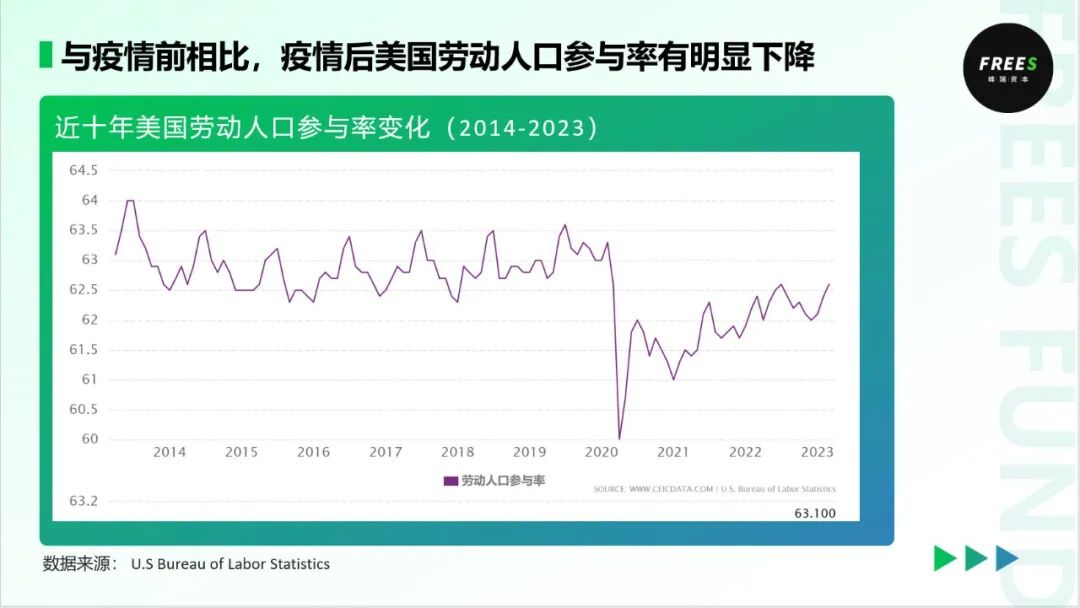
In coming years, the decline in labor force participation may accelerate further, particularly in service industries such as food service, hospitality, and logistics, which will continue facing labor shortages. In August 2023, due to recruitment difficulties from labor shortages, full-time UPS delivery drivers saw annual salaries rise to $170,000.
From an investment perspective, service robots and intelligent automation applications could become essential in the US market. Already, to cope with labor shortages and rising labor costs, the US restaurant industry has begun adopting automated production tools. Recently, Chipotle partnered with California robotics startup Vebu Labs to use robots for avocado processing.
▎Summary
The US economy experienced elevated post-pandemic inflation and entered a rate-hiking cycle in 2022. Throughout this cycle, the economy has shown surprising resilience. This resilience first manifested in consumption market prosperity driven by "excess savings," particularly the recovery of service consumption that began post-pandemic.
Looking at recent months, inflation has been temporarily contained, but the Fed and markets generally believe that if economic and employment data hold at current levels, inflation will remain elevated. Meanwhile, Europe — especially the UK — also faces inflation challenges.
In recent years, US unemployment has stayed near historic lows, and service sector labor supply will remain relatively tight for some time. This is one important reason why US inflation will be difficult to bring down significantly in the near term. Going forward, service inflation and labor shortages may persist together. From a startup and investment perspective, we can identify opportunities and challenges amid the normal and abnormal patterns of the US economy. On one hand, American households' excess savings are nearly exhausted; combined with a high interest rate environment, how long consumption-side resilience can last remains uncertain. On the other hand, US labor shortages may persist long-term. In service industries where "difficulty hiring" is especially acute, high labor costs will further push industries toward intelligent automation. Service robots and intelligent automation innovation may see broader market development opportunities.
Given inflation, labor shortages, depleted excess savings, and other issues, the current US macroeconomic picture remains unclear, with few structural sector-wide opportunities. We can pay closer attention to niche market opportunities. Below, I'll share insights on different categories and channels in the US consumer market, drawing on my firsthand observations from my US trip and my ongoing investment observations in consumer and cross-border e-commerce sectors.
Observations on the US Consumer Market: Innovation Is Hard, but Niche Opportunities Remain
▎Cross-Border E-Commerce Enters Red Ocean; Entrepreneurs Need Deeper Market Insight
Cross-border e-commerce has entered a classic red ocean. The US cross-border e-commerce market is large, but competition for existing share is fierce. On one hand, the US is the world's second-largest cross-border e-commerce market. According to Comscore, the US e-commerce market reached $1.09 trillion in 2022, up 20.54% year-over-year. On the other hand, under the combined pressures of tightening platform regulations, rising traffic and operating costs, and price competition, the market is undergoing consolidation.
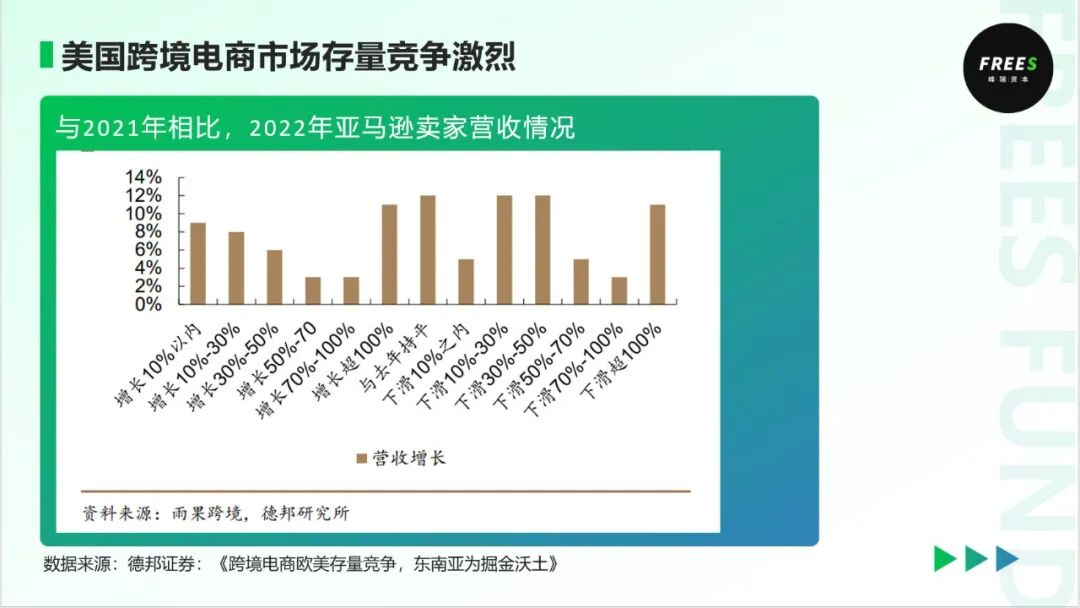
Around 2015, most cross-border e-commerce companies focused on apparel and home goods. Back then, whoever could first connect Chinese supply chains with overseas markets gained an edge. Today, niches like apparel and home goods are intensely competitive. In Shenzhen and Hangzhou, thousands of cross-border e-commerce teams have entered categories ranging from smart hardware to accessories and cosmetics. FreeS Fund portfolio companies like PatPat and Cider have become leaders in cross-border e-commerce. We're also watching newer niche directions, such as pet smart products, intelligent fitness hardware, and beauty and skincare.
The increasingly competitive market environment demands more from entrepreneurs: not just executing the cross-border e-commerce chain, but developing deeper insight into overseas consumers and understanding their real needs.
▎Offline Consumer Electronics Command Premium Pricing; Apple Dominates
During this US trip, we also observed offline channels. US offline retail is mature and ripe for Chinese brands to expand and cultivate deeper presence. But in mainstream offline channels specifically, relatively few Chinese brands are visible. Here "Chinese brands" means Brand from China, not Made in China. This stands in sharp contrast to the prosperity of Chinese cross-border e-commerce brands on online channels like Amazon.
In offline consumer electronics, Apple — the world's first company to surpass $3 trillion in market cap — dominates. We've also observed some Chinese brands actively laying groundwork in US offline. Shokz entered the US offline market early; its website shows coverage of over 2,000 offline channels. DJI has also established presence in major channels including Best Buy, Walmart, Sam's Club, Micro Center, and Apple Store.
▎Intelligent Fitness Grew Rapidly During Pandemic; Future Potential Remains
Among consumer electronics, we focused particularly on the intelligent fitness hardware niche. In offline channels like Best Buy, dedicated sections display intelligent fitness hardware.
From appearance, these products differ little from ordinary domestic spin bikes and treadmills. But from a functional innovation perspective, the US intelligent fitness market has seen considerable innovation: sensor-enabled posture correction, such as Peloton's smart rower and Tempo Studio's smart home gym; strength training hardware like Tonal; and comprehensive fitness system smart mirrors like Mirror (acquired by lululemon).
These intelligent fitness hardware brands grew rapidly during the pandemic, yet post-pandemic, the industry may again face the challenge of fitness scenarios shifting from home back to gyms. FreeS Fund is more interested in and optimistic about intelligent fitness directions spanning both home and traditional gym scenarios — using technology to upgrade fitness equipment and methods.
In 2022, FreeS invested in Speediance in China, a company focused on intelligent strength training. Speediance's key breakthrough was converting the physical weight of fitness equipment into digital weight. In traditional gyms, when people use barbells, they mainly interact and struggle with iron plates. With Speediance's products, users don't need to fight against iron plates — the motors in these products adaptively respond to human pulling force, adjusting resistance based on each person's strength level.

▲ Speediance's first product, the "GYM MONSTER." Image source: Speediance
Speediance's products don't need to be wall-mounted. They come with a freestanding frame, making them easy to store and requiring minimal space — a better fit for smaller home environments. For commercial gym settings, Speediance also offers a professional-grade B2B version of its digital strength training equipment, making its use cases more comprehensive.

▲ Image source: Speediance
▎Pet food innovation thrives in offline channels; smart hardware shows growth potential
In the broad pet smart products赛道, we see iteration opportunities in both China and overseas markets. In Europe and the US, the pet market is already mature, with pet ownership rates quite high. Much as before the pandemic, offline pet retail in the US remains dominated by industry giants like PetSmart and Petco, alongside newer vertical e-commerce platforms like Chewy. The US has the world's largest population of pet owners and the biggest pet stock, making it the largest existing pet market and potential upgrade market globally. But when it comes to category innovation, it's not a landscape where every segment is seeing major breakthroughs.
In pet food, there has been some functional product innovation originating in the US. For instance, pet foods now incorporate prebiotics and probiotics for digestive health; fiber and grain blends to aid digestion and weight control; and specific nutrients to improve coat condition.
However, in categories like pet supplies, domestic innovation has been limited. Offline shelves still mostly carry legacy-generation traditional pet products — the majority of which are manufactured and exported from China. Currently, smart pet products have low penetration in the US, and sales are primarily online, though they hold growth potential. Market research firm Packaged Facts noted in its 2021-2022 U.S. Pet Market Outlook study that smart product sales are growing at 2–3x the rate of other pet supplies, with smart wearables, smart pet beds, and smart water fountains among the hottest categories.
A study conducted by a Columbia University visiting scholar and a former Nielsen consumer insights staffer found that people worry using these smart products might diminish their emotional bond with their pets. Yet many users also feel that smart pet hardware improves efficiency. A 2020 Packaged Facts survey of pet owners who had purchased smart pet products found that 49% of dog owners and 48% of cat owners agreed that "technology saves me time caring for my pet."
Smart products are a category where China has considerable supply chain advantages. Moreover, China is one of the world's largest incremental growth markets for the pet industry. Chinese Gen Z and millennials are willing to experiment with pet smart hardware — smart water dispensers, smart litter boxes, and smart feeders, most of which were pioneered by Chinese teams.
The smart pet products赛道 could very well give rise to regional or even global brands. In 2022, we invested in pet smart hardware brand uah (有哈科技). During Double 11, uah's handheld pet dryer and "Delicious Bug" smart toy ranked #1 in Tmall's pet blower category and smart pet toy category, respectively.

▲ uah's "Delicious Bug" smart toy. Image source: uah
▎Beauty and skincare: continuous product innovation, plus major channel shifts
In recent years, the beauty and skincare space has seen both offline channel restructuring and considerable product innovation. On the channel front, Sephora is no longer the largest beauty and skincare retailer in the US. Upstart Ulta Beauty has become the go-to destination for young Americans buying beauty products.
Ulta Beauty offers a broader range of products and price points, covering well-known brands, budget-friendly options, and emerging innovators alike. This allows Ulta Beauty to capture consumers trading down to more affordable brands during economic weakness.
On the product side, beauty and skincare has seen numerous new experiments in recent years, with greater emphasis on technology integration and environmental sustainability.
For example, Droplette uses AI to analyze users' skin conditions and provide customized foundation; Nimble combines machine vision and AI to launch an at-home smart nail salon device; and FreeS Fund portfolio company JUNOCO has developed a "Clarifying Powder" cleanser that achieves a waterless formula and waterless production, reducing water dependency in manufacturing.
Overall, competition among new beauty brands is fierce. Breaking through requires strong product capabilities and substantial capital reserves.
▎Food: broad trade-down trend, with innovation concentrated in organic/natural channels
The US food industry is highly developed. But impacted by the pandemic and inflation, in this high-price environment, more consumers are gravitating toward budget-friendly mass-market food channels like Trader Joe's and Walmart. Innovation in these channels is limited — after all, with pressure on both costs and retail prices, there's little room for it.
In recent years, channels like Whole Foods, which emphasize organic, natural, and premium positioning, have become the testing ground for food and supplement industry innovation. Particularly in probiotics, alternative proteins, superfoods, and dietary supplements, a great deal of innovation has emerged. This reflects a segment of American consumers seeking to eat healthier and more nutritiously within the US's ultra-processed food environment — heavy on oil, sugar, and industrial processing.
▎Channels: TikTok's influence on young people is ubiquitous, making it a high-potential commercial channel
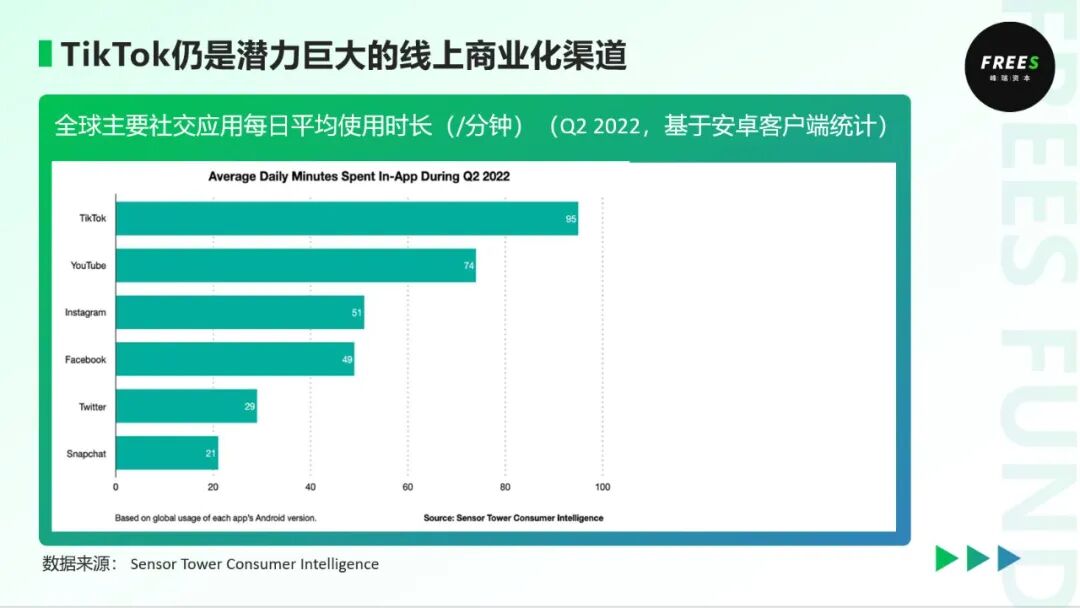
Finally, on media and channels: while multiple data points show TikTok has already become the platform with the highest per-capita time spent, being in the US really drives home how truly ubiquitous its influence is.
This is especially true for young people. American teenagers have essentially grown up inside TikTok's ecosystem. In restaurants and other public spaces across the US, you frequently overhear young people discussing TikTok — which creators they follow, what interesting videos they've seen, and so on.
According to a 2022 Pew Research Center survey, TikTok has risen to become the primary social media platform for US teenagers. Among surveyed Americans aged 13–17, 67% are TikTok users. For both brands and platforms, TikTok remains a commercial channel worth deeply cultivating to capture young people's attention.
**/ 03 / ** ** Reflections and Takeaways **
Reflections and Takeaways
From our observations, we've found that whether domestically or internationally, markets are demanding more and more from entrepreneurs. Ideally, you position yourself as a global brand from day one of founding. For founders, you need to understand both the domestic market and overseas demand.
Based on our observations of the US consumer market, we see the following opportunities:
- Cross-border e-commerce: The field is increasingly competitive for incumbents. New entrants need to think carefully about product positioning, look beyond hot赛道s like apparel and home goods to find more niche opportunities, and actively expand into new online and offline channels.
- Consumer electronics: US consumers overall have strong spending power. China has robust supply chain advantages, and a handful of smart hardware brands have already established deep presence in the US. Whether in fitness-focused smart hardware or pet smart products, there is room for further innovation.
- Beauty and skincare: This space also faces intense competition. In the US beauty market, brands are already "内卷-ing" on cutting-edge technologies like AI, machine vision, and 3D. And beauty retail channels themselves are evolving. To capture share in the US beauty market, you need to be a versatile player with no weak spots.
- Food: The coexistence of trade-down preferences and demand for natural, premium quality points the way for entrepreneurs — either achieve broad accessibility at affordable prices, or genuinely deliver on quality and health.
By comparison, China remains fertile ground for consumer entrepreneurship. You have considerable forces backing you: a vast market, powerful supply chains, abundant talent, and fast-growing channels like Douyin/TikTok. Whether you're targeting the domestic market or going global, you can leverage this infrastructure to your advantage.
Whether in pet products, fitness, beauty and skincare, or food and beverage, FreeS Fund has been continuously挖掘ing innovative brands that use new technologies to improve industry efficiency and deliver better user experiences. We look forward to walking alongside more outstanding consumer entrepreneurs and discovering more innovation opportunities together.
** Reader Giveaway ** What new changes have you observed in consumer markets at home or abroad? We look forward to hearing your thoughts in the comments. By 5:00 PM on August 25, the 3 commenters with the most likes will receive a wireless pet water fountain from uah; the 3 most thoughtful commenters will receive a 200 RMB credit for Dedao (得到) app.

Recap of FreeS Fund's 5th Open Day — Looking Forward to More Gatherings Ahead
How to Find Fresh Inspiration for Consumer Brands from Chinese Aesthetics? | FreeS Fund Dialogue
Star the FreeS Fund WeChat Official Account for timely business insights delivered to your inbox.