AI Can Help You Work Out Online, Too — Beyond Chat and Art | A FreeS Fund Conversation

Getting started is hard, and sticking with it is even harder — but is working out really against human nature?
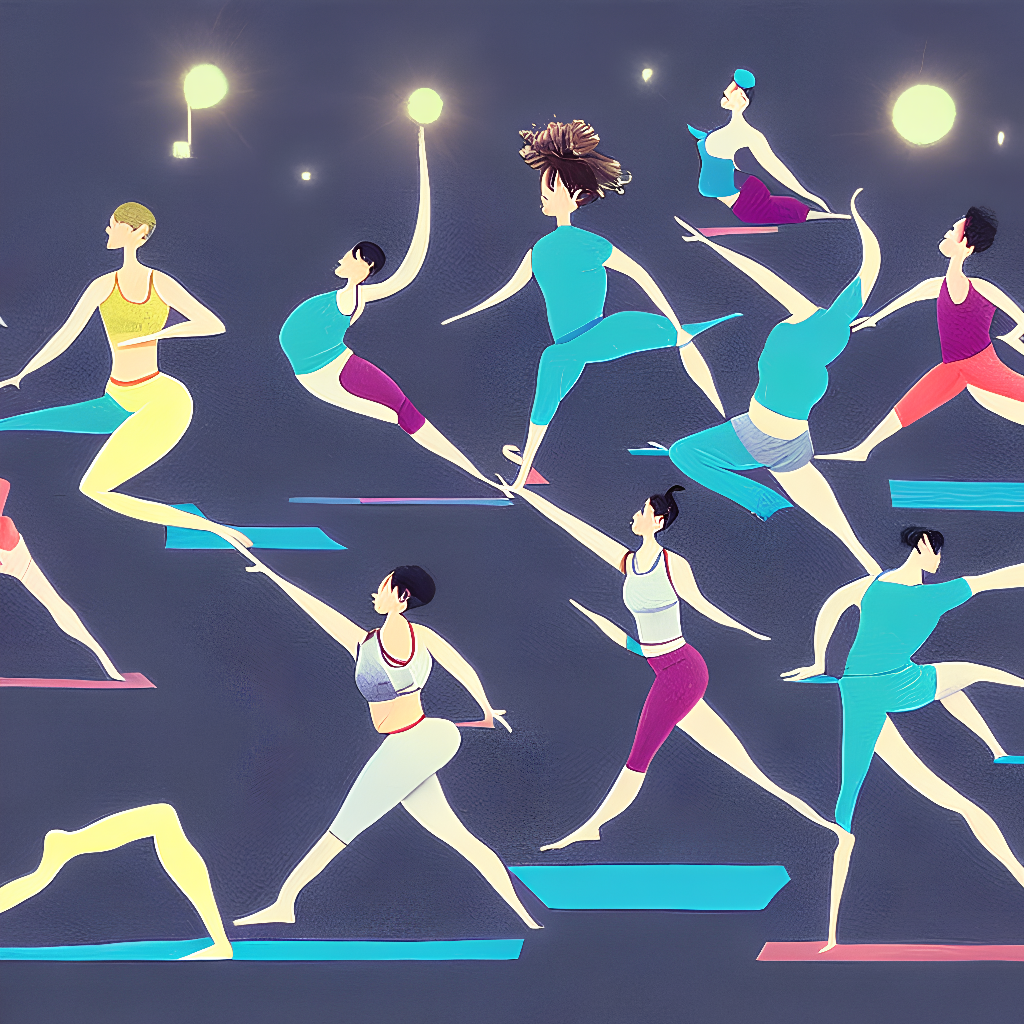 ▲ We asked AI to generate an image on the theme of "online fitness"
Image source: PaddlePaddle Wenxin Yige Spring has arrived as promised. We can finally stretch our bodies, shake off the winter fatigue, and go running, do yoga, or play frisbee.
But for most people, the chain from getting the idea to actually moving can be quite long. While exercise releases dopamine and endorphins, and the exhilaration they bring is real and tangible, the difficulty of getting started is equally real.
Online fitness might offer a new solution for your exercise life. When you feel like working out, just clear a space where you can move around, open your phone, choose the module you want to train, and have a real coach or even an AI assistant online help you correct your form. But questions follow: How do you pick the right service for you? Can online fitness actually work? Can the social atmosphere of offline fitness be recreated online?
We've invited Alex Li, founder and CEO of BodyPark, an AI-powered sports tech company, to chat with two sports-loving investors from FreeS Fund — Pengqi Liu and Yingzhu Jiao — about interesting topics in the health and fitness space.
Alex graduated from Tsinghua University and holds an MBA from Harvard Business School. Before founding BodyPark, he was an early founding executive and VP of Product at Mobvoi, an AI unicorn. BodyPark combines key elements like "AI algorithms + real personal trainers + gamification" to launch "AI + human" online personal training sessions. In September 2022, BodyPark completed its Pre-A round led by FreeS Fund.
Pengqi Liu is an Executive Director at FreeS Fund. He holds a bachelor's degree in Electronic Engineering from Tsinghua University and a master's in Computer Science from Carnegie Mellon University. Before joining FreeS Fund, he worked as a software engineer at Microsoft headquarters, responsible for search advertising algorithm R&D. He loves triathlons (swimming, cycling, running), rock climbing, and also plays flag football, basketball, badminton, and skis... He says: "People who love sports are always seeking higher and harder challenges."
Yingzhu Jiao is an early-stage project lead at FreeS Fund. She graduated from the University of Cambridge with a degree in Real Estate Finance. She focuses on investment opportunities in new consumer brands, cross-border, and the intersection of consumer goods with technology and biotechnology. She finds joy in various sports, especially running and road cycling, having once ridden over 247 kilometers in a single session.
Topics they discussed include but are not limited to:
- How did niche sports like frisbee, cycling, and rock climbing become popular? Can niche sports be a good business?
- Exercise feels great, but getting started is hard and sticking with it is harder — is exercise against human nature or aligned with it?
- How do you find entrepreneurial opportunities in the fitness track?
- "If you didn't record it on your watch, it didn't count." What does the datafication of exercise mean for users and companies?
- How do you create an immersive fitness atmosphere online? What role does an AI assistant play?
- Why is it said that "in modern society, exercise is an elective, but for primitive humans it was mandatory"?
The full audio of this conversation is now available. Head to the Xiaoyuzhou app or Apple Podcasts and search for "High Energy" to listen. Hope it brings some inspiration. It's spring now — whether you choose online or offline, get moving~

Reader Perks Welcome to share your thoughts on exercise in the comments — what sports have you tried, which is your favorite, what have you gained from sports...
The user with the most liked comment will receive a sports gift package from BodyPark (including 2 online personal training sessions + phone stand + fisheye lens + resistance band).

The 5 users with the most heartfelt comments will receive Exercised, written by Harvard University evolutionary biologist Daniel Lieberman.

All FreeS Fund readers can click the mini-program below to claim 1 free BodyPark online fitness class.
01
Why Did Niche Sports Become Popular?
Yingzhu Jiao: Our guests for this conversation are Alex Li, founder and CEO of BodyPark, and Pengqi Liu, an investor on FreeS Fund's tech team. Both are good friends of mine and passionate about sports.
Pengqi Liu: When I was helping Jiao Jiao evaluate the BodyPark project, I tried their product immediately and was deeply impressed.
Alex Li: Let me introduce BodyPark. We're an AI-powered fitness tech company. Our main product uses artificial intelligence to replicate the offline personal training experience online. As long as you have a yoga mat and a 2x2 meter space, turn on your camera, and you can enjoy professional, engaging online personal training sessions.
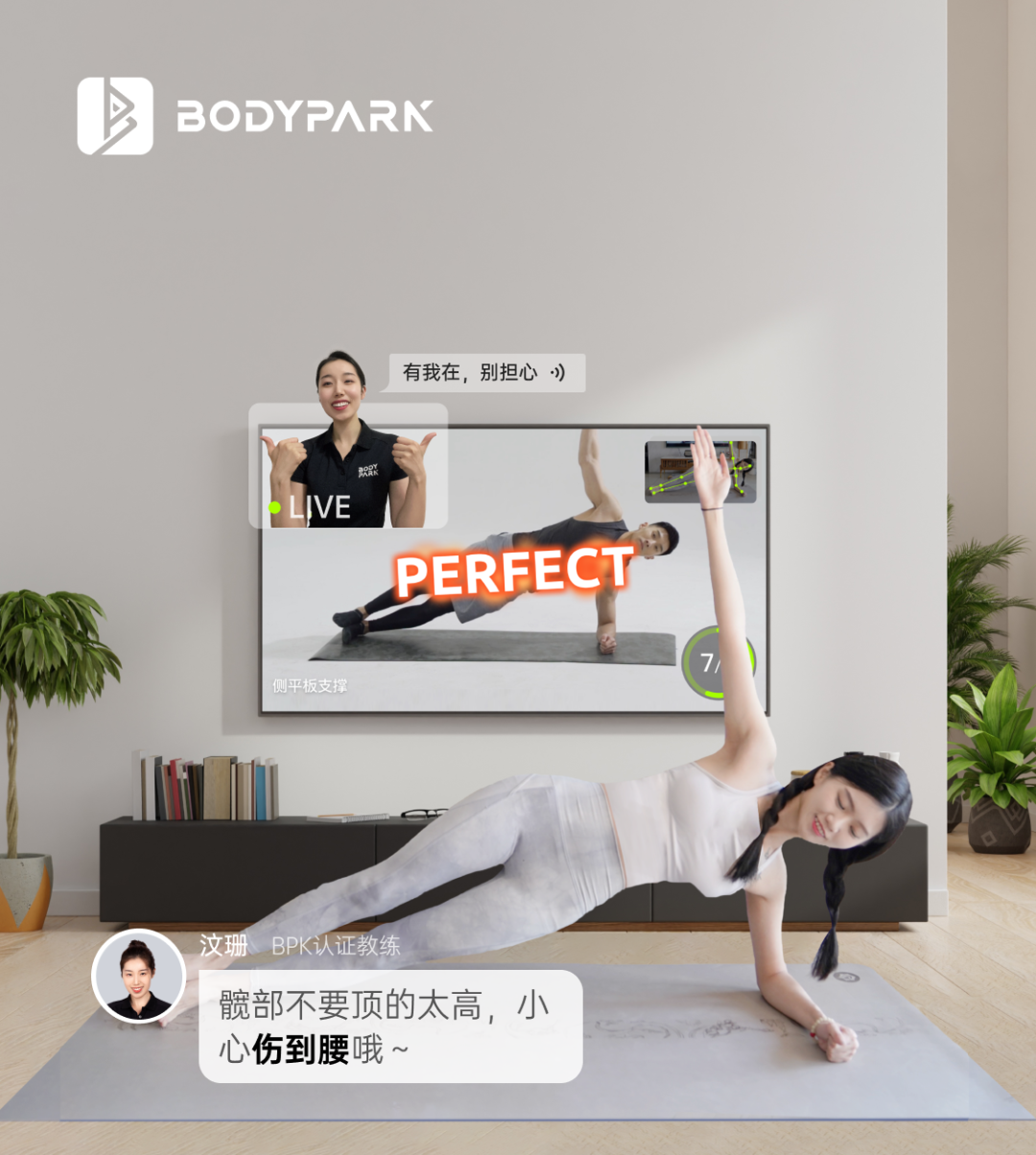 ▲ BodyPark launched "AI + human" online personal training sessions. Image source: BodyPark
Yingzhu Jiao: I noticed something both of you have in common on WeChat Moments — your posts are either about work or fitness. Pengqi, what sports are you into lately?
Pengqi Liu: I'm someone with broad interests. I believe in Work Hard, Play Hard. Last year I spent considerable time on rock climbing and triathlons. I started climbing in May 2020 after the pandemic began. As for triathlons, it started with a running obsession in early 2021, then getting into road cycling by year-end. In February 2022, I learned about a triathlon in Jinhai Lake, Pinggu, Beijing — 1.5km swim, 40km bike, plus 10km run. I'd also trained in swimming for several years as a child, so I had some foundation in all three. I started training and competing, and got increasingly hooked.
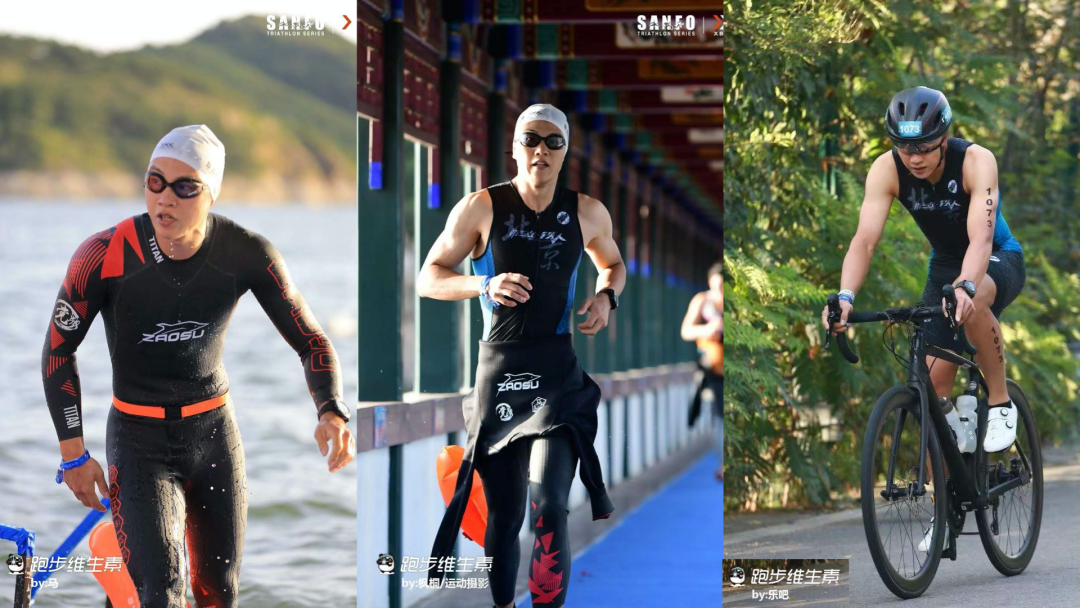 ▲ FreeS Fund investor Pengqi Liu participating in a triathlon.
Image source: Running Vitamin Besides these two, I occasionally go hiking or trail running, and ski when I get the chance in winter.
Yingzhu Jiao: Have you loved sports since you were young?
Pengqi Liu: I was always good at sports as a kid. I liked swimming when I was little, then track and basketball in elementary school. In middle school, I happened to play flag football for a while. Unexpectedly, in 2022, flag football suddenly broke through in China and became hugely popular — another niche sport that blew up after frisbee.
In college, academics were extremely demanding, and sports became a smaller part of my life. Then I worked in the US for many years. After returning to China to start a business in 2015, for a long time my focus was almost entirely on work, with very little time for exercise. Then once, during a physical exam, the doctor said, "You have moderate fatty liver." That made me take health seriously and try various ways to lose weight. I used the fitness app Keep, went to SuperMonkey gyms, and even used Ring Fit during the pandemic — but it was always on-again, off-again. It wasn't until I started climbing and running after the pandemic that I entered a new state.
Yingzhu Jiao: Alex, when did you get into sports?
Alex Li: Middle school. Back then, anime like Captain Tsubasa and Slam Dunk were huge, and I got obsessed with soccer and basketball. Once playing soccer, I even got my front tooth kicked out, haha. I studied automotive engineering at Tsinghua. There's a saying: "No sports, no Tsinghua." The school had a strong atmosphere for basketball, soccer, and marathons. I even won a marathon championship. During school, I didn't have a clear concept of "fitness" — sports were just about having fun, though team honor was also a major motivator. After starting work and my own company, for me, exercise became about health. I take BodyPark's "AI + human" online personal training sessions 2-3 times a week, and also enjoy running. I'm still not really part of the weightlifting crowd, but I deeply enjoy the dopamine rush during exercise. Even when busy, I stick to weekly workouts.
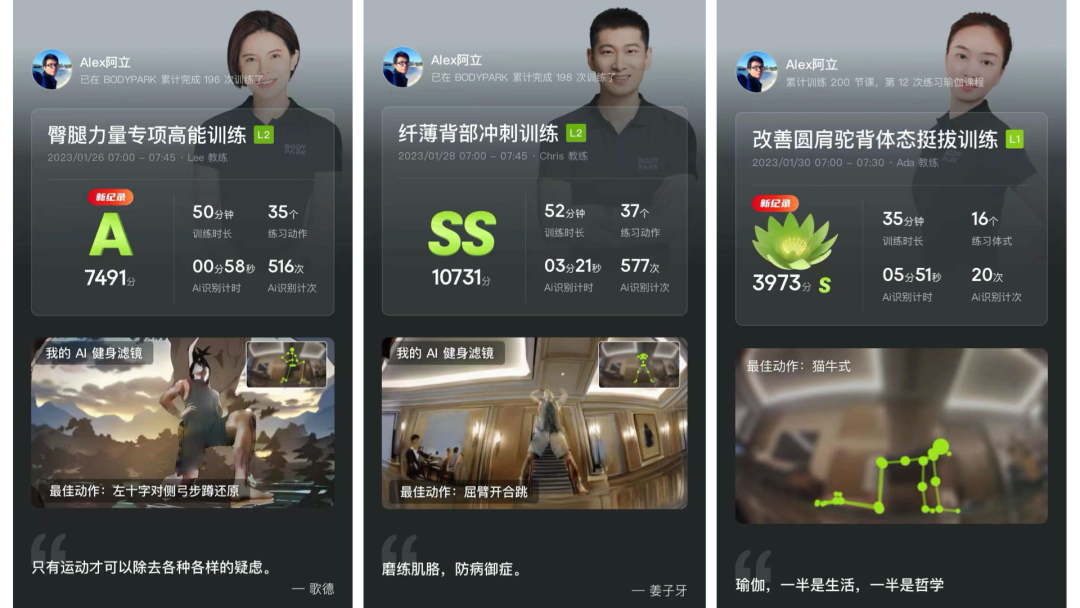 ▲ BodyPark founder and CEO Alex Li checking in for an "AI + human" online personal training session. Image source: BodyPark
The first time I seriously went to a gym was during my MBA in the US, when I was almost 30 — a bit late to fall in love with exercise, in retrospect. In American MBA programs, classmates of all races and skin colors generally had good physiques. This came partly from their sports culture, partly from their gym culture. When a country's economy reaches a certain stage, demand for beauty and health rises dramatically. For Gen Z and post-00s, whether actively or passively, they've basically had awareness of exercise and fitness since their school days.
Yingzhu Jiao: Indeed, more and more young people in China are getting into fitness. Cycling, frisbee, land surfing — these niche sports appeared abroad long ago but have become popular in China in recent years. Why is that?
Pengqi Liu: As Alex mentioned, when social and economic development reaches a certain stage, people's attitudes toward exercise and fitness shift.
Alex: Previously, when people talked about fitness, they associated it with health or bodybuilding — you had to build muscle, there was a very strong sense of purpose. If you're only working out for health but forcing yourself to build muscle, that's somewhat against human nature. Now people care more about the experience. They want to look better, feel better, have more fun, post better photos on social media, make more friends. These physiological pleasures drive greater participation in niche sports like frisbee. Of course, the pandemic also pushed people outdoors.
I've attended several frisbee events. It's technically a sport, but more often it's a social medium. On weekends, people find a nice park, young and vibrant people play frisbee together, chat, make new friends. The barrier to entry is low — easy for both men and women to pick up — so it gradually evolves from a small-circle hobby into a form of social currency. It's a lifestyle that lets young people expand their social circles.
Yingzhu Jiao: Sports like frisbee have low barriers and strong social attributes, so they might see explosive but phase-driven growth. But how many people stick with them? Are niche sports actually a good business?
Pengqi Liu: That depends on their future growth potential. On one hand, you look at participation rates and penetration in developed countries. On the other, you consider China's specific context — whether it's an Olympic sport, for instance. Once something makes the Olympics, whether through national awareness or participation numbers, the market grows rapidly.
Take rock climbing, skateboarding, and street dance. They all sounded niche, but after becoming new events at the Tokyo Olympics, suddenly you saw many more people around you doing them. Related venues, apparel, and equipment all developed quickly.
Beyond market size, your voice in the industry matters enormously. Industry resources are limited. First movers and companies that control core supply chains will have significant room to maneuver.
Alex: From a consumer perspective, niche sports enrich the fitness landscape — a hundred flowers blooming, which is great. If you have venue resources, community resources, and market resources to extract commercial value, frisbee might be a decent business.
But from an entrepreneur's standpoint, I wouldn't choose an overly niche sport. A good business needs scalable market size and sticky core users. For most niche sports, people remain at the experience level — very few play daily. For me, rock climbing is genuinely interesting enough to get hooked on long-term; skateboarding never reached that point.
When someone wants to exercise, the sport they love and stick with long-term is more of a necessity, a more foundational product — like rice, something you eat every day. But they also want novelty, to try niche sports like frisbee or triathlon.
So from a demand perspective, niche sports will produce periodic viral hits each year, but mass fitness is a longer-term, more certain growth track.
**/ 02 / **
How to Find Entrepreneurial Opportunities in the Fitness Track?
Yingzhu Jiao: Alex, how did you first come up with the idea to start BodyPark?
Alex: In the early days, we found that people had very different views on fitness products. Many believed that to commercialize well and deliver good user experience, you had to do offline fitness with personal trainers. When it came to online, people assumed it meant free tools, low prices, difficulty profiting. Yet for consumers, offline personal training cost thousands or tens of thousands, and was hard to sustain — they were often caught between a rock and a hard place.
Many investors and fitness industry professionals felt that "fitness is against human nature, few people can persist long-term, retention is poor. Therefore fitness as a business has low commercial potential and is hard to fund."
Our founding mission with BodyPark was to use technology to solve fitness's two major pain points: difficulty starting, and difficulty persisting. (Welcome to read BodyPark: 2023 Is Here, Some Words for You)
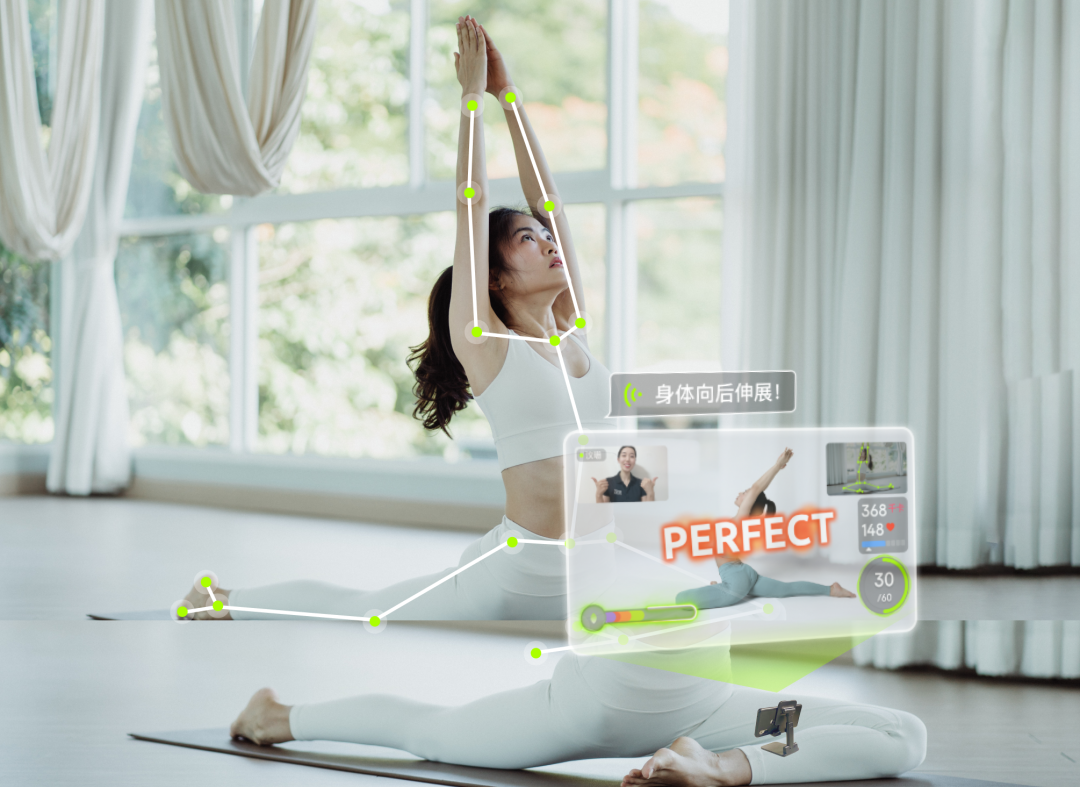 ▲ BodyPark's self-developed AI big data algorithm engine can accurately capture and recognize over 140 human body key points.
Image source: BodyPark
Look closely and you'll find many people enjoy the dopamine from running and lifting weights, finding joy in fitness and persisting. Dig deeper and you'll discover fitness itself isn't against human nature — what's against human nature is starting fitness, and persisting with fitness. Essentially you need to accept the discomfort of starting to exercise, but only a minority can do this. We hoped to find different entry points, using differentiated approaches to give consumers a new solution.
Pengqi Liu: Harvard University evolutionary biologist Daniel Lieberman wrote a book called Exercised. It contains many interesting points. I can summarize it in two sentences: exercise is against human nature, but movement is not.
In principle, most people would rather lie down than sit, and avoid expending energy whenever possible. From an evolutionary perspective, this is because humans needed to conserve energy for survival, reproduction, and raising offspring — it's genetically determined. Genes are selfish; their purpose is self-propagation. Beyond that, don't move if you don't have to.
Human evolution spans roughly 6 million years, but our direct ancestors, Homo sapiens, emerged only about 200,000 years ago. By contrast, the shift from hunting-gathering to agriculture happened "merely" some 10,000 years ago, and the transition from agriculture to industrial modernity only a few hundred years ago.
Today, technology is advanced. We have better medical care, richer entertainment, and an overloaded information environment — our daily information intake may exceed what ancient people received in their entire lives. Human living environments have transformed dramatically, yet our bodies are essentially no different from those of Homo sapiens 10,000 years ago.
In the past, humans needed substantial physical labor for survival — finding food, caring for children. Now people solve basic needs with minimal effort: food delivery for meals, brain-only work at the office, staying home for entire months.
So there's a mismatch between our bodies and our environment. Reduced physical activity clearly degrades physical fitness. Obesity, diabetes, and hypertension were rare among hunter-gatherer groups; most deaths came from infectious diseases and violent conflict. Therefore experts and doctors advise that for better health, people need additional physical activity to address this mismatch. This health-oriented, passive exercise is unquestionably against human nature.
So why isn't movement against human nature? Earlier I mentioned genes are selfish, but they're also clever. They know to provide positive incentives and stimulation for necessary daily physical activities — essentially making you feel good and happy.
Some are physiological incentives: dopamine that makes you crave success, endorphins and endocannabinoids released after prolonged exercise, and the tension and thrill from high-speed or extreme sports like skiing and cycling. There are also social incentives that appeal to our desires for beauty, showing off, making friends, and the sense of achievement from victory.
Take running: the motivation is pursuing physiological dopamine and endorphins, plus social and spiritual satisfaction. This internal, self-driven motivation makes you exercise unconsciously. From this perspective, movement is not against human nature.
**/ 03 / **
How to Build Products That Align With Human Nature?
Yingzhu Jiao: Whether something aligns with or against human nature affects whether people can persist. How does BodyPark build products that align with human nature?
Alex: In modern society, exercise and fitness are electives — unrelated to survival. But for primitive humans, they were required courses. Hunting provided sufficient exercise; those with underdeveloped athletic ability were eliminated by the tribe.
B.J. Fogg, the "father of behavior design," proposed the behavioral model formula: B=MAP. The three factors influencing behavior are: you need Motivation, Ability, and sufficient Prompts.
In modern society, people are busy with work, lacking drive for fitness, and face many obstacles. Going to a physical gym requires considering scheduling and commute time — hard to sustain long-term. But working out at home alone makes positive feedback difficult to obtain.
So how do we align with human nature to create mass fitness products with low starting barriers and continuous positive feedback?
We need to understand why exercise makes people happy. Humans naturally need attention and respect. Exercise has strong gaming and social-competitive attributes that can bring attention and friendship.
Recently a friend tried BodyPark's classes. She felt our classes "arranged everything clearly, no need to worry — this matters." She's a mother and internet industry professional with no time for gyms; her previous membership went unused. Now at home, with just 30 minutes, she can open her phone and follow professional coaches. After each movement, the AI gives immediate feedback. The process feels like gaming — not mentally taxing — with real-time feedback of perfect / good / OK, and ultimately a ranked leaderboard.
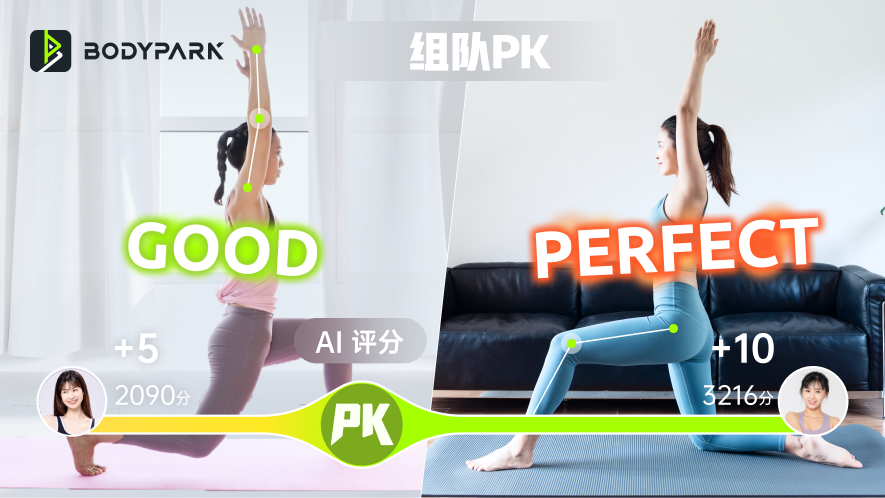 ▲ Users can form teams online for PK competitions through BodyPark.
Image source: BodyPark
From a product manager's sensitivity: if a product "pushes" users, stimulates them, creates too much friction, ultimately only a small fraction persists. Online there are recorded classes, tutorials, influencer coaches leading workouts — but many people still can't stick with online classes, and may blame themselves: "I'm just not disciplined enough."
I deeply hope to use technology to help more users fall in love with fitness and persist. Exercise doesn't need to be so grueling. People can choose a smarter way to achieve a better self.
Whether hiring a personal trainer or using BodyPark's online live personal training, you're purchasing motivation services, conserving energy for more important matters. And this online product costs much less than offline — why not?
To summarize, products that align with human nature: first, need to be fun, with gamified mechanics, reasonable challenge difficulty, and timely feedback. Second, build in social attributes. Third, provide guidance that arranges things for users and reduces friction.
Yingzhu Jiao: In the half-hour before my fitness class, my feelings are very mixed. On one hand I look forward to it; on the other I debate whether I can skip out. For BodyPark, how does product design help users reduce this psychological friction?
Alex Li: Let's shift perspectives. You cycle outdoors every week — what keeps you going?
Yingzhu Jiao: Honestly, my biggest motivation for cycling is weight loss.
Alex Li: Do you enjoy the actual process of cycling outdoors?
Yingzhu Jiao: Yes. You see so much scenery while riding — it's mentally and physically refreshing, which is great positive reinforcement. Plus, cycling burns a ton of calories, so afterward I can eat well without guilt. The whole process is enjoyable; I'm completely hooked on this sport.
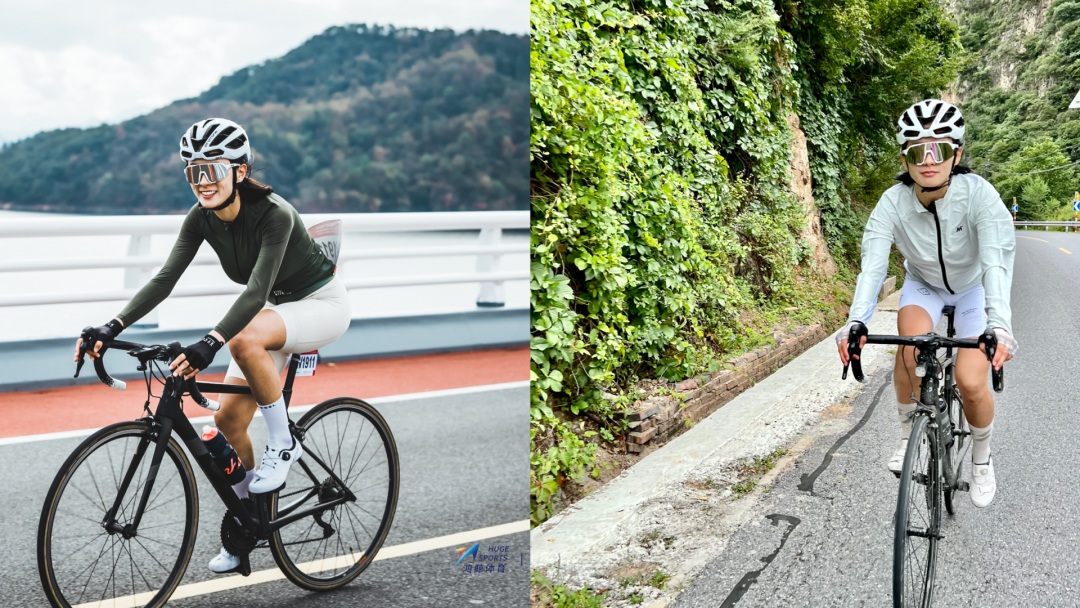 ▲ FreeS Fund investor Yingzhu Jiao cycling outdoors.
Image source: Hongjing Sports
Alex Li: You fully experience the joy and positive feedback that cycling brings, which is why you've stuck with it. Before starting BodyPark, we studied most fitness products on the market. Let me first explain the difference between online and offline fitness. In our view, online solutions have lower activation friction, and their scalability potential is generally better than offline.
The first friction we needed to solve was the difficulty of getting started — making it so users could move when they felt like moving. Online or at-home fitness doesn't disrupt users' daily routines. Any offline solution necessarily changes commuting patterns, which creates resistance to working out.
With the broad online direction set, we still needed to choose a specific niche. Among existing online fitness products, recorded classes and live-streamed fitness had the widest user bases.
But recorded classes lack interactivity; they require extreme self-discipline to stick with. Live-streamed fitness has done quite well in recent years. Liu Genghong's livestream reached monthly active users in the tens of millions, with daily active users in the millions. The atmosphere in livestreams is better than recorded classes, but it's still one-way output — the instructor mainly demonstrates, unable to give specific feedback to individual students.
We wanted to push online fitness one step further and achieve two-way interaction. That's how BodyPark came about.
Once you have two-way interaction, both users and instructors feel stronger immersion and motivation. Because everyone can see actual, specific people and get responses. Timely feedback is crucial — it aligns with human nature. Every movement you make, every detail, the instructor can see and will guide you.
**/ 04 / ** What Does Datafication of the Workout Process Mean for Users and Businesses?
Pengqi Liu: I've noticed something while exercising: once people find a sport that suits them, they enter a positive feedback loop, pursuing higher, faster, stronger — competing with others and themselves.
People who love sports constantly seek harder challenges. Many say exercise is about joy, but competitiveness still plays a huge role. At first you exercise mainly for health, but as you persist, you may start pursuing improved athletic performance and capability. Some even overtrain and get injured.
Marathon enthusiasts have a saying: the end of marathons is trail running and triathlons. Trail running can go much longer distances — up to 200 kilometers. Triathlons combine multiple disciplines.
So I'm curious — Alex, BodyPark has many beginner fitness users who get stronger alongside the platform. Are there many professional fitness people using BodyPark for daily supplemental training?
Alex Li: Quite a few professionals use BodyPark. We independently developed the BIPT curriculum system, which has three phases and five levels, meeting needs from beginner adaptation, intermediate advancement and improvement, to advanced challenge and breakthrough. For beginners, we rely on fun and positive feedback to motivate them. For advancing users, we gradually increase challenge so they can improve athletic ability and gain self-achievement.
Many people start just running in the park, then start wearing smart sports watches to track cadence and pace data. People constantly pursue progress — this underlying logic never changes.
Yingzhu Jiao: Exactly. If I run without my watch, it feels like the run was wasted.
Alex Li: When it comes to fitness, people often start with fun and stay for professional effectiveness. Good fitness service products need both. In the progression from simple to difficult, you must quantify properly, paying attention to users' training trajectory and growth.
Pengqi Liu: As a running enthusiast, it's quite a happy thing. Running only requires focusing on a few metrics: distance, pace, heart rate. Today's wearables let us train ourselves to near-professional-athlete levels. But when I previously did strength or bodyweight training, I could basically only look at heart rate. How does BodyPark datafy exercise types that previously lacked data?
Alex Li: Quantification is extremely important for digital fitness products. Before users experience the joy and sense of achievement from quantifying something, they don't even realize they need it.
Before starting up, I worked at a company doing AI voice and smart hardware. We made a smart watch, and in user experience surveys found that many people "easily go from frugal to luxurious, but not back again." Once users ran with a smart watch tracking distance and heart rate, the next time without the device, unable to quantify their workout, they'd feel they got no timely feedback — very uncomfortable.
BodyPark hopes to provide users with more comprehensive, finer-grained data: Are you doing push-ups or planks? When squatting, is your hip joint at proper depth? What needs improvement? Providing quantitative data helps users understand and internalize movements more deeply.
Pengqi Liu: Nintendo's fitness ring hardware plays this data feedback role, with sensors strapped to the legs. Will BodyPark do something similar?
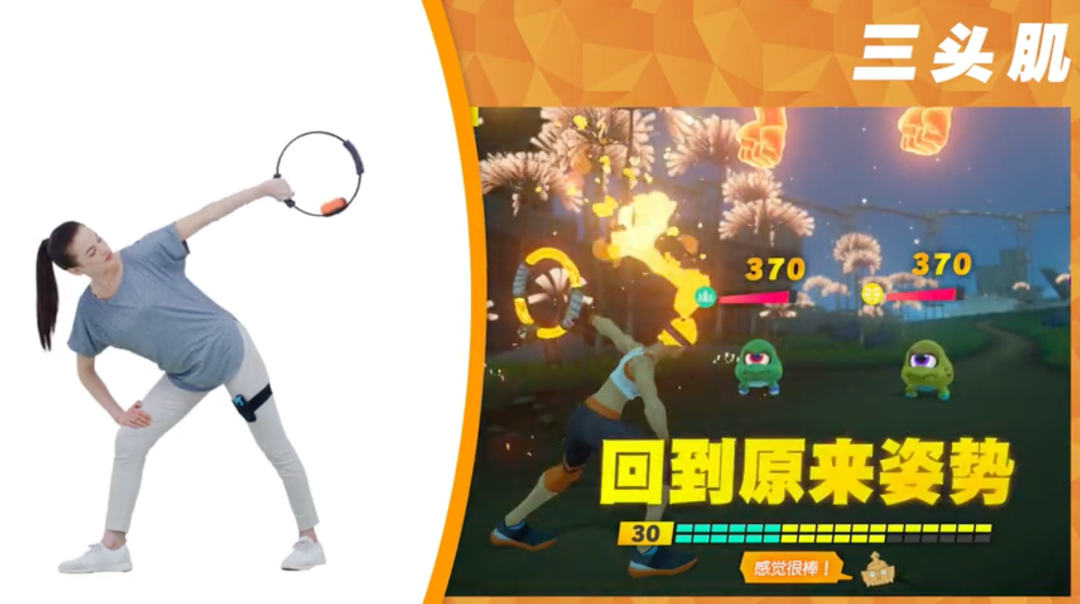
▲ Nintendo released the game Ring Fit Adventure.
Image source: Tencent Nintendo Switch official website
Alex Li: I also bought Ring Fit Adventure — it's among the top ten most popular Switch games overall, which shows there's consumer demand. The game itself isn't cheap, and prices even surged during the pandemic when it went viral. Many friends practiced for a while, then let their Ring-Cons gather dust at home.
As a game, Ring Fit Adventure prioritizes fun over professional rigor. Its curriculum lacks depth, with limited movement variety. Professional fitness people might find it insufficiently scientific, so usage frequency drops.
Also, to play you need a game console, must connect to a TV, and strap sensors to your feet — these steps feel cumbersome to me. BodyPark uses a no-wearable, pure vision-based approach. You only need a smartphone; let the camera capture your movements, and you get quantification of your entire workout process with timely feedback, plus a data report after class.
Once users get accustomed to real-time feedback from online coaches plus AI assistants, it's hard to go back to life without BodyPark. Three years ago people might still debate whether smart watches were a pseudo-demand, but you rarely hear that now.
Management guru Peter Drucker once said: "If you can't measure it, you can't manage it." The same applies to fitness — quantification is BodyPark's core competitive advantage.
Yingzhu Jiao: BodyPark is still in early startup stages. What difficulties did you encounter in user activation, and how did you solve them?
Alex Li: In users' lives, there's eating, clothing, daily necessities, and exercise — exercise is definitely the hardest. Getting users off the couch, away from short videos, is difficult for everyone in this industry. What we can do is think from first principles, do everything possible to minimize friction in product experience, then align with human nature by delivering timely feedback, fun, and social interaction.
Online fitness may be a slow business, but the growth trend is certain. Currently BodyPark barely does advertising; most new users come from referrals by existing users. We have enough patience to wait for user scale to grow.
Pengqi Liu: The product experience must be good enough that existing users recommend it to friends.
Yingzhu Jiao: Pengqi, do you think using high-tech to enable at-home fitness will be a long-term trend?
Pengqi Liu: Exercise is highly diverse. Everyone finds different attractions in different sports. After all, outdoor exercise is constrained by various time and space limitations — home is a crucial exercise scenario, an important complement to outdoor exercise. At-home exercise is an inevitable major trend.
If someone trains at home alone without professional guidance or equipment, results may be half the effort for double the work. Whether solving this through AI or hardware like smart watches, it's the right direction. It's just that the at-home fitness market may not grow that fast — as Alex said, you need enough patience.
Reader Benefits Welcome to share in the comments your feelings about exercise — what sports have you tried, which is your favorite, what have you gained from exercise...
The user with the most liked comment will receive a BodyPark fitness gift package (including 2 online personal training sessions + phone stand + fisheye lens + resistance band).
The 5 users with the most heartfelt comments will receive Exercised, written by Harvard University evolutionary biologist Daniel Lieberman.
All FreeS Fund readers can click the mini-program below to receive 1 free BodyPark online fitness class.

▲ 20 Industry Research Reports + 1 Podcast to Kickstart Your Year
▲ FreeS Fund 2022 Year in Review: Stay True to Your Convictions, Do What's Right—Not What's Easy
▲ Biotech Investing in 2023 | FreeS Research
▲ A Conversation About 2022 and 2023
▲ Short Video: A Shortcut for Chinese Animation to Surpass Disney? | FreeS Fund Dialogue
▲ Slow Is Fast: Why Insurtech Is a Bet Worth Making | FreeS Fund Interview
▲ What Will Humans Eat in the Future | FreeS Report 27