Biomanufacturing: Who Can Move Faster on the New Research Paradigm?

A Conversation with Professor Liu Tiangang on Future Industries: Biomanufacturing

Does "turning stone into gold" exist in this world?
Biomanufacturing might just qualify. From humanity's first grasp of biomanufacturing to today, more than ten thousand years have passed. From ancient winemaking to penicillin during World War II, to the currently buzzworthy hyaluronic acid — none of it would exist without biomanufacturing. It's fair to say that biomanufacturing is a science intimately woven into our daily lives.
Recently, we invited Liu Tiangang, founder & chief scientist of Hosen Biotechnology and distinguished professor at Shanghai Jiao Tong University's School of Life Sciences and Biotechnology, to pull back the curtain on this industry.
In Professor Liu's eyes, microorganisms are like a "stage" that allows substances to unlock new value. Even though we've discovered more than 400,000 natural products, biomanufacturing's potential remains largely untapped — "like comparing the number of stars in the Milky Way to the entire universe."
Feng Shu and Professor Liu had an in-depth conversation about biomanufacturing, covering topics including but not limited to:
- What is biomanufacturing, and how did it develop in its early days? What do winemaking and hyaluronic acid production have in common?
- Why did penicillin give rise to the modern pharmaceutical industry?
- How do we discover new substances at the genetic level? What impact has gene-editing technology had on biomanufacturing?
- Compared to Europe and America, what potential advantages does China have in biomanufacturing?
- Will biomanufacturing replace traditional chemical industries? What technologies might become major drivers of the industry's future?
- What's next — will AI transform biomanufacturing?
Some spoilers ahead:
- When penicillin was first developed, production costs were so high that one dose cost the equivalent of a gold bar. Today, penicillin costs less than an IV tube.
- In the 1930s, a wave of microbial exploration swept across the scientific world. You could dig a scoop of soil from your backyard and isolate microorganisms with simple cultivation equipment. Major companies even encouraged employees to bring back soil samples during business trips — and reimbursed their travel expenses.
- In the past, lycopene for health supplements could only be extracted from cultivated tomatoes. Today, lycopene synthesized through brewer's yeast costs far less than agricultural extraction.
We've edited portions of the conversation into this article, hoping to offer fresh perspectives. For the full episode, search and subscribe to "High Energy" on Xiaoyuzhou or Apple Podcasts.

Giveaway What changes do you hope biomanufacturing will bring to daily life? Leave a comment below — we'll randomly select 5 readers to each receive a copy of A Human History in Maps.

/ 01 / What Is Biomanufacturing: What Do Winemaking and Hyaluronic Acid Production Have in Common?
Li Feng: For China's economic development, biomanufacturing represents an important future industry. There's a fascinating book called A Human History in Maps that explores why humanity originated in Africa, and why major civilizations clustered in subtropical or temperate zones — questions that connect directly to our discussion today.
Put simply, the birthplaces of civilization relate to how different latitudes absorb and utilize solar energy. Africa became humanity's cradle because its total solar energy absorption and conversion is substantial, yielding abundant food resources. Early humans had limited ability to reshape nature, so these conditions were crucial for survival and development.
Professor Liu Tiangang has raised an important point: many natural phenomena, from the evolution of plants to humans, to our daily necessities, are essentially expressions of carbon-based life.
Traditionally, we produce plastic bags, food containers, and similar products through petrochemical or coal chemical processes. Oil and coal are essentially ancient carbon-based organisms — animals and plants — buried underground and transformed over tens of thousands to millions of years under high pressure, high temperature, and microbial fermentation. These substances contain densely packed energy and are used to create chemical products.
Natural products represent another form. The rouge and dyes used in ancient times, extracted from plants through soaking or extraction, are one category of natural products. Beyond these are more complex applications — for instance, we now produce insulin through biosynthesis, a classic carbon-chain product.
Carbon is the core element of life. Carbon chains are chain-like structures formed by carbon atoms connected through covalent bonds. The length of these chains and the arrangement of other atoms along them determine the properties and functions of organic molecules. When we crack oil, coal, and other chemical substances, long-chain hydrocarbons break into shorter chains; adding functional groups or other components yields many familiar chemical products like synthetic rubber and plastics.
Complex long carbon chains require metabolic reactions in humans, animals, plants, or microorganisms to achieve. This natural evolutionary process parallels modern biomanufacturing. Traditional chemical manufacturing excelled at handling small molecules, while medium-molecular-weight natural products could only be obtained from nature — specific plant roots, stems, seeds, or animal secretions. Now we can produce diverse substances through biomanufacturing.
Liu Tiangang: From an academic standpoint, biomanufacturing refers to using biotechnology to produce various molecules or substances. I mainly work in the natural products direction. By molecular weight, we can roughly divide biomanufacturing into three categories:
The first category comprises smaller molecules, typically below 100 Daltons. These are usually primary metabolites of cells with minimal chemical structure modification but high yield — biofuels, biomaterials, bulk amino acids, and so on. These products are generally priced by the ton.
The second category covers natural products between 100 and 1,000 Daltons — my main research area. These are typically bioactive substances widely used in pharmaceuticals, food, and cosmetics. Nearly all small-molecule chemical drugs fall into this range. For food industry flavors and fragrances, as well as cosmetics and personal care applications, the volume and importance of natural products needed are no less than for drugs. These products are typically priced by the kilogram.
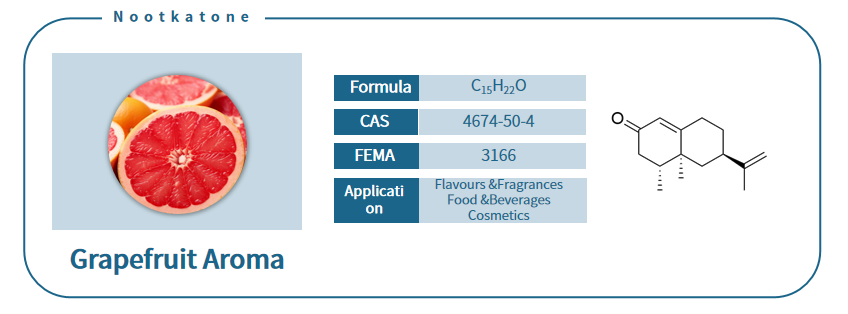
▲ Nootkatone, a natural sesquiterpenoid compound. Image source: Hosen Biotechnology
The third category comprises larger products — polypeptides or proteins ranging from several thousand to tens of thousands of Daltons, such as antibody drugs and functional proteins. These are generally priced by the gram or even milligram.
Li Feng: A fascinating example among natural products is hyaluronic acid. It was originally extracted from rooster combs; later, researchers discovered it's a product synthesized by specific bacterial strains. After extraction, it undergoes processing, screening, directed selection, and other steps to achieve large-scale production for cosmetic use.
China is a global chemical powerhouse, accounting for nearly half of worldwide chemical production capacity, spanning natural extracts, petroleum cracking, coal chemical processes, and more. The entire industry consumes roughly one-third of China's energy and generates close to 20% of industrial carbon emissions — yet represents less than 10% of consumer carbon emissions. Currently, this industry's scale in China exceeds 8 trillion RMB.
The shift from petrochemical and coal chemical industries toward biomanufacturing represents not only a complex technological challenge but also a crucial direction for reducing energy consumption and alleviating carbon emissions. Fundamentally, biomanufacturing and traditional chemical industries share essential connections in carbon chain transformation, solar energy utilization, and the development of animal and plant resources.
Microbial manufacturing has now evolved into synthetic biology — the ability to direct microorganisms and bacteria to work with precision, producing hyaluronic acid and similar products with high yield and accuracy. From your perspective, how did we reach today's level?
Liu Tiangang: From humanity's first grasp of biomanufacturing to today, more than ten thousand years have actually passed. The earliest biomanufacturing was winemaking. People may not have understood this as a microbial reaction, or specifically recognized catalysts like enzymes, but through repeated trial and error, they learned to control these processes. For instance, winemaking requires preventing oxygen exposure — if oxygen isn't controlled properly, you end up with vinegar instead.
A qualitative leap in biomanufacturing history occurred roughly 100 years ago, when the West began researching microorganisms and antibiotics. Two milestones stand out in Western scientific development: the smallpox vaccine and penicillin.
The shift from human inoculation to cowpox vaccination for smallpox was crucial progress. It demonstrated that Western medical approaches could be replicated and scaled, overturning the Eastern reliance on transmitted knowledge.
As for penicillin, its discovery stemmed from researchers accidentally noticing that a certain fungus could kill other microorganisms on a culture medium. During World War II, penicillin achieved large-scale biomanufacturing, becoming a complete industrial chain.
The process of putting microbial products into scaled production, purification, and manufacturing established the foundation of modern biomanufacturing technology. From that point, we gradually entered the era of large-scale, controlled fermentation.
Initially, fermentation occurred in barrels, controlled through temperature regulation — a process of natural inoculation. This evolved into explicit microbial screening: isolating a specific strain capable of producing penicillin. Next came further optimization of conditions — what nutrients work best, when to introduce oxygen and when to withhold it, what stirring speed and intensity to use — ensuring the strain could replicate at scale and produce in an orderly manner.
But this stage had no direct connection to modern molecular biology techniques. The focus was simply finding an effective strain and controlling it properly. The "finding" process was essentially natural selection, requiring constant picking and optimization. Which strain produces a larger zone of inhibition? Irradiate strains with ultraviolet light to induce mutation, or even send them to space to trigger mutation with cosmic radiation. This was the first stage of biomanufacturing.
Li Feng: At this stage, fermentation had just become an academic discipline and industry.
Liu Tiangang: Yes, it was called fermentation engineering back then.
Li Feng: Historically, this wave of biomanufacturing catalyzed the starting point of fermentation engineering. Beyond scientific discovery, the main driving force came from war. For example, to address soldiers' pain, infection, and inflammation, antibiotics and analgesics became urgent priorities. These needs also propelled the development of fermentation industries and industrial capacity.
Liu Tiangang: Here I'd like to offer simple definitions for "synthetic biology," "fermentation engineering," and "metabolic engineering" — for reference only.
Synthetic biology, we can simply understand as turning stone into gold: originally, a particular strain doesn't have a certain capability, but after gene editing or introducing foreign genes, we give it the ability to produce a target substance. This way, it can create what we want out of nothing.
Traditional winemaking, for example, involves screening natural strains and then controlling external conditions to achieve efficient production — we call this approach fermentation engineering. When we identify a specific research subject, such as a strain that naturally does something, and modify its metabolic pathways to achieve higher yield and production efficiency, we call this process metabolic engineering.
How Do We Speed Up Microbial "Evolution"?
Li Feng: Professor Liu just mentioned that after we obtain a strain or microorganism, we need to further improve its efficiency, making it focus solely on producing the target product with higher yield and productivity — this is the process of "evolution."
But in natural environments, this evolutionary speed is very slow. So we typically use external means to stimulate mutation, such as various forms of radiation or even outer space environments. We screen for mutated strains with higher yield, higher productivity, and purer products, then repeat this process with the selected strains, ultimately obtaining the most efficient strain.
Liu Tiangang: This process can be traced back to the 1960s and 70s. With the emergence of genetic engineering, our understanding of DNA's double helix structure deepened, and we began using cutting and editing methods to understand these microorganisms, plants, and even animals at the genetic level. We gradually came to understand which enzymes these genes encode, and how these enzymes function as catalysts.
After decades of research, people now have comprehensive understanding of many molecular synthesis processes. While we can't claim to know everything, for most substances that have been discovered and applied, we can explain how they are produced.
Li Feng: This process can be divided into two stages: the first stage is research at the substance category level, recognizing that a certain bacterium can do something; the second stage is research at the genetic level, figuring out why it can do that thing.
Liu Tiangang: Exactly, and this shift in research paradigm brought revolutionary changes. Previously, our discoveries of certain substances were vague — for example, knowing that a certain herb was effective but unable to pinpoint the specific molecular level. The discovery of penicillin changed this. We isolated a particular bacterium from soil or air, clearly identifying that it could produce a certain substance. Starting with penicillin, our research focused on specific, single substances.
It was precisely this shift in research paradigm that launched the wave of microbial exploration in the 1930s. We could do this at very little cost — for example, digging a scoop of soil from the backyard and using simple cultivation equipment at home to isolate microorganisms. Large companies at the time even encouraged employees to casually bring back soil samples during business trips, with travel expenses reimbursed.
Substances like penicillin had relatively high discovery probabilities. There were also many antibiotics, such as erythromycin and chlortetracycline — drugs now largely obsolete, but back then they were star products for Pfizer, generating enormous commercial returns.
Li Feng: Historically, these discoveries laid the foundation for many pharmaceutical companies' beginnings.
Liu Tiangang: That's right. For example, companies involved in penicillin development at the time evolved into modern pharmaceutical enterprises.
This change in research paradigm dramatically reduced R&D costs while substantially increasing the volume of R&D output. Each company was like discovering a new continent. This technological revolution not only transformed scientific research methods but also brought tremendous industrial progress.
Later, with genetic engineering, people began studying how these microorganisms synthesize target products at the genetic level. The driving force behind this process was clear: when natural evolutionary methods couldn't meet demands, we turned to human intervention. For example, in synthesizing natural products, if we know a microorganism has thousands of genes with a few key ones, we can increase the number of these key genes, remove genes that break down the target product, reduce intermediate product formation, and improve product purity.
This R&D approach was implemented globally roughly from the 1990s to the early 21st century, sparking a revolution. Today's industrial strains have essentially completed a comprehensive iteration.
Li Feng: Using winemaking as an example, assuming we have relatively few wine strains, could we improve the strains to increase alcohol yield, so we don't need to expand production lines and can still get better, purer wine?
Liu Tiangang: Exactly, this approach was applied in penicillin production. When penicillin was first developed, production costs were extremely high — the price of one penicillin injection was equivalent to a gold bar. But now, penicillin formulations cost even less than an IV tube.
Li Feng: Hyaluronic acid went through a similar process.
Liu Tiangang: Yes, though hyaluronic acid hasn't reached penicillin's level of cost reduction. Currently, hyaluronic acid's market volume and scale are far from reaching production demands at the tens of thousands of tons level like antibiotics.
Li Feng: Indeed, antibiotics mainly address more serious disease and health issues, while hyaluronic acid is more of a "nice-to-have" product. So after industrial strains have basically completed one comprehensive iteration, what's the next stage?
Liu Tiangang: By now, our understanding of substance synthesis processes, and how to artificially intervene and directionally optimize these processes, is largely complete. The next challenge is that many substances still cannot be artificially synthesized and must be obtained from nature. For example, bear bile — in treating liver disease, ursodeoxycholic acid is an essential drug, and its optimal component still needs to be extracted from bear bile. But this extraction method is extremely inhumane, extremely cruel, requiring live bears to provide bile.
We've already clarified the formation pathways of these substances, but in the past could only obtain them from nature. Now we can use new technologies to build entirely new systems.
The Impact of Genetic Engineering on Biomanufacturing: The Next Research Paradigm Is Coming
Li Feng: You mentioned that starting from the 1960s and 70s, people's understanding of genomics gradually deepened, including enzyme mechanisms, gene fragment functions, and later the stage of improving strains — directly transforming ordinary strains into "straight-A students" or even "genius strains." Throughout this process, what impact did the emergence of gene editing technology have on biomanufacturing?
Liu Tiangang: The starting point of gene editing can be traced to the American biotechnology company Genentech. They used genetic engineering methods to transfer the human insulin gene into E. coli, thereby achieving insulin synthesis — this became a groundbreaking technology called genetic engineering. But at the time, genetic modification capabilities were very limited; you could only transfer one gene in, having the strain complete a single task, such as producing insulin protein.
As tools and technologies developed, we can now not only transfer genes in but also delete unnecessary genes, combine dozens of gene fragments together to work synergistically, generating more complex products. So today's synthetic biology has evolved from initial simple genetic modification to being able to handle extremely complex biosynthesis processes.
Li Feng: Many natural extracts we've discovered and used are actually just a small fraction of biological species — there are likely many products that have never been discovered or developed. From the perspective of discovering new substances, what kind of landscape do you think biomanufacturing and related technologies will move toward in the future?
Liu Tiangang: This is an excellent question. Returning to the natural product research paradigm: roughly from 100 years ago, humans began isolating single substances from plants, animals, or microorganisms in nature to study their functions. This research paradigm brought tremendous progress — we could extract raw materials to identify and purify target substances, evaluating their functions.
To date, humans have discovered approximately 400,000 natural products. In the context of the entire world, this is a very small number, because theoretically, the number of substances that can be formed through combinations of carbon-based molecules is astronomically vast — like comparing the number of stars in the Milky Way to the entire universe.
Among these, only about 5,000 are in our daily use, including drugs for lowering blood sugar, blood lipids, anti-tumor treatments, antibiotics, and some less commonly noticed products like chlorophyll, lycopene, and even materials like rubber.
But currently, our rate of discovering new substances is declining. Even with more advanced technological means than in the past, it's like mining — this visible mine has been dug for 100 years. Researchers' exploration ranges have expanded from backyard soil to Antarctica, the Arctic, even outer space. Due to the continuously narrowing sample scope, this natural product research paradigm faces challenges today. But the ocean is actually waiting for further development.
Li Feng: Recently, China's first deep-ocean drilling ship, the Mengxiang ("Dream"), was officially commissioned. It can sail continuously for over 120 days, with a maximum drilling depth of 11,000 meters. Could the commissioning of the Mengxiang also help us further expand the scope of research?
Liu Tiangang: Yes. Beyond traditional exploration methods, there's another model: discovering new substances at the genetic level. In the past, we needed to first know a substance existed, then extract it. Now, we can use gene sequencing to find related genes, even if these genes are temporarily inactive or only function under specific environmental conditions.
For example, substances plants produce to repel insects. We don't need to deliberately let insects bite healthy plants first, then extract the repellent substances from the plants. Through gene sequencing, we can decode and collect species' gene sequences one by one, then in the laboratory import these genes into microorganisms to produce corresponding substances. We can even use AI to predict what new substances these genes might synthesize.
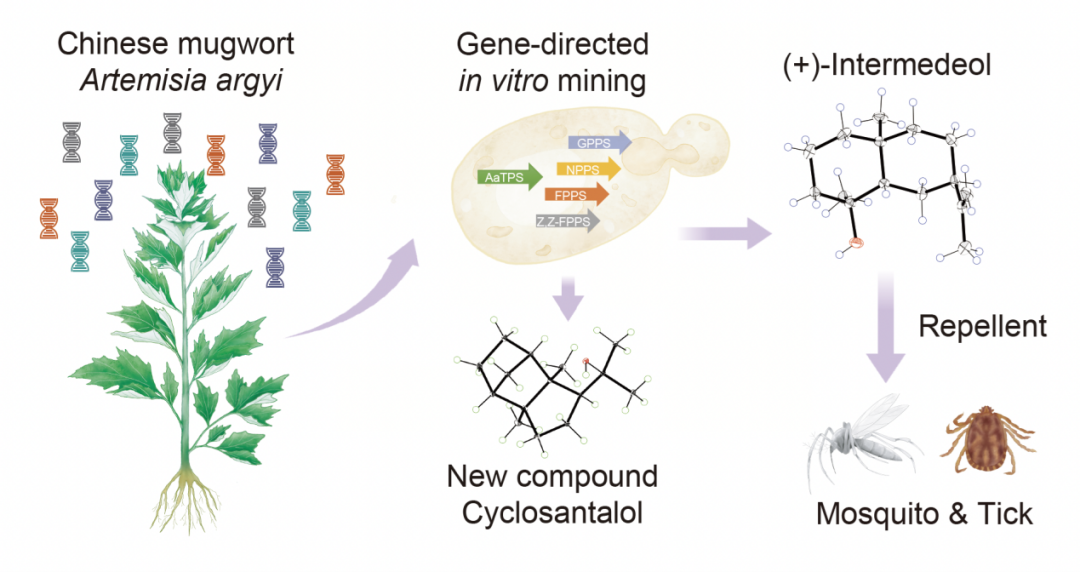
▲Artemisia alcohol, a highly effective insect repellent identified in mugwort. Image source: "Gene-directed in vitro mining uncovers the insect-repellent constituent from mugwort (Artemisia argyi)"
If we encounter something that existing knowledge cannot explain, it's likely a genuinely new discovery. Another possibility is that we can recombine known elements to create something entirely unknown. New technologies and tool platforms are giving rise to a fundamentally new research paradigm.
Li Feng: Is this similar to what you mentioned earlier — when multiple technological advances reach a critical threshold simultaneously, the research paradigm shifts accordingly?
Liu Tiangang: Yes, we've reached that stage.
The first factor is the massive scale of genomic big data. When we encounter a species, we may not know its full productive potential. Take the fungus that produces penicillin — its genome also encodes dozens of other substances, which may generate scents, flavors, and so on. Big data allows us to mine deeply into a species' productive potential at the genomic level. The scope of "mining" has shifted from traditional soil samples to gene sequences, which are now digitized and stored in databases as "online mineral deposits."
The second is the improvement in algorithms and computing power. With AlphaFold 2 and other AI technologies, we can predict unknown possibilities based on existing knowledge, without massive amounts of blind experimentation. When predictions prove reliable, we then conduct experiments — and the efficiency improves dramatically.
The third major breakthrough is the maturation of experimental automation. In the past, a technique's reproducibility might be poor, experiments required PhD students with technical expertise, and efficiency was very low. When I was doing my PhD, completing one project in five years was considered quite good. Now, much repetitive experimental work can be done by machines. Machines are not only more efficient but also produce more controllable and consistent results.
The final key point is our enhanced ability to control microbial "chassis."
These microorganisms serve as a "stage." For instance, we might have a microorganism that produces penicillin at high yield. You can remove its penicillin production capability and instead generate substances similar to penicillin but distinct from it. If we predict it might produce something valuable, we can use this microorganism as a "chassis" to unlock new capabilities.
Today, genomic big data, AI prediction algorithms, automated experimental technology, and microbial chassis technology — these four elements, accumulated over many years, have reached a new peak and converged to form the starting point of a new research paradigm.
Early Results Under the New Paradigm Are Emerging. Next, Will AI Transform Bio-manufacturing?
Li Feng: I remember when I first encountered synthetic biology, I saw an extremely complex diagram, like a subway map, filled with various functions and pathways. Given the discovery process you just described, if these new technologies continue to develop and cause a paradigm shift, have any preliminary results or forms already emerged today?
Liu Tiangang: The dawn has appeared. Take terpenoids, which we study — they're a very important class of natural products, accounting for roughly a quarter of all natural products, with approximately 80,000 to 100,000 known varieties. Their synthetic pathways are relatively universal, like a highway with different exits leading to different substances.
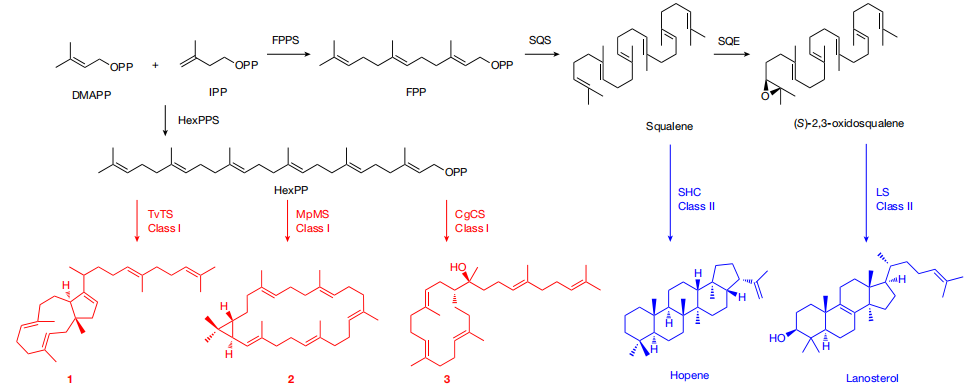
▲Triterpene biosynthesis. Image source: "Discovery of non-squalene triterpenes"
In the past, when we searched for plants or microorganisms, we could only discover limited substances. But now, we can use gene prediction to identify substances that haven't yet been understood or predicted, further extending this "highway" to find more previously undiscovered exits. It is precisely this shift in research paradigm that has allowed us to expand that already extremely complex "subway map." If this can be transformed into an industrialized, reproducible process, the "map" will expand rapidly.
Li Feng: The 2024 Nobel Prizes included quite a few AI-related research achievements, such as AlphaFold's protein structure prediction. This type of technology is considered a foundation model with broad applicability and strong practical utility. So, do you think in synthetic biology or bio-manufacturing, similar foundational AI computational models or predictive models might emerge? Or in this field, will AI more likely be used as a tool, with everyone applying it based on specific needs, data, and omics results? (Extended reading: "AI for Science: At the Turning Point of the Research Paradigm | FreeS Report")
Liu Tiangang: I'm not an AI expert, but I think both scenarios are happening, and both are theoretically feasible.
From the perspective of life's composition, there may be hope for developing a unified large model applicable across many fields. Some fundamental chemical reactions of known life — such as glucose utilization — are shared across insects, microorganisms, and humans, essentially using the same system.
To extend the highway metaphor: the main trunk is the same; only the branches differ. So theoretically, building a general-purpose model is feasible. But who can actually create and execute it well — that's extremely challenging.
Regarding the second scenario, I don't believe anyone would reject AI applications in specific research domains. Everyone is willing to use AI to summarize empirical and inductive patterns, helping solve practical problems. But the effectiveness of practical application depends on data accumulation for specific problems, and how to effectively apply AI to that data.
In bio-manufacturing, particularly in enzyme research as catalysts, AI applications may bring enormous changes — and this is already becoming visible. Previously, when we did enzyme engineering, we wanted faster reactions and fewer byproducts. In 2018, half the Nobel Prize in Chemistry went to "directed evolution of enzymes," a method that can generate massive possibilities within a given timeframe, then screen for target results. But now AI can organize more known information, helping us discover patterns of variation and precisely guide enzyme design and engineering. This is a completely different research paradigm. Currently, both approaches are developing in parallel, but in the future, rational design may prove more advantageous, yielding more precise results.
In Bio-manufacturing, How Do China, the US, and Europe Compare?
Li Feng: Looking globally, where do China, the United States, and Europe currently stand in terms of research and industrial capabilities in bio-manufacturing or synthetic biology?
Liu Tiangang: Overall, the three are now roughly comparable, each with distinct strengths.
From the production perspective, bio-manufacturing costs come from three sources: raw materials, infrastructure, and human resources. For bulk products, raw materials account for most costs. If scale is large enough, fermentation plants require very few people to manage, enabling modernized, large-scale production. So the key to bulk products is reducing raw material costs.
The US has advantages in raw material supply and energy costs — they have more abundant biomass, giving them an edge in bulk products. Biomass refers to organic matter from plants, animals, or microorganisms that can be converted to energy.
China has relatively limited petroleum resources, but can compensate through other means, such as carbon utilization technologies that the state is vigorously developing. We need to focus our efforts in this direction to compete with other countries in the bulk product track.
China has advantages in intermediate products, such as natural product manufacturing. For most natural extracts, raw material costs are roughly several hundred to several thousand RMB per kilogram, and intermediate products are produced in smaller volumes with more varieties, so raw material costs don't dominate — labor is the main cost. Compared to Europe and the US, China's labor costs are relatively low, giving us a production cost advantage.
Intermediate products require both production refinement and factory competitiveness. China's current factory scale and configuration allow us to compete with Europe and the US, because it's difficult for Europe and the US to have thousands of bio-manufacturing enterprises producing intermediate products.
But in high value-added areas, Europe's advantages are more pronounced. For example, in the manufacturing and R&D of weight-loss drugs like semaglutide, production costs are relatively low, and most value is captured in innovation rather than production processes. In these areas, Europe still has strong original advantages, which we need to catch up on at scale.
Looking at overall investment, I'm very confident about China's future. We have large numbers of excellent engineers and researchers, plus steadily growing education and R&D investment. China has long-term development potential in bio-manufacturing.
Li Feng: From your current observations, what exciting visions and major directions do you see for bio-manufacturing's future?
Liu Tiangang: In bulk raw materials, we can see some breakthroughs on the verge of happening, particularly in effectively converting one-carbon resources into biomass.
For example, converting carbon dioxide into long carbon chains, generating a two-carbon unit like ethanol from CO₂ — centralized capture, utilization, and conversion. If this field achieves breakthroughs, it will give bio-manufacturing an advantage in competition with petroleum. Theoretically, this is feasible. As mentioned earlier regarding solar energy: solar energy gives one-carbon matter energy, converting it into usable energy substances.
Li Feng: That sounds fascinating — like a replay or accelerated version of evolution. Early Earth also started from inorganic matter, through energy and environmental effects, including temperature and pressure stimulation over long periods, gradually evolving into organic matter, then forming complex life.
Liu Tiangang: This is tremendously exciting. If this breakthrough can be achieved, it will provide new pathways for carbon emission reduction.
As for the natural products field, we're transforming processes that originally depended on natural resource extraction into controllable, industrialized fermentation processes. The former obtains substances from plants or animals; the latter uses fermentation and other technologies to solve access to certain substances. These breakthroughs are being realized case by case, and precisely because of these practical successes, bio-manufacturing is receiving so much attention today.
Li Feng: In your current research and industrialization work, what exciting progress or directions are you seeing?
Liu Tiangang: We've successfully achieved industrialized production for dozens of plant-derived products. Take lycopene — a 40-carbon long-chain substance that gives tomatoes their red color, with excellent health benefits. Previously it could only be extracted from cultivated tomatoes, but now we synthesize it using Saccharomyces cerevisiae, and the cost is already far below agricultural extraction. This not only changes the production model but also enables better land use. Tomatoes can be used for food rather than being wasted on extraction processes.
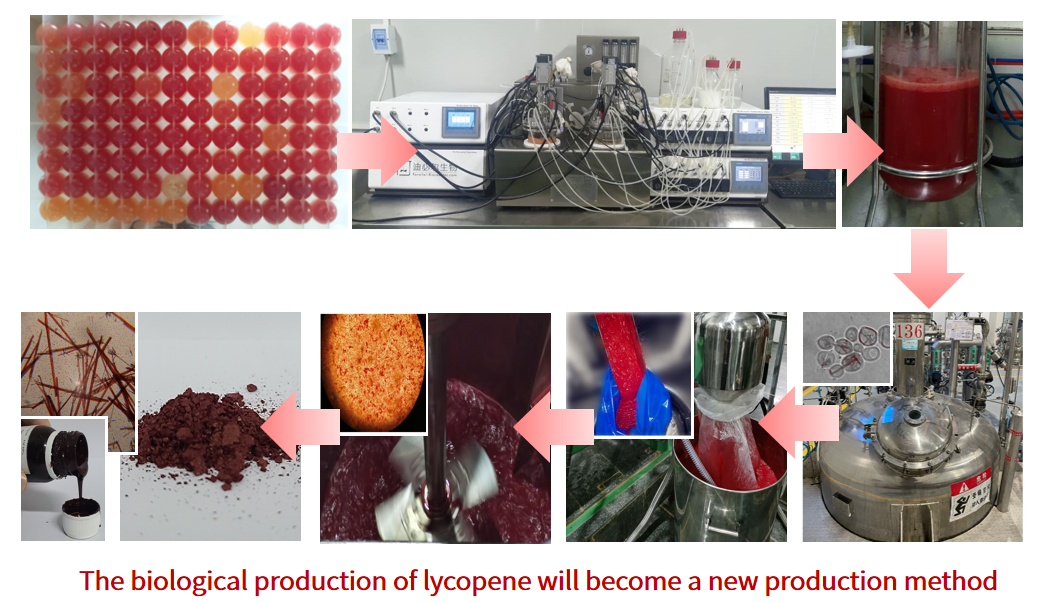
▲ Industrialization of lycopene. Image source: Biosynth
There are many similar cases. While existing production methods have already achieved scale and support the industry's progress, what's more exciting are the natural products yet to be discovered. We've currently identified roughly 400,000 substances, but how many more remain? These gaps can be gradually filled through new research paradigms.
Right now, the entire bio-manufacturing field is in a "land rush" phase. It's as if we've returned to the era of natural product exploration from over a century ago. Countless unknown substances await discovery in the world. These substances don't arise randomly — they all serve functions in nature. It's just that when we discover something, we may not immediately recognize its use.
When enough of these substances accumulate, an industrial chain emerges. Switzerland, for instance, has many pharmaceutical companies, and a major related industry is the flavor and fragrance sector. In the process of exploring pharmaceutical substances, researchers might discover compounds with no medicinal activity but excellent scent profiles — these get redirected into flavor and fragrances. Dig deeper and find insecticidal properties, and they pivot to agrochemicals.
This is a chain of substance utilization. What we discover isn't limited to a single function. When you've found enough substances, you can use them to meet needs that haven't yet been filled. This is where bio-manufacturing's broader market and exploratory potential lie.
06
What have you learned from the transition from professor to entrepreneur?
Li Feng: As an entrepreneur working on technology commercialization and industrialization, what insights have you gained? Especially regarding the transition from professor to entrepreneur — any particular realizations?
Liu Tiangang: My biggest realization is that when doing scientific research, especially applied basic research, you must stay close to the market. Often, poor technology transfer outcomes stem from not knowing what the market actually needs.
Many people choose to follow hot topics in the literature, repeating what others have already done, trying to do it better within existing directions. In fact, if you select problems that haven't been solved yet, you might achieve greater success at lower cost. And these problems typically come from actual industrial needs and market feedback. Doing research close to market demand yields disproportionate returns.
Li Feng: Indeed, don't work in isolation. Over your years in research and commercialization, which phases or moments were most difficult? What caused these difficulties?
Liu Tiangang: Different stages have different challenges. During my PhD, the biggest hurdle was insufficient problem-solving capability. You might know where the problem lies, but haven't yet mastered the methods and thinking to solve it.
During postdoc, choosing a research direction becomes critical — it directly determines your career trajectory. With the same level of effort, different topics or directions can land you in completely different situations.
However, for the entire research process, the hardest phase was the first few years of establishing my own research group and lab. At that time, you need to balance many things — you have to "want it all": secure funding, mentor students with focus, and choose research directions. I believe that stage represents the most significant challenge young people face in their development.
But as I mentioned earlier, if during that phase you can find a problem that others haven't solved, and that problem happens to be a market pain point, your odds of success increase dramatically. Conversely, if you enter a highly saturated research direction, competition becomes fiercer with limited resources, and your development becomes much harder.
Li Feng: I completely understand. Since the government included bio-manufacturing in its future industry planning, have you felt any impact from this policy on yourself or the industry? Also, what types of partnerships or resources do you most need now, whether doing research or running a company?
Liu Tiangang: On the first question, I've clearly felt that since 2024, people have been paying more and more attention to bio-manufacturing.
On the second question, what we need most now are application outlets — more demand, and this demand must be certain. Making something isn't actually that hard; the hard part is whether what you make can form a closed loop, whether it can achieve industrial scale. What you produce needs to sell, ideally as much as you can produce. But in practice, this pathway often isn't smooth.
Li Feng: I see. This isn't just a demand issue — it involves upstream and downstream production processes, the structure of benefit chains, and so on. For example, when existing technology is expensive, scarce, unstable, or supply is fragmented, the market has incentive to find alternatives. These alternatives need reasonable pricing, stable supply, and high purity and efficiency. But actually identifying such opportunities and meeting them remains difficult, right?
Liu Tiangang: Yes, you not only have to capture strong market demand, but also quickly find your entry point and execute before that demand gets satisfied.
Li Feng: From your personal perspective — whether in research, science, or company R&D — looking at a longer time horizon, what do you hope to ultimately achieve?
Liu Tiangang: At the company level, China currently has no enterprise that can match major Western natural product companies. Pfizer, Bayer — these companies started from discovering natural products and gradually expanded from star molecules into various directions.
We missed this development process in the past. When the world was "mining," we weren't participating, and we did miss some opportunities.
However, due to technological iteration, accumulation, and new opportunities emerging, this gap has narrowed to some extent. New technologies have put us back on a relatively level playing field. Of course, global differences persist in various aspects — some regions are more advanced in AI computing technology, others have advantages in chassis technology accumulation. But overall, the capability gap isn't dramatically wide.
Now, the key is who can move faster on new research paradigms. Whoever possesses enough compounds, whoever can produce enough products, can potentially grow rapidly and gain advantage.
Reader Giveaway
What changes do you expect bio-manufacturing technology to bring to daily life? Leave a comment below — we'll randomly select 5 readers to each receive a copy of The Human Story in Maps.
- ▲ Looking Ahead to 2025: What Innovation Opportunities Exist in AI? | FreeS Report
- ▲ LiDAR or Cameras? How We View the Autonomous Driving Route Debate
- ▲ AI for Science: At the Turning Point of Research Paradigms | FreeS Report
- ▲ How to Invest in Biotech in 2023? | FreeS Research
- ▲ Dialogue with Li Xiang of Shize Bio: The Past, Present, and Future of Stem Cells
Star the FreeS Fund WeChat Official Account for timely business insights