A Strong Personal Brand Beats a Million Paid Articles: How Startup CEOs Can Build Their Brand | FreeS Business School

Fortune favors the bold.


Three Questions About the CEO "Persona":
Let's face it — this is an era that demands we live inside a "persona." As a founder, your position has already made you a "Public Face," speaking for your company and representing yourself. Social networks have laid out the channels of distribution for you; whether you like it or not, there are moments when you must display a crafted personality toward a predetermined goal.
Steve Jobs in his classic black turtleneck and jeans. Mark Zuckerberg forever looking like a college student. The tireless "Iron Man" Elon Musk. And the cool, aloof Evan Spiegel... Silicon Valley's superstars have already achieved personal branding and brand personification. The CEO has become part of the product the company makes.
We wonder:
- How does a CEO's "Public Face" take shape, and how is it perceived?
- How should startup CEOs seek breakthroughs for their "persona" from their personal experiences and character traits?
- What does a CEO's "persona" mean for a company's brand and reality? How can a corporate vision be woven into it?
The stories of Silicon Valley stars in this article may offer you some inspiration. Feel free to share your thoughts at the end, and which Chinese CEOs' "personas" you find compelling.

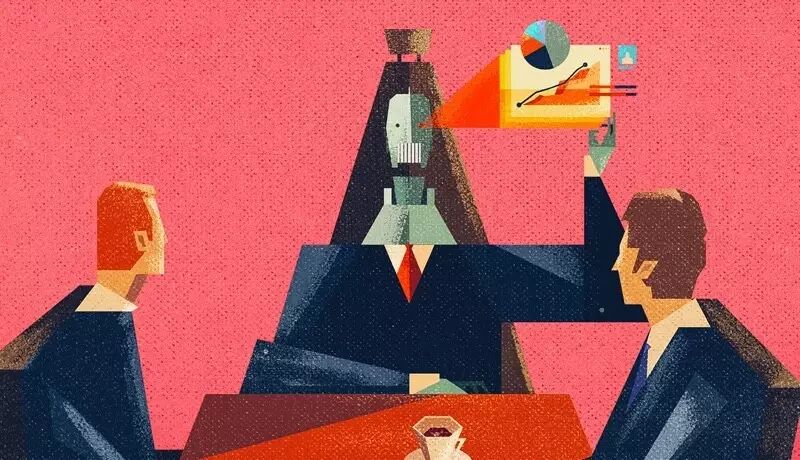
What Personas Are Internet Giants Selling?
One Public Face Beats Ten Million Soft-Promo Articles
Source / Quanmeipai. This article is republished with permission from Tencent Media Quanmeipai (WeChat ID: qq_qmp).
How Is a CEO Persona Formed?
Public Face = Legend + Genius + Serendipity
The tech world is littered with geniuses. Elite university pedigrees are table stakes; dropping out to start a company is hardly news anymore. So how should the next generation of tech stars find their breakthrough from personal experience and personality traits to build a super-persona?
Consider a few examples:
-
"Cool" is the defining keyword of Amazon founder and CEO Jeff Bezos's life. His signature moves: a neurotic laugh, tyrannical roars, and cold-blooded treatment of human resources. Amazon developed a "Cool" PR style from this, along with a "Bezos communications theory": the CEO personally picks up a red pen to strike through any words he deems unimportant in press releases, speeches, even product descriptions — all to deliver streamlined messages to the outside world.
-
Elon Musk, dubbed "Iron Man," has pulled off a series of missions the world considered impossible: founding Tesla, SpaceX, and other famous companies across numerous fields. Like the Iron Man in films who obsessively develops new tech, Musk believes humans are like computers — body and brain are the hardware, while learning knowledge is "downloading new information and algorithms into the brain." Interestingly, when director Jon Favreau was filming Iron Man, he sent Robert Downey Jr. to a SpaceX factory to chat with Musk and absorb the Iron Man vibe.
-
As a post-90s founder, Snapchat CEO Evan Spiegel has built a company that always chases whatever is novel and fashionable — inseparable from Spiegel's own love of play and flash. Born into wealth, rejecting Facebook's acquisition, repeatedly爆出低俗负面 [repeatedly爆出低俗负面], marrying a Victoria's Secret supermodel... a series of labels have made him controversial and earned him massive exposure.
Spiegel's rise may signal the decline of stale archetypes: the overly authoritative, flawless hero template for "successful people" barely works anymore. Instead, CEOs with fuller, more entertaining personalities can refresh and surprise.
How to Cultivate a Persona?
Personal Style + Team-Based Operation
▍Team-Based Operation
Zuckerberg has grown increasingly adept at managing his own Facebook page. He employs a 12-person PR team to run his account, including renowned photographer Charles Ommanney, who captures precious moments.
Bloomberg Businessweek put it this way: "It's normal for a CEO to have a PR image manager, but Zuckerberg hiring an entire team to operate his FB account is extraordinary."
Beyond daily work like crafting posts, deleting negatives, and responding to comments, this team also tries to more artfully fuse Zuckerberg's personal image with Facebook's corporate image: releasing company business updates alongside Zuckerberg's private life moments — from his daughter's first steps to his wife's new hat — sharing all kinds of life details with followers.
▍Manufacturing Talking Points
Beyond daily appearances, public speeches, interviews, and articles, these titans like to add something extra — through marriages, book releases, acting cameos, and viral quotes, they output their personas in creative ways:
-
Instagram chief Kevin Systrom frequently posts photos of his wife on his own Ins account, and exposed wedding photos through the famed fashion magazine Vogue, successfully reinforcing his family-man image. Facebook COO Sheryl Sandberg released the book Lean In, extensively discussing female power, success, and positive energy; it ranked #1 on the New York Times nonfiction bestseller list for six consecutive weeks.
-
Musk, who loves acting, made a cameo in Iron Man 2; Bezos, who grew up imitating characters from Star Trek, got to experience space travel in 2016's Star Trek Beyond; the most bizarre entry goes to Zuckerberg, who appeared as a cartoon character on The Simpsons and repeatedly mocked himself, joking about his dropout story.
-
After Jobs's "Stay Hungry, Stay Foolish," Zuckerberg's top ten quotes from his Harvard speech and Musk's inspiring entrepreneurial aphorisms both went viral on social networks. In an era of ever-fragmenting attention, short, punchy sentences attract more notice than long speeches and spread more easily. As users "drink this bowl of chicken soup," they tacitly accept the values the CEO has implanted.
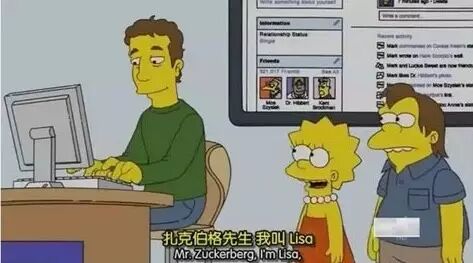
▲ The Simpsons. Zuckerberg's cartoon character is on the far left.
▍Handling PR Crises
Letting a PR crisis run its course invites disaster, but responding blindly and impulsively won't necessarily turn the tide either.
In the U.S. election, Trump's victory saddled Facebook with accusations about fake news. Facing the storm, Zuckerberg first vehemently denied, then faced backlash. Only after his second and third, more tempered explanations did the situation come under control. During the flare-up, Facebook's official spokesperson had issued an official clarification early on, but it was overshadowed by Zuckerberg's own statements.
Crisis PR is a required course for every CEO, and even Zuckerberg with his massive PR team once walked a tightrope — undeniably risky. The public's demand for a perfect persona is forever harsh; once they discover a psychological gap through some scandal, they won't hesitate to sink a massive ship with their keyboards.
Why Has Public Face Become Standard Equipment for Giants?
Personification Is the "Soft Power" of Corporate PR
▍Externally: Getting Users to Pay for the Brand
Silicon Valley heavyweights are themselves heavyweight "opinion leaders." As walking embodiments of values, their every word and deed is inseparable from corporate image. So how can a brand's goals, mission, vision, and other core elements be condensed into a single point and disseminated outward through a vivid, personified "leader"?
The public doesn't constantly care about tech giants' annual reports, stage goals, and grand ideals. More often, fervor for consumption surpasses pursuit of ultimate values; people gossip about titans' sensational stories the way they consume celebrity tabloids. Many deliberately hunt for CEO cameos in films and TV shows. This pleasure is an unthinking sensory hit that makes the public naturally pay for these CEOs' stories, invisibly reinforcing brand impressions.
-
The "1-dollar salary club" that titans love joining is a good example. Whatever their motives, they've all successfully established an image of despising money before the public. Especially for companies like Facebook, this behavior makes it easier for the public to believe it's developing services to fulfill a social mission, not purely to make money.
-
Fred Cook, director of public relations at USC, has served Bezos and Jobs; his newly adult son is a Zuckerberg fan. He said that in his son's eyes, Zuckerberg updates his FB account every day like an ordinary person. "Eighteen-year-olds all think he's sincere. That says something."
-
Amazon is known for good user experience; Bezos publicly shares his personal email to receive customer complaints and forwards them to relevant responsible parties. When forwarding, he says nothing, only typing a heavy question mark "?" to indicate the matter needs immediate resolution. When employees receive such emails, they treat them as a grave emergency, explaining the full story and taking a series of remedial measures in the shortest time. When this "terrifying question mark" became known to the public, it cleverly highlighted Amazon's customer focus.
▲ A CEO's persona is often equated with company image.
It's not hard to see that when people consume goods and services, they don't just focus on use value; they also care about symbolic value, that is, what it signifies. For example, buying Apple products because they represent ultimate industrial design; using Amazon because of convenient shopping experiences; using Snapchat to show you're not behind the curve in pop culture.
The symbolic meanings these brands carry need precisely to be expressed through personification. CEOs' external image and words and deeds are not just brand touch points, but important vehicles for brand image output. As part of the brand symbol system, a CEO's persona should serve the development of the entire system; its goals should align with brand goals — getting people to pay for the brand.
▍Internally: Becoming Employees' Spiritual Lighthouse
CEOs' unique temperaments often directly affect employees inside the company.
-
Open, gentle Facebook that encourages "speaking truth to power" holds weekly CEO Q&A sessions in the cafeteria, where Zuckerberg directly answers all kinds of questions raised by employees. The company is also enthusiastic about "posting slogans"; employees can freely make slogan posters and put them on company walls.
-
Bezos, known for his "tyrant personality," has built a confrontational, challenging atmosphere inside Amazon. He encourages employees to speak bluntly and clash head-to-head, using data and debate as weapons to collide and generate new ideas. This gladiator culture once plunged Amazon and Bezos into controversy, but some Amazon employees also admit that in this environment, they can grow more efficiently.
-
Larry Ellison, deeply influenced by Japanese culture, established a rather contradictory culture when founding Oracle: aggressive while maintaining inner humility. Ellison worships Genghis Khan, taking "only others' failure is true success" as his motto; company employee T-shirts usually feature a shark with its mouth wide open. Yet surface aggression isn't the whole story — Ellison also grasps market trends through humility toward the market. "This founder knows how to run a company during a recession," Fortune magazine assessed.
In the process of shaping internal culture, as the sender end in the organization's communication chain, the CEO's role is undoubtedly pivotal: transmitting values through personal example, continuously influencing employee philosophy to converge with organizational philosophy. Such communication helps form the organization's "collective meaning system" — what we call "corporate culture."
(This article is from Tencent Quanmeipai; feel free to share to your Moments.)


▲ CEO Self-Assessment: Are You Your Company's Ceiling?

▲ The Startup CEO Playbook: How Many Pits Must You Dodge to Become Zuckerberg?

▲ Who Says Early-Stage B2B Companies Don't Need Branding?