A Year of Reading From 100 CEOs: The 10 Books They Want to Recommend to You Most (With a Perk Inside) | FreeS Fund Startup Library

"Every smart person I've met, across every industry, reads every single day."

Warren Buffett's partner Charlie Munger once said:
In my whole life, I have known no wise people who didn't read all the time — none, zero. You'd be amazed at how much Warren reads — at how much I read. My children laugh at me. They think I'm a book with a couple of legs sticking out.
Good books offer vision and the intellectual resources needed on the entrepreneurial journey.
FreeS Fund surveyed roughly a hundred founders in its network for their top book recommendations of 2017, then selected the ten most frequently cited titles. From this list, you'll glimpse the principles of personal conduct and corporate management that have kept hedge fund Bridgewater standing for over 40 years; the secrets behind General Electric's growth from a $13 billion to a $400+ billion market cap; and the life story of a Confucian scholar who achieved the three imperatives of establishing virtue, merit, and legacy...
As the holiday ends and you set sail again, we hope this reading list gives you logical clarity — or simply the strength to keep moving forward.
New Year Giveaway
Share your reading plans for the year, your thoughts on any of these books, or an interesting story about how reading connects to your work and life in the comments below. The 3 commenters with the most likes and the 3 most thoughtful commenters will each receive a copy of Principles by Ray Dalio, founder of hedge fund Bridgewater (Deadline: 9:00 PM, March 4). We look forward to your contributions.
Reply with the keyword "书单" in our backend to get the full list of 100 CEO recommendations.


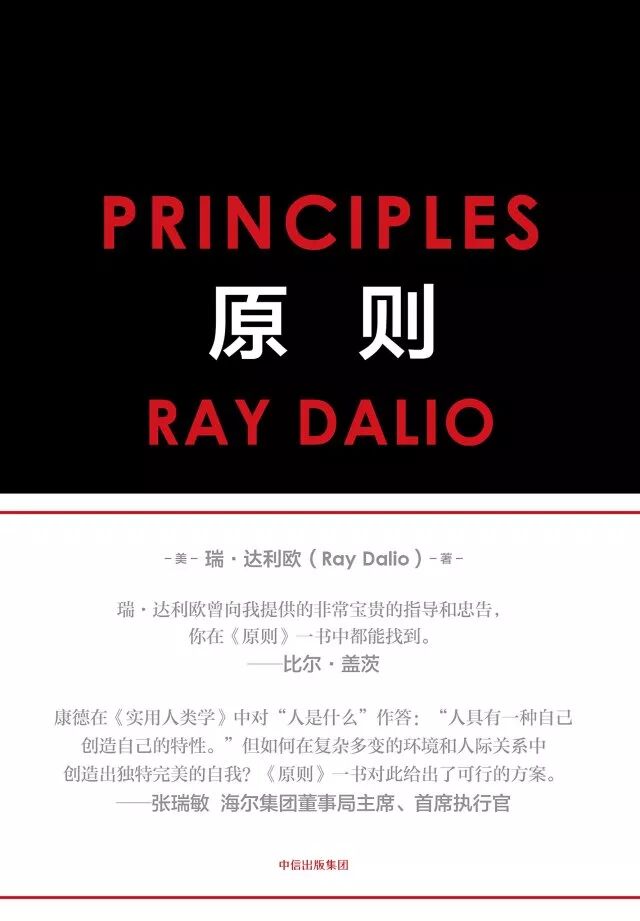

Principles
[US] Ray Dalio
Translated by Liu Bo, Qi Xiang
Citic Press Corporation / January 2018
Hedge fund Bridgewater has stood for over 40 years, managing more than $150 billion in assets. Founder Ray Dalio uses vivid case studies to review his career since founding Bridgewater in 1975, including the firm's internal conflicts. In the second half of the book, Dalio shares the 21 high-level principles, 139 mid-level principles, and 365 sub-principles that keep Bridgewater running — covering both personal conduct and corporate management.
▍Ruan Wei @ Nuoxin Chuanglian: This is a handbook on how CEOs can continuously cultivate themselves and how to run an elite company.
▍Zhang Du @ Shunshun Liuxue: With this book, all success literature can go take a nap.
▍Qiu Weini @ Haalthy: Walking the entrepreneurial path, we believe our judgments are right for all sorts of reasons — but "how do you know you're right?" This book helped me establish principles to examine my work, life, and relationships.
▍Liu Wenchao @ Tingjiandan: Absolutely riveting.

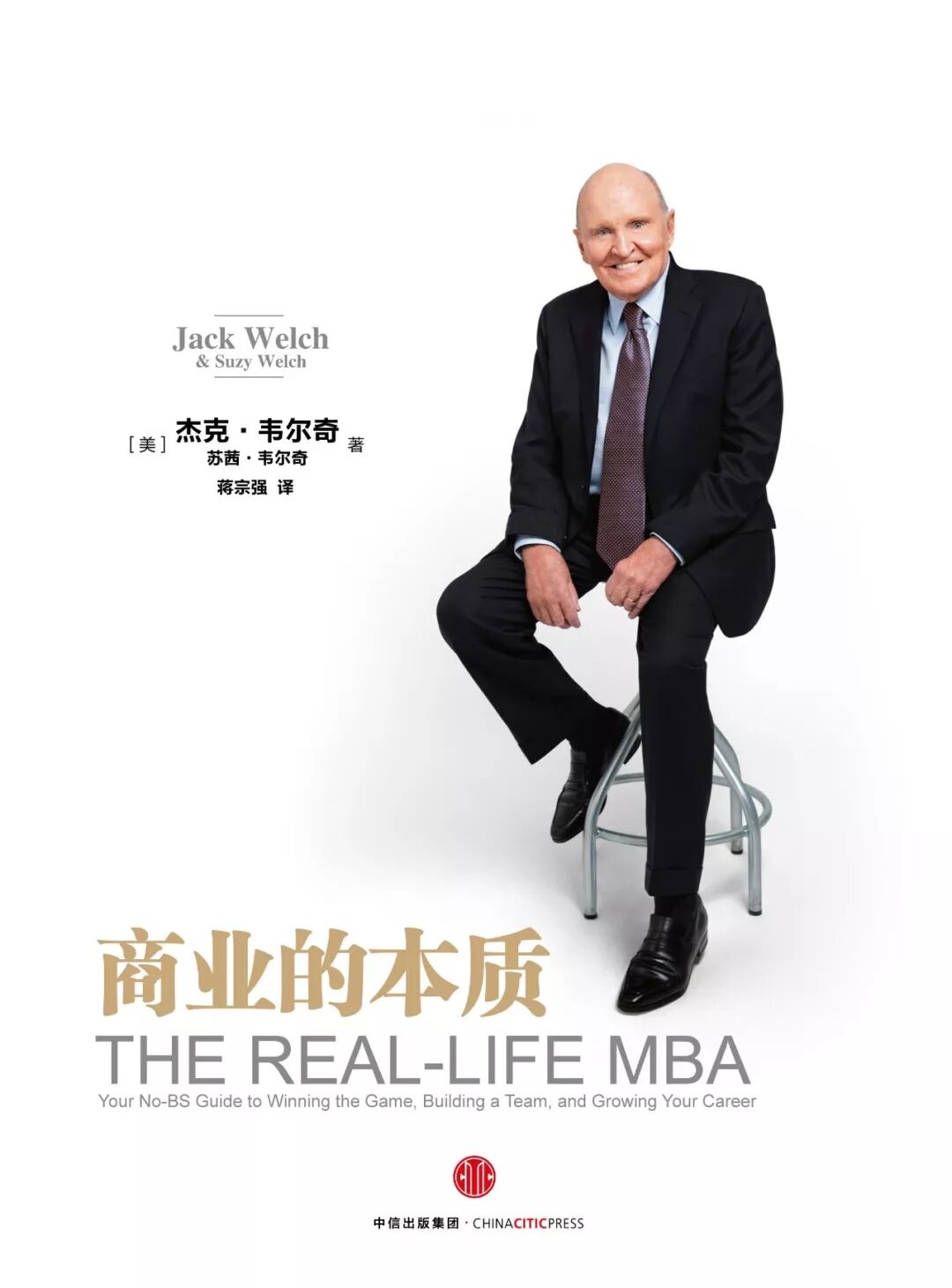
The Real-Life MBA
[US] Jack Welch, Suzy Welch
Translated by Jiang Zongqiang
Citic Press Corporation / September 2017
The beauty of management lies in relentless practice. Jack Welch, the "world's #1 CEO" and former chairman and CEO of General Electric, reflects on decades of business transformation and argues that the essence of business never changes. The keys to rapid growth are synergy, leadership, the data that truly drives performance and costs, fast and agile strategy processes, organizational optimization, and the psychological resilience of leaders.
▍Liu Changke @ Qingqing Jiajiao: This is a substantive book. Its treatment of "leadership" and emphasis on teams deserve careful study from every manager. If we can cross-reference its insights with our own theories and methods, our management capabilities will surely improve.
▍Wang Hao @ Saifeng Technology: This book covers the fundamentals every CEO needs, with many cases worth pondering.

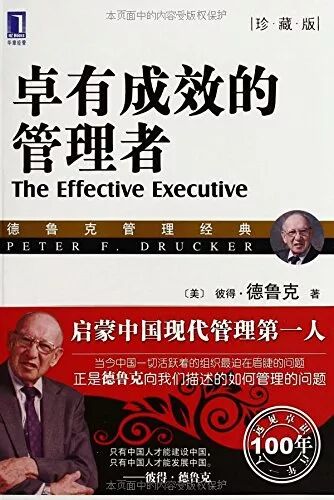
The Effective Executive
[US] Peter Drucker
Translated by Xu Shixiang
China Machine Press / September 2017
Can ordinary people achieve extraordinary things? "The father of modern management" Peter Drucker believed the answer is yes — if everyone in an organization is effective. Managers who bear responsibility for their organization and can influence its results must lead by example. Focusing on goals and performance, doing only the most important thing at a time, and improving communication are among the methods that make managers more effective.
▍Gao Can @ PatPat: Management efficiency and execution are the fundamental guarantees of rapid startup growth. If an organization wants higher execution and value, this book offers excellent thinking directions and case analysis, showing what time management and decision-making habits are most effective.
▍Liu Bo @ Shiyue Huhu: I read this book three times in 2017. Once an organization reaches a certain scale, the manager's self-positioning, self-management, and ensuring their actions truly deliver results for the organization become central to growth. Every entrepreneur should think deeply about this.


Homo Deus
+ Sapiens
[Israel] Yuval Noah Harari
Translated by Lin Junhong
Citic Press Corporation / February 2017
By reviewing human history from the first signs of life 100,000 years ago to the 21st-century entanglement of capital and technology, Yuval Noah Harari answers how humans rose from ordinary animals to the top of the food chain — and where we go next.
▍Zhang Rui @ Shiqu Hudong: Predict the future, create the future.
▍Zuo Weixiong @ Kunshan Meimiao Environmental Protection: The unknown is vast; technology guides development. Startups can leverage their comparative advantages and focus on what they do best.

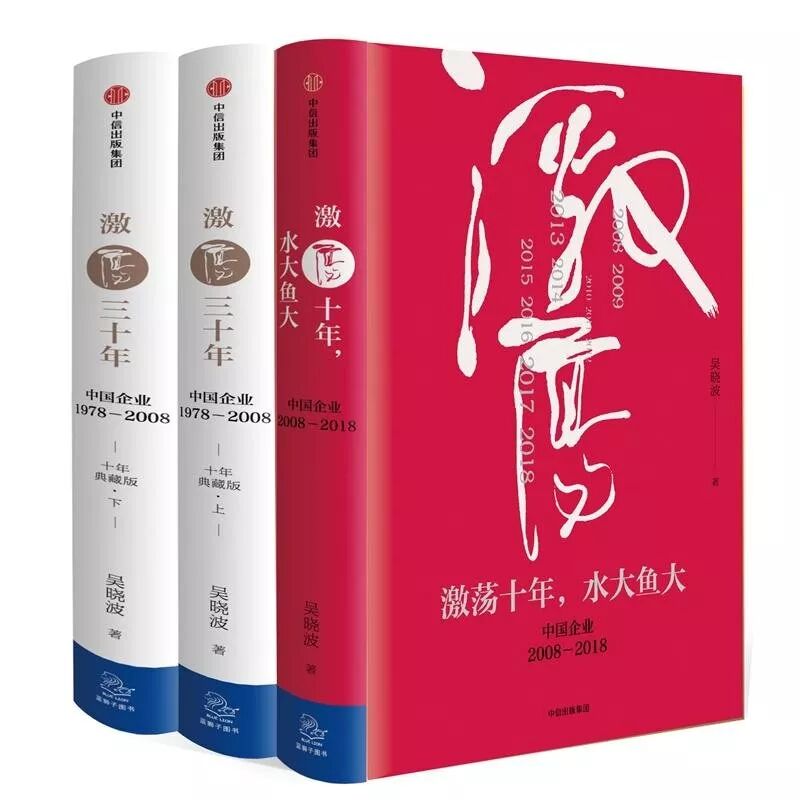
The Turbulent Forty Years
Wu Xiaobo
Citic Press Corporation / December 2017
From 1978 to 2018, as China's planned economy gradually dissolved, Chinese enterprises marched toward the market and the world. This book records the ebb and flow of state-owned, private, and foreign enterprises, and the anguish and joy of entrepreneurs making history.
▍Lei Shuyu @ Feixin Electronics: This series is a chronicle of Chinese enterprises, a summation of reform and opening-up's achievements. Wu Xiaobo captures the era's grand convergence through countless details, drawing on domestic and foreign publications, core magazines, personal interviews, entrepreneur autobiographies, and key policies and regulations. For entrepreneurs, this is essential reading. It gives us the possibility of mastering the past, and thus the future.
▍Zhang Xiaohua @ Anyipu Precision Instruments: This series offers a complete record of Chinese enterprise development over four decades of reform and opening-up. Looking back, many things we didn't fully grasp at the time now reveal how the trajectory of fate may have been set in that very moment.


The Three-Body Problem
Cixin Liu
Chongqing Publishing House / January 2008
The Three-Body Problem trilogy tells of information exchange and existential struggle between human civilization and the Trisolaran civilization — a reflection on history, a transcendence of morality, and an attempt to construct cosmic sociology, psychology, and ecology. The translated series won the 73rd Hugo Award for Best Novel.
▍Zhang Sai @ Yifei Automation: The bible every entrepreneur must read.
▍Hong Chuntao @ Feima Technology: Our journey is to the sea of stars.

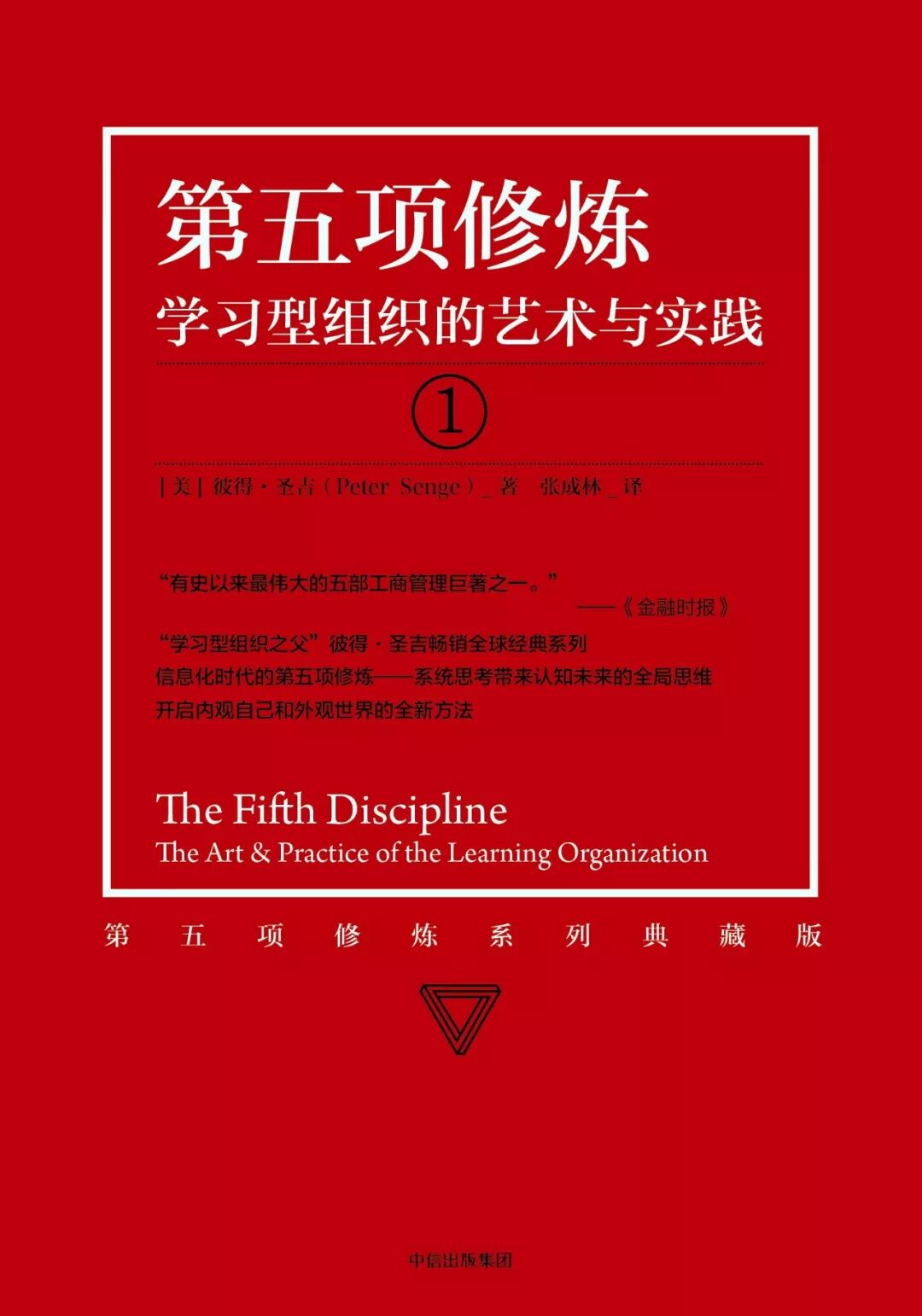
The Fifth Discipline
[US] Peter Senge
Translated by Zhang Chenglin
Citic Press Corporation / February 2018
A classic in business administration, this book introduces how companies can adopt learning organization strategies to eliminate "learning disabilities" that threaten efficiency and success. In the process, new and expansive thinking patterns are cultivated, collective aspiration is unleashed, and organizational members continuously learn how to create the results they truly desire.
▍Li Jie @ iBeidiao: For enterprises — especially modern ones in rapid flux — to thrive, they must first become learning organizations where members fully commit to learning and capability-building, helping themselves and the organization succeed. The "five disciplines" can be summarized as personal mastery, improving mental models, building shared vision, team learning, and systems thinking. This is valuable not just for mature organizations but for startups too.
▍Yang Linfeng @ Yangcong Shuxue: Once you understand your own and others' "mental models," it's like seeing a three-dimensional world from a fourth dimension — the root of problems lies plain before your eyes.

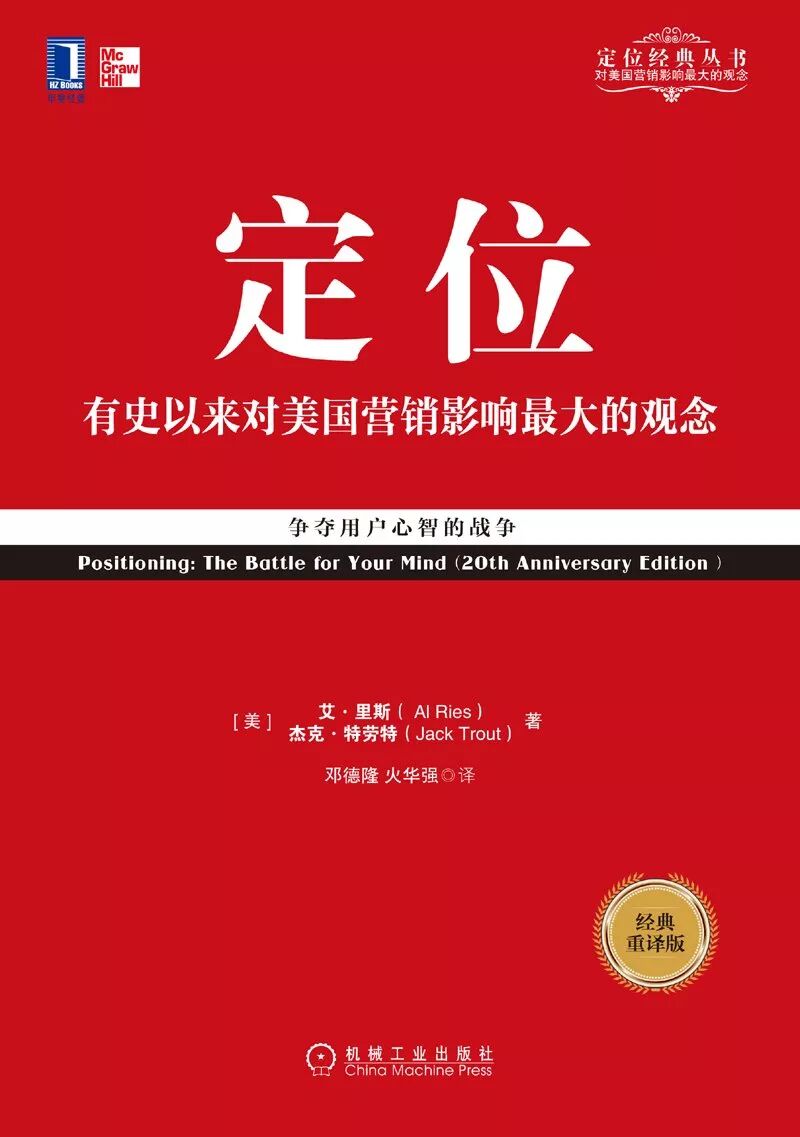
Positioning: The Battle for Your Mind
[US] Al Ries, Jack Trout
Translated by Deng Delong, Huo Huaqiang
China Machine Press / September 2017
This book presents what has been called "the most important marketing concept ever developed" — positioning. It analyzes why "meeting needs" fails to win customers, then shows how companies can enter customers' minds to win their choice.
▍Zhang Chenfan @ LUX: One of the books every entrepreneur must read.
▍Xiao Jianhong @ Xinyi Information Technology: Many CEO friends start from technological innovation. I hope this book helps everyone learn something about marketing.

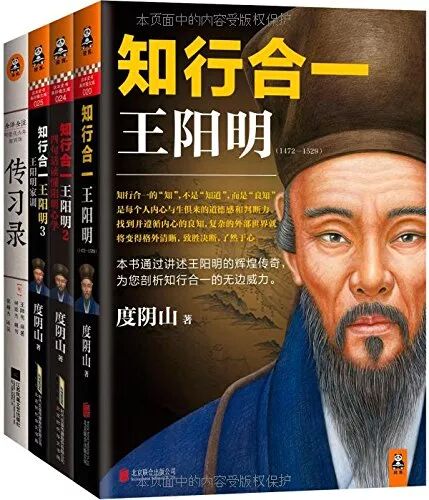
Wang Yangming: The Unity of Knowledge and Action
Du Yinshan
Beijing United Publishing House / July 2014
The mind is the master of the body. When the mind is at peace, the immense wisdom inherent in a person reveals itself. This book explains in accessible language the principles of "the mind is principle," "the unity of knowledge and action," and "the extension of innate knowing" — a way of thinking that contains the wisdom to discern good from evil and right from wrong.
▍Li Jian @ Xinliangji: Wang Yangming's philosophy of the mind synthesizes the best of three schools. Readers can cultivate their inner selves and elevate their thinking. It is also the foundation of business management. All who would achieve great things must read it.
▍Yang Shu @ Shuabao Technology: A dialogue with one's own soul.

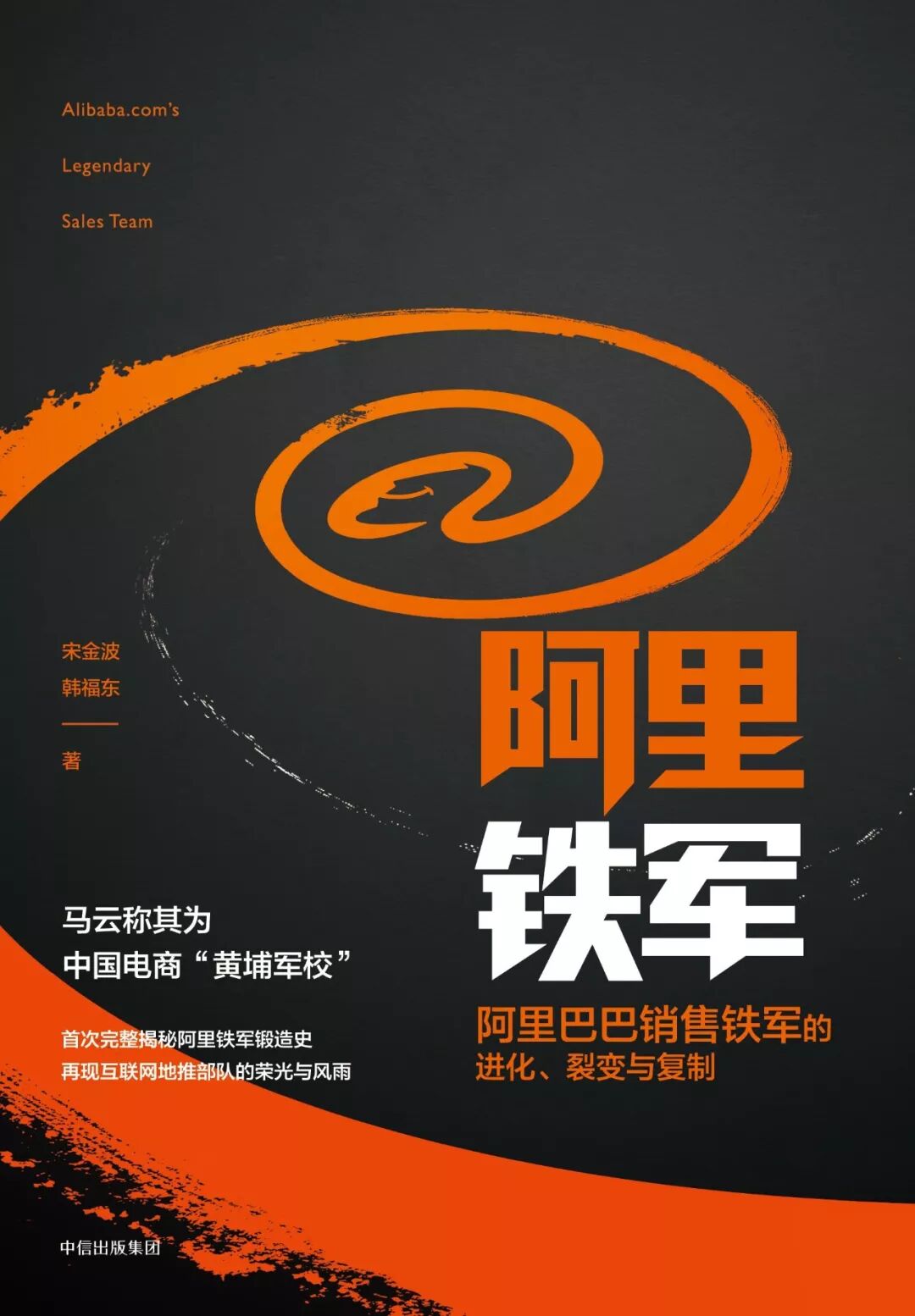
Alibaba's Iron Army
Song Jinbo, Han Fudong
Citic Press Corporation / July 2017
Alibaba once had a team called "China Suppliers," later dubbed by Jack Ma as the company's "Iron Army." Executives like Lucy Peng, Daisy Dai, Judy Tong, Sun Tongyu, and Joe Tsai all emerged from its ranks. This book reveals how such a ferocious, hyper-execution team was forged — and where its formidable sales capability came from.
▍Xiao Guan @ Guancha: Alibaba's Iron Army is famed for its execution, exemplified by "point where, strike there." Regional sales directors and managers were rotated on average every six months. No complaints — everyone stood ready to deploy and open new markets. This rotation system cultivates managers, who in turn bring new experience and different management styles to their teams.
▍Shi Rui @ Binglifang: Moved, and truly grasped the power of organization.
New Year Giveaway, One More Time!
Share your reading plans for the year, your thoughts on any of these books, or an interesting story about how reading connects to your work and life in the comments below. The 3 commenters with the most likes and the 3 most thoughtful commenters will each receive a copy of Principles (Deadline: 9:00 PM, March 4). We look forward to your contributions.
Reply with the keyword "书单" in our backend to get the full list of 100 CEO recommendations.
(Feel free to share to your Moments. For republication on other official accounts, websites, or mobile apps, please reply with "转载" to learn republication rules and contact FreeS Fund for authorization. Copyright belongs to FreeS Fund.)

▲ Startup as Permanent Wartime: 11 CEOs on Human Nature, Strategy, and Responsibility | 2018 FreeS CEO Annual Meeting Recap
▲ A Founder's 365 Days: The Days We Survived and 22 Amazing Moments | FreeS Year-End Special
We Know You Won't Read Them, But Here Are 18 Books and a Distraction-Free Joy Anyway