"The Chip Shortage": Entrepreneurial Challenges and Opportunities | FreeS Research Institute · Chip Series

Why Is the Auto Industry Struggling More Than Others With the Chip Shortage?
The chip shortage in automotive manufacturing first became apparent in 2020. Initially, it was seen as just a temporary global issue — many industry analysts expected it to resolve by the end of that year. But to this day, the shortage persists. BMW CEO Oliver Zipse recently commented that the situation may not end before 2023.
On April 27, 2022, in Season 6, Episode 10 of the "What's Next|Tech Matters" podcast, Yongcheng Yang, partner at FreeS Fund, and host Diane explored the theme "Two years on, why hasn't the chip shortage ended?" They discussed the following questions:
-
Why does the chip industry take longer to adjust supply-demand relationships compared to other sectors?
-
How is this round of "chip shortage" different from previous ones?
-
Many industries have faced "chip shortages," so why has consumer electronics been able to resolve them faster, while automotive moves more slowly?
-
How should we view the challenges and opportunities for China's semiconductor industry during this "chip shortage"?
Interested listeners can click the official "What's Next|Tech Matters" audio link below to tune in. We've also transcribed the conversation in this article. This is the fourth installment in the "FreeS Chip Series" — we hope it offers some food for thought. We look forward to continuing the conversation with you. Feel free to reach out to Yongcheng Yang, partner at FreeS Fund, at yangyongcheng@freesvc.com.
Livestream Registration On May 15, the third installment of the "FreeS VC Dialogue · Chip & Semiconductor Series" — Frontier Interdisciplinary Entrepreneurship — will feature Xin Zhao, founder of Xinsu Technology, and Yibin Li, founder & CEO of Xinyong Technology, going head-to-head online with Rui Ma, partner at FreeS Fund. They'll discuss how interdisciplinary collisions are reshaping how chips impact every industry.
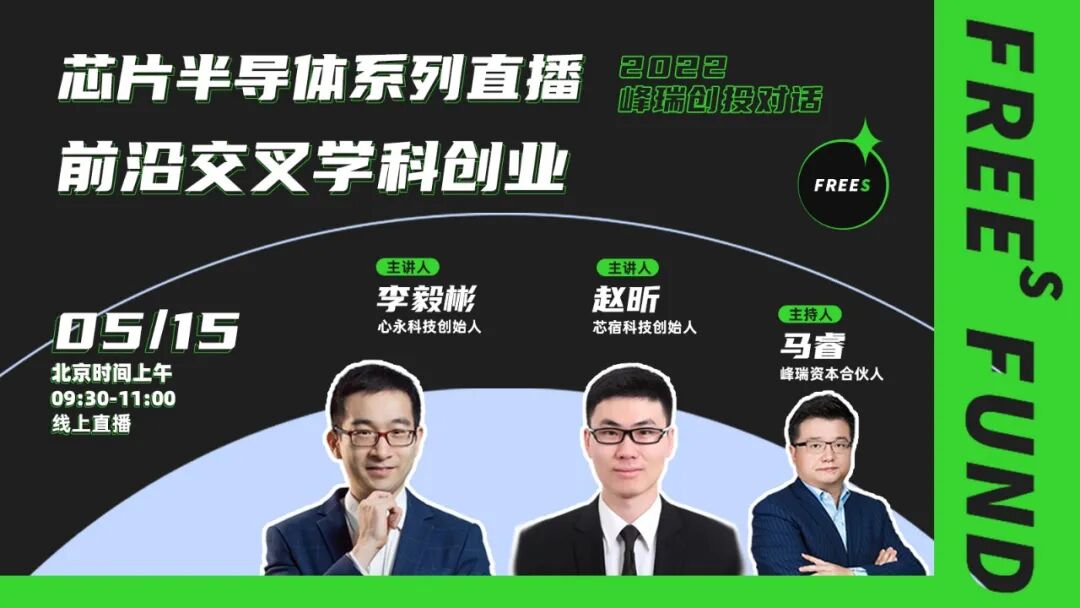
Click the "Register" button below on our video channel to reserve your spot ↓
ZOOM Livestream We've sent out the first wave of Zoom webinar invitations via email. A limited number of spots remain — scan the QR code or click "Read More" at the bottom left of this article to register for the Zoom room and interact with our guests live. Please check your inbox for the participation link. If you haven't received it, you can also contact FreeS Fund's WeChat account (freesfund) for access.

/ 01 / The Supply-Demand Dilemma Behind the Chip Shortage
Diane: Hi everyone. Recently, while searching for news about the "chip shortage," I noticed two very different takes. One came from The Wall Street Journal, with the headline "TSMC Warns of Tight Capacity, Says Chip Shortage to Persist." The other was a research report from Morgan Stanley, published on April 12, which stated that while chip shortages had led automakers to lower production forecasts, a sharp drop in demand for traditional consumer-facing products — PCs, smartphones, and consumer hardware — could create a supply glut. By tracking several key indicators, Morgan Stanley found that more than a year of supply chain tightness was finally easing. Today, we'll focus on the "chip shortage." Is the two-year-long "chip shortage" finally coming to an end?
Our guest today is Yongcheng Yang, or Yang as we call him, a partner at FreeS Fund. Yang focuses on deep tech investments, with over 30 years of experience and expertise in frontier technologies, chips, semiconductors, and IoT. Before joining FreeS Fund, he served as General Manager of Baidu's Hardware Ecosystem Channel Division and VP at Xiaomi. Yang, welcome to the show.
Yang Yongcheng: Hello.
Diane: For the past two years, everyone's been talking about the "chip shortage," which has had quite a lot to do with the pandemic. Can we start by analyzing exactly which aspects of COVID-19 caused this "chip shortage"?
Yang Yongcheng: The "chip shortage" itself isn't strange — "shortages" are essentially a normal market economy phenomenon. Typically, a "shortage" will return to supply-demand balance through market adjustment mechanisms, ensuring stable industry development. The way markets adjust supply and demand is fairly crude — basically "add water when there's too much flour, add flour when there's too much water." Imbalance is the norm. Ultimately, it has to be solved by market adjustment mechanisms.
Diane: I once saw a data chart. From 2000 to 2020, as you mentioned, there was a dynamic balance process in between — sometimes several years of oversupply, sometimes several years of shortage, constantly searching for equilibrium. Is that the right way to think about it?
Yang Yongcheng: That is indeed a characteristic of this industry. Compared to other sectors, the chip industry takes longer to adjust supply-demand relationships. There are several factors:
First, the technology is genuinely complex. For example, all silicon-based semiconductors and chips start from a pile of sand. You extract silicon from sand, and gradually purify it into an ingot. The ingot is like a crystal the size of a bucket, which is then sliced into wafers. From wafer to chip is still a long way — a wafer can be understood as a raw material for producing chips, like the dough base for a pizza.
To turn this base into a chip, the process is actually quite similar to making pizza — it's basically built up layer by layer. But unlike pizza, the layers aren't applied evenly, and there are typically far more layers than in a pizza. What goes where? Where doesn't need anything? This is where lithography machines come in.
After the lithography machine creates the pattern, photoresist is applied according to the pattern distribution to form uneven pits, which then go through an etching process. It's normal for a chip's "dough base" to have dozens of layers stacked up. Throughout this process, you need not just wafers, but also electronic specialty gases, and a special environment. It's an extremely complex manufacturing process. Over decades of development, every incremental advance in chip manufacturing has required enormous effort.
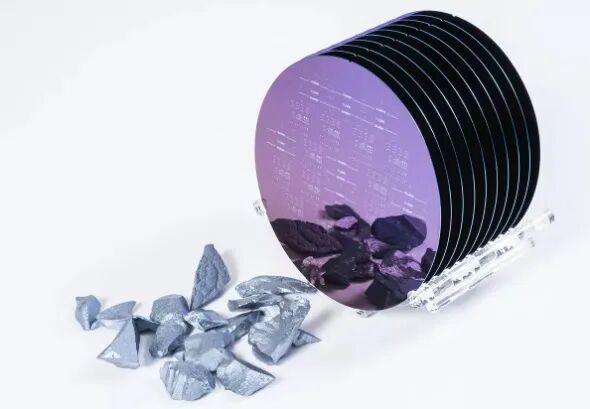
Silicon wafer | okmetic
So the technology is genuinely difficult. And because it's difficult, there aren't many people who can do it, and even fewer with experience. Competition also means companies aren't likely to share their knowledge and expertise with everyone. So when you want to expand capacity, money alone isn't enough.
Additionally, this industry is extremely globalized. Different materials come from different countries around the world — for example, semiconductor silicon materials may come from Japan or Germany, silicon-on-insulator (SOI) wafers are best made in France, and silicon carbide wafers currently come mostly from the US. And this is just the broad picture; there are many less obvious dependencies. For instance, after the Russia-Ukraine conflict, we discovered that neon gas for making lasers mostly comes from Ukraine...
That's the raw materials side. The manufacturing side is equally complex and international. Take lithography machines — a single machine may have over 100,000 components, sourced from countries worldwide. This global distribution of materials and components means the industry constantly faces uncertainty and volatility; supply chains can break very easily.
Diane: Will the current chip shortage attract more people to chip manufacturing or design?
Yang Yongcheng: It likely will. In recent years, whether in China, the US, Europe, or Japan, there's been considerable talent accumulation on the design side. But the production side, including materials, has relatively higher barriers. Production differs from design — because the investment is so massive, it's hard to learn through university courses or textbooks like you can with design. Inventors generally won't divulge all their knowledge and experience either. Then there are patent barriers — if your process nodes and technology are too similar to the leaders', you could face legal conflicts.
Diane: Intel announced its return to the chip manufacturing market last year, with multiple capacity expansion plans. How do you view this new wave of manufacturing and design integration in the industry?
Yang Yongcheng: The chip industry currently has two models coexisting in a state of competition and mutual support. One is the IDM model — designing and producing chips in-house. This was the original form of the semiconductor industry. Intel used to operate this way. Many Japanese semiconductor companies still do. The advantage is that you control the entire chain, making you less vulnerable to international disruptions.
The familiar model of fabless design companies partnering with foundries is actually a more recent trend. This emerged because as technology advanced, particularly in digital circuits, the industry had abstracted out a mature set of standard models, thinning the knowhow barriers. Much of the competition shifted to design rather than processing. Given that maintaining a fab is expensive and labor-intensive, many originally IDM companies outsourced production, testing, and packaging.
But some things companies are unwilling to let go. For example, Murata of Japan dominates most of the filter market. To this day, Murata controls everything from materials to process, design, and production in-house. Or take semiconductor materials like silicon carbide (SiC) and gallium nitride (GaN) — because there's still considerable knowhow involved, many companies choose to handle chip design, production, and more in-house.
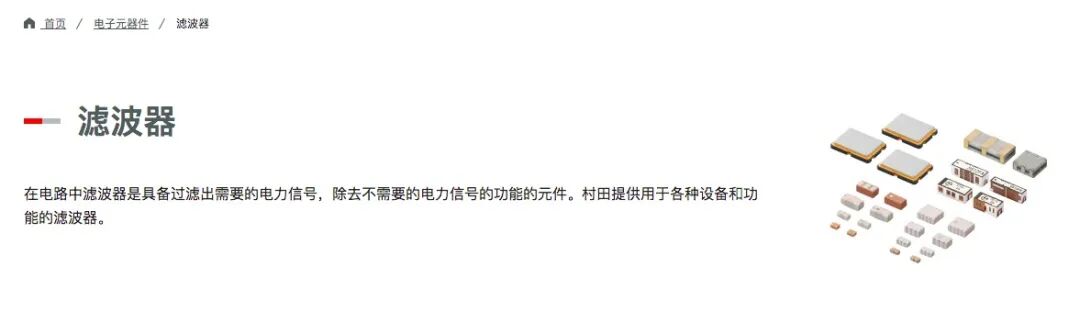
Murata's filter product introduction on its official website
IDM and outsourcing models each have pros and cons. For optical devices — laser sources, laser modulators — more than half use the IDM model. Keeping everything in-house is best for building technological moats.
/ 02 / This "Chip Shortage" is Long-Lasting and Wide-Ranging
Diane: Let's return to the "chip shortage" we first mentioned. When people talk about the "chip shortage" these past two years, are all chips tight, or just some? For instance, are automotive chips particularly constrained, while consumer electronics is relatively okay?
Yang Yongcheng: Phone manufacturing used to frequently experience "chip shortages" — mainly shortages of Qualcomm CPUs. Those "shortages" happened because those chips used newer processes still being tuned, so capacity was unstable. The current "shortage" has indeed lasted quite long, basically in sync with the pandemic. Besides duration, it's also broader in scope than before, particularly with large gaps in 8-inch and sub-8-inch wafers. Digital circuits, analog circuits, and sensors are all in short supply. This does relate to the pandemic — on one hand, COVID-19 weakened willingness to expand capacity; on the other, it dampened demand expectations. These are the special characteristics of this "chip shortage."
Looking back from the demand side, several sectors have had consistently strong chip demand since the pandemic began. First, laptops — more people working from home increased laptop demand. Second, phones, which we need to view from two dimensions. Long-term, phone volume growth is sluggish; short-term, chip demand isn't necessarily decreasing. When you buy a 5G phone now, its chip needs to cover all functions and frequency bands across 2G, 3G, 4G, and 5G. So while you might not see it on the PCB board — because multiple chips are packaged into small chip modules using secondary packaging technology — the actual number of chips packaged inside the phone has increased. Beyond laptops and phones, chip demand for smart home and wearable devices is also growing.
Another typical industry is automotive. Ten years ago, a car was still a mechanical power device. But through the development of Tesla and various "new car-making forces," we can see that cars are no longer just mechanical power devices — they've become information platforms, or mobile internet platforms. This somewhat parallels the evolution of mobile phones back then.
Driven by this transformation, cars now require vastly more chips. For example, most cars with autonomous driving features come with over a dozen cameras, plus ultrasonic radar, LiDAR, and so on. Beyond intelligence, cars have also gained other electronic functions — side mirrors that automatically fold when you exit, automatic fuel caps, windows, and seats. This too is an incremental chip market.
So as we can see, many of the industries mentioned above have experienced short-term "chip shortages." But which will be resolved more quickly? I generally agree with what you said at the beginning. Consumer markets will recover faster; automotive will likely be slower.
Industry Differences in the "Chip Shortage"
Diane: Why this difference?
Yang Yongcheng**: There are several factors. First, the semiconductor industry has extremely high complexity and automation. From the supply side, particularly for foundries and materials companies, their primary goal is large-scale production. Ideally, you design one chip with massive unit volume and keep batch-producing it. Because switching products involves redesigning the production line, and adjusting production lines is extremely complex. Of course, once running smoothly, efficiency is extraordinarily high — possibly higher than a money printer. So you see that CPU and GPU manufacturers recover capacity quickly, because the supply chain wants to do this. What the supply chain least wants are fragmented demands — small volumes for each, and if the requirements are even higher than consumer products, they're even less willing.
Unfortunately, the automotive industry has both these characteristics.
First, the requirements are high. Because unlike consumer products — phones get replaced every two years, while cars might be expected to run ten years without failure. So demands on chips are particularly high from both design and manufacturing perspectives, verification cycles are very long, making this typically not the optimal choice for foundries.
Second, constantly refreshing fragmented demands. Take ECUs — they're currently in short supply for car manufacturing. There are many types of ECUs, plus supporting software. The knowhow here is very high, requiring integrated consideration of software and hardware. For example, controlling windows versus controlling the trunk tailgate are different things with different requirements. From a foundry's perspective, this is a fragmented market, unfavorable for large-scale production. Major foundries typically don't want to do this; only during idle time might they consider it. When large production facilities adjust their capacity, even if you offer higher unit prices, they may not take this path. Demand-side urgency doesn't help; production-side profit priority prevails.
Another reason is that the automotive industry has less experience dealing with "chip shortages" than consumer electronics. Consumer electronics has been through many rounds of chip shortage challenges — shortages of Sony high-resolution image sensors, shortages of Sharp screens. These "shortages" most commonly occur during technology transitions, like from LCD to OLED. Throughout its development, consumer electronics has constantly faced various shortages. Particularly with key components, demand-side experience and capability in handling shortages have been honed. Meanwhile, in dealing with "shortages" — whether demand or supply shortages — interdependence between甲方 and乙方 in the chain has grown stronger.
For example, major domestic phone manufacturers have basically gone through this phase — visiting Japanese headquarters when LCDs were scarce to place advance orders; communicating with Qualcomm executives when chips were scarce to secure priority supply. They also prepared psychologically and capability-wise for manufacturers' conditions. And of course, on the flip side, since you asked for priority supply during shortages, even if your product reaches end-of-life or underperforms sales-wise, you have to take all the chips you pre-ordered.
For automakers, "chip shortage" is still a new problem, so their adaptation and adjustment capabilities aren't as strong as their consumer electronics counterparts. This also means the automotive industry's "chip shortage" will ease more slowly.
Diane: I saw a set of data using analog chips as an example. Comparing 8-inch and 12-inch production lines, 12-inch costs 40% less and gross margins are 8% higher. So consumer electronics chips have lower costs and higher profits, making them more attractive to produce.
Yang Yongcheng: Indeed, 12-inch is more efficient than 8-inch. The inch measurement refers to wafer diameter. How many chips you can ultimately dice out depends on area. Larger area means higher dicing efficiency. Some people have suggested — if 8-inch wafer capacity is insufficient, why not use 12-inch to produce? The intention is good, but how much it can help is uncertain.
Diane: Why?
Yang Yongcheng: For several reasons. First, if we simply categorize things as 8-inch versus 12-inch, we're oversimplifying the complex semiconductor industry. Even within 8-inch wafers, some are for MEMS, some for power devices, some for digital circuits, some for analog devices — each chip type has different structures and requires different processes and equipment. So even on the same 8-inch line, producing one thing makes it hard to switch to another. From 8-inch to 12-inch, this is even more true.
Second, even if theoretically feasible to convert 8-inch processes to 12-inch lines, the investment would rise significantly. If this market shortage wave passes, much equipment could sit idle. Foundry logic somewhat resembles money-printing logic — maximum benefit comes from high-efficiency production. This also means market-based adjustment is much slower than anticipated.
Despite many challenges, the current period represents a major opportunity for China's semiconductor industry.
Diane: How do you view the challenges and opportunities for China's semiconductor industry during this "chip shortage"?
Yang Yongcheng: We've discussed many challenges above. But for China's semiconductor industry, these past two to three years have also been a rare window of opportunity.
First, for startups, there are now abundant scenarios for experimentation and market entry — an unprecedented opportunity in history, particularly for the automotive industry. In the past, it wasn't necessarily that you weren't good enough — you simply had no chance to try.
Second, China's semiconductor industry started from a very low base, but advancing the semiconductor industry in both technological depth and breadth has become a key focal point for upgrading China's manufacturing sector. Against the backdrop of the global "chip shortage," this also becomes a major opportunity for China to integrate its chip industry chain and establish collaborative ecosystems for joint R&D, product development, and testing validation.
On March 7, 2022, at the State Council Information Office's press conference on "Staying Steady While Pursuing Progress, Promoting New Advances in High-Quality Development," it was stated that "going forward, first, we must address weaknesses and gaps, focusing on key areas related to national welfare and strategic security, targeting 'chokepoint' weak links, and fighting the battle for core technologies. Second, we must build on our strengths, upgrading traditional industries, developing competitive advantages in key sectors with full industrial chain competitiveness, cultivating emerging industrial chains, seizing opportunities in frontier areas, and accelerating development of new industries, new business forms, and new models. Meanwhile, we must remove bottlenecks, focusing on resolving chip shortage issues in automotive and other manufacturing sectors."
In the past, China's main advantages in the semiconductor industry were concentrated on the design side. Going forward, our breakthrough points will be in production equipment and materials. The knowhow in these areas requires substantial time and accumulated experience. In the past, our equipment penetration was relatively low — unlike abroad, where various universities have their own small foundries or production equipment for hands-on practice. Now, as we've established foundries of various sizes, these foundries will in turn drive progress in materials R&D at China's research institutions.
For example, in the gallium nitride space, some domestic companies have reached internationally advanced levels in epitaxial material technology. This is extremely time and energy consuming. Looking further ahead, in some emerging sectors like thin-film semiconductors — carbon nanotubes, graphene — we've also reached world-leading levels. In previous years, investment focused on the design side; now we may need to move into materials. Behind materials come processes and equipment.
One advantage of China's current industry chain is that we have presence at nearly every point, with some gains at each, all in growth mode. The end result is that when integrated together, the entire semiconductor industry's supply-demand-sales relationships will be very tightly knit. In the long run, besides national policy support, China's chip industry development also concentrates technology, engineering talent resources, energy supply, logistics — and after production, rapid deployment to the domestic market with timely market feedback. This demand-side feedback quickly reflects back to design and manufacturing, forming virtuous development. This avoids the efficiency losses from time lags and information distortion in cross-country communication.
Diane: One last question — will Moore's Law limit the future development of the chip industry? Or will there be new methods to drive further advancement?
Yang Yongcheng: When we discuss Moore's Law, we're actually discussing whether chip process sizes can get smaller — whether the basic unit, the field-effect transistor, can be made smaller. From silicon-based materials, continuing to shrink by orders of magnitude may become increasingly difficult. Our pursuit of advanced processes is mainly to further optimize switching speed and power consumption for digital circuits, and Moore's Law's decline mainly applies to this category of chips.
Future development opportunities may lie in new materials. If one day we can better control the generation, manufacturing, and positioning of carbon nanotubes, they would make excellent field-effect transistor devices. There are also two-dimensional materials like molybdenum disulfide, which could be good alternatives for achieving high-speed, low-power, low-voltage digital circuits. In these directions, China's progress is keeping pace with the global frontier, and in some areas even slightly leading.
Diane: Thank you so much, Yang, for walking us through the principles, manufacturing processes, and supply chain perspectives to help us understand where this "chip shortage" came from, and for helping us anticipate future trends. We remain confident in China's chips going forward, and look forward to more domestic chip entrepreneurs doing even better. Finally, thank you again, Yang, for joining us today.
Yang Yongcheng: You're welcome, thank you.
Livestream Registration On May 15, the third installment of the "FreeS VC Dialogue · Chip & Semiconductor Series" — Frontier Interdisciplinary Entrepreneurship — will feature Xin Zhao, founder of Xinsu Technology, and Yibin Li, founder & CEO of Xinyong Technology, going head-to-head online with Rui Ma, partner at FreeS Fund. They'll discuss how interdisciplinary collisions are reshaping how chips impact every industry.
Click the "Register" button below on our video channel to reserve your spot ↓
ZOOM Livestream We've sent out the first wave of Zoom webinar invitations via email. A limited number of spots remain — scan the QR code or click "Read More" at the bottom left of this article to register for the Zoom room and interact with our guests live. Please check your inbox for the participation link. If you haven't received it, you can also contact FreeS Fund's WeChat account (freesfund) for access.

▲In Chip Sector, How to Go From Scientific Innovation to Tech Entrepreneurship? | FreeS Chip Series
▲FreeS's Yongcheng Yang: The Red Ocean Is the Ultimate Battle Entrepreneurs Must Face
Can China's Domestic Semiconductor Materials Outrun International Competition? | FreeS Chip Series
Why We're Bullish on the Optical Chip Industry | FreeS Chip Series