Club Factory Raises $100 Million in Series D Led by Qiming Venture Partners and Several Domestic and International Funds, with FreeS Fund Following On | FreeS Fund Deal News

Ranked as India's third-largest e-commerce company
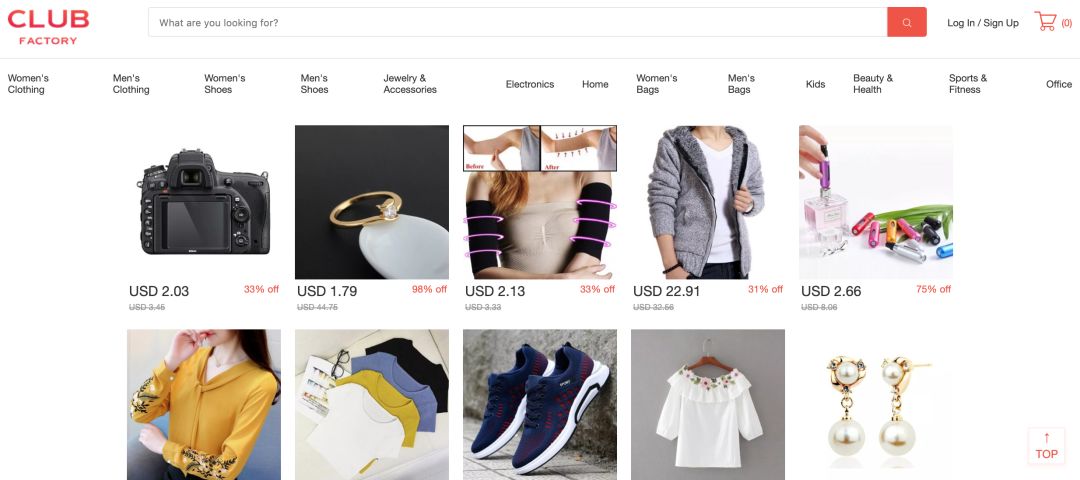
In recent years, as China's domestic internet dividend has gradually faded, overseas markets have increasingly become a focal point. Club Factory, a leading cross-border e-commerce company, raised $100 million in its Series D round in early 2019, led by Qiming Venture Partners and several other domestic and international funds, with existing shareholders FreeS Fund and BAI (Bertelsmann Asia Investments) making additional investments above their pro-rata rights. This followed Club Factory's Series A round of tens of millions of RMB in March 2016, which was led by FreeS Fund.
Since its launch over two years ago, Club Factory has consistently pursued a global vision built on technical capabilities and international perspective. In India, its core market, the company has surpassed Snapdeal to rank alongside Amazon and Flipkart as one of the country's top three e-commerce platforms. Its local seller business has grown more than 10x in the past six months. Much of this rapid growth in India can be attributed to Club Factory's "Hyper-Local" operational strategy. Beyond more localized user operations and marketing, its vision of "empowering the Indian ecosystem" has gradually taken shape. The company has even become India's largest online sales channel for traditional stronghold categories like ethnic apparel.
Club Factory founder Jialun Li believes that "lowering transaction costs for buyers and sellers, and enabling more local players to enter the ecosystem — that's how you become more local than the locals." Guided by this philosophy, Club Factory launched a local-to-local Marketplace platform with "0% commission," allowing any Indian seller with proper legal credentials to sell on the platform. The company also pioneered a strengthened shop concept among Indian e-commerce platforms, permitting buyers and sellers to communicate directly through its proprietary messaging app. This broke the platform monopoly over buyer-seller information that had characterized Indian e-commerce, allowing small and medium sellers to better cultivate their own customer relationships.
Business models like "0% commission for merchants" or "allowing direct buyer-seller contact" are hardly novel in China. What Club Factory has done is combine its team's strong international perspective with product and technical capabilities to successfully adapt proven Chinese internet business models for the Indian market — then go deep across every dimension of local operations. The result is an international internet company that marries global vision with local execution.
Jialun Li notes that "India ranks third globally in purchasing power parity and second in population. A market of this scale necessarily demands diversity. In India, both Amazon and Flipkart lean toward JD.com's heavy-asset model, pursuing quality supply within a closed ecosystem. But India also needs another kind of e-commerce — a more open, platform-based model that gives consumers more choices and makes the ecosystem healthier and more dynamic. That's the fundamental reason Club Factory has been able to grow so rapidly in India."