Consumer Innovation Never Sleeps: How to Build New Categories Through Interdisciplinary Approaches | A FreeS Fund Conversation

How much room for growth is left in the sports market?

Fitness is a national pastime and a multi-billion-dollar industry. The traditional fitness sector is undergoing massive transformation. During COVID-19, brick-and-mortar gyms took a severe hit, while online fitness apps surged.
According to SensorTower's 2023 Health and Fitness App Market Insights, global health and fitness app downloads jumped nearly 50% in 2020, surpassing 2.7 billion. Downloads have since retreated from that peak over the past two years but remain above pre-pandemic levels. Earlier this year, Keep rang the bell at the Hong Kong Stock Exchange, becoming the "first exercise tech stock" with a total market cap of HK$16.8 billion (as of September 6), capping off this wave of change.
But the path toward intelligent fitness isn't the only one. Digitized strength training equipment represents an even newer track. Smart fitness brand SPEEDIANCE — "Sujing" (速境) hereafter — was founded in December 2020 and has since completed angel and Pre-A funding rounds against the headwinds.
Founder Tao Liu previously served as a product manager at star tech companies including FITURE and XGIMI, with products under his leadership generating cumulative sales exceeding RMB 1 billion. He's also a fitness enthusiast himself. Like many beginners who quit halfway, he once let home gym equipment gather dust for lack of professional guidance and motivation. Yet this frustration sparked an insight: could there be better equipment that let everyday users experience the professionalism and joy of strength training?
He noticed that in robotics, robotic arm motor systems gave machines far more precise control capabilities. Why not apply this technology to fitness and digitize traditional equipment? So SPEEDIANCE converted the physical weight of gym equipment into digital weight. At conventional gyms, people lifting barbells mainly interact and wrestle with iron plates. SPEEDIANCE's motor system delivers high-precision, dynamic, and adaptive digital weight that better serves diverse user training needs.
SPEEDIANCE is, in essence, a classic cross-disciplinary project — drawing ample support from China's robotics, motor, and sensor industries while fully leveraging the country's consumer electronics supply chain and industrial digitization advantages.
Recently, SPEEDIANCE founder Tao Liu and FreeS Fund Vice President Ying Shen sat down on the podcast High Energy (「高能量」) to discuss:
- How did the fitness industry develop in China? What changes and impact has Keep's listing brought?
- From DJI to Peloton, how do consumer electronics brands build moats?
- What distinct advantages do China and the US each hold in consumer hardware?
- How can cross-disciplinary approaches solve the pain points of product innovation?
- In a company's early stages, how do founders mobilize and motivate teams?
We've edited their conversation into this article, hoping to offer fresh perspectives. We invite you to continue observing and exploring with us. You're also welcome to tune into the full episode on Xiaoyuzhou or Apple Podcasts by searching and subscribing to High Energy.

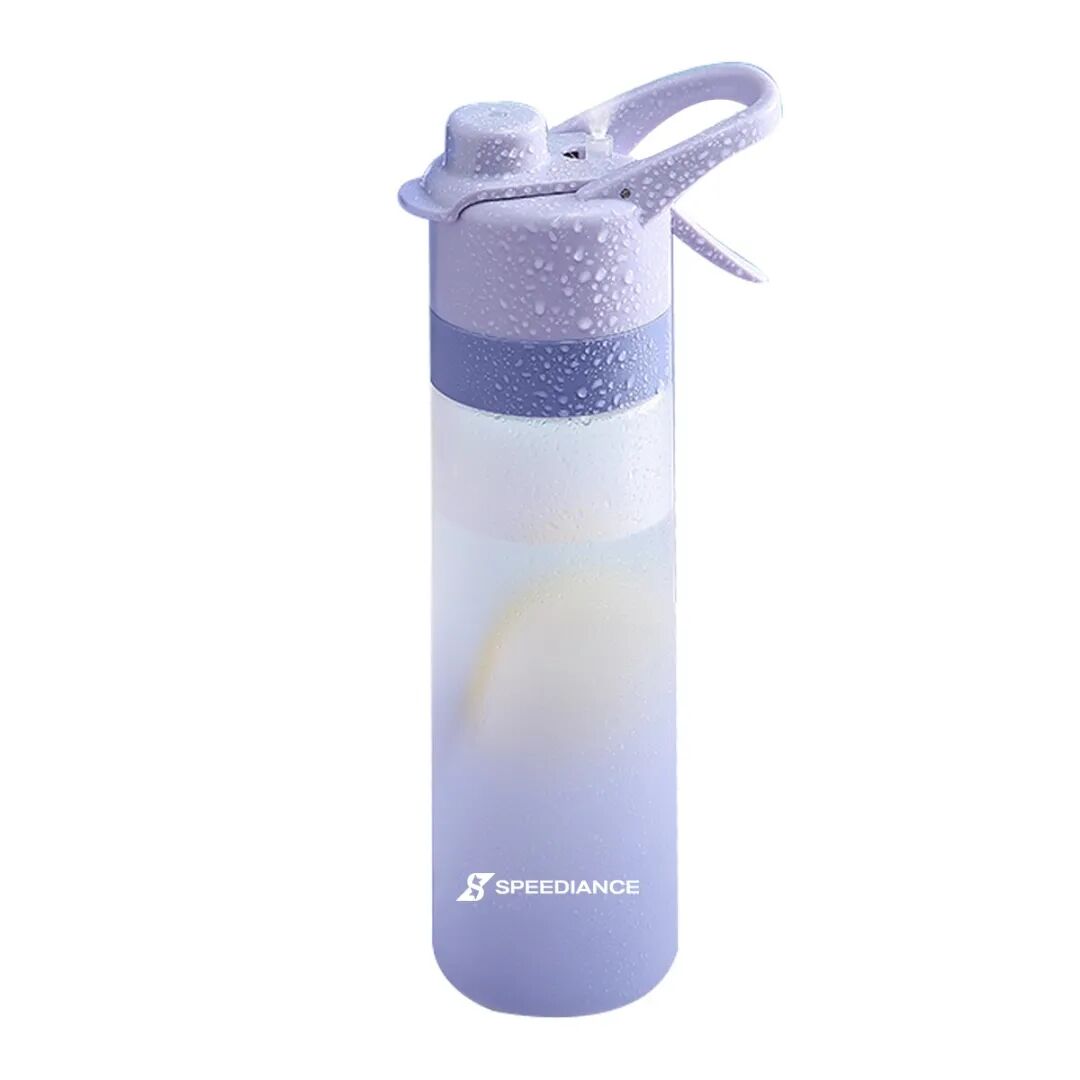
Giveaway What type of exercise do you enjoy? What new opportunities or trends have you spotted in today's fitness market? Share with us in the comments! By 17:00 on September 14, we'll select the 5 most thoughtful commenters to receive a SPEEDIANCE sports water bottle.

/ 01 / Digitizing Exercise: How to Create a New Category?
Ying Shen: Keep recently listed on the Hong Kong Stock Exchange, generating fresh buzz around the fitness track. How do you view this event?
Tao Liu: Keep's IPO proves capital markets' long-term recognition of this industry. But from my recent observations, the listing hasn't attracted much additional user-side interest. Overall, it's accelerated attention from primary and secondary markets toward this sector. Fitness is a long-term process — it's hard to accelerate growth through one company's阶段性成果 [milestone achievement].
Ying Shen: The fitness industry is indeed a long, wide track. But after pandemic restrictions lifted, many companies in the sector have risen and fallen, with some gyms facing operational difficulties. How do you view the current market?
Tao Liu: Looking at the industry's development, around 2014–2015, SuperMonkey, Lefit, and Keep emerged in succession. The internet educated a massive wave of users about fitness, which then drove people into gyms. After tasting success, gyms went on a wild expansion spree in 2015–2016. China's fitness market was still very nascent then — user awareness, fitness stickiness, and demand for personal training were all unstable — yet the industry experienced a井喷式增长 [geyser-like growth spurt].
Unfortunately, COVID hit in 2020. The industry suffered tremendously, unable to acquire new users or charge for new personal training sessions. The entire sector went through cash flow difficulties during the three-year pandemic. But from the demand side, user stickiness around exercise actually increased overall. So I believe demand will inevitably strengthen supply. We need to more meticulously refine our business models, manage our teams, and operate our stores well.
Ying Shen: To sum up, the industry is still developing and needs to provide supply adapted to market conditions — and quality supply remains a pain point awaiting resolution in fitness.
I still remember first meeting you in 2021 — you were dragging a suitcase that contained not luggage but your motors, the earliest form of what would become SPEEDIANCE. At the time, many startups focused on cardio fitness, yet almost no one was touching strength training. Your motors gave us great imagination. I'm curious how you arrived at this direction?
Tao Liu: I'd previously purchased home fitness equipment including benches, small dumbbells, and resistance bands. But lacking professional guidance and motivation, I didn't stick with it. The seed remained planted though — I hoped to someday create better equipment. Later I discovered that in robotics, motors enabled far more precise machine control. We wondered if we could apply this to fitness equipment and digitize it.
Digital exercise can solve many problems — lack of guidance, no data tracking, inability to interact during strength training. If we trace back, strength training even dates to ancient times like the overlord lifting the bronze ding. Today, roughly 400 million people globally do strength training, yet most still use traditional equipment that hasn't seen fundamental innovation in decades.
Digitization isn't only needed at home. Large numbers of users switch between C-end and B-end scenarios. We tried building a B-end device — for fitness, it's simply the same activity happening in different settings.
We can also collect more user data through equipment to help people find their favorite exercises. For example, after gathering extensive user data from gyms, if we discover back-training machines get more use than leg machines, we'll反向设计 [design in reverse] specialized back-training courses.

▲ SPEIDIANCE product client interface; Image source: SPEEDIANCE
Ying Shen: The earlier wave of fitness buzz concentrated on projects like Keep and SuperMonkey that focused mainly on cardio. Strength training suits more advanced fitness crowds. How do you view your project's position within the industry?
Tao Liu: As we mentioned, China's fitness track only really took off around 2014–2015. Keep, SuperMonkey, Lefit, and chains like Will's and One-Fit Wade rose rapidly from then.
But exercise is highly diverse — including recently popular rock climbing and extreme sports — requiring more equipment to support it. SPEEDIANCE serves as the vehicle for strength training. Traditional equipment can't let home users do comprehensive, full-body exercise in small spaces. We've created an entirely new category.
Ying Shen: You've used an innovative model to create a new product form. How did you conceptualize the product?
Tao Liu: As a product manager, I invested considerable effort in early user insight. The first step in defining a product is understanding what needs users have. Which comes first, the hammer or the nail? I lean toward finding the nail first — identifying the pain point, then figuring out the tool to solve it.
In the fitness scenario, I identified a problem: traditional fitness happens at gyms, yet we go home every day. If fitness has become a habit, it should be achievable at home. The equipment users most commonly use at home are dumbbells and barbells, which use vertically downward gravity to provide resistance training. I wondered: could I design a traction force from bottom to top, creating an internal gravity fitness device?
We started with just a flat board, embedding two motors inside it. But the interaction was poor — without a display, users couldn't see data or interact. So we added a screen in front. Once we had a screen, why not use an upright product form? So we made the screen support into a gantry frame form.
Then how to combine vertical and horizontal force? We designed two sets of fitness interfaces. Now it became L-shaped — the upright portion served gantry functions, the horizontal portion handled vertically downward force. This matched our need to replace both dumbbells/barbells and gantry frames.
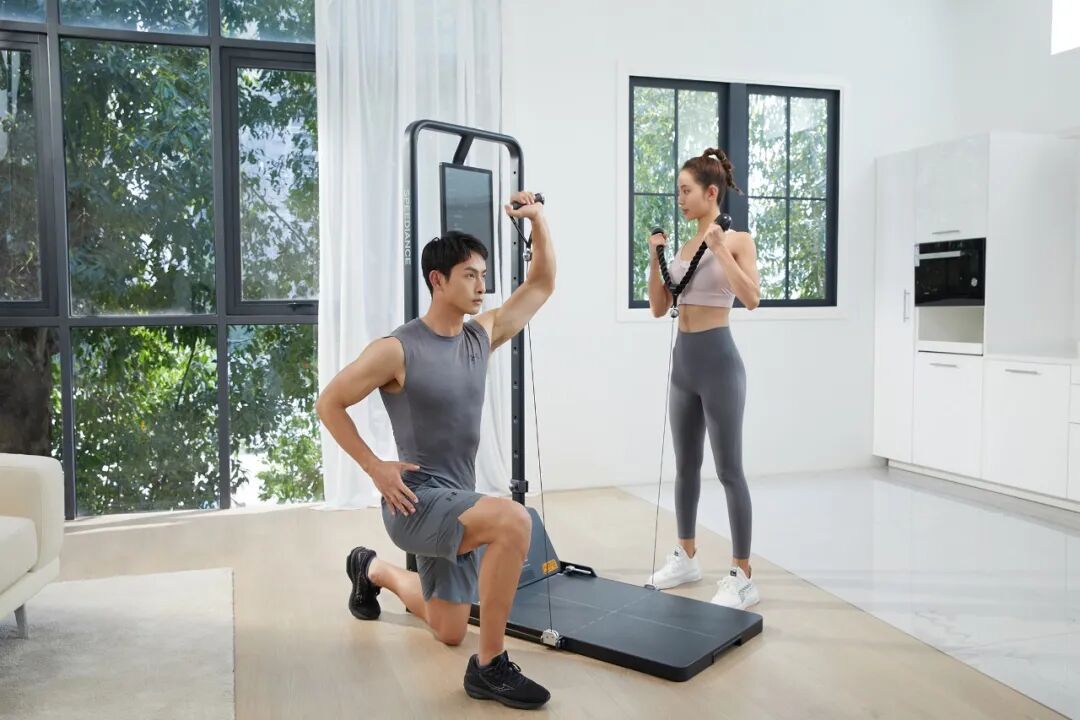
▲ Image source: SPEEDIANCE
With the gantry and base plate done, it still took up too much space. So we made the base plate foldable. Through continuous deep insight into needs, refining industrial design and structure, the product finally became what it is today.
The feedback from customers has been strongest on three points. First, it works right out of the box — no installation, no drilling into walls. Second, the convenience that digital brings to strength training: one tap to jump to 40 kg or 60 kg, no need to swap out dumbbells, no clanking noise. Third, the variable resistance that traditional strength training simply can't offer, helping users achieve better muscle stimulation throughout their workout.
Going forward, we'll continue designing products and software features with the user in mind. We're also experimenting with AIGC to have machines help generate portions of our courses — things like leg decompression workouts, core stability training, and explosive power training.
/ 02 / From DJI to Peloton: How Do Consumer Electronics Brands Build Moats?
Shen Ying: Consumer electronics covers a lot of ground. What drew you to fitness specifically? Did you see it as a high-growth space, or was it personal interest?
Liu Tao: A bit of both. First, it's a genuine personal interest. Second, I see fitness as an exceptionally long runway. As economies develop and material living standards rise, fitness penetration keeps climbing. What we're building right now is a consumer-facing strength training device. In April we launched our B2B product line, so the product portfolio is expandable. That's an interesting challenge for our product matrix strategy. Fitness is also a field where you can build real barriers — the technology compounds, creating higher and higher technical moats.
In consumer electronics, DJI is a brand I deeply admire. I've been a "fan" for over a decade. To me, DJI is a company with extraordinary vitality, constantly iterating on its technology and products. From roughly 2008 to 2012, DJI mainly served hardcore flying enthusiasts with controllers. Later it expanded to gimbals, then enriched its image transmission capabilities. I learned that DJI started by purchasing Qualcomm chips, then moved to custom-developing its own. Every generation of DJI products has reinforced its technical moat.
Why was DJI able to build this moat?
First, DJI isn't easily held hostage by core supply chains. Whether it's image transmission chips, gimbal CMOS sensors, or motors, it has relatively abundant supply chain options.
Second, DJI has spent over a decade deeply embedded in the drone space, accumulating long-term R&D沉淀 and technical expertise. As a hardware entrepreneur, I very much hope SPEEDIANCE can, through five years or more of accumulation, establish a similar lead.
Looking back at fitness, our motor drive control represents an accumulated advantage — it's hard to build a high-performance motor drive system from day one. More importantly, our content and data platform is a long-term accumulative advantage for us.
It's somewhat like the internet flywheel effect: more users attract more coaches, more coaches produce more premium content, which draws in more quality users, while also driving down our supply chain production costs.
Shen Ying: We've been following Peloton, the smart fitness hardware company. After the pandemic hit, its valuation multiplied several times and sales exploded. But in the post-pandemic era, its stock quickly fell back to pre-COVID levels. As a company also focused on home fitness, how does SPEEDIANCE view the demand shifts before and after the pandemic? What lessons have you drawn from Peloton's ups and downs?
Liu Tao: I think the process was indeed triggered by the pandemic — a portion of users who had planned to purchase were pulled forward, so there was naturally a subsequent decline.
Second, after its crowdfunding launch, the bike has remained Peloton's core product. So far, it hasn't found an effective second growth curve, seemingly no second hit product. For any company, trying to support ten years of growth on a single product is an enormous challenge.
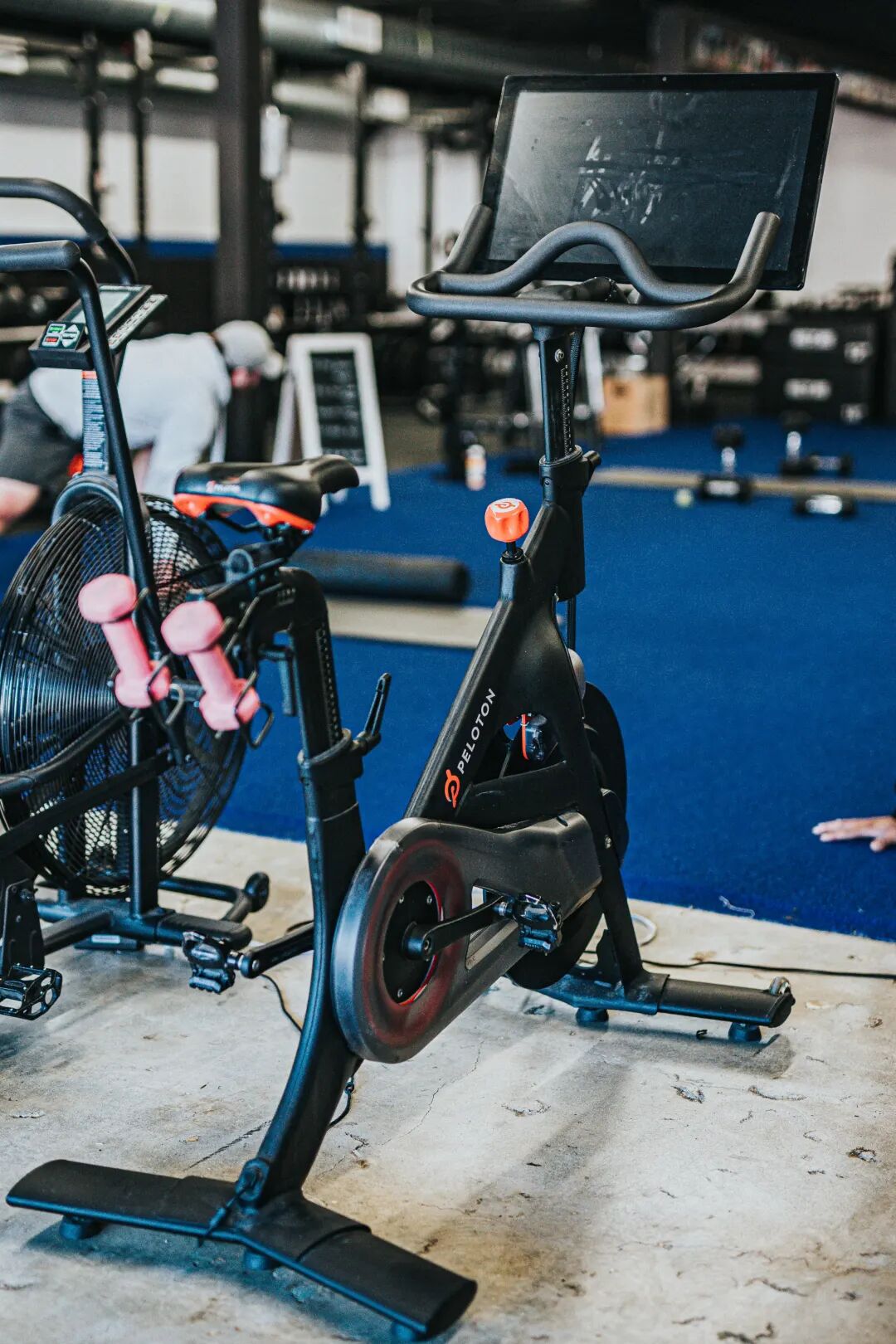
▲ Peloton bike product; Image source: Unsplash
Third, Peloton's operational efficiency could improve. With a team of over a thousand people, its hardware iteration speed is relatively slow. For a company with offline stores, a non-essential product — not food, clothing, housing, or transportation — sitting in prime real estate selling only one product, the store efficiency probably isn't very high.
Fourth, from what we can see, Peloton's hardware supply chain management still isn't fully mature. Looking at its financial reports, for three consecutive quarters, with selling prices of $1,500–$2,500, hardware gross margins were still negative.
Fifth, beyond the problems, Peloton's strengths are also clear. Its financial reports over the past three quarters show roughly $700 million in revenue each quarter, with content revenue at about $400 million and hardware around $300 million. Content revenue exceeding hardware sales proves that Peloton's business model is fundamentally sound.
Shen Ying: From my personal perspective, Peloton's success is inseparable from its insight into American users and its marketing capabilities on home soil.
Liu Tao: I completely agree. But before marketing capability, Peloton was the first product company to put a screen on a stationary bike. Peloton's founder isn't a marketing genius — he's an engineer. Though it was a small innovation, he revolutionized the user experience at the product level, creating the first interactive content-enabled spin bike. That was the foundation of their success.
Peloton's model is a good one: leveraging cutting-edge technology advantages based in the US to build innovative consumer hardware. But Peloton has clear weaknesses in supply chain management and team operational efficiency.
Why China can produce so much consumer innovation is because we have vast numbers of excellent R&D engineers willing to iterate on products and build at the application layer. China's industrial chain advantages are unmatched by other countries.
Shen Ying: We also noted in a recent consumer report that in offline consumer electronics, Apple and Tesla, as global leading consumer tech companies, stand head and shoulders above the rest. But looking at average performance, China's consumer electronics industry still holds the advantage. Just in terms of infrastructure, the supply chain efficiency of Shenzhen's consumer electronics industry likely far exceeds other regions globally. (Welcome to read: A Trip to the US: 6 New Opportunities in Consumer Sub-Sectors | FreeS Research)
Liu Tao: I was talking with an overseas entrepreneur recently. He said it took six months to get a prototype made in Los Angeles. In Shenzhen, you might get it done in six days.
/ 03 / "Porsche Invented the Electric Car a Hundred Years Ago,
But Tesla Ultimately Made It Work"
Shen Ying: SPEEDIANCE's product sits at the intersection of technology and consumer innovation. In the innovation process, where do you find the greatest challenges?
Liu Tao: I only realized after starting the company just how cross-disciplinary we are. There's the robotics direction — motor and electrical control. There's the software direction — presenting workout information and social features through the mobile app and on-device screen. And there's content production — not just filming, but professional coaches, complex exercise science knowledge.
Fortunately, our team is inherently cross-disciplinary. I have accumulated experience building hardware products. Among my partners, some specialize in robotics technology, others come from BAT companies with deep software expertise. So our team can both execute motor control well and digitize traditional equipment more effectively.
In the innovation process, the hardest thing for us right now is how to make content diverse and professional enough to present in a personalized, "thousand-users-thousand-faces" way. That's a long-term process.
We've come up with quite a few solutions: recruiting content product managers with deep fitness industry experience; engaging well-known domestic coach teams to record courses; expanding expert resources including media studies graduates and sports health industry researchers. On top of these foundations, combined with AI technology, we can make personalized recommendations increasingly sophisticated.
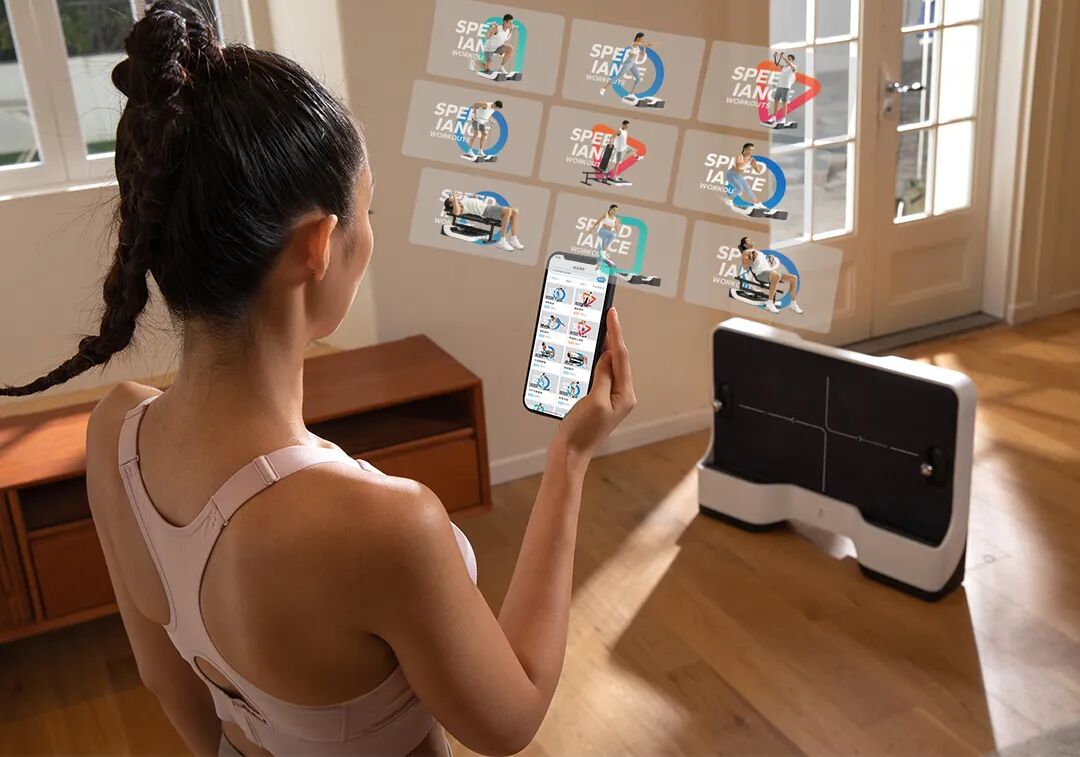
▲ SPEEDIANCE home fitness device GYM PAL paired with rich training courses; Image source: SPEEDIANCE
Shen Ying: SPEEDIANCE's products focus primarily on strength fitness, but for beginners, they still need personal trainer assistance. For you, are personal trainers potentially something that needs to be displaced?
Liu Tao: SPEEDIANCE isn't actually trying to replace personal training sessions. Trainers serve several functions: first, getting users started; second, constantly pushing you to train during workouts; third, helping elite athletes break through plateaus with hardcore coaching.
Breaking this down: First, can SPEEDIANCE teach beginners? It's difficult at this stage — there are too many movement cues, and we can't do visual capture through sensors. Second, what can we do? We can activate engagement, through courses and app push notifications to help boost user activity. Third, how do we help more advanced athletes improve? We have commercial-grade equipment that's more digitized and larger-scale, helping users achieve breakthroughs.
We mostly hope to empower trainers and enhance user experience while lowering user costs. Excellent trainers actually benefit from this, because there's a wealth of user data here. We'll also use AI to replace some of the simpler trainer tasks — like program planning, injury prevention. SPEEDIANCE empowers trainers; it's not a simple replacement relationship.
In the near term, SPEEDIANCE's competitors are still industry peers. In the long run, I think our real competitors are actually the cultural forces that encourage people to indulge their laziness and not exercise. The long-term result of such culture might be shifting society from "fitness as beauty" to "lying flat as beauty" — turning time that could go to fitness into lying at home playing games. Stretch the timeline to something like 20 years, and our competitors are the collective set of all companies competing for this slice of user mindset, time, and money.
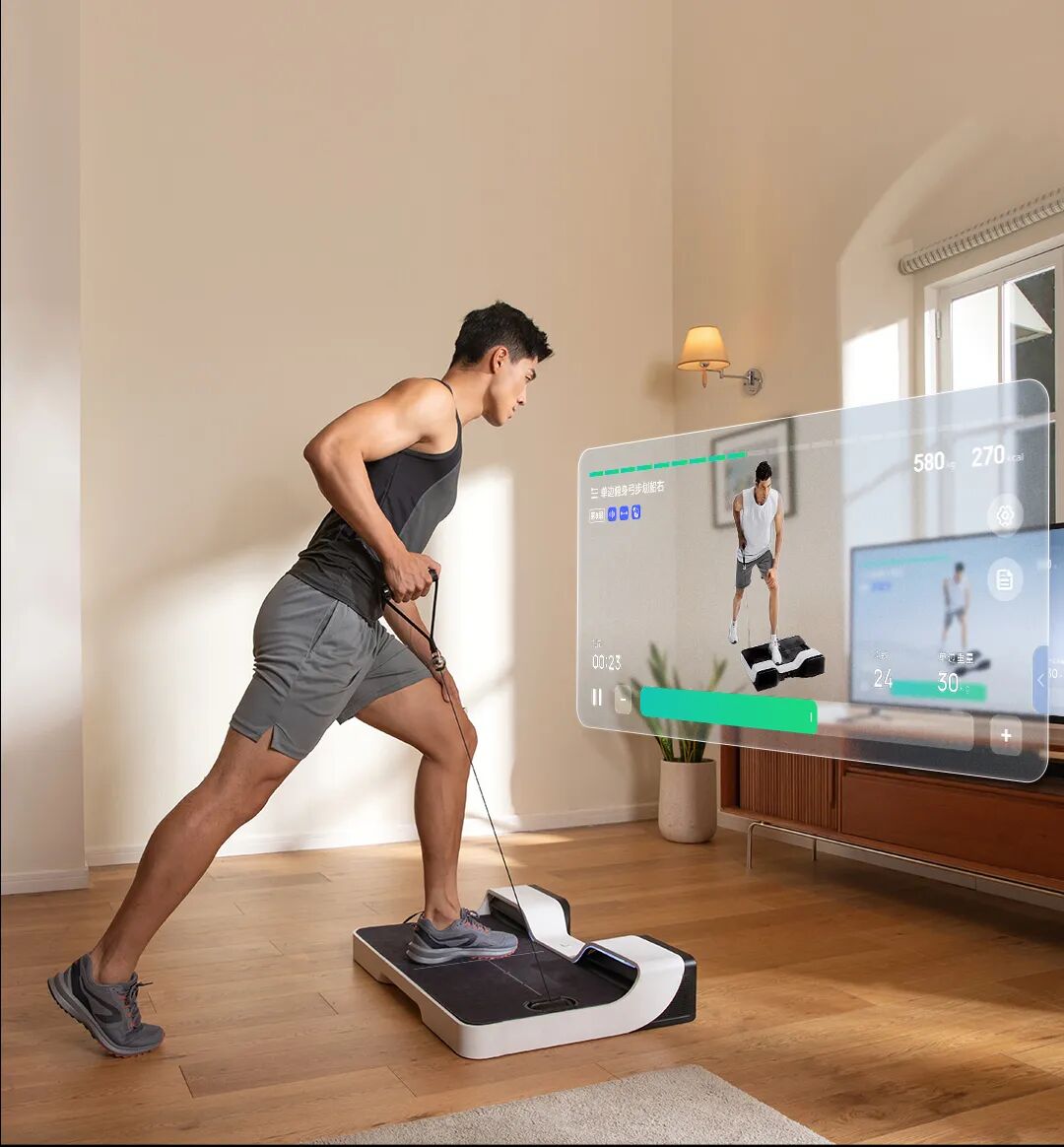
▲ SPEEDIANCE home fitness device GYM PAL aimed at beginner users; Image source: SPEEDIANCE
Shen Ying: Traditional fitness scenes feature lots of large weightlifting equipment. Why haven't these fitness equipment manufacturers built products similar to yours?
Tao Liu: Traditional gyms lean toward conventional manufacturing. They don't have teams doing algorithm research, hardware design, or software R&D. They may look like fitness equipment companies, but they're essentially traditional processing plants.
Porsche invented the first electric vehicle over 100 years ago, but it was Tesla that ultimately made it happen. The door to technology doesn't suddenly open one year — it takes a committed team to push it open.
In recent years, BLDC (brushless DC motor) technology, robotic arms, and various control systems have gradually matured. Within this window, products similar to SPEEDIANCE could have emerged. But we were willing to try, willing to fail — so it was us.
Shen Ying: Many industries benefit from iteration in upstream industries or their ecosystem. Looking at your entrepreneurship, have updates in motors or upstream supply chains provided any momentum?
Tao Liu: I completely agree — industry maturity determines the difficulty of entrepreneurship. The biggest driver for motors has been the robotics industry. It helped us design and produce high-performance motors, and through application, the entire supply chain has matured.
Second, the robotics industry helped us achieve some complex controls. We then further optimized to make motors adaptable to current application scenarios. For example, our motors need to rotate forward and reverse, handling complex scenarios where the user pulls it and it pulls the user. We built on the robotics industry's foundation to develop our own algorithms and motors suited to this application.
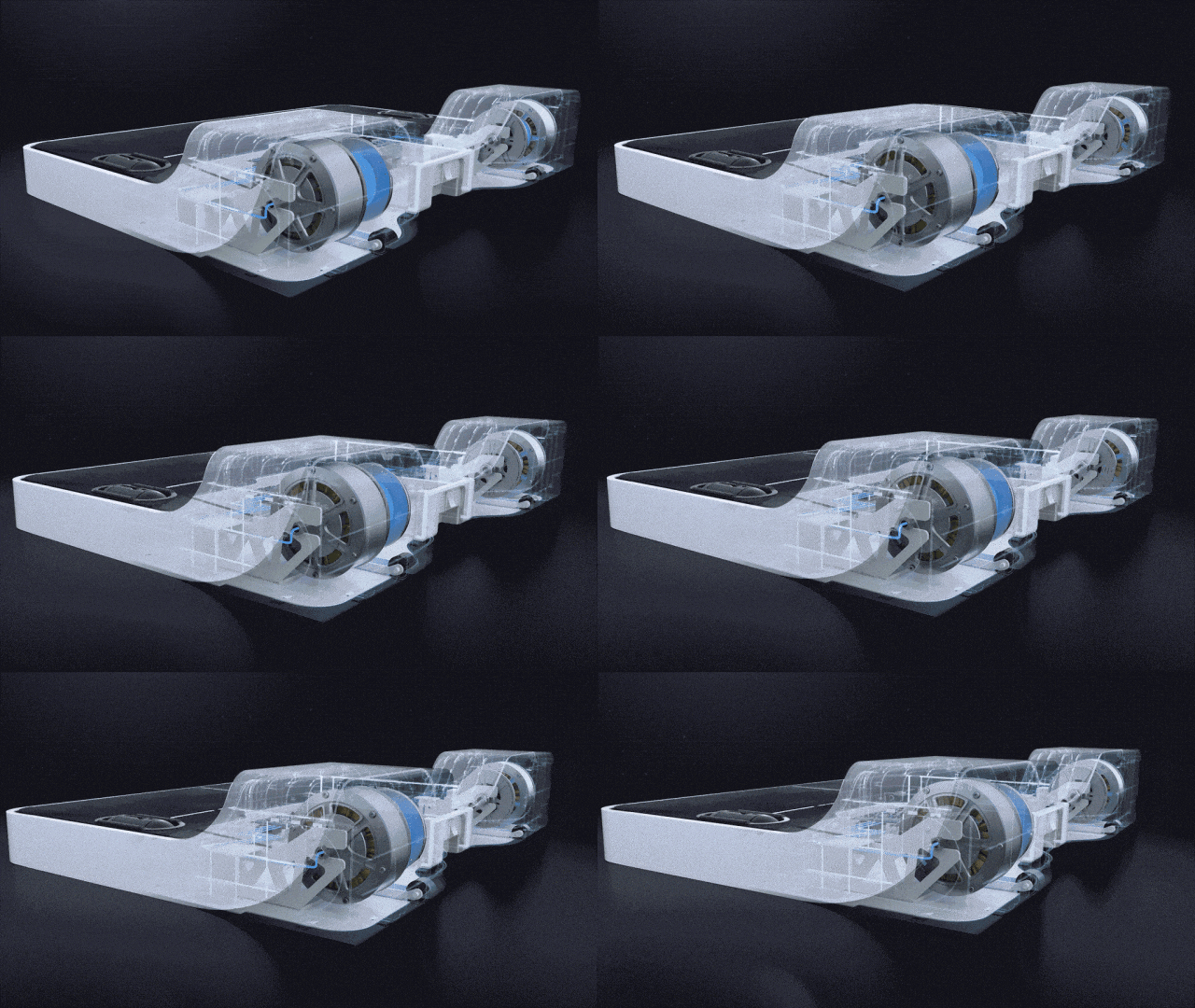
▲ SPEEDIANCE's self-developed direct-drive dual-motor technology; Image source: SPEEDIANCE
Shen Ying: Although you're currently building intelligent hardware, software and content can form a better ecosystem for long-term development, creating lasting moats. Many DTC brands are struggling right now, but your overseas DTC growth has been quite encouraging — you've gained traction in the US, Australia, even Chile. Can you share how fitness demographics differ across these countries?
Tao Liu: We've found that the higher the GDP per capita, the higher the stickiness and awareness among fitness users. The US market is widely recognized as the best in the fitness industry, with over 100 million users. Our rapid growth this year is partly due to entering the US market, with solid month-over-month growth.
Chile also has decent GDP per capita — it's one of South America's more developed countries. Chilean users are actually more active in fitness than Americans. In Asia, Hong Kong and Singapore also have good fitness habits.
I'd also like to ask you, Shen Ying — as an investor, how do you see the fitness market evolving over the next 3-5 years?
Shen Ying: A country's level of economic development does determine how far its pursuit of healthy lifestyles can go. Looking back at China's fitness market — in 2014, 2015, or earlier — fitness participation was relatively low, and expectations weren't that sophisticated. If China can maintain relatively solid economic growth, and overall economic levels reach new heights, people's fitness demands will rise accordingly.
As the base of beginner exercisers grows and their expectations increase, they'll gradually upgrade to anaerobic and strength training products like SPEEDIANCE. China's fitness market still has tremendous potential, particularly in strength training.
As you mentioned, the US is indeed the world's best fitness market — the country's fitness habits, awareness, and industry are all very mature. You happened to iterate on its massive existing market. For many other countries, as long as their economies are developing and they're in a relatively peaceful, prosperous state, fitness will increasingly become a necessity.
/ 04 / "You Have to Turn One Person's Performance Goals
Into a Group's Performance Goals"
Shen Ying: Now that you're an entrepreneur yourself, compared to being a product manager at a startup before, what do you find most challenging?
Tao Liu: When I was employed, I had very clear, concrete goals. These goals mostly required individual effort to achieve, leading to good performance that met the company's expectations of employees.
After starting a company, I have a grander vision that requires mobilizing a group of people to realize. The biggest challenge of entrepreneurship is turning one person's performance goals into a group's performance goals — and making sure everyone can achieve them.
Shen Ying: What methods do you use to motivate and inspire your team?
Tao Liu: The premise of encouraging a team is getting everyone to believe that the underlying logic of what we're doing is sound. In a company's early stages, resources are limited, and the visible future is limited. We don't need overly complex goals, but we need a阶段性目标 that team members believe is achievable.
Also, team morale is particularly important. Compared to leading companies, startups are at a disadvantage in funding reserves and brand credibility. How do we make employees feel accomplished and enjoy their work? We need to focus more on the spiritual level — paying attention to employee growth and value realization, enhancing their sense of participation.
I think one of the biggest differences between humans and ordinary animals is that humans can imagine. Even in primitive tribes, someone might tell you there are many fruit trees beyond the mountains, and let's go pick them together.
It's the same with companies. In the process of managing a company, founders also need to help everyone create a shared vision and lead them toward success together. Some working professionals may dislike bosses "drawing big pies" — the reason behind this is that some bosses only draw them without delivering. Beyond the spiritual level, SPEEDIANCE is also actively fulfilling incentives for employees, such as establishing stock option incentive plans and special bonuses.
Shen Ying: Behind entrepreneurship, you've probably put in tremendous effort and paid significant costs. Throughout this process, what difficult moments have you experienced?
Tao Liu: The hardest moment came before FreeS Fund invested in us. The company once had less than 500,000 RMB in the bank — after paying salaries that month, the team might have had to disband the next month. But we had already refined our product to be better than before, and we were gradually expanding the market.
We even prepared for the worst — even if most team members left, the partners could stay on without salaries and continue working on the product. When we were recognized by the industry again, the entire team would re-emerge.
Shen Ying: When we first met, you appeared very calm, but we could also sense the enormous pressure you were under.
Tao Liu: Recently, I rewatched the movie Kung Fu Hustle. My biggest takeaway was that before becoming a world-class master, you inevitably have to take some hits everywhere.
Perhaps investing and entrepreneurship are similar — both face certain pressures and challenges. In the past year or two, the overall macro environment has been volatile, and perhaps excellent entrepreneurial projects have become fewer. For investors, what do you see as the biggest challenge in the past year?
Shen Ying: Consumer investing is indeed affected by the overall macro environment. I think people who choose investing or entrepreneurship tend to be more optimistic in how they view problems. Compared to the boom years of consumer entrepreneurship, there may be fewer entrepreneurs in the market now. But from another perspective, the broader environment has already helped us filter out extremely resilient entrepreneurs. We also look forward to walking alongside more consumer entrepreneurs who are committed to product innovation through interdisciplinary technology.

Interactive Giveaway: What type of exercise do you enjoy? In today's fitness market, what new opportunities or trends have you noticed? Share with us in the comments! By 17:00 on September 14, we'll give SPEEDIANCE sports water bottles to the 5 users with the most thoughtful comments.

Beyond Chatting and Drawing, AI Can Also Help You Work Out Online | FreeS Fund Dialogue
AIGC Deep Dive: How Can Vertical Players Find Opportunities in This AI Wave? | FreeS Fund Dialogue
Follow & star the FreeS Fund WeChat official account for timely business insights delivered to your feed.