Deep Talk for 4.5 Hours, 10,000-Word Essential: A Conversation with Three Squirrels' Zhang Liaoyuan (Part 2): Every Stage Is a Race Against Speed and Time

Only someone who has weathered two eras can truly call themselves an entrepreneur.

These days, Zhang Liaoyuan of Three Squirrels no longer minds being tagged as "good at marketing." He even actively positions himself as a "marketing expert," despite the term's overused, grating quality. In his view, within Three Squirrels' operating system, products are created through marketing-driven processes.
Seven years into entrepreneurship, Zhang has ridden two major waves: the red-hot transition from traditional retail to e-commerce, then the new retail era where that红利 vanished and established brands woke up. Like many once-buzzing Taobao brands, Three Squirrels soared on the rising tide. Many Taobao brands collapsed when traffic红利 disappeared; Three Squirrels also fell into a growth trap. Climbing out of slowing growth and achieving reverse growth took Three Squirrels more than a year.
"Online warfare is brutally intense. If you can't capture dynamic traffic, it means market share decline. Cliff-like decline," Zhang says. From nuts to snacks, from selling products to now focusing on "making goods" and deepening supply chain roots, Three Squirrels has continuously innovated, made mistakes, and pivoted. In Zhang's view, no matter what stage a company reaches, the two most critical things are speed and timing.
We sat down with Zhang Liaoyuan. In a 4-hour-23-minute conversation, he spoke freely about:
- The evolution of retail, the rise and fall of Taobao brands, Three Squirrels' gains and losses over seven years
- What he's learned from brands like Apple, 7-Eleven, Muji, Want Want, ChaCha, Li-Ning, and Uniqlo
He also shared openly:
- His personality, how he gets along with the world, and how he resists anxiety.
Hope this offers some inspiration. Feel free to save and share.


The Death of Taobao Brands
Feng Xiaorui: In the early years of Double 11, the top five spots were basically Taobao brands' territory. In recent years, many once-hot Taobao brands have gradually disappeared. Why?
Zhang Liaoyuan: Taobao brands initially rose mainly because of e-commerce红利. It's like a train station suddenly being built at your doorstep — you make some tea eggs to sell there, and suddenly you're number one or two. Then those who professionally made tea eggs elsewhere see your business doing well and come sell at your train station too, and you likely die.
That's why when ZARA and Uniqlo both started selling on Tmall, many apparel Taobao brands couldn't survive: their categories were already crowded with giants, too many competitors, too powerful. The cosmetics industry is the same — big brands have stronger consumer mindshare. If Taobao brands can't give users a stronger perception, it's very tough.
Additionally, for e-commerce brands, beyond the product itself being good, you have to find categories with large traffic. That is, if you just do a very niche category or scenario, you'll often get crushed by big traffic. Because the fundamental logic is: big traffic eats small traffic, high frequency beats low frequency, high average order value beats low average order value.
For example, if Three Squirrels still only did nuts today without expanding to snacks, it's very possible we'd already been eaten by others. Because nuts' traffic pool isn't big enough. Often, consumers online aren't coming for a specific brand but for the product they search for. Theoretically, our product categories need to reach a certain scale at minimum to sustain nuts.
Feng Xiaorui: As a typical Taobao brand representative, Three Squirrels hasn't declined over the years but has achieved seven consecutive years as Double 11 category champion. What exactly did Three Squirrels do right?
Zhang Liaoyuan: Indeed, historically, no Taobao brand has recovered growth within a year after stopping growing, and no Taobao brand after losing that title has dared to so高调 and arrogantly announce its Double 11 results. We're the exception.
Over the past six-plus years, internal and external environments have been rapidly changing. At basically every stage, we've been fighting for speed and timing, working around the relationship between speed and timing, and between traffic and products.
Feng Xiaorui: How have Three Squirrels' strategies changed over the years?
Zhang Liaoyuan: I'm a very focused person. From 2012 to October 2015, we didn't enter any distribution or offline channels. No matter how big a distributor came to me, I wouldn't do it. I only focused on doing online well. It wasn't until 2018 that we formally and comprehensively entered offline.
Before 2015, Three Squirrels only did nuts, no other categories. In May 2015, we stepped into the snacks field. When we first did snacks, we only launched 20 SKUs, confirming each was a hit. In 2016, we began gradually expanding varieties.
From 2016 to 2017, one mistake we made was expanding categories too fast, not matching traffic. Or rather, when expanding more varieties, each product's crafting wasn't极致 enough. These diluted traffic while bringing negative impact to customers' mindshare. This was a major 2017 problem that we're still adjusting for.
Human energy is limited; you must walk step by step. Before taking the next step, assess your resources, assets, and traffic situation. In early startup days, traffic came "inexplicably" — nuts alone couldn't sustain, so we did 20 snack SKUs; when 20 couldn't sustain, we went to 50. Now the situation is different. Traffic红利 has ended. In a存量 market, we must shift focus back to products.
Feng Xiaorui: From nuts to snacks, Three Squirrels grew horizontally, addressing broader needs of one type of person?
Zhang Liaoyuan: Mainly to maintain traffic. The reason apparel Taobao brands later failed, besides the powerful competitors I mentioned, is that during the period of abundant traffic红利, they didn't quickly invest in products to capture traffic sources and攻占 consumers' mindshare. Once smart players like Uniqlo and ZARA came to Tmall, their product lines could satisfy more people, and traffic would naturally gather there.
Online competition is extremely brutal. Traffic is dynamic; not growing means declining, and it's cliff-like decline that gives you no breathing room. Unlike offline — your store here, others can't steal it; it climbs slowly and falls slowly. Online economy is traffic economy; speed and timing are extremely important, and how much mindshare your traffic can build is also crucial.
What's "Wrong" with Offline Stores and IP
Feng Xiaorui: In September 2016, Three Squirrels opened its first offline "Feeding Store"; now it's approaching 50 locations, having gone through expansion, iteration, and even Zhang's father smashing stores. Is offline business what you envisioned back then? Compared to online play, what are the difficulties?
Zhang Liaoyuan: Overall, offline has great potential. We're now doing full-channel: making goods online, selling goods offline.
However, offline business is heavy — not something internet people can do well with just passion. Take Feeding Stores: initially we were overly optimistic, even our slogans were overly optimistic. We discovered that even standardizing renovation schemes was extremely difficult. I smashed two stores for this reason.
On management, we tried to bring our good user experience offline through our values. Two stores works; 20 stores doesn't.
Third, we once cared too much about stores' IP image, neglecting their fundamental function as a store — selling products. This was wrong. When you over-focus on IP, customers' first impression is especially good, but it doesn't sustain. After all, we're not an entertainment venue; shopping malls have plenty of those, why must they come to yours?
Meanwhile, over-focusing on IP image weakens product presentation. Yet our sustained stickiness with customers still depends on products.
These are the three "wrong" aspects of our offline stores that we summarized.
Feng Xiaorui: How will you adjust going forward?
Zhang Liaoyuan: The fourth-generation offline stores will be very different — IP as supplement, products as main focus. Each store's operating area controlled to around 200 square meters (previously often 300+ square meters). This way, we calculate roughly 10% net profit per store, annual sales of 8 million yuan, and sales per square meter around 30,000-plus yuan.
We're also researching fifth-generation stores, which will emphasize product innovation and experience even more, letting users sample without burden, pleasantly. Nowadays at many stores when you're offered samples, you resist internally — either the staff pressures you, or the food's been exposed to air who knows how long.
On this point, Apple Stores are absolutely worth studying. Before Apple Stores came along, many phone retailers wouldn't even put out real devices — just a plastic model you could touch. What kind of experience is that? The birth of the Apple Store completely changed everything. They designed the space to be clean, elegant, beautiful. Real devices sat right there. You saw them, and naturally you wanted to touch them, to walk in and experience them — zero psychological burden. Though many offline phone experience stores operate this way now, the emergence of the Apple Store was absolutely a disruptive, brilliant invention.
Feng Xiaorui: When you pushed hard on the IP strategy that year, did anyone in the company oppose it?
Zhang Liaoyuan: No, basically what I said went. I'm not used to others pointing out my mistakes, but I'll admit and correct them myself.
In 2016 IP was hot. I felt Three Squirrels had IP attributes that others didn't, so I leaned into it. I leaned too hard, and it evolved into a core strategy. For a while we got trapped, treating IP as a lifeline, thinking if we just did IP well, the brand would follow. That was definitely wrong.
That said, whether it's the Squirrel Town layout or the Three Squirrels animated series, neither looks problematic in hindsight. IP can serve as brand enhancement, as the icing on the cake.
We're very clear now: Three Squirrels is not an IP brand. It's a product brand that simply leverages IP. The positioning of the two is fundamentally different.
Feng Xiaorui: So Three Squirrels won't become Disney — it's more like Nestlé?
Zhang Liaoyuan: Right, we're still a product brand. We've just taken a differentiated route in communication, using IP as a vehicle for brand传播.
Feng Xiaorui: Speaking of brand communication, do you mind when outsiders say you're all marketing and nothing else?
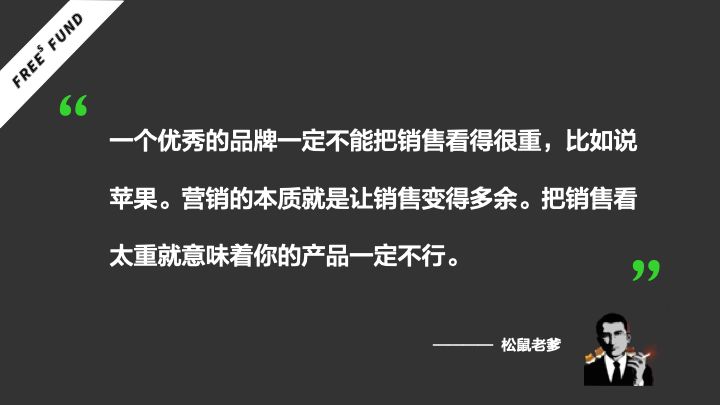
Zhang Liaoyuan: I don't mind anymore. Marketing expert = product expert. Actually we've misunderstood marketing, thinking it means sales. Marketing isn't sales — it's洞察 consumer demand and, through innovative means, creating products consumers love. Steve Jobs's greatest contribution to Apple was also marketing and product.
Two years ago, I would have minded. Because back then I had other ambitions, like management. I once wanted to become a management expert, and spent enormous time on organizational development, values-building — while letting product and user experience slip. In 2017, all the problems surfaced. I'd say the biggest mistake of my seven years founding this company was overestimating the role of organization.
Now I'm certain: for Three Squirrels, great product and experience come above everything. With good product and experience, growth follows. Management isn't my core competence; marketing is. My current self-positioning is marketing expert and product expert, not some management expert. Entrepreneurs should maximize their core strengths to the extreme — stop trying to pick up everyone else's.
"Only entrepreneurs who have survived two eras deserve the title"
Feng Xiaorui: As you mentioned, the e-commerce dividend seems to have passed. What's the future trend for the snack industry?
Zhang Liaoyuan: The product innovation we're doing right now — that's the future trend. Any company in its development must cross eras to complete transformation, or it can't sustain growth. If you succeed on your first attempt, you definitely caught a wave; with a tailwind, even pigs fly. Only entrepreneurs who have survived two eras deserve the title.
China's earliest private enterprises, like Shazi Guazi, never crossed into the new era. Chacha, Laiyifen, Want Want, and Dali Garden all caught the era when Chinese material goods were scarce and retail channels were just emerging — channels fed them. Among them, Chacha and Laiyifen didn't grow as large as Want Want and Dali Garden because nuts are a smaller category.
When the e-commerce era arrived, none of them seized the opportunity. The e-commerce era was bound to produce snack brands — and we showed up.
But e-commerce has peaked now. You can keep growing, sure, but at best you're squeezing incremental gains from a stock market. Ten percent, five percent annual growth — possible. Much beyond that, very difficult.
What's next? We can understand it as new retail, simply put the fusion of online and offline. This is actually an opportunity for entire industrial upgrading built on top of the internet. Some companies move from offline toward online, like Dali Garden and Want Want. Others move from online toward offline integration, like Three Squirrels. I believe online-to-offline is more efficient.
Feng Xiaorui: There are two production models now — owned factories and contract manufacturers. Three Squirrels works with contract manufacturers. How do you guarantee food quality and safety?
Zhang Liaoyuan: It comes down to the quality management system. Quality is made by people.
In theory, the drive of a contract manufacturer boss is definitely stronger than that of an owned-factory plant manager, because if they don't perform, I stop working with them — that's interest-based pressure.
Beyond that, I keep talking about digital supply chain. That's the ultimate form of quality control. Every supply-demand relationship, every quality system fully digitized — even if the contract manufacturer is thousands of li away, you maintain control.
Before achieving this, we inspected every single batch. We already operate the largest testing center in China's food industry.
Feng Xiaorui: Following this logic, does that mean social division of labor will become very clear in the future — some people building brands and front-end traffic, others specializing in manufacturing?
Zhang Liaoyuan: Yes. Openness, collaboration, division of labor.
Future industrial chains will definitely move toward collaboration — no one can do everything alone. Think how many outstanding manufacturing enterprises sit behind Apple. Some specialize purely in contract manufacturing, and their quality systems are beyond question. If people are still纠结 about the contract manufacturing issue, that thinking itself is the problem.
That said, many Chinese contract manufacturers haven't figured this out yet. I often tell supplier companies: you can focus on doing OEM or even ODM. But many mid-tier enterprises still think contract manufacturing is somehow shameful, insisting on struggling to build their own small brands. What's wrong with it? Is Foxconn shameful? It's highly profitable, and has accomplished remarkable innovation. China's biggest problem in many industries is too many brands — many will die off.
"All 'speed' is about gaining more time than others"
Feng Xiaorui: If Three Squirrels became a business school case study, what would be most instructive for others?
Zhang Liaoyuan: The post-red-envelope transition — that should be instructive for everyone. Transition looks simple, but when you actually do it, you may really make mistakes, even constantly make mistakes (see previous installment).
Also, in the process of brand evolution, believe in positioning but don't worship it. In the internet era, because of traffic uncertainty, the most core keyword for the entire business environment is speed and time.
Speed means fast, extremely fast — seize traffic fast, become number one fast, "kill" competitors fast. All this "speed" is about gaining more time than others. With that time, you can break through.
If you don't put these two things first, all positioning, brand, product talk is bullshit.
Feng Xiaorui: An example?
Zhang Liaoyuan: The moment Three Squirrels launched, we aimed to become number one in the nuts industry as fast as possible. Because only by becoming number one can you leverage all resources. During 2012's Singles' Day, with only 5 million-plus yuan in our account, we spent over 1 million to claim the top nuts spot on Singles' Day, displacing Xinnongge, then the category leader.
Many entrepreneurs start out declaring themselves a brand. But in an era of rising competition, the first step of brand-building is selling goods. Without sales volume and traffic, there is no brand. Lose speed and time, and brand becomes impossible to discuss.
Feng Xiaorui: After Xinnongge, which competitors has Three Squirrels been watching?
Zhang Liaoyuan: After reaching number one online, you still need to watch competitors beyond online — Chacha, Laiyifen, Bestore, and so on, which would move online. Timing is critical. You must get bigger than them before they wake up.
We kept sprinting until 2016, when we finally felt solid at 5 billion yuan in annual sales. At that point the offline players were still at 3 billion — if we'd only reached 1 billion, we couldn't have beaten them when they came online.
Today we're still sprinting. Growth matters enormously to us, because the benchmark has shifted again. Companies like Want Want and Dali Garden at 20 billion yuan annual sales — if they seriously studied e-commerce, they'd move fast too.
Under the new retail backdrop, ways to reach C-end consumers may change dramatically. Any new development could put us at a disadvantage, so we need危机感, we need to fight for time, to quickly build the scale of a Dali Garden. Once we've conquered the national market, what's next? I think it's watching what foreign brands are doing.
Feng Xiaorui: Imported snacks have been quite popular in China in recent years. What impact will this have on domestic brands like Three Squirrels?
Zhang Liaoyuan: In past years, the pressure from imported snacks hasn't been too great. Because the vast majority of imported snacks haven't localized — most Chinese consumers don't recognize them; at minimum, many can't read the English instructions. If one day a major imported snack player like Mondelēz deeply localizes in China, the pressure would be immense. But that path isn't easy — most international brands are puzzled by how to understand the Chinese market.

Feng Xiaorui: What's so hard about it?
Zhang Liaoyuan: In China today, the way you build a brand has changed. Foreign brands have to adapt their product mix, distribution channels, and how they engage with consumers.
It used to be simple. You'd finish R&D, run a few ads on CCTV, and get your products onto shelves at Carrefour or 7-Eleven. Now, a lot of advertising money gets burned for nothing.
What's our model? To sum it up, the first-generation approach was build the brand through sales — kill the premium, let consumers discover the brand by buying it. Internet channels are naturally cheaper. Users try it, they connect with us, and if they like it, they come back.
Take our instant noodles on Douyin. If I spent 10 million RMB on ads, maybe nobody would see them. Instead, I sell a million bowls at cost — and quickly reach a million users, effectively. You can hardly imagine Mondelēz coming to China and going crazy with discounts, selling at cost even.
Now that the traffic dividend era is over, the sales-first approach hasn't changed — but something's been added: build the brand through the product. Make the product more extreme, create brand mindshare. Take our daily nuts. Same dried fruits and nuts as everyone else, but we use separate dry and wet compartments so moisture doesn't transfer between them. That keeps the nuts crunchy and the fruit soft.
Feng Xiaorui: Is there a ceiling on product and experience upgrades?
Zhang Liaoyuan: The act of upgrading itself has no ceiling — it depends on whether you can pull it off. Years ago people worried, how much more can phones or cars really improve? And look, they're still improving. If you think it's hard, that there's no room left, then you've hit a ceiling. If you don't think it's hard, you can make anything happen.
Feng Xiaorui: What user experiences at Three Squirrels are you most proud of?
Zhang Liaoyuan: Don't underestimate those little extras we pack in — nutcrackers, wet wipes, toothpicks. In the future we'll add breath mints, mouthwash.
These small things really matter. First, it's invisible marketing — users are directly moved. Second, we're creating a scenario where users get used to this way of consuming: I finish my Three Squirrels and don't need to find my own wet wipes or toothpicks. It becomes part of the Three Squirrels product.
These experience packs with wet wipes and toothpicks add 200 million RMB to our costs every year. But I told finance: don't even think about cutting this 200 million to save money. It absolutely creates added value for us. Isn't that what a brand is — providing value to users? In the past, added value meant showing off through advertising. Today, we need to hit people in the heart. Brand experience is everything.
"Find what you love, and success isn't far away"
Feng Xiaorui: You're a top snack brand, but your biggest volume is on Alibaba. Outsiders might see that as a vulnerability.
Zhang Liaoyuan: I don't feel that way. We were the first Tmall brand to hit 20 million followers. Alibaba depends on us too — our brand is strong on their platform. You could say we helped Alibaba carry the snack category.
I've never worried about dependency. When you're good enough, there's no reason for the platform to mess with you. My current omnichannel push is about company development, not deliberately reducing platform dependence. Platforms understand their role clearly.
Feng Xiaorui: Many founders find corporate culture abstract and hard to build, but Three Squirrels has strong culture. Any methodology?
Zhang Liaoyuan: It's hard and not hard. What kind of person you are as a founder matters — what's real can't be faked, what's fake can't be made real. On that foundation, do things young people can understand and relate to. Then repeat it, keep saying it. Of course, this also connects to your business model and industry.

Feng Xiaorui: So what kind of person are you?
Zhang Liaoyuan: I'm someone who cares a lot about idealism. I'm against rationality — I almost never use rationality to make decisions. Anyone with real marketing talent is idealistic, even somewhat extreme and emotional. Steve Jobs was that kind of person. A rational person couldn't have made Apple. Back then, the MacBook was so obsessively thin it didn't even leave room for a USB port. That's extreme, that's disruptive.
Idealistic people don't get excited easily — they get amped. When I have a creative idea, a good concept, I can wake myself up laughing. When a good product gets made, I want to see it immediately, I'll even wait at the door for it. I tell my team: if you don't have this kind of impatience toward the product you designed, you don't have love.
I found this love many years ago. At Zhan's, I both ran stores selling nuts and handled supermarket distribution. After getting products into supermarkets, I'd go to nearby stores several times a day to check how displays looked, whether shelves were running low, how much had sold. It was internal drive. I went so many times that eventually I felt embarrassed to show my face at that store again. Selling nuts in stores, I was also amped. When someone has this kind of love for something, that person isn't far from success.
Feng Xiaorui: Have you ever been burned by your own nature? Many people follow their instincts, get hurt suddenly, then stop following them — that's most people's growth path.
Zhang Liaoyuan: Not really, I haven't been burned there. I'm fairly adaptable. My principle is: go with the tide, not with the current. Follow the big trend, but don't wallow in the muck. Don't touch bottom lines.
Rapid Fire: Resisting Anxiety, Cross-Border Innovation
Feng Xiaorui: You keep mentioning MUJI, Uniqlo — what have you learned from them?
Zhang Liaoyuan: What's powerful about these brands? People in first-tier cities use them daily; people in third- and fourth-tier cities can stretch a bit and afford them too. That's universal appeal.
Feng Xiaorui: Does Three Squirrels have a number two?
Zhang Liaoyuan: No. Entrepreneurship really sucks. Not being an entrepreneur is nice — work hard, enjoy life.
Feng Xiaorui: What makes you anxious?
Zhang Liaoyuan: Fundamentally, starting a business isn't hard. In the beginning you have courage, passion, excitement — you feel like failure's fine. Only by approaching entrepreneurship with a mindset of being willing to lose everything can you possibly succeed.
Keeping the business is the hardest part.
Before 2017, we kept growing, we were happy. Once growth stopped, I started getting anxious. Because you're no longer responsible just for yourself — you have employees, society. Solving personal problems is easy; if you fail, you lose some money, so what. When it becomes a social responsibility issue, you just have to push forward with a stiff upper lip. Sometimes you can't even find direction, can't see the road. When I'm anxious, I grab onto operations — tinker here, tinker there, nobody looks good to me.
Feng Xiaorui: Do you have insomnia?
Zhang Liaoyuan: I've always had insomnia. Worse the past year or two. But I have a method: drinking. I also smoke to relieve stress, recently switched to e-cigarettes.
There was a period when stress was so high my stomach hurt terribly. Medicine didn't work, really annoying. One day I made an important decision — looked up gastric neurosis online. Sure enough. It's when psychological anxiety causes your central system's CPU to glitch, affecting your stomach. That night, I hugged a bottle of red wine and finished it. Next day, I was fine. So the drinking habit stuck.
Feng Xiaorui: When you're very anxious, very lost — does talking to people help?
Zhang Liaoyuan: I generally figure things out myself, not used to wasting words with others.
I like reading. I think my greatest ability is focus. When researching micro-business units, I read every book on the topic — including ones on the Amoeba Management model, and Chen Chunhua's books and speeches on the subject. When researching chain management, I read everything on 7-Eleven, MUJI. I also read some books about life philosophy and purpose.
I'm a divergent thinker — I connect reading to actual work. For example, studying Li-Ning's recovery, I found the core was preserving its most traditional DNA and mindshare while making it fashionable. Chinese style plus red-yellow color schemes, "Li-Ning" everywhere you looked.
I immediately thought this might be useful for me. Recently planning our New Year's gift packs, Li-Ning's recovery instantly came to mind. I'll keep it mysterious — this year's Three Squirrels New Year's gift pack will definitely be very fashionable, very different.
I'm good at cross-border innovation. I think imitation is plagiarism; theft is innovation. Imitation means taking someone else's thing and making an identical copy. Theft means you can only stand at the doorway and peek, you can't see clearly, so you won't make an exact copy — your inspiration just gets triggered. Our first-generation nut packaging actually came from seeing dog and cat food bags at supermarkets. Where inspiration comes from may not matter most; what matters is where you take it.
Feng Xiaorui: What are your hobbies?
Zhang Liaoyuan: Fishing — and I like wild fishing. Sitting by a small stream all day, no problem. Never boring, my brain's always running anyway.
Feel free to share this to your Moments. For republication on other official accounts, websites, or mobile apps, reply "reprint" to learn our republication rules and contact Feng Xiaorui (ID: freesfund) for authorization. All rights reserved by FreeS Fund.

Dialogue with Zhang Liaoyuan (Part 1): Three Squirrels' Comeback Battle
Three Squirrels' Zhang Liaoyuan: Six Things I Did in My First Year of Entrepreneurship