The Past and Future of ESG: From Dividing the Pie to Growing It | FreeS Research

A Complete Guide to ESG ESG — Environmental, Social, and Governance — has evolved from a niche investment framework into a mainstream lens for evaluating companies. Yet for many in China's tech and investment circles, it remains more buzzword than business practice. Here's what actually matters. **The Three Pillars** *Environmental* covers a company's carbon footprint, resource use, waste management, and broader ecological impact. For Chinese manufacturers, this increasingly means compliance with the EU's Carbon Border Adjustment Mechanism (CBAM) and domestic dual-carbon targets — not just greenwashing. *Social* encompasses labor practices, supply chain ethics, data privacy, and community relations. In China's context, this gets complicated fast: tech platforms face scrutiny over algorithmic labor management (think Meituan's delivery riders), while consumer brands navigate Xinjiang cotton controversies that can tank overseas sales overnight. *Governance* examines board structure, executive compensation, shareholder rights, and anti-corruption measures. For Chinese companies listing in the U.S. or Hong Kong, this includes VIE structure transparency

"No matter how vast a commercial empire grows, it will never prevail over love and mercy." This paraphrase from Starbucks founder Howard Schultz reflects the earnest pursuit of social responsibility.
The road to "love and mercy" is long and arduous. In the 19th century, Western religious churches measured investments through an ethical lens, steering clear of certain "sinful" industries. From the 1960s to 1970s, against the backdrop of social movements like prohibition and opposition to the Vietnam War, modern funds with explicit socially responsible investment philosophies were formally established. In 2004, the UN Environment Programme first introduced the ESG investment concept, advocating attention to Environmental, Social, and Governance issues in investing.
In China, attention to ESG started later but has now translated into concrete action. Data from Securities Times · China Capital Market Research Institute shows that over 1,100 A-share companies listed on the Shanghai and Shenzhen exchanges published ESG reports for 2020, accounting for nearly 27% of all listed companies. In April 2022, the China Securities Regulatory Commission (CSRC) formally incorporated ESG into investor relations management. Beyond listed companies, a growing number of startups are turning ESG into specific actions, integrating it across product manufacturing, brand marketing, after-sales service, and other value chain segments.
In this issue, FreeS Research traces the development of ESG overseas and in China. Specifically, we will address the following questions:
- How did ESG evolve to where it is today?
- What distinguishes ESG, CSR (Corporate Social Responsibility), and dual carbon goals?
- What metrics or frameworks matter when evaluating ESG?
- How can consumer goods industries in China and the US do ESG well?
- How can startups implement ESG?
Happy reading — we hope this offers fresh perspective. If you're interested in ESG topics or building a startup in this direction, feel free to reach out to the author, Jintong Xian, VP at FreeS Fund (jintong@freesvc.com).

Reader Giveaway
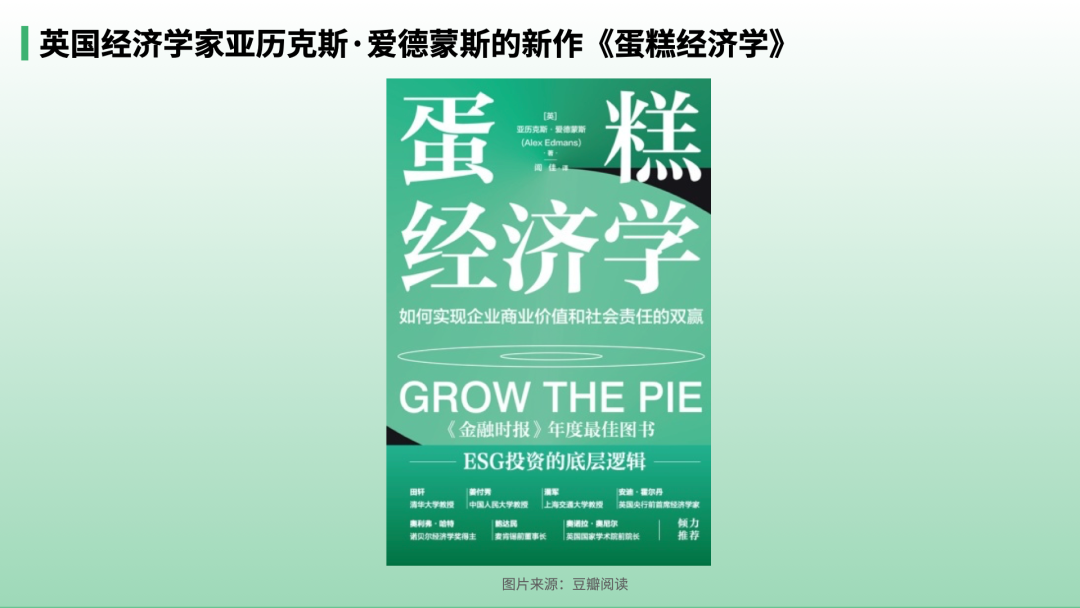
Share your thoughts on ESG in the comments section. The 6 most thoughtful responses will receive a copy of British economist Alex Edmans' new book, Grow the Pie: How Great Companies Deliver Both Purpose and Profit.
/ 01 /
How Did ESG Get Here?
ESG investing traces its roots to 19th-century "ethical investing," when Western religious churches evaluated investments through moral criteria, avoiding certain "sinful" industries.
From the 1960s to 1970s, modern funds with explicit socially responsible investment philosophies were formally established. In 1965, against the backdrop of Sweden's prohibition movement, the Akite Ansvar Aktiefond was launched with a core strategy that explicitly excluded alcohol and tobacco companies from its portfolio. In 1971, Pax World Funds was founded in the US by two ministers, clearly stating its avoidance of companies supporting the Vietnam War.
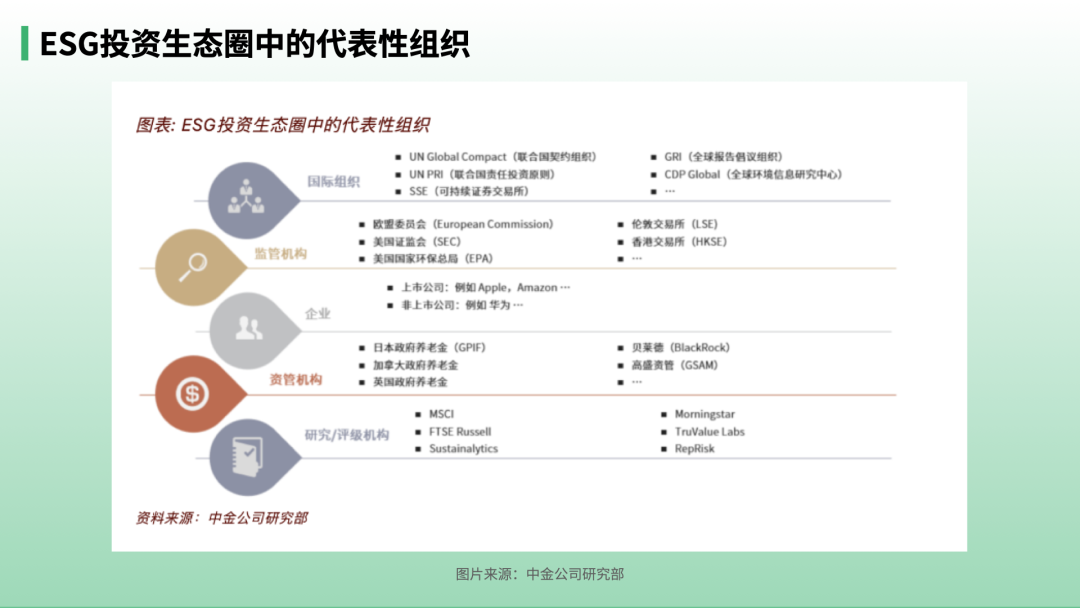
In 2004, the UN Environment Programme first introduced the ESG investment concept, advocating attention to environmental, social, and governance issues in investing. In 2006, the UN Principles for Responsible Investment (UNPRI) was released, playing a pivotal role in developing the ESG concept and defining the field. That same year, Goldman Sachs published an ESG research report integrating the "environmental, social, governance" concepts — marking the formal crystallization of ESG. Since then, international organizations, investment institutions, and other market participants have continuously deepened the ESG concept, gradually forming a complete ESG philosophy. International investment institutions have successively launched ESG investment products, with ESG concepts and offerings constantly evolving and expanding.

Following the COVID-19 outbreak, the public has paid greater attention to health, environmental, and social development issues, bringing ESG investing more into the spotlight and accelerating the expansion of ESG assets under management. The Global Sustainable Investment Alliance (GSIA) Sustainable Investment Report shows that global sustainable investment AUM reached $35.5 trillion at the beginning of 2020, with a compound annual growth rate of 13.02% from early 2012 to early 2020 — far outpacing the overall global asset management industry's 6.01%.
Global ESG assets were projected to hit $41 trillion in 2022. Bloomberg forecasts this figure will reach $50 trillion by 2025, representing one-third of all managed assets globally. Currently, the US is the world's largest ESG investment market, with ESG investment growth exceeding 40% over the past two years.
As of October this year, over 300 institutions worldwide have signed the UNPRB (UN Principles for Responsible Banking), committing signatories to align their development strategies and business operations with the UN 2030 Agenda for Sustainable Development and the Paris Agreement.
/ 02 /
ESG, CSR, and Dual Carbon:
Not the Same Thing
▍ESG vs. CSR
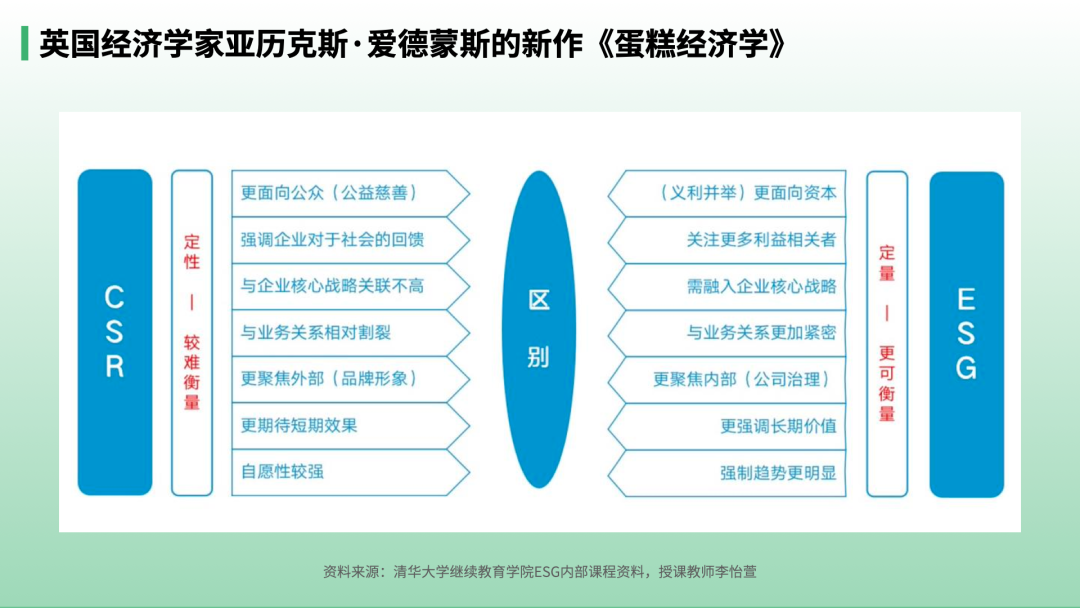
Compared to ESG, corporate social responsibility (CSR) was previously more widely known. Many large companies established CSR departments focused primarily on philanthropy, poverty alleviation, and public welfare.
Yixuan Li, Executive Secretary of the Digital China Research Institute at the University of Chinese Academy of Social Sciences, views ESG as an evolution of the CSR (Corporate Social Responsibility) concept. Compared to CSR, ESG covers a more comprehensive scope, features a more robust framework, and maintains a closer relationship with business operations.
The key distinctions include:
- Audience: CSR is primarily public-facing, communicated through PR. ESG is mainly oriented toward capital markets, with professional ratings and measurement systems that enable quantitative assessment.
- Relationship to business: CSR emphasizes corporate giving back to society, with a looser connection to core business. ESG stresses the integration of commercial and social value, maintaining a tighter relationship with business operations and requiring longer cycles from planning through implementation.
- Mandate: CSR remains largely voluntary, while ESG's mandatory trajectory is increasingly evident — we will elaborate in the next section. Internet giants like Tencent and Alibaba have elevated ESG to top-level strategic importance, launching ESG or sustainability strategies and restructuring their organizations accordingly.
▍ESG vs. Dual Carbon
"Dual carbon" is shorthand for carbon peaking and carbon neutrality. In September 2020, China explicitly set targets for carbon peaking by 2030 and carbon neutrality by 2060. The "E" in ESG stands for Environment — being environmentally friendly (low-carbon / zero-carbon) is an important component of ESG and a key focus of ESG investing. Clearly, ESG's scope extends well beyond dual carbon.
/ 03 /
Why Has ESG Become So Important in China?
ESG investing in China only gradually entered public consciousness after 2016 — a later start compared to Europe and the US, but with rapid development. Why should companies care about ESG? We can understand this from three angles: national strategy, capital market requirements, and corporate self-interest.
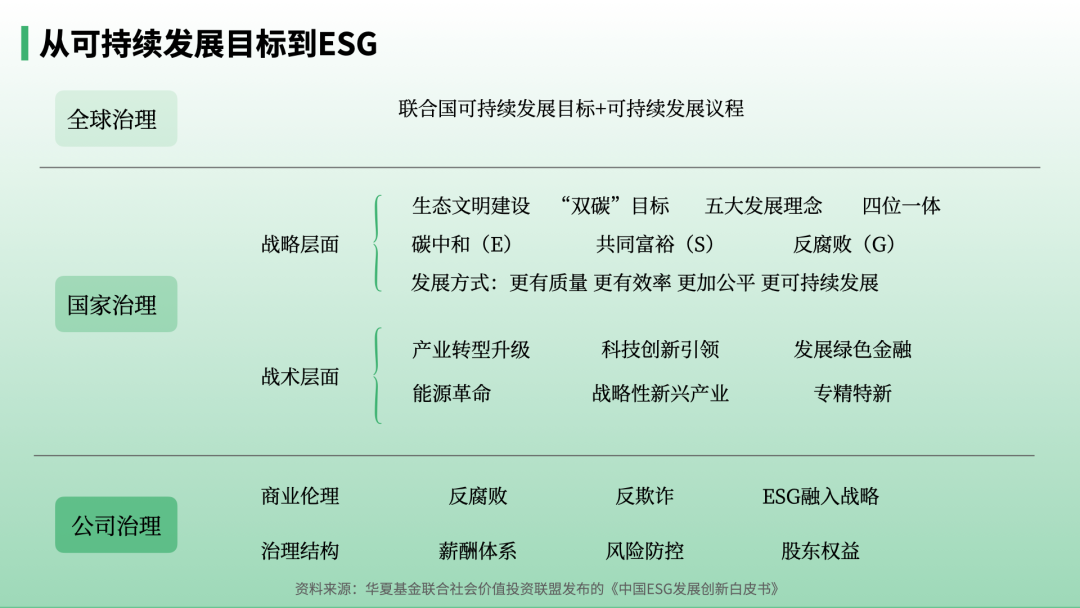
First, from a national perspective, ESG strategy helps China advance its dual carbon goals and achieve sustainable development. In recent years, as China has pushed for economic and social transformation, it has introduced a series of measures related to energy conservation and emissions reduction, ecological and environmental protection, strengthened ecological civilization construction, promotion of dual carbon targets, and building a Beautiful China.
Second, ESG information disclosure in capital markets is becoming standard practice.
Relevant policy bodies have begun incorporating ESG disclosure into financial regulation, with carbon peaking and carbon neutrality becoming focal points for responsible investing. ESG disclosure requirements are compelling companies to take ESG systems seriously, pushing them to prioritize the integration of economic and social benefits from the very beginning of product design.
Summary of selected capital market ESG-related policies:
- As early as 2012, the Hong Kong Stock Exchange issued the ESG Reporting Guide as voluntary disclosure guidance for listed companies. In December 2019, the HKEX finalized the updated Guide, further expanding mandatory disclosure requirements.
- In September 2020, the Shenzhen Stock Exchange revised its Measures for Assessment of Information Disclosure by Listed Companies, awarding bonus points to companies that voluntarily disclose social responsibility reports.
- In January 2022, the Shanghai Stock Exchange issued its Notice on Annual Report Disclosure for STAR Market Listed Companies, explicitly requiring STAR Market companies to disclose ESG information in annual reports and to "consider" issuing standalone reports.
- In April 2022, the State-owned Assets Supervision and Administration Commission (SASAC) established the Social Responsibility Bureau, with "guiding and promoting enterprises to actively practice ESG concepts" among its responsibilities. The CSRC released its Guidelines for Investor Relations Management by Listed Companies, formally incorporating ESG as a topic for communication between listed companies and investors.
In recent years, the number of A-share listed companies voluntarily disclosing ESG information has increased year by year. Data from Securities Times · China Capital Market Research Institute shows that over 1,100 A-share companies listed on the Shanghai and Shenzhen exchanges published ESG reports for 2020, accounting for nearly 27% of all listed companies.
Third, from the corporate perspective, strong ESG performance benefits companies over the long term.
In 2015, Gunnar Friede of Deutsche Asset & Wealth Management Investment, together with Timo Busch and Alexander Bassen, two social science scholars at the University of Hamburg, conducted a comprehensive review of roughly 2,200 empirical studies from 1970 to 2015. They found that over 90% of the research showed a non-negative relationship between ESG and corporate financial performance, with the majority demonstrating a positive correlation.
ESG enables companies to evaluate whether their investments will yield expected returns through a rational, social-value lens. It helps companies anticipate potential opportunities while enhancing their overall reputation and credibility in capital markets. Internally, companies with higher ESG ratings tend to foster stronger employee identification and belonging. As a CICC ESG research report concluded based on quantitative analysis: "Governance itself can contribute relatively significant excess returns."
In the short term, ESG investments may increase corporate costs, but over the long term they generate greater economic, capital, and social benefits—helping companies go further.
/ 04 /
ESG Evaluation Systems: Global and China
Although ESG is increasingly discussed, how to measure corporate ESG performance remains a matter of "non-consensus." ESG standards can be broadly divided into two categories: ESG disclosure standards and ESG rating standards.
ESG disclosure standards are typically established by authoritative international organizations, NGOs, or research institutions—such as GRI (Global Reporting Initiative), SASB (Sustainability Accounting Standards Board), and CDSB (Climate Disclosure Standards Board) abroad. These standards impose different requirements on reporting entities because they target different stakeholders and focus on different dimensions or issues.
The expansion of overseas ESG asset management has driven rapid development among ESG rating agencies. According to incomplete statistics, there are over 600 ESG rating agencies globally, with influential players including financial data and information service providers Bloomberg, Thomson Reuters, and Refinitiv; index providers MSCI and FTSE Russell; and investment research firm and international fund rating agency Morningstar.
China's ESG evaluation system started later but has developed rapidly in recent years. Mainstream domestic ESG rating agencies include index providers Huazheng and CSI; green finance and responsible investment service provider SynTao Green Finance; fund management company Harvest; financial information service provider Wind; and public welfare organization China Alliance of Social Value Investment. The Hong Kong Stock Exchange, Shanghai Stock Exchange, and Shenzhen Stock Exchange all impose ESG disclosure compliance requirements on issuers or IPO candidates, including voluntary disclosure, mandatory disclosure, and "comply or explain" provisions.
Take the CSI ESG evaluation system as an example. It primarily covers companies listed on A-share and Hong Kong markets, with evaluation content including:
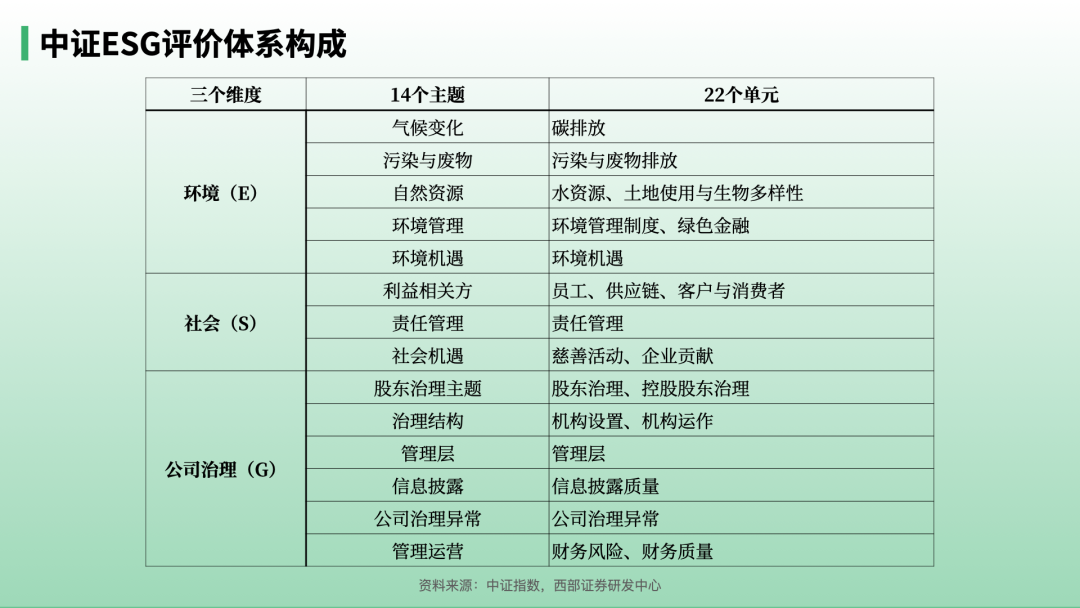
- "E (Environment)": Environment is currently a major area of focus, encompassing carbon emissions, pollutant and waste discharge, green finance, and more.
- "S (Social)": This primarily examines how companies treat stakeholders including employees, supply chains, customers, and consumers, as well as their initiatives in charitable activities and responsible management.
- "G (Governance)": This covers shareholder governance, institutional operations, information disclosure, and so forth. A-share markets have also raised requirements for listed companies to disclose information about directors, supervisors, and senior executives.
These evaluation dimensions are not merely about demanding corporate social responsibility—they also help companies become better and stronger.
Li Yixuan, Executive Secretary of the Digital China Research Institute at the University of Chinese Academy of Social Sciences, believes that the "excessive number of ESG reference standards" is both an important manifestation of ESG's vigorous development and a major challenge companies currently face. A non-unified, even low-consistency standard system inevitably imposes enormous costs on corporate disclosure and evaluation work, while also reducing the credibility of evaluation results and failing to provide effective reference for investors' decision-making. Meanwhile, because the evaluation standards recognized by investors are all formulated by foreign companies, "acclimatization" issues frequently arise due to differing national conditions and cultural differences, leaving Chinese companies facing "unfair" ESG evaluation results.
Globally, major authoritative international organizations are joining forces to provide the public with unified ESG disclosure standards for reference. For example, the ISSB (International Sustainability Standards Board) standards represent a "new consolidation" of five major ESG standards, planned for formal implementation in 2023.
Domestically, in November 2022, the National Development and Reform Commission issued the Opinion on Further Improving the Policy Environment and Increasing Support for Private Investment Development, stating that international experience should be fully drawn upon and combined with domestic capital market practice to research and carry out ESG evaluation of investment projects. The document designated the NDRC as the lead agency for ESG evaluation work, with relevant State Council departments and regional governments responsible according to their duties. An ESG evaluation system better suited to China's national conditions is expected to emerge.
05
ESG Development and Reference Points for U.S. Consumer Goods Companies
In 2020, total ESG investment in the U.S. market reached $17.08 trillion, accounting for nearly 48% of global ESG investment that year. This marked the first time the U.S. surpassed Europe to become the country and region with the highest share of global ESG investment. Since then, total U.S. ESG investment has maintained rapid growth, firmly holding the top position globally.
Today, as ESG increasingly becomes global consensus, the U.S. market has seen not only established consumer brands seeking "green" transformation, but also a growing number of new consumer brands launching with ESG as their core mission. More specifically, building on decades of accumulated practice, U.S. consumer goods companies have focused their efforts across production materials, product packaging, operations, energy utilization, and supply chain systems to reduce environmental impact, striving to fulfill their sustainability commitments throughout the full lifecycle of products and services.
[Sustainable Materials] Allbirds: "Better things in a better way."
As a young American casual athletic brand, Allbirds has been virtually unstoppable in the sportswear and fashion market in recent years. With a simple, comfortable, and environmentally sustainable wool shoe, it has successfully captured the attention of countless consumers. From Google co-founder Larry Page, Apple CEO Tim Cook, and prominent Silicon Valley venture capitalist Keller Russell, to actress Emma Watson and even former U.S. President Barack Obama—all are Allbirds fans. Leonardo DiCaprio is not only an investor in Allbirds but also starred in the brand's first promotional film for its China market entry.
Starting from raw materials, Allbirds strives to be "greener." Its flagship Merino wool collection uses 60% less energy than synthetic materials. Its eucalyptus collection saves 95% of water resources compared to traditional materials like cotton, while cutting carbon emissions in half. Beyond the upper, Allbirds' sole material comes from Brazilian sugarcane, its insole is processed from wool and natural castor oil, its laces are made from recycled plastic bottles, and even its shoe boxes are largely sourced from recycled and reused cardboard.
Beyond footwear, Allbirds has also launched the Trino Crab T-shirt made from TrinoTM material plus chitosan—using chitosan from discarded crab shells to create sustainable fibers for sustainable apparel.
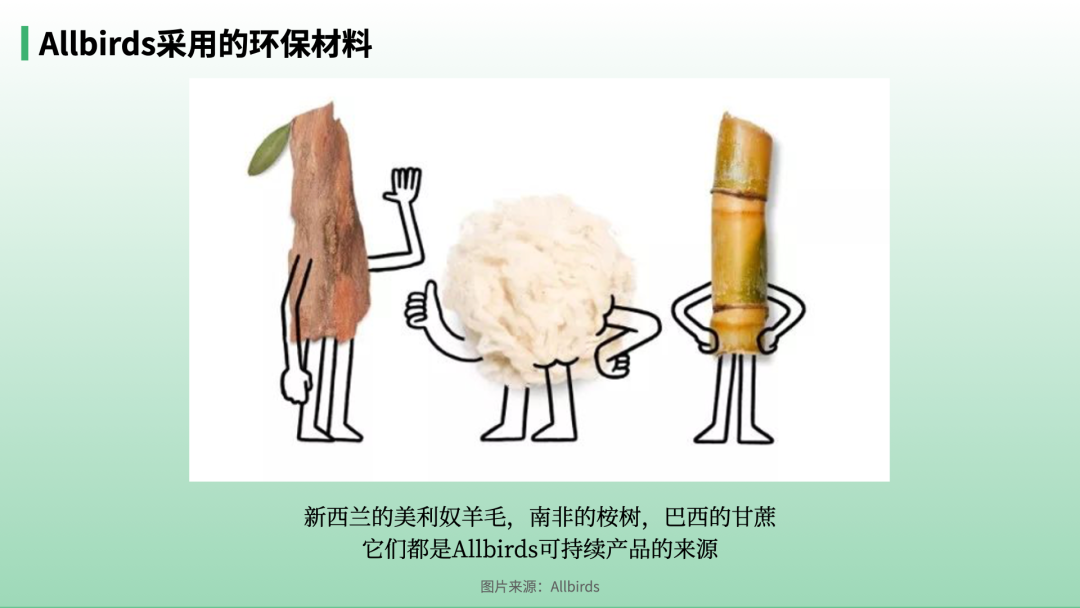
Moreover, Allbirds has obtained B Corp (Benefit Corporation) certification—using for-profit structure as a powerful tool to mobilize people for social change—and launched its "Carbon Fund" on Earth Day 2019, tracking carbon footprints across its product supply chain and effectively taxing itself. According to the brand's commitment, the fund will support public welfare initiatives in land, air, and energy.
[Sustainable Packaging] Coca-Cola: "World without Waste"
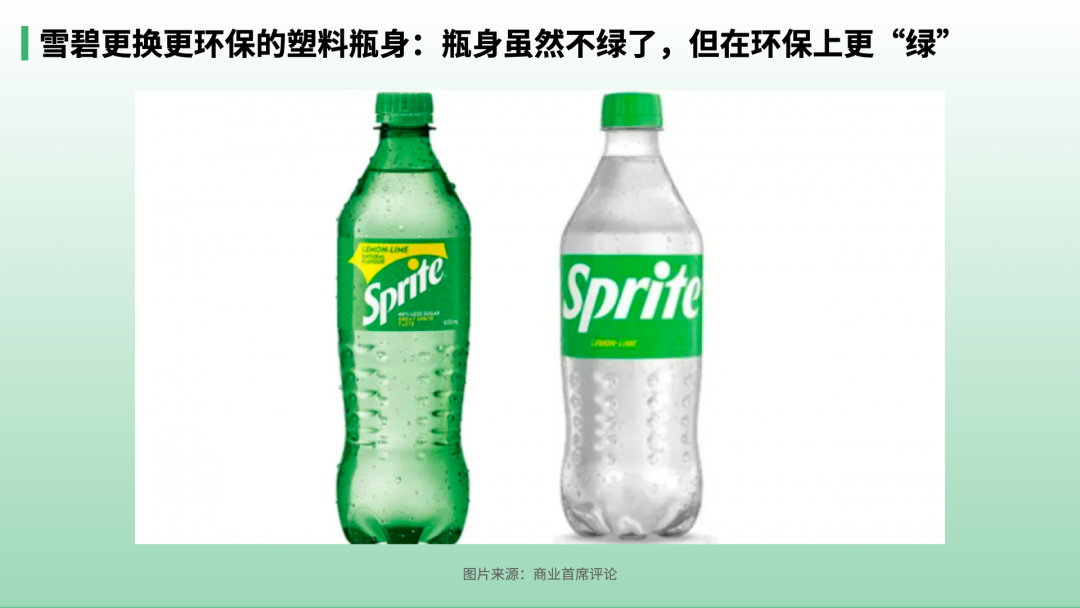
Remember when "Sprite abandons green bottle packaging" trended on Weibo? Because current bottles contain non-recyclable green polyethylene terephthalate (PET), Coca-Cola decided that starting August 1, 2022, it would end the green Sprite packaging that had been used for over 60 years, replacing it with a more environmentally friendly transparent bottle. Sprite's current bottles contain green PET, which is typically only recycled into single-use items, whereas transparent bottles can be made into new bottles—helping promote circular plastic economy and reduce plastic waste.
Coca-Cola has committed to making its packaging 100% recyclable globally by 2025. By 2030, Coca-Cola will use at least 50% recycled materials in its packaging and collect and recycle every bottle or can it sells. Meanwhile, the brand will also work to bring people together to support a healthy, debris-free environment.
Ahead of its 25% reuse commitment, Coca-Cola's sustainable packaging has focused more on its first goal: using more environmentally friendly materials in "design." In 2021, Coca-Cola introduced its first PET beverage bottle made from plant-based plastic (excluding cap and label). Plant-based bottles can conserve petroleum resources and reduce carbon dioxide emissions.
[Sustainable Energy Use and Supply Chain Systems] Dell: Regenerated Factories and Mature Supply Chain Auditing
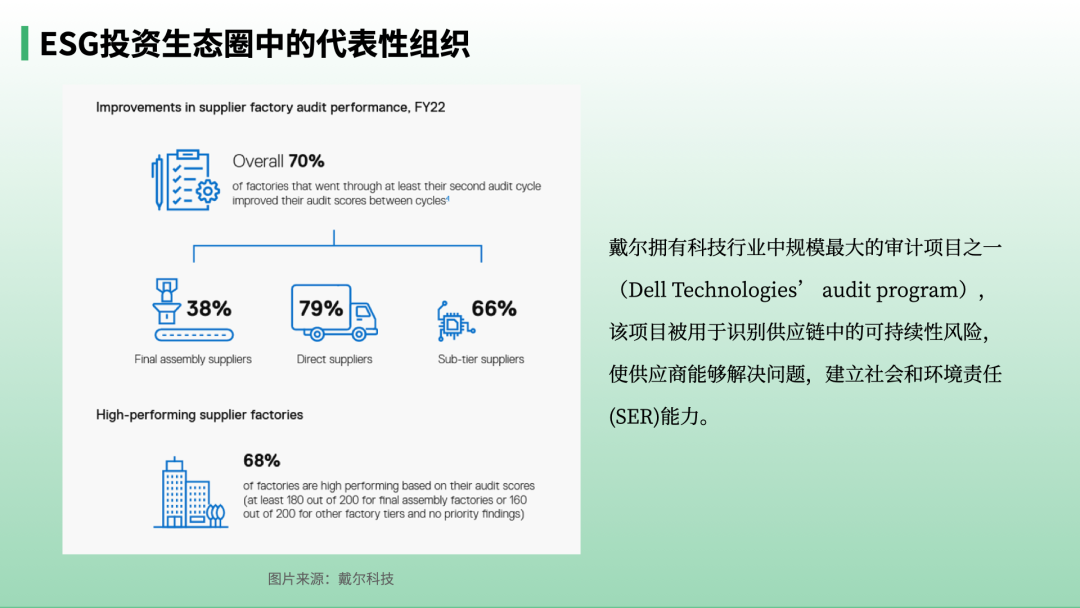
In 1998, technology company Dell (whose product lines include servers, laptops, storage, printers, and more) published its first Technology & Environment Report, addressing the relationship between production, environment, and nature in the report. Nine years later, it renamed the Technology & Environment Report to Corporate Social Responsibility Report, publishing it annually without interruption.
06
Integrating ESG Throughout Daily Operations and the Full Industry Chain
Xtep: Integrating ESG Throughout Daily Operations
In the textile and apparel industry, total carbon emissions account for 10% of global carbon emissions, making it the second most polluting industry after petroleum. As a major textile and apparel producer, China must inevitably transform the industry's previous characteristics of high energy consumption and high emissions, moving toward sustainable development.
In January 2021, Xtep established a sustainability committee that reports directly to the board of directors on ESG progress, embedding environmental, social, and governance considerations at the top of the company's organizational management. ESG has been systematically integrated into every level of the business and woven throughout daily operations.
The plan took effect from 2021 through 2030. It focuses on three key themes: supply chain management, environmental protection, and social responsibility, encompassing 12 topics including supplier assessment, sustainable product innovation, water management, waste management, sports promotion, and social investment. In 2022, Xtep increased the proportion of supply chain companies fully meeting ESG standards from 10% in 2020 to 20%.
On World Environment Day 2021, Xtep launched a biodegradable polylactic acid (PLA) windbreaker. If Xtep were to switch all its fabrics to PLA, it could save 300 million cubic meters of natural gas annually — equivalent to roughly 2.6 billion kWh of electricity or 620,000 tons of coal.
JUNOCO: Embedding Sustainability Into Every Production Stage
In August 2022, sustainable skincare brand JUNOCO completed a $6.3 million Series A round led by Yuanjing Capital, with FreeS Fund continuing to invest. JUNOCO's approach to ESG offers valuable lessons.
JUNOCO integrates sustainable, eco-conscious principles into packaging design, avoiding flashy, complex techniques and elaborate packaging structures to reduce raw material needs and lower energy consumption and emissions. Its "10-Ingredient Cleansing Balm," which sold 500,000 units in its first year and now ranks first in its category across all U.S. e-commerce platforms, is produced with zero microplastics.
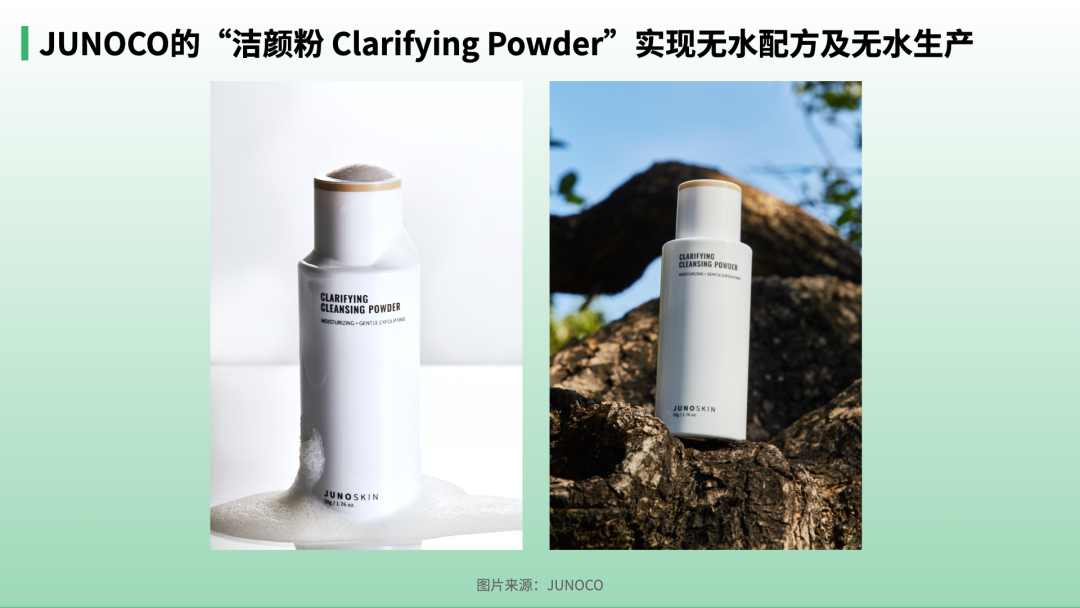
JUNOCO's "Clarifying Powder" currently achieves a waterless formula and waterless production process, drastically reducing reliance on water resources. The brand's new makeup sponge incorporates bamboo powder, which can save 50% of foundation with each application. Figuring out how to embed environmental principles into every stage of product design and execution is something that emerging consumer companies are now actively considering.
07
TIPS: How Can Startups Join the ESG Movement?
The advocacy and attention around ESG originated in developed countries, gained momentum in mature markets, and was first embraced by multinational corporations and well-known enterprises. What should startups do to achieve both commercial and social value within the ESG trend?
"Do what is right, not what is easy" has been FreeS Fund's consistent philosophy. We always strive to identify innovative companies that combine commercial value with social value. Since our founding, FreeS Fund has invested in a number of ESG-related projects. We are pleased to partner with these companies working to create both commercial and social value, and we continue to witness their new breakthroughs and actions in 2022. Here we share some examples:
E (Environmental)
First, let's look at several B2B companies' environmental initiatives. They approach the challenge from different angles — new energy, new materials, and new power drive controls — helping their customers save energy and reduce emissions.
New Energy: Qingtao Energy is a global leader in the industrialization of solid-state lithium batteries, having built China's first mass production line for solid oxide batteries and the world's first large-scale production line for solid-state power lithium batteries, redefining safety and range standards for new energy vehicles.
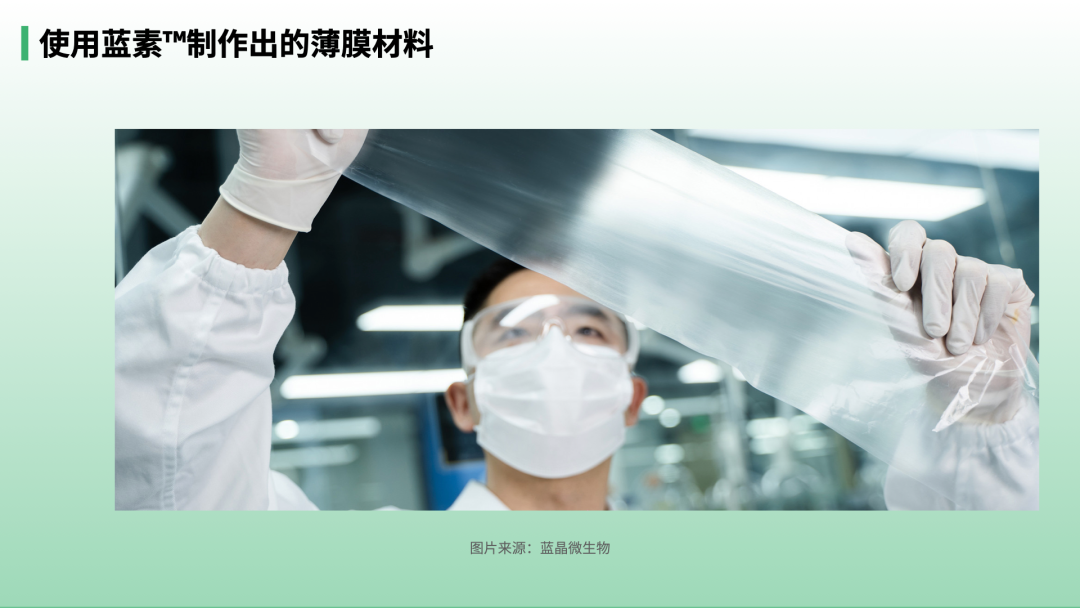
New Materials: Molecular and materials innovation company Bluepha produces Bluepha® PHA, which can fully decompose into water and carbon dioxide in almost any natural environment. The carbon atoms in Bluepha® come from bio-based raw materials that capture CO2 from the air.
Huayu New Materials is one of the few domestic carbon fiber composite companies to pass automotive-grade verification. In real-world vehicle testing, replacing the original driveshaft with Huayu's carbon fiber version reduced fuel consumption by approximately 0.5L per 100 kilometers.
New Power Drive Controls: Songchen Power's solution reconstructs the underlying control architecture for power drive systems, deeply integrating electrical control and data application layers to build new standards for intelligence, informatization, and digitization in power drive systems. This enables practical 5G applications, helping customers save energy, reduce emissions, and achieve carbon neutrality.
Now, two consumer companies' environmental initiatives: Saturnbird reduces carbon through coffee can recycling, while fashion cross-border e-commerce company Cider creates clothing collections from recycled materials.
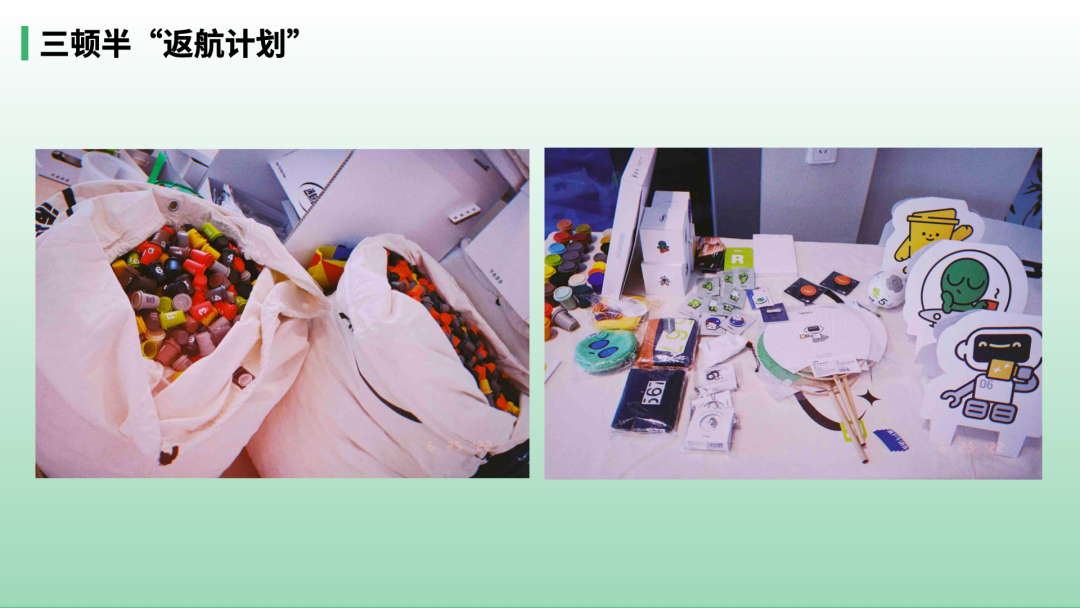
Can Recycling: Saturnbird operates its own sustainability program, the "Return Project." The company designates coffee shops in cities where 80% of its domestic users are located as return points, where users can exchange empty coffee cans for Saturnbird merchandise. Saturnbird notes that recycled cans are not reused for secondary packaging; instead, materials are processed according to recycling standards and used to manufacture new merchandise.
Recycled Materials: Cider's "Recycled Cider Collection ♻️🍏" product line is made from Global Recycled Standard (GRS)-certified recycled materials. Compared to organic cotton, recycled cotton saves 55% of water resources and reduces greenhouse gas emissions by 35%.
▍S (Social)
Social Opportunity (Philanthropy): Since its founding in 2013, Onion Academy has established the "Onion Teaching Assistant Initiative," a dedicated public welfare team that has long provided free digital education support, applications, and services to rural schools in remote areas, contributing to balanced, high-quality development of rural education. To date, the initiative has benefited more than 60,000 teachers, covering over 30,000 rural schools across 29 provinces, municipalities, and autonomous regions.
Social Opportunity (Corporate Contribution): XtalPi is a drug discovery company powered by quantum physics and artificial intelligence. Using AI prediction algorithms combined with experimental validation, XtalPi assisted Pfizer in identifying the optimal crystal form for Paxlovid in just six weeks, accelerating the development of this COVID-19 treatment.
Stakeholders (Employees): Eyelash and nail brand Milan Diary has provided employment opportunities for hundreds of homemakers with monthly incomes below $200, also offering them housing and medical insurance.
▍G (Governance)
Governance Structure (Organizational Operations): 2:10 Animation has transformed the animation production industry through more industrialized, market-oriented approaches, enabling creators to work more effectively. Internally, departments at 2:10 operate in transactional, market-based relationships with each other, enhancing the initiative and efficiency of content creation.
Finally, we'd like to recommend British economist Alex Edmans' new book, Grow the Pie: How Great Companies Deliver Both Purpose and Profit. Drawing on economic theory, Edmans uses cases and rigorous argumentation to explain how companies can establish purpose and "grow the pie," demonstrating that when companies are purpose-driven and create social value, they often achieve long-term profits and sustained success. This theoretical framework has been summarized as "pieconomics."
This book establishes an entirely new framework for thinking about ESG. We typically view ESG as "do no harm" (ensuring fair distribution of the pie) — reducing carbon emissions, minimizing workplace injuries, conducting product recalls. Edmans argues that ESG is about "actively doing good" (growing the pie) — proactively creating value for society.
As Edmans notes in the book's conclusion:
"Today, business leaders are in a unique position: because of technology and the global reach of business, they have more power than ever before to create value for society. Investors who run funds also have more money and stronger shareholder rights than ever before to hold firms to account for both purpose and profit. And citizens have more agency than ever before — we can organize movements, provide public feedback to firms, and also seek mutual benefit in our personal interactions. Using these powers to create a form of capitalism that benefits wider society is up to all of us."
We hope this resonates with you all.
Reader Giveaway
We welcome your thoughts on ESG in the comments section. The 6 most thoughtful commenters will receive a copy of British economist Alex Edmans' new book, Grow the Pie.

▲ Slow Is Fast: Why Insurtech Is a Bet Worth Making | FreeS Fund Interview
▲ How Will Humans Work in the Future? | FreeS Fund Report 26