Every Brain Is a Unique Little Universe | FreeS Fund's World Autism Awareness Day Special

May every life be treated with gentleness.

Today is World Autism Awareness Day, the day after April Fools'. Autism feels like a cruel "joke" that the "Creator" played on life, giving us "children of the stars."
Some children with autism cannot speak. Some resist hugs and hand-holding. Others struggle to perceive changes in their surroundings. In adults, symptoms may include communication difficulties, sleep disorders, depression — sometimes life itself has to be put on pause.
You might wonder: why do we need to care about autism?
Autism is not a rare disease. Its prevalence may exceed your imagination. According to UN data, as of 2021, over 70 million people worldwide were affected by autism — roughly 1 in every 160 children.
In China, there are 13 million people with autism, including over 3 million children under 14. The autistic individuals with special talents portrayed in films like Rain Man represent only a tiny fraction of the autistic population. Most people with autism, and the families behind them, live extraordinarily challenging lives.
Fortunately, there are always people doing "what is right, not what is easy."
NeuroXess, a portfolio company of FreeS Fund, focuses on finding new methods to tackle brain diseases including autism. Co-founded by Harvard Medical School professor Hesheng Liu, MIT academician Guoping Feng, academician Robert Desimone, and Kecheng Wei, NeuroXess operates with the mission to "break through bottlenecks in brain cognition and conquer challenges in brain diseases," dedicated to helping humanity understand, protect, and develop the brain.
On this special day, we invited Kecheng Wei (Coach), co-founder and CEO of NeuroXess, to discuss with Rui Ma, partner at FreeS Fund, the causes of autism, methods of tracking and diagnosis, treatment approaches, and how autism impacts individuals, families, and society — plus what each of us can do. We've edited their conversation into this article. You're also welcome to search for and subscribe to "High Energy" on the Xiaoyuzhou app or Apple Podcasts to listen to the full version.
May every life be treated with gentleness.

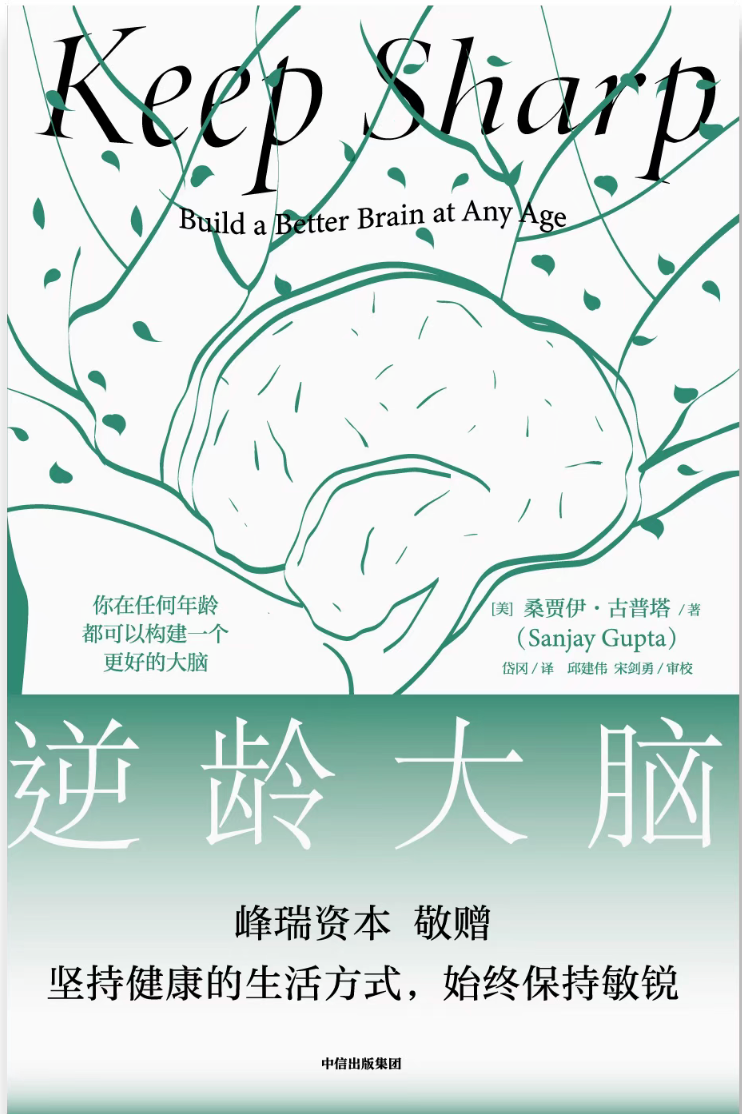
Giveaway
There's been growing attention on autism recently. What is your understanding of it? Do you know how autism affects patients and their families? The 5 readers with the most thoughtful comments will each receive a copy of The Age-Proof Brain. We look forward to your sharing.
01 What is autism? What symptoms do autistic individuals typically have?
Rui Ma: Could you explain from a professional perspective what autism is, and what visible or hidden symptoms autistic individuals typically display?
Kecheng Wei: Autism, or autism spectrum disorder (ASD), is also known as autism spectrum condition. It is a disease spectrum — a complex neurodevelopmental disorder. The core symptoms of autism manifest as social impairment and repetitive behaviors, often accompanied by cognitive deficits such as language disorders, attention deficits, and short-term memory impairments.
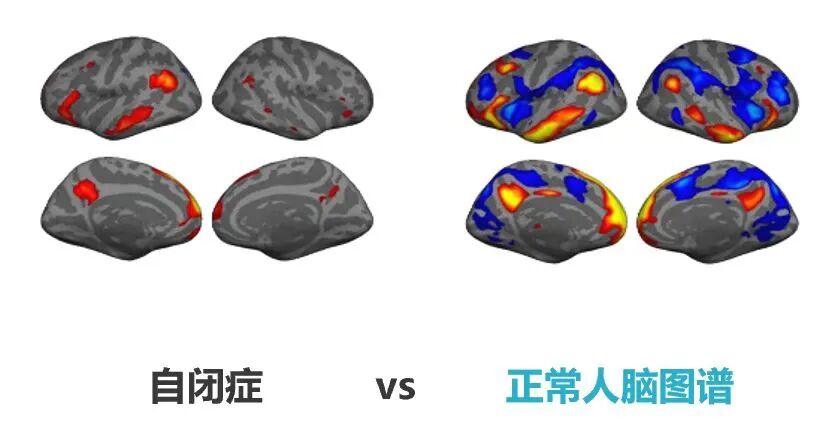
▲ Image source: NeuroXess
For example, some children still can't speak much by age 2 or 3, and don't understand what family members say. This kind of language delay may be related to autism and requires early medical attention.
Another example: if a child doesn't play with others much and lacks awareness of mutual interaction, early diagnosis is also needed. Research also shows that among the autistic population, boys are far more likely to be affected than girls — about 3 to 4 times as much.
Among young children with autism, one type shows symptoms from infancy, while another develops normally until age 1 or 2, then suddenly exhibits autistic symptoms around age 3. Within months or even weeks after onset, certain abilities begin to weaken or disappear.
Rui Ma: Autism is a developmental disorder, so symptoms become apparent when children are 3 or 4 years old. Do doctors mainly diagnose autism based on symptoms?
Kecheng Wei: Currently, there is no very good method for diagnosing autism globally. Doctors generally make diagnoses through scale-based assessments, asking children questions and observing their responses during interaction.
Rui Ma: What is the pathogenesis of autism? Is this disease related to gene mutations, or is autism a hereditary disease?
Kecheng Wei: The pathogenesis of autism is not yet fully understood, but some progress has been made. Research suggests that autism may be caused by gene mutations occurring during a child's growth. But exactly which genes mutate, and under what circumstances, still requires further study.
The NeuroXess team has long been working toward a deeper understanding of autism from the perspective of brain function. We believe that regardless of whether gene mutations are the cause, the pathogenesis of autism lies in abnormal development of one or several brain functions.
Rui Ma: So there may be hundreds of risk genes associated with autism. But no single gene mutation either definitively causes autism or has a necessary and sufficient corresponding relationship with it. Autism is a developmental disorder characterized by functional deficits, so detecting it based on individual-level brain function mapping is a potentially viable approach.
02 Three Common Misconceptions About Autism
Rui Ma: To help us understand autism more clearly, could you tell us about some common misconceptions?
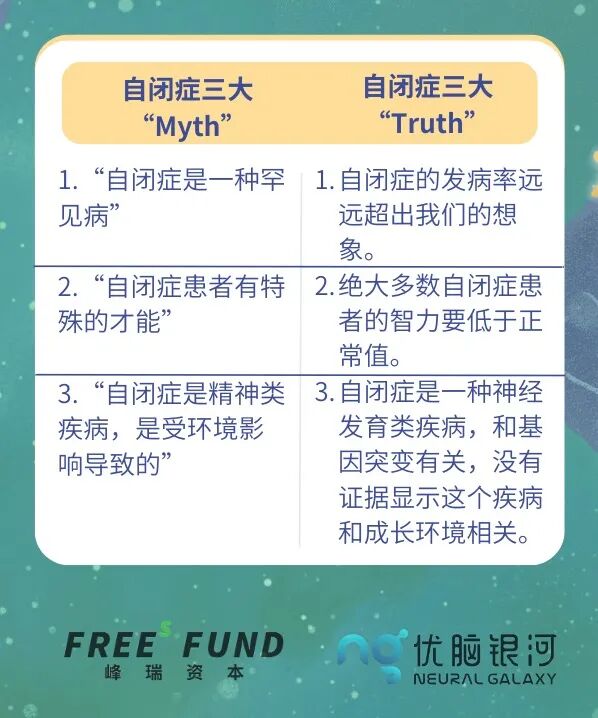
Kecheng Wei: There are many misconceptions about autism. The three most common are:
First misconception: "Autism is a rare disease."
Many people think autism has a very low incidence. In reality, it far exceeds our imagination.
In the US, approximately 1 in 44 children has autism — a rate of 2.27%, and this may have increased further in recent years. Some institutions estimate China's autism incidence at 1.18%, about half that of the US. The global prevalence of autism is roughly consistent; with improvements in medical diagnosis and research methods, the incidence in China may actually be higher than 1.18% in recent years.
Second misconception: "People with autism have special talents."
Some films feature characters with autism. The classic movie Rain Man brought the concept of autism into mainstream awareness. It tells the story of a younger brother who initially tries to cheat his autistic older brother out of their father's inheritance after the father's death, but is moved by familial affection during their time together and gives up his claim.
Some productions showcase the genius side of autistic individuals — what we call "high-functioning autism." But these people represent a very small proportion of the autistic population. The vast majority of autistic individuals have below-average intelligence.
Third misconception: "Autism is a psychiatric disorder caused by environmental factors."
In fact, autism is a neurodevelopmental disorder related to gene mutations. There is no evidence linking this disease to upbringing environment.
Rui Ma: These findings are quite interesting. By clarifying what autism "is" and "is not," you've helped us understand it more clearly.
Has your understanding of autism changed since you and your team founded NeuroXess?
Kecheng Wei: After more research on autism and contact with more families affected by it, my understanding has changed considerably.
First, as I mentioned, the incidence of autism is higher than I imagined. Low-functioning autistic individuals account for over half of the entire autistic population. Over 40% of these children have no language ability at all. The families of these children face the greatest difficulties.
Second, the previous prevailing view was that autism had no medical treatment and could only be somewhat improved through education and training. After the so-called "golden intervention window" before age 6 or 7, there was supposedly nothing that could be done.
The view that "missing the golden intervention window means there's no hope" is not entirely correct. Among the patients we've treated, there are both children and adults around 20, 30, or 40 years old — and the results have been very good.
03 Which Populations Are Concentrated with Autism Patients? Is Autism Incidence Increasing?
Rui Ma: Which age groups are autism patients mainly concentrated in, and what common characteristics do they share?
Kecheng Wei: The gene mutations that cause autism may be present at birth, but some people show symptoms at age 1 or 2, while others don't until age 3 or 4.
China's total autism patient population is approximately 12 million, with about 3 million patients under age 6 or 7, and nearly 10 million above that age range. In Beijing, there are roughly 30,000 autistic children under 6, with thousands added each year.
Rui Ma: Compared to before, has autism incidence increased? Why is autism still so difficult to conquer despite continuous advances in medical technology?
Kecheng Wei: Statistically speaking, autism incidence is indeed increasing. On one hand, the actual incidence is rising; on the other, statistical methods have improved. According to data from the US Centers for Disease Control and Prevention, when screening began in 2000, the proportion of 8-year-old children with autism was about 1:166 (roughly 1 autistic child per 166 children). By 2020, this had increased fourfold to 1:44.
Over the past decades, scientists have been researching how to conquer autism, but there hasn't been much clinical progress. The difficulty lies in the fact that autism is a complex brain disease, yet human understanding of the brain remains relatively shallow.
04 What Methods Are There for Treating Autism?
Rui Ma: How did people treat autism in the past, what methods are available now, and how do they compare in effectiveness? There are many so-called autism therapies on the market — stem cell transplants, gut microbiota transplants, transcranial magnetic stimulation, electroencephalography therapy, injections, medication, neurotrophic factors, and so on. Which ones are actually effective?
Kecheng Wei: Autism is a global challenge, and there is currently no recognized treatment. Additionally, compared to the total autistic population of over 10 million, China currently has only tens of thousands of professional rehabilitation therapists — a severe supply-demand mismatch.
Methods like stem cells and gut microbiota, I have some understanding of these; they are mostly still in experimental stages.
We need to approach autism treatment from the mechanism of disease origin. NeuroXess's developed Advantage Therapy starts from the underlying mechanisms of brain disease, investigating what brain function problems each autistic patient has, and where in the brain the problematic functional areas are located.
NeuroXess has conducted some exploration in the autism field. Our Advantage Therapy starts from the mechanisms of brain disease, investigating what brain function problems each autistic patient has, and the specific location and shape of problematic functional areas in the brain. Through non-invasive methods and physical intervention, we modulate the dysfunctional brain circuits to improve core autism symptoms.
Rui Ma: By comparison, how do hospitals currently diagnose autism — based on symptoms, or using scales, or more on doctors' experience?
Kecheng Wei: The mainstream assessment methods currently used in hospitals are still scales. Common autism-related scales include the Autism Screening Scale, Social Responsiveness Scale, Autism Behavior Checklist, Autism Diagnostic Observation Schedule, and others. Doctors use these scales to observe patients' interactive responses. But scales are ultimately "rigid" tools; doctors must still combine them with experiential judgment.
Rui Ma: Indeed, autism is a spectrum disorder with many subtypes. Using a single broad-scale tool is not necessarily particularly objective or accurate. In specific diagnosis, it relies more on doctors' clinical experience.
NeuroXess's Advantage Therapy uses relatively objective biological characteristic data to depict each person's brain function status. Since autism is related to developmental function, NeuroXess can measure based on brain function data. Therefore, in terms of subtyping and diagnosis, Advantage Therapy can achieve relatively high precision.
05 Every Person's Brain Is a Unique Little Universe
Rui Ma: What is the underlying reason that NeuroXess's diagnosis and treatment are feasible or effective? Where does the moat lie?
Kecheng Wei: The core reason our team has been able to make certain progress in autism intervention and treatment is our research into brain function.
NeuroXess is currently the only team in the world that can map individual brain function profiles through a 20-minute scan. This method is called Personalized Brain Functional Sectors (pBFS). Why is this technology so difficult?
The reason is that there was previously a misconception in the scientific community — people assumed that brain function distribution was roughly similar among humans. The NeuroXess team first revealed in 2013 that differences in brain function between individuals are enormous. The variation in human brain function distribution may be as personalized as the differences between human fingerprints.
In 2015, NeuroXess mapped individual brain function networks. Although this map only showed a dozen or so functional networks, it was already a major breakthrough in neuroscience. Harvard Medical School specifically published a commentary article calling it a turning point in neuroimaging.
After multiple technological iterations, NeuroXess can now map over 200 functional profiles across the entire brain, locating and quantifying brain functional areas. NeuroXess has conducted 20 to 30 clinical trials with over 10,000 clinical validations.
This method also meets the reliability, accuracy, and universality required for clinical application.
Reliability means that for the same patient, multiple tests should yield consistent results. Accuracy means we verify the location and specific shape of brain functions through various clinical trials. Universality means our research method must be applicable to patients of different ages, genders, and regions — able to detect the brains of autism patients as well as those with Alzheimer's, depression, Parkinson's, and other conditions.
Rui Ma: Why is researching individual brain function so difficult?
Kecheng Wei: Research into individual brain function has long been an important direction in science. Mapping individual brain function profiles is so difficult because it involves interdisciplinary challenges — not just neuroscience, but also signal processing and algorithmic capabilities.
NeuroXess has an interdisciplinary team, with members who have focused on brain science research for over a decade. Chief Scientist Professor Hesheng Liu is Director of the Laboratory for Individual Brain Differences at the Martinos Center for Biomedical Imaging at Harvard Medical School's affiliated Massachusetts General Hospital. He has made major breakthroughs in individual brain function and has an interdisciplinary background himself.
Additionally, our team includes two renowned neuroscientists, both US academicians. One is Professor Guoping Feng, Poitras Professor in the Department of Brain and Cognitive Sciences at MIT. The other is Robert Desimone, Director of the McGovern Institute for Brain Research at MIT and Berkey Professor in the Department of Brain and Cognitive Sciences at MIT.
Every Small Improvement Can Bring Positive Change to Patients' Lives
Rui Ma: NeuroXess has conducted extensive exploration in autism treatment. Could you introduce how NeuroXess specifically treats autism?
Kecheng Wei: NeuroXess focuses on finding new methods to conquer brain diseases. Autism is also a brain disease and one of NeuroXess's main research directions.
NeuroXess has been trying various methods, especially from the brain function perspective, to study the mechanisms behind different types of brain diseases — what problems occur in the brain itself, what kind of impact functional circuits suffer, and where abnormal functional circuits are located in the brain.
Based on understanding autism mechanisms, NeuroXess uses Advantage Therapy to treat autism in three steps: "Read," "Decode," and "Write."
Step one, "Read." A panoramic scan of the brain, about 20 minutes, collecting whole-brain signals.
Step two, "Decode." Based on the collected whole-brain signals, software analyzes and processes the data to map the patient's brain function profile, find abnormal brain circuits, and design an individualized treatment plan.
Step three, "Write." NeuroXess has developed a set of non-invasive equipment that uses electromagnetic methods to modulate problematic brain circuits, thereby achieving repair.
Over the past two to three years, the NeuroXess team has conducted many clinical trials, and we have indeed seen results that excite us greatly.
Besides children around 6 or 7, we have also treated autistic patients around 18 years old and in their 30s. One patient still couldn't speak at age 18, couldn't understand what people said, and frequently had outbursts and hit people. After more than a year of NeuroXess treatment, we saw changes every few weeks: understanding language, making sounds, speaking simple words, learning Chinese characters, and eventually learning several hundred characters. Since he could understand language, he never hit anyone again and could even go out and interact with people.
Rui Ma: Could these adult autism patients potentially find employment after treatment? Can older autistic patients return to normal life trajectories after treatment?
Kecheng Wei: We treated an autistic patient in his 20s. Previously, his parents had to send him to a daycare facility all day and pick him up in the evening. After several months of treatment, he recovered very well. Later he found a job and could commute to and from work by himself every day.
Not every patient can achieve such treatment results, but every small improvement brings positive change to an autistic person's life — being able to understand language, being able to read characters — which greatly reduces family stress and burden. So whether a child or adult has autism, don't give up. Believe that there are more scientific ways to intervene.
Rui Ma: Through clinical practice, NeuroXess has found that patients over 6 or 7 years old show improvement in brain function development issues after "intervention." In this process, besides repairing brain function, is rehabilitation training also needed?
Kecheng Wei: Corresponding rehabilitation training is necessary. After we repair brain function, patients still need to learn and train to put the corresponding functions into use.
We combine knowledge from multiple disciplines to design appropriate courses based on each patient's specific recovery goals. For example, to help restore language ability, we involve auxiliary training to teach speaking and literacy, enabling them to truly master language function and achieve improvement.
How Can We Help Families Affected by Autism?
Rui Ma: You've mentioned "children's families" multiple times. What does having a child with autism mean for the entire family? What should they do?
Kecheng Wei: We have been in contact with many families with autistic children. Having an autistic child at home, especially a low-functioning autistic child, is extremely challenging for parents.
Parents must have correct understanding of autism:
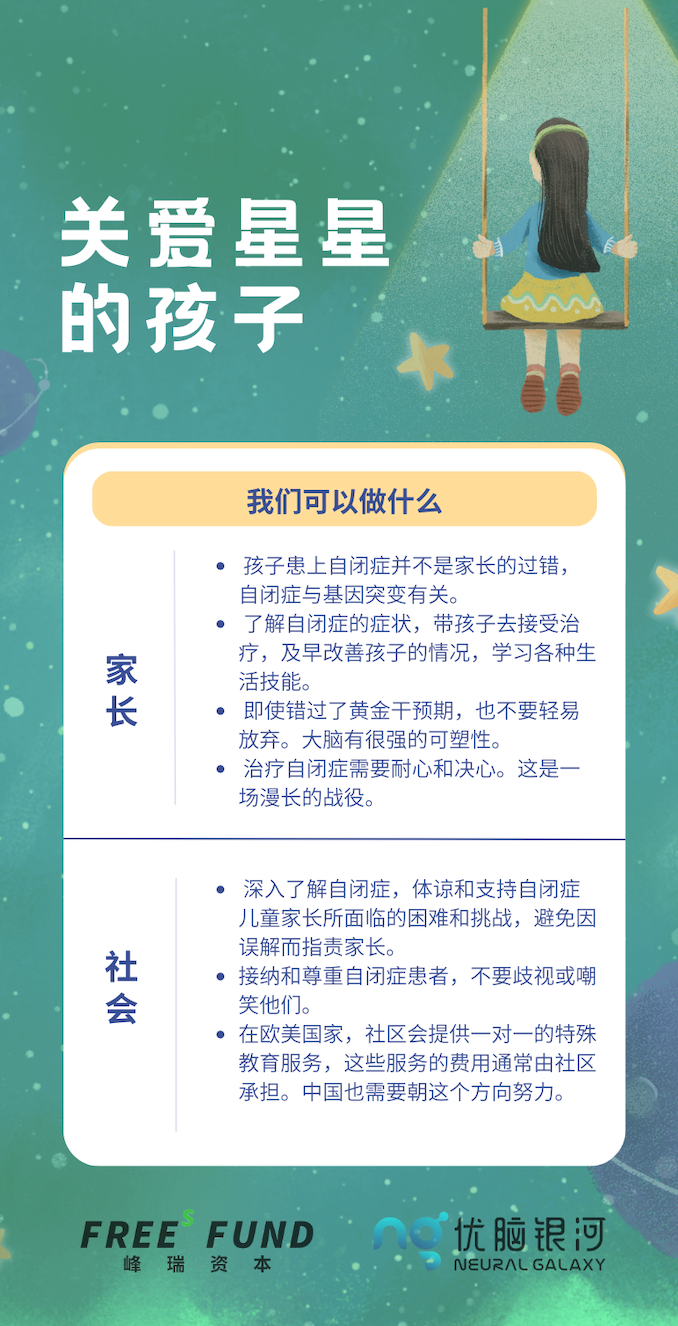
First, a child having autism is not the parents' fault, nor does it mean there's a problem with family education methods. Autism is a neurodevelopmental disorder related to gene mutations.
Second, seize the golden intervention window as early as possible, take the child for treatment, improve early, and learn various skills needed in life.
Third, even if the golden intervention window is missed, don't give up easily. We will always have solutions, and these methods will become increasingly accessible. The brain has strong plasticity, which can persist even to age 80 or 90. We have treated patients from age 6 to over 40, with certain results achieved.
Finally, parents need to understand that treating autism requires patience and determination. The battle against autism is long; a child's symptoms won't completely disappear in a few months or a year. If parents can celebrate every bit of progress, encourage the child, and persist through treatment together, the overall treatment effect may be better.
Many families may have searched for solutions countless times and been disappointed countless times. We deeply understand this mentality, but we hope families affected by autism can see that many people are still working hard to treat autism. Better and more accessible treatments are coming. Please don't lose confidence. We will find ways to treat this.
Rui Ma: What do you think society should do to help families affected by autism? If there are autistic people around us, what can we do?
Kecheng Wei: I believe Chinese society's awareness, understanding, and support of autism can improve further, especially increasing support for families affected by autism.
For example, autistic children may face difficulties attending school. In Europe and America, if a child shows developmental disorders, the community will hire someone to provide one-on-one special education services. And these services are usually covered by the community.
This is education before school enrollment. After children reach school age, there are a series of questions: what kind of school can they attend? If attending a regular school, what support can they get? If attending a special school, how to choose? These already have relatively well-developed mechanisms in Europe and America.
Rui Ma: Are there people in the NeuroXess team whose family members have autism? Why did these colleagues join NeuroXess?
Kecheng Wei: We have some colleagues who have autistic children in their families. These colleagues heard about NeuroXess through various channels, communicated with us multiple times, and chose to join NeuroXess full-time to work together toward the cause of treating autism.
These colleagues' children are being treated at NeuroXess clinics, and they can witness their children's progress firsthand. By joining NeuroXess, they can not only help the children in their own families but also help similar families. Making more people aware of autism treatment methods is very necessary and valuable. Our entire team is working hard toward this goal.
Rui Ma: If someone wants treatment for autism, or other brain diseases like depression or cerebral palsy, how can they contact NeuroXess?
Kecheng Wei: We have opened a clinic in Sijiqing, Haidian District, providing services related to brain disease treatment. Based at this clinic, we also continue to carry out public welfare activities. In 2022, NeuroXess partnered with the Beijing Disabled Persons' Welfare Foundation to launch an autism brain science exploration project. In 2023, similar projects are still recruiting; there are some enrollment criteria. Families in need are welcome to contact us. (Welcome to read the "Autism Brain Function Rehabilitation Treatment Research Public Welfare Project Recruitment Announcement" to learn more about autism public welfare projects)
Giveaway
There's been growing attention on autism recently. What is your understanding of it? Do you know how autism affects patients and their families? The 5 readers with the most thoughtful comments will each receive a copy of The Age-Proof Brain. We look forward to your sharing.

▲ Li Xiang x Li Feng: Institutional Reform, Silicon Valley Bank, GDP Targets, Money Flows... Discussing Recent China-US Macro Hot Topics | Li Feng Column
▲ How Should We Age in the Future? | FreeS Report 29
▲ Li Xiang x Li Feng: What Might 2023 Look Like for Us? | Year-Ahead Outlook
▲ FreeS 2022 Year-End Review: Staying True to Our Logic, Persisting in Doing What Is Right, Not What Is Easy
▲ Stepping Toward the Next Spring in the Depths of Winter: 7 Early-Stage Companies Raise Nearly 600 Million | FreeS Family Funding News · Vol. 13

