Exploring Ten Thousand Possibilities for Matcha: Guancha Raises Tens of Millions in Series A | FreeS Fund Investment News

"I've prepared enough patience for Guancha, and I'm young enough."
Investor Perspective

Huang Hai, Vice President, FreeS Fund
Email: hai@freesvc.com
When FreeS Fund led Guancha's angel round in 2016, the company was just getting started with little data to show. What impressed us most was founder Xiaoguan's original vision. She is a young entrepreneur deeply committed to food innovation, determined to build a matcha snack brand that consumers would love — one that delivered genuine flavor innovation and a sense of happiness.
Over the past two years, Guancha has developed a fairly complete product line and evolved into an online-offline integrated new retail brand. Beyond e-commerce, it has expanded into physical retail and will open more than 20 offline stores this year. Compared to companies that jumped straight into selling matcha beverages, Guancha entered through packaged foods, giving it higher barriers in R&D and production.
Guancha is not alone. FreeS has also invested in food innovators including Three Squirrels, Xinliangji, and Teasoon. Going forward, we remain bullish on investment opportunities in food innovation.

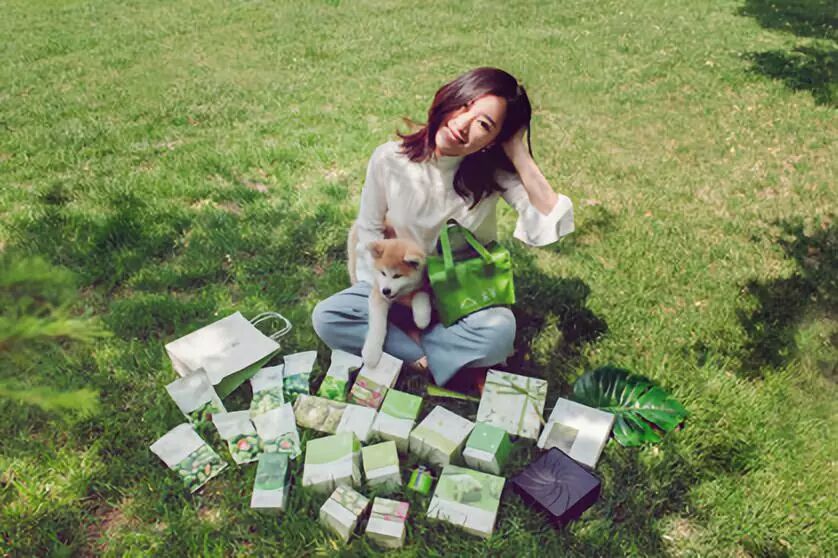
Recently, Guancha — a health food brand built around matcha as an IP — announced the completion of a Series A round of tens of millions of RMB, led by Shunwei Capital with follow-on investment from Meridian Capital and multiple strategic investors. Founder Xiaoguan said the funding will primarily go toward developing hit products, team upgrades, and store expansion.
Diversifying Around the Matcha IP
In recent years, matcha has gradually moved from "niche category" into the mainstream. This classical Chinese "IP" — which originated in the Tang dynasty and flourished in the Song — is now colliding with young consumers' new spending habits.
"Matcha is no longer just a food category. It's a visual and cultural symbol, a flavor IP," Xiaoguan said.
In this era of nationwide consumption upgrading, consumers increasingly care about taste, ingredients, and aesthetics. All matcha is green tea, but not all green tea is matcha. Matcha is made from top-tier tea leaves that undergo 20 days of shaded growth before harvest, steam fixation, and grinding with natural stone mills into a powder fine enough to enter human pores — measured in microns. This fineness gives the ingredient remarkable versatility and compatibility, allowing it to be incorporated into various common foods and beverages like chocolate, cake, and ice cream.
The "matcha IP + food category" model can quickly establish brand recognition in consumers' minds, while matcha's cultural depth adds meaning to the brand. Using one IP to connect multiple individual products keeps the innovation pipeline alive. "This is the path Guancha has been exploring — in our retail stores, you can taste ten thousand possibilities of matcha," Xiaoguan noted.
Crafting Products with Care, Sustaining Innovation
In 2014, Xiaoguan graduated from Tsinghua University's School of Economics and Management and went on to pursue a master's degree at ESSEC Business School in Paris. Trained as a Le Cordon Bleu pastry chef, she returned to China and began developing products along the matcha direction.
Matcha milk jam was Guancha's first product, launched in 2016. It requires 6.5 hours and over 20 steps to prepare. This dedication to craft enabled Guancha to develop multiple new products. When the product entered standardized factory production and began sales in early 2017, annual sales exceeded 10 million RMB. Since then, Guancha has rolled out several hit products.
From day one, all Guancha products have followed "six commitments": insistence on globally sourced premium ingredients; insistence on using genuine, appropriate matcha; insistence on avoiding unnecessary chemical additives; insistence on proprietary R&D for production formulas; insistence on consumer-centric design; and insistence on "private bakery standards + industrial standardized production."
"A food brand rests on four dimensions: product, supply chain, channels, and brand. I'm convinced that only when the product is strong will the other three pillars work," Xiaoguan explained. Guancha maintains strict quality control from ingredient selection through R&D to production, gradually building a systematic standard.
During product development, for example, Guancha collected and studied all premium matcha sources available domestically, blending different shades — deep green, emerald, dark green — and aroma profiles — bamboo leaf, seaweed, fresh grass — to find the most suitable matcha for each product.
On the word "craftsmanship," Xiaoguan believes it hasn't been worn out by overuse, but its meaning has evolved. "Craftsmanship in the new era isn't about spending a lifetime making something slow and self-indulgent. It's about delivering complete user experiences, stable and sustained innovation, bringing high-quality living and beautiful feelings and value to more consumers. That's my understanding of what good food should be."
Brand Upgrade: Online Hits Lead, Offline Builds Owned Channels
Multiple hit products have laid a solid foundation for the Guancha brand. In Xiaoguan's view, "now is the best time in China to build a genuine product brand."
She traces the evolution of domestic casual snacks through four stages: first, food factories shipping directly to market with no product or brand identity; second, big single-product brands dominating all channels; third, e-commerce-native snack brands like Three Squirrels and Baicaowei riding the online wave; and fourth, the product brand era, where brands rise around taste, cultural symbols, and ingredients as IP.
Guancha's model of using the matcha IP to connect multiple product categories meets diverse consumer needs, enabling the brand to enter various channels with support from different types of industry partners. This approach has allowed Guancha to develop over 50 SKUs in the past two years.
For near-term brand planning, Xiaoguan said online will follow a hit-product logic — slowing new product launches but consistently creating blockbusters. Offline, stores will accelerate refresh cycles, with drinks and desserts getting monthly new releases.
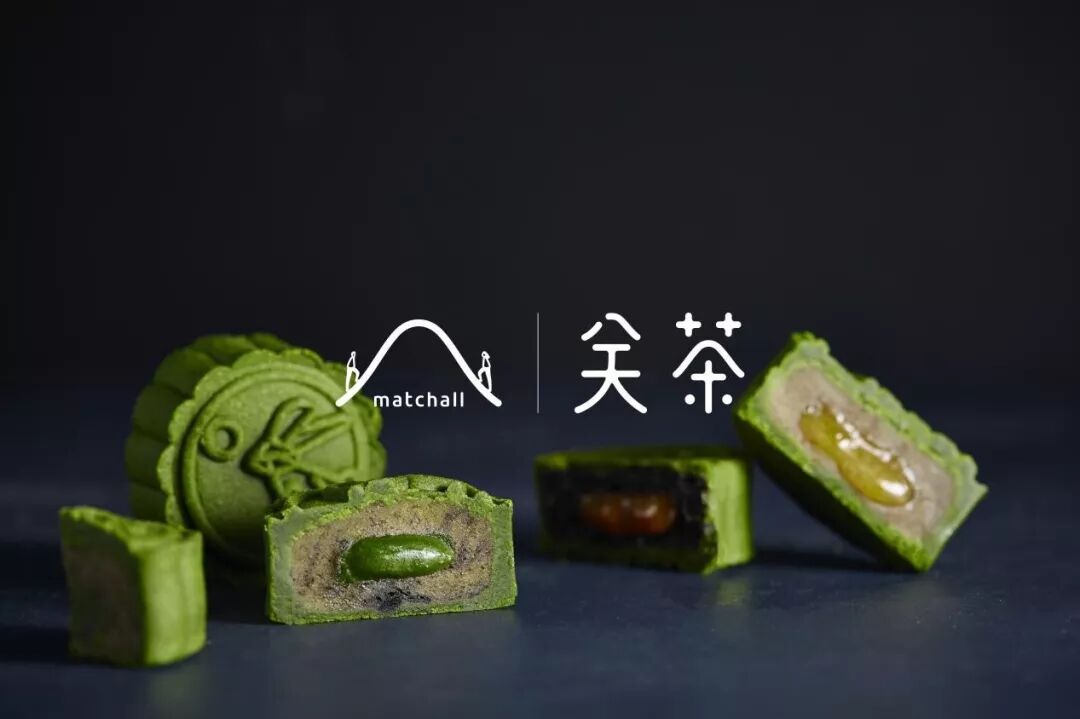
With the Mid-Autumn Festival approaching, Guancha will push a signature "Companion Moon" lava matcha mooncake. Only a company truly focused on products would approach a branded mooncake this way. The product brings together top global food R&D designers and packaging designers, and will launch jointly with the knowledge IP Wu Xiaobo Channel. These three lava matcha mooncakes are fully developed by Guancha's in-house product center using the world's finest ingredients. "We compared at least 50 types of ham to find one without nitrites. We're confident this will be the Mid-Autumn Festival's breakout mooncake."
Offline, Guancha has developed three store formats: First, Guancha MINI — roughly 10 square meters in mall atriums or counters, focused on packaged foods and three matcha concentrations and flavors of Italian artisanal gelato, achieving sales per square meter exceeding 10,000 RMB. Second, Guancha SOLO — about 30 square meters in mall atriums or side halls as new retail spaces combining packaged foods, beverages, desserts, and ice cream, with sales per square meter of 5,000–8,000 RMB. Third, Guancha brand experience stores with a "matcha museum" concept, going beyond sales to popularize matcha culture and offer innovative experiential activities. By year-end, Guancha will have 25 directly operated stores, expanding to 40–50 by end of March next year.
"For a product-driven consumer brand, user relationships matter. Past channel brands didn't own their channels, so user data sat in others' systems and couldn't inform brand and product design. We're building an integrated WeChat and store membership system, accumulating brand value through user operations, time, and word of mouth," Xiaoguan said.
Guancha's core management team includes three Peking University Guanghua School of Management MBAs from senior roles at COFCO, Huarun, and other major FMCG groups. The offline operations team comes from Starbucks and Pizza Hut with 14 years of store operations experience. Mid-level managers are from leading brands like China Mengniu Dairy Company Limited.
Not a Traffic Brand, But a True Product Brand
Guancha will also launch more cross-industry collaborations and operations. In the second half of 2018, Guancha and food designer Wang Xiaolong will partner with Tsinghua University to create the "Beautiful Food Lab." Going forward, Guancha will transform its product center into an open platform, working with Tsinghua University to serve campus creative incubation needs, cross-industry brand customization, and industry upgrading.
"Guancha wants to use the Beautiful Food Lab to connect people who want to enter the food industry or change it, integrating resources across industries so experiential value can be shared and exchanged, sparking better ideas and genuinely improving people's quality of life," Xiaoguan explained. She and Wang Xiaolong added: "If we can socialize and platformize Guancha's 'product power' to help more entrepreneurs and companies, and if we're fortunate enough to make food design a discipline at Tsinghua University someday, that would be our greatest aspiration."
On long-term brand development, Xiaoguan emphasized that Guancha should not become merely a traffic brand or channel brand. "We live in the best of times, but these times are somewhat restless, somewhat impatient. In chasing traffic, people often forget the product. I want to settle in and build something truly valuable — a good product and a good brand. I've prepared enough patience for Guancha, and I'm young enough."
"With an outsider's craftsmanship and natural reverence for food, bringing matcha culture back to China and building a food brand that China can be proud of — that's the shared goal for me and Guancha," Xiaoguan said.