Finding New Opportunities in the Periodic Table: There's Still More Room for Imagination in Tech Entrepreneurship | A FreeS Fund Conversation

How do we solve the "chokepoint" challenges today, and what room for imagination remains in the tech landscape of tomorrow?

In deep-tech fields like wafer fabrication, LiDAR, and advanced materials, China is facing "chokepoint" challenges. South Korea, which has gradually broken free from similar chokepoint constraints in semiconductor manufacturing, may offer valuable lessons.
In 2019, Japan restricted exports to South Korea of three key semiconductor materials — high-purity hydrogen fluoride, fluorinated polyimide, and photoresist — using products that accounted for less than one ten-thousandth of total export value to hold the entire Korean semiconductor industry hostage, effectively "throttling" the Korean economy.
Yet just over three years later, that grip had lost much of its power. In 2019, the Korean government significantly increased support for domestic suppliers of semiconductor raw materials, components, and equipment, and launched an import substitution program that November.
Within three years, South Korea's photoresist industry went from zero to operational, hydrogen fluoride imports dropped 66% cumulatively... and on March 16, 2023, Japan announced it would lift export restrictions on all three materials.
Looking at the present: how do Chinese semiconductor entrepreneurs and investors view the chokepoint problem? Looking ahead: what room for imagination remains in tech entrepreneurship?
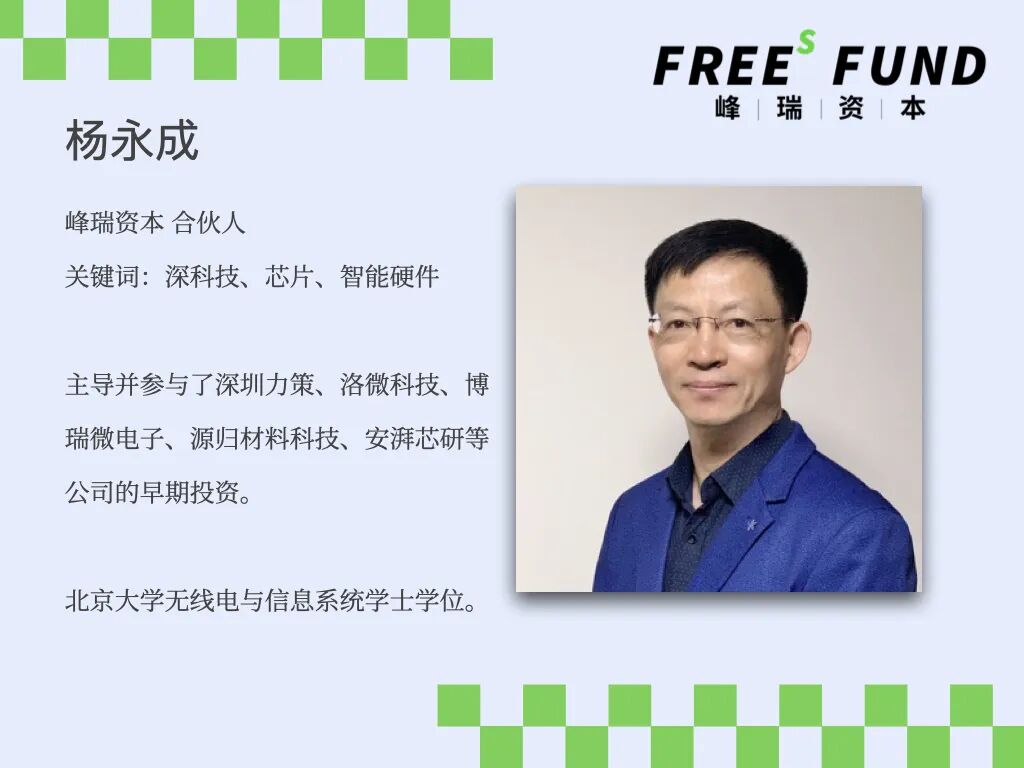
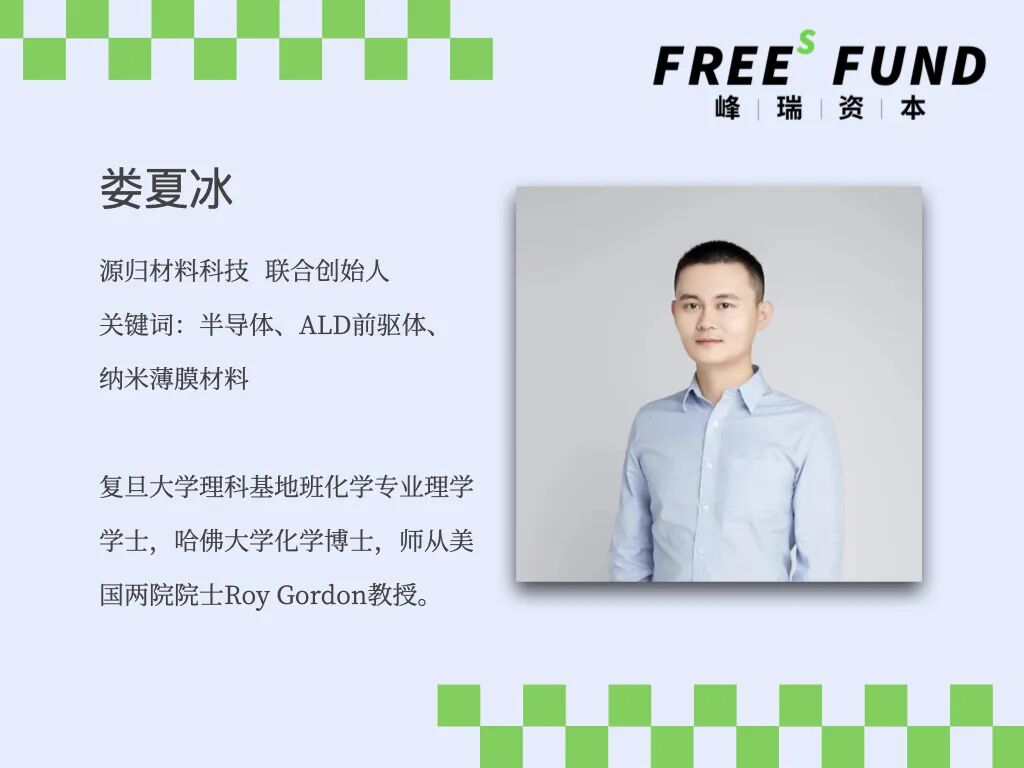
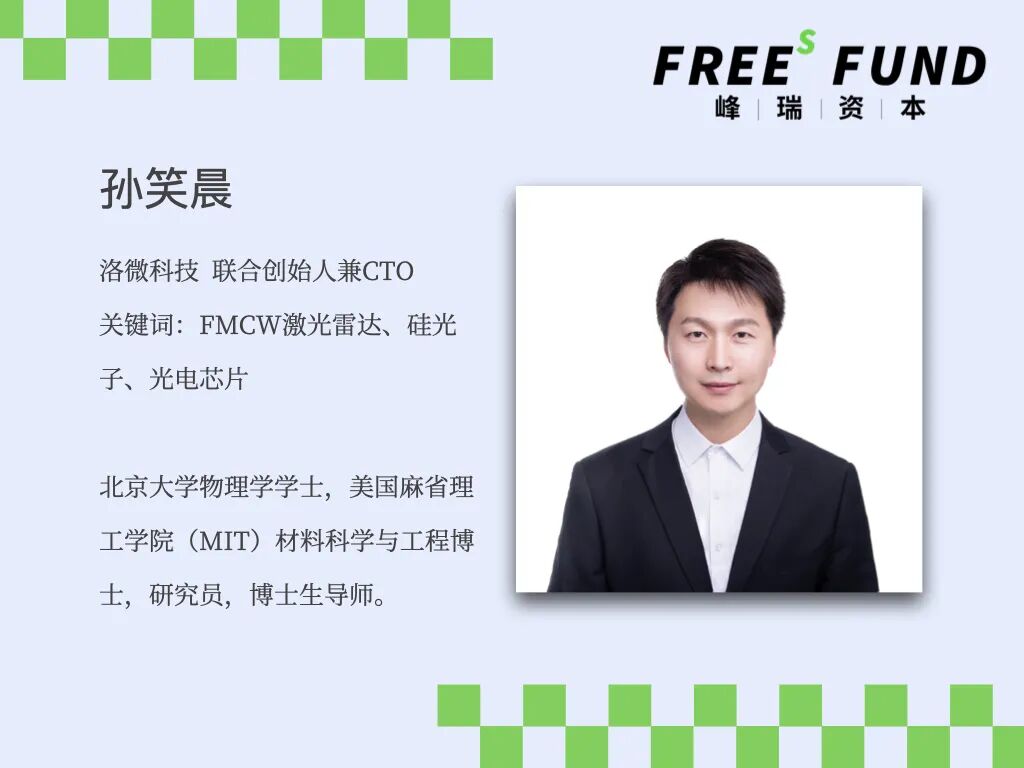
At the "Trends 2023 — FreeS Fund China-US Venture Capital Summit," FreeS Fund partner Yongcheng Yang sat down with Xiaochen Sun, co-founder and CTO of LuminWave, and Xiabing Lou, co-founder of Yuan Gui Materials Technology, to discuss opportunities in semiconductor entrepreneurship, whether LiDAR is essential for autonomous driving, the consumer electronics market, and the considerations and experiences of founders returning to China...
We've edited excerpts from their conversation. Follow the FreeS Fund WeChat video channel for the full replay.
Swipe to see more
Contact Us
If you're building a hard-tech startup, reach out to Yongcheng Yang (yangyongcheng@freesvc.com)
Giveaway
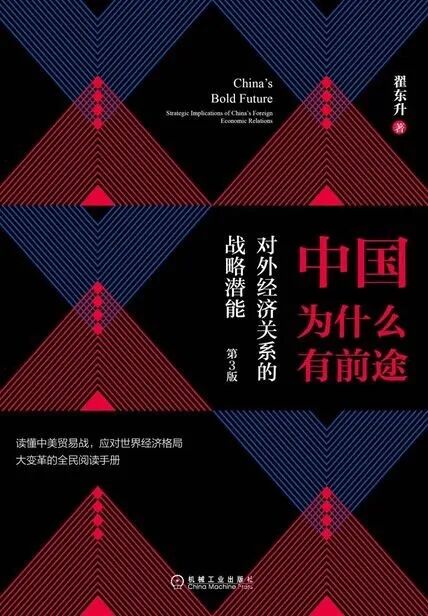
What imaginative new technologies are you seeing in tech? Share with us in the comments. The 5 most thoughtful commenters will receive a copy of Why China Has a Future. Looking forward to your thoughts.
/ 01 / Lessons from South Korea vs. How China Solves Its Chokepoint Problem
Yongcheng Yang: "Chokepoint" has been a buzzword these past couple years. First they choked off chip supply, then they wouldn't let you manufacture chips, then not only "we" can't sell you equipment, nobody else can either. Dr. Lou, what's the situation with chokepoints in materials? Where is this headed?
Xiabing Lou: Actually, for domestic wafer fabs, materials chokepoints haven't become particularly acute yet — people are worried about future restrictions. But on the equipment side, chokepoints are already quite visible. There's a classic 2019 case: Japan restricted exports to South Korea of high-purity hydrogen fluoride, fluorinated polyimide, and photoresist — three key semiconductor materials that made up less than one ten-thousandth of Japan's total exports. Once materials were choked off, nearly all of Korea's semiconductor exports were affected.
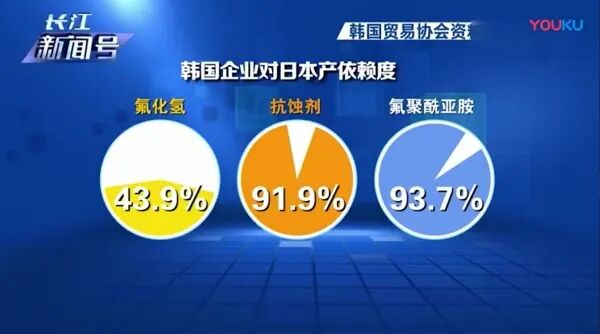
▲ Image source: Yangtze News screenshot
South Korea's response at the time is highly instructive. After the restrictions hit, Korea quickly committed to localizing these materials. Within two to three years, it had essentially achieved domestic supply. China may not be tightly constrained on materials yet, but we'll need to achieve domestic substitution going forward.
Yongcheng Yang: There's recent news that Japan lifted some semiconductor material restrictions on South Korea. Does this mean Korea has gradually solved its chokepoint problem and can now produce these things independently?
Xiabing Lou: Yes, because these restrictions were imposed precisely to exert leverage. Once the other party can produce them, restricting them becomes pointless — it comes down to normal commercial competition again. So I believe that in semiconductors, when China's domestic materials and equipment can be produced and supplied normally, these restrictions will also be gradually lifted.
Yongcheng Yang: Fundamentally solving chokepoints isn't about persuading the other side to stop choking you — it's about having the strength and capability to breathe on your own, or not letting them put their hand on your neck in the first place.
FreeS Fund invested in companies like Yuan Gui Materials Technology in the ALD space (ALD stands for atomic layer deposition) primarily because ALD represents precision materials that can offer new solutions for semiconductor processing bottlenecks.
First, the inevitable trend in semiconductor materials is moving from low to high process nodes.
Second, the application scenarios we can envision now are just the tip of the iceberg — they'll likely expand into many other areas.
So in recent years we've been more willing to invest in projects related to new materials, new processes, and new technologies, with the patience to help founding teams grow the market — that's a core part of our investment philosophy. But solving chokepoint problems for the country is also something capital should do and must do now.
/ 02 / Finding New Opportunities in the Periodic Table
Yongcheng Yang: I'd like to ask both founders: what new trends are emerging in semiconductors? Will things get better, worse, or even disappear?
Xiaochen Sun: The semiconductor industry cannot disappear. Twenty years ago, people started saying Moore's Law was dead, but we're still talking about Moore's Law today. It's become industry consensus.
Relying solely on chip technology itself — shrinking dimensions or design improvements — will solve increasingly less. More layers of technology need to be introduced. For example, advanced packaging is a hot direction recently, and behind that is the need to improve at the whole-system level, ultimately achieving better computing and application system capabilities.
I believe continuing down this path, there will constantly be new advanced chip combinations and new ideas and improvement paths in system-level packaging.
Meanwhile, the industry is paying more attention to new materials. While semiconductors are silicon-based, more and more elements from the periodic table are being used in chips — from probably fewer than 10 initially to maybe 40 or 50 now.
Going forward, many more new materials may be incorporated into chips, such as III-V materials (III-V materials generally refer to alloy compounds formed from group III and group V elements in the periodic table; there are many types, such as gallium arsenide (GaAs), indium phosphide (InP), gallium nitride (GaN), etc.) integrated with silicon.
Additionally, as processes improve and optimize, even CMOS devices are considering introducing new materials like III-V materials and 2D materials.
I believe whether at the semiconductor foundational technology level or the system-level packaging level, there will be many paths and methods for development going forward. I probably won't see this industry stop in the next 50 years.
Yongcheng Yang: When silicon photonics was first proposed, the vision was "unification" — putting all the main optical components on a silicon base.
But in development, people found that some light sources were very difficult to realize on silicon, so they hoped to do deposition and epitaxy directly on silicon to make it emit light. Then they found doing this directly on wafers was very hard, which gradually drove heterogeneous integration and 3D packaging. "Long united, must divide; long divided, must unite" — this pattern continued in materials applications.
Now, materials and processes have become "purpose-built": what's good at light sources uses III-V semiconductors, what's good at light modulation may use another material, then they're integrated together — driving much development in new processes, equipment, and materials.
Dr. Sun mentioned the periodic table. From an investment perspective, we also see market opportunities in new materials, new equipment, and new devices.
Additionally, we're quite bullish on optics-related entrepreneurship opportunities, because light itself is a high-quality electromagnetic wave, and its properties enable performance that microwaves and millimeter waves struggle to achieve. But because our ability to control and manipulate light is still limited, we haven't pushed it to its limits — which means there's still huge room for development.
Xiabing Lou: From my perspective, first, semiconductor technology itself has enormous evolutionary potential and will enable many applications.
Additionally, users constantly make new demands on electronic devices and software every day — for example, gaming display requirements going from 60Hz to 120Hz — all driving continuous innovation in semiconductors. AR glasses, autonomous driving — these products impose further performance requirements on chips. Whether through advanced packaging or new materials, the semiconductor industry needs to solve these problems going forward.
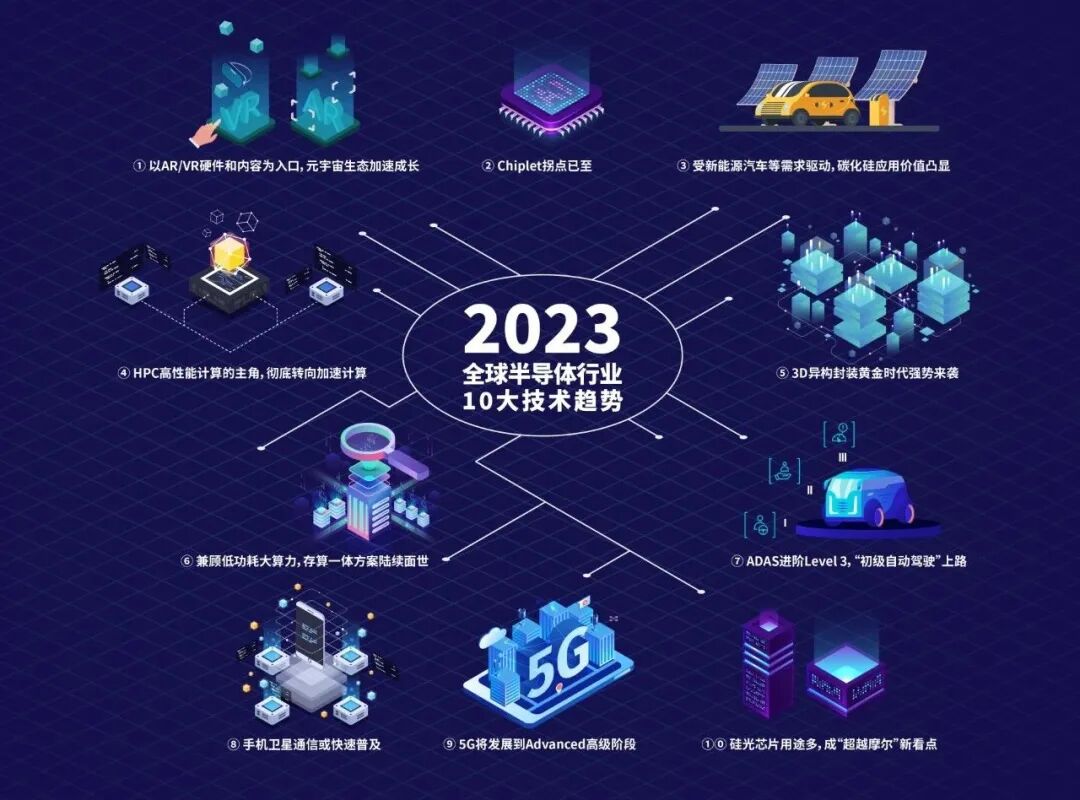
▲ Image source: EET-China
With demand never ceasing, users will always need lighter, thinner, higher-computing-power devices — the semiconductor industry will never stop advancing.
/ 03 / LiDAR: Is It the Direction for Autonomous Driving?
Yang Yongcheng: LiDAR has been controversial throughout its development. Dr. Sun, what's your take on this? Do you think Zvision made the right call or the wrong one?
Sun Xiaochen: I believe Zvision chose the right path with LiDAR. This question can actually be examined on two levels: first principles, and LiDAR itself.
On the first level, drawing on Elon Musk's first-principles analysis — humans drive using vision and the brain to achieve a certain level of driving capability, and machines can do the same through AI algorithms and cameras.
To some extent, I actually agree with this. But there's a problem: while humans solve most driving scenarios through vision and the brain, we still see a significant number of accidents every year caused by perceptual errors rather than inattention.
Machines, through the fusion of AI and vision, haven't yet reached human driving levels. And even if they do, they still won't be able to avoid a certain percentage of traffic accidents.
On the second level, if we analyze this from a commercialization and productization perspective, there's no question that Tesla has done exceptionally well. But Tesla's decision not to use LiDAR wasn't without cost.
It minimizes the hardware cost and complexity of the vehicle itself, but incurs costs elsewhere — massive data training, even building its own supercomputing centers. These hidden costs are embedded in the overall solution development. Not every automaker or autonomous driving company has the resources to pursue a similar business model.
I believe most automakers will embrace the LiDAR solution because it aligns with their business models and development timelines. They need to achieve commercial deployment as quickly as possible with cost-controllable solutions.
From both the fundamental principles and commercialization perspectives, I believe LiDAR is essential.
Yang Yongcheng: I share Dr. Sun's view on where the LiDAR industry is headed. I'd offer another perspective: LiDAR and cameras are fundamentally both optical imaging — they share most of the same attributes. The only difference is that LiDAR carries its own light source, and that light source is purer. From a communications standpoint, it has higher signal-to-noise ratio, which gives it very strong future prospects.
But in terms of industrial maturity, LiDAR and cameras aren't on the same level yet, so its potential hasn't been fully unleashed. As an early-stage fund, FreeS Fund places great emphasis on innovative technology and the potential of entrepreneurial teams — that's why we invested in Zvision.
My personal feeling is that automakers are fundamentally brand owners and integrators. So in product definition and positioning, they'll select the best components, including sensors. When LiDAR becomes truly excellent, automakers won't reject a good product because of extraneous "love-hate" dynamics. I'm still very optimistic.
Yang Yongcheng: Many people had already entered the LiDAR industry before you. What gave you the confidence that by starting over, you could still contribute to and be accepted by this industry?
Sun Xiaochen: When people talk about LiDAR, they mostly talk about what startups are doing — which shows LiDAR is still in a very early stage, driven by startups advancing the technology, with no monopoly by giants yet.
Additionally, LiDAR is part of automotive sensors. Looking back at the history of automotive sensor development, the evolution of millimeter-wave radar offers lessons for LiDAR.
In 1999, the first millimeter-wave radar was installed in a Mercedes-Benz. It took more than a decade before millimeter-wave radar became something most vehicles would consider installing, with the market reaching billions of dollars. So automotive sensors are inherently a long-cycle track with enormous potential.
We believe LiDAR is now beginning to be installed in vehicles — this track is taking off — but the technology is still immature, with substantial room for future upgrades.
Technically speaking, millimeter-wave radar also underwent continuous upgrades and shifts in technical approach. The first millimeter-wave radar installed in 1999 used TOF (Time of Flight, where the sensor emits modulated near-infrared light, receives reflections from objects, and calculates distance by measuring the time or phase difference between emission and reflection).
More than a decade later, millimeter-wave radars in vehicles today have completely shifted to FMCW (Frequency Modulated Continuous Wave, which achieves precise measurement of object position and velocity by emitting a constant stream of laser light and periodically changing its frequency modulation).
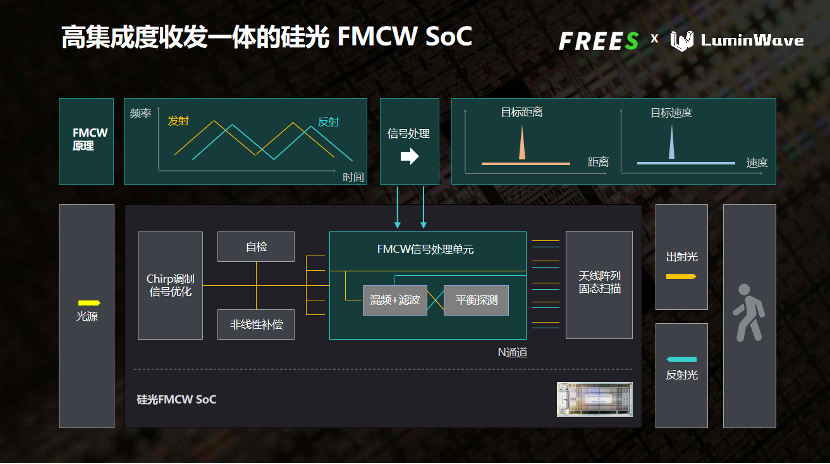
▲ Image source: Zvision
We believe the LiDAR field will also shift from TOF to FMCW, and I suspect the transition will be faster than with millimeter-wave radar, because market demand for assisted driving is very strong right now, and automakers want to differentiate themselves with these features. Zvision is building FMCW based on silicon photonics chip technology — this is the next-generation detection technology.
Yang Yongcheng: Autonomous driving and its related sensors are still developing, with significant room for technological advancement.
People are focused on how quickly millimeter-wave radar and LiDAR can get into vehicles.
But there's actually another large market that may not be getting as much attention. For example, robot vacuums have gradually shifted from cameras to LiDAR, and many automated guided vehicles tend to use LiDAR as a key sensor. Sometimes you have to dive into the sea of entrepreneurship to feel the buoyancy and momentum of the water.
Sun Xiaochen: That's true. On intelligent devices, replacing or complementing cameras with LiDAR offers significant benefits.
LiDAR measures real-world 3D modeling data. Based on this data, the computing power required for obstacle avoidance and perception is far lower than what's needed for cameras. Algorithm development is easier, and the volume of data collection is smaller. From a business perspective, LiDAR has many application scenarios. While LiDAR is more expensive than cameras, the overall input-output ratio is higher.
"Demand for AR Will Always Exist"
Yang Yongcheng: What opportunities do you see in consumer electronics? Dr. Lou just mentioned AR glasses — what are your thoughts on this?
Lou Xiabing: I'm very passionate about AR glasses. Around 2018, AR glasses were limited by computing power and could basically only achieve photo projection functions.
We hope that future underlying technology can solve the computing power problem and truly enable voice interaction with glasses, or complex operations through eye movement. Ultimately, people definitely want to achieve what we see in sci-fi movies — no computers needed, everything operated through glasses, with the glasses themselves causing zero interference to daily behavior.
But right now, the core difficulty is stuck at the hardware technology level. For a considerable period going forward, this is the direction we as practitioners need to work toward.
Sun Xiaochen: I very much agree with Dr. Lou's view. Information acquisition is part of our lives, and mobile phones are our primary source of information. But phones themselves aren't very friendly to the human body — holding one for long periods makes your wrists sore and tired. So there's definitely demand for new information acquisition platforms.
In 2022, world population surpassed 8 billion. Consumer electronics demand will certainly always exist. The consumer electronics market itself will continue to develop — there may be brief periods of stagnation or decline, but the overall trend remains unchanged.
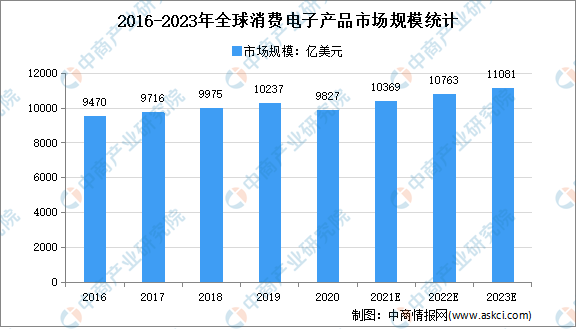
▲ Consumer electronics demand keeps growing
From the perspective of information acquisition channels, humans probably get 80-90% of their information visually — through light. So I'm particularly interested in light-related things.
Zvision initially considered consumer products as well. Although we later pivoted, we did some market and technical research.
In the consumer electronics space, the bar for entrepreneurship is relatively high. Because consumer electronics ship in large volumes, market demand can be more volatile and intense. It's not a process from 0 to 1 to 10 to 1000 — it's from 0 straight to 1 million or even 10 million. So for suppliers and startups, entrepreneurship in consumer electronics can be quite difficult.
Yang Yongcheng: The closer electronic consumer products are to the human body, the greater their demand — electronic watches, phones. Smart glasses are the same — users don't need to develop new usage habits. As long as you work to make smart glasses approach existing glasses in weight, cost, appearance, and other aspects, the smart glasses market will exist.
Currently, AR glasses haven't exploded as quickly as expected. We've perhaps given AR glasses capabilities and expectations that are too high. Technology needs to improve and break through further, but in terms of use cases, we need to lower the dimensionality or reduce technical difficulty, provide core visual information, and ultimately achieve mass production. This way, smart glasses can enter the market more efficiently and quickly.
Nuclear Fusion, Perovskite Photovoltaics... Greater Imagination for Tech Entrepreneurship
Yang Yongcheng: What other technologies are currently controversial and uncertain, but which you judge and reason might have the potential to grow big and succeed?
Sun Xiaochen: Let me start with a broad direction, then narrow down. Broadly, I mainly look at GDP composition. Within GDP composition, I'm particularly focused on energy, because energy relates to all industries and everyone's lives.
Global primary energy (primary energy refers to energy resources that exist in their original form in nature,未经加工转换的, also called natural energy, such as coal, oil, natural gas, hydropower, etc.) expenditure accounts for roughly 10% of GDP output. Any change in it causes deep, fundamental shifts across society. In the energy sector, I believe new opportunities will continuously emerge.
From the longest-term perspective, controlled nuclear fusion can give humanity safe, clean, low-cost energy. Solving nuclear fusion involves new energy generation, storage, transportation, composition, and conversion — every link potentially represents a market of considerable scale.
Narrowing down to my own specialty: I started in optical communications, then moved to optical sensing. LiDAR is a form of optical sensing. We build all these product solutions based on silicon photonics chip technology.
In recent years, cloud computing and AI have created new demands for optical chip products — increasing data bandwidth density, solving heat dissipation and power consumption problems. The industry hopes to integrate the optical chip transmission portion into electrical chips, known as co-packaging, or optical interconnects.
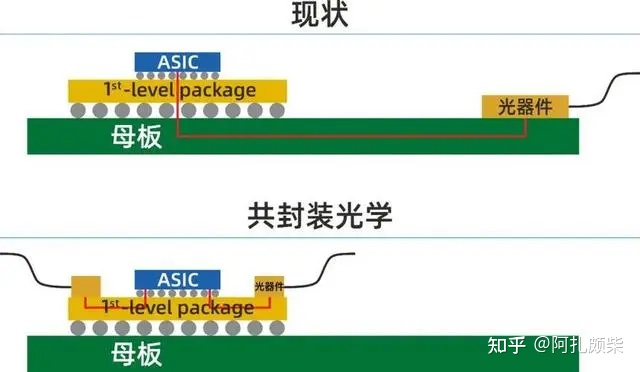
▲ Co-packaging illustration
The concept of co-packaging has existed for some time, but market adoption has been relatively slow because it means changing the entire data center and supercomputing center architecture. But this change is inevitable. Over the next decade or so, I believe co-packaging will see major development.
Yang Yongcheng: Sun Bo mentioned nuclear fusion — profiting from energy. I'm very bullish on that too. In the long run, nuclear fusion may be the cleanest energy source humans can harness. In practice, the technical barriers to nuclear fusion aren't insurmountable; it's fundamentally a matter of control. If we can truly harness nuclear fusion, we can let our imaginations run wild. At the first level, we might no longer need to worry about energy security. At the second level, if energy becomes abundant and costs approach zero, it would transform all of humanity, including Earth's ecology. Energy could influence the evolution of technology — people could revisit research shelved due to energy constraints, such as interstellar travel.
The second point Dr. Sun raised was photovoltaics in the near term, which is about photoelectric conversion. There's actually another related area: our luminescent materials, including imaging materials. This includes earlier LCD (Liquid Crystal Display) technology, and now people are working on MiniLED (a new display technology) — these are all promising directions.
Dr. Sun also mentioned optical interconnects, which is about co-packaging photonics and electronics. Each playing to its strengths, this will be crucial for the future development of the entire information industry. We can control both light and electricity, develop many new materials, and integrate them into unified devices and packaging. I find all of these points quite valuable, and I'd encourage aspiring entrepreneurs or researchers to take note.
Dr. Lou, what do you think?
Lou Xiabing: Let me start with something we're working on right now that many people still find somewhat implausible: perovskite photovoltaics.
People might think silicon photovoltaics are already cheap, but in reality they're not cheap enough. Especially for grid-connected power generation, they're not cost-effective everywhere in the world. For example, installing rooftop solar in rural areas now might only yield 5-6% annual returns — a relatively low payback.
Perovskite photovoltaics currently have the potential to solve the cost problem. Though we're still far from that goal, both in terms of degradation and cost. But from first principles, perovskite photovoltaic materials are very thin, so theoretically costs could be driven extremely low.
As a materials company, we've secured key materials for one step in the perovskite photovoltaic manufacturing process, so we're growing alongside perovskite photovoltaic companies.
Another thing that even I find somewhat "out there" is the convergence of the semiconductor industry and life sciences. FreeS Fund has also invested in some companies in this space, including those doing microfluidics and various bio-syntheses using chips.
Chips represent a highly logical, programmable direction. In biology, at the genetic and protein levels, the pursuit of programmability is also driving these two major fields toward convergence. For example, could we consider using a bio-semiconductor hybrid approach to replace existing organs? This might lower our functional requirements for organs and make transplantation easier.
Another even more far-fetched idea: with chip technology assistance, could we achieve human external gestation? This ventures into science fiction territory. But in my view, the broad direction of chip technology converging with life sciences may gradually develop in the future.
Yang Yongcheng: Very forward-looking. On perovskites, I agree with Dr. Lou's view — I'm optimistic about perovskites as a new photovoltaic material, and FreeS Fund has invested significant effort here. For those doing well in perovskites, aspiring to start a business, or already on the entrepreneurial path and needing funding, feel free to contact us (yangyongcheng@freesvc.com).
However, the difference between perovskite and conventional silicon solar panels is that silicon-based panels have excellent stability, while perovskite stability isn't as good. To solve the stability problem, one technology path that people are fairly optimistic about and recognize is using ALD thin films from YuanGui Materials Technology to encapsulate the perovskite material.
On the second point about semiconductor and life sciences convergence — FreeS Fund pays particular attention to interdisciplinary fields, such as those combining technology and biomedicine. If we view biomedicine within the broader technology landscape, humanity's depth, breadth, and systematic understanding of life clearly lags behind physics and other disciplines, which creates significant space for entrepreneurs.
Additionally, Dr. Lou just mentioned microfluidics and other technologies applied at the microscale. Using advances from the microscale domain of the electronics industry and combining them with cytology, proteomics, and DNA omics — this is a technology direction.
In fact, there are many applications people are already trying in the industry, such as T-cell generation, DNA synthesis, and nanopore sequencing — these are all developments at the intersection of semiconductor processes and biology at the microscale. I don't actually find this far-fetched; it may be something happening now, or even already happened. We're very bullish on this.
Regarding the organ example Dr. Lou mentioned — electronics or hardware science have more applications here. The most typical example is extracorporeal hearts using magnetic levitation pumps, which are actually quite mature. But because they're external to the body, they're not particularly easy to popularize.
Opportunities and Challenges of Returning to China to Start a Business
Yang Yongcheng: Dr. Lou, this is your first time starting a business. How has this year of entrepreneurship felt? Why did you consider returning from the US? What's your view of the domestic entrepreneurial environment? I'd like to hear your firsthand experience.
Lou Xiabing: The domestic semiconductor materials industry is developing much faster than abroad, with clear supply chain advantages, relatively lower costs, and rapid iteration speed. China has an engineer dividend, with abundant industry talent and relatively rich experience in synthesis — this has been enormously helpful to us, allowing us to complete technical iterations faster.
The domestic atmosphere is more dynamic, while life abroad is comparatively calm. Returning to China feels more dramatic. And the domestic environment has improved noticeably — there's not much to worry about in daily life.
It's worth noting that domestic industrial policies are quite extensive. Land, rent, and factory construction costs are much lower than elsewhere, and facility construction is fast. For example, material suppliers near semiconductor wafer fabs — domestically these suppliers can be built and operational in six months at most, while abroad the construction cycle is roughly four to five years. So China has major development advantages.
Yang Yongcheng: In your entrepreneurial process, have you received support from government or other industry resource providers on the supply and client sides? Was the fundraising process smooth, or did you face significant challenges?
Lou Xiabing: The stability of our upstream raw material supply still presents some challenges to this day. Part of the reason is that we're still relatively small in scale — if we were larger, we'd have more leverage in communicating with upstream suppliers. This requires significant effort in supply chain management to resolve.
Expanding our client base domestically has been smoother and faster than in the US, mainly because domestic demand is growing rapidly. Even with the semiconductor industry slowing this year, customers and the broader market still have strong appetite for new materials and new technologies. The government officials we've engaged with are all working hard to develop local industries, understand entrepreneurs' needs well, and are willing to provide support.
Yang Yongcheng: I share that sentiment. When we work with local government officials, they're professional and efficient.
Dr. Sun, this is your second time starting a business — the first was in the US. How do you view the domestic entrepreneurial environment now?
Sun Xiaochen: When I started my first company, it was established in the US, but in the later stages, the company's main customers came from China. Since most optical module manufacturers are Chinese companies, I ended up spending half my time on commercialization in China. We also had team members domestically, so when I started my second company, I placed the company's headquarters in China.
Choosing to start a business domestically also relates to our industry. Lidar now serves assisted driving and intelligent driving for vehicles. The rapid development of new energy vehicles gave us the opportunity to enter this new track.
In 2022, China's new energy vehicle exports already ranked first globally. China's new energy vehicle market is developing rapidly, with shorter technology iteration cycles for automakers, and people are willing to try new technologies and products. New energy vehicles have become an iconic industry in China, with strong national support. What we do is part of new energy vehicles, so LuminWave being based domestically also makes business sense.
Based on decades of accumulated development, China has vast numbers of master's and PhD talent across various industries. For startups, it's easier to build teams.
Moreover, China's hard tech supply chain is very complete. Except for some core chips from Europe and the US, all hardware needed for system-level products can be sourced domestically, and production cycles are short. This allows our products to reach market faster. So for our second startup, placing the headquarters in China was a suitable and wise choice.
Contact Us
If you're starting a business in hard tech, feel free to contact Yang Yongcheng (yangyongcheng@freesvc.com)
Reader Giveaway
What imaginative new technologies do you see in the tech space? Share with us in the comments. The 5 most thoughtful commenters will receive a copy of Why China Has a Future. Looking forward to your shares.

▲ Every Brain Is a Unique Little Universe | FreeS Fund World Autism Awareness Day Special
▲ Beyond Chatting and Drawing, AI Can Also Help You Work Out Online | FreeS Fund Dialogue
▲ How to Turn Black Tech into Reliable Products? | FreeS Fund Dialogue
▲ 2022: Where Are the Next-Gen Consumer Opportunities? | Li Feng Column
Star the FreeS Fund WeChat Official Account
Get timely business insights delivered to your feed