FreeS Fund Angel-Round Portfolio Company NextVPU Closes 200 Million RMB Series A | FreeS Funding News

We provide professional solutions for robotics, drones, autonomous vehicles, and security surveillance.
" Investor Perspective

Li Feng, Founding Partner, FreeS Fund
Email: feng@freesvc.com
More than two years ago, when FreeS Fund decided to invest in the chip and sensor sector, one direction we were bullish on was companies with both hardware integration capabilities (modules and chips) and the ability to implement algorithms better on the edge — right on the device itself. This requires founders to have more complete and stronger hardware-software integration skills, and the ability to design and develop the most suitable hardware-software solutions based on specific applications and scenarios.
The two co-founders of NextVPU happen to have deep experience in both areas, having led multiple top-tier industry projects. After collaborating for years, they already had a prototype of "Angel Eye" when they decided to start their own company — demonstrating both technical sophistication and hardware-software integration capabilities, as well as genuine entrepreneurial determination. Moreover, vision-related applications and technology represent the most important and most challenging problems in the sensor space, and they have proven their technical foresight and capabilities in this赛道. I'm deeply grateful to both founders for their trust in us over these past two years, and congratulations to NextVPU on their achievements.
"

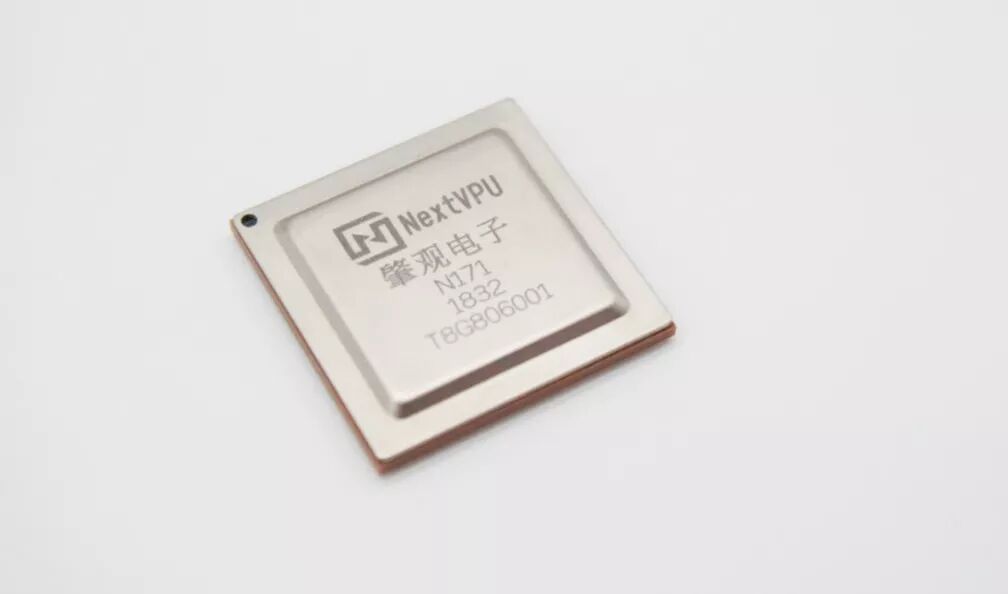
Recently, AI chip and systems company NextVPU announced the completion of a 200 million yuan Series A funding round, led by CETC Hikvision Fund. The proceeds will reportedly go toward accelerating technology R&D, strengthening team building, and corporate strategic development. NextVPU previously received angel investment from FreeS Fund in 2016.
Founded in 2016, NextVPU's co-founder and CEO Xin-Peng Feng previously served as AMD's chip R&D director, with over 14 years of chip design and team management experience. He built and led a global 100-person R&D team from scratch, and participated in the design of more than 50 CPU and GPU chips that shipped tens of millions of units. Co-founder and CTO Dr. Ji Zhou previously served as AMD's lead architect for computer vision, image signal processing, and video, designing and developing multiple generations of hardware IP for AMD's GPU and APU chips, and has been granted four related patents in China and the US.
NextVPU is dedicated to innovation and R&D in computer vision processor chips and AI application products, focusing on providing professional solutions for robotics, drones, autonomous vehicles, security surveillance, and other specialized fields. The company currently has multiple self-developed products including the N171 AI vision chip, Angel Eye smart glasses, and Angel Eye smart reader. Core team members have created tens of millions of units in products and services across chips and consumer electronics, bringing deep industry experience. The company has attracted top talent from AMD, Intel, Qualcomm, Nvidia, Hikvision, Baidu, Cheetah Mobile, Marvell, SMIC, and other leading enterprises. To date, NextVPU has established deep partnerships with numerous Fortune 500 companies, with business coverage across the US, UK, Germany, Japan, and other countries and regions worldwide.
As is widely recognized, with the accelerating pace of the global technological and industrial revolution, AI will profoundly transform every industry over the coming decades, and high-computing-power chips are the foundation of AI applications — a critical pillar supporting AI technology.
As a world-class VPU, NextVPU's self-developed N171 has elevated visual processing capabilities to an entirely new level, fundamentally solving the problems of latency, transmission, storage, and accuracy that previously plagued cameras when handling massive data volumes. NextVPU founder and CEO Xin-Peng Feng revealed: "N171 supports all mainstream visual algorithms and seamlessly integrates with existing mainstream deep learning frameworks. It handles unknown situations through effective prediction, reducing computational and power requirements."
N171 will provide processing environments and computing speeds far exceeding current industry visual chips for tens of millions of cameras, spanning security surveillance, intelligent robotics, autonomous driving, drones, and multiple other specialized fields.