FreeS Fund's Yongcheng Yang: The Red Ocean Is the Ultimate Battle Entrepreneurs Must Face | Chip Series Livestream Registration Now Open

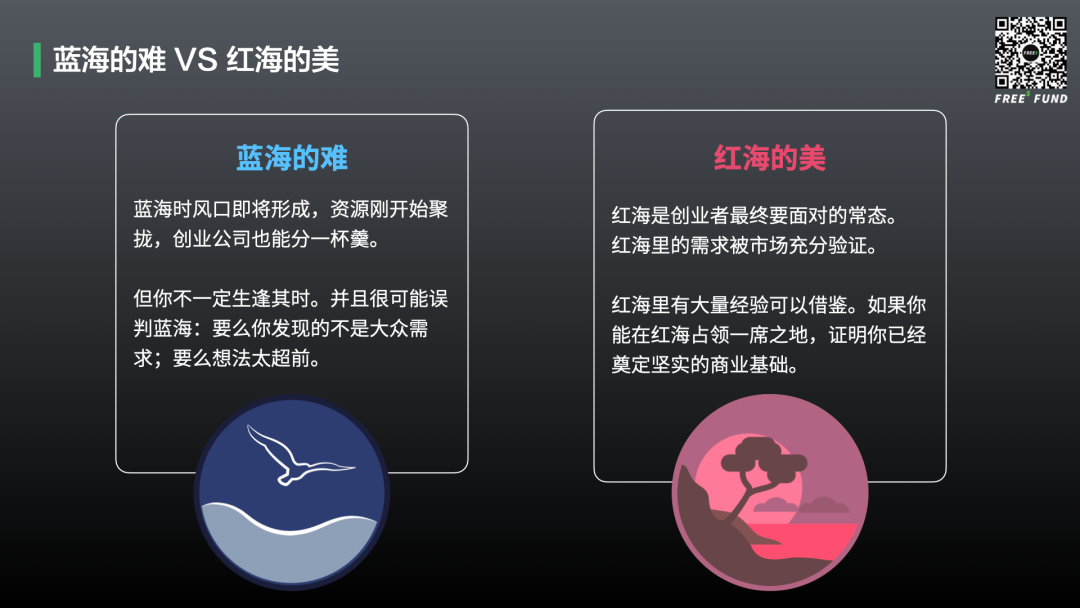
The Hardship of Blue Oceans vs. The Beauty of Red Oceans
The "sea of stars" in tech markets is mesmerizing.
Revolutionizing lifestyles, achieving domestic substitution, solving bottleneck technologies — tech entrepreneurship naturally gets placed on a coordinate axis of profound depth. Yang Yongcheng, partner at FreeS Fund, tries to strip away the slightly "aloof" shell of tech entrepreneurship in his series "Fun Talks on Hardcore Tech," returning to business common sense and human nature to tell the stories of treacherous shoals and pleasant surprises in tech entrepreneurship.
Yang previously served as general manager of Baidu's hardware ecosystem and channel division, overseeing product design & mass production, e-commerce infrastructure, and channel expansion. He was also vice president at Xiaomi, where he led the audio product line and founded Xiaomi's smart speaker technology and product team.
The "Fun Talks on Hardcore Tech" series explores the following questions:
- When starting a company, should you enter a blue ocean or red ocean market? What's hard about blue oceans? What's beautiful about red oceans?
- How should we understand the relationship between technology and demand?
- As a company develops through different stages — "bicycle," "car," "train" — what are the advantages and disadvantages of each, and how do you avoid pitfalls?
- Should you pursue a "premium" or "cost-effective" route?
- How do you design a tech blockbuster product?
This is the first installment of the series, focusing on whether entrepreneurs should enter blue ocean or red ocean markets. In Yang's view, both red and blue oceans have their own scenery and their own difficulties. They essentially reflect the objective state of market competition. Whichever path you choose, you must face it calmly, seek the optimal solution, and strive for victory.
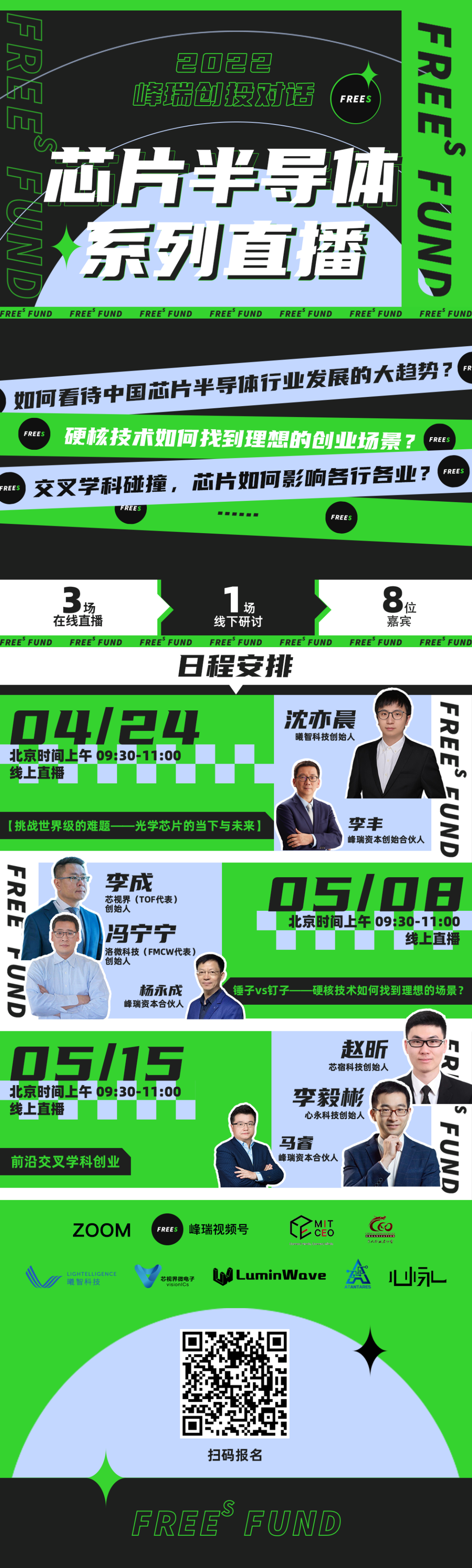
Livestream Preview: From late April to May, we will launch the "FreeS Fund Dialogues: Chip Series" with three livestreams and one offline seminar. Scan the QR code on the poster to register. The first livestream, "Tackling World-Class Challenges — The Present and Future of Optical Chips," will go live on April 24. Shen Yichen, founder of Lightelligence, will join Li Feng, founding partner of FreeS Fund, for a discussion on opportunities and challenges in optical chips.

/ 01 /
The Sea of Stars in Tech Entrepreneurship Markets
In the eyes of optimistic entrepreneurs, there are always opportunities in the market. But beneath this prosperity, you must face frequent, brutal competition. In the sky of the market, there are big stars and small stars, many stars difficult to identify, and black holes and dark energy you don't wish to see.
But when you start a company and enter this vast galaxy, you are destined to begin a new life and endure new trials. Beyond the necessary hard work of "toughening your mind and straining your body," the choice of path and goals matters more to your success. Or rather, the bigger the issue, the more choice trumps effort. Which track do you choose? Blue ocean or red ocean market? Which product direction to pursue? These are all crucial decisions.
/ 02 /
The Difficulty of Blue Oceans
From a human nature perspective of seeking benefits and avoiding harm, people will most likely prefer to enter blue ocean markets, hoping that what they do, if not "world-creating," should at least be "something no one else has."
In common perception, blue oceans initially offer larger market space, less historical baggage, and fewer competitors. More importantly, early entrants in blue oceans face vast market emptiness, where capital and resources more easily tilt toward them. From an energy supply perspective, companies that enter during the blue ocean phase have greater odds of becoming massive unicorns.
As described in the classic Journey to the West: "Behind Mount Kunlun, a spiritual treasure formed since the primordial chaos, born from the essence of the sun — thus it can extinguish fire." This treasure was the Banana Leaf Fan that sent Sun Wukong flying. Consider: a single leaf from the dawn of creation possessed such power — the energy of blue oceans is immense indeed.
In real-world investment and entrepreneurship cases, just in the tech sector, there are numerous examples of companies that started from blue oceans and grew into giants. Around 2000, the internet was nascent in China, giving birth to Sina, Sohu, NetEase, and Baidu. Starting a company during this period meant riding an approaching wave, with industry resources just beginning to coalesce — startups had a good chance of getting a big slice.
If you are truly this fortunate, this well-timed, don't hesitate. Pour all your energy into blue ocean entrepreneurship, embrace the opportunity, meet the challenge, and hope for success.
But the entrepreneurial path, like life's path, often features "plump ideals and bony reality." Blue oceans don't exist according to our will.
Especially when no new demand has exploded or new technology landed, and the industry is still grinding away at existing technologies day after day, the blue ocean you've discovered likely contains some illusion.
For instance, facing a vertical technology and market opportunity, startup teams typically struggle to obtain complete information on all competitors. Or teams that started around the same time as you are lurking underwater, unknown to outsiders. The result: when you enter the market with your product, you discover to your shock that many competitors are already waiting in the same market, in the same position. This is the classic case of a startup team misjudging a red ocean as a blue ocean.
But this isn't the scariest part. The scariest is thinking you've found a blue ocean, only to discover upon approach a hopeless, endless desert. This might be because the market demand you've identified isn't mass demand, but niche demand — or even just the personal preference of your team members. Or your idea is too ahead of its time, serving needs that won't emerge for decades. This is the most heartbreaking. Being too far ahead means not only failing to gain current market recognition and returns, but even when the market finally arrives decades later and others feast, you as the early dropout can only offer a long sigh.
Therefore, when you think you've discovered a new continent, you must carefully deliberate, conduct market research personally, and humbly assess competitors and competitive dynamics — beware of straying into deserts. Because this desert has neither powerful competitors nor the ecosystem and market you anticipated.
Regardless of external tides, understanding market demand and charting product roadmaps remain the startup team's top priority.
/ 03 /
The Beauty of Red Oceans
Compared to blue oceans, red oceans have "naked-eye visible" competitors, with price wars fought more fiercely and bloodily.
But the beauty of red oceans lies in verified market demand, backed by substantial data — it absolutely cannot be the hopeless desert mentioned above. Moreover, red oceans have many who've tested the waters, with abundant historical and practical experience to learn from, greatly reducing your risk of "falling into pits."
In real life, the probability that you alone possess unique insight to discover some blue ocean is quite small. Even if you are the first discoverer, as more and more people enter, the blue ocean will eventually become red. Thus, red oceans are the normal state entrepreneurs must ultimately face, and the challenge destined in your fate. Only by securing a place in the red ocean can you prove you have a strong team and solid commercial foundation.
For example, in the chip and semiconductor industry, many seasoned founders and teams have worked at world-class companies for years, accumulating deep technical strength and profound market understanding. For such teams to abandon their years of industry expertise and explore new directions would be incredibly wasteful and unwise.
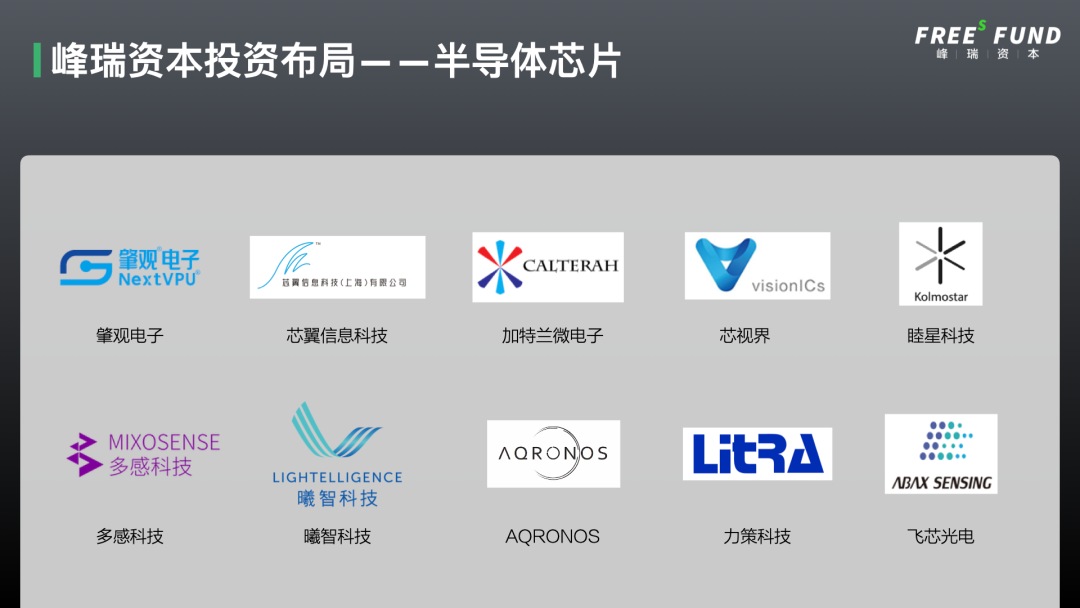
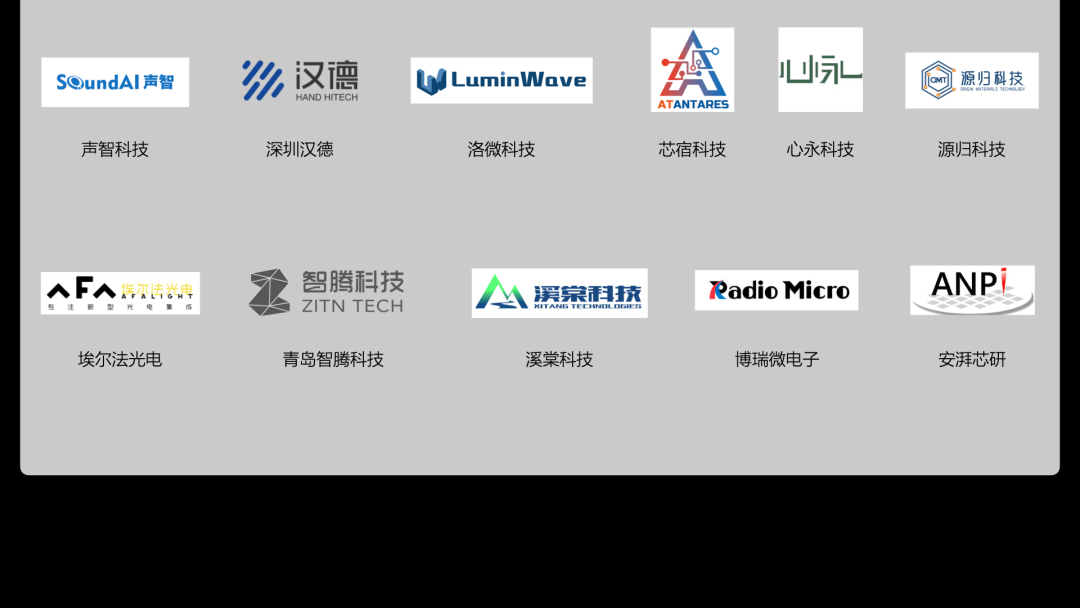
We've invested in many such excellent teams. With slight adjustments to technology and product roadmaps, choosing the right first landing point in the market, they charge resolutely into already-proven mature markets — "red oceans" — and practice has shown their success rate remains quite high. Of course, founders and teams must possess hardcore capabilities and long-term accumulation in the industry.
/ 04 /
How Should Entrepreneurs Respond?
Whether red ocean or blue, each has its scenery and its difficulties. They essentially reflect the objective state of market competition. Whichever path you choose, you must face it calmly, seek the optimal solution, and strive for victory. I have two suggestions here, hoping they help you in your entrepreneurship.
First suggestion: Find blue oceans within red oceans.
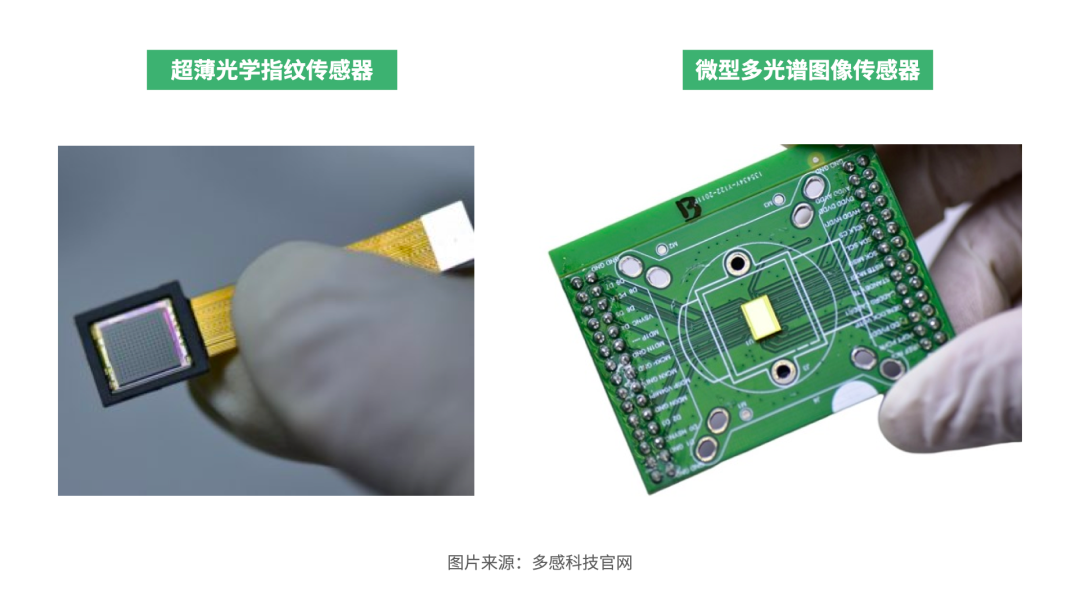
In tech, due to technological development and increasing or upgrading social demand, even mature markets periodically extend new opportunities. Take fingerprint sensors — once a relatively mature industry. From bulky CCD fingerprint modules 20 years ago to fingernail-sized CMOS sensors based on electrostatic principles, the market had stabilized and reddened. But with the advent of full-screen phones came demand for fingerprint modules to become even smaller and hideable under screens — and thus new ultra-thin fingerprint sensors emerged.
FreeS Fund invested in Multi-Sensing Technology, dedicated to optoelectronics, in 2019. Over several years, Multi-Sensing not only seized this new blue ocean opportunity but also expanded its product portfolio. Beyond fingerprint sensors, it entered multi-spectral sensors and the super-red ocean of traditional CMOS image sensors, becoming truly "multi-sensing" — a supplier of multiple sensor types.
Another example: FreeS's 2020 investment in LidarTech, currently a well-known startup team in the OPA (optical phased array) lidar space. Lidar is a familiar hot market direction. When FreeS Fund invested in LidarTech, lidar was already relatively mature, with unicorns valued at over 10 billion yuan at home and abroad. But LidarTech possessed a technological path different from mechanical radar and MEMS mirrors — OPA phased-array laser technology. OPA's technical sophistication has long been recognized in academia; the industry's concern was who could ultimately realize and commercialize such a difficult technology. This is a game where technological breakthroughs seize market share.
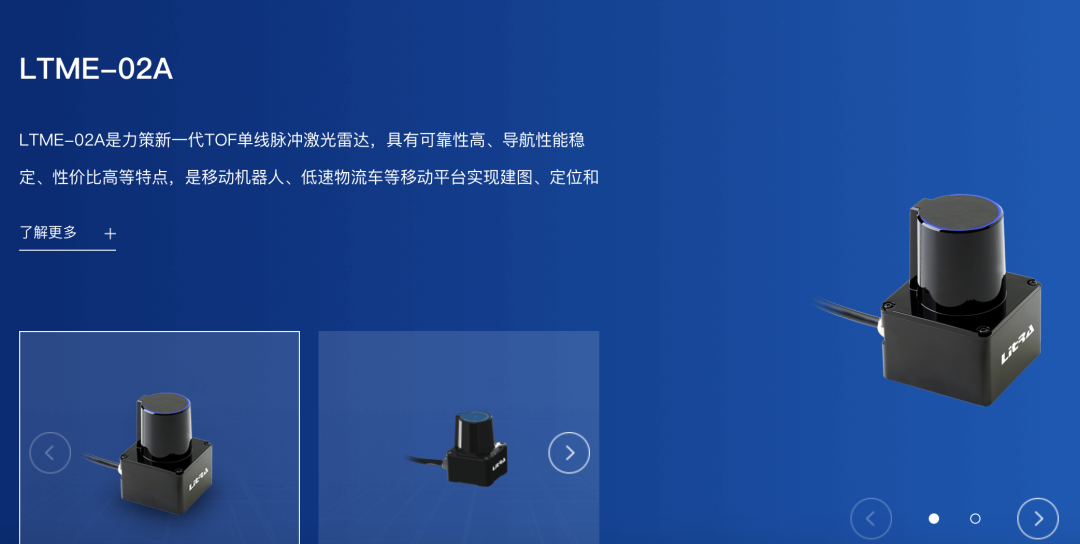
▲ Image source: Shenzhen LidarTech official website
Dr. Zhang Zhongxiang, LidarTech's founder, and his team, after years of technical攻关, successfully developed OPA lidar chips and prototypes, carving out their position in the red ocean and gaining recognition from the capital industry. (Click here to read shares from Multi-Sensing founder Wang Teng and LidarTech founder: "Why We're Bullish on Optical Chips | FreeS Chip Series")
Of course, there are also plenty of examples of directly charging into red oceans. In content recommendation, ByteDance broke through despite giants like Google, Baidu, and portal sites. In e-commerce, Pinduoduo found its entry point amid the fierce battle between Alibaba and JD.com. If you want to establish something significant and gain massive market returns, you must face red oceans head-on.
For most entrepreneurs, you may not have the opportunities and resource mobilization of ByteDance or Pinduoduo. My suggestion: even if you know your destination is a blood-red ocean, choose as blue an entry point as possible — at least a "weakly defended" shallows to land on, occupy the beachhead, accumulate strength, and dream of the greater city deeper in.
Overall, the blue ocean you discover is just a landing point, not the final goal. Don't settle for small gains, don't sell yourself short — charge toward broader seas.
Second suggestion: In blue oceans, prepare for red ocean challenges.
Blue oceans aren't available every day or everywhere, but some teams do encounter or find them. A few years ago, the communications industry encountered the blue ocean of 5G, and many startups seized this window to begin their journey.
Let me give another example: Xinyi Information Technology, a FreeS angel-round investment. Founder Dr. Xiao Jianhong is a quintessential top-student-turned-tech-expert.
His market entry point was NB-IoT in the IoT market. When he brought his NB-IoT chip to market, it was no longer the hoped-for blue ocean — numerous competitors had already appeared before customers. Fortunately, as a veteran with over a decade of communications chip experience, the founder perhaps anticipated the red ocean market structure and was all too familiar with competition's brutality. In short: "Just do it." After several years of effort, Xinyi not only captured the NB-IoT beachhead but also leveraged years of technical accumulation to push toward CAT1 and RedCap — markets that are "redder" but also more rewarding.
In summary, whether you currently face blue or red ocean, you must constantly储备 energy for red ocean decisive battles, build barriers for survival and development in red oceans, and especially maintain firm determination for red ocean decisive battles. Because whether you like it or not, the red ocean is an unavoidable "tribulation" — or rather, the "red ocean" is the ultimate normal state of market competition, the destined归宿 of all entrepreneurs.
May every entrepreneur find their place in the market and achieve the success they dream of.
Livestream Preview: From late April to May, we will launch the "FreeS Fund Dialogues: Chip Series" with three livestreams and one offline seminar. Scan the QR code on the poster to register. The first livestream, "Tackling World-Class Challenges — The Present and Future of Optical Chips," will go live on April 24. Shen Yichen, founder of Lightelligence, will join Li Feng, founding partner of FreeS Fund, for a discussion on opportunities and challenges in optical chips.
(Welcome to scan the QR code to register 👆)

9 Financing Updates from Spring | FreeS Family Financing News · Vol. 9
▲ Why We're Bullish on Optical Chips | FreeS Chip Series
Can Domestic Semiconductor Materials Outrun International Competitors? | FreeS Chip Series
▲ FreeS 2021 Outlook ④ | Final Speculations on Sensors Behind Autonomous Driving