How Can We Further Explore the Human Body's "Smartest" Organ? | FreeS Research Institute

A Few Things About Exploring the Brain
The brain is regarded by many scientists as "the most complex object in the universe." If we say that "the brain is a miracle of biological evolution," then understanding the brain becomes one of the longest and most meaningful journeys in human evolution.
In July 2005, to celebrate its 125th anniversary, Science magazine invited hundreds of scientists worldwide to discuss the most important frontier scientific questions of our time. Among the 125 questions ultimately identified, 18 fell within the field of neuroscience. In China, "Brain Science and Brain-Inspired Research" is one of seven cutting-edge scientific and technological fields targeted for breakthroughs in the 14th Five-Year Plan.
Interest in brain science stems not only from humanity's drive to understand, explore, and transcend itself, but also from the necessity of survival and development. According to statistics released by the World Health Organization, brain-related diseases — encompassing various neurological and psychiatric conditions — have surpassed cardiovascular disease and cancer to become the greatest threat to human health, representing a major public health, social, and livelihood challenge.
Brain science is one of the main arenas in which the world's major economies compete technologically. In 2016, "Brain Science and Brain-Inspired Research" was designated as a major scientific and technological innovation project and initiative in China's 13th Five-Year Plan. According to statistics from Arterial Network, from 2016 to 2021, more than 10 billion RMB flowed into China's brain science sector, with 210 financing rounds completed.
FreeS Fund has also maintained a consistent focus on this "final frontier" of life sciences, investing in multiple brain science-related companies such as NeuraMatrix and Qunmai Medical. (Click the link for a previous FreeS report: Embracing the "Smartest" Opportunity: Investing Boldly in Brain and Neuroscience)
In previous brain science reports, we shared our thinking on brain and cognitive science, including the origins of the field. In this report, we will focus on the strategic significance of developing brain science, research methodologies and current status of the industry, and the state of brain science technology applications.
Before diving in, here are some key perspectives:
- In China, although brain science research is still in its early stages, both supply and demand sides are building momentum.
- Humanity's overall cognitive framework for the brain remains incomplete. While substantial research achievements have been made, these findings remain scattered like isolated islands. However, the transition from fragmented to systematic understanding will create significant investment premium opportunities.
- Due to inherent R&D difficulties, currently available drugs for brain diseases are relatively limited, with room for improvement in disease modeling and therapeutic efficacy. Compared to pharmaceutical treatments, device technology is developing more vibrantly.
- Brain functional imaging and neural modulation are two areas worth watching. High resolution, whole-brain scale, and multi-modal imaging represent the direction for functional imaging. In neural modulation, treatment effects are primarily evaluated across four dimensions: non-invasiveness, deep brain targeting, precision, and multi-target approaches.
We hope this offers a fresh perspective. We look forward to engaging with more researchers and entrepreneurs in brain and cognitive science, and to discovering more early-stage projects in brain and neuroscience.
Please contact the author, Da Xie, Vice President at FreeS Fund (xie.da@freesvc.com). We also welcome partners with industry backgrounds interested in biopharma investment to join us (hr@freesvc.com).
Reader Giveaway What are your thoughts and reflections on brain science research and development? Share your views in the comments. The 6 most thoughtful responses will receive a copy of The Age-Proof Brain.
01 The Strategic Significance of Developing Brain Science
What Is Brain Science?
In the narrow sense, brain science refers to neuroscience — research aimed at understanding molecular-level, cellular-level, and intercellular changes within the nervous system, and how these processes integrate within central functional control systems. In the broad sense, brain science explores the brain's physical structure, biological mechanisms, and working functions from the perspective of biological brains, incorporating psychological and cognitive science research alongside the narrower definition.
With imaging, optogenetics, gene editing, and other research techniques and tools, brain science can be approached from angles including normal states, pathological states, and interpretation and manipulation.
Why Focus on Brain Science?
Why vigorously develop brain research initiatives? We can examine this from both demand and supply sides.
First, demand.
Rising Demand for Brain Disease Diagnosis and Treatment.
Citing China.org.cn, brain disease patients globally account for approximately 11% of all diseases, with the social burden approaching 30% of the total disease burden. According to China News Service, in China, the proportion of patients with brain-related diseases continues to rise, with stroke having replaced ischemic heart disease as the leading cause of death among residents.
Considering population aging and the gradually increasing incidence of mental illness, the scale of brain disease patients may remain persistently high, generating greater demand for brain disease treatments. Therapeutic approaches with strong efficacy, high safety and accessibility, low cost, and non-invasive delivery will be preferred.
Growing Demand for Mining Brain Data.
Brain data encompasses three levels: microscopic, mesoscopic, and macroscopic. The microscopic level includes macromolecules, small molecules, and cellular interaction mechanisms. The mesoscopic level allows study of neural circuits and network physical structures between neurons. The macroscopic level enables exploration of the formation mechanisms of complex consciousness, cognition, and emotion.
On the research side, in recent years developments across life sciences, neuroscience, psychology, linguistics, and other disciplines have driven demand for data at all three levels, data accumulation, and the discovery of numerous correlational relationships. For instance, researchers discovered that myelin molecules optimize brain information processing; explored how visual and auditory neural circuits follow different biological developmental pathways; and elucidated that "long-term potentiation" is one of the primary mechanisms forming the basis of learning and memory. These represent outstanding recent advances in brain data research.
On the industry side, increasing brain disease diagnoses and emerging detection methods are translating into rising demand for patient data acquisition and mining. Additionally, the establishment of brain science laboratories with participation from multiple clinical institutions in recent years demonstrates growing emphasis on human brain data.
Second, supply.
Increasingly Rich Brain Research Tools and Improving Operational Capabilities.
Development of biomedical tools includes patch-clamp techniques, magnetic resonance imaging, optogenetics, gene editing, and more. These all create opportunities for studying brain nerves and brain diseases.
Policy, Economic, and Infrastructure Support.
In 2019, China's per capita GDP first surpassed the $10,000 threshold. Referencing the development trajectories of developed countries, crossing this threshold typically leads to greater national attention to the research-industry chain, gradual establishment and improvement of innovation systems, and promotion of high-tech commercialization.
In April 2013, then-U.S. President Obama announced the launch of the BRAIN Initiative, planning to invest $3 billion over 10 years to explore human brain working mechanisms, map brain activity, and develop new therapies for currently incurable brain diseases. Beyond the U.S., seven technologically leading countries and regions including the EU, Japan, Australia, and Canada launched their own "brain initiatives," with major world economies continuously increasing support for brain science development.
In China, "Brain Science and Brain-Inspired Research" is one of seven cutting-edge scientific and technological fields targeted for breakthroughs in the 14th Five-Year Plan. By 2022, the first batch of projects under China's National Science and Technology Innovation 2030 — "Brain Science and Brain-Inspired Research" major initiative — began launching sequentially.
China's "Brain Science Project" comprises "one body, two wings." The "body" refers to researching the neural foundations of brain cognitive functions, including brain research innovation technology platforms, cognitive function neural circuit research, and brain-intelligence development research. The "two wings" are brain disease diagnosis and treatment, and brain-machine intelligence technology. Brain disease diagnosis and treatment includes early diagnosis and intervention for major brain diseases related to cognition, as well as clinical and community cohort data and biobanks. Brain-machine intelligence technology includes brain-machine interfaces and brain modulation technology, brain-inspired computing systems, and brain-inspired devices and intelligent agents.
Overall, while China's brain science research remains in early development, both supply and demand sides are building sustained momentum.
02 Where We Stand: How Do We Study the Brain?
The human brain contains hundreds of billions of neurons, which form communication networks of even greater complexity. The brain and its data processing complexity rival that of the universe itself.
Research Status
We can study brain data from microscopic, mesoscopic, and macroscopic perspectives. However, we must acknowledge that no systematic biological or informatics theory has yet fully described the brain system's operating mechanisms. This stems from three main factors:
First, the brain system is extraordinarily complex. The brain has nearly 100 billion neurons, with each neuron forming approximately 1,000 connections, ultimately constituting a connection network of quadrillions of synapses. Studying systems at this scale requires highly efficient methods and very sophisticated theories or mechanisms.
Second, although we mentioned advances in research tools, among existing tools, means capable of studying brain cognition and disease at whole-brain scale remain limited. Whole-brain scale human brain research data accumulation is relatively scarce.
Third, the systematic nature of research methodologies needs strengthening. Previous research on complex cognitive activities such as motivation, consciousness, and memory emphasized behavioral description, with less attention to neuronal-level activity. For brain disease diagnosis and treatment, current understanding of mesoscopic-scale neural circuits and networks remains relatively insufficient, and scale-based diagnoses cannot be directly linked to molecular biological targets or mechanisms of modern medicine.
Overall, humanity's overall cognitive framework for the brain remains unestablished — findings remain scattered like isolated islands. However, the transition from fragmented to systematic understanding will create substantial investment premium opportunities.
Brain Disease Treatment: Drugs vs. Devices
Drug Development
Currently available drugs for brain diseases are relatively limited. Constrained by difficulties in obtaining human samples for clinical research and inherent differences between other biological models and humans, many brain disease pathogenesis mechanisms lack convincing explanations. Although multiple candidate drugs have entered clinical trials, drug development still faces significant challenges and uncertainties.
Moreover, the blood-brain barrier represents a critical bottleneck in brain disease drug development. As shown in the figure, endothelial cells within brain blood vessels, together with astrocytes, pericytes, basement membranes, and other components, collectively form the tight blood-brain barrier.
The blood-brain barrier effectively prevents metabolic waste and toxic substances from entering the central nervous system through blood circulation, but simultaneously blocks drug delivery into the brain. Drug concentrations reaching the brain are often very limited. Insufficient brain penetration of therapeutic candidate drugs is the primary reason for failure in most CNS (central nervous system) drug development.
In summary, current brain disease drug R&D still requires systematic advances in disease modeling and efficacy.
Device Technology
Compared to pharmaceutical treatments, device technology is developing more vibrantly.
Device technology in brain science mainly has three new tracks: brain mapping, brain-computer interfaces, and neural modulation.
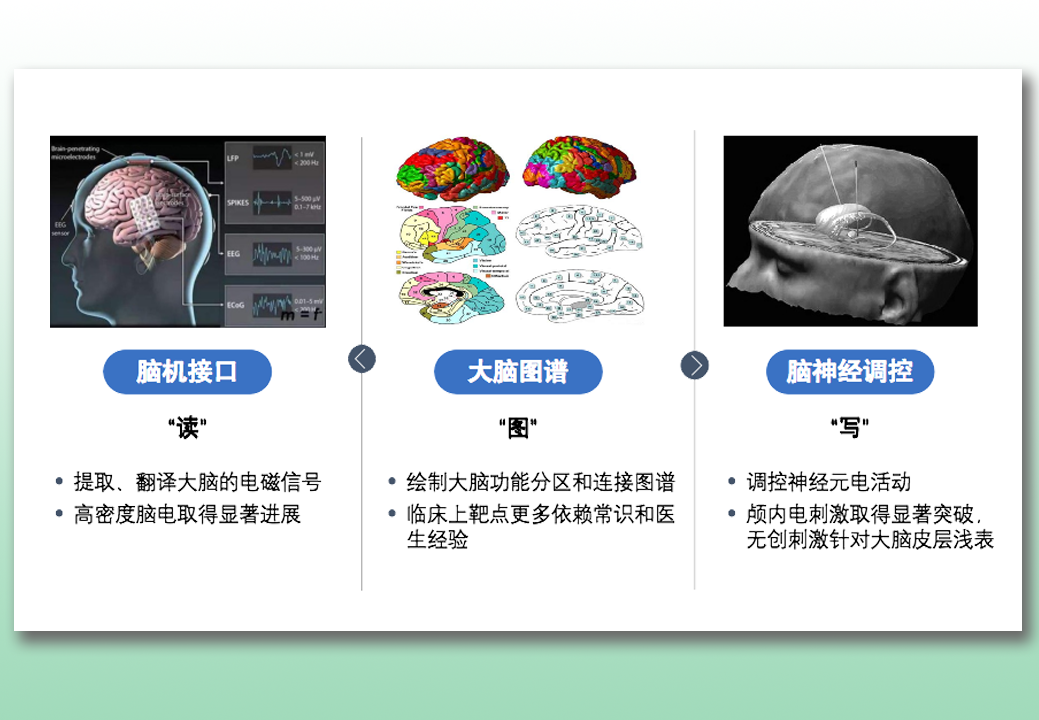
Brain mapping involves interpreting the functional and connectivity patterns of various brain regions in the human brain infrastructure. Currently, targets within the brain mainly rely on existing knowledge and physician experience; in the future, we can identify more targets through data support. For example, the Allen Institute for Brain Science in the U.S. and NeuraMatrix, a FreeS portfolio company, have both conducted in-depth research on brain mapping with substantial data accumulation.
The representative tool for "reading" is the brain-computer interface, which extracts and translates brain electromagnetic signals through invasive approaches — placing electrode arrays inside the brain, beneath the skull — or non-invasive methods. Elon Musk's Neuralink is representative in this area, having made notable progress in invasive brain-computer interfaces, currently capable of recording and translating motor intent brain signals from pigs and monkeys.
To intervene in brain activity, "writing" is achieved through functional neural modulation technology, which uses invasive or non-invasive stimulation techniques to intervene in neuronal electrical activity and chemical neurotransmitter secretion, thereby achieving therapeutic modulation effects.
What Technologies and Tools Are Used to Explore the Brain?
Next-Generation MEG: A Whole-Brain, Non-Invasive, High Spatiotemporal Resolution Neural Activity Imaging Tool
To understand brain structure and function, the first problem to solve is acquiring brain signals. Brain imaging is the most important means of obtaining brain data. Traditional methods for acquiring brain data include X-ray computed tomography (CT), magnetic resonance imaging (MRI), and positron emission tomography (PET). Additionally, functional MRI (fMRI), electroencephalography (EEG), intracranial EEG (SEEG/ECoG), and functional near-infrared spectroscopy (fNIRS) are applied in brain observation.
Based on what is observed, brain imaging can be divided into two categories: imaging of brain anatomical structure, including CT and MRI, which observe the morphology of tissues and organs; and functional imaging of brain metabolism, blood oxygen, electrical currents, etc., such as PET and fMRI, which observe specific biological events.
In clinical brain diagnosis, structural imaging can be used to observe organic changes, while functional imaging more focally reflects abnormalities in neuronal activity and connections between neurons. Both imaging modalities are indispensable. For structural imaging, CT and MRI complement each other, enabling observation of brain hard and soft tissues with good spatiotemporal resolution. New functional imaging modalities are continuously evolving toward higher resolution, whole-brain scale, and multi-modal imaging.
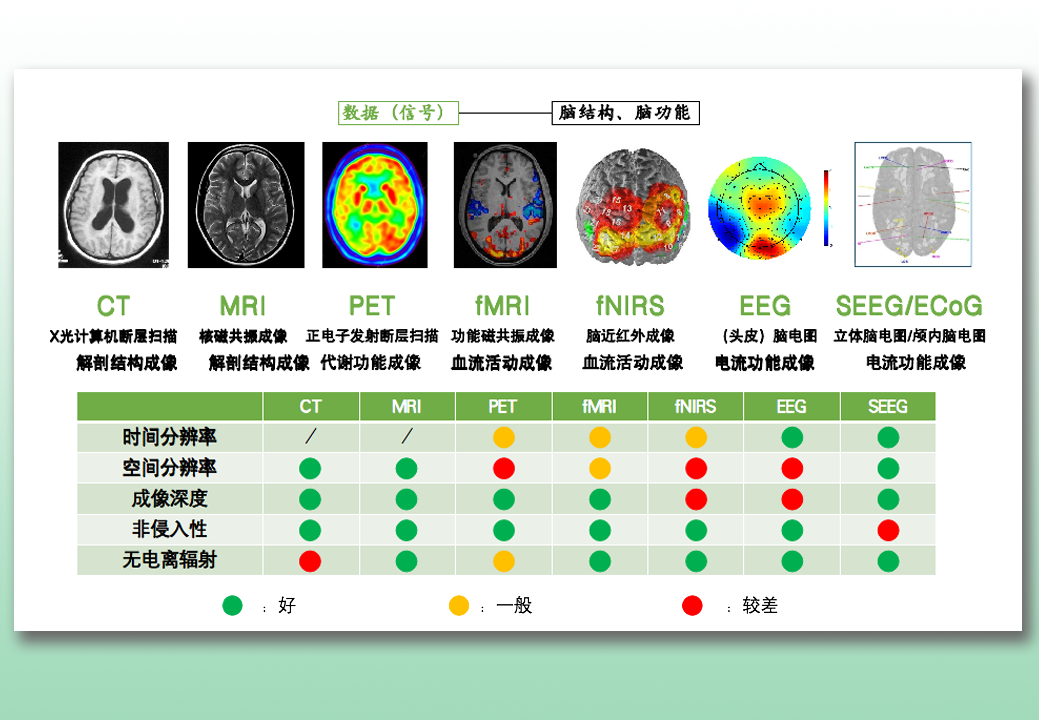
Magnetoencephalography (MEG) is a brain electromagnetic functional imaging technology that simultaneously satisfies whole-brain, non-invasive, and high spatiotemporal resolution requirements, and can be used to observe activities in different brain functional areas including visual, auditory, and motor regions.
In actual testing, operators record magnetic field information through magnetic detectors placed at different positions near the subject's scalp, and determine the location of neuronal activity within the brain according to inversion algorithms. By combining localization information from different brain functional areas with the temporal variation of neuronal discharge, operators can observe brain activity processes or identify disease foci.
Existing commercial MEG systems are all superconducting MEG, which have obtained clinical approvals in China, the U.S., Europe, and other countries and regions, and are managed as Class II medical devices. In China, superconducting MEG is clinically used for localization of brain functional areas and epileptic foci and other abnormal brain activities, providing support for preoperative planning.
The key technical challenge of MEG is capturing the brain's weak magnetic fields. In reality, the magnetic field strength of brain activity is extremely low — ten to eleven orders of magnitude lower than Earth's magnetic field. How to shield Earth's magnetic field to record extremely weak brain magnetic fields and their changes represents a major challenge.
This requires, on one hand, magnetic shielding — employing magnetic shielding devices to maintain geomagnetism at a low and uniform level, thereby enabling observation of brain magnetic field activity against this baseline. On the other hand, advanced detectors capable of sensing the extremely weak magnetic fields produced by brain activity are needed.
Next-generation MEG uses atomic magnetometers as ultra-weak magnetic field sensors, freeing itself from the "Josephson junction" magnetic field sensors that require liquid helium temperatures in traditional superconducting MEG.
The principle of atomic magnetometers can be described with reference to the following image series: in a sealed atomic vapor cell filled with alkali metal atomic vapor, metal atoms undergo spin precession around the magnetic field direction under external polarized light irradiation and weak magnetic field presence, changing the polarization angle of detection polarized light. By detecting the deflection angle of polarized light, the intensity of weak magnetic fields can be obtained. At higher atomic vapor cell temperatures and saturated vapor pressures, high atomic density atomic magnetometers can satisfy the sensitivity requirements for detecting brain magnetic fields.
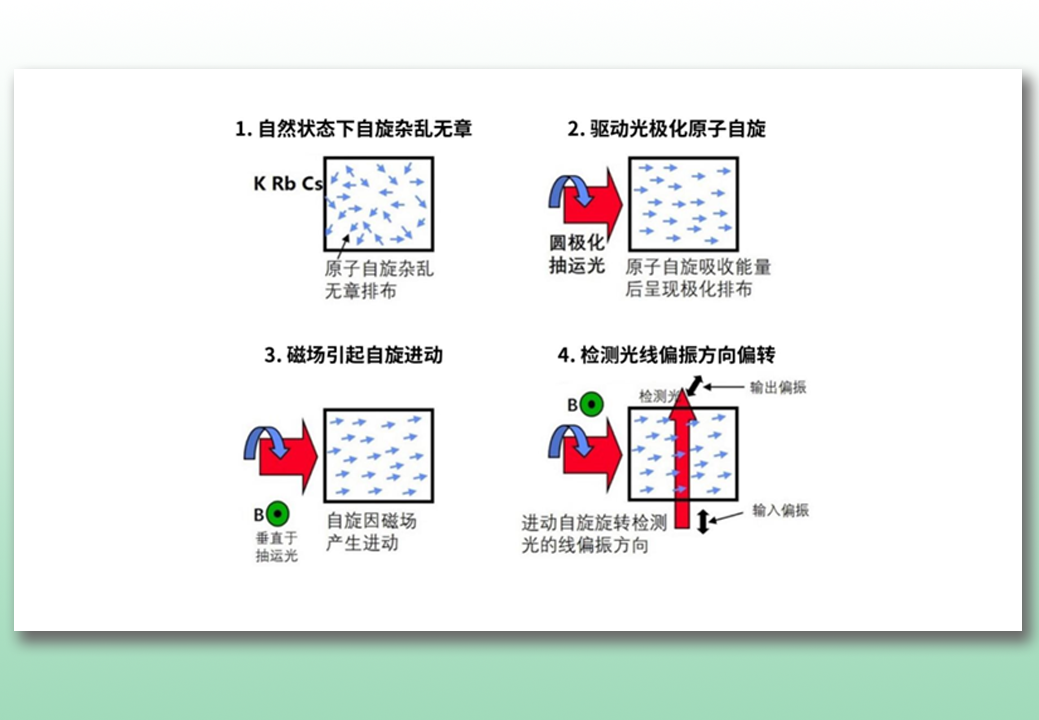
Using quantum spin for precision measurement of physical quantities has become an important method in physics. Next-generation MEG based on atomic magnetometers offers numerous operational advantages and can completely replace superconducting MEG.
First, atomic magnetometers have a theoretical sensitivity limit significantly below brain magnetic field strength. Compared to superconducting MEG, next-generation MEG is expected to more sensitively detect detailed information of dynamic brain activity.
Second, atomic magnetometers do not require harsh working environments such as liquid helium cryogenics; detection devices can be miniaturized, giving next-generation MEG high individual matching, with more detectors in close contact with the scalp, ensuring recorded signals have high signal-to-noise ratio.
Additionally, next-generation MEG has lower construction and maintenance costs. If designed in a supine configuration, the physical space required for equipment installation and brain magnetic signal reading is smaller.
Among FreeS's brain science portfolio companies, Qunmai Medical leverages proprietary core technologies including atomic magnetometer miniaturization, dedicated to R&D and production of biofunctional magnetic imaging equipment. It has achieved a series of breakthroughs in high-sensitivity magnetic sensing, open magnetic shielding, and high-precision magnetic inversion, enabling non-invasive, radiation-free real-time detection and dynamic imaging of neural activity. Its core product, the next-generation MEG system, can be widely applied in scientific research, clinical brain disease diagnosis, brain-computer interfaces, and other frontier fields.
Temporal Interference Stimulation: A Highly Selective Deep Brain Neural Modulation Technology
While brain imaging provides a window for observing brain activity, neural modulation is the "golden finger" for achieving brain disease intervention.
The neural modulation field primarily focuses on four dimensions of therapeutic effect: non-invasiveness, deep brain treatment, precision, and multi-target approaches. As one of the fastest-growing disciplines in medical science in recent years, neural modulation technology is widely used in treating Parkinson's disease, epilepsy, depression, pain, and other neurological disorders.
Currently commonly used clinical neural modulation therapies mainly include transcranial electrical stimulation (TES), transcranial magnetic stimulation (TMS), and deep brain stimulation (DBS, or brain pacemakers). Among newly developed neural modulation technologies, temporal interference (TI) stimulation is promising for simultaneously satisfying non-invasive, precise, multi-target, deep brain intervention therapeutic effects.
Transcranial electrical stimulation refers to non-invasive technology that applies direct or alternating current stimulation to the scalp surface to modulate brain neuronal activity. Because the skull has strong shielding effects on direct current and low-frequency alternating current, and transcranial electric field propagation covers relatively large areas, transcranial electrical stimulation is generally used for modulating cortical brain region activity rhythms, such as improving Alzheimer's disease and working memory decline.
Transcranial magnetic stimulation is a non-invasive therapy using changing external magnetic fields to stimulate brain neurons. Human brain tissue is relatively "transparent" to magnetic field propagation, while magnetic stimulation precision at the cortex can reach sub-centimeter scale; thus transcranial magnetic stimulation is used to intervene in neuronal activity in superficial cortical regions, treating depression, sleep disorders, and other conditions.
Deep brain stimulation (also called brain pacemakers) involves craniotomy surgery to implant electrodes deep in the brain, directly activating nearby neurons through electrode discharge. Brain pacemaker technology is mainly used for treating severe Parkinson's disease, severe depression, and other seriously ill patients, achieving relatively significant therapeutic effects.
Temporal interference stimulation technology converges two or more high-frequency electric fields inside the brain, generating interference at the intersection to form low-frequency oscillation envelopes that vary over time, thereby activating neurons. Because the skull has relatively limited shielding effects on high-frequency alternating current, and neurons do not respond to high-frequency stimulation but only sense low-frequency oscillations to discharge, temporal interference technology can selectively intervene at deep brain targets.
Temporal interference stimulation technology can induce suprathreshold activation of neurons. By adjusting scalp surface electrode layout and electric field parameters, stimulation location, stimulation intensity, and other factors can be changed, achieving different intervention effects on the brain. This brings great convenience to clinical practice.
Currently, researchers in the brain science field are developing temporal interference stimulation technology for treating Parkinson's disease, epilepsy, and other diseases.
We have reason to believe that with the combined push of policy, technology, and industry-academia-research collaboration, our understanding of the brain — the body's most "intelligent" yet "mysterious" organ — will continue to break through. And the exploration of brain science represents an extremely important step in humanity's journey of exploring itself.
Reader Giveaway What are your thoughts and reflections on brain science research and development? Share your views in the comments. The 6 most thoughtful responses will receive a copy of The Age-Proof Brain. Wishing everyone a wonderful holiday!


▲ U.S.-China Biotech Competition: What Opportunities Exist for Synthetic Biology Entrepreneurship? | FreeS VC Dialogue ▲ Understanding Carbon Emissions to Know How to Achieve Carbon Neutrality | FreeS Research
▲ FreeS Report 24 | Embracing the "Smartest" Opportunity: Investing Boldly in Brain and Neuroscience
▲ How to View Biotech Development Opportunities in the Next Decade? | FreeS VC Dialogue ▲How Do We Think About Green Investment? | FreeS Research