How to Find Fresh Inspiration for Consumer Brands from Chinese Aesthetics? | A FreeS Fund Conversation

How can you find inspiration for building a consumer brand from traditional culture?
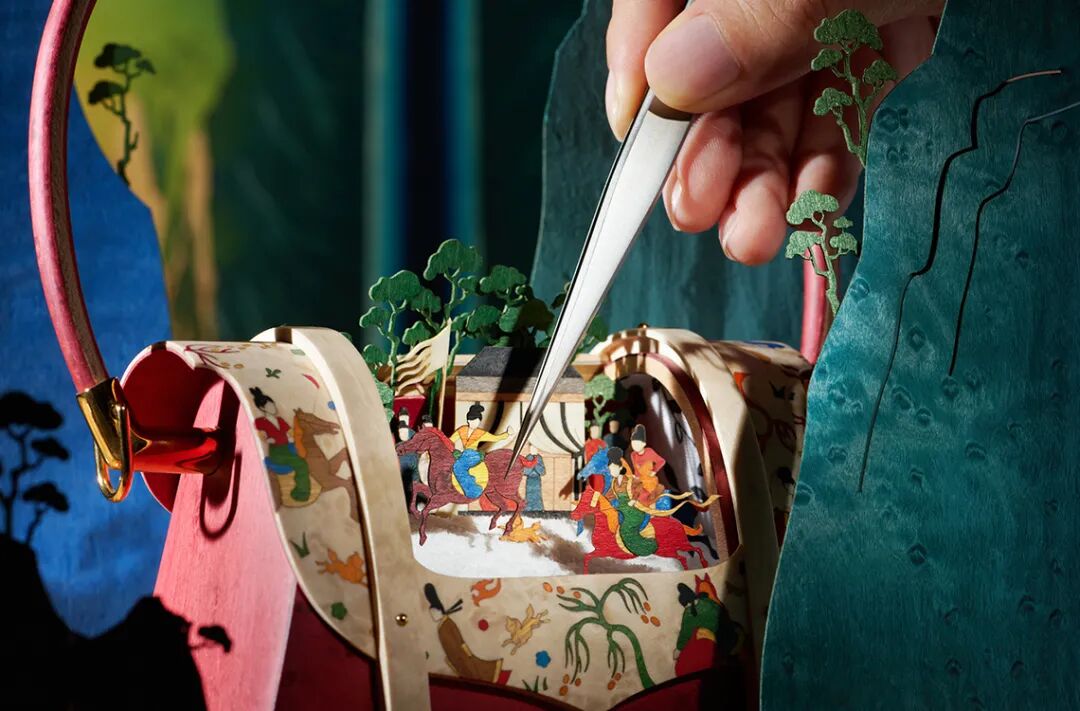
The Han dynasty was austere, the Wei-Jin period carefree, the Tang dynasty resplendent, the Southern Song refined, the Ming and Qing dynasties street-smart — Chinese culture is both weighty and diverse. Even after a thousand years, people can still transcend time and space to savor its ancient beauty.
Today, more and more consumers favor guochao brands imbued with cultural character. This generation of young consumers has experienced the country's rapid development and seen the diverse outside world. They expect more high-end Chinese brands that can make a distinct mark on the global stage.
Qi Tian, founder and chief designer of Chinese fashion brand DUANMU, has loved traditional culture since childhood. He draws inspiration from the aesthetics of Wei-Jin calligraphy, Dunhuang grottoes, and Han dynasty pictorial bricks. The brand he founded uses wood as its primary material, crafting pieces like the Luo Shen Fu wood-inlay round bag with leather accents, the Tang dynasty polo series princess bag, and the wood-carved flying bird Tang flower mirror. These ethereal, airy ancient-style handbags and accessories offer users new choices and add momentum to homegrown high-end fashion brands.
How can products express the ancient beauty of Chinese culture? What kinds of products move consumers? How can art and commerce be combined? We invited Qi Tian and Shen Ying, a consumer investment professional at FreeS Fund, to discuss the underlying logic of luxury brands and the aesthetic thinking behind product design.
Qi Tian graduated with a bachelor's degree in architecture from Tsinghua University and a master's in architecture from the University of Pennsylvania. After returning from the US, he founded DUANMU in Beijing in 2011, focusing on designing and crafting handbags, fashion accessories, and lifestyle aesthetics products with wood as the primary material. In early 2021, DUANMU raised its Series A with participation from FreeS Fund. In 2022, the brand secured a new round of financing in the tens of millions of RMB.
Shen Ying is a vice president at FreeS Fund, focusing on early and growth-stage investments in consumer, cross-border expansion, and enterprise services. Her major investments include DUANMU, Uah, and Speediance. If you're building in these directions, feel free to reach out to Shen Ying at shenying@freesvc.com.
Topics they covered include:
- What exactly makes luxury goods luxurious?
- What are the design inspirations and aesthetic philosophies behind DUANMU? What explorations and evolution has the brand undergone?
- How do you create products that move people? Is it more about the designer's inspiration or market feedback?
- Why is it said that "all design and products are reflections of expressive impulses in life"?
- How does mental state during the pandemic influence product design thinking?
- How can traditional culture be used and deconstructed creatively to carve out a place in fashion?
The full audio of this conversation is now available. Head to the Xiaoyuzhou app or Apple Podcasts and search for "高能量" (High Energy) to listen.

Interactive Giveaway
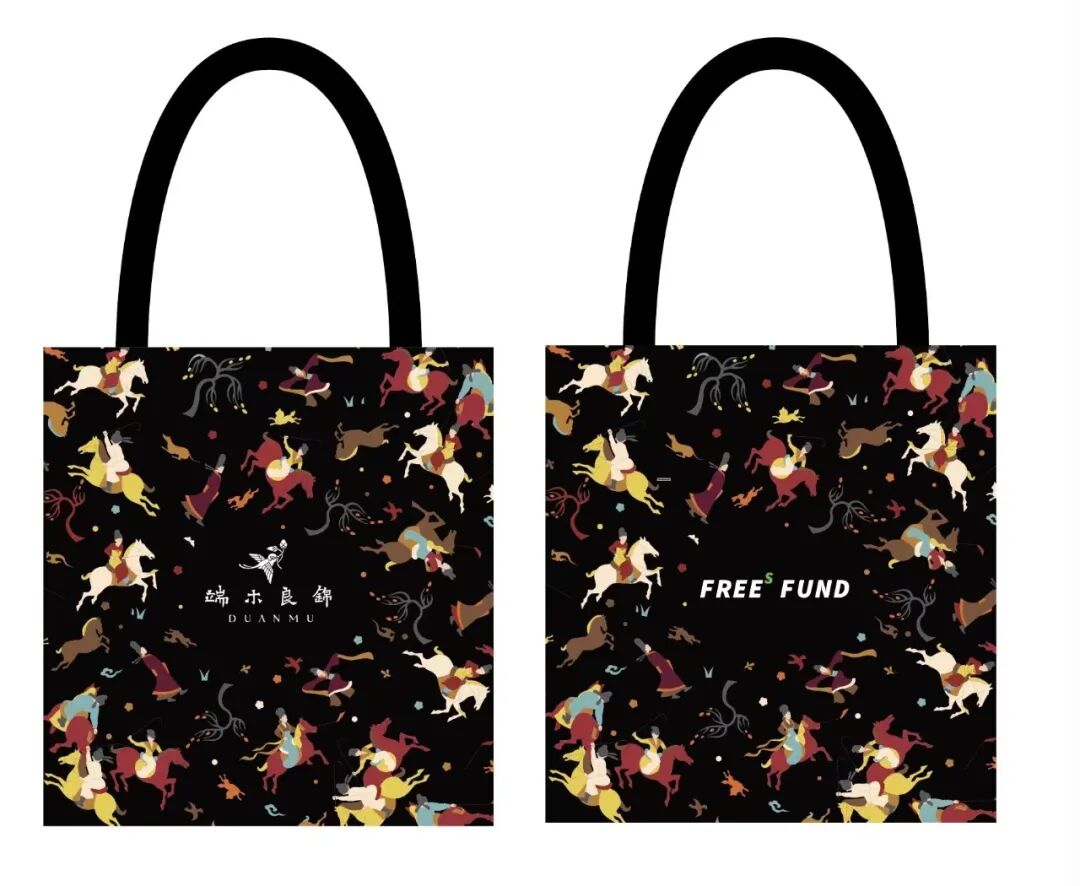
Do you think China will produce luxury brands? Share your thoughts in the comments. By February 23, the 6 most thoughtful commenters will receive a canvas bag designed by DUANMU.

01
The premium of luxury lies in
what exceeds consumers' existing perception
Shen Ying: What are the basic elements of luxury? How does its brand positioning differ from mass-market consumer goods?
Qi Tian: The core of luxury is premium. Luxury is a product that must create premium — as a maker, you need to deliver value far beyond what consumers expect.
If a consumer buys something from you, but your solution doesn't meet their needs and purpose, that's the opposite of luxury. That's called making do.
What is luxury? For example, a consumer originally wanted a hamburger, but I provided an upgraded set — the hamburger is just one part, with steak, salad, seafood, and more. The consumer may never have imagined that beyond hamburgers, so many options exist. Those things consumers didn't originally think of as hamburger alternatives, but desperately want to buy — that's luxury.
Solutions that exceed expectations, value that goes beyond consumers' existing perception — that's the premium of luxury. Premium driven by top-tier celebrity endorsements and massive advertising spend isn't product-derived premium.
A consumer wants a bag; DUANMU creates a product that "is a bag and isn't a bag." Few could imagine a bag could be made this way, so exquisite and beautiful, making consumers want to possess it — that constitutes the legitimacy of luxury.
Shen Ying: Compared with Western brands like LV and Hermès that have existed for decades or centuries, what distinguishes the premium of guochao brand DUANMU?
Qi Tian: Fundamentally, there's no difference. The pursuit of high-quality material goods is a primal instinct — it's universal human nature. For instance, Hermès's Birkin bag, priced in the hundreds of thousands, has devoted followers worldwide. After the Birkin emerged, consumers' understanding of bags changed entirely. Having shifted consumer perception, these luxury goods gained their legitimacy.
In recent years, many Western brands have launched Chinese New Year collections. But zodiac paper-cuts, mahjong tiles, fans — those are just one corner of Chinese culture, not its most brilliant aspects, certainly not the whole.
For Chinese consumers, what we need is precisely what we ourselves cannot imagine. DUANMU has deep roots in Chinese cultural soil — that's our advantage. The core premium of Chinese high-end brands lies in using culture as a foundation, using bags as a vessel, allowing Chinese culture to be refined and elevated on a new medium, colliding with new colors. This unique cultural undertone is something Western brands can hardly imitate in both form and spirit — that's where Chinese and Western brand premiums differ.
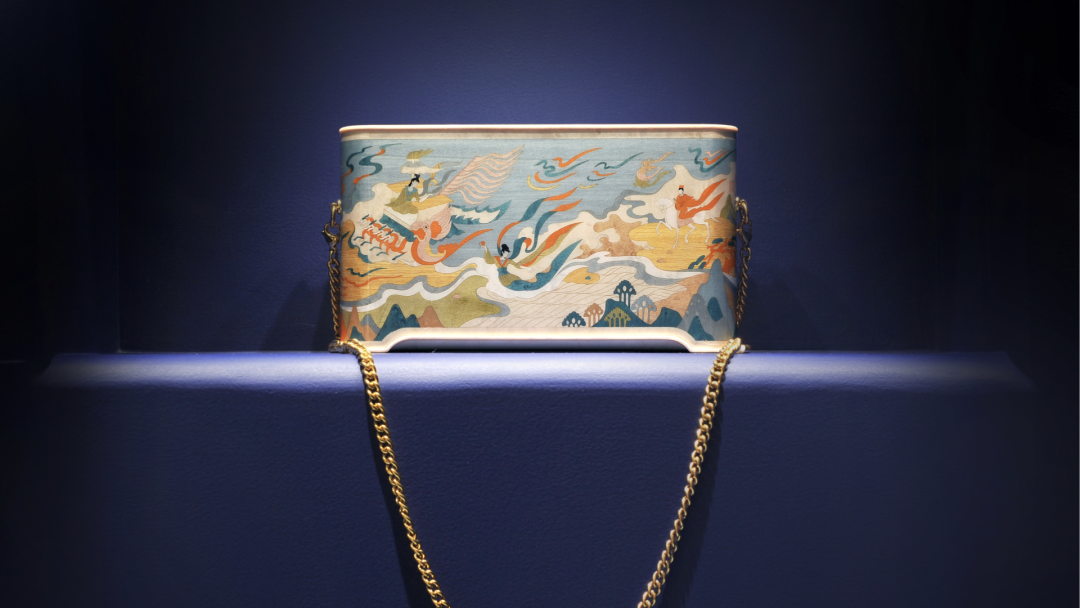
DUANMU must create premium belonging to Chinese culture. For example, based on the timeless Chinese classic Luo Shen Fu (Goddess of the Luo River), we imagined and designed an evening bag, using traditional wood marquetry to depict the Luo Shen Fu motif. This bag embodies Chinese culture without being confined to traditional cultural impressions.
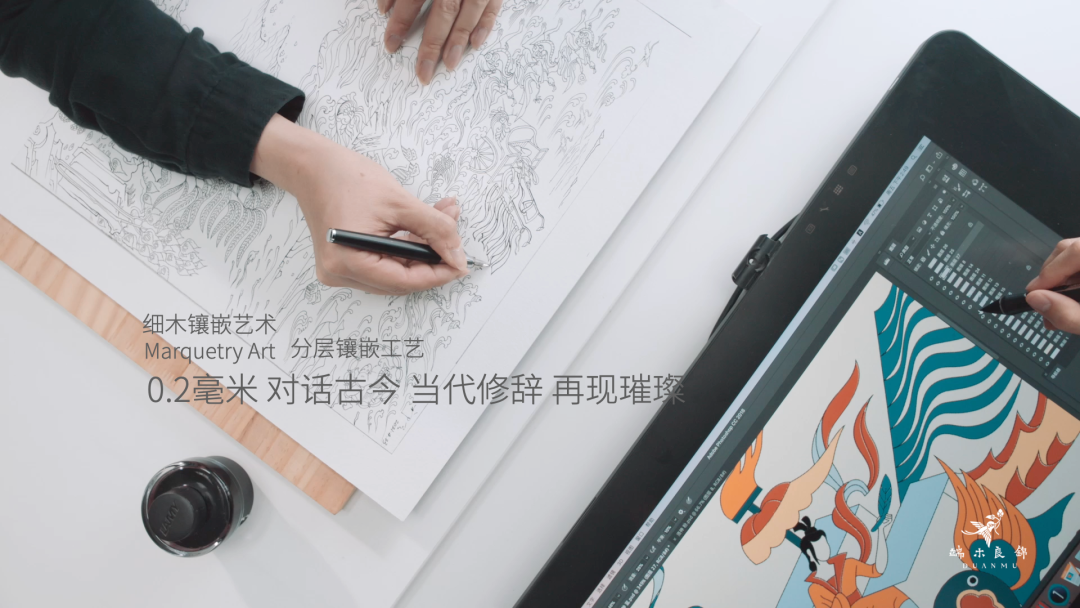
Shen Ying: The value of luxury lies in the full expression, refinement, and elevation of the culture behind it.
02
What makes DUANMU innovative?
Shen Ying: Where does DUANMU's unique creativity come from?
Qi Tian: First, free expression that recreates the beauty of Chinese culture. The West has mature methodologies for excavating its own culture; DUANMU is also experimenting with and exploring more ways to express and carry the beauty of Chinese culture.
In its early days, DUANMU focused on Tang dynasty aesthetics — passion, romance, and openness were the core aesthetic principles. Later, we realized Tang art wasn't a beginning or a peak, but a culmination. Where did it originate? Possibly from the Wei-Jin period. The calligraphy and painting of that era achieved great heights. Thus, ethereal, airy aesthetics became the core of DUANMU's new seasonal theme products.
After ethnic minority cultures merged with Wei-Jin aesthetics, they rapidly brought a sense of weight to the airy aesthetic. This weight differs from Tang opulence — it's the wild, primal power of grassland energy. Perhaps at some point, it too will become a core aesthetic for DUANMU.
These aesthetic points exist in a multi-dimensional, intersecting relationship, not a linear one, and our excavation methods similarly expand outward. Aesthetically, DUANMU also attempts to draw inspiration from Dunhuang grottoes and Han dynasty pictorial bricks.
Continuous excavation, broadening aesthetic boundaries — this vitality allows the brand to keep innovating and evolving.
Second, capturing unique traits and aesthetic points beyond people's current understanding of Chinese culture.
Like a radar image, what we can currently scan may only cover 15 degrees of Chinese civilization. In the remaining 345 degrees, much may lie beyond our cognition.
The Chinese world far exceeds our imagination. Continually exploring the matrix of Chinese culture reveals ever more new traits and aesthetic spaces.
Chinese culture is the world's longest-living culture — both widely known and mysterious. Unlike Western culture, which is segmented into multiple periods, Chinese culture formed a complete developmental sequence from the beginning. Across thousands of years of culture, countless points await excavation. To re-excavate Chinese culture and express it precisely is challenging and difficult, but if accomplished, it creates a brand moat.
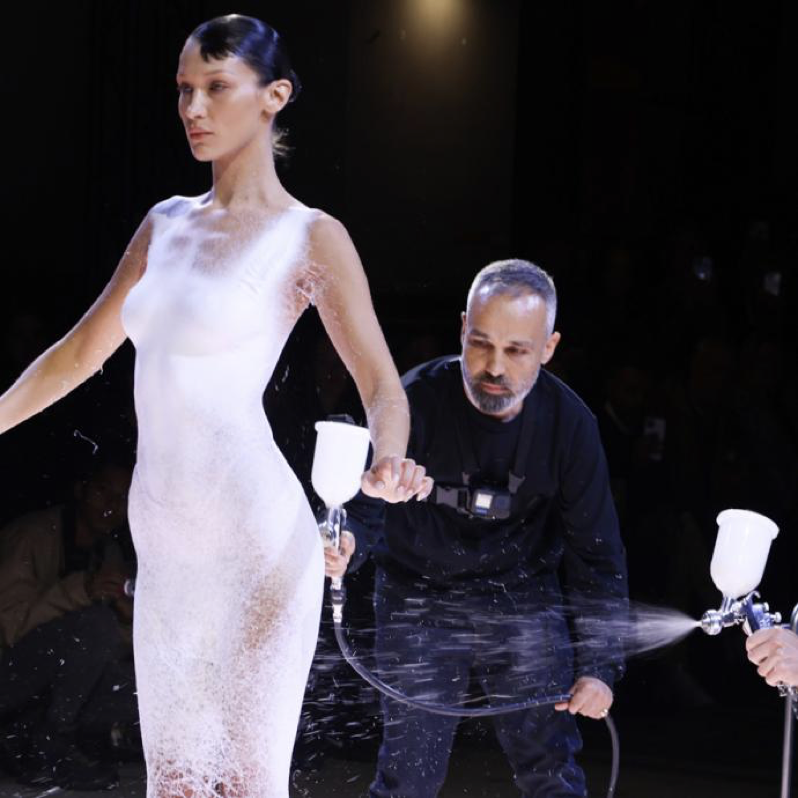
▲ Image source: Nanyang Siang Pau
Shen Ying: At 2022 Paris Fashion Week, the spray-on dress by designer brand Coperni in collaboration with British textile technology company Fabrican became a major highlight. Did you follow that?
Qi Tian: I was moved — not because the dress was so beautiful, but because of what I saw: their subversion of the underlying cognitive logic of a thing.
When we all think of clothes, we assume they should be made of fabric, cut first, then sewn to fit the human form. In our habitual thinking, clothes are mostly made by human hands using scissors and rulers. But suppose humans were a handless, high-IQ species with skills like spiders spinning silk — perhaps our clothes would take entirely different forms. In essence, spraying and silk-spinning follow the same logic. Thinking this way allows fundamental disruption of clothing's creation model.
Inertial thinking sometimes limits our creativity; we need disruptive innovation.
Shen Ying: Speaking of disruptive innovation, we see this in DUANMU as well — you've used wood to subvert the perception that bags must be made of leather or fabric. How did this innovation emerge?
Qi Tian: On one hand, from my professional background in architecture; on the other, from the cognitive impact of fine pieces in my collection. Studying architecture subconsciously made me feel that good products are built with a "clink and clank" — constructed. The traditional notion holds that bags are sewn stitch by stitch on sewing machines; I believe that using a few wooden strips, small nails, a sheet of sandpaper, carving knives — through hand-carving and assembly — can equally produce a good bag.
Chinese people excel at furniture-making; furniture combines points, lines, and planes, built with mortise and tenon joints going "clink and clank." Chinese people also excel at ceramics; porcelain is entirely shaped through the interaction of human hands and materials. The Chinese are a people exceptionally skilled at using natural materials, with a naturalist sentiment in material selection. The manufacturing system this people developed uses tools with perfect appropriateness, while placing few restrictions on the materials themselves. Therefore, using wood as material and a carving system to make bags, I hope to inject new soul into bags and offer everyone a fresh perspective.
Shen Ying: Beyond appreciating DUANMU's creativity, disruptiveness, and unique Chinese aesthetics, do users question making bags from wood? How do you assess the practicality of wooden bags?
Qi Tian: In terms of practicality, wood is certainly inferior to leather. But from a fundamental logic perspective, practicality isn't the main characteristic of luxury.
Luxury is a process of providing premium. And what DUANMU wants to do is create events beyond imagination. So practicality isn't our only consideration, or even our first. I believe creating a bag that makes a person more beautiful and more Chinese at a glittering occasion — that's more worth pursuing. And wood as a material delivers tremendous value in this regard. So I choose wood as our primary material.
Shen Ying: What kind of users and usage scenarios do you most hope for DUANMU?
Qi Tian: I most hope DUANMU can become a fashion trend seen on the streets, like girls wearing hanfu and holding oil-paper umbrellas. I hope DUANMU can serve as a catalyst, bringing more Chinese aesthetic trends and practices back into the mainstream.
03
How to create products that move people?
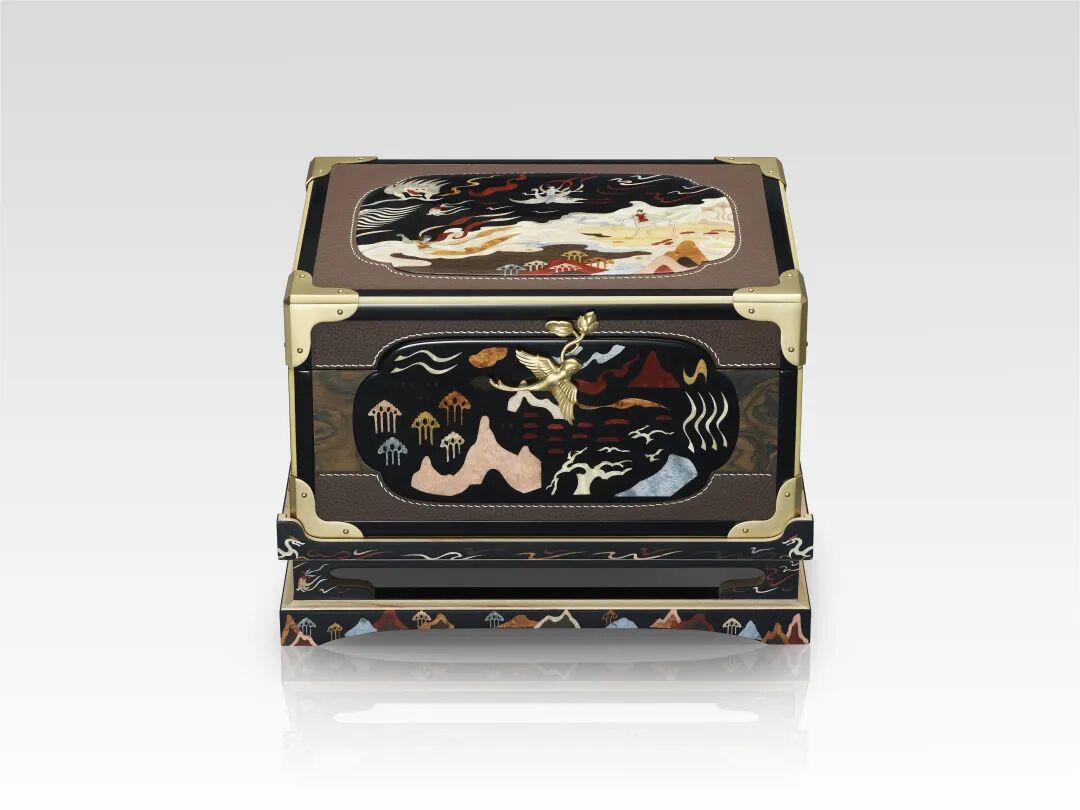
Shen Ying: DUANMU's Shenzhen MixC store has opened. Will you be bringing new products? Are there any design stories about new products you can share?
Qi Tian: Recently we launched a very significant product called the Jindian Box. DUANMU itself started in packaging; early on, we served high-end collectors and institutions, customizing small wooden boxes and cases for their collections. Around 2015, we transitioned to handbags, accessories, and more.
DUANMU has been around for over 11 years now; we wanted to create a storage product that consolidates years of accumulated aesthetic inspiration and craftsmanship.
From the outside, the Jindian Box is a regular cube. But in craftsmanship, five of its six sides feature unique inlaid elements. The Jindian Box combines DUANMU's past expressive techniques with various materials — high-gloss piano lacquer, leather, wood-plastic composite, metal hardware mechanisms, and more.
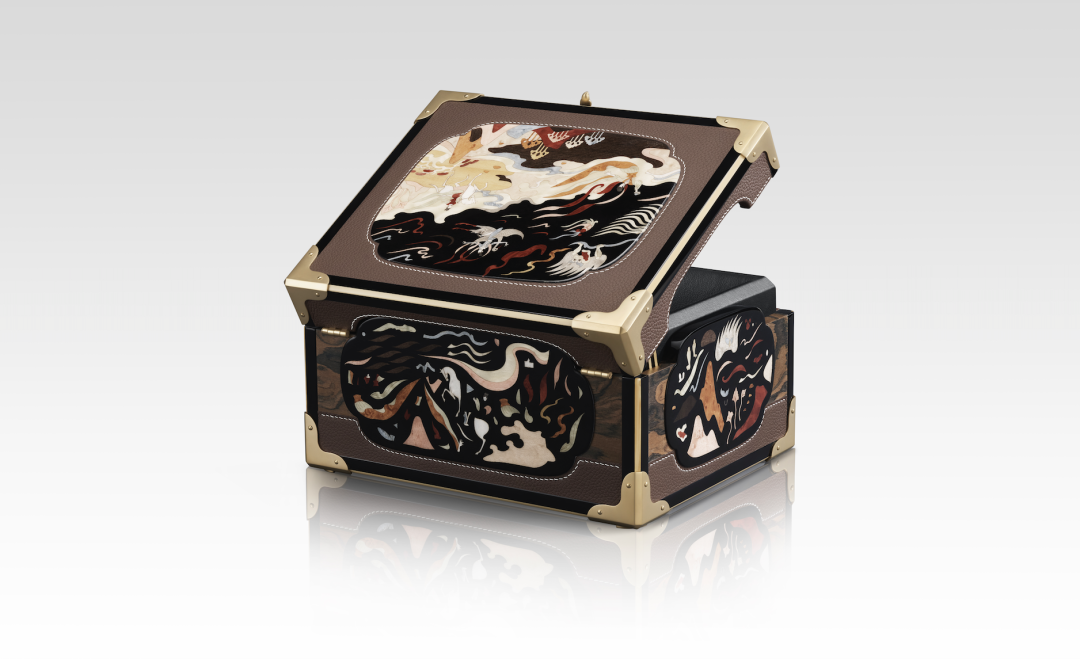
This box is a milestone for our brand — both a commemoration of our original intent and a signal that going forward, the brand will launch a series of storage products.
Shen Ying: You just spoke about product design and launch. In product development, does DUANMU launch new products more based on your own ideas or market feedback? Which approach has yielded better results?
Qi Tian: In the early, middle, and late stages of brand development, our R&D and execution strategies differed considerably.
Early on, when the brand had no products at all, products were more designer-led, dependent on the designer's inspiration. As the brand continuously launched products — from bags to accessories, with increasingly diverse categories — developing new products became like placing pieces on an already crowded board, with few empty spots remaining.
In the middle stage and beyond, we needed to listen to market feedback, recognizing which consumer needs weren't being met, and develop products accordingly. For instance, some consumers knew our early history and longed for the small boxes we made initially; feedback from sales consultants also pushed me to create this Jindian Box.
But ultimately, whether a product gets launched follows my own criteria. If I have inspiration and passion, I'll bring it from imagination to reality. But if I'm not very interested in an idea, I probably won't pursue it. If a product's positioning and aesthetic style don't match DUANMU, I won't do it either.
Developing and positioning a new product is indeed increasingly difficult. Only when the demands of the objective world and subjective world converge can I confirm a product and find the motivation to continue creating.
A good product must be wild and bold. It can revolutionize traditional cognition at the product's underlying logic, leading consumers and the market forward, opening up an unknown world — rather than repeating and cycling within the known world.
Shen Ying: In many consumers' minds, DUANMU is a unique presence — its aesthetic philosophy and material choices are very bold and avant-garde. As brand founder and designer, how do you find inspiration?
Qi Tian: All design and products are reflections of expressive impulses in life.
If in life you're someone without expressive impulses, it's hard to convey what you want to express through products to your users. The colors, patterns, textures, sheens on DUANMU's products — even little-known corners — are all reflections of the emotions and expressive impulses I've experienced.
How to sustain design inspiration and talent long-term? You don't need to sustain it; you just need to keep perceiving keenly in the world beyond products. The joy from hobbies or lifestyle, the grief of weeping bitterly, the heroism of hearty laughter, the emotion of being overwhelmed by beauty... These emotional fluctuations in life give you deeper understanding of the world and human nature. These emotions can be transformed into colors, materials, products to express, thereby capturing moments of life, and the resulting products will have tenacious vitality.
Shen Ying: Recently, where has your design inspiration come from?
Qi Tian: What has brought the most change to my products is the pandemic. At first, I treated it as a disaster; three years later, we've gradually adapted to its existence. In a challenging environment, all we can do is change our attitude toward life, making our inner selves more comfortable. So we created the "Among Flowers" series — though the products haven't launched yet.
Where does "among flowers" come from? From a school of poets in the late Tang and Five Dynasties period, who enjoyed fleeting sweetness and "little确幸" (small, certain happiness) among flowers and moonlight. Their poetry broke from the Tang dynasty's grand romanticism and world-embracing sentiments, instead re-examining their inner selves, exploring their spiritual worlds inwardly. Like Li Yu, the last ruler of Southern Tang — despite enormous setbacks and failures, he still sang of the beauty of spring flowers and autumn moons.
So I created an "Among Flowers" series. Making this product involved much pain, but what ultimately emerged is a sweet state. When people lack sweetness, it's precisely through the mindset of pursuing sweetness during painful moments that this sweetness can be recreated — that's inspiration from life.
Western brands dominate the industry — how can Chinese brands break through?
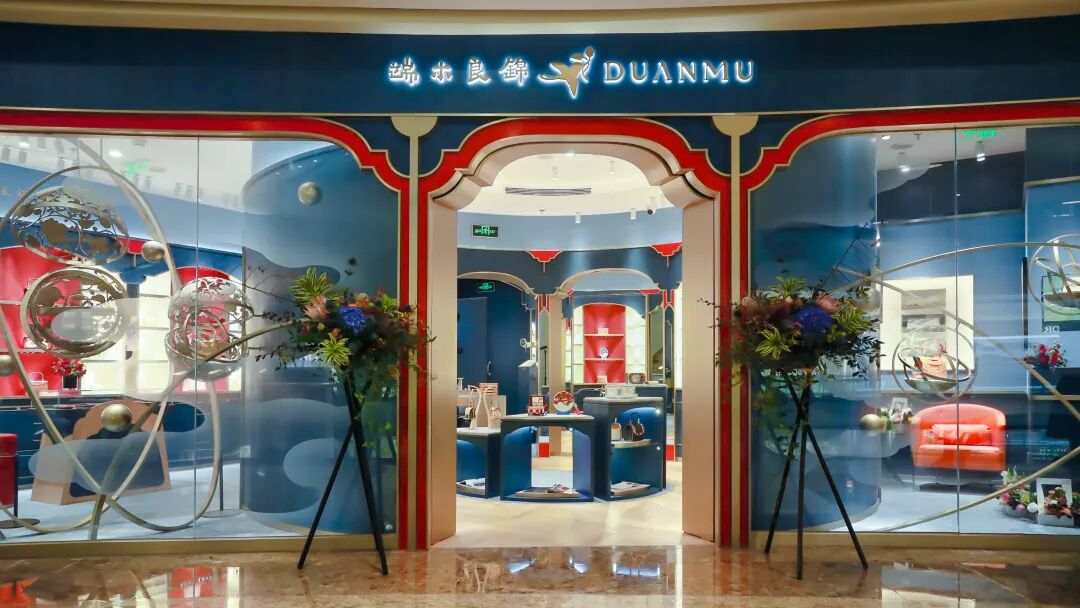
Shen Ying: In the luxury industry, Western luxury groups currently hold dominant positions. In what areas should Chinese brands improve?
Qi Tian: China doesn't lack top-tier artists, but it lacks brands capable of producing top-quality products. How to change this?
As a brand, what we can do is embrace our mission and make good products. As China's national power rises, we may truly welcome an era belonging to Chinese luxury.
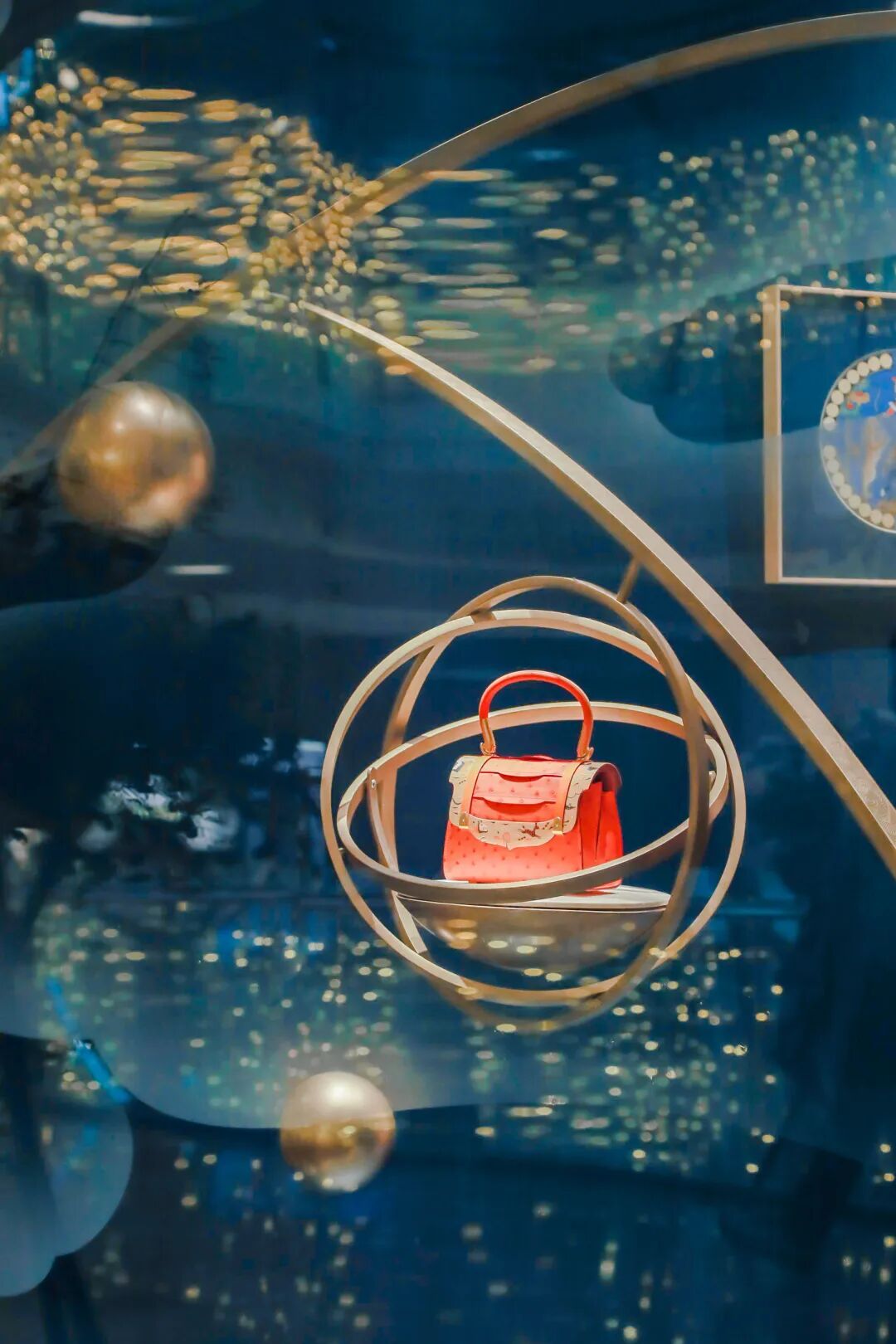
Shen Ying: DUANMU has gone from a studio store in Beijing's 798 Art District to opening in a core location at Shenzhen MixC. Over these years, what changes have you observed in consumers?
Qi Tian: Affected by three years of pandemic, people's consumption desire has withered — this fog makes it hard to discern what real changes have occurred in consumers.
Subjectively, consumers increasingly favor guochao brands. This generation of young people has seen the world and can view the West and the world more objectively and neutrally, no longer "wearing filters" to romanticize the outside world; many actively choose to return to China.
Because young people prefer domestic brands, domestic brands must work harder to surpass Western brands and not disappoint consumers.
Shen Ying: Is the logic behind consumers buying Chinese luxury brands like DUANMU the same as buying overseas brands?
Qi Tian: Consumers buy DUANMU because they see Chinese culture they love in the product.
If DUANMU sold products carrying Chinese culture in a conventional sense, there probably wouldn't be so many consumers.
If we want to compete with Western brands like Hermès and LV, we must offer a kind of Chinese cultural product beyond conventional understanding. This beauty must be something consumers haven't seen before — innovative enough, unique enough, aesthetically meaningful enough — to challenge the West. Because it challenges Western aesthetics, consumers then develop a patriotic sentiment. This sentiment is the result, not the cause.
Patriotism isn't the reason consumers choose a brand. If consumers buy Western brand products, are they unpatriotic?
It's not like that. Consumers always buy products. Without excellent products to carry and express Chinese culture, consumers will choose other, better products.
Shen Ying: After 11 years, as brand founder, have you ever thought of giving up? What's been the hardest challenge?
Qi Tian: On a micro level, I have indeed thought about giving up on running such a brand. But on a macro level, I've never thought about giving up expressing Chinese culture. At my lowest point, I thought it through — even if I didn't do DUANMU, I'd eventually do something similar expressing Chinese culture, so why give up?
I don't think there's a hardest challenge, just as there's no success that made me happiest. In a world full of change, there's no hardest or happiest — the biggest difficulty comes every day.
Shen Ying: What's been your greatest motivation on the entrepreneurial journey?
Qi Tian: My greatest motivation is my love for this land beneath my feet. Thousands of years of profound culture and beauty lie buried within, brilliant as treasures.
I'm like a metal detector — when I perceive this beauty, it sounds an alarm like buzzing, restless in my heart. A tremendous expressive desire ignites within me; I want to dig open the soil and reveal this treasure to the world, telling them: "What you stand on is the richest mine in the world — don't leave it."
Interactive Giveaway
Do you think China will produce luxury brands? Share your thoughts in the comments. By February 23, the 6 most thoughtful commenters will receive a canvas bag designed by DUANMU.

▲ Li Xiang × Li Feng: What Might We Experience in 2023? | Year-Ahead Outlook
▲ Beyond Chatting and Painting, AI Can Also Help You Work Out Online | FreeS Fund Dialogue
▲ 20 Industry Research Reports + 1 Podcast for You — Wishing You a Smooth Start to Work
▲ A Dialogue About 2022 and 2023
▲ Li Xiang × Li Feng: The Dollar's "Monopolistic Success" and "Incremental Dilemma" | Li Feng Column