How Do Tech Companies Go From "Technology Is Valuable" to "Technology Makes Money"? | FreeS Research --- In the past two years, the tech industry has undergone a profound shift. The era of "technology for technology's sake" is fading. Companies that once commanded sky-high valuations based on technical prowess alone are now facing a harsh reality: investors and markets increasingly demand proof that technology can translate into sustainable profits. This transition—from "technology is valuable" to "technology makes money"—is far from automatic. It requires fundamental changes in how tech companies think about product-market fit, commercialization strategy, and organizational capabilities. ## The Valuation Trap For years, Chinese tech companies were rewarded for technical milestones. Breakthroughs in AI, quantum computing, or autonomous driving could attract hundreds of millions in funding before a single revenue dollar was earned. The underlying assumption: superior technology would inevitably find commercial applications. This logic has collapsed on multiple fronts. Some technologies proved to be solutions in search of problems. Others faced regulatory headwinds that made their intended business models unviable. Still others discovered that the cost of commercial deployment far exceeded initial projections, rendering unit economics untenable. The result is a growing cohort of "zombie unicorns

Why should tech talent avoid "walking around with a hammer looking for nails"?

Not long ago, at the "FreeS Fund e-Salon · CMU (Carnegie Mellon University) Special Session," Feng Shu and Rui Ma, partner at FreeS Fund, sat down with Chinese students and entrepreneurs from CMU for a conversation on startups and investing. We've pulled out some of the most interesting topics to share with you:
- How do you view the development prospects of the industrial robotics industry?
- As a technical founder, how can you build a startup more efficiently? How do you find the right industry for you?
- How do you think about the future of AI technology deployment?
- Why do tech companies tend to be valuable when they're not making money, and profitable when they're not as valuable?
- How do you view the development stages and opportunities of industrial transformation in China and the US?
Before diving in, here are the key takeaways:
- Market demand determines how technology develops and where it lands. With the叠加 of demographic shifts, industrial structure changes, and technological progress, China will inevitably give rise to its own industrial robotics giants.
- If you're thinking about starting a company and solving a specific problem, you have to move toward interdisciplinary work and step outside your comfort zone to learn from other fields.
- Cross-disciplinary startup projects with higher success rates share a pattern: in phase one, start from demand — first understand what problem needs solving on the demand side, then graft on technology to see what can address it.
- Technical founders should avoid "walking around with a hammer looking for nails." In the early stages of a project, the nail matters more than the hammer; once a new technology gains broad market acceptance, the hammer becomes more important than the nail.
- Full AI deployment requires three conditions: sustained rapid industry growth, completion of underlying digitization, and data generation far exceeding the limits of human processing efficiency.
- Technology is usually most valuable when it can't yet make money; when it can make money, it's not necessarily that valuable anymore.
- Industrial internet has two defining characteristics: first, it must be embedded within the physical economy or industrial chain; second, it must tightly connect upstream and downstream links to maximize efficiency gains. Therefore, no industry can build an industrial internet by weaving a web out of thin air and draping it over existing structures — it is inevitably deeply tied to the physical environment.
We hope these discussions offer some useful perspective.

/ 01 /
Market Demand Determines Where Technology Lands and How It Develops
Q: I'm currently a PhD student and have always been interested in robotics startups. Our first-phase product is about to launch. I'd like to ask Feng Shu how you view the robotics space and which directions you're more optimistic about?
Li Feng: Before sharing my conclusions, we need to understand an interesting phenomenon.
We all know that American manufacturing was already highly developed by the early 20th century. During World War II, Ford and General Electric were the world's two largest military factories.
After WWII, American industrial production capacity ranked first globally, and the US economy consistently accounted for a leading share of world GDP, cementing its position as the global manufacturing hegemon.
Here's the question — since both automatic control theory and computers originated in the US, why did none of the "Big Four" industrial robotics families that emerged after the 1970s (ABB of Switzerland, Yaskawa of Japan, KUKA of Germany, and FANUC of Japan) come from America?
A crucial reason was market demand. The US simply didn't have market demand for developing industrial robots at that time.
Around the 1970s, the post-war baby boom generation was entering the labor market in waves. Abundant young labor supply collided with economic recessions, pushing US unemployment to 6-9%. Meanwhile, the two oil crises of the 1970s dramatically increased US oil import costs, accelerating the relocation of manufacturing supply chains to defeated nations like Japan and Germany.
In 1945, US manufacturing employment peaked at 38% of the workforce, then declined continuously from that summit. The exodus of manufacturing — which had previously absorbed nearly two in five workers — combined with severe employment pressure, left companies with no incentive to develop industrial robots.
Germany and Japan faced the exact opposite situation.
Before WWII, as initiators of the war, both countries had already built solid industrial foundations. After the war, driven by the imperative of rapid economic recovery, they absorbed massive transfers of automotive and electronics manufacturing from the US. Manufacturing required legions of industrial workers, yet both nations faced severe shortages of young labor. Against this backdrop, developing industrial robots became urgent market demand. Replacing human labor with machines could not only fill workforce gaps but also achieve better cost-effectiveness and win global market favor.
So we see that after Japan and Germany imported automatic control technology and computers from the US, they combined these with domestic industrial chain demands to achieve relatively rapid industrial and technological iteration, from which the Big Four industrial robotics families emerged.
Turning to China — does the Chinese market currently have similar demand? Is there potential to incubate an industrial robotics family?
Let's examine demographics first.
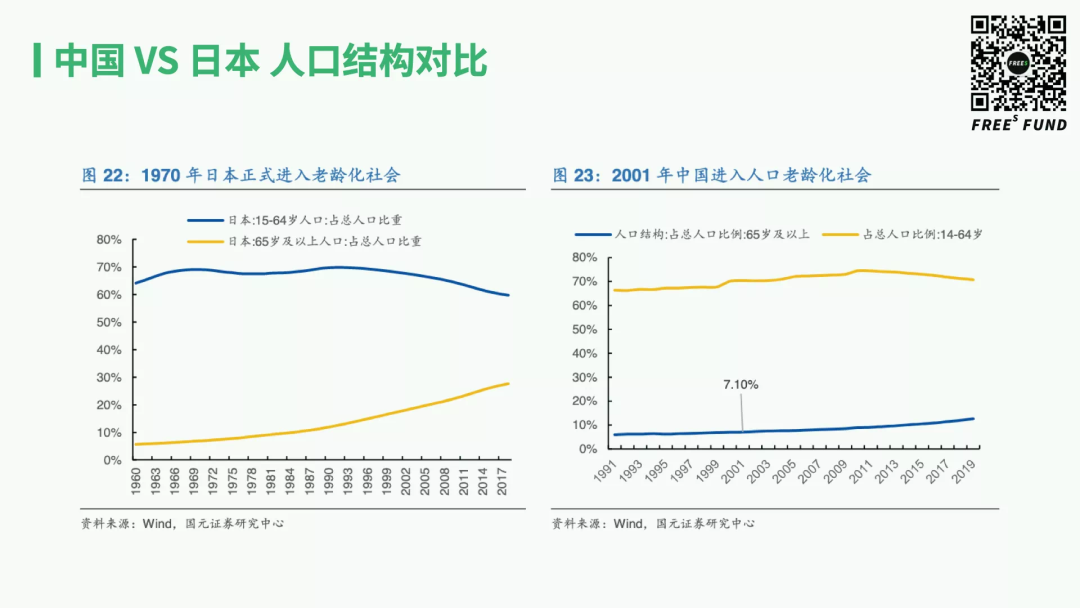
National Bureau of Statistics data shows that in 2012, China's working-age population (aged 15-59) reached 937 million, with its share of total population declining for the first time. The seventh national census in 2021 showed further contraction to 880 million working-age people (16-59); meanwhile, aging accelerated, with 264 million people aged 60 and above, representing 18.7%. During the 14th Five-Year Plan period, China's elderly population is expected to exceed 300 million, transitioning from mild to moderate aging.
Next, industrial structure.
China's current industrial structure differs from that of 1970s Japan and Germany. During their industrial recovery, the latter relied primarily on automotive and electronics sectors. As a manufacturing powerhouse today, China has established relatively complete industrial categories with long, highly integrated supply chains. Consequently, industries with automation upgrade needs span virtually the entire industrial spectrum.
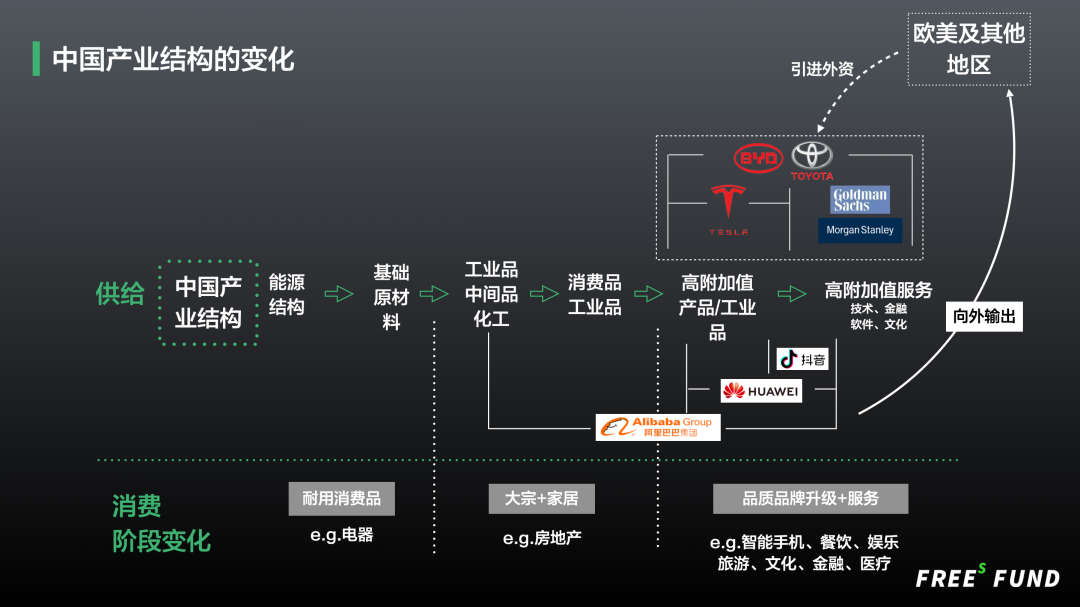
We recently spoke with a fairly well-known company and found they urgently need to develop a fully digital and fully automated production process to verify whether computer simulation results can be realized in physical environments. Achieving full digital and automated feedback would enable rapid validation, saving time and capital costs. This illustrates the demand for supply chain automation upgrades.
Third, current automation technology levels.
Today's automation technology has advanced dramatically compared to last century. Beyond mechanical repetition and measurement, it now incorporates numerous new sensing, perception, and decision-making layers. Computing power, sensor precision, sensor measurement range, and sensing and control capabilities are simply not comparable to what existed before.
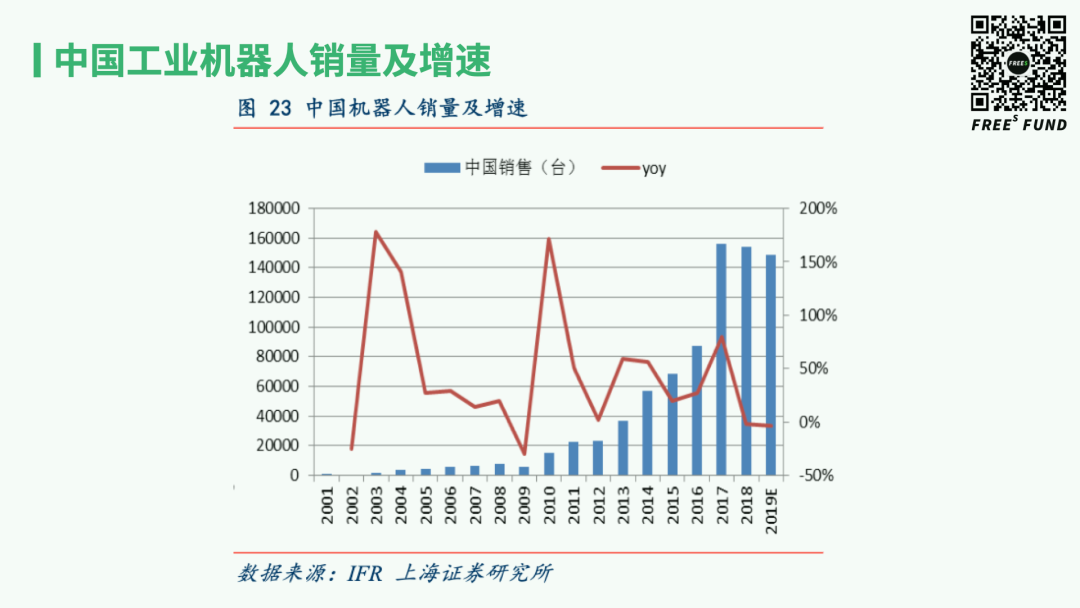
In summary, with the convergence of demographic shifts, industrial structure evolution, and technological progress, China will inevitably produce its own indigenous industrial robotics families. (Welcome to read "How to Invest in Industrial Robotics? | FreeS Research Institute — Learning from Investing")
/ 02 /
Technical Founders Should Avoid "Walking Around with a Hammer Looking for Nails"
Rui Ma: Feng Shu was talking about trend judgment. I'd like to continue with application directions.
At FreeS, we've consistently adhered to one methodology — don't look for applications starting from technology. This is especially critical in industrial robotics. For CMU students, sensing and computing are core strengths, so the most important thing when starting a company is finding good application directions, placing your technology into specific industries. Take biomedical applications, for example — there's massive demand for machine substitution of human labor, such as building high-throughput platforms for biological applications, and so on.
If you don't find suitable people around you to discuss application directions with, I'd encourage you to get out and see more, including coming back to China to take a look. The key is how to place your technology into specific industry applications where it can truly shine.
Li Feng: Rui Ma raised a crucial point — technical founders should avoid "walking around with a hammer looking for nails."
We've seen many examples in our investing. Generally speaking, starting purely from research is quite troublesome — you need to spend enormous amounts of time finding that suitable "nail."
FreeS has consistently been optimistic about interdisciplinary entrepreneurship. We've invested in many cross-disciplinary projects combining AI with pharmaceuticals, AI with finance, and so on. In these fields, entrepreneurs basically fall into two categories: one is industry professionals who start companies — for instance, founders with medical backgrounds hoping to use AI technology to solve industry problems; the other is technical founders with computer science or AI backgrounds entering industries like healthcare.
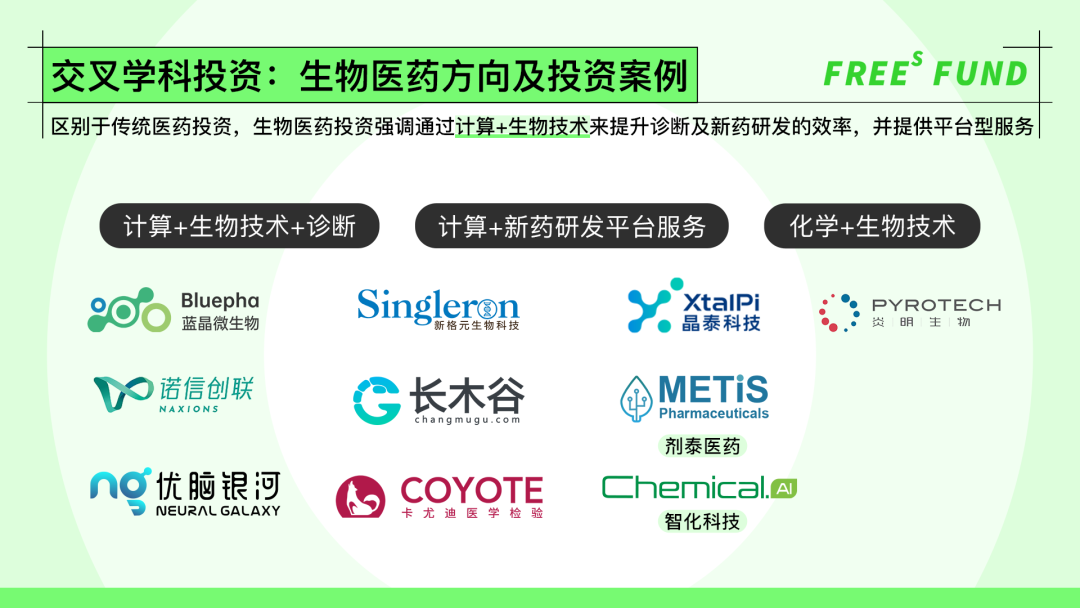
Based on our observations, the second category encounters more difficulties. When a technically trained computer scientist does AI medical imaging, the technology itself poses no challenge. The biggest difficulty is not understanding industry demand — as the project progresses, you'll find user expansion extremely hard, unable to satisfactorily answer who will use it, why they should use it, and why they should pay. Category one projects, by contrast, tend to proceed more smoothly in commercialization and application.
So cross-disciplinary startup projects with higher success rates share a pattern: in phase one, start from demand — first understand what problem needs solving on the demand side, then graft on technology to see what can address these problems.
Currently, most applications combining AI or other technologies with industries are still in this first phase of development. In the initial stages, the nail is usually more useful than the hammer. Of course, as projects evolve, especially once a new technology's industry application gains broad market acceptance — for instance, computer vision and sensor technology applications in robotics have become something of an industry consensus — then the competition shifts to technology evolution, and the hammer becomes more important than the nail.
Rui Ma: Right, let me expand on Feng Shu's thread.
To better apply AI in industries, pay attention to three things: first, build industry know-how — you need to understand how to break into the industry; second, you need to know how to obtain industry data, which is the foundation for AI to function; third comes the AI technology itself.
Research and entrepreneurship are actually quite similar — only by forming a closed loop between technology and industry can you achieve good results. For academics doing fundamental research, focusing solely on their own patch is perfectly understandable. But if you're considering entrepreneurship and want to solve a specific problem, you must move toward interdisciplinary work, must step outside your comfort zone to learn knowledge from other fields.
This helps you find suitable nails. Once you've found the nail, the hammer can be deployed better and more thoroughly. For example, there's broad consensus that data-driven healthcare represents a major trend for the next decade. If you want to make your mark in this field, you must learn healthcare domain knowledge, establish know-how, and clarify your data sources.
Don't view this as a distraction from your proper work — this is precisely laying solid groundwork for your future, determining whether your entrepreneurial path will be good and long-lasting.
/ 03 /
Prerequisites for Full AI Deployment
Q: Personally, I feel that China's "AI Four Dragons" (SenseTime, CloudWalk, YITU, Megvii) all have very good technology, but seem to face commercialization challenges. I'd like to hear Feng Shu's view on the future of AI technology deployment.
Li Feng: We can look at this in stages.
Phase one is solving the digitization problem. Once full-industry-chain, full-scenario digitization is complete, we enter phase two.
Phase two is about allocation and connection efficiency — better matching and connecting supply and demand across upstream and downstream links to improve industrial chain efficiency.
When allocation and connection reach a certain level, and the underlying digitization is complete, their efficiency will exceed that of human intervention, allocation, and connection. Only then does AI application enter a relatively mature phase.
Let me use a more vivid analogy.
When we first started using computers, we could digitize text through keyboards, mice, and operating systems. In this phase, the problem to solve was getting enough people to own computers. Once penetration was sufficiently high and enough text had been digitized, we entered the allocation and connection phase.
In phase two, digitized text had become plentiful, and portals would filter and connect this digitized text to match demand and supply. When this data grew so massive that portals like Yahoo couldn't process it all, failing to satisfy information needs, AI-based search engines emerged — Google, for instance.
Looking at China's mobile internet development, current content platforms including Xiaohongshu, TikTok, and Bilibili may have just reached something like the "Yahoo" stage — platforms can partially satisfy various information needs, but they're still some distance from fully AI-driven content platforms. What they're mainly analyzing is still user behavior, not content itself. The future trend is definitely toward intelligence.
It's not just content industries — any industrial chain will undergo a similar progression from digitization to intelligence. Finance is another example. Currently, finance has very high digitization and is moving toward more efficient allocation and connection.
So if you want to think about where AI will be in four or five years, you can ponder this logic. The prerequisites are sustained rapid industry growth and completion of underlying digitization. Only when an industry's data generation far exceeds the efficiency limits of human processing will that industry definitively transition to the AI phase.
04
Technology Is Usually Most Valuable When It Can't Yet Make Money; When It Can Make Money, It's Not Necessarily That Valuable
Q: How do you view the relationship between "making money" and "being valuable" for technology companies?
Li Feng: This is indeed an interesting and somewhat controversial topic. Let me start with a conclusion — technology is usually most valuable when it can't make money.
Take big data technology as an example. Ten years ago, many people talked about big data. The concept was fashionable, but people who truly understood big data technology were extremely rare. At that time, big data technology was very valuable, but very hard to monetize.
By 2017-2018, almost no company would call itself a "big data company" anymore, because big data talent had become relatively saturated and technology application had become widespread. By the time a technology can be well commercialized, the technology concept itself is no longer that valuable.
Let's use a few more familiar examples. If ByteDance had tried to sell its AI engine in its early days, it might not have been easy. For one thing, large companies might not buy — major platforms that valued AI would prefer to develop in-house; for another, smaller platforms that wanted to use it might not be able to pay much. So, as I said, technology is usually most valuable when it can't make money, and when it can make money, it's not necessarily that valuable.
Take Baidu as another example. When Robin Li first returned to China, what he wanted to build wasn't a search website, but a B2B search engine business — selling search engine technology to mid-to-large internet companies including Sohu, Sina, and other portals, providing them with on-site search technology. But as he went along, he found his important clients not renewing contracts, instead building their own search engine teams. Later, he had no choice but to shift from B2B to B2C. The rest is history — he successfully made the leap from the "technology is valuable" stage to the "technology makes money" stage.
Why could he achieve this transition? Because he had accumulated sufficiently good and abundant technology, and developed relatively mature consumer understanding. With these prerequisites, when all elements aligned, he could achieve higher efficiency than other B2C products. And scale effects would continue amplifying that advantage.
Almost all technology applications go through this process. Simply put, to make technology more useful and more profitable, it's never something technology itself can push through unilaterally — it invariably requires industry insiders plus technology. Technology more often plays an enabling role.
Of course there's another path. That is, successfully raising funding when technology is valuable, then waiting for the right moment to use that technology to create an entirely new solution delivered directly to consumers. Naturally, this path is extremely difficult.
05
Two Defining Characteristics of Industrial Internet
Q: My personal observation is that some large Chinese companies like Tencent and Huawei are investing heavily in building 5G ecosystems. Compared to mobile internet, industrial internet and digital transformation seem to be the more closely watched trends in China right now.
The US seems different — there's lots of innovation in internet applications, but discussion of 5G, AI industrialization, and similar topics doesn't seem to have the same volume as in China. I'd like to hear your view on the development stages and opportunities of industrial transformation in China versus the US.
Li Feng: Indeed, China's 5G deployment is relatively leading. According to the Ministry of Industry and Information Technology, as of end-March 2021, China had built 819,000 5G base stations, accounting for over 70% of the global total, covering all prefecture-level cities nationwide, establishing the world's largest standalone 5G network. 5G is a technology oriented toward industry scenarios. Once the network is established, more and more commercial and consumer applications will be developed on this foundation, empowering industrial digital transformation.
Industrial internet has two defining characteristics: first, it must be embedded within the physical economy, or within industrial chains; second, it must tightly connect upstream and downstream links to achieve efficient connections. Therefore, no industry can build an industrial internet by weaving a web out of thin air and draping it over existing structures. As a core component of industrial internet, 5G is catalyzing more demands and services, and the industrial internet thus woven is inevitably deeply tied to base stations and other physical infrastructure.
As we mentioned earlier, China has established relatively complete industrial categories with long, highly integrated supply chains. The cumulative efficiency improvement space brought by 5G technology will certainly be larger than in other countries. This isn't hard to understand. Compare building one upstream-downstream supply chain versus connecting multiple upstream-downstream supply chains — which brings greater connection efficiency improvement? The answer is self-evident.

Consumer Entrepreneurship: How to Capture Category Dividends? | FreeS Research Institute
How to Invest in Industrial Robotics? | FreeS Research Institute — Learning from Investing
Expansion or Store Closures: Re-examining Offline Opportunities | Li Feng Column