How Should Chip Companies Position Themselves Amid the IoT Industry's Rapid Growth? | FreeS Fund Chip Series

From Water Meters to Wearables to EV Batteries: How Chips Are Powering the Internet of Everything
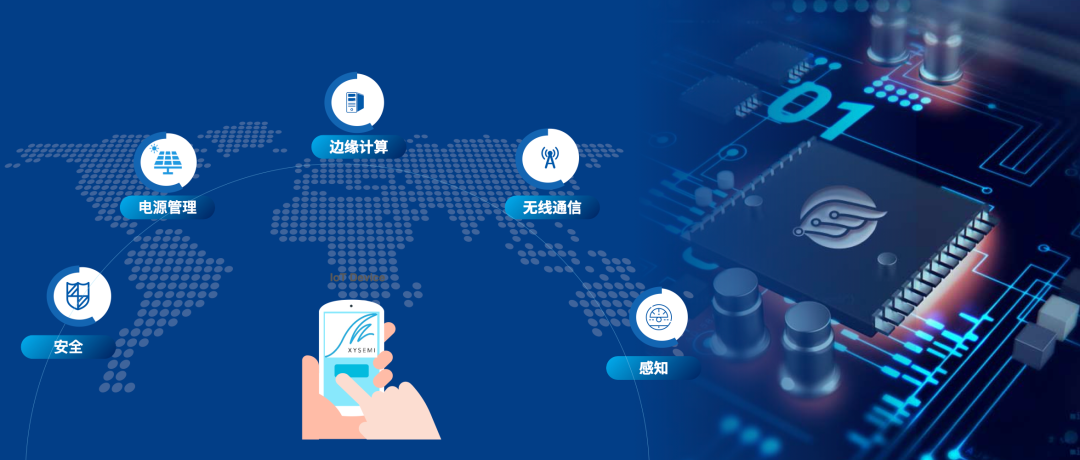
"Let's imagine what the IoT era might look like. For instance, once autonomous driving becomes reality, people won't need to drive themselves — cars could become mobile offices, meeting rooms, or entertainment spaces. They might even become extensions of ourselves, helping us fulfill our desires and enabling us to work more harmoniously. In this scenario, everything connects with humanity to form a network, with both becoming two species coexisting harmoniously in the future IoT era," said Jianhong Xiao, founder and CEO of Xinyi Information Technology, envisioning this future.
The age of "everything connected" is gradually taking shape. Terminal devices in our daily lives — from home living to urban management — have already been upgraded thanks to 5G and IoT technologies. The Internet of Things brings enormous opportunities, and naturally, enormous challenges. But ultimately, intelligent terminals across all industries will gradually interconnect.
This is the fifth installment in the FreeS Fund Chip Series (click here to revisit previous articles in the series). We've invited Dr. Jianhong Xiao, founder and CEO of Xinyi Information Technology, to share his thinking on the IoT chip sector — starting from where IoT stands today and where it's headed.
Xiao graduated with a bachelor's degree from Peking University and earned his Ph.D. in electrical engineering from Texas A&M University before joining Broadcom in the US. There, he led the development of high-performance broadband RF communication systems, high-speed DACs, and high-speed, high-precision PLLs — all reaching world-leading levels. For his sustained outstanding contributions, he received multiple out-of-cycle promotions, becoming Broadcom's youngest senior principal scientist at the time.
In 2017, Xiao returned to China and founded Xinyi Information Technology, initially focusing on low-power IoT NB-IoT chip R&D with angel investment from FreeS Fund. Now five years in, Xinyi has evolved into an IoT intelligent terminal system SoC company with broad deployments in smart cities, smart logistics, smart agriculture, and wearables.
Below is Dr. Xiao's sharing, in which he explores:
- What will the future of IoT look like? What concrete applications exist today?
- How do chips accelerate IoT development? What are the five essential capabilities for IoT terminal chips?
- The PC era produced chip giant Intel; the cloud era crowned NVIDIA; what kind of company will the IoT era nurture?

01 What Are the Major Application Directions for IoT?
First, I'd like to talk about the future of IoT.
The concept of IoT has been around for nearly 15 years, and many feel it's lost its novelty. You might be asking yourself right now: "What does its future actually hold? Hasn't this been talked to death?"
I'd like to approach this from a technologist's perspective. Let me share some figures from McKinsey & Company's report The Internet of Things: Catching Up to an Accelerating Opportunity:
- By 2030, IoT will generate $5.5 trillion to $12.6 trillion in global economic value, encompassing both B2C consumer IoT and B2B IoT products and services.
- By 2030, factory production scenarios will account for the largest share of IoT's potential economic value, approximately 26%.
- By 2030, B2B applications will comprise 62% to 65% of total IoT value.
- By 2030, China will represent roughly 26% of global IoT economic value.
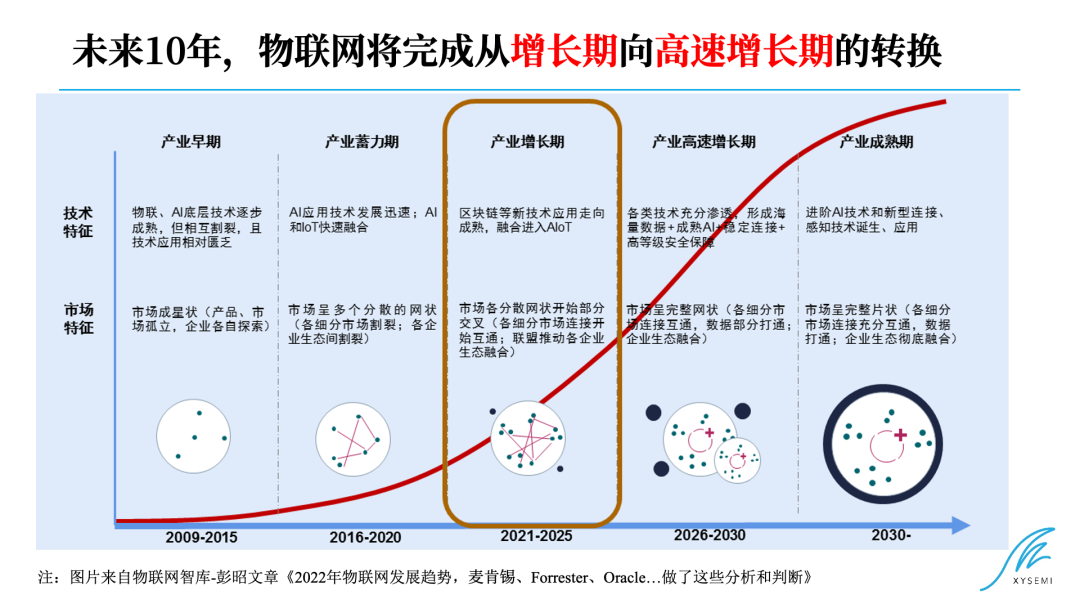
What we can anticipate is that over the next decade, IoT will transition from a growth phase to a high-growth phase, particularly in B2B industrial IoT. These technologies will enable industrial upgrading, improve the efficiency of social management and operations, realize intelligent transformation of traditional industries, and digitize the physical world — all critical to making "everything connected" a reality.
For example, autonomous driving abroad has heavily focused on installing various sensors in vehicles themselves. But China, with its more complex road conditions, has taken a different path — vehicle-road coordination. This requires collecting road information through sensors and feeding it back to vehicles, involving multiple IoT technologies.
Another example: the dual-carbon economy. The generation of new clean energy, energy circulation, optimization of enterprise energy consumption, monitoring of carbon emission indicators — all of these create substantial demand for IoT technology. The recently popular battery swapping model is one example of improved energy circulation efficiency, with IoT technology enabling digital management and tracking of batteries.
The real-world demand for IoT applications far exceeds these examples, so I have unwavering faith in IoT's future.
02 How Do Chips Accelerate the Interconnection of Everything?
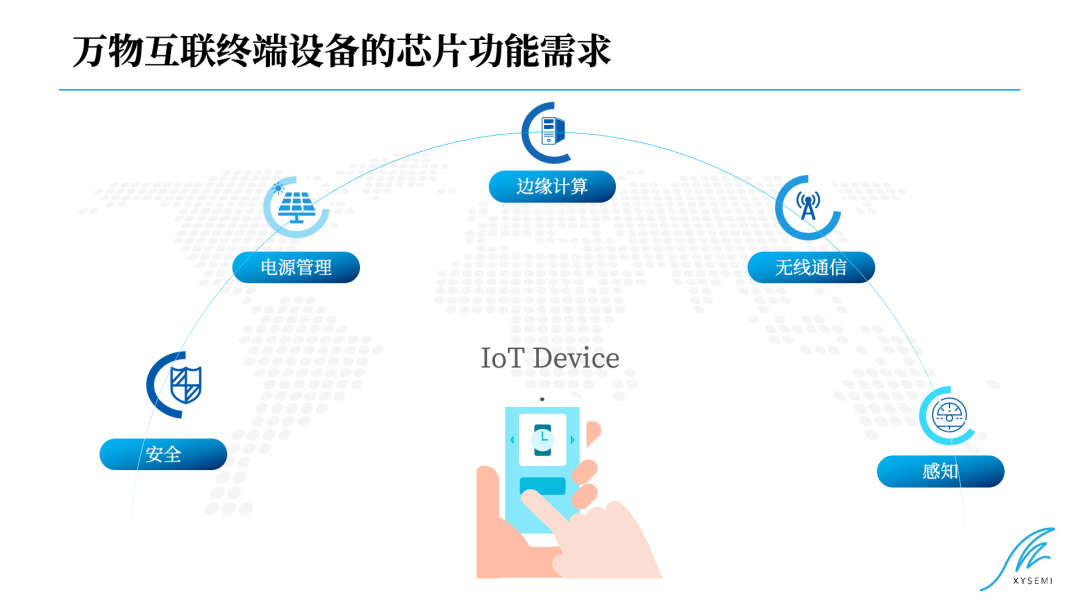
The basic architecture of IoT is end, pipe, and cloud. What's the end? Our smartphones are the most fundamental endpoints, connecting to the cloud through communication base stations, fiber optics, or wired networks.
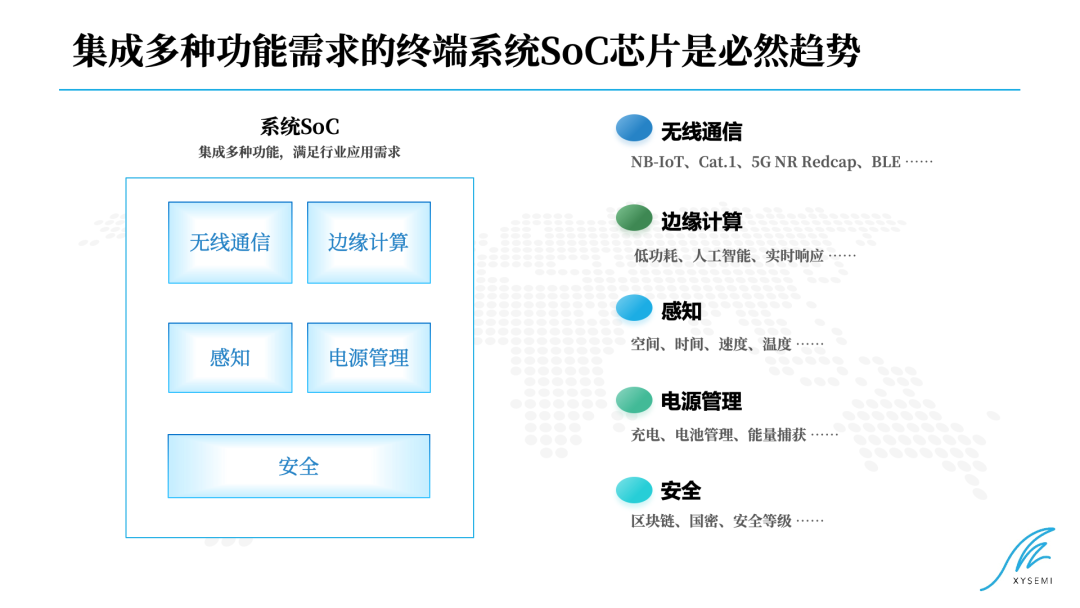
As a chip company, on the "end" side, we focus on five capabilities: wireless communication, sensing, edge computing, power management, and security. From a chip perspective, these technical capabilities must be organically integrated into the chip and corresponding package to help industry terminals reduce costs and power consumption, and enable all parties to use these technologies more easily — that's the essence and vision of a chip company.
The first and most fundamental capability for doing "end" well is "connection" — how to connect things to the network, meaning communication capability. From the Wi-Fi and Bluetooth in every home to today's 5G and even satellite communications, these are all connection capabilities.
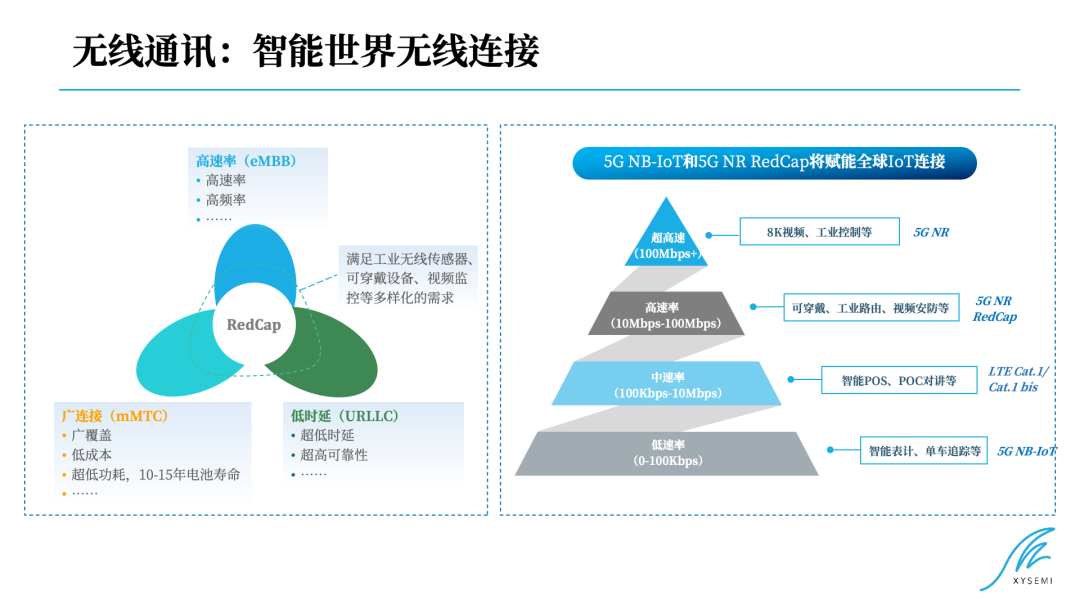
In the communication segment, the track we've devoted ourselves to over the past five years is low-to-mid-speed 5G communication, including NB-IoT, Cat.1, RedCap, and so on. In future 5G scenarios, 80% to 90% of use cases will likely be addressed by low- and mid-speed communication technologies, with information from tens of billions to hundreds of billions of terminals collected and uploaded to the cloud.
The second capability is "sensing" — sensors. In IoT's future, numerous sensors will digitize the physical world, fully depicting every aspect of objective reality. Take gas and water meters in every household — we used to use mechanical measurement, but now we're gradually switching to ultrasonic measurement. However, ultrasonic measurement chips currently rely almost entirely on imports, with a gas ultrasonic measurement module costing over 100 yuan. The opportunity space in the sensor chip industry is enormous.
The third capability, "edge computing," primarily handles large-scale computing at terminals or edge nodes, distinct from cloud computing. Edge computing is the inevitable path as IoT scales up. Why? Imagine hundreds of billions of nodes flowing into the cloud — the data volume transmitted through communication networks would be massive, necessitating many localized scenarios where edge computing reduces power consumption and costs. Take security applications: continuous cloud monitoring incurs significant data and electricity costs. If edge computing uses image recognition to determine there's no security threat and suppresses communication, it dramatically optimizes costs and power consumption.
The fourth capability is "power management or energy harvesting." We charge our phones daily — so when those hundreds of billions of nodes I mentioned all need to connect, how do we replenish their power? Beyond conventional low-power power management chip demand, the IoT industry has a new concept called "passive IoT," where terminal devices harvest energy from their environment to minimize or even eliminate reliance on batteries. The key to passive IoT technology is harnessing all possible energy sources — including solar and kinetic energy, energy from electromagnetic waves in the air such as Bluetooth signals, radio, 4G, and 5G signals. How to realize passive IoT technology? How to integrate it with other technologies in specific application scenarios? Solving these problems will further broaden the reach of IoT.
For example, Wiliot, an American IoT startup, recently raised $200 million. Its core product is a passive Bluetooth sensor tag the size of a postage stamp that can be attached anywhere. Its standout feature is harvesting energy from ambient Bluetooth signals through a miniature antenna to power the sensor.
The fifth capability is "security." If hundreds of billions of devices connect to the network, cyberattacks could easily trigger massive-scale damage. But traditional security measures like SM algorithms (cryptographic algorithms certified by China's State Cryptography Administration) or authentication are extremely costly to implement. How to adopt technological approaches that meet chip requirements, reduce costs, and prevent large-scale replication attacks — this too is what our chip industry must research.
03 Terminal System SoC Chips Integrating Multiple Functions Are the Inevitable Trend
2019 was China's 5G debut year. High speed, low latency, and massive connectivity are the obvious characteristics of 5G as the latest generation of mobile internet technology. Unlike the previous four generations of mobile communication technology, 5G enables large-scale connection of various smart home devices, public smart devices, and mobile terminals, bringing infinite possibilities for technology application. Moreover, low latency and massive connectivity better serve the development of B2B industrial IoT.
For IoT technology to achieve large-scale application, controlling overall costs and power consumption is critical — not just communication. Every industry's intelligent terminals will use several of the five capabilities mentioned above to varying degrees. As industries scale, these capabilities will inevitably need to be integrated into a single chip to optimize costs and power consumption. Without this, it's difficult for industrial intelligence to achieve scale effects. The mobile phone industry's development is a good example — from early communication chips to later integration of application processors (APs), then to integration of various sensors including cameras and light sensors.
Due to the fragmentation of the IoT industry, currently no single company may be able to meet all different industry terminal needs with just one chip. Moreover, established large companies are constrained by short-term ROI pressures, creating growth space for startups. Innovative chip companies, as long as they possess breakthrough capabilities in core technologies, can very likely develop chips for certain industries that rival or even surpass those of large companies.
To support efficient societal operation, various industries need hundreds of billions of intelligent terminals. If a chip company can excellently integrate multiple capabilities into an SoC and cover as many industry applications as possible, that company's value will far exceed our imagination. In this brand-new IoT era, new companies will have more opportunities — just as Columbus faced a new continent, a new world has opened.
04 What Kind of Company Will the IoT Era Nurture?
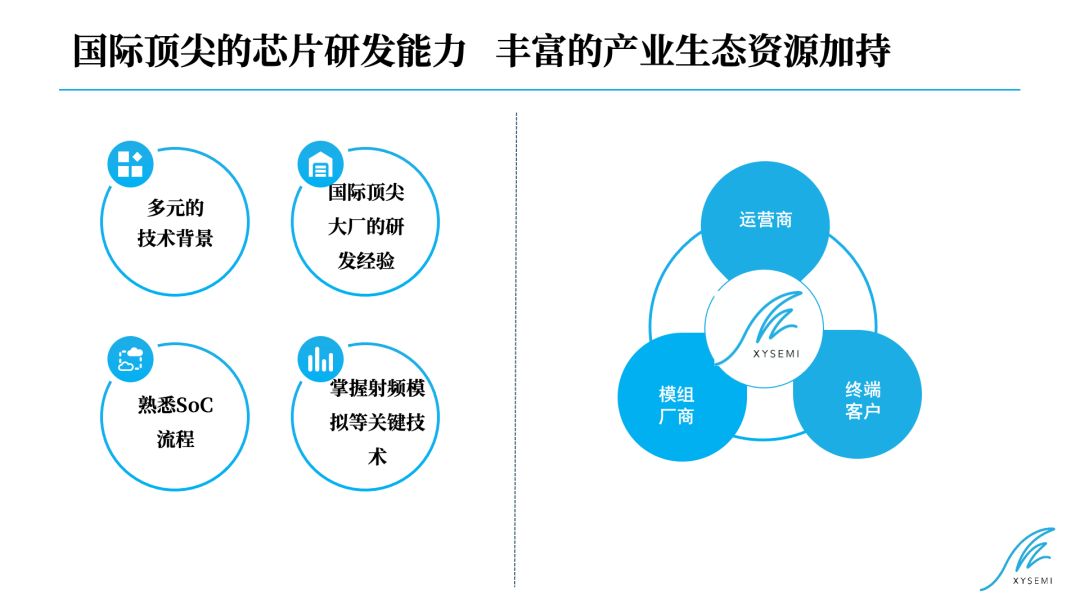
In recent years, technical breakthroughs by domestic NB-IoT chip manufacturers have given the chip industry a boost. Here we find both established players like Huawei HiSilicon, MediaTek, and UNISOC, as well as tech startups rising as "dark horses." In this process, domestic chip manufacturers including Xinyi Information Technology have all been working toward one goal — reducing power consumption, reducing size, improving sensitivity, and improving performance. Xinyi Information Technology was among the first chip manufacturers globally to integrate a power amplifier into an SoC.
As NB-IoT becomes part of 5G, there will be further improvements to better meet the requirements of wide connectivity and massive connectivity. With the extension of technical standards, this sector will develop more new applications, with more functions integrated onto a single small chip, even enabling customized differentiated chips.
Since its founding in March 2017, Xinyi Information Technology has maintained a steady R&D pace of one milestone per year. The company has built its own low-to-mid-speed IoT chip portfolio, with broad deployments in smart cities, smart logistics, smart agriculture, and wearables, becoming one of the leading players in its segment. Its independently developed ultra-high-integration 5G NB-IoT system-on-chip SoC XY1100 was the first to launch and achieve mass commercialization, leading the global NB-IoT chip technology trend to date, penetrating consumer terminal fields including water meters, gas meters, positioning and tracking, and smart cities, earning high recognition from industry customers. By the end of 2021, XY1100 SoC shipments approached 15 million units.
Beyond vigorously developing communication NB-IoT chips, Xinyi is also actively promoting R&D of system chips that apply NB-IoT to serve different industries. In the next two to three years, NB-IoT applications in asset management and tracking, digital health, smart agriculture, smart cities, and smart logistics may see high growth.
Xinyi Information Technology's independently developed next-generation NB-IoT chip, the XY2100 series, has completed R&D and is expected to hit the market soon. The XY2100 series breaks through the industry's architecture of integrating standalone MCUs on-chip, solving performance bottlenecks in extreme low power consumption and extreme sleep-wake times. Moreover, the XY2100 series is the industry's first chip to integrate communication, industrial-grade low-power MCU (computing), and sensor analog front-ends (sensing) into a single chip (SoC) to serve industries such as metering and fire smoke detection. Just as Xinyi successfully led CMOS PA integration technology to massively reduce NB-IoT chip costs in its early days, the launch of industry-specific chips is expected to further reduce the cost of industry intelligence.
Beyond low-speed NB-IoT, as 2G gradually phases out, mid-speed Cat.1 has welcomed huge development opportunities — in 2021 alone, Cat.1 chip shipments in China exceeded 100 million units. In addition to its NB-IoT product series, Xinyi Information Technology's highly integrated LTE Cat.1 chip XY4100 is currently in intensive R&D and expected to launch this year. With the arrival of the 5G era, the company has already taken the lead in investing in 5G RedCap R&D.
As China's digital economy flourishes, industries will undergo a process of "intelligent transformation of traditional industries, digitization of the physical world." In this process, IoT technology applications place high demands on terminal intelligence — and this is precisely Xinyi Information Technology's vision. The name "Xinyi" (芯翼) expresses "using chips as wings to boost IoT" (以芯为翼,助推物联), hoping to contribute to China's industrial upgrading in this new era.

▲ Yes, we're hiring — welcome to join FreeS Fund ▲ "Chip Shortage": Entrepreneurial Challenges and Opportunities | FreeS Research Institute · Chip Series ▲ Chip Sector: From Scientific Innovation to Tech Entrepreneurship | FreeS Chip Series
▲ FreeS Yongcheng Yang: The Red Ocean Is the Ultimate Battle Entrepreneurs Must Face ▲ Domestic Semiconductor Materials: Can They Outpace International Competition? | FreeS Chip Series ▲ Why We're Bullish on the Optical Chip Industry | FreeS Chip Series ▲ How Tech Companies Go from "Valuable Technology" to "Technology That Makes Money" | FreeS Research Institute