How to Navigate Black Swans: We Spoke with Six Founders

Through the Hundreds of Hardships of Entrepreneurship: A Founder Must Be a Problem-Solver
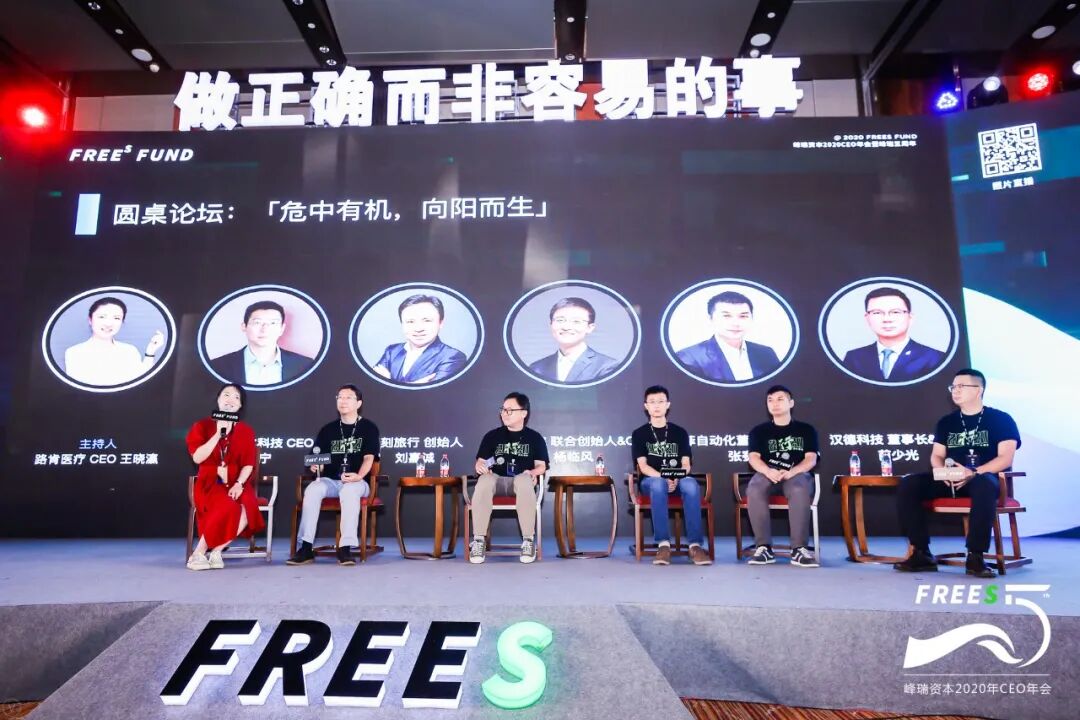
Uncertainty has a life of its own.
Though the pandemic has yet to be fully extinguished worldwide, we've seen countless companies in the venture capital and startup world fighting against COVID-19 — this elusive "black swan" — and turning crisis into opportunity.
At the "FreeS Fund 2020 CEO Annual Meeting & FreeS 5th Anniversary," six founders from the FreeS Fund family shared with attendees the challenges and pivotal decisions they faced during the COVID-19 outbreak. They were:
- Ning Xia, founder of Wuhan Zhihua Technology
- Jiacheng Liu, founder of Qingke Travel
- Linfer Yang, co-founder of Onion Academy
- Sai Zhang, founder of Effort Automation
- Shaoguang Miao, founder of Shenzhen Hande Technology
- Xiaoying Wang, founder of Lukan Medical (moderator)
They came from different fields: biomedicine, manufacturing, online education, travel, and logistics technology. We found that while different industries faced different problems under the pandemic, the founders' approaches to solving them had much in common. Their stories are also a microcosm of how Chinese startups respond to emergencies. They shared:
- How do founders make rapid decisions during emergencies and ensure those decisions are accepted and executed by their teams?
- How do seemingly peripheral preparations made in normal times become critical during emergencies?
- After hitting the "pause button," how should companies rethink their value to the entire industry?
- What difficult dilemmas lay behind their public welfare efforts?
- In the face of the pandemic, how did founders help their teams overcome fear, boost morale, and move forward together?
We've compiled these entrepreneurs' genuine reflections into this article for you, along with four videos of founders discussing how they responded to the pandemic. We hope you find them inspiring. We believe that in the ever-turbulent business world, as long as we keep working hard and remain optimistic, the results will far exceed our imagination. Believe that opportunity lies within crisis, and we will grow toward the sun.
Contact Us
We always look forward to meeting more innovators. Please send your pitch deck to bp@freesvc.com. We also welcome those interested in joining our investment team (contact hr@freesvc.com).

/ 01 / "Seemingly peripheral preparations come into play at critical moments"
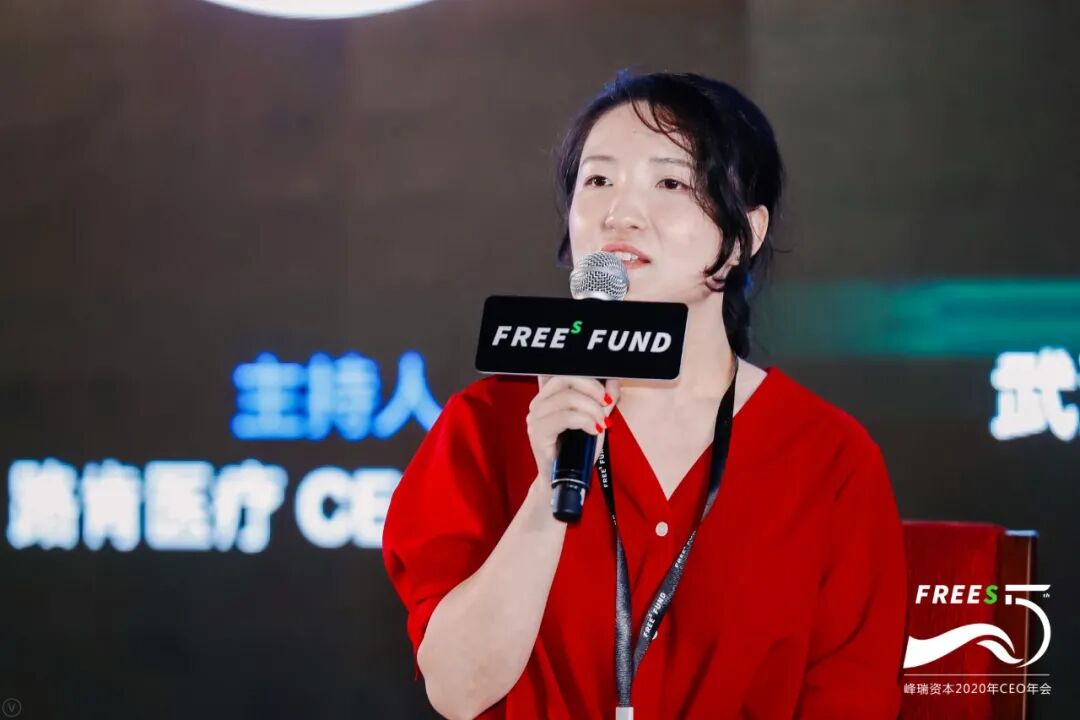
▲ Xiaoying Wang, founder of Lukan Medical (moderator)
Xiaoying Wang: I'm Xiaoying Wang, founder of Lukan Medical. Our company works in medical devices. Many might assume the healthcare industry fared well during the pandemic. But medical care has numerous sub-fields — we're relatively traditional, focused on developing and producing new instruments for minimally invasive procedures.
In fact, our company faced enormous challenges this year. For instance, many of our automation suppliers switched to producing mask-making machines. Sai Zhang, founder of Effort Automation, who is joining our panel discussion today, also got into mask machines.
When the outbreak began, many experts rushed to the front lines of the fight against the virus, and many offline academic events could no longer be held — we couldn't meet with leading specialists either.
Our company was also in the registration phase. We had expected to obtain our "production license" and "medical device registration certificate" right after the New Year. But during the pandemic, regulatory bodies prioritized companies producing anti-epidemic materials, so we worried for a while that our registration might be indefinitely delayed. Fortunately, we eventually obtained it.
▲ Click the video to watch how Lukan Medical responded to the COVID-19 outbreak.
In facing these challenges, I'd like to share three strategies:
First, in favorable conditions, focus "outward first" — rapidly expand externally to capture greater market share and claim your position in the industry. During expansion, you may encounter issues like overly rapid growth or lagging processes. I think it's acceptable to temporarily set these aside and capitalize on the favorable external environment.
When you hit adversity — such as an off-season or a "black swan" like COVID-19 — you can appropriately contract. Use this time to carefully review your company's structure, resolve internal issues, and strengthen your fundamentals.
Second, Lukan Medical later pivoted to foreign trade, exporting some epidemic prevention materials. Before the pandemic, our company had no foreign trade business, but we had long ago completed all the qualifications for it. This was crucial to our overall planning. We make seemingly peripheral preparations in normal times, and these come into play at critical moments.
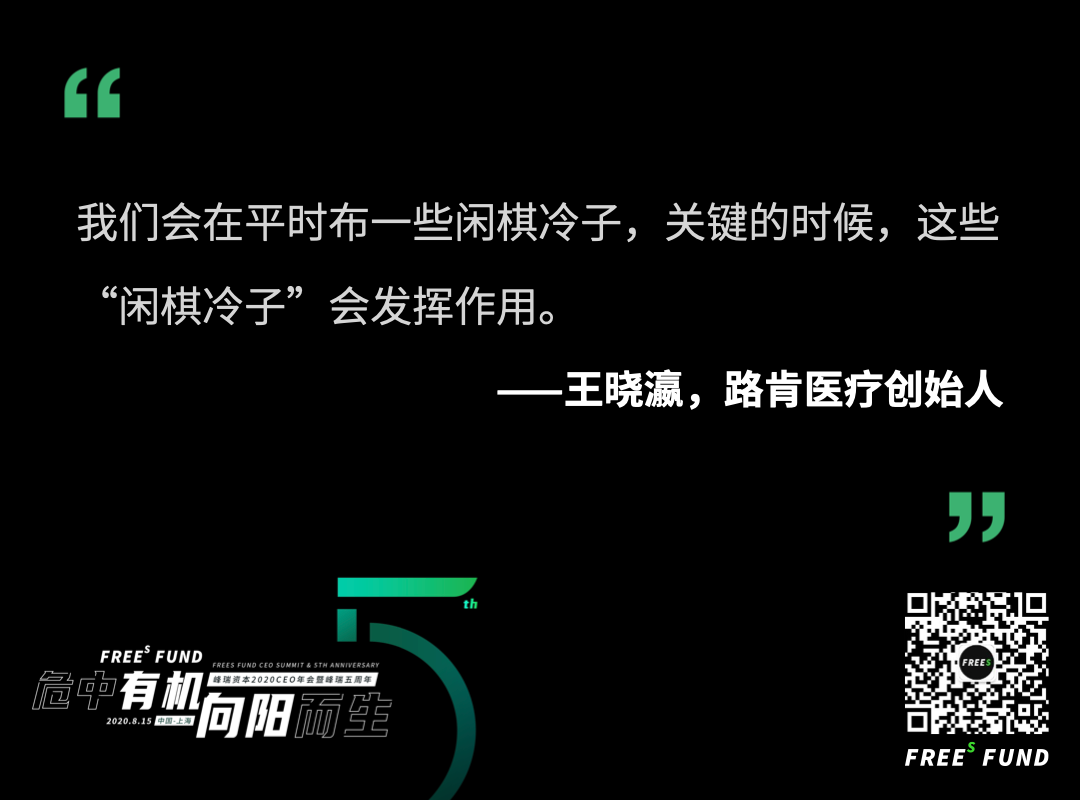
Third, the team is extremely important. This is a time to invest in working through challenges with your team, to show them how to overcome difficulties together. We rarely had opportunities to practice responding to emergencies before — this COVID-19 outbreak has been a valuable chance.
These are some of the measures our company took during the pandemic. Through these strategies, we found opportunity within crisis and turned danger into safety.
/ 02 / "Closing major deals without daily international business trips"
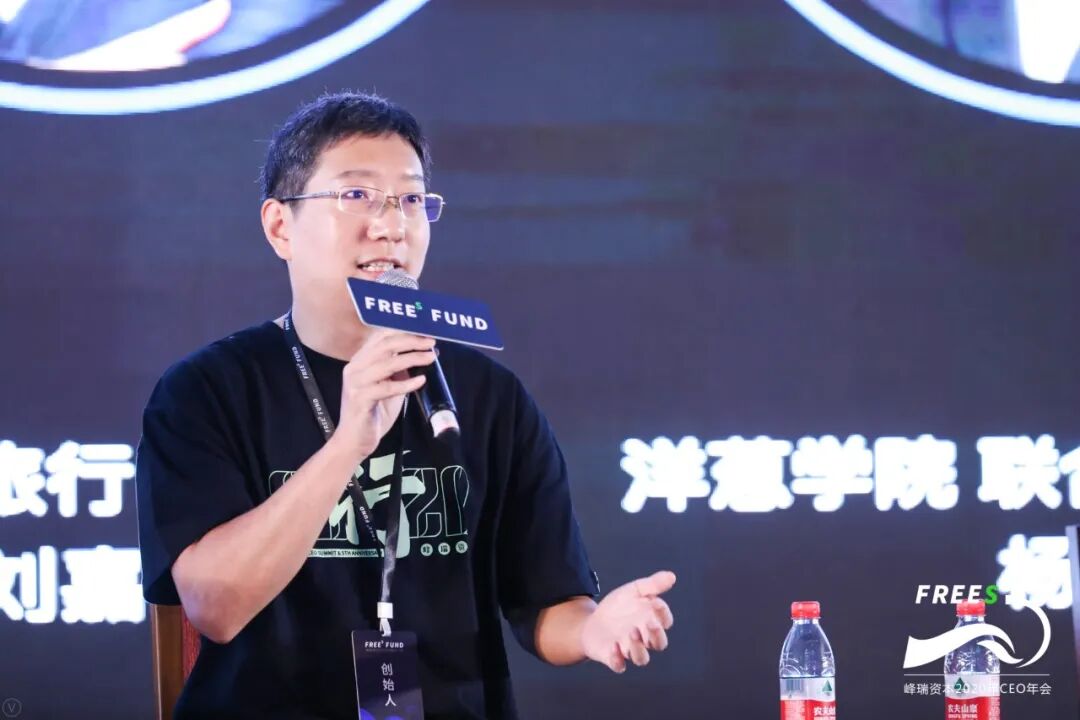
▲ Ning Xia, founder of Wuhan Zhihua Technology
Xiaoying Wang: Our panelists today come from various industries — manufacturing, education, logistics. Under the pandemic, different industries must have encountered different situations.
Please share what difficulties your companies faced during this period and how you overcame them.
Ning Xia: I'm Ning Xia, CEO of Wuhan Zhihua Technology. We are an AI-powered chemistry R&D company that helps pharmaceutical research enterprises improve their scientific efficiency, particularly in preclinical new drug development.
Our company is based in Wuhan, right in the eye of the storm. At the time, most of our 20-plus employees were in Wuhan and other parts of Hubei.
When the outbreak first began, especially the moment Wuhan was locked down on January 23, no one knew what would happen next. Our colleagues in Wuhan especially couldn't leave their homes, daily necessities were difficult to purchase, and the sound of ambulances was constant. Besides ambulances, the streets were virtually empty of people and vehicles. The entire city had hit the pause button, and everyone was extremely anxious, feeling like "the sky was falling."
We had originally planned to resume work on February 14, but as the official return-to-work date kept being pushed back, we faced a dilemma. As a startup, we couldn't simply stop and wait — no one knew when the pandemic would pass. After discussion, everyone agreed to begin remote work on February 17. All employees connected their home computers to company computers, held daily remote morning meetings and evening check-ins to confirm everyone's safety and report work progress.
My colleagues' dedication deeply moved me. A few colleagues didn't have computers at home and borrowed them. During this period, we encountered several difficulties — once our internet went out, once our power went out, preventing colleagues from connecting to company computers. The more dramatic incident was the power outage: every computer needed to be restarted, but no one could go in to do it. After much deliberation, we contacted the head of our community police station. After earnest pleading, the police agreed to escort my family member in a police car to our office, where with the building management's help, they entered and turned on each colleague's computer one by one. Everyone quickly returned to work.
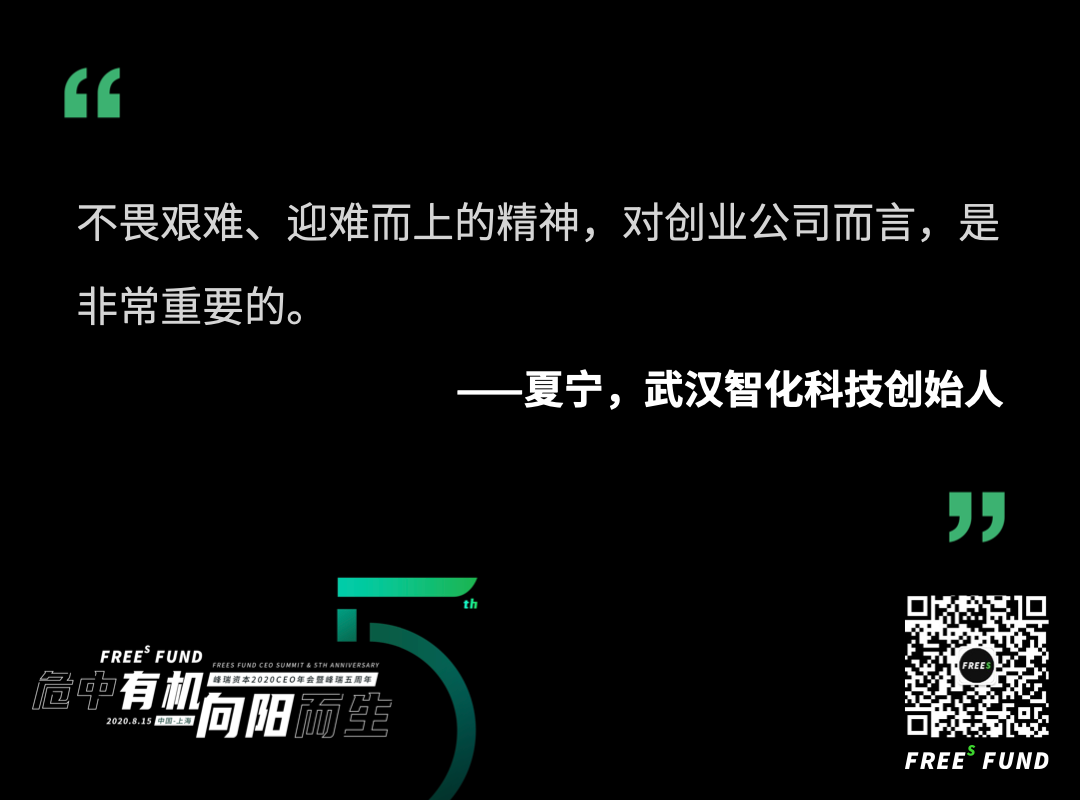
This spirit of not fearing hardship and pressing forward is extremely important for a startup.
Everyone assumed working from home would be inefficient, but the opposite was true — our team was highly productive remotely, often working until 11 or 12 at night. We gradually grew accustomed to remote communication with domestic and international clients.
In the end, we smoothly navigated this phase without being too severely impacted by the pandemic. Meanwhile, we initiated cooperation with several major foreign enterprises and have already reached the contract stage.
I think it was all quite remarkable. Later, when new waves of the pandemic emerged abroad, our clients began working from home too, and we continued remote collaboration with our partners. Everyone grew accustomed to it. I see this as an opportunity, a new way of working — we can close major deals at lower cost, without daily international business trips.
/ 03 / "After hitting pause, better understanding the value of the travel industry's existence"
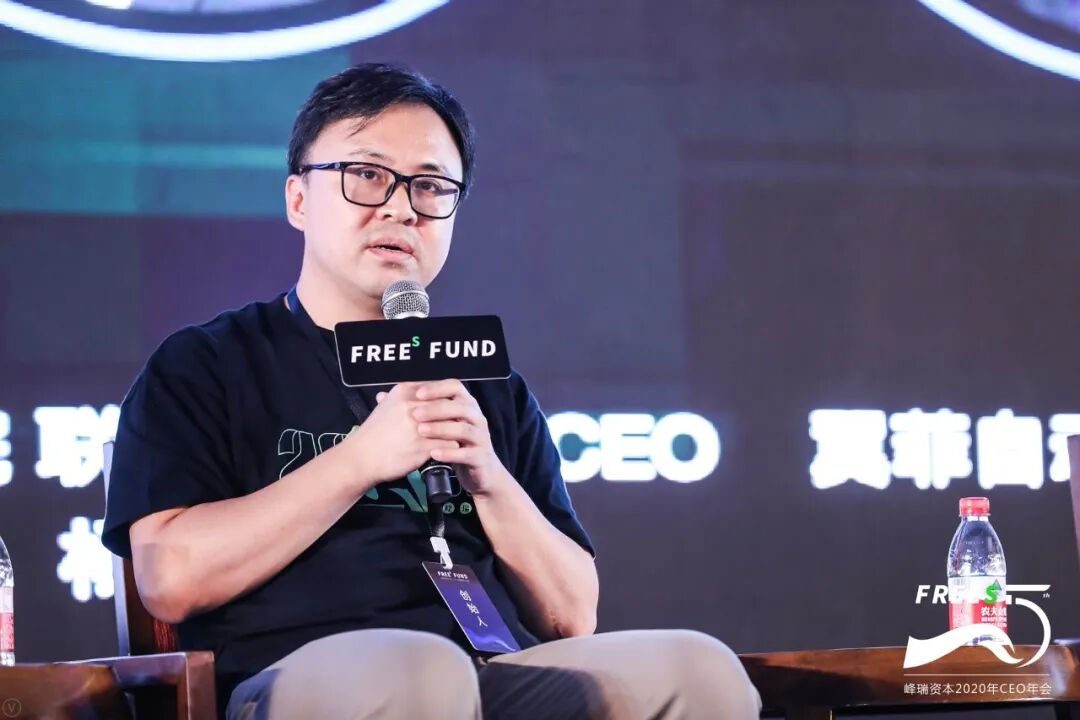
▲ Jiacheng Liu, founder of Qingke Travel
Jiacheng Liu: Qingke Travel is a customized travel company. Our main service is on-demand customized vacation travel. Unlike traditional small boutique custom travel agencies, we more often serve mass tourism and vacation needs.
The pandemic's impact on the travel and vacation industry was enormous. In January and February this year, our overall cancellation rate exceeded one-third. The entire company was occupied with confirming all orders and completing service to our customers.
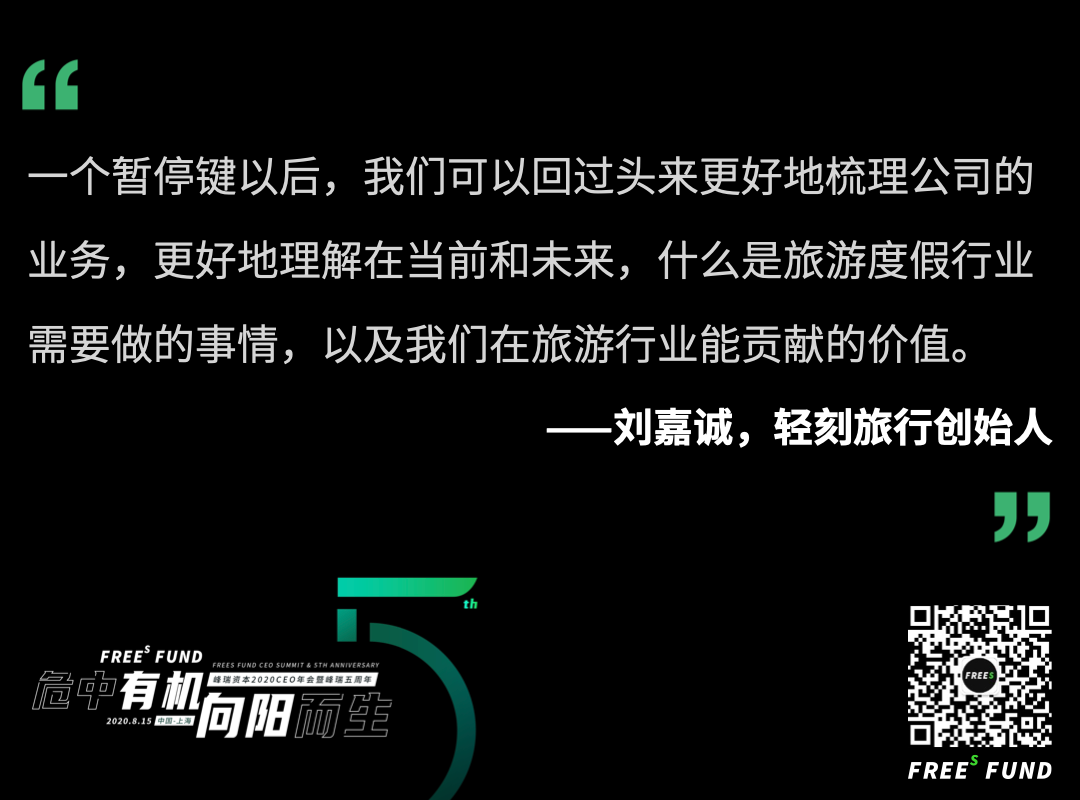
Looking back, our company experienced rapid growth in 2018 and 2019, expanding from a few people to over a hundred. After hitting the pause button, we could look back and better organize our business, better understand what the travel and vacation industry needs to do now and in the future, and what value we can contribute to the travel industry.
Over the course of three to four months, we went through many rounds of iteration, constantly adjusting our team. Restructuring the team was something we had to do to achieve better financial balance.
While adjusting the team, finding ways to align everyone's understanding proved immensely valuable. Compared to six months ago, we now have much clearer vision of our path forward.
The pandemic's impact on the travel and vacation industry hasn't fully dissipated. But you'll notice that COVID never interrupted user demand for the industry as a whole. The desire for travel and vacation remains — it's simply manifesting in various forms. Because of the pandemic, the industry's supply chain and entire value chain have been transformed at massive scale, giving rise to more new models.
Certain trends that had already begun emerging became even more pronounced, including the digitalization of all vacation-related demand, and the diversification and decentralization of on-the-ground services.
The pandemic merely accelerated the travel industry's development. We've managed to continuously "benefit" from this crisis, finding opportunities for sustained growth within it.
/ 04 / "The pandemic brought many unexpected challenges — we had to identify and solve them one by one"
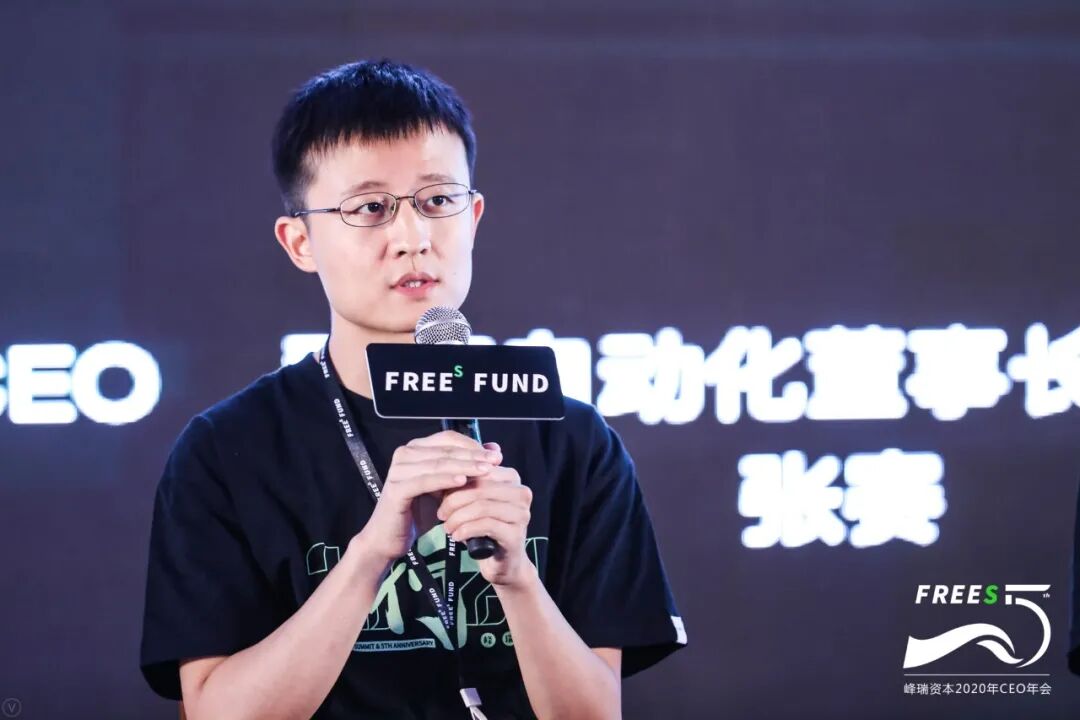
▲ Yang Lin Feng, co-founder of Onion Academy
Yang Lin Feng: I'm the co-founder and CEO of Onion Academy. We're a K-12 online education company. Unlike live-streaming classes, we focus on human-computer interactive courses that help primary and middle school students learn independently across subjects, and help schools deliver personalized, precision classroom instruction.
During the pandemic, the online education industry appeared to benefit from favorable tailwinds, but in reality it was incredibly "turbulent." While the market saw tremendous demand growth during COVID, a pandemic isn't normal circumstances — to some extent, it represented "false demand."
Many online education companies may have seen their traffic data surge dramatically, but by May and June it quickly reverted to previous levels. The pandemic disrupted the development rhythm of many companies.
From Onion's perspective, as a technology-driven internet education company, we don't employ many tutoring teachers — most of our investment goes into product R&D and human-computer interactive courses. Yet even we faced enormous challenges during the pandemic. It brought many unexpected difficulties that we had to address one by one.
After Wuhan was locked down on January 23, schools nationwide quickly suspended classes. We asked ourselves: What can Onion contribute to society? To what extent, and with what intensity, should we respond and help?
After discussion, we concluded that during the "suspend classes without suspending learning" period, what families and students fundamentally needed most wasn't extracurricular tutoring — it was school-synchronized curriculum aligned with their regular classes.
Onion Academy's core resource was precisely a complete system of school-synchronized courses. The problem was, beyond this core curriculum, we had nothing else. We could either open our system free to schools, or hold onto it and provide no substantive help to society.
We faced a dilemma. If we opened this system to society, it meant our revenue would drop to zero in March and April. We might transform from a company capable of helping society into one that needed rescue itself — that would be quite troublesome. In the end, we decided to make all school-synchronized courses free, but in tiers. First, we opened access to all schools and teachers nationwide. Second, we extended it to children of medical workers nationwide, and all primary and middle school students in Hubei Province.
Our strategy at the time was that at least until late April that year, anyone in these categories who applied would receive our complete system courses at no cost. On January 28, after Onion Academy announced the free opening of all courses, massive numbers of schools, teachers, and students nationwide applied — the scale of demand was enormous.
▲ Click the video to watch Onion Academy's relief efforts during the pandemic.
We also needed to explain to our existing paying users. After making courses free, some users who had already paid for Onion Academy courses didn't understand. We had to find ways to communicate with them.
We also needed to expand our cloud server resources. February 10 and 17 were dates many schools nationwide chose to start online classes. On those two days, basically most online education servers in China "crashed." We were no exception.
During that period, our DAU increased tenfold. The massive traffic put "explosive pressure" on our servers. Our technical team worked around the clock with cloud service provider engineers, frantically repairing servers, handling traffic peaks from online school openings, and urgently resolving various resource issues.
The challenges weren't over. Beyond communication and capacity expansion, we also had to handle permission verification.
After receiving many user applications, our team had to verify these institutions' information. Our company's customer service team was based in Wuhan and couldn't work — we had to mobilize colleagues from other functions to support. To ensure users could start using the platform as quickly as possible, we continuously simplified processes, shifting from the original "verify before activation" to default activation first. If some people took advantage, we'd accept that loss. Later, when we freed up personnel to audit, if they didn't qualify, we'd shut them off.
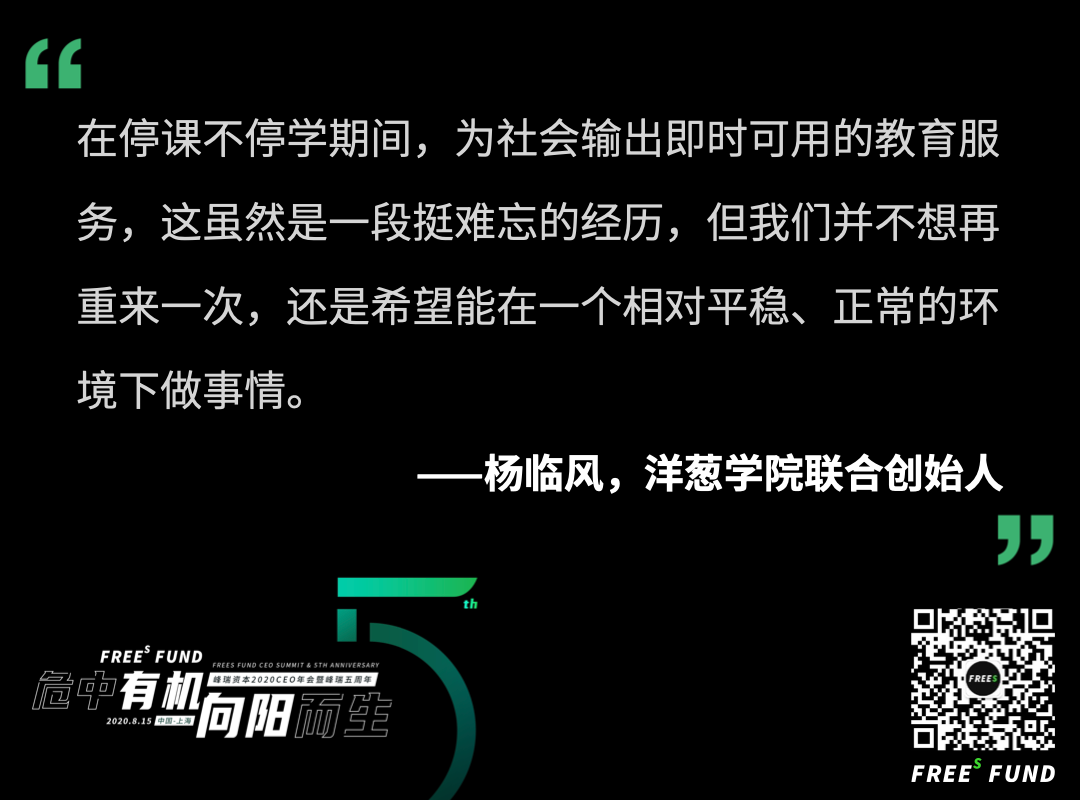
Providing immediately usable educational services to society during the "suspend classes without suspending learning" period — though quite an unforgettable experience — isn't something we'd want to repeat. We still hope to operate in a relatively stable, normal environment.
/ 05 / "Timing is a particularly critical factor"
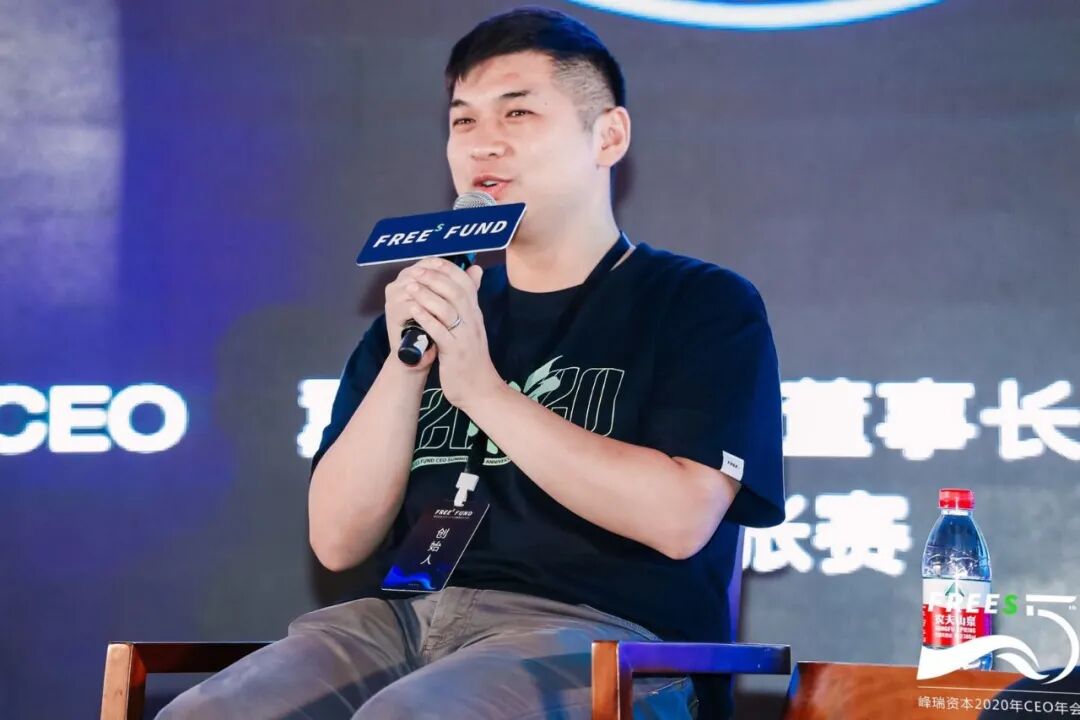
▲ Zhang Sai, founder of Yifei Automation
Zhang Sai: I'm Zhang Sai, founder of Yifei Automation. I'm glad to share with everyone again this year. FreeS Fund recently did a feature interview with me, sharing Yifei Automation's anti-pandemic journey. That article was particularly true-to-life — interested readers can take a look.
During the pandemic, many automation companies shifted production to mask-making machines. For automation companies, transitioning from robots to mask machines was "dimensional reduction" — technically speaking, not particularly difficult. The hardest part was dealing with challenges around timing, supply chain organization, personnel organization, and so on — we really had to overcome numerous difficulties.
I believe timing is a particularly critical factor.
▲ Click the video to watch how Yifei Automation seized opportunities during the pandemic.
Yifei Automation was among the earlier companies to shift to mask machine production, and we also exited early. On February 10, we resumed work and production, gradually taking over 100 sets of mask machine orders. Around February 20, we decisively stopped accepting new orders.
Around March 10, after delivering all orders, we rapidly returned to our main business. After all, our main business volume is quite substantial, with considerable demand.
So when the mask machine market later devolved into chaotic "mess," we were relatively less affected.
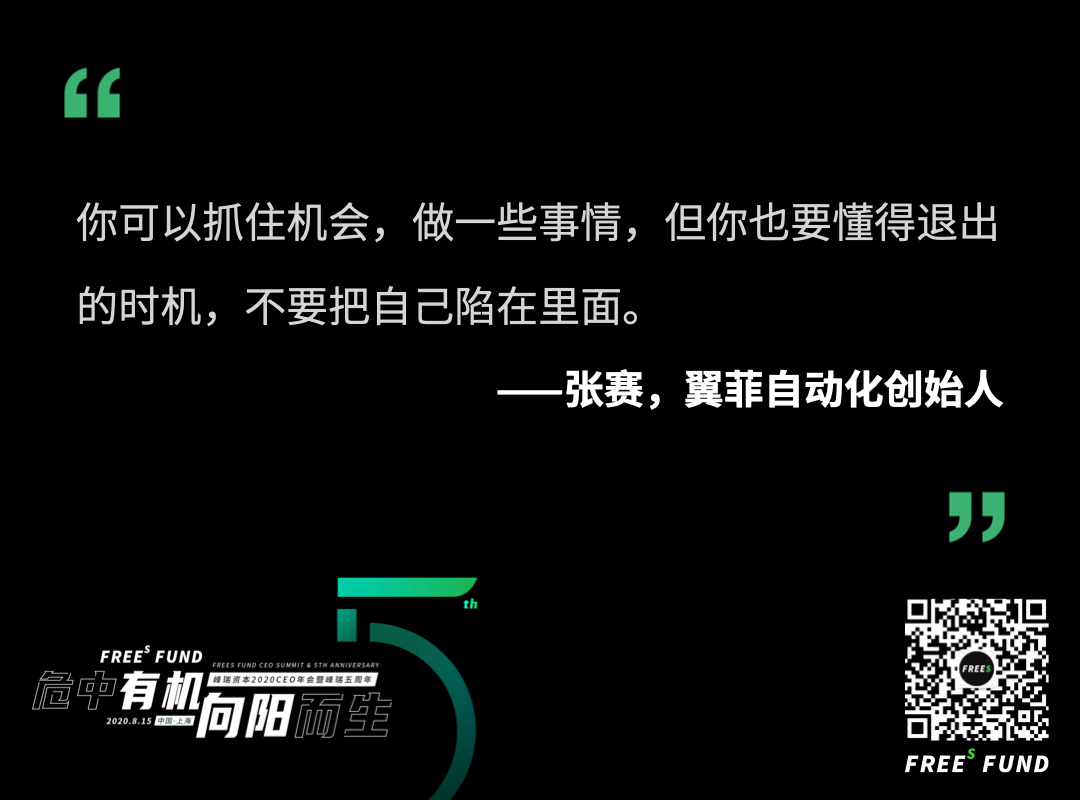
My summary is: you can seize opportunities and do something, but you also need to know when to exit — don't get trapped in it.
Looking back, during that mask machine production period, our pandemic prevention pressure was enormous.
On January 23, our company held its annual meeting. At that time, we had colleagues who had just returned from Wuhan within the past seven days. If even one COVID case had emerged, our entire company would have been quarantined.
After we started operations, many places strictly controlled work resumption. Because Yifei Automation was a government-designated company for mask machine production transition, the government gave us many green lights. So while the public couldn't gather, our company was "packed with people," working frantically. To deliver as quickly as possible, we recruited many outsourced personnel. Some out-of-town clients even came to our company to monitor delivery — the farthest client drove all the way from Heilongjiang.
So at the time, our own pandemic prevention pressure was immense. We were particularly fortunate that throughout the mask machine production process, not a single infection occurred.
Though the mask machine transition lasted only a month and a half, I feel like I experienced things I never had in my entire life.
When I left Beijing in February, I told my wife we'd meet "when the moon rises above the willow tree, after the pandemic ends." I never expected I wouldn't return to Beijing until mid-May. During that period, when video-calling my wife, I'd have this particularly strong urge to cry — it felt like we were separated by worlds.
"Like a different lifetime" — I believe many people who lived through COVID have similar feelings. Having experienced such a massive wave's impact, we still need to hold onto certain things, let go of others, and pursue better development.
/ 06 / "Though the logistics industry was heavily impacted by the pandemic, we found our positioning"
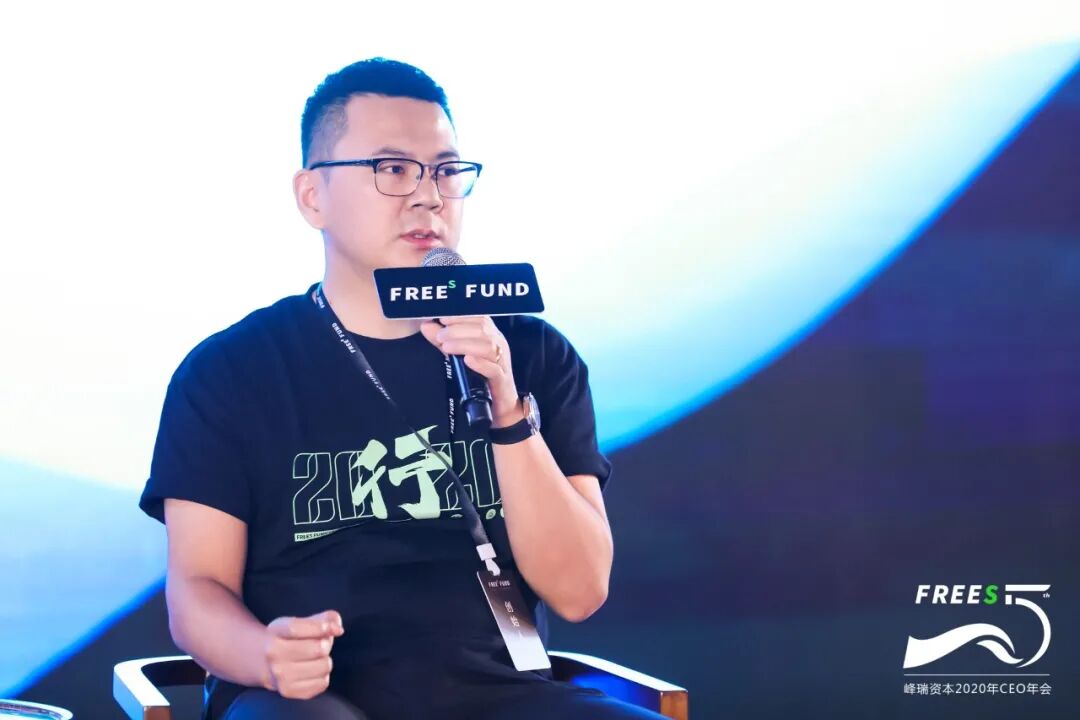
▲ Miao Shaoguang, founder of Shenzhen Hande Technology
Miao Shaoguang: I'm Miao Shaoguang, founder of Shenzhen Hande Technology. We mainly work in logistics technology, installing sensors on vehicles to obtain real-time weight-dimension information from trucks. In China's progression from logistics mechanization to logistics intelligence, we're among the few companies that can automatically collect truck and cargo weight information online.
Our customers are primarily large B-end enterprises. Especially in the past couple of years, we've focused on working with coal, cement, steel, mineral raw material producers, and similar companies.
During the pandemic, we mainly encountered three important issues: team, supply chain, and business.
First, the team. When the pandemic first broke out, the impact on business was actually secondary. What mattered most was that COVID-19 made our team very anxious and afraid. Whether it was the founding team or the execution team, everyone was pretty panicked. And part of our business required colleagues to go on-site to install equipment — literally crawling under trucks to mount weight-measuring devices. That work basically ground to a complete halt.
During that period, I talked quite a bit with Feng. As far as I know, the FreeS Fund team was among the earliest investment firms to return to work. Feng gave me tremendous encouragement. I also felt that blind fear and passive waiting wouldn't solve anything. This was the time to fill the team with confidence.
▲ Click the video to watch how Shenzhen Hande Technology supported the epidemic-stricken areas.
Around February 20th, our entire team resumed work. By late February, I was already traveling again — my first stop was Suzhou. I passed on this attitude of facing things proactively to the founding team, who then relayed it to all our colleagues. Later, all our implementation staff were back at customer sites, working at cement plants and coal enterprises that had resumed operations.
By mid-March, we hit supply chain problems.
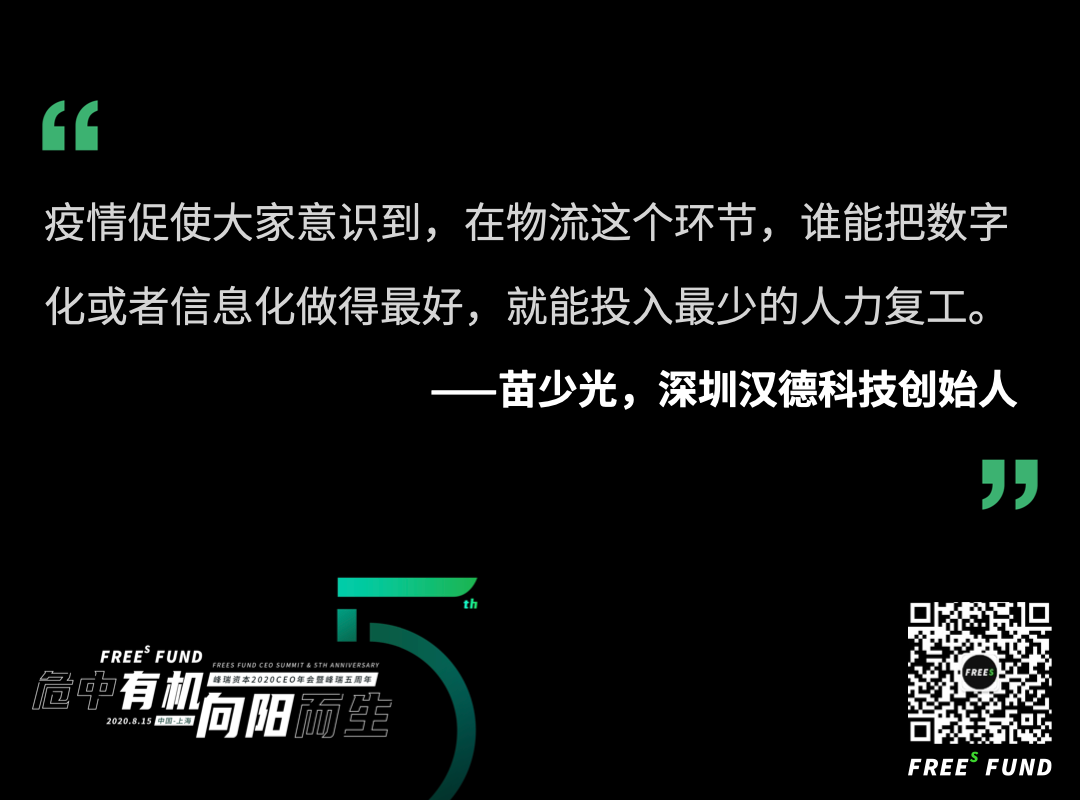
During that period, we encountered an explosion of orders. The pandemic made everyone realize that in logistics, whoever could do digitalization or informatization best could resume work with the least human resources. So Shenzhen Hande Technology gained attention in the logistics industry, with many logistics companies wanting to adopt our sensor devices.
But a core data acquisition chip in our product used the same chip as forehead thermometers, and supply across the entire market was extremely tight at the time. If we couldn't get more chips, we would have had to stop shipping.
Later, one of FreeS Fund's LPs helped connect us with a chip manufacturer that supplied us with 5,000 chips, allowing us to get through that period.
As for business challenges, those were something we constantly faced throughout the pandemic.
From when our team was founded in 2012, we'd been at it for over eight years, so the fluctuations during the pandemic weren't that difficult for us.
It was more that because of the pandemic, I "couldn't see" customers anymore. We do typical large enterprise B2B business — China's biggest state-owned cement enterprises are all our clients. If you can't meet face-to-face with a client, they're not likely to sign with you. So all our orders got pushed back.
There were upsides to everyone communicating online. During the pandemic, when we sent messages, we'd get customer responses immediately. We felt the warmth of "instant replies."
Overall, although the logistics industry was heavily impacted by the pandemic, we found our own positioning within it and eventually turned things around.
/ 07 / "Your employees have been grinding at home for so long — how do you keep morale up?"
Wang Xiaoying: It sounds like every company has "a tale of tears." Every manager, every CEO, is not only the backbone of their family but also of their employees. It really isn't easy.
Let's explore one final question. The pandemic was an extremely sudden event — at the start, nobody was prepared. As CEO Zhang Sai just mentioned, the agreement with his wife. I also feel like I said goodbye to my employees for Spring Festival, and somehow when we came back, the first quarter was almost gone.
With absolutely no preparation, some of us had to choose contraction, some had to decide whether to make products free, some had to choose whether to immediately pivot to things somewhat unrelated to our core business. All of these required rapid decision-making.
When you were making these quick decisions, is there anything you'd like to share?
Yang Lin Feng: After the pandemic broke out, we were honestly pretty "stunned."
When Wuhan was locked down on January 23rd, we immediately faced a question: what should we do?
For society as a whole, epidemic prevention was definitely the priority, but education was also something that had to be addressed. We knew we had to do something, but needed to think through:
First, when exactly should we do this? Not too early, because in the early period everyone was focused on epidemic prevention. But not too late either, because the outbreak happened right before the start of school, and schools, teachers, and parents were all anxious.
Second, how specifically to do this well? If we were going to do this, it involved massive changes to user permissions, including free versus paid modifications — this was a whole system that required enormous decision-making and development work.
So after Wuhan's lockdown, Yuan洋葱学院 went back to work online on January 24th. We held many decision-making meetings and in about a day settled on the plan to make our systematic courses freely available. The development team immediately got to work. On January 28th, we officially announced the plan. From January 24th to February 17th — that month from the Spring Festival holiday to when schools nationwide started online classes — was our busiest period.
Third, employees had already been grinding at home for a long time — how could we guarantee morale?
For two weeks straight, I sent emails to all colleagues at 3 a.m. every day. In each email I'd quote various macro conditions and how they related to what we were doing, talk about our business, talk about how hard what everyone was doing was, to keep the team continuously moving.
The decision itself, or "going with your gut," is relatively easy. But after making the decision, how to execute it is the problem. With team members unable to see each other, still getting everyone to believe the company made the right decision — that's the hard part.
/ 08 / "When external conditions keep changing, the decisions you make must be continuous"
Liu Jiacheng: I also agree with Yang Lin Feng's view, especially that when external conditions keep changing, the decisions you make must be "continuous." While maintaining the company's central philosophy and core goals unchanged, how do you make decisions continuously, win recognition from the decision-making team and core team, implement things quickly, adjust based on results — this is a process of constant iteration, not a one-size-fits-all approach.
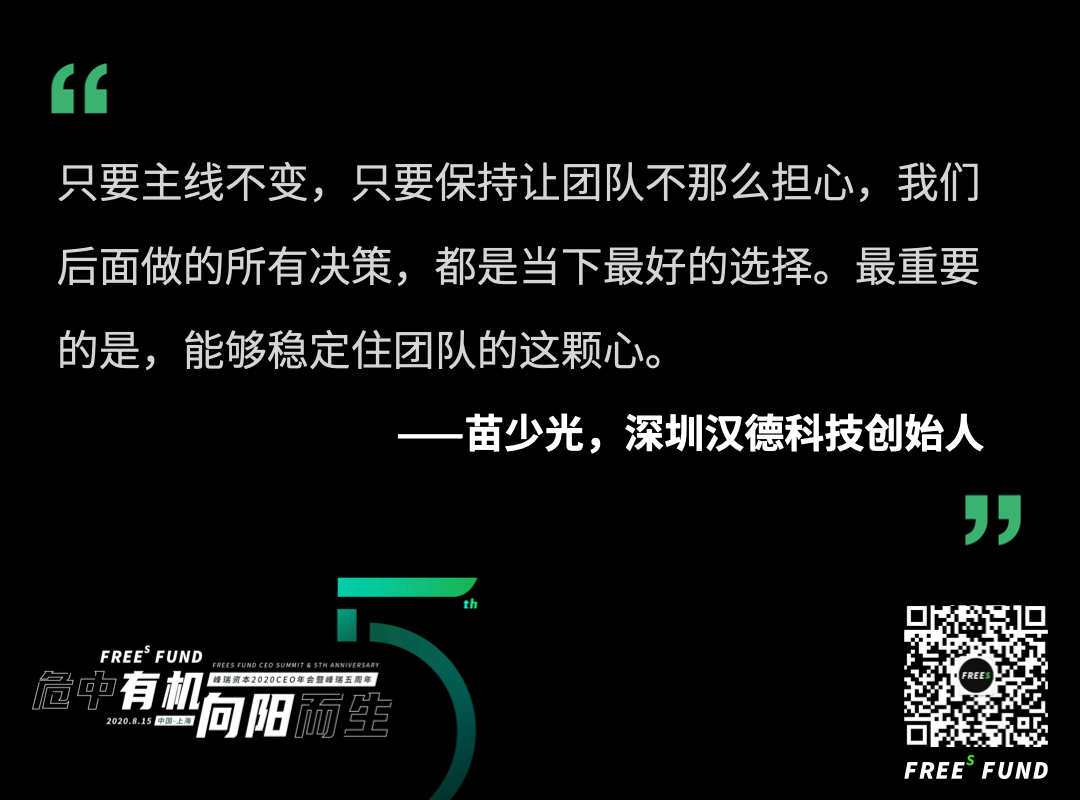
Miao Shaoguang: As I said earlier, the biggest challenge was the team. All company decisions are actually made around the team — decisions must be executable once made. As long as the main thread doesn't change, as long as we keep the team from worrying too much, all the decisions we made afterward were right, were the best choices for that moment. Most importantly, we could stabilize the team's mindset.
Zhang Sai: After we resumed work, one relatively quick decision we made was to bring all our decision-makers and core execution personnel together to work in the same place. This had quite a big impact on us.
As a manufacturing enterprise, the entire production follows a chain. So we designed the "Mask Machine War Room" — core personnel from supply chain, production, design, sales, and project management all worked in this room.
The "Mask Machine War Room" had all kinds of computers, plus instant noodles, ham sausages, sleeping bags, inflatable mattresses and other items that administrative colleagues had prepared.
Our group basically slept at the company every day, everyone fighting together. Decisions were made and executed immediately, getting through this period together.
Wang Xiaoying: I completely understand — the masks you made were also exported by us, so I know this rhythm.
Xia Ning: When the pandemic broke out, hospitals were running short of supplies, especially hospitals in Hubei province outside of Wuhan, which received far fewer resources than Wuhan itself.
FreeS Fund also reached out to me at that time, and we quickly provided information on large numbers of hospital needs, particularly for hospitals outside Wuhan. FreeS Fund actively donated millions of yuan in medical supplies — I'd like to take this opportunity to thank FreeS Fund for its support of people in Hubei.
Wang Xiaoying: The FreeS family we're part of has a strong sense of social responsibility. Today many founders ended up talking about team. When many variables are happening externally, you first need to stabilize internally — this is something I feel very deeply.
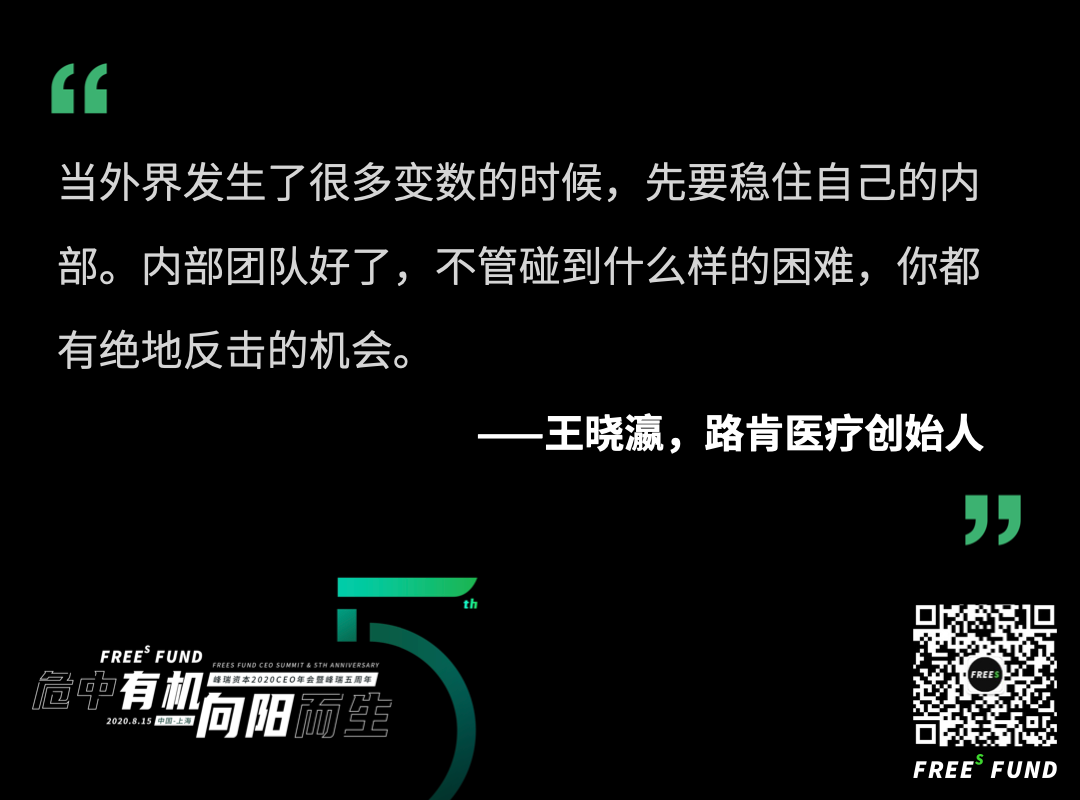
When your internal team is solid, no matter what difficulties you encounter, you have the opportunity to fight back from the brink.
Interactive Benefit: Welcome to share your understanding and reflections on entrepreneurship in the comments section. By 21:00 on October 3rd, the 6 readers with the most thoughtful comments will each receive a custom FreeS Fund notebook.
Hiring Investors | Beijing, Shanghai, Shenzhen, Three Directions
We are seeking investors in biotech, deep tech, and consumer/TMT in Beijing, Shanghai, and Shenzhen. Welcome those with industry backgrounds and an interest in investing to join us, and welcome recommendations of outstanding candidates. Please send resumes to hr@freesvc.com
*Please indicate in the email subject: Application for "[Specific Position Name]" - "[Work Location]" Click the link for recruitment details: "Moving Forward in Year Six, FreeS Fund Hiring Investors | Doing What's Right, Not What's Easy"

▲ Galaxies in Your Eyes: A Visual Guide to the Colored Contact Lens Boom | FreeS Research
▲ The Financial Transformation Begins: How to Build the Next "Hundsun"?
▲ Veteran Entrepreneurs: Navigating the Darkest Hours While Spotting the Windows God Opens | FreeS Fund 2020 CEO Annual Meeting
▲ The First Wave of Post-90s Entrepreneurs — Where Are They Now? | FreeS Fund 2020 CEO Annual Meeting
▲ Three Squirrels' Zhang Liaoyuan: A Once-in-20-Years Brand Opportunity — How to Win in Three Steps? | FreeS Fund 2020 CEO Annual Meeting
▲ Moving Forward in Year Six, FreeS Fund Hiring Investors | Doing What's Right, Not What's Easy
FreeS Fintech Venture Summit 2020: What New Opportunities Will Emerge in Fintech?