How to Invest in Industrial Robots? | Frees Fund — Learning to Invest Through Investing

China will give rise to world-class industrial automation enterprises.

"Learning to Invest Through Investing" is a column we launched in 2020. Its purpose is to reconstruct the trend hypotheses and validation processes behind our investment decisions in representative projects, and to pay tribute to founders by sharing what we've learned about their industries from watching them lead their companies forward and overcome challenges.
In the fifth installment of this series, we want to share what we see as the structural opportunities in industrial robotics, drawn from the growth and exploration of EFORT Intelligent Equipment (翼菲自动化).
As the world's largest manufacturing nation, China has benefited from innovation-friendly policies and the development of AI technology. We believe China will eventually produce world-class industrial automation companies. What patterns will govern their emergence, and how will they develop? We'll analyze this in a dedicated article soon.
Today, let's first look at how EFORT, a typical representative of industrial robotics, has grown, and what we've learned from it over the past four-plus years. EFORT specializes in R&D and manufacturing of industrial robots, holds nearly 100 national patents, and is currently one of China's largest parallel robot companies — also one of the few Chinese robot brands to make it into a Fortune 500 company's supplier list.
Through EFORT's growth, we'll explore:
- How adaptable are industrial robots to China's industrial environment?
- Why has Chinese manufacturing reached the stage where robots are needed for upgrading, and how does that upgrade happen?
- After developing standardized products around the needs of benchmark clients, how do you achieve scalable expansion within the same industry? How do you solve the profitability problem?
Before diving in, here are the three most valuable conclusions we drew from investing in EFORT:
- The most important thing for industrial robots to achieve commercial deployment is finding benchmark applications with benchmark clients in major industries.
- China's manufacturing sector has undergone significant changes and evolution in both processes and demand. To capture opportunities in this transformation, the key is identifying needs and developing localized industrial automation solutions.
- For Chinese industrial robotics companies to achieve substantial growth, it's difficult to rely solely on selling standardized technical components. At the same time, pure integration and hardware lead to low-margin, poor-cash-flow business models. They must combine algorithms, including AI, software, and controls, to create more advanced hardware-software integrated automation solutions that improve margins.
Contact Us
We remain bullish on innovation in industrial automation and intelligence. Founders and industry experts are welcome to reach out:
Yongcheng Yang, Partner at FreeS Fund: yangyongcheng@freesvc.com
Yuan Yao, Vice President at FreeS Fund: yaoyuan@freesvc.com

01 Where Is the Biggest Opportunity for Industrial Robotics Startups in China?
The International Federation of Robotics (IFR) recently released its World Robotics 2019 report, projecting that global industrial robot installations will maintain annual growth of around 12% from 2020 to 2022. The top five markets account for 74% of global installations: China, Japan, the United States, South Korea, and Germany. China remains the world's largest industrial robot market, representing 36% of global installations.
But in this largest global market, has Chinese manufacturing truly reached the stage of comprehensive robot-driven upgrading?
We explored the history and present of Chinese manufacturing in our article "Understanding Changes and Opportunities in China's Industrial Chain in One Chart". Applying that analysis to industrial robotics yields interesting insights. Over four decades, China has built the largest, longest, and relatively most complete industrial chain in the world — and in many segments of this chain, China has become the global leader.
While "getting bigger," our industrial structure has also been "creating value": beyond taking on increasingly sophisticated precision manufacturing, Chinese manufacturing has layered more technology, software, and other services onto high-value-added processing.
The defining characteristic of Chinese industrialization is scale. This is the soil and the opportunity for industrial automation — validate technology and standardize it in a massive market, and you have a chance to take it global.
In recent years, Chinese tech companies have done much to increase technological value-add, embedding key technologies like nails into the industrial chain. A crucial premise for why innovation and entrepreneurship around "core technology localization" is promising is that we sit closer to mature industrial chains, enabling rapid response and faster iteration than competitors.
Parallel robots were adopted later in China than in the US and European markets. But no market in the world matches China's manufacturing scale. Every production line operates at massive scale with dense labor concentration — meaning whenever a Chinese tech company identifies new demand in an industry and develops a standardized solution, it has the opportunity to amortize R&D costs through industry-wide replication, achieving better margins and cost advantages.
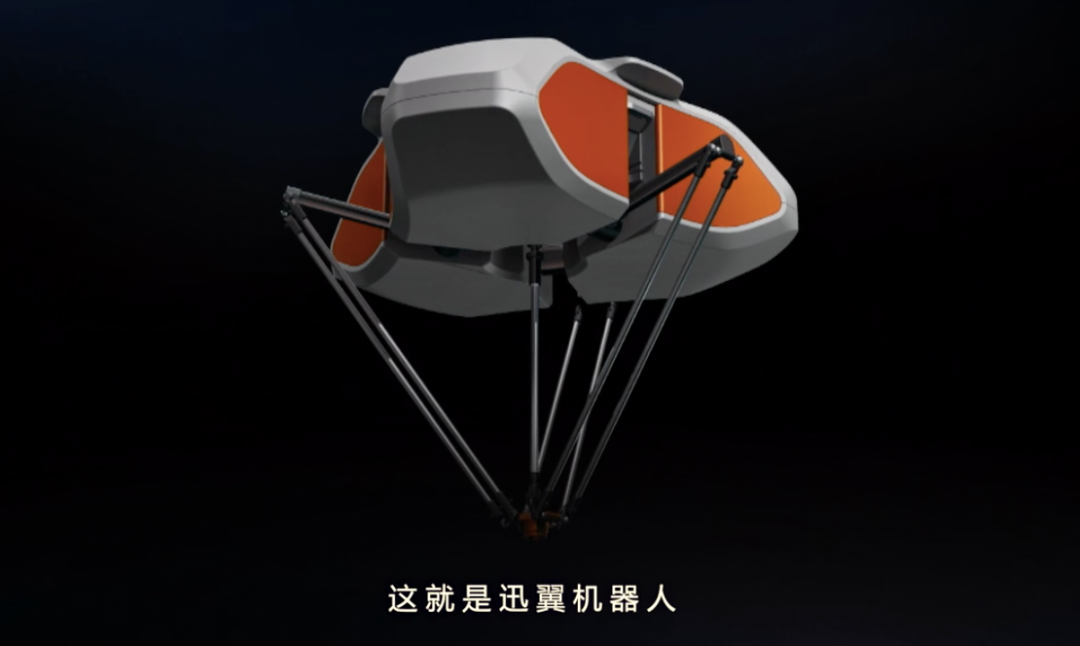
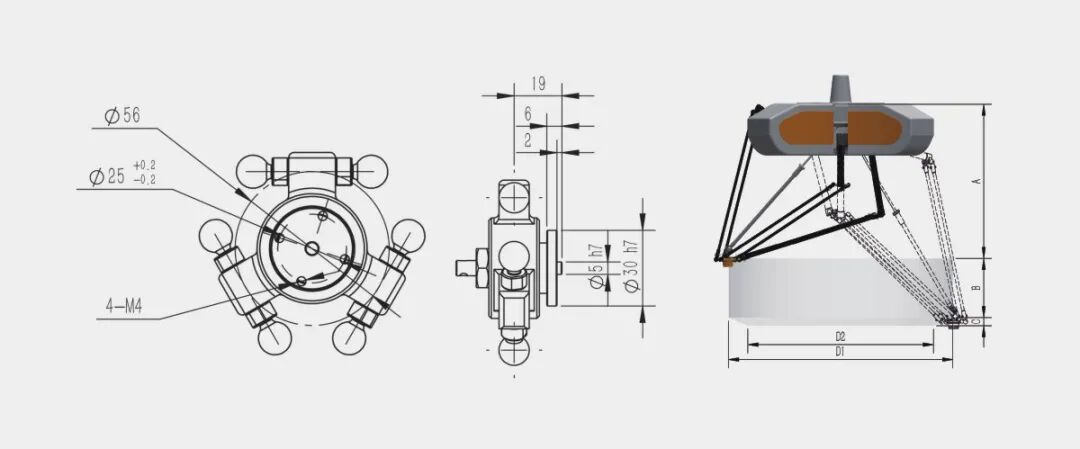
▲ EFORT's BAT-1600A heavy-load Xunyi robot.
EFORT's eight-year journey from founding to today offers another answer to this question.
When intellectual property around robot bodies has become openly available, the question becomes whether you can offer enterprise clients cost-effectiveness that exceeds human labor.
A company that succeeds in winning clients needs two qualities: first, solid technical capability; second, the ability to educate the market through service and customization — identifying scenarios that haven't used robots, and convincing clients that these scenarios should and can use industrial robots to replace human workers.
These two qualities represent both the greatest challenge and the greatest opportunity for industrial robotics startups in China.
At its founding in 2012, EFORT gradually settled on parallel robots as its direction. At that time, few parallel robots were visible in the Chinese market. Yili Group and China Mengniu Dairy were pioneers in introducing parallel robots to production lines, using them for milk carton packing.
Industrial robots divide into serial robots and parallel robots. Compared to the serial robot field, parallel robots represented an emerging area with less intense competition. Serial robots are highly standardized, and the market was long dominated by the "Big Four" — FANUC (Japan), Yaskawa (Japan), ABB (Switzerland), and KUKA (Germany). Parallel robots required more customization than serial robots, and at that time had few productized or commercialized applications. This left breathing room for startups, but also dramatically raised the technical and service barriers to market entry.
In 2016, when FreeS Fund encountered EFORT, the company was shifting its business model toward non-standard, customized solutions centered on parallel robot bodies. This aligned with our assessment of industrial robotics market trends — we saw it as a promising direction in China. In that year and the next, as EFORT broke through application scenarios with major clients like Dong-E-E-Jiao, Unilever, and Lens Technology, we further validated this judgment.
However, even then we could see that building parallel robots was arduous work within a fundamentally correct long-term direction. Scenarios needed education, demand needed precise targeting, payment cycles were typically long. EFORT had been exploring multiple industries and nearly died after a failed cooperation project with a small appliance manufacturer worth several million yuan.
Fortunately, EFORT founder Sai Zhang demonstrated extraordinary commitment and determination, with genuine passion for industrial automation. His background also validated his capability for this undertaking. A native of Jinan and born in the 1980s, Zhang graduated from Tsinghua University and earned his master's degree at Columbia University in the US. He then served as senior engineer and production supervisor at Hong Kong-listed Chen Hsong Group. His experience in design, R&D, and production management at a listed company, along with the professional network he built, provided strong support for EFORT's development.
Reader Giveaway: Share your thoughts on industrial robots in the comments. By 21:00 on August 11, we'll select the 6 most thoughtful commenters to receive custom FreeS Fund notebooks.
02 Capturing New Demand and Developing Solutions
EFORT's products first left the lab in July 2013, when a machine was sent for trial use at Shandong Qidu Pharmaceutical.
Although that machine was ultimately not sold to Qidu, the year of debugging accumulated substantial experience. EFORT's third-generation product emerged from this process, and at a subsequent industrial robotics exhibition, this generation successfully sold to another pharmaceutical company.
At this point, EFORT wasn't merely selling a robot — the pharmaceutical company was actually buying a parallel robot-based solution. EFORT had customized an entire workstation for IV bag sorting based on the client's specific needs.
This project, generating several hundred thousand yuan in revenue, consumed over half a year of the company's core team from deployment to final acceptance.
After completing that project, in 2014 EFORT created a hit product: the wet wipe lid attaching machine.
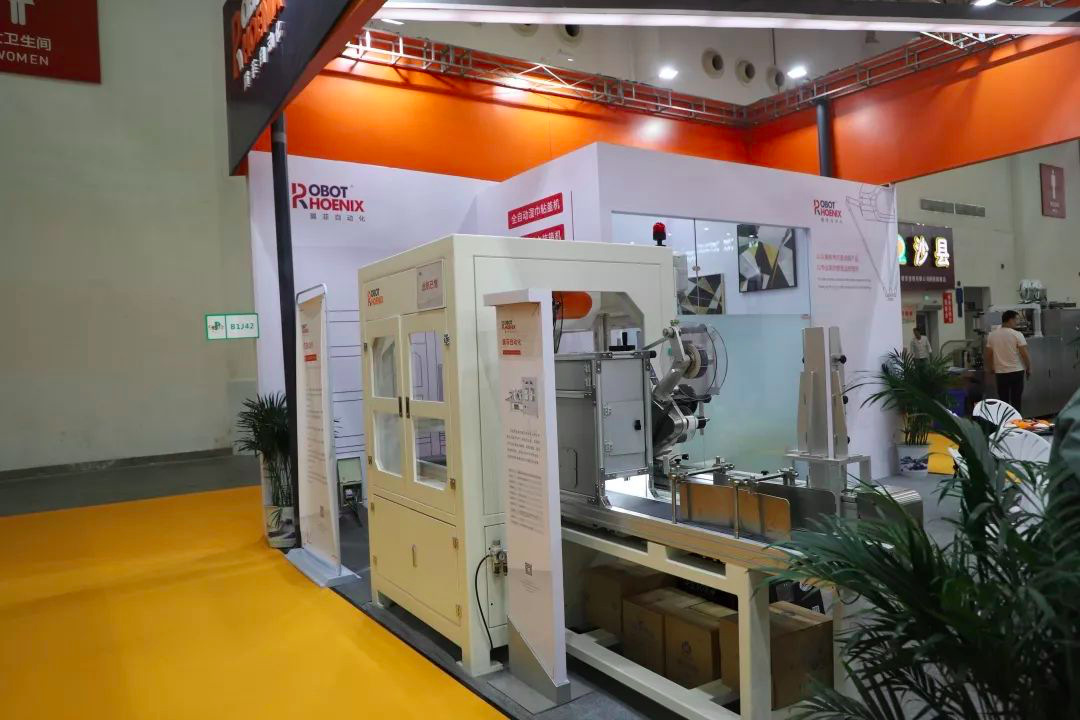
▲ EFORT's fully automatic wet wipe lid attaching system at the 26th International Scientific and Technical Expo on Household Paper in 2019.
Few people had noticed that for a long time, the plastic lids on wet wipe packaging were glued to the bags entirely by hand. This unremarkable lid required five workers to complete the gluing process. EFORT turned this process into a highly standardized product, using a parallel robot to integrate the conveyor belt, lid dispenser, labeling machine, and glue sprayer into a unified system — the wet wipe lid attaching machine.
The wet wipe production industry is typically characterized by fragmentation — mostly small and medium enterprises producing highly similar products. The lid attaching machine essentially invented new demand, quickly replicable across the entire industry.
Given the geographic concentration of these wet wipe producers, mainly in Jiangsu, Zhejiang, and Fujian, large numbers of manufacturers soon adopted EFORT's lid attaching machine as a production line standard. An entire industry was transformed.
Though each machine sold for only several hundred thousand yuan, the volume added up. Today the wet wipe lid attaching machine contributes over ten million yuan in annual sales for EFORT.
IV bag sorting and wet wipe lid attaching were both applications where industrial robot use went from zero to one. Before EFORT, no one had told manufacturers in these scenarios that machines could replace humans with better cost-effectiveness.
Starting from the wet wipe lid attaching machine, EFORT found a direction for market creation: seek opportunities in industries with concentrated repetitive labor. Because automation carries certain barriers and therefore hadn't been applied before, parallel robot customization solutions could precisely address this threshold problem.
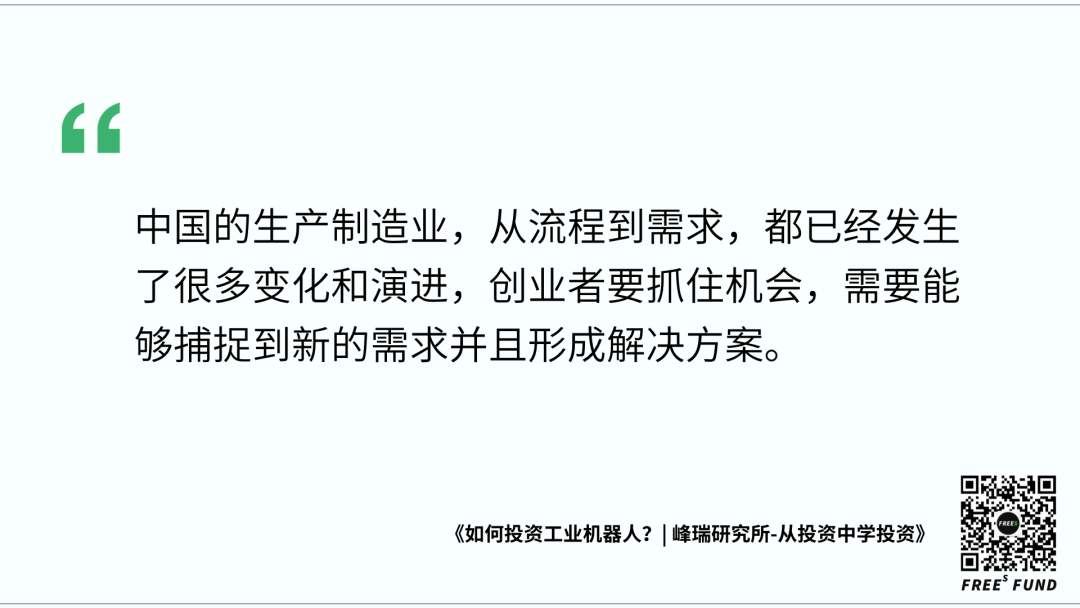
In the period that followed, EFORT took some detours, but its successful moves repeatedly validated this conclusion: Chinese manufacturing has undergone substantial changes and evolution in processes and demand. To capture opportunities, entrepreneurs need to identify new needs and develop solutions.
03 Leveling Up: Finding Benchmark Clients in Benchmark Industries
Consumer smartphones — the most demanding industry with the highest standards — represent the world's most concentrated source of precision manufacturing clients. Breaking through with large enterprises like Dong-E-E-Jiao and Unilever was milestone-worthy for EFORT, but winning Lens Technology as a glass panel producer represented true breakthrough into a benchmark client in a benchmark industry.
At that time, the entire company mobilized all resources to connect with Lens Technology — investors, government relations, suppliers, personal friends, everything was deployed. Ultimately, by enabling Lens Technology to fully understand EFORT's capabilities, the company secured a trial contract opportunity.
A trial opportunity wasn't the final formal contract. First came technical validation: the client specified requirements, EFORT proposed a technical solution, and Lens Technology's technical department had to approve before sample machines could enter the factory. Only after debugging and testing the sample machines would the formal contract truly be secured.
Lens Technology was the most demanding client in EFORT's history for product quality, performance, and precision.
Transforming a glass substrate into a phone panel requires at least 30 processes; loading material for one particular process was the step for which Lens Technology issued EFORT its first trial order. The client required the equipment to achieve 2,500 panels per hour within a 2x2 square meter footprint, without creating scratches or contamination on the glass.
During the process of delivering the first sample machine to the factory, EFORT nearly lost the order.
Glass was an industry EFORT had never entered. Lens Technology had previously used only European, American, and Taiwanese machines. But EFORT's sample machine was merely equipment meeting performance requirements — without specialized packaging or dust removal equipment. For glass panel manufacturing, where cleanliness requirements are extremely stringent, EFORT's first sample machine was essentially不合格.
This again proved our earlier conclusion: the technical and service barriers to market entry are extremely high. Entrepreneurs seeking to break through industry barriers need more than hardware meeting performance specs — they need to provide integrated hardware-software solutions tailored to specific industries.
Zhang summarized that this industry-specific customization must be learned. Entrepreneurs must understand all the rules of an industry. This includes scratch-free glass conveying, scratch-free glass gripping, FFU (fan filter units), cleanroom treatment, even packaging methods — all have specific requirements.
EFORT organized emergency engineer meetings overnight, produced new designs in two days, completed procurement and manufacturing within three days, and delivered two new machines to Lens Technology's Changsha factory before the client's deadline.
Lens Technology's first order to EFORT was 16 units, worth several million yuan. But six months after completing that first order, Lens Technology placed another order — this time much larger, worth tens of millions.
From EFORT's arduous journey into Lens Technology, we can see that industrial robotics entrepreneurship in China requires founders who:
Have comprehensive technical backgrounds, enabling them to provide novel hardware-software integrated solutions;
Also possess strong sales and service orientation, because breaking through with core clients requires coordinating with and serving everyone from chief engineers to factory directors to line workers — with the flexibility to adapt up and down;
And maintain certain market sensitivity to create and identify new needs and solutions suited to Chinese manufacturing.
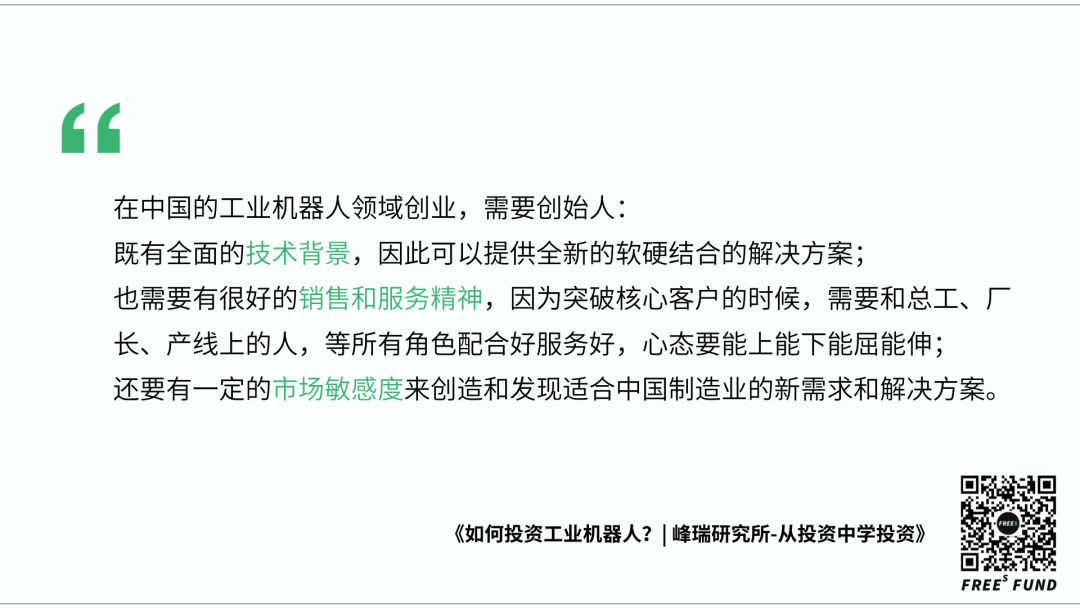
EFORT's custom equipment for Lens Technology, beyond the parallel robot itself, included glass conveyor belts, glass gripping devices, FFU dust removal equipment, machine frames, and other components forming what's called a functional machine platform — highly customized, with even the equipment packaging specially designed.
That order was a critical step for EFORT's breakthrough with benchmark clients, and also a stress test from Lens Technology. Multiple competitors were vying for this order; beyond performance, price and delivery time were also factors. Ultimately EFORT won the bulk of it, while remaining competitors split a smaller portion.
A tangential insight: in many industries, startups have opportunities because, before certain symbiotic relationships form, clients generally don't want to be locked in with a single supplier.

Today, after years of cooperation, EFORT's partnership with Lens Technology runs very deep. Lens Technology's factories house thousands of EFORT machines, and Lens Technology accounts for a substantial portion of EFORT's annual sales.
It was only after breaking through with benchmark applications in benchmark industries that EFORT truly established itself in industrial robotics. Benchmark industries and benchmark applications are both indispensable: before winning Lens Technology, EFORT had once nearly faced资金链断裂 due to a failed project with a small appliance manufacturer worth several million yuan, and had been trying non-standard customized solutions across multiple industries.
The Gift of Time: Sufficient Accumulation Is Also a Competitive Advantage
Where lie the barriers to industrial robotics entrepreneurship?
They can be summarized in two points:
First: core technology accumulation — in robotics technology and core equipment;
Second: sufficient accumulation in industry processes and know-how. The more you do, the more you accumulate, the simpler the work becomes.
After becoming a core supplier to Lens Technology, EFORT found it easier to win other clients in the same industry. Everyone knew this company supplied Lens Technology, and Lens Technology's client was Apple — this double endorsement brought trust and recognition from industry peers.
EFORT's sales strategy follows a major client plus replicable approach. Taking Lens Technology as an example: initially EFORT provided products centered on parallel robots and related automation systems. Now, as service deepens, EFORT can also provide SCARA robots, small six-axis robots, modules, and other automation components.
While meeting the comprehensive needs of major clients, these outputs can also be replicated across the entire industry — just as the wet wipe lid attaching machine spread from one wet wipe factory to clusters of producers in Jiangsu, Zhejiang, and Fujian. From Lens Technology to BOE, Tianma, Foxconn, and other glass panel manufacturers, EFORT's glass panel equipment can meet automation production needs.
As we discussed earlier, for Chinese industrial robots to achieve commercial deployment, two things are needed: finding benchmark industries, and capturing new needs to develop solutions. The conclusion derived from these two points is that Chinese industrial robotics companies seeking substantial growth can hardly rely solely on selling standardized technical components. They must provide solutions or integrated solutions rather than simple products to meet client needs.
Unilever was another milestone client for EFORT.
Unilever has seven factories in Greater China across three major business segments. One segment comprises daily consumer products familiar to ordinary consumers — shampoos, body washes, and similar products. The bottles for these products are produced in specialized factories; before entering the filling process, workers had to manually arrange and stand the bottles upright on the production line for the filling machines.
EFORT designed an automation solution for Unilever, using parallel robots combined with 3D vision recognition and other technologies to automatically arrange unordered empty bottles for the filling process.
This equipment addressed a need that essentially didn't exist before at Unilever. After validation, it has been applied across several of Unilever's Greater China factories. Barring COVID-related shutdowns, it would already be deployed at Unilever's overseas factories.
This too is a case of adapting industrial automation solutions to industry-specific conditions. Simply procuring standard components for basic integration essentially won't work. Moreover, relying solely on integration and hardware makes it difficult for entrepreneurs to form competitive business models in terms of cost-effectiveness and cash flow. This demands that entrepreneurs must combine algorithms to create more advanced hardware-software integrated automation solutions, thereby improving margins, while using benchmark clients to develop standardized,定型 products for subsequent scalable industry-wide expansion.
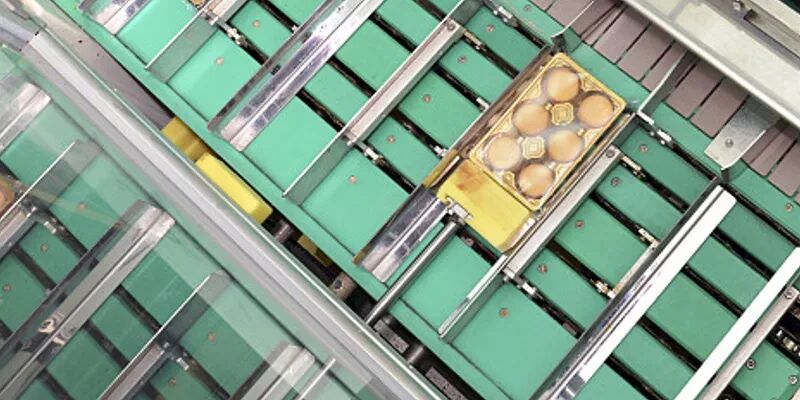
▲ EFORT's automatic cartoning system.
To summarize: only by conquering the toughest industries and most demanding clients does a company truly capture industrial robotics deployment opportunities. Lens Technology counts as one, Unilever as another — both were previously companies using only foreign products. If EFORT can maintain advantages in cost-effectiveness and service going forward, the opportunities will be even greater.
The Resilience and Opportunities of Chinese Manufacturing
Earlier this year, COVID-19 disrupted nearly every industry's rhythm, and EFORT was significantly affected.
Masks were in severe shortage at that time, and with many mask production steps relying on manual labor, capacity was severely insufficient. EFORT also pivoted to producing mask machines.
▲ EFORT's mask machine system.
In some sense, automation companies shifting to mask machines represented a kind of "dimension reduction." At that time, many companies producing mask machines alongside EFORT were automation and robotics firms like Topstar, Yinghe Technology, and Han's Laser.
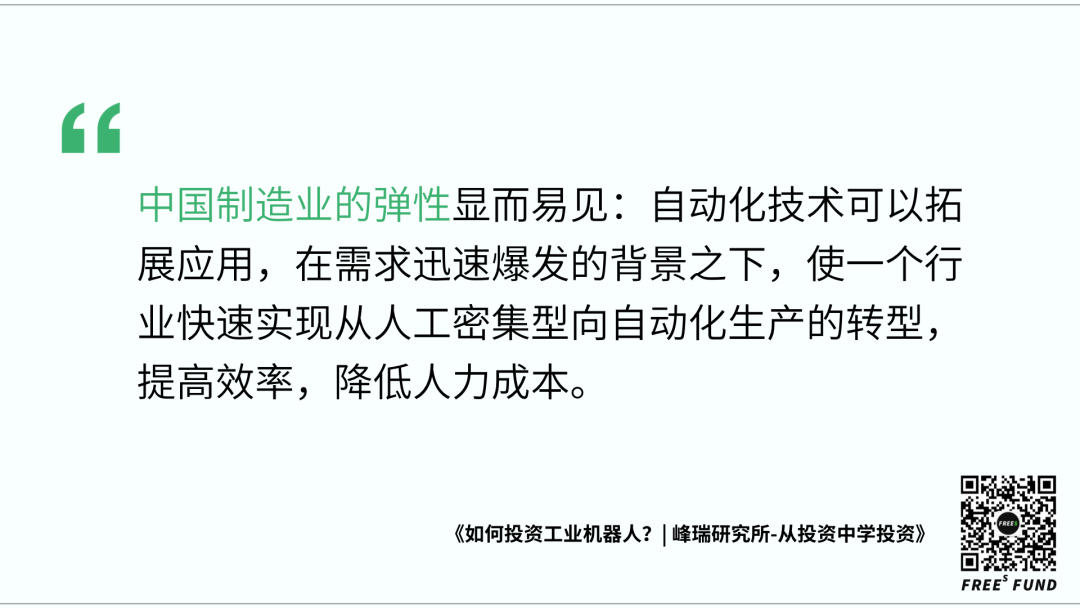
The resilience of Chinese manufacturing is evident: automation technology can expand its applications, enabling rapid transformation from labor-intensive to automated production in industries with suddenly exploding demand, improving efficiency and reducing labor costs.
Presently and going forward, EFORT's top priority is continuously broadening application scenarios. In Zhang's view, the pandemic also benefits industrial automation — more enterprises recognize automation as an inevitable trend. He has identified three characteristics of companies with strong automation willingness:
First, they operate in industries with large market scale;
Second, the companies themselves have large and relatively stable order volumes;
Third, they employ many workers, with production lines that don't require frequent changeovers.
Even with willingness, a prerequisite for industrial automation is feasibility. Consider an industry with strong automation willingness that's currently difficult to automate — footwear and apparel. The main reason is that apparel's flexibility is too high; current automation technology struggles with fabric gripping, positioning, and sewing. Once technology breaks through, the market potential is substantial. The industry itself has large scale, is labor-intensive, and involves substantial repetitive labor. Consider that a single factory typically has thousands of workers doing sewing.
As long as something is feasible and achievable, and within acceptable cost ranges, if machines can complete tasks more efficiently than humans while saving costs, industrial automation will become the choice of most business owners.
Moreover, once companies taste the benefits of automation, it's hard to return to manual labor. A simple reason: workshops designed for automated equipment may not leave adequate space for worker movement. So when technology upgrades, factories will likely choose to update automation equipment rather than dismantle it and bring workers back in.
Looking back, mask machines were a short-term event, but EFORT also identified potential clients for parallel robot business cooperation within it.
As EFORT's upstream enterprises resumed work and production, EFORT's core business recovered, and they quickly returned to their main business line, leaving behind that market of "chaotic phenomena but extremely tempting cash flow." (Click here to read about the twists and turns EFORT experienced in making mask machines.)
This year, during and after the pandemic, EFORT has achieved continued substantial year-over-year growth in revenue and profit through its own innovation and efforts. EFORT's new industrial park is under construction; they plan to continuously expand scale and aim for an IPO within two to three years. We look forward to seeing them in the capital markets.
Summary
1. As the world's largest manufacturing nation, China has benefited from innovation-friendly policies and AI technology development, with its massive existing manufacturing workforce. We believe China will ultimately produce world-class industrial automation companies — this is ideal soil for industrial automation.
2. Chinese manufacturing has undergone substantial changes and evolution in processes and demand. To capture opportunities, entrepreneurs need to identify new needs and develop solutions.
3. The entrepreneurial experience of EFORT, a typical representative of the industrial robotics field, demonstrates that entrepreneurs must combine algorithms to achieve more advanced hardware-software integrated automation solutions, thereby improving margins, while using benchmark clients to develop standardized,定型 products for subsequent scalable industry-wide expansion.
4. Industrial robotics entrepreneurship in China requires founders who: possess comprehensive technical backgrounds enabling novel hardware-software integrated solutions; also have strong sales and service orientation, because breaking through with core clients requires coordinating with and serving everyone from chief engineers to factory directors to line workers — with flexibility to adapt up and down; and maintain market sensitivity to create and identify new needs and solutions suited to Chinese manufacturing.
Reader Giveaway: Share your thoughts on industrial robots in the comments. By 21:00 on August 11, we'll select the 6 most thoughtful commenters to receive custom FreeS Fund notebooks.
Contact Us
We remain bullish on innovation in industrial automation and intelligence. Founders and industry experts are welcome to reach out:
Yongcheng Yang, Partner at FreeS Fund
Yuan Yao, Vice President at FreeS Fund
You can also add FreeS Fund's WeChat account (ID: freesfund) to connect with us.

What Did Minister Miao Wei Actually Say About Chinese Manufacturing? | FreeS Research
Li Feng Column 14: Why Should We Thank Chinese Manufacturing?
Double 11 Mid-Game: What Did Chicecream, Saturnbird, Botanee, and Huasheng Haoche Do Right?