How to Break Through Innovation with the Power of Interdisciplinary Collaboration? | FreeS Fund Biomedical and Pharmaceutical Investment Summit Transcript

What should you do if you discover a mismatch between technology and market?
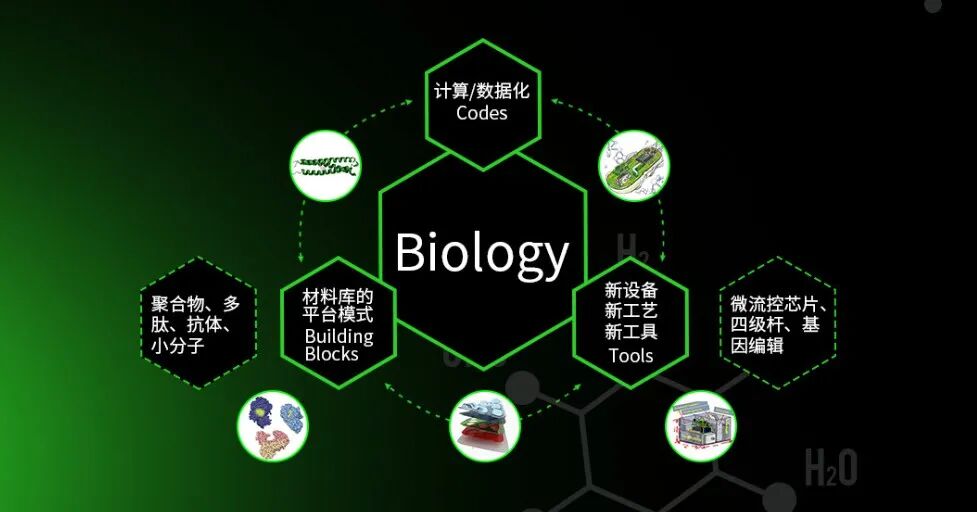
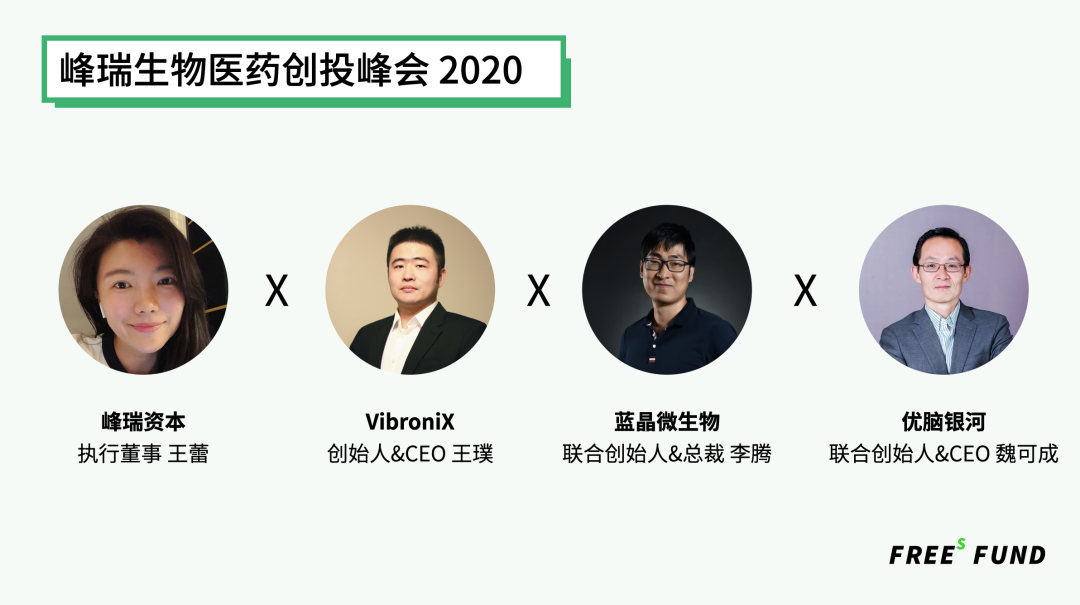
On November 8, FreeS Fund held the third livestream of its Biomedical Venture Capital Summit, titled "New Devices, New Tools: The Cutting Edge of Biotechnology Moving Forward with Hardware." Lei Wang, Executive Director at FreeS Fund, hosted a substantive and engaging online discussion with three outstanding founders from FreeS Fund's portfolio:
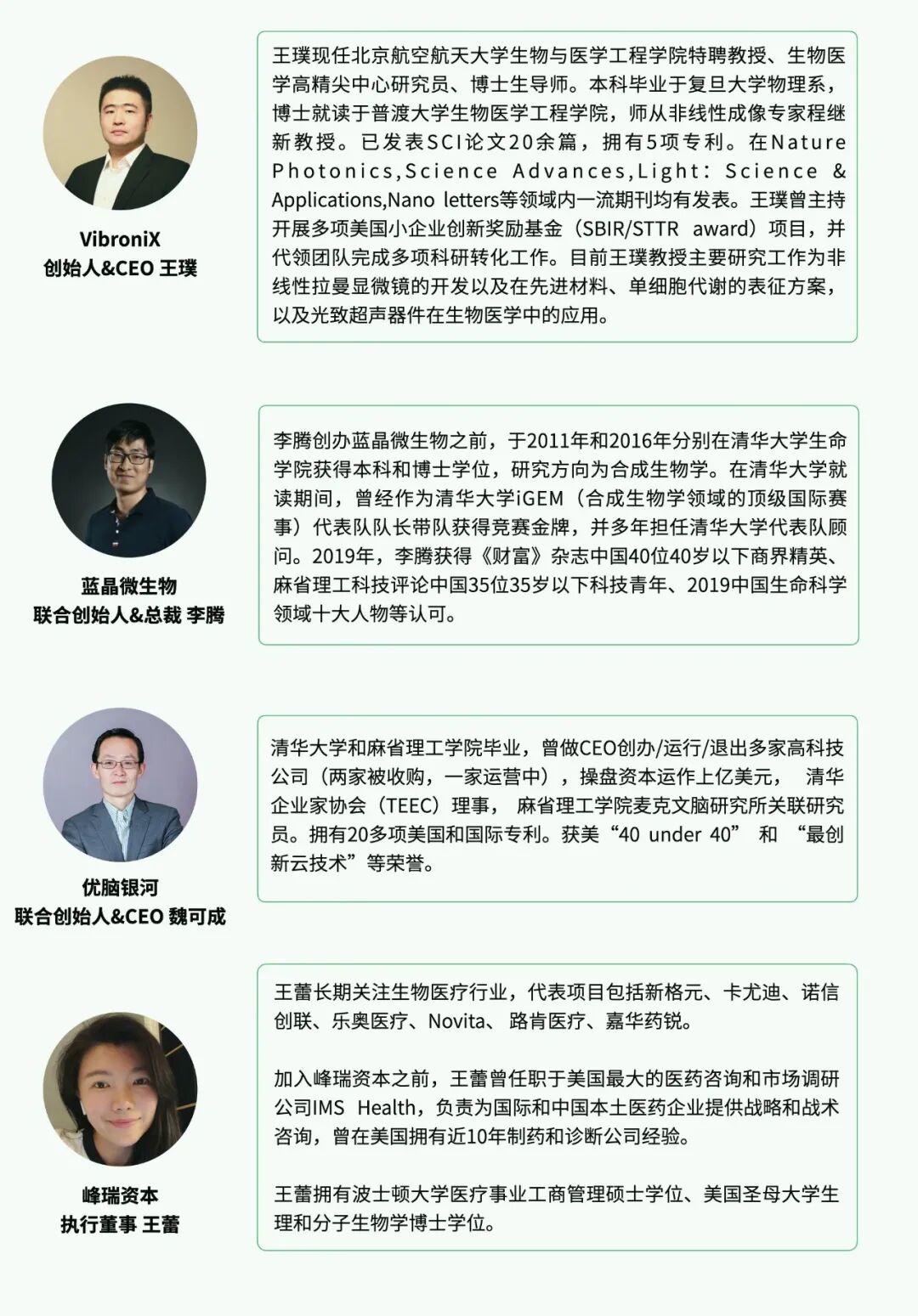
- Pu Wang, Founder and CEO of VibroniX, Distinguished Professor and PhD Advisor at the School of Biological Science and Medical Engineering, Beihang University
- Teng Li, Co-founder and President of Bluepha, PhD in Life Sciences from Tsinghua University
- Kecheng Wei, Co-founder and CEO of Neuracle, Master of Engineering from MIT, serial entrepreneur
They explored the following topics:
- What are the applications of interdisciplinary approaches in biotechnology?
- How do you choose a specific direction for interdisciplinary work?
- What should you do if you discover a mismatch between technology and market demand?
- Which technological breakthroughs from other fields are driving — or will drive — major advances in biotechnology?
- Which interdisciplinary areas are overheated, and which deserve more attention and investment?
- How do you recruit interdisciplinary talent, and what factors matter most in hiring?
We've compiled excerpts from the conversation below, hoping they offer some useful insights.

/ 01 /
Applications of Interdisciplinary Approaches in Biotechnology
Lei Wang: I'm Lei Wang from FreeS Fund's healthcare investment team. The reason for today's discussion is that technological leaps rarely come from a single field advancing in isolation — breakthroughs often emerge from the explosive potential of interdisciplinary collaboration. I once heard a CEO put it this way: interdisciplinary approaches let us see entirely new data or visual dimensions that were previously invisible or even unimaginable, giving rise to new frameworks for measurement. Recently, the National Natural Science Foundation of China established its ninth division — the Division of Interdisciplinary Sciences — the first new division since the Medical Sciences Division was spun out in 2009. This signals national-level prioritization of interdisciplinary development, which aligns closely with what we've been observing and thinking about in venture capital.
Today we've invited three founders from our portfolio. Though they operate in different sectors, they share a common origin: their projects all began as interdisciplinary endeavors, and none of their core founders came from a biomedical background. Most trained in physics, optics, or computer and electronic engineering, and their progress depends heavily on advances in hardware and hardware-related technologies.
That said, while we're optimistic about interdisciplinary entrepreneurship, we recognize that achieving true disruption through this path remains a high bar. It requires a long market education cycle and faces significant talent scarcity. So we'll also ask the three founders to share how they've tackled these challenges. To start, I'd like each of you to introduce your company, which fields your core technology bridges, and how it connects to hardware.
Kecheng Wei: Neuracle is a brain technology company with the mission of conquering brain disorders — one of the world's toughest problems. Brain disorders include dozens of conditions we're all familiar with: childhood autism, depression, Alzheimer's, and many others. Although there are already a billion patients globally, humanity remains largely helpless. There hasn't been meaningful progress in decades, fundamentally because our understanding of the brain is still in its infancy — we don't understand the mechanisms behind these disorders. So to even talk about conquering them, we need genuine scientific breakthroughs. We built Neuracle on more than a decade of brain science research from Harvard Medical School, taking an interdisciplinary approach that integrates signal processing, computing, electromagnetic waves, and software-hardware integration to offer a pipeline of products spanning from understanding disease mechanisms to detection, diagnosis, and treatment. Our core is scientific breakthrough; our method is interdisciplinary technology; our target is brain disorders.
Teng Li: Bluepha is a synthetic biology company. Synthetic biology is a classic interdisciplinary field — the intersection of biology and engineering. It's quite new, emerging around 2000. It arose from deepening understanding at the genetic level, leading people to wonder whether we could modify organisms' DNA at scale to change their functions — adding new capabilities or removing unnecessary ones.
The most iconic example is insulin. Early insulin was extracted from pig pancreases, making it extremely expensive. By the late 1970s, with the development of genetic engineering, someone had the idea to insert the human insulin gene into the E. coli genome and use bacteria to produce it — which is why insulin became widely accessible. Early genetic manipulation was mostly done in microorganisms. Then in 2013, a breakthrough in gene editing technology enabled applications in higher organisms, and synthetic biology began advancing rapidly. This year's Nobel Prize in Chemistry was awarded for this technology.
Bluepha specializes in engineering microorganisms through synthetic biology. Why microorganisms? Two reasons: first, we understand them relatively well; second, they have enormous application potential. That potential mainly lies in biomanufacturing — the industrial-scale synthesis of biological macromolecules and small molecules. Beyond the insulin example, this includes most antibiotics, amino acids, and many bioactive compounds. You can essentially manufacture any organic compound this way, whether for pharmaceuticals, food, or active ingredients in skincare. Our first product is a natural polymer material called PHA, which can be used for medical implants or as a fully biodegradable plastic alternative.
Pu Wang: VibroniX is a typical hardware-software integration company. We focus on developing several technology platforms, including photoacoustic imaging navigation and Raman scattering microscopy. The latter applies an optical microscopy method based on Raman scattering to drug susceptibility testing for tumors and microorganisms, enabling precision medicine for cancer and infectious diseases.
/ 02 /
How to Choose a Specific Direction for Interdisciplinary Work
Lei Wang: I'd like to ask about the early stages of your ventures. Why did your teams choose biomedical applications as the entry point for interdisciplinary work? And how did you decide on the specific direction within biomedicine?
Kecheng Wei: As I mentioned, Neuracle is a brain technology company, but we're not limited to biomedicine. At our core, we use computer software and hardware approaches to help solve brain disorders, and we may eventually apply related technologies to broader fields.
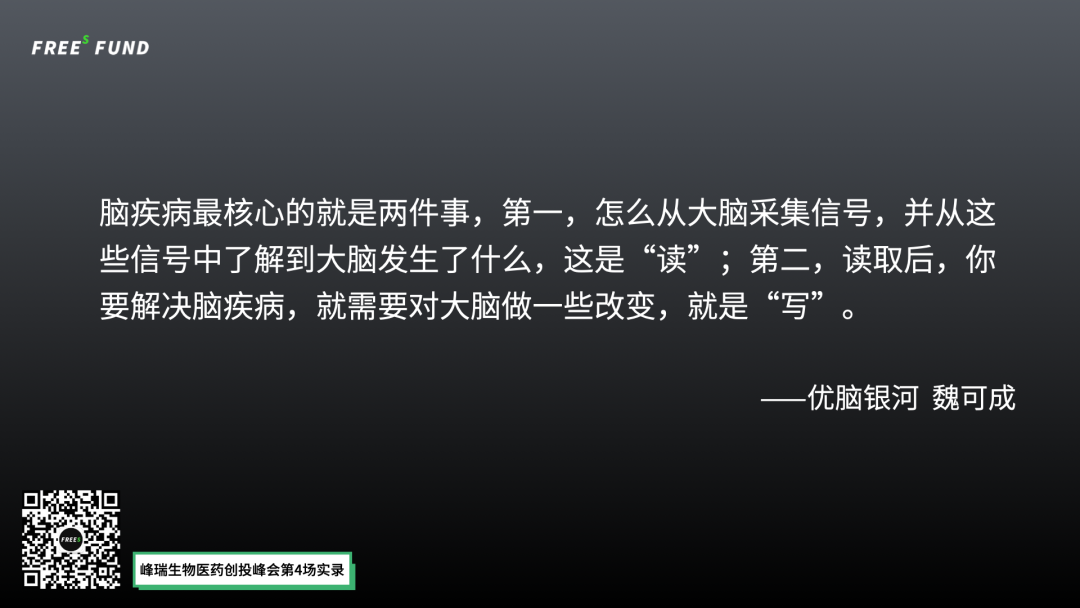
For brain disorders, different researchers and companies approach from different angles — some from the molecular level, some from pharmaceuticals, and so on. In our view, the core of brain disorders comes down to two things: first, how to collect signals from the brain and understand what's happening inside — this is "reading"; second, after reading, to actually treat the disorder you need to change something in the brain — this is "writing." There are many ways to achieve this core read-write capability. Medication is one way to "write," but so far, pharmaceuticals haven't performed well on the "writing" side. So when we started out, we focused on how to "read" better and how to "write" better.
Our founding team has four members. I don't come from a neuroscience background — my expertise is in computer software and hardware, which I've worked on for the past 20 years in various systems. Of the other three co-founders, one is Professor Hesheng Liu from Harvard Medical School, who completed his bachelor's, master's, and PhD at Tsinghua in biomedical engineering. Biomedical engineering deals with signal processing — how to extract signals and how to process them. The other two co-founders are Robert Desimone, Director of the McGovern Institute for Brain Research at MIT and a member of both U.S. national academies, and Guoping Feng, also an MIT professor and academy member. Both are accomplished scientists in brain science, with numerous breakthroughs in how the brain works, disease understanding, and genetics.
The fundamental reason we can do what we do is that we've combined these four distinct backgrounds into an interdisciplinary solution. Brain science is a field where breakthroughs are very difficult without interdisciplinary collaboration. And that cross-pollination gives R&D many new directions. Over the past year, we've made substantial progress — our products have already been deployed at several top-tier tertiary hospitals with good results. In the coming year, we'll be announcing some very breakthrough developments.
Teng Li: Our situation is somewhat different. We didn't cross over from an external field into biology looking for applications. Quite the opposite — we started from a typical life sciences technology and application context, and crossed outward to find new technologies we could leverage to accelerate innovation in synthetic biology.
My co-founder Haotian Zhang and I both studied life sciences for our undergraduate degrees — him at Peking University, me at Tsinghua — and then pursued PhDs in synthetic biology.
When we discuss hardware, data, automation, and so on, these are all tools to us. We use them to solve problems better or improve efficiency. So if you look at Bluepha's technology areas, they basically fall into four directions — the first three are biological, and the last one is non-biological.
First is enzyme engineering. Much of what we innovate consists of enzymes or proteins. Proteins often need to be customized for specific contexts — meaning you need to do rational or semi-rational design of the enzyme. This is the first major technology we employ.
Second is metabolic engineering, a core technology in synthetic biology. This means redesigning at the genetic level to restructure the entire metabolic network inside a microbial cell, giving the microorganism new functions or removing redundant ones — essentially designing a completely new microbe. To use an analogy, it's modifying part of the "code" in the microorganism's genomic "software."
Third is fermentation engineering. Once you've designed the microorganism, you need to scale up production to manufacture the product at industrial scale — that's fermentation, essentially the same principle as brewing alcohol. The initial microorganisms are cultivated in tiny laboratory settings, at the milliliter scale. Large industrial fermenters, by contrast, operate at hundred-ton or thousand-ton capacity. Going from 1 milliliter to 100 tons is a 100-million-fold scale-up. Ensuring a smooth process across that entire amplification is no small feat.
Fourth is data and automation — the integration of BT (biotech) and IT. Traditional biological research has been manual, with scientists running experiments by hand at relatively low throughput. But that approach doesn't work in synthetic biology, where researchers need to operate so many parallel processes that it's impossible to track all the details simultaneously — so automation becomes essential. This is already a clear industry trend.
As synthetic biology applications deepen, demand for automation keeps growing. On the hardware side, we use roughly three categories of equipment. First, liquid-handling devices. At its core, biological research — whether preparing reaction systems or cultivating microorganisms — mostly involves moving liquids around. Automated liquid-handling equipment is already quite mature, but the challenge is integrating it smoothly with our own R&D systems. Second, cultivation equipment: incubators, fermenters, ultra-low temperature freezers, and so on. Third, detection equipment — devices that acquire various types of data. This is where our need for innovation is highest among the three categories. We have particularly strong demand for in-situ, high-throughput, real-time, and automated detection technologies: novel chromatographs, mass spectrometers, single-cell-level imaging instruments, and the like.
Overall, our field is highly interdisciplinary, biology-centered but spanning software, hardware, and automation.
/ 03 /
When Technology and Market Don't Match, You Need to Pivot Decisively and Quickly
Wang Lei: I often hear that for hard-tech projects, once you've committed to a technical route, it's very difficult to adjust later — so you have to get it right from the start. Have you encountered situations in your entrepreneurial journeys where the technology and application didn't quite match, requiring you to change direction and technical approach?
Wei Kecheng: We haven't really faced this at NeuraMatrix so far. The technical routes we envisioned have basically all proceeded smoothly. That's because our founding team members each have decades of experience in their respective fields — we thought through what problems to solve and how to solve them very carefully from the beginning. Our company was formally registered in July 2019, and we already have products deployed at a number of top-tier hospitals with good progress.
But in entrepreneurship, a mismatch between technology and application is actually the more likely scenario. My previous company went through exactly this. It was a cloud computing company I founded in the U.S. We used cloud computing to help e-commerce sites automatically optimize user experience — using massive computational power to deliver real-time, personalized optimization for every single user — ultimately improving conversion rates. We pursued a cutting-edge technical route with some genuine breakthroughs. We targeted the entire market of websites, believing every website needed good user experience and could appreciate its value.
The first year after launch, we grew well and landed over a hundred clients. At the start of the second year, everyone was excited — we thought we could scale from 100 to 1,000 to 10,000 websites and we'd be set. But unexpectedly, sales didn't accelerate. Meanwhile, clients from year one started churning, and we spent most of our time trying to save existing accounts. That's when we realized: clients didn't care about cutting-edge technology. They cared about business results — what they put in and what they got out. Cutting-edge tech sounded nice, but 99% of websites had no ability to measure its value. What they saw was that it increased their costs and was a headache to maintain.
After another year or so, we understood: to survive, we had to change either the technology or the market. After a painful decision, we chose to change the market — to serve only clients capable of measuring our technology's value: large websites. From then on, our path got smoother. For e-commerce sites with GMV in the billions of dollars, our product's impact was visible and easy to evaluate.
Li Teng: We have plenty of experience here too. When you first start a company, it's very hard to think everything through completely. But you force yourself to anyway — and even when you think you've figured it out, problems still emerge, like the technology-market mismatch Wei mentioned. Once you realize the direction is wrong, you need to pivot decisively and quickly.
We had problems with our technology route selection. Bluepha was founded at the end of 2016, so it's been exactly four years now. Synthetic biology has many applications. We initially chose to work on biodegradable materials, specifically natural polymer PHA. The direction itself was excellent — large market potential, and synthetic biology could dramatically reduce costs. The direction wasn't the problem; our chosen technical path was.
The core of our technical path was the chassis microorganism, and that choice is critical because it determines your ceiling. At laboratory scale, test results looked good, but scaling up revealed many problems. The microorganism we chose was relatively novel. The advantage of novelty was that everything we built on it could be patent-protected — it was a unique technical path. The problem was that when we scaled to industrial production, testing showed this technical route had a cost bottleneck. This was closely tied to the microorganism's inherent capabilities, and solving it would be extremely complex. It's like trying to convert a sedan chassis into an off-road vehicle — a classic technical path problem.
At this point, market demand was clear, and we faced a choice: stick with our current technical path or develop a new one. But the sunk cost of switching was substantial. All our patents were tied to that path; changing meant starting over. We hesitated, but after much consideration, we decided we had to switch. The results after switching were excellent — by key production metrics, we surpassed the original technical path's performance in remarkably little time. Of course, this was built on an important foundation: in developing the original technical route, we had accumulated substantial genetic parts and data that could be directly transferred to the new chassis microorganism. Without that, we couldn't have progressed so quickly.
So one thing is obvious: customers don't care what technical route you use. What they care about most is whether you can deliver products and services that meet their needs. Innovation is inherently uncertain — you need to accumulate massive amounts of data to form sufficient understanding, constantly exploring which technical paths best satisfy market demands.
Wang Pu: We've pivoted quite a bit too. The company initially focused on foundational technology R&D for photoacoustic imaging and coherent Raman, aiming to provide the research community with efficient, cost-effective optical imaging equipment. Later shifting to healthcare, especially IVD (in vitro diagnostics), put us in an interdisciplinary space. Our current core technology is an analytical chemistry technique — using coherent Raman for microbial antibiotic susceptibility testing. This was what we landed on after extensive exploration. In choosing specific healthcare applications, we studied analytical chemistry peers, particularly how the mass spectrometry industry applied their technology in healthcare. The team eventually concluded that coherent Raman could maximize market potential in oncology and microbial infection applications — and that's how we found our core value proposition. So we shifted our technology application from research equipment to medical devices. Often, when searching for the right starting point, you can learn from peers' experiences — how they think about the industry, application scenarios, and how they identify the core application of their technology.
/ 04 /
Breakthroughs in Other Fields
Are Massively Accelerating Biotech Applications
Wang Lei: In recent years, chips, optics, sensors, batteries, and other fields have been developing rapidly. Which technologies do you see having major driving effects on your projects or your sectors?
Wei Kecheng: This is genuinely exciting. I'll answer from several dimensions:
First, looking at ten, twenty, even thirty-year horizons, the breakthrough our field needs most is finding a good way to read signals from the brain. I believe the best solution should be non-invasive and not limited to reading local signals. Because human behavior is a systems-level phenomenon — the result of extensive computation across different brain regions working together. Merely capturing locally generated signals isn't enough to infer the behavior of the entire system. So the core question is: how to collect global, whole-brain signals through a non-invasive method? Only then can we truly understand the human brain — this is an ultimate question in science. This is probably a thirty-to-fifty-year problem.
Now for nearer-term horizons. At NeuraMatrix, we currently can use hospital MRI equipment for non-invasive whole-brain signal collection. (In our methods for reading and collecting signals, based on our research, our approach differs from current hospital methods.) MRI's advantages are that it can read global signals with excellent spatial resolution and good tissue penetration. The problem is that it's bulky and expensive. If someone could find a way to make MRI equipment lightweight, mobile, even portable, it would be enormously helpful for whole-brain signal collection.
The second thing working in our favor is computing power. Signal acquisition is only the first step — the second is parsing. Over the past two to three decades, our computational capacity has increased by orders of magnitude. Part of the reason NeuroGalaxy has been able to make breakthroughs in brain disease research is precisely this leap in computing power. And now, our demands for further upgrades are growing ever more intense. There are still certain computations that take over ten hours to run on large-scale machines. So we're also exploring partnerships with relevant companies, hoping to dramatically accelerate processing speeds through novel computing architectures — another very promising direction for breakthroughs.
The third challenge is how to write signals back into the brain, which brings us into the therapeutic domain. Beyond pharmaceuticals, there are numerous approaches available today — light, electricity, magnetism, ultrasound, even viruses — all of which are "writing" methods. We're particularly optimistic about physical interventions like ultrasound, electrical stimulation, and magnetic approaches. This area holds the most promise for major breakthroughs in treating neurological conditions and intervening in the brain. We're already conducting clinical trials in this space, and I believe within a year, we'll see enormous breakthroughs. There's been substantial accumulated progress in this field; it's actually on the verge of exploding.
Overall, whether we're talking about how to read and collect signals, how to parse them, or finally how to write back into the brain, neuroscience holds many genuinely exciting advances. We're very much looking forward to seeing how this field transforms humanity in the coming decades.
Li Teng: What I'd most like to see breakthroughs in is detection. Take microbial strains, for instance — you need to collect data across different scales, and obtaining high-quality, real-time data remains a bottleneck. Using industrial-scale fermenters for experiments, the cost per run is extremely high. So is it possible to conduct high-throughput parallel testing at smaller scales while maintaining consistency with industrial production results? Additionally, can we do in-situ real-time detection? Because microbial growth is continuous — they grow rapidly, then quickly senesce. Whether your data acquisition can maintain in-situ real-time monitoring throughout this process is critically important. Then there's data depth. In traditional fermentation, you can only detect macro parameters like pH, temperature, rotation speed, dissolved oxygen, CO₂ production rate, and so on. But it's very difficult to observe the metabolism of various microbial small molecules throughout the fermentation broth, or cell division rates and activity. If we can achieve breakthroughs in data depth, then a single experiment can yield far more useful data. Finally, reducing detection technology costs is also crucial.
There have been some emerging trends in detection recently. For example, miniaturized mass spectrometers and spectrometers are finding more applications in biomanufacturing detection. Another example is microfluidics technology and flow cytometry-based micro-cultivation and detection techniques. As I mentioned earlier, these new trends are all making our detection more high-throughput, more real-time, and more deeply informative.
You could say that all of life science is driven by various technologies; hardware innovation is likewise profoundly shaping the development of synthetic biology.
/ 05 /
Which Interdisciplinary Fields Are Overheated,
and Which Need More Attention and Investment
Wang Lei: Next question. Where do you all see bubble-like trends in interdisciplinary applications? Conversely, in which areas is interdisciplinary application not yet "bubbly" enough?
Wang Pu: I think the AI field has a certain tendency toward bubble formation. AI + medical devices has actually been around for quite a while — take imaging AI, for example. Imaging AI has many useful applications: pulmonary nodule diagnosis, carotid artery ultrasound screening, and so on. These application points have been executed very well. We've also seen capital assigning very high valuations to AI projects. But in reality, due to issues with end-user pricing and the integration of AI software with hardware, the path to commercialization remains quite difficult. Some AI application points aren't particularly solid, leading to less-than-ideal current operating conditions.
So only by amplifying AI's value within the medical workflow and making it serve the business model can it land stably. Of course, in what we consider already-hot areas, there really are some startups executing very well on commercialization. For instance, I know of one company whose team leveraged AI technology to dramatically improve ultrasound image reading efficiency. In this case, AI didn't directly solve some core difficult problem — rather, at specific points or steps in the medical workflow, AI could greatly improve the efficiency and success rate of problem-solving, thereby enabling the company's business model to scale.
The second aspect is which fields should be hotter than they currently are. Actually, our own field of analytical chemistry falls into this category. We come from an instrumentation background; what we do is extract biochemical essence by analyzing biological or chemical phenomena. In analytical chemistry, while mass spectrometry has somewhat broken out of its niche and stepped into specific medical application scenarios, other techniques including Raman, infrared, and so on still largely remain in chemical engineering, chemistry, and scientific research domains. So going forward, we also hope that analytical chemistry equipment can find broader applications in the medical industry.
Wei Kecheng: I agree with Mr. Wang that there's a certain bubble in AI. While AI as a whole is very promising, there are indeed some companies that have risen merely because of the trend. Additionally, semiconductors — I've seen statistics showing that over the past year, more than ten thousand new semiconductor companies were established domestically. Of course, both of these are technology domains that the country needs to prioritize for breakthroughs, so from a macro perspective there's no problem. But there's no doubt that many of these enterprises are simply froth.
On the second question, I do believe brain science deserves more attention. Looking at the past century, the most significant technological advances in human society have been in computer science and technology — chips, PCs, the internet, mobile phones, and so on. So in the next century, where will humanity's most important breakthroughs come from? I believe it will be brain science. As a species, humans have essentially stopped evolving. If we're to have any next step in evolution, the breakthrough point likely lies in brain science. If one day we figure out what consciousness actually is, it will produce many particularly interesting breakthroughs that will affect all of humanity. So from a long-term perspective, brain science will be an extremely promising direction.
Li Teng: Compared to the potential impact synthetic biology could bring, this field is still relatively cold in its current state of development. Synthetic biology has many application scenarios. One quite interesting point is that no one previously thought the first thing to break out would be cultured meat. The core technology behind cultured meat is essentially synthetic biology, and its impact could be quite far-reaching.
06
Most Valued Talent Qualities: Learning Ability, Open Mindset, Sense of Mission
Wang Lei: Final question, on interdisciplinary talent cultivation. Although universities at home and abroad have established some interdisciplinary programs, most interdisciplinary projects still rely on post-hoc learning within a single discipline, particularly the integrative capacity of engineering disciplines. Could the three founders share what difficulties you encountered in your own interdisciplinary learning processes and how you overcame them? And when hiring, what qualities do you look for?
Wei Kecheng: I actually did a dual bachelor's degree. When I first entered university, I studied civil engineering, but I wasn't particularly interested in real estate, so I went into automation. In my view, the most important thing school gives us is the ability to learn. From my experience, textbook knowledge learned in school doesn't see much direct application in reality. Instead, every time you start a company, you need to teach yourself many things from scratch. So I think the most important qualities are two-fold: one, you're willing to learn, and two, you have the capacity to learn.
From a talent perspective, we very much need people from all backgrounds to join us. We're currently based in Beijing and will also be in the Yangtze River Delta region going forward. Next year we need to hire at least thirty to forty people. Our current team covers a very broad range of professional backgrounds: physics, mathematics, mechanics, psychology, neuroscience, electronics, computer science, chemistry. So what specific discipline you studied isn't the most important thing. What we're doing synthesizes multiple disciplines. Even people with neuroscience backgrounds have plenty to relearn here. We're now hiring extensively, including product managers, marketing and operations, software and hardware R&D, and so on. We welcome like-minded individuals to join us — see our website at www.neuralgalaxy.com for details.
Wang Pu: We make analytical chemistry equipment, and we've applied it to in-vitro diagnostic scenarios, so our demand for interdisciplinary talent is also substantial. I come from a physics background and did my PhD in biological engineering. Our hiring directions basically cover chemistry, physics, mathematics, biological engineering, electrical engineering, software engineering, and other fields.
In hiring, we first look at technical skills. Second, whether we're hiring engineers or salespeople, we also focus heavily on whether a person has genuine passion for healthcare and the driving force to translate that commitment into action.
Li Teng: We're also typically interdisciplinary. In an interdisciplinary context, one very important thing is that everyone can have a shared context for discussion when talking and working. Here, the starting point for discussing any problem is customer needs: what customer needs can you satisfy? If discussions proceed from this premise with rational, pragmatic deliberation, you can generally reach consensus in the end. So learning ability and an open mindset are both particularly important. Another point is sense of mission. What we're doing has enormous imaginative space and great potential. When you join in, whether you have a sense of mission matters a great deal.

Over the past two years, we've basically maintained a rhythm of doubling headcount annually. Our headquarters are in Beijing, with an R&D center in Shenzhen and an office in Shanghai as well. Our people come from biology, materials science, software and hardware — all backgrounds. Welcome to join us. My email is liteng@bluepha.com.
(Welcome to read, share, and hit "like." For reprint requests, please reply "reprint" to learn about our reprint rules and contact FreeS Little Rui [ID: freesfund] for authorization. Copyright belongs to FreeS Fund.)

Blue Ocean Strategy: How Early-Stage Biotech Startups Can Break Through and Win Alongside Big Pharma | FreeS 2020 Biotech Summit Part 3 Registration Beyond the "Narrow Door": Real Stories of Early Biotech Entrepreneurship at China's Frontier | FreeS 2020 Biotech Summit Registration Now Open Li Feng: One Chart to Understand Biotech Innovation Opportunities | FreeS 2020 Biotech Summit Guide Riding the Gene Therapy Wave | FreeS Research Hammer and Dance: The Next Wave of Healthcare Investment Opportunities Under the Pandemic | FreeS Research FreeS Report 16: The Truth About Early-Stage Healthcare Investment and China Speed | FreeS Research FreeS Report 15: Life's Gamble — The Risky Journey of Drug Development | FreeS Research Why Is New Infrastructure the Most Impactful Stimulus Policy for China's Next Decade? | Li Feng Column One Chart to Understand Changes and Opportunities in China's Industrial Chain | Li Feng Column