How Do You Turn Black Tech Into a Reliable Product? | FreeS Fund Dialogue

Pessimists are often right; optimists are often successful.

The path toward "what's right, not what's easy" is never crowded. Ten years ago, before carbon fiber became a hot sector thanks to policies like "dual carbon" environmental targets, Xuduo Yu, founder and CEO of Huayu New Materials, got his hands dirty exploring the possibilities of applying carbon fiber to industrial manufacturing. Two years ago, Jin Wu, founder and CEO of Songchen Power, arrived with a cross-disciplinary team from Tsinghua University to tackle the similarly niche field of equipment drive control. Both founders focused on heavy industry scenarios — automotive, oil, minerals — and converged on power systems, working from the ground up to help save energy and cut emissions.
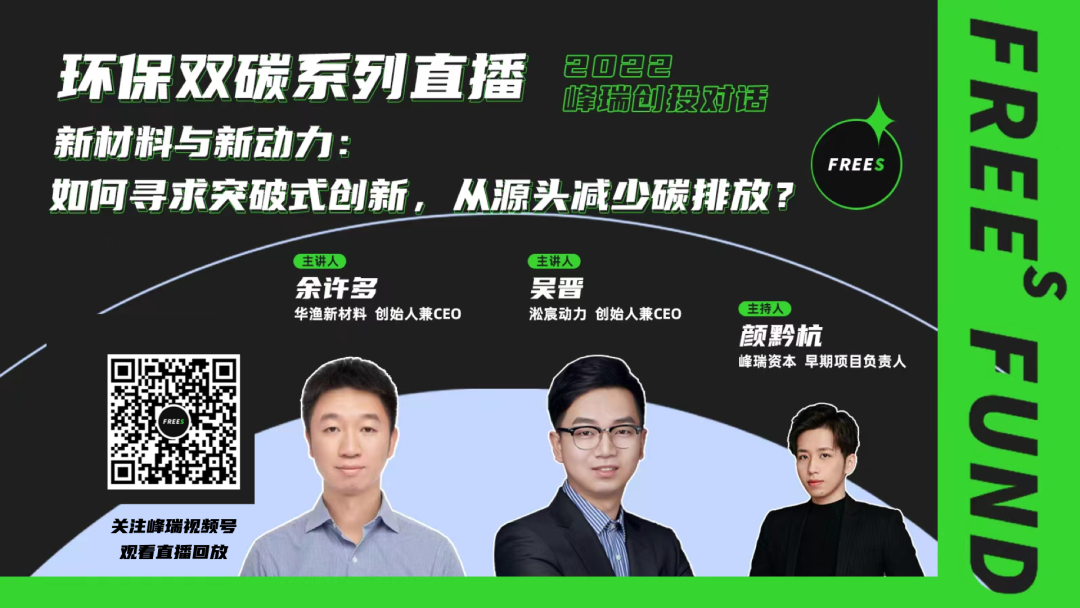
Recently, on the third episode of the "FreeS Fund Dialogue · Environmental Dual Carbon Series" livestream, titled New Materials and New Power: How to Reduce Carbon Emissions at the Source?, Wu, Yu, and Qianhang Yan, an early-stage project lead at FreeS Fund, talked about what they've learned from the industry, opportunities they've spotted, and lessons from building their companies. You can watch the replay on FreeS Fund's WeChat video channel.
We've compiled some of their key insights below. Before we dive in, here are the main takeaways:
- If you truly want cutting-edge technology to scale, it has to be cost-driven.
- Whether the market is hot or cold, refining your product is always the most important thing.
- When selling to large enterprise customers, build direct sales channels early, and try to hit different needs at every level of the client organization.
- In traditional industries, breaking existing interest chains is extremely difficult. But once a customer accepts you, they're unlikely to switch. First movers have a real advantage — once you're validated, you're hard to replace.
- Compared to oil-powered products, electric-powered products can carry far more digital and intelligent capabilities.
- Whether it's economic cycles or industry cycles, there are always peaks and troughs. We can't expect to hit every upswing. Flip the perspective: if we can survive these tough times, won't we have an even stronger first-mover advantage when the industry recovers?
Hope this offers some inspiration. If you're building in the dual carbon space or want to have an in-depth conversation about precision energy saving, feel free to reach out at yanqianhang@freesvc.com.
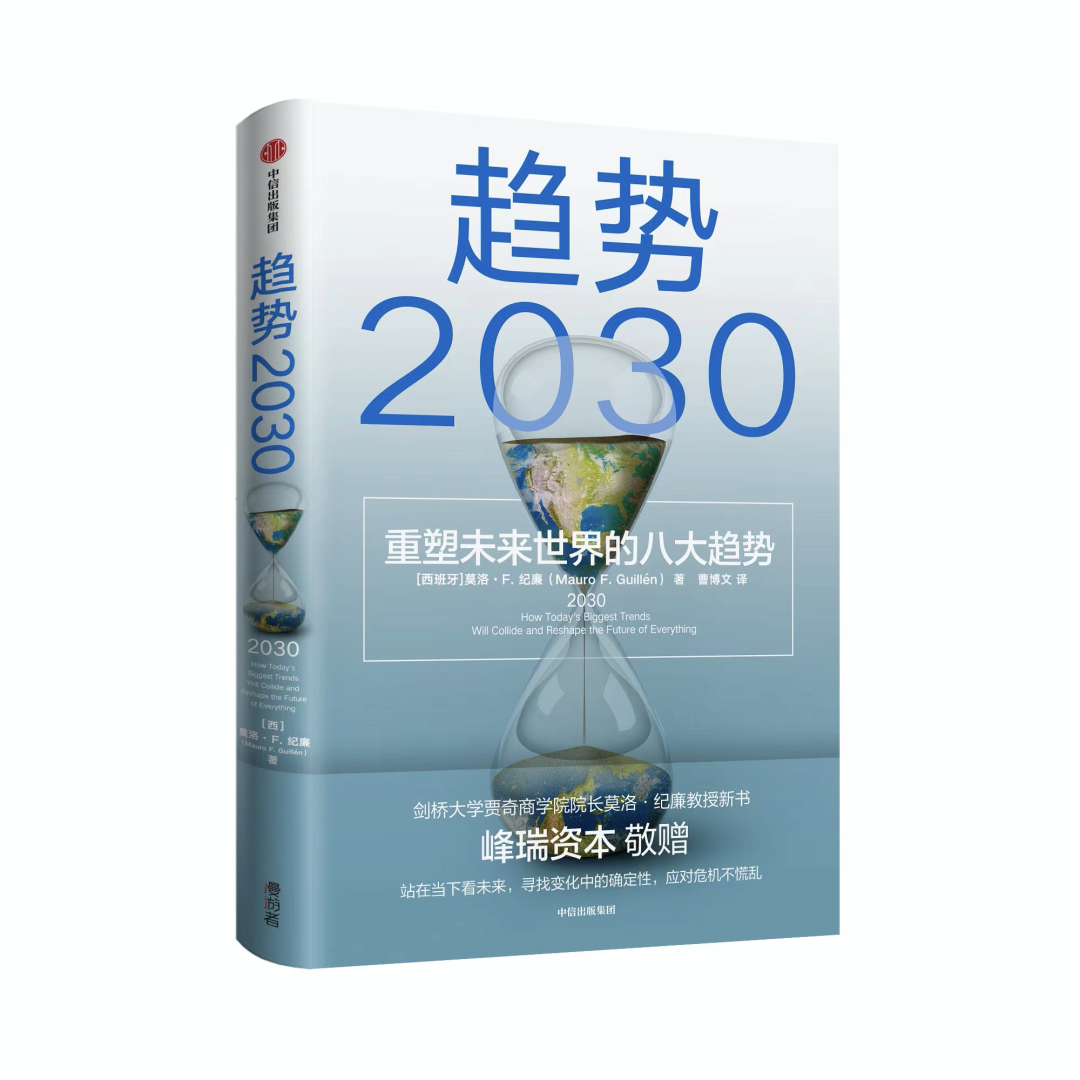
Giveaway From your perspective, what entrepreneurial opportunities exist in the environmental space? Share your thoughts in the comments. The 6 most thoughtful commenters will receive a FreeS-customized edition of Megatrends 2030: Eight Trends That Will Reshape the World. We look forward to finding certainty amid change, and staying sharp together.
/ 01 /
How Can Carbon Fiber Materials Help Save Energy and Cut Emissions?
Yan Qianhang: For a material like carbon fiber, people might feel it's both close to and distant from daily life. What everyday items are made of carbon fiber? And in which industries will carbon fiber have strong growth prospects?
Yu Xuduo: In everyday life, the carbon fiber we most often encounter is probably in sports equipment — badminton rackets, golf clubs, bicycles, and so on. The first impression carbon fiber gives is "light." In industrial applications, when these power components become lighter, it's not just about reducing energy consumption; precision improves too, which further lowers overall energy use. In the energy sector, carbon fiber is already widely used in wind power, hydrogen energy, and other fields, mainly for weight reduction and high precision.
Yan Qianhang: Specifically on which points of environmental dual carbon has Huayu New Materials made contributions?
Yu Xuduo: Huayu New Materials makes carbon fiber composite components. In the automotive sector, we mainly produce parts for vehicle powertrains, such as carbon fiber drive shafts. Our carbon fiber drive shafts reduce weight by over 50% compared to traditional steel shafts. In a gasoline vehicle, one OEM simply swapped in our carbon shaft across the entire vehicle — acceleration from 0 to 100 km/h improved by 1.4 seconds, and fuel consumption dropped by roughly 1 liter per 100 kilometers. In new energy vehicles, the core components we've developed for electric drives can more than double maximum rotation speed and dramatically improve electromagnetic efficiency. Beyond that, we're also working on power devices for the aerospace sector.
Yan Qianhang: So for consumers, if you buy a gas car, carbon fiber saves fuel and boosts power. If you buy an EV, carbon fiber extends range and saves electricity.
▲ From Huayu New Materials founder Yu Xuduo: What is carbon fiber? Where is it used in daily life? What specific contributions does it make to energy saving and emission reduction? What pitfalls has Huayu encountered along the way? Like and share to your Moments~
/ 02 /
From "Big Horse Pulling Small Cart" to Precision Energy Saving
Yan Qianhang: Songchen Power focuses on equipment drive control, targeting large industrial scenarios like petrochemicals and mining. How to save energy and cut emissions in these large industrial settings has long been a concern. What exactly does equipment drive control do? And how does it promote energy saving and emission reduction?
Wu Jin: Songchen mainly builds intelligent drive control assemblies. We've developed a hardware-software integrated system that, through unified design, adds information and intelligence modules to motor drive systems, helping save energy and cut emissions from the source.
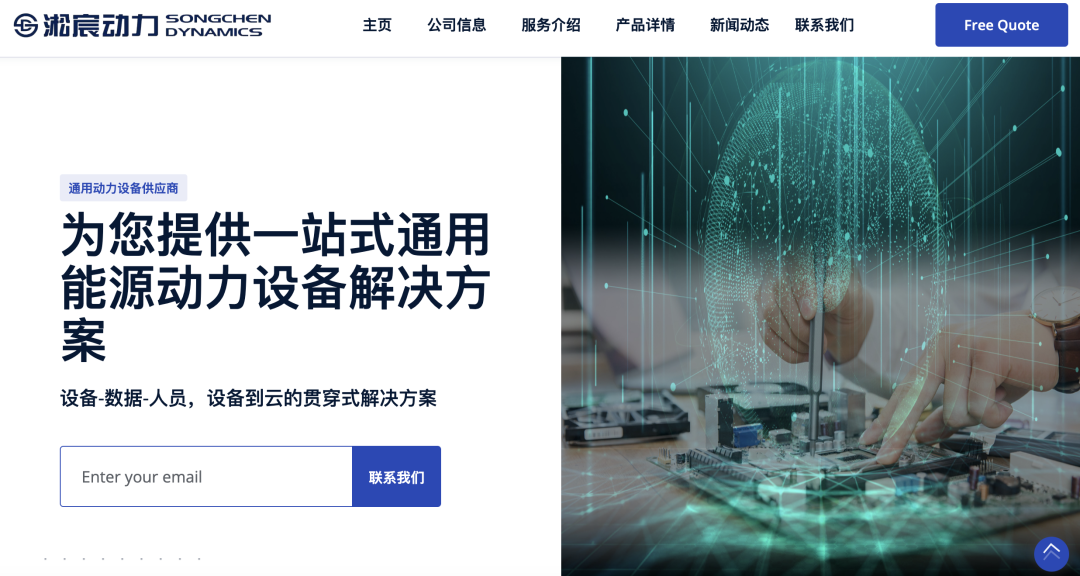
▲ Image source: Songchen Power
Songchen's customers are mainly upstream in the petrochemical industry — oil and gas extraction. We can replace the entire drive control system, and if the client needs it, we'll replace the motor too. These measures address general-purpose needs.
A long-standing problem in petrochemicals, mining, and similar industries is that motor output power doesn't match operational precision — what's commonly called "big horse pulling small cart." Because control precision isn't fine enough, motors run at high power in most scenarios, not matching actual load requirements.
Through real-time front-end data feedback, we help clients achieve refined control. The motor outputs exactly the power the actual load needs, fitting input to output as closely as possible, reducing energy consumption by 20-30%. At the same time, because the powertrain's drive structure changes, noise drops significantly too, lowering the costs clients spend on environmental compliance.
Yan Qianhang: So the industry used to prefer "big horse pulling small cart," but big horses eat a lot of hay, causing energy waste. Precision control means: however much force is needed, that's how much I output — energy efficiency goes up.
/ 03 /
What New Opportunities Have Environmental Dual Carbon Policies Created?
Yan Qianhang: In recent years, what new policies around environmental dual carbon have emerged, and what new directions in new materials and equipment drive control have opened up more entrepreneurial space?
Wu Jin: Motor equipment has two notable characteristics: high carbon emissions and high consumption. The 2013 Industrial Energy Conservation and Green Development Special Action Implementation Plan once noted that motors in China consumed 75% of total industrial electricity. Every 1 percentage point improvement in motor energy efficiency could save roughly 26 billion kWh annually.
From our observation, 2020 was a dividing line. Before that, development was relatively粗放 [rough/extensive]. In 2020, China proposed its "dual carbon" goals — "strive to peak carbon dioxide emissions before 2030, and endeavor to achieve carbon neutrality before 2060."
After that, the Ministry of Industry and Information Technology and five other ministries jointly issued the Industrial Energy Efficiency Improvement Action Plan, which proposed "accelerating motor upgrades and replacements," and "by 2025, the proportion of newly added high-efficiency energy-saving motors should reach over 70%." This means high-energy-consumption motors need to be phased out and scrapped, and drive control systems need to be upgraded in tandem. This is the policy-driven force in the industry, and it creates significant opportunities for startups like ours.
Yu Xuduo: We mainly serve the automotive industry, which has always had strong demand for energy conservation, environmental protection, and emission reduction. Previously, the impression of carbon fiber was that it was extremely expensive, only usable in aerospace, military, or supercars. A core part of our work has been making carbon fiber parts affordable for customers. So in our product promotion, the focus has been on letting customers use these technologies while reducing overall costs. For us, improving energy efficiency within the scope of overall cost reduction has always been strong demand.
/ 04 /
Sensing the Market's "Cold" and "Hot"
Yan Qianhang: How do you sense whether the market is hot or cold? In a relatively cold environment, how do you formulate survival and development strategies?
Yu Xuduo: The automotive industry is quite "cold" this year — many new energy OEMs' supply chains have taken considerable hits. The impact on us is that customers shift from budget-driven to cost-reduction-driven, setting higher bars for us.
What we've done more of is further refining our product, because for automotive OEMs, reducing energy consumption and improving performance are long-standing needs — it's just a matter of how much cost advantage and technical level we can deliver. When customers see your product continuously improving, even exceeding their experience in some areas, they're quite willing to increase investment in this area. Seen this way, the "cold" is actually an opportunity for us. From a capital perspective, we completed a tens-of-millions RMB Pre-A round this year, and we're grateful for FreeS's continued support from our angel round.
Wu Jin: Our industry's tidal patterns are quite clear — this year could be called "alternating hot and cold." The market and business are growing, but constrained by the overall environment, the enterprises we serve are facing strategic contraction. For us, this year has also been mainly about internal cultivation, improving overall human efficiency. On another front, because our customers are mainly large enterprises, we use "investment-loan linkage" methods to address payment cycles and collection issues.
/ 05 /
Seizing Opportunities in Industrial Intelligent Upgrades
Yan Qianhang: Energy, mining — these heavy industry fields sound quite traditional, and mainly serve large enterprise customers. How are these industries different from popular perception, and what new changes are happening?
Wu Jin: These industries are basically state-enterprise dominated, relatively conservative, but at many key positions, post-80s generations have gradually moved into leadership roles. This group has higher acceptance of new technologies and products, and also wants to make corresponding changes in the industry to create overall value addition. Energy, mining — these industries are brewing very profound changes, such as industrial digital upgrades, intelligent upgrades, among which there will certainly be substantial market opportunities.
Yan Qianhang: When trends like industrial digital upgrade, intelligent upgrade, and "dual carbon" energy saving and emission reduction all converge, what opportunities should startups seize?
Wu Jin: In my previous work on technology commercialization, I found that industrial digitalization and intelligent upgrades represent relatively certain opportunities. With the development of new energy, we started by doing "dual carbon" and intelligence-related things in traditional industries like energy and mining. But we also discovered that the shift from coal and oil-driven to electric-driven is happening across all industries. Compared to oil-powered products, electric-powered products can carry far more digital and intelligent capabilities. So through "compute-control-drive" integration, we're doing overall upgrades for drive control systems.
Why do integration? Because I had done industrial software before, and industrial software delivery is quite difficult because domestic heavy industry's intelligence level is relatively low. You could understand it as: trying to run a computer on a basic calculator is basically impossible. We have to upgrade that calculator to a desktop or laptop for industrial software to have applicable scenarios. So we developed the idea of helping traditional industries upgrade intelligently.
In practice, when we first entered these industries a few years ago, demand for intelligence and "dual carbon" wasn't particularly obvious. But as large numbers of workers have left heavy industry, industrial intelligence, digital upgrades, and energy consumption reduction have become urgent matters — giving us opportunities. And large enterprise customers have fairly strong payment ability, so against the backdrop of China's heavy industry undergoing intelligent upgrade infrastructure waves based on power mechanism conversion, we've seized some opportunities.
Yan Qianhang: Indeed, heavy industry is undergoing power system iteration, shifting from traditional fuel and gas drive to electric drive, bringing opportunities for intelligence and "compute-control-drive" integration. Also, when doing industrial software in China, you must combine software with hardware for delivery to customers, because that's what the Chinese market demands.
**/ 06 / ** How Will Carbon Fiber Materials Affect the Automotive Industry?
Yan Qianhang: Huayu New Materials combines carbon fiber composites with automotive power components. How was this opportunity discovered? What impact will carbon fiber have on the automotive and new energy industries?
Yu Xuduo: We've been making carbon fiber components for a long time. Starting in 2013, we began cooperating with various OEMs on things like "four doors two lids" [body panels], chassis, trim, and now these core power components. The reason we eventually concentrated on automotive is that cars themselves are price-sensitive products in a fully competitive market, so cost control is extremely strict. If the carbon fiber powertrain components we provide can dramatically improve performance while achieving costs similar to original steel parts, manufacturers are quite willing to use them. But many parts are quite difficult to make cost-competitive with steel parts, so we gradually narrowed our focus to powertrain components.
In the automotive market's new energy transformation, we've clearly felt that traditional gasoline-focused OEM brands, in their "lightweighting" process, may be willing to pay less than new energy vehicle makers. But whether it's new energy OEMs or traditional gasoline car OEMs, once a certain cost-performance threshold is reached, acceptance of our products is very high. When we bring down the price of previously expensive carbon fiber components and make the material more stable, customers are quite willing to accept them.
The reason we've put so much effort into powertrain components is that whether in automotive or other industrial fields, weight reduction on power components definitely has better effects than on static components. So by doing powertrain components, the value-add we can demonstrate is greater. That's why beyond automotive, we're also continuing to push into energy and other industrial fields.
**/ 07 / ** Dealing with Big Customers: Experience and Lessons
Yan Qianhang: Whether automotive or chemicals, these are all B2B customers with substantial scale. What experiences or lessons can you share in dealing with such customers?
Wu Jin: Dealing with these customers has two very obvious characteristics. First, you must have a product with actual results. On the other hand, we're competing with traditional suppliers for market share, which requires us to master the balance and compromise to a certain extent — if you don't handle it well, you'll face significant local resistance.
We try as much as possible, when entering each industry, to form a "united front" with traditional suppliers. For example, when we delivered products to an oil extraction plant client, we provided drive control assembly components, but sourced the motor portion from a local motor company that was technically compatible with us, and used a local company for installation — so the three parties formed combined strength to serve the client together. Of course, the most critical and core step was our assembly.
We all know that with large enterprise customers, channels are relatively important — they're the key point for initially entering the industry. With channels, you get the chance to have the client confirm and certify your product's effectiveness. Once the product is confirmed and certified, the channel's role relatively diminishes. This leads to a situation where as a startup, you often can't deal directly with the client, can't get first-hand client feedback and data — so building your own early direct sales capability is very important.
Locally, many third-party traditional suppliers can help you do this. For us, the most important early lesson was: first refine your product, don't over-rely on channels.
In commercial sales, I also want to share that you need to hit different needs at every level of the client organization. For frontline workers, the appeal is reduced workload and improved working environment. One level up, middle management's concern is core KPIs — economic benefit indicators, whether it can be quantified into real money. Finally, for the actual decision-makers, what matters is whether it aligns with "dual carbon" policy, whether it's consistent with the broader direction of intelligent oilfield construction, and so on. Hitting the core needs of upper, middle, and lower levels — that's the sales logic that can penetrate B2B customers.
Yu Xuduo: My feeling is quite similar to Mr. Wu's — you need to satisfy needs from top to bottom at every level. In the fully competitive automotive industry, breaking existing interest chains is very difficult; finding balance is a problem we're constantly solving. Another issue in automotive is that to supply them, you must have experience first. So for a new product, how can you supply without experience? It becomes a chicken-and-egg problem. Of course, once a customer accepts you, it's very hard to replace you — once you're validated, you're hard to substitute. First movers definitely have advantage.
**/ 08 / ** Letting Change Happen Bit by Bit
Yan Qianhang: Throughout today's discussion, both of you have emphasized "one must be strong oneself" — we need to make good products. So how to combine technology with industry, and in the process of technology landing and productization, what insights can you share?
Wu Jin: I started in technology commercialization — everyone takes technology to find market scenarios, but in this process you encounter a problem: the customers you face may be quite price-sensitive, making breakthrough difficult.
Our experience is: try as much as possible to integrate technology into the customer's existing system, more on the foundation of their current technical process, adding a little, then slowly two points, three points. From the big picture, the customer's production habits, production processes, procurement habits, management habits haven't changed at all, but efficiency and data are better than before — this wins initial customer recognition, and the next step is accepting more change. Let change happen bit by bit, rather than asking customers to accept everything all at once.
Yu Xuduo: In the automotive industry, we're constantly finding balance. For example, if material performance improves 100% or 200%, but it's 10 times more expensive than before, in large industrial application scenarios, maybe only one in a thousand or one in ten thousand customers would be willing to use it. If you truly want cutting-edge technology to deploy at scale, it must be cost-driven.
For example, if I want to sell a core component to Mr. Wu, it must be cost-competitive with or lower than your existing product, with superior performance, before you'd be willing to buy. That's why we always say products need to be well-refined — they must be much better in performance, with costs at least flat with current levels. That's what we've been constantly working toward.
**/ 09 / ** Pessimists Are Often Right, Optimists Are Often Successful
Yan Qianhang: As the year draws to a close, if you summarized what you've learned or felt this year in three keywords, what would they be?
Wu Jin: Using fitness as analogy, this year we've been "building muscle." 2022 was a special year, and the nature of the large customers we face reinforced this. But perhaps because this year was special, many internal and external company problems were exposed — and many problems thus found opportunities to be solved. So "internal cultivation" is my first keyword; in a "cold" environment, we solved many problems that had been masked by high-growth prosperity.
The second keyword is "hope." We had fairly low expectations for the market at the beginning of the year, but actual customer demand hasn't shrunk, and funding genuinely exists — so "spring opening" shouldn't be far.
The third keyword is "growth." This year we went through some team adjustments, some technology direction updates, and overall resource focus. I'm first securing the oil and gas extraction industry, then penetrating downward into other industries, concentrating ammunition on markets where we can establish stability.
Yu Xuduo: This year has been extremely difficult for the automotive industry, but this has also led the industry to undergo a series of transformations, including cost reduction, seeking domestic solutions to replace "chokepoint" imported products, and so on. This gives startups like ours opportunity.
But opportunity is also challenge — behind this lies problems facing the entire industrial domain. On our domestic substitution path, what are the things with clearest demand? In this process, how to solve team, funding, and the various problems that follow — these are all things we must solve one by one. Overall, difficulties and hope coexist. So my three keywords are challenge, difficulty, and opportunity.
Yan Qianhang: Having experienced the ups and downs of the macro environment and industry, what insights can you share?
Wu Jin: From my personal feeling, entrepreneurship isn't affected by whether the macro environment is good or bad. To this point, I feel entrepreneurship is still related to opportunity, or rather to your recognition of and persistence in what you want to do. If you stop entrepreneuring just because the macro environment is bad, then I think such a person may not be ready to start a business.
So in an uncertain environment, you need more firmness and persistence, more positive and optimistic attitude. Because whether it's economic cycles or industry cycles, there are always peaks and troughs — we can't expect to hit every upswing. Flip the perspective: if we can survive these difficult times, when the industry recovers, won't we have an even stronger first-mover advantage?
Yu Xuduo: Something I've always told our team is "when it's hard, get through it, no matter what get through it." This year our goal is: on the basis of 50% higher product performance, reduce costs significantly further. Because to survive the harsh winter, many customers will also be cutting costs — the whole process is quite brutal, and you might be eliminated over a 1% procurement price difference. So what we've emphasized internally this year is cost reduction: if we can still achieve cost reduction in a relatively poor environment, when conditions improve later, even fewer people will be able to compete with us.
Yan Qianhang: To sum up in one sentence: pessimists are often right, optimists are often successful.
Giveaway From your perspective, what entrepreneurial opportunities exist in the environmental space? Share your thoughts in the comments. The 6 most thoughtful commenters will receive a FreeS-customized edition of Megatrends 2030: Eight Trends That Will Reshape the World. We look forward to finding certainty amid change, and staying sharp together.
▲ ESG's Past and Future: From Dividing the Pie, to Enlarging the Pie | FreeS Research
▲ FreeS Report 22: Can New Materials Save the Footwear and Apparel Industry? | FreeS Research
▲ Slow Is Fast: Why Insurtech Is a Business Worth Betting On | FreeS Interview
▲ Li Xiang x Li Feng: The Dollar's "Monopolistic Success" and "Gradual Dilemma" | Li Feng Column
▲ In the Future, How Will Humans Work? | FreeS Report 26