If mobile internet failed to reshape the education industry, can AI?

In a future where AI "controls" knowledge, how do we protect children's capacity for autonomous learning?
Educated is a memoir by Tara Westover. Born into an extreme Mormon family in the mountains of Idaho, she never attended school before age 17, yet eventually earned a PhD in history from the University of Cambridge through self-study. The original English title is more direct: Educated.
In Westover's writing, education is escape, redemption, and an extreme form of self-reinvention.
Yet in reality, educational transformation rarely produces such "myths." Yang Linfeng, who chose to return to China to teach in rural areas after graduating from Harvard in 2011, felt this acutely. In everyday rural classrooms, he saw the state's continuous investment in educational infrastructure, but also the insurmountable resource gap and widespread "learning pain." He realized that even as hardware improved, the scarcity of quality teachers and outdated methods meant that for many students, learning remained an arduous climb.
So in 2013, he joined Zhu Ruochen and Li Nuo to found Onion Academy (洋葱学园). They wanted to design "learning experiences" that met students' needs and aligned with cognitive science — not just delivering ready-made answers like "takeout," but teaching students how to learn autonomously. And the latter may be what matters most in an AI-reshaped future.
Over the past 12 years, Onion Academy has ridden through the frenzied K12 boom, witnessed astronomical funding burned on customer acquisition under the "theater effect," weathered the double-reduction storm's impact on education, and now confronts AI technology reshaping every industry. While everyone else sees AI as merely a smarter "photo search" tool, Yang is leading Onion Academy toward new explorations.
Recently, business writer Li Xiang sat down with Yang for an in-depth conversation. We've edited portions of their dialogue, hoping to offer anxious industry participants during this period of technological upheaval a reference point on "product craftsmanship" and "cognitive science."

Li Xiang in conversation with Yang Linfeng
Photo | Onion Academy
Their main topics included:
-
Why did mobile internet's promise to transform education, once so highly anticipated, fall short of expectations after all these years?
-
To what extent will this wave of AI technology change the education industry?
-
How do you define "learning experience design," and why can't education be just "photo search"?
-
Why does some knowledge feel like climbing a "cliff face," and why is the core of educational productization building "gentle slopes"?
-
Behind 500 billion interaction data points, how does big data analyze each student's personality?
-
Facing the industry's once-manic "theater effect," why did Onion insist on the slowest path of "human-computer interaction, productized delivery"?
-
The AI era choice: Are large models for generating content, or for orchestrating professional assets?
-
Thinking about the next generation: In a future where AI flattens hard knowledge, how do we protect children's capacity for deep thinking?
We've edited portions of the conversation below. For the full dialogue, search for "High Energy" (高能量) on Xiaoyuzhou App and Apple Podcast.

Interactive Giveaway
How would you use AI to improve your own learning efficiency? Share your thoughts in the comments. By 17:00 on January 21, 2026, the 2 most thoughtful commenters will receive a copy of Educated.
01
Education is student growth, not the answer to a problem
Li Xiang: I hesitated when introducing Yang Linfeng. At first I thought Onion Academy was just another online education company. But seeing Linfeng's foundational thinking about education, including their recent AI integration, I wasn't even sure how to accurately define or understand this company. Is Onion Academy still an online education company?
Yang Linfeng: By industry classification, definitely online education or edtech. But our philosophy differs from most companies. We focus intensely on the learner themselves, and prefer to position ourselves as a "learning experience design company."
So we care about whether they enjoy learning, whether they genuinely gain autonomous learning ability through the process, rather than treating learning tasks as to-do items, or like ride-hailing or food delivery — you have a problem you don't understand, and I quickly solve it for you.
Li Xiang: But we're both getting on in years. How do we understand what students need?
Yang Linfeng: When we started, I had just graduated from Harvard with a computer science degree, and the founding team were all young recent graduates. We enjoyed thinking deeply about problems in school, so we had our own insights into "how to help people understand knowledge more efficiently and engagingly."
Second, when we taught students during our volunteer teaching, we discovered that the foundation of learning is cognitive science. When you align with learners' cognitive patterns, you get twice the result with half the effort; teach against them, and it becomes painful. Learning does consume mental resources, but if you spark curiosity, it becomes fascinating. We found enormous "potential energy" in this space, and I held the key — I could present knowledge in a more human-aligned way, so it was my responsibility.
Beyond experience, we drew on cognitive taxonomy, educational psychology, and other theories to reconstruct content. Before teaching students mathematical tools, we guide them to realize: "Actually, the tools I have now aren't sufficient." We try to recreate the historical process of knowledge discovery, guiding thinking evolution through questions — and this logic applies regardless of age.
Finally, returning to our original motivation: I noticed the large urban-rural education gap, especially in many rural schools. Their buildings, hardware, and internet — the state had built these very well. But when we observed classes, we found many teachers, constrained by traditional teaching concepts and heavy workloads, couldn't deliver engaging lessons, leading to student aversion and low efficiency. I hoped technology could infinitely replicate good teaching methods so everyone could benefit.
02
Is learning climbing a "cliff" or a "gentle slope"?
Li Xiang: Regarding the urban-rural education gap you mentioned, I often hear discussions with various proposed solutions. Some advocate donating hardware, like sending tablets to schools; others suggest merging schools; still others believe in training principals. By comparison, is Onion Academy's solution directly providing software?
Yang Linfeng: Our solution empowers both teachers and students simultaneously. Because the most basic unit of educational delivery is actually each minute in the learning process. Whether that minute is efficient and motivated determines ultimate success.
To this end, we've divided into two service scenarios: C-end is the AI Learning Companion, addressing pain points in self-study outside class; B-end is AI Classroom, reconstructing human-computer collaboration inside the classroom.
Under traditional teaching models, teacher-led lectures dominate most class time. But at our partner schools like Yueyang No. 20 Middle School, Shenzhen Longling Education Group, and Chengdu Baiyue Chenglong, this ratio has been inverted: teachers "return" 70% of class time to students for personalized self-study.
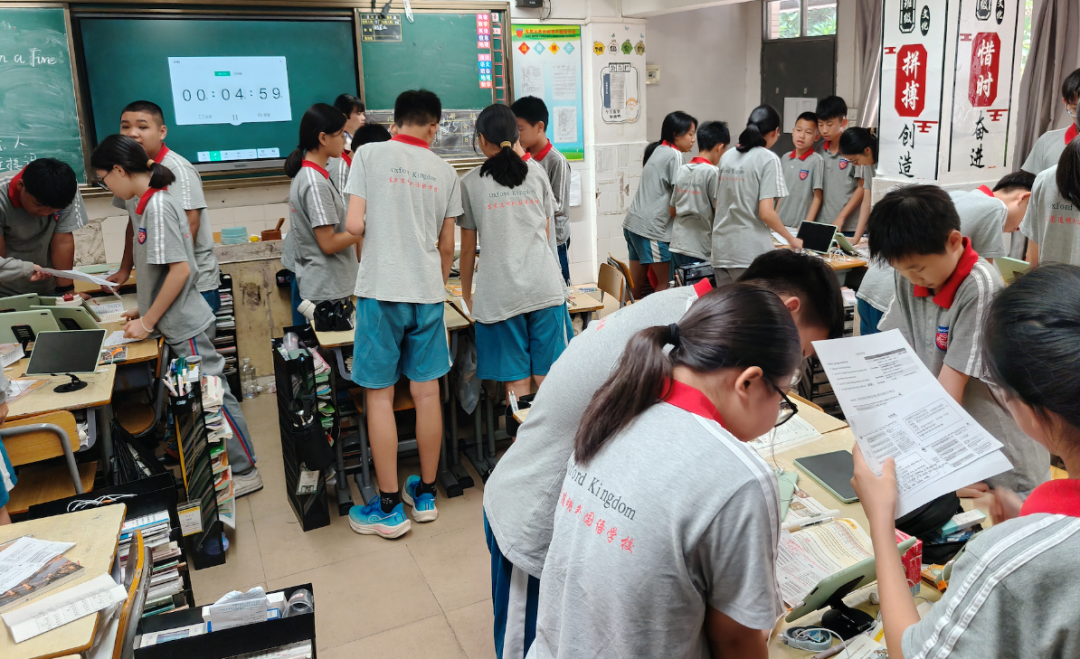
AI Classroom
Photo | Onion Academy
Li Xiang: Why were you interested in education from the start?
Yang Linfeng: We had experiences like this: classmates would come ask questions, saying they didn't understand what the teacher explained in class. When you'd explain it briefly from your own understanding, they'd "get it instantly," even exclaiming: "So that's how it works! Why didn't the teacher explain it this way?"
I started reflecting: was my teaching level higher than the teacher's? Definitely not. The fundamental reason is that students and teachers have different cognition. The teacher is a "veteran," standing at the mountaintop shouting to students: "Climb up quickly, it's easy." But from the student's perspective, what they see is a "cliff face." We need to think: what allows us to mentally transform that cliff into a gentle slope through "mental filling-in"? This process of "building gentle slopes" is what's most worth investing time to study.
Li Xiang: You're a Harvard-educated top student. Can you really understand most ordinary students' pain in learning?
Yang Linfeng: There are scientific methodologies to follow here. If Onion's success today relied entirely on personal experience, the company couldn't scale.
The underlying scientific methodology extends to how every sentence is polished, what examples to use, analyzing students' cognitive starting and ending points. These are validated by all our past user data. Our product records comprehensive details, accumulating over 500 billion student interaction data points. We analyze playback for every video. For example, if at the 3:30 mark, pause rates suddenly spike, it means something's wrong with our explanation there. Many students are forced to pause and puzzle through it, so we need to go back and refine the script.
Li Xiang: This sounds somewhat like Douyin's live e-commerce methodology, looking at drop-off and completion rates.
Yang Linfeng: But we don't focus on "addiction," but on whether the process allows students to learn "smoothly." So we care about coherence, rhythm, and sense of purpose. Learning requires extremely strong purpose — if you lose track for even a minute, you fall into a vacuum of "who am I, where am I, what am I doing."
We pay extreme attention to how language logic guides thinking. We don't just teach knowledge, but let students see how they themselves thought through to solving a problem. Essentially, learning knowledge isn't about the knowledge itself, but about the thinking logic and methods built through it.
Li Xiang: You started from a public welfare angle, so why choose to establish a company?
Yang Linfeng: Because R&D product investment is enormous, and relying solely on charitable fundraising is difficult. Fortunately, education doesn't differ much between urban and rural areas — if the product is good, there's definitely a market.
From the start, Onion took a different path: we consistently insisted on solving problems through "human-computer interaction." This offers better experience than large live classes, but more importantly, it achieves "universality." Because large live class experience is "one-size-fits-all," and many families still can't afford the fees, so you can only serve those who can pay. We wanted to provide undifferentiated learning experiences for rural and urban students alike.
We thought extensively about "universality" and found that only through tech products could this be achieved, not through people.
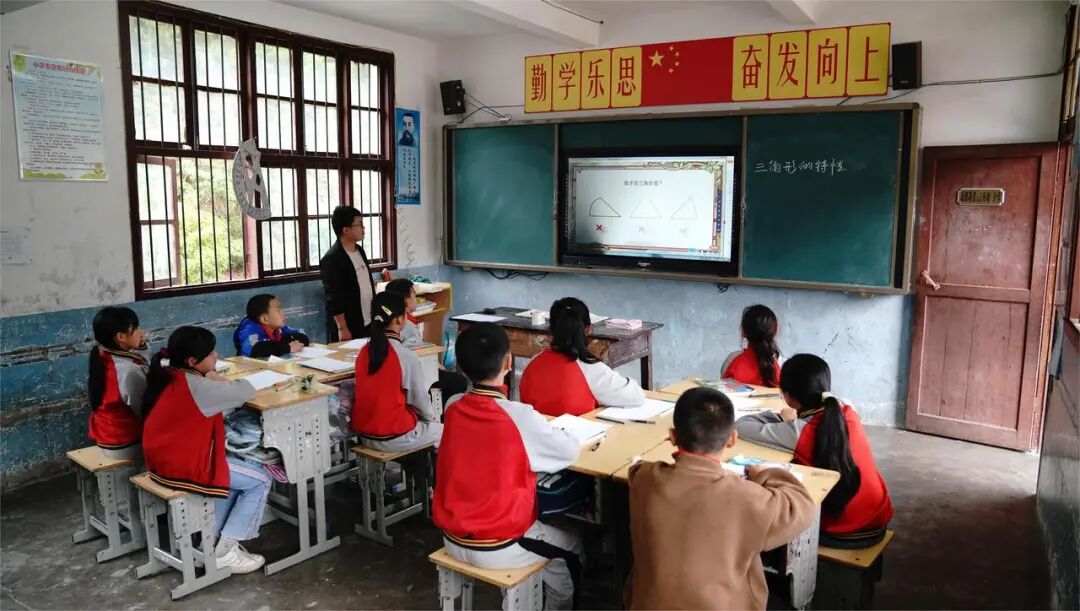
Onion Academy Public Welfare Support
Photo | Onion Academy
Li Xiang: Onion now has 130 million cumulative registered users. What's their distribution?
Yang Linfeng: Among Onion's 130 million registered users, the urban-rural distribution closely matches China's population geography. We've calculated county population proportions against county-level user volumes, and found the distributions are almost identical.
What's quite interesting is that from tier-1 to tier-5 cities, our user distribution is basically even. This actually shows this product has truly achieved "low barriers." Thanks to China's globally leading mobile internet penetration, as long as you have a phone and network, quality education is within reach.
03
Having survived the K12 boom, how do you resist the "theater effect"?
Li Xiang: Onion has been around over a decade since its 2013 founding. How would you divide the company's development stages?
Yang Linfeng: 2013 to 2015 was the "handicraft period." Our philosophy then was to let students learn easily and happily on their own, but nobody believed "autonomy" could work. However, I believed curiosity is fundamentally human, so the biggest challenge then was proving this model viable.
We spent two years polishing middle school math; a single video took eight weeks on the production line. Looking back, we were quite fortunate — the internet economy was booming, people had many imaginings about online education, and we met investors like Feng Shu who supported us. When we launched our mobile product in October 2015, Apple App Store featured us in the first week, and user numbers quickly broke 1 million.
2016 to 2019 was subject expansion and scenario mining. We covered all nine subjects in middle and high school. We found students have different needs in different scenarios: stuck on homework, wanting to review, or exam prep — so we polished for multiple scenarios. Those years saw very rapid user growth.
Li Xiang: Was expanding subjects important?
Yang Linfeng: Very important. Parents don't want to learn just one subject. Our path was different. Serving people may start fast then slow; serving through products is extremely slow at first with huge investment costs, but once done well, it can gradually replicate.
Li Xiang: Before 2021, online education was extremely hot, with everyone crazily spending on advertising for customer acquisition. Was there pressure on you?
Yang Linfeng: **Quite a bit. That overwhelming advertising disrupted parents' attention — people felt they should try a 9.9 yuan experience class, try large live classes. This fell into the classic "theater effect" — when the first row stands up, everyone behind has to stand too.
Massive funding went in, but money wasn't spent on R&D, rather on burning demand and acquiring customers. In our view this was unhealthy — money should go to researching better models, not making parents complete transactions quickly.
The core problem with large live classes is they fundamentally cannot improve students' autonomous learning ability. Across K12's 12-year academic journey, whether in cram schools or traditional classrooms, what students repeatedly practice is merely "listening" — this single input ability of passively receiving others' explanations. This model lacks deep exercise of "learning ability." Critical abilities like pausing and reviewing, active inquiry, deep exploration get almost no training in single passive-input scenarios. Yet these abilities are precisely core competitiveness after entering society. If during the golden 12 years when abilities should accumulate, students only practice one skill not urgently needed in the future, while neglecting true underlying survival instincts, this puts the cart before the horse.
Li Xiang: But large live classes or traditional training models do have very mature, highly scalable business models. By comparison, Onion Academy then chose productized delivery with low unit-price strategy to build business logic — did investors question this?
Yang Linfeng: The mainstream solution then was "photo search," but everyone knew that was short-term "painkiller." Onion offered a different solution: providing students with an intelligent learning companion anytime, anywhere — letting students learn easily, autonomously, and feel emotional validation. This "uniqueness" and proven user scale were why our investors were willing to support us.
Li Xiang: At Onion, what's the ratio of curriculum R&D/technical staff to sales staff?
Yang Linfeng: Our company now has about 1,000+ people, with nearly half being the R&D team. Within R&D, we divide into "technical product R&D" and "curriculum content R&D," roughly 1:1.
Technical product R&D covers software-hardware interaction design (including self-developed learning tablets), big data infrastructure, and AI algorithms. Currently, this team is exploring integrating large model capabilities to build multiple internally coordinated intelligent agents like "AI Private Tutor," providing students with deep and rich learning guidance.
Curriculum content R&D forms the company's core R&D pipeline, supported by two types of professionals: first, a teaching research team responsible for transforming knowledge points into lively, engaging teaching scripts; second, a full-time professional animation production team responsible for turning scripts into high-quality animated content.
Li Xiang: What's the overall online education industry situation now?
Yang Linfeng: Objectively speaking, tutoring models still exist; live classes and offline classes operate in other forms. Learning tablet growth started slowing in Q3 2025. Additionally, many large model companies are entering education scenarios, treating "photo search" as their main customer acquisition function.
Li Xiang: Since you started in 2013, Khan Academy was often discussed domestically. Which new education companies do you think are decent?
Yang Linfeng: I studied in the US from 2007 to 2011, right when Khan Academy, Duolingo, and Coursera were rising. Back then the US had many B2B products, very focused on supporting teachers' classroom instruction. Even today, over 50% of US K12 products are school-paid. This forces them to research: how do teachers teach? How do students learn? That deep experience polishing is extremely refined. This gave us a core insight: building education products, you absolutely cannot pursue "short, flat, fast."
I think education products divide into two types. One is "efficiency-completion type": treating problem-solving like delivering packages or takeout. Focuses on stickiness, frequency, and retention — fastest speed to eliminate your problem, no further obligations. The other is "ability-cultivation type," what Onion does: accompanying you, letting your abilities and cognition change. This isn't just transaction, but a deeper experience.
As you mentioned, Khan Academy is undoubtedly a benchmark product, also showing that "self-directed learning products without human involvement" have huge potential for humanity. But this content can't simply be localized — Chinese problems are harder and more varied, requiring much localized design.
Li Xiang: But "ability cultivation" is very hard to measure — is this a commercial challenge?
Yang Linfeng: It is challenging. But if you extend the time dimension to two weeks or a month, you'll find ability-cultivation effects far surpass efficiency-solving.
Look at what "efficiency-completion" does: first, the customer is king, wants answers immediately given. Second, teaches mnemonics, teaches "big moves," letting students memorize an algorithm only applicable to that problem. Students memorize and think the teacher's amazing, but get stuck when the problem changes slightly, and because answers are too easy to search, they lose motivation for deep thinking. You think shortcuts are efficient, but long-term, extremely inefficient.
From an ability-cultivation perspective, we tell students the "general method" of thinking: how to read, what the relationship is between known and unknown. We fill in the full underlying logic of knowledge. Many tutoring institutions don't understand: "Why teach this? Parents won't pay for this." But the fact is, when students master underlying logic, their neurons activate by connecting to knowledge networks, their thinking pathways get refreshed 10 times across 10 problems, and they can solve unseen problems. This is true high efficiency.
Li Xiang: You started your business already in the mobile internet era. What was mobile internet's actual impact on education itself?
Yang Linfeng: For adults it was the mobile internet era, but for students it wasn't yet, so we happened to experience students migrating from PC to mobile.
At first everyone wondered: will students study on phones? Later we realized we worried too much. Because mobile internet solved a huge problem: for the first time, it gave students autonomy over their learning device. Before, computers sat in parents' studies or living rooms — the moment a student opened one, parents' first reaction was "are you going to play games?" Phones were students' first truly personal electronic device. Without mobile internet, scenarios for students to achieve autonomous learning would be extremely limited.
Li Xiang: Actually, people once had high expectations for mobile internet transforming education, but why after all these years does it seem not to have met expectations — is this my misperception?
Yang Linfeng: **Not a misperception. Everyone raised so much money, but spent it all on making live technology better, how to operate tutoring teachers, how to acquire customers. This was all demand-side effort, not improving supply-side — the latter means investing heavily in optimizing learning experience, spending massive resources on R&D for curriculum content, incentive systems, etc. The key is sparking student interest, making them willing to learn, able to learn autonomously, meaning making them feel they can understand knowledge through their own abilities and enjoy the pleasure of learning.
Li Xiang: MOOCs were trendy for a while — digitizing many courses, like putting Harvard star professors' classes online — but this didn't become students' mainstream learning method.
Yang Linfeng: **Because autonomous learning is an extremely high-order ability. You need to get positive feedback from the autonomous learning process, then build confidence — this isn't even just an ability, but a belief and value system. And this requires environment, habits, and values to support.
Current products aren't training students to "learn," they're training students to "listen." Parents are the same, overly fixated on gains and losses of each problem, while neglecting to cultivate children's autonomous learning ability. Parents both want children to learn autonomously, yet don't believe in or trust children's self-study. For example, parents now often supervise children doing homework — this over-intervention creates a vicious cycle: parents won't let go, so children can't exercise self-study ability; they can't exercise it, so parents dare not let go more.
Li Xiang: So you don't agree with the view that "education goes against human nature," right?
Yang Linfeng: **Education has parts that go against human nature — especially when learning reaches deep cognition, you need to mobilize System 2 (the part responsible for deep thinking), and human System 2 is very energy-consuming. But is learning completely against human nature? Definitely not — if learning weren't human instinct, how did humans evolve from apes?
If the internet's transformation of education fell short, can AI do better?
Li Xiang: How much do you think this wave of AI technology will change the education industry?
Yang Linfeng: I believe AI's greatest potential isn't content generation, but its scheduling and planning capabilities**.**
How Onion now uses large models is as a "brain" to schedule our professional library. For example, you photograph a complex magnetic field concept diagram saying you don't understand — the large model automatically pulls the corresponding video segments from our library, with interpretations attached.
To enable student self-study, we built an "AI Intelligent Learning Companion System." It's not a single intelligent agent, but multi-agent collaboration: some responsible for preview, review, exam prep, even psychological comfort and motivation. Some students also need an "AI Planner" — input goals and time, and AI helps plan tasks.
Li Xiang: When did you start combining large model capabilities with Onion's existing products?
Yang Linfeng: Roughly late 2024 to early 2025. One aspect was domestic large models reaching certain capability levels; another was DeepSeek bringing chain-of-thought technology democratization. Large models' planning ability had a qualitative leap, suddenly allowing us to connect existing assets with user experience, so our product iteration speed this year has been very fast.
Li Xiang: You studied computer science, so should be sensitive to technology progress. What was your first reaction when ChatGPT emerged?
Yang Linfeng: **Shocked, as if seeing the true form of intelligence. Previous AI was more neural networks, doing fixed-path planning or probability calculation. But ChatGPT could actually respond to open-ended questions with various answers.
But returning to education scenarios, we quickly realized: relying purely on generated content to explain complex logic to students, it's still a "cliff face." However beautiful the text, if students aren't interested or don't understand, it's useless. And most students lack follow-up questioning ability — no matter how much content is generated, it can't solve the fundamental "acquisition" problem.
Back then, we felt large models could only solve "small closed-loop" problems, like being a Q&A assistant, but hadn't figured out product workflow transformation. Until chain-of-thought and RAG (retrieval-augmented generation) technology emerged, we discovered large models' true essence isn't a content factory, but a "scheduling hub."
In 2025, we launched an intelligent agent system whose core logic is systematic cultivation of students' "self-study ability."
We re-examined every link from preview, listening to lectures, Q&A, planning, to learning habit cultivation. In others' eyes, these are just fragmented scenarios, but to us, these are precisely golden opportunities to cultivate children's self-study ability. We designed intelligent agents with different functions — for example, "AI Private Tutor," whose purpose isn't to eliminate difficult problems for you, but to eliminate the fear and retreat caused by "not understanding."
We went through a process from initial excitement, to not having figured out scenarios, to finally seeing the paradigm clearly in recent years. The logic is now clear: use AI to schedule professional assets, to protect children's most precious autonomy.
Li Xiang: Many large model companies also target education as their landing scenario. What are Onion's moats and advantages?
Yang Linfeng: First advantage is deep data**. In the large model era, data's value isn't in "breadth" but in "depth."**
General models have cross-sectional data from 10,000 people, but this is meaningless for understanding education. We care more about longitudinal trajectories of single users over years. When you have 10,000 interaction records on one child, you can penetrate knowledge points to perceive their "implicit personality."
Some children always skip ahead in videos — they may be somewhat rash in doing things; some children watch three times even when they understand — this may indicate excessive caution. Large models can let the system make targeted responses — for example, when detecting a child lingering too long on one frame, attention starting to drift, the system won't coldly prompt them, but will pop up an interesting interactive question, like an old friend pulling them along, helping them return to learning rhythm. This dynamic interaction aims to help children avoid invalid repetition that drains motivation, keeping them in learning "flow."
Second advantage is DNA. We've studied this for 12 years; we understand students better than general large model companies, and know better how to make products warm. Plus self-developed knowledge graphs and copyrighted assets — these all constitute competitiveness.
Li Xiang: If an AI-native education startup appeared today, could it complete what Onion developed over all these years at lower cost and faster speed?
Yang Linfeng: If not in the education industry, this possibility is quite large.
But education is a strongly professional domain; content generated by large models alone cannot guarantee students truly internalize it. This involves extensive know-how about product design, content presentation, and cognitive process design — how to design a path where students are willing to learn and can understand — this isn't solvable by AI capability alone.
The current situation is that underlying models aren't any company's private property; everyone can use them. If your only advantage is seemingly leading in model application, that doesn't constitute a moat. By comparison, our industry know-how and experience, understanding of users, and massive existing data assets are the true core. When model capabilities become universal, these accumulations instead become our "acceleration," putting us in a better competitive position.
Additionally, education services (especially school-entry scenarios) have extremely strict requirements for knowledge professionalism and accuracy, which must rely on existing PGC (professionally generated content) libraries for continuous verification — this is actually the natural shortcoming for new entrants to this field.
Li Xiang: Are there any companies in the current market that have made good combinations of this wave of AI technology with education? What are they doing?
Yang Linfeng: Most are still doing what foundation models are good at — for example, many overseas products do college student photo search, another part does essay grading, and English oral conversation.
From the perspective of pedagogy itself, let me offer a perspective: education products deal with a "person who changes," completely different from ordinary internet products. Ordinary internet products do distribution, do matching — if the user doesn't consume it, give them another. But in education's context, the user doesn't consume because they lack the ability to digest and understand, so changing how many you give is useless; instead you need to feed them content they can digest and understand. Most products are desperately optimizing distribution and matching ability, while neglecting whether the content itself can be accepted by users.
Human System 2 is very energy-consuming, and biological instinct is to avoid it. But look ten years ahead — AI will be readily available, all hard knowledge will become outdated, and then autonomous learning ability will matter most. If today's children don't exercise it, how will they adapt to society after graduating college in ten years? To use an imperfect analogy, it's like global warming — if we don't act now, something big will happen sooner or later.
Li Xiang: You sound like a very logically consistent person. Is there anything that still troubles or anxieties you?
Yang Linfeng: The biggest challenge is transforming the company into an AI Native enterprise. How do humans and machines coexist?
Before, AI was Copilot, which people could accept. But now AI is entering workflows, occupying certain "ecological niches" originally belonging to humans. People feel unsettled. Like some teachers might feel: "You don't let me lecture and make students self-study — it's like I haven't eaten." This involves human thinking inertia. Organizations must keep up with the times first, before products can keep up.
I'm now less curious about education companies' thinking; I'm more curious about how companies across industries use AI for organizational architecture design. For example, OpenAI trying to use AI to manage departments — I want to learn from this kind of organizational transformation.
AI for Science Investment and Entrepreneurship: Where Are the Next Decade's Opportunities?
FreeS Fund Li Feng's 2025 Year-End Sharing: AI Investment Logic and Outlook
Looking Ahead to 2026: What Innovation Opportunities Exist in the AI Industry?
AI Healthcare: Has It Reached Its DeepSeek Moment?
Star the FreeS Fund WeChat Official Account for timely business insights