As Long as You Don't Lose the Domestic Race, You'll Win Globally | Li Feng's New Year Outlook on Consumption

7 Defining Factors That Will Shape the Consumer Market Over the Next Decade
As the new year begins, I want to share my latest thinking on China's consumer market.
This analysis starts from a basic fact: if an entrepreneur were to start a consumer business today, it would take roughly ten years to build it into a mature brand or take it public. That raises two questions for entrepreneurs and investors like us:
- What long-term structural forces will shape the consumer market over the next decade-plus?
- What future-oriented startup and investment opportunities exist in consumer?
I first discussed these ideas at Hundun Academy and have since updated and refined them. Before diving in, here are a few preliminary conclusions:
- Most of the changes we've seen in consumer over the past two years have been short-term disruptions caused by exceptional circumstances — things like shifts in traffic structure affecting consumer brands, or COVID-19's impact on large companies and consumer behavior.
- In ten-plus years, entrepreneurs will face a consumer market unlike anything seen before. Several forces will converge: per capita disposable income doubling, housing costs no longer rising as a share of disposable income, and the "third distribution of wealth" expanding the middle class — the core consumer demographic. Specifically, over one billion Chinese will have spending power close to what Shanghai residents have today. The middle class will make up a significant portion of this group. With housing-related expenses no longer consuming a growing share of income, people will have more options for how they spend.
- We see three major new investment opportunities emerging: supply chain transformation and supply chain capabilities, and incremental product categories. Building on these two foundations, China will give rise to global brands. In other words: if you don't lose in China's intense domestic competition, you'll win globally.
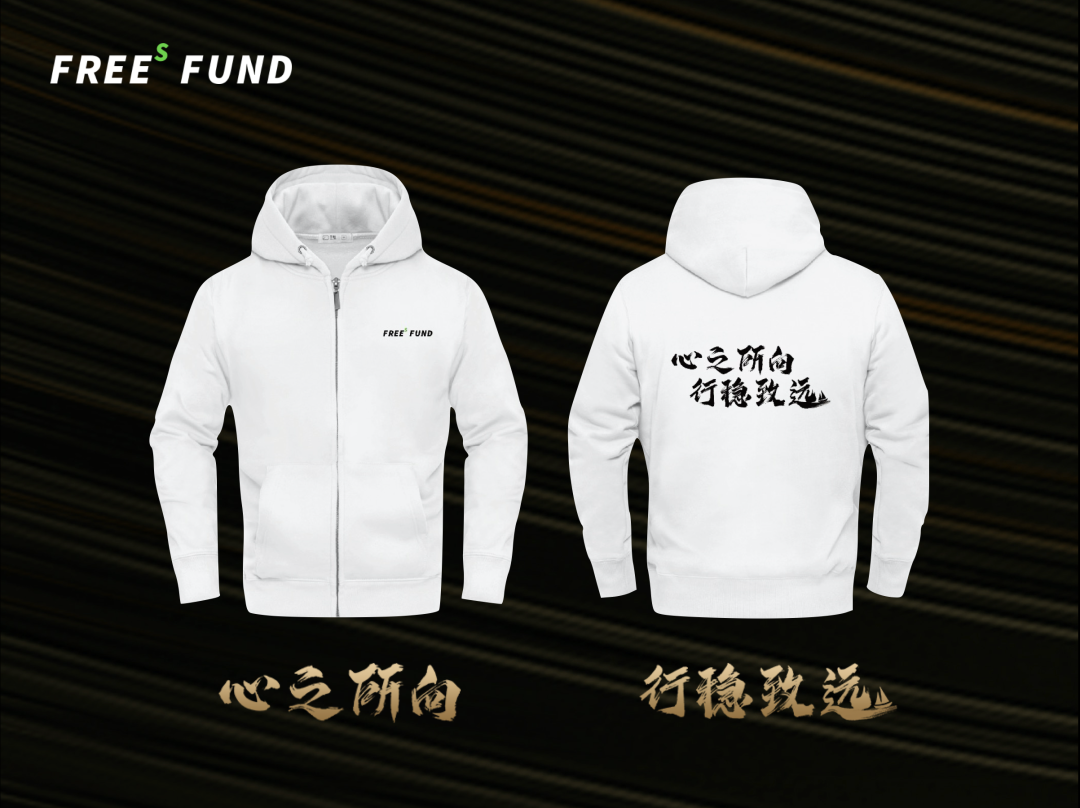
Hope this offers some food for thought. Feel free to share your own thinking on the future consumer market in the comments — the three most thoughtful responses will receive a custom FreeS Fund hoodie. In 2022, let's move steadily toward what we believe in.
01 The Future: Focus on Long-Term Consumer Trends
Over the past two years, we've seen unusual exuberance in consumer investing, waves of product innovation in niche categories, and what seemed like massive potential for offline retail reinvention. But most of these have been short-term phenomena driven by COVID-19 and other temporary factors. We analyzed these in detail at Hundun Academy, so I won't rehash them here. (Click to read "Li Feng: Eight Trends in China's New Consumer Economy Over the Next 10 Years")
Whether you're building or investing, the focus should be on the long term. Returning to our opening scenario: starting a consumer business today, going public might take eight or nine years. Extend that to ten-plus years, and you need to work backward from that future point — where to start, who to serve, what problems to solve, how large the market could be.
To answer this chain of questions, one issue demands deep consideration: looking long-term, how will China's consumer market change, and what structural forces will drive it?
One billion people will have spending power close to today's Shanghai residents
In November 2020, an explanatory document on the 14th Five-Year Plan for National Economic and Social Development and the Long-Range Objectives Through 2035 stated: "It is entirely possible to double the economic aggregate or per capita income by 2035."
What does doubling disposable income mean?
In 2020, national per capita disposable income was roughly 32,000 RMB; urban residents averaged about 44,000 RMB.
That year, China's permanent urbanization rate reached 63.89%. By 2035, urbanization will likely exceed 70%. Assuming China's population remains around 1.4 billion, that means roughly one billion urban residents.
If those one billion urbanites double their disposable income, it rises to 80,000–90,000 RMB. Shanghai's current per capita disposable income is about 72,000 RMB.
Assuming this target is met, in roughly ten-plus years, one billion Chinese will approach or exceed the average consumption level of Shanghai residents today.
Real estate prices will no longer rise too quickly, and housing's share of disposable income may decline
For many years, whether renting or buying, housing has consumed a significant portion of disposable income. But now, most people no longer see property as a good investment.
As disposable income rises, prices will still increase, but if housing prices no longer outpace income growth, this will offset some of inflation's impact on purchasing power.
With successive policies like "housing is for living, not speculation" and property tax reform pilots, home price growth should gradually moderate. When housing price growth lags far behind income growth, consumers will have more money for other spending. This is a key reason we're bullish on consumer.
Common prosperity will expand the middle class
By end of 2020, China had eliminated absolute poverty. The country is now promoting "common prosperity" through the "third distribution of wealth," which will further narrow development gaps and expand the existing middle class.
McKinsey & Company's 2020 China Consumer Survey showed China's middle-income population already exceeds 300 million and continues growing, expected to surpass 500 million by 2025.
The middle class is the core consumer demographic. In 2020, Brookings Institution published a special issue, China's Influence on the Global Middle Class, in which Homi Kharas and Meagan Dooley noted that by purchasing power parity, China's new middle class spent 7.3 trillion international dollars in 2018 — 18% of the global total (41 trillion), or 1.55 times America's 4.7 trillion.
To summarize: if China meets its 2035 income-doubling target, it will likely have the world's largest middle class. This middle class will be the backbone of the consumer market. If housing costs can sustainably decline as a share of disposable income, people will spend more across other categories.
Beyond disposable income, consumers themselves and their attitudes are evolving:
Post-95s and Gen Z, who haven't experienced material scarcity and are highly educated, are becoming the market's driving force. They no longer make purchase decisions based solely on price, paying more attention to products' spiritual attributes. Notably, they demand more technology, more environmental consciousness, and greater social responsibility — aligning with China's policy directions in tech and sustainability, and reshaping the entire consumer market.
Additionally, antitrust measures, interoperability mandates, and strengthened personal data privacy protections that began last year mean society is helping consumers reclaim control over information access. As information symmetry increases, these discerning, independently thinking consumers can better recognize products' essential characteristics. Thus, brands need stronger brand power and product power to survive in a more transparent market.
Cheap vs. expensive? Beyond cost-performance, continuous consumption upgrading
We've used this framework repeatedly. The US and Japan each went through three stages; China is simultaneously in the latter two, or transitioning from the second to the third.
The first consumption stage centers on durable goods and necessities.
The second stage brings optional consumer goods. Both stages essentially emphasize low prices. Every country in these phases is experiencing rapid manufacturing development, accumulating social wealth and boosting productivity — so making things fast, good, and cheap is the core competence.
In the third stage, as disposable income rises and consumption upgrades, many consumer goods must help customers feel they're becoming better (health, wellness) or more beautiful (aesthetics), while also carrying spiritual dimensions.
Overall, in this upgrading wave, the shift from pure functionality to spiritual attributes beyond function is inevitable. With upgrading, brands cannot sell on cost-performance alone. Cheap still attracts, but not enough.
Young consumers: seeking participation, valuing values
Today's young consumers are notoriously difficult to please — a common sentiment among consumer entrepreneurs.
One interesting observation: young consumers aren't looking for brands to do everything for them. They care about co-creation space, needing the satisfaction of participating in making something their own.
Image source: Xiaohongshu
Search for Haidilao notes on Xiaohongshu, and you'll find endless posts about customizing dipping sauces. The creative satisfaction of mixing your own combination makes it special. The same principle applies to Saturnbird Coffee's creative recipes — these self-created things carry unique meaning for consumers, a small method for turning users into loyal fans.
Moreover, this generation develops brand awareness early and demands emotional resonance.
Without having experienced material deprivation, they lack intense desire for material fulfillment, leading to high demands for spiritual attributes. They expect "correct" values from businesses: social responsibility, cultural and historical expression, environmental consciousness, animal protection, fairness, and so on.
More tech + more green: from nice-to-have to need-to-have
Among the values young consumers prioritize, technology and environmental consciousness — social responsibility dimensions — are receiving heightened attention. Previously, tech and sustainability were nice-to-have brand add-ons; now they're approaching need-to-have, as national policy is educating consumers to recognize these value-added dimensions.
In green consumption, for example, China has issued successive policies since 2016, including the E-commerce 13th Five-Year Development Plan and Notice on Promoting Green Development in E-commerce Enterprises.
Image source: International Institute of Green Finance, Central University of Finance and Economics
These green policies are genuinely influencing consumer behavior, especially young consumers' awareness of green and sustainable consumption.
A 2021 Mall Green Consumption Report by Southern Weekly and New Retail Think Tank found over 60% of respondents understood "green consumption," with Gen Z and post-90s showing significantly higher awareness than other age groups — 79% and 70% respectively.
Deep interoperability: information control shifts to consumers; brands need stronger brand and product power
Over recent months, antitrust and personal data privacy protection have emerged globally. These measures mean society is helping consumers reclaim control over information access. As information symmetry increases, consumers more easily recognize products' essential characteristics, and brands need stronger brand power and product power to stand in a more transparent market. This is especially true for the college-educated post-95s and Gen Z, who can seek out information, gather enough to evaluate and judge, and only then make purchase decisions after convincing themselves.
First, antitrust. Once wealth accumulation leads to severe polarization, antitrust becomes universal across countries — a method of rebalancing wealth.
Second, personal data privacy protection. China and globally are trending toward protecting personal data privacy. China's cross-border e-commerce faces challenges from this shift: advertising on Google and Facebook must shift from precision targeting to brand advertising, with far less user tracking available and privacy tags removed before placement. Previously, going from zero to one was relatively easy because you could leverage precise user data for targeted ads. This change has made it harder for consumer brands to make that initial breakthrough. (Read "FreeS Fund's Li Feng: Consumer Brands — Easy from 0 to 1, Hard from 1 to 10")
[Click video to watch Feng Shu's analysis of different consumer entrepreneurship stages 👆]
Both antitrust and privacy protection are driving true interoperability in the internet space.
Interoperability means eliminating barriers between platforms — Douyin, Tmall, WeChat, and others connecting so each can focus on its core competency. Platform A only does A's job. Only when users truly remember your brand will they actively seek to buy your product, making brand power and product power more important than ever. (Read "'Interoperability' Begins: What Are the Long-Term Impacts on Consumer Brands? | FreeS Daily Business Thoughts")
02 New Opportunities for Consumer Entrepreneurship and Investment in China
A uniquely Chinese opportunity: intelligent manufacturing + supply chain transformation and capabilities
In China, when an industry's capacity overflows, leveraging that excess capacity to transform other industries requires being a world-class, high-tech processing and supply chain hub. In the 1960s, Nestlé invented freeze-dried coffee. Over the past three years, upgraded freeze-dried instant coffee — represented by Saturnbird — rapidly penetrated the Chinese market, making China the primary country where freeze-dried coffee has gained mass adoption. Most other countries use spray-dried coffee, which costs less. So why could freeze-dried coffee spread so quickly in China despite higher costs?
This is inseparable from Chinese supply chains. Freeze-drying technology was originally developed for biological and blood products. Because China further advanced this technology, we developed high freeze-drying capability and capacity at relatively the lowest cost. Combined with China's coffee upgrade, consumption upgrade, and high internet penetration for sales, these factors converged to drive adoption using overflow freeze-drying capacity.
The same logic applies to semiconductors — supply chain capabilities overflow. Today's massive investment in new energy and chip capacity will likely lead to chip oversupply in China two or three years from now. What to do with excess chip capacity is the question to solve next, and it may contain enormous opportunity. When new micro-processing technologies combine with this excess chip capacity, they become transformative elements for other industries.
One framework: in mature categories, the "good" win big; in incremental categories, the "fast" win big
In principle, China's largest and earliest opportunities lie in "incremental categories." Even within mature categories, incremental sub-category opportunities exist. Categories that leverage internet traffic and content advantages have developed extremely rapidly in China and represent the main investment direction.
A few examples:
- Coffee. In 2017, annual per capita coffee consumption in China was just over four cups. Projections suggest Japan reached 180 cups of coffee plus over 200 cups of tea annually. Will China reach 100-plus cups per year? We're uncertain. But we can be sure that today, five years later, in first- and second-tier cities like Beijing, Shanghai, Guangzhou, and Shenzhen, annual per capita consumption far exceeds four cups. This is what we mean by incremental category.
- Contact lenses/circle lenses (meitong). China has high myopia rates, with increasing cases and younger onset. Most children now resist wearing frame glasses for convenience and aesthetics. Some non-myopic people also wear colored lenses to look better. These are all incremental users.
[Click video to watch Feng Shu's analysis of opportunities in the meitong industry 👆]
The next systematic opportunity: global brands that win both at home and abroad
The tech-enabled supply chain transformation we discussed earlier represents supply-side renovation; incremental categories represent demand-side renewal and iteration.
Because supply chains have gained intelligence and precision manufacturing, consumer goods can be different from before. New categories emerging and old categories being renovated stimulate new consumption demand. Through the interplay of new supply and new demand, China will give rise to global brands.
Take robotic vacuum cleaners — a category that renovated both demand and supply chain. Leveraging Chinese manufacturing, domestic brands created models with integrated sweeping and mopping, plus automatic mop cleaning. Though iRobot currently leads globally, Chinese brands like ECOVACS, Roborock, and Xiaomi rank among the top players.
Brands that are half grounded in technology, half in consumer products are most likely to become global brands. Previously, consumer brands like DJI typically "bloomed outside the wall first, then inside" — winning foreign markets before returning to domestic success. Going forward, some products with significant differentiation from existing consumer goods will have the chance to "bloom inside and outside simultaneously," because China's consumer market has the capacity and willingness to absorb these innovative categories. And in China's intensely competitive ("juan") domestic market — if you don't lose in China, you'll definitely win globally.
Summary
-
The past 2020 and 2021 looked extraordinarily prosperous for consumer, with hot entrepreneurship and investment activity, but actual consumer product sales weren't as strong as imagined.
-
Rather than looking at last year or this year, look ten years ahead. If China's macro consumer targets are achieved, the industry scale growth from rising disposable income will far exceed what we can imagine today, and far exceed our current expectations for total demand across various categories.
-
So how to capture these opportunities? Around China's market characteristics — the three circles of most efficient connectivity, largest consumer market, and most complete supply chain — whoever can combine these three circles can achieve innovation. If you're willing to be optimistic: as long as you don't lose in China's domestic competition, you'll definitely win globally.
Reader Giveaway
We welcome your thoughts on the consumer market in the comments. By 9:00 PM on January 10, the three most thoughtful commenters will each receive a custom FreeS Fund hoodie. In 2022, let's move steadily toward what we believe in.

▲ What Kind of Spiritual Consumption Does Gen Z Need? | 2021 FreeS Fund Annual Investor Summit ▲ Consumer Entrepreneurship: How to Capture Category Dividends? | FreeS Research Institute ▲ How Can Tech Companies Go From "Valuable Technology" to "Technology That Makes Money"? | FreeS Research Institute
▲ Expansion or Store Closures: Re-examining Offline Opportunities | Li Feng Column
▲Understanding US-China Development Model Differences to Find China-Based Entrepreneurial Opportunities | Li Feng Column
▲Metaverse Development Hypothesis: Starting With Social, Ending With Digital Immortality | FreeS Research Institute