In the context of great-power rivalry, the chip industry's race to the bottom is hard to avoid | FreeS Research · Chip Series

Why is the auto industry starved for chips while the consumer electronics industry has a surplus?

From the industry-wide "chip shortage" that began in 2020 to the recent "overcapacity" in consumer electronics chips, the semiconductor industry has been on a rollercoaster ride.
In this volatile market environment, how should Chinese chip companies, especially startups, respond? Why does the automotive industry face chip shortages while consumer electronics chips suffer from excess capacity? And how should we think about the future opportunities in the chip industry from the perspective of global dynamics and great-power competition?
Yongcheng Yang, partner at FreeS Fund, shared his thoughts on these hot topics in chips at China Star Market's "Xiao K's Irregularly Scheduled Talks" and Jazzyear's 2022 "Jazzyear Gravity X" Tech Industry Investment Summit. FreeS Fund's investments in the chip sector earned recognition from Jazzyear, placing it among the "Top 20 Best Investment Institutions in Semiconductors and Integrated Circuits for 2021-2022."
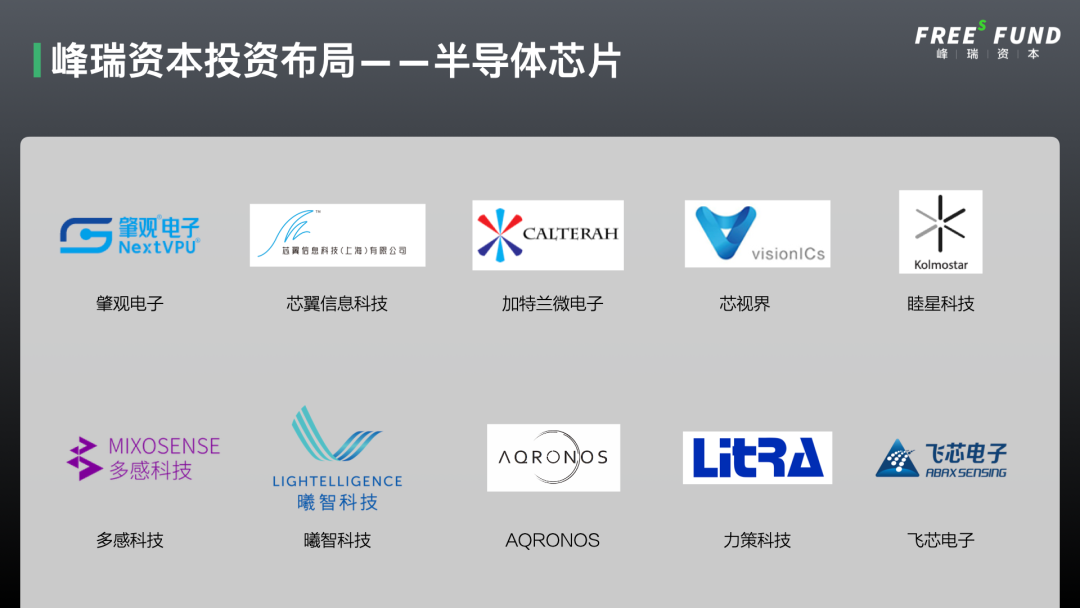
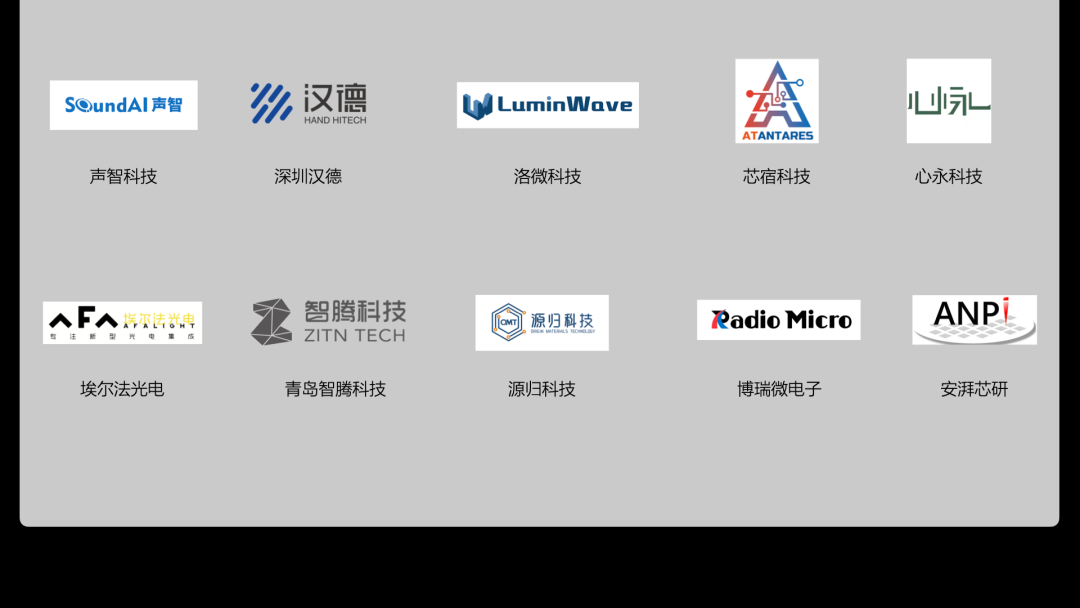
We've compiled excerpts from these conversations, hoping to offer fresh perspectives. We look forward to exchanging ideas with you (feel free to reach out at yangyongcheng@freesvc.com). This is the eighth installment in our "FreeS Chip Series" — click here to revisit previous articles in the series.

/ 01 /
The chip market itself won't vanish — elimination and consolidation are all normal
Q: Currently, many Chinese chip companies are focusing on design. There's a view in the market that "half of these chip design firms could disappear." What's your take on this view and the broader chip startup investment boom behind it?
Yongcheng Yang: When we talk about the semiconductor boom, let's look at the bigger picture of how this wave of chip startup investment came about. To some extent, this surge was triggered by external events — specifically, the various restrictions the US imposed on Chinese companies like Huawei. Because of these shifts in the international environment, China's "chokepoint" problem in chips became extremely urgent, suddenly accelerating the entire industry.
Looking at the development path of each part of the supply chain, we've generally followed a market-for-technology approach. Semiconductor development cannot happen without market pull. And among the various industry segments — from materials, equipment, and production lines to chip design — which is closest to the market? Clearly, it's the design end. That's why chip design firms saw the first wave of startup activity. In some hot directions, you'd often see multiple startups launching simultaneously.
Fortunately, thanks to the country's overall planning and coordination in semiconductors, along with direct support and investment, the industry has achieved relatively balanced development. In a very short time, we've covered everything from applications and design to materials, processes, equipment, and manufacturing. That's a good thing.
From the perspective of founding teams, when an industry heats up mainly due to external drivers, you'll see several distinct types of entrepreneurs with different backgrounds. In this boom, two types stand out.
One type consists of entrepreneurs who have been deeply rooted in China's semiconductor industry for over a decade. They were the "early visionaries"; but they may have started too early. Despite years of effort, they never saw the industry take off, and life was tough — fundraising was hard, customer acquisition was hard. Many entrepreneurs "fell" before dawn broke.
It wasn't until 2019 and 2020, when the US imposed strict restrictions on China in chips, that domestic chip companies finally got relief after a long drought. They gained more market opportunities, attracted investor attention, and were given high valuations and market caps by primary and secondary markets. Most of the companies now pushing for IPOs on the STAR Market belong to this cohort.
The second type are entrepreneurs who joined the fray after 2019, including many semiconductor and chip talents who returned after studying overseas. These later "catch-up" entrepreneurs aren't lacking in technical ability or confidence in their technology and market capabilities. Most of them were simply more risk-averse, with comfortable existing lifestyles, which made them slower to commit and act. But perhaps this very "slowness" and "lateness" caused many to miss the first wave of the STAR Market feast. Meanwhile, the competitive landscape they face is quite different. As latecomers, they must compete not only against overseas giants but also face "involution" pressure from the first batch of entrepreneurs. More uncertainty has been added to their path to success.
These different types of chip entrepreneurs are competing in the same market. There's both technology competition and market capability competition, plus the need to respond to market environment changes.
Some companies will ride the wind upward; others will be eliminated by the market. This isn't unique to chips — it's true of other industries too. "Add water when there's too much flour, add flour when there's too much water" (see "The Entrepreneurial Challenges and Opportunities Behind the 'Chip Shortage' | FreeS Research Institute · Chip Series") — this is how the market adjusts. Eventually we get a dough, and that's our win.
In the development of the semiconductor industry, especially as it enters a relatively stable period, mergers and acquisitions will likely occur. One type is consolidation among similar companies; another involves companies with different roles combining to form new entities that can broaden their product range and reach. For example, a company originally making IoT NB-IoT chips might also do 5G broadband chips, or even millimeter-wave radar.
Looking at the US semiconductor industry, over decades of development, American chip companies went through several distinct waves of M&A and consolidation. In terms of numbers, there are relatively few US chip companies left, but those remaining are giants. And these remaining giants may still merge with each other. So ultimately, the total number of semiconductor companies globally, including Chinese chip firms, will likely decrease — while becoming larger and stronger. Of course, as investors, we need to find those with a chance of being among the survivors.
From the height of China's overall semiconductor industry development, regardless of how individual chip startups ultimately fare, the Chinese chip market will not only persist but will most likely grow larger and stronger. The technology, experience, and talent accumulated by companies that are eliminated and don't survive will continue to serve our semiconductor industry.
From a timing perspective, Chinese chip companies are still in a phase of building internal capabilities, training while fighting. They need to adapt to "involution-style" competition in the vast domestic market, and then the battle-hardened survivors can "roll out" to broader international markets.
China imports more than half of the world's chips. Even if Chinese chip companies only capture 50% of that half in the future, that means hundreds of billions of dollars. China's semiconductor and chip industry undoubtedly has a bright future.
/ 02 /
Why did the automotive industry face such severe chip shortages?
Q: The chip shortage in auto manufacturing first showed signs in 2020 and is still ongoing. How do you view the chip shortage problem in the automotive industry?
Yongcheng Yang: The automotive chip shortage is actually consistent with the broader supply-demand dynamics I mentioned earlier. But due to the particularities of the auto industry, the "shortage" in automotive chips appears more "severe" than in ordinary consumer electronics chips, showing a pattern of "arriving fiercely, leaving slowly."
From the automotive industry's perspective, chips weren't as critical to cars in the past, so automakers' management teams didn't necessarily prioritize supply chain management and control for chips the way they did for mechanical components like engines and transmissions.
Moreover, in terms of probability of shortage, chip production efficiency is vastly higher than large components like engines and transmissions that are processed one by one. So historically, there weren't many cases of chip shortages causing vehicle production cuts, which means corresponding crisis response plans and timeliness weren't necessarily in place.
Additionally, from the perspective of chip foundries. In an industry as automated, intelligent, and scale-efficient as chip manufacturing, foundries prefer to produce the same chip continuously countless times, maximizing single-chip capacity to achieve maximum economies of scale. So memory, CPUs, smartphone and watch chips — these large-volume, single-type consumer chips — are foundries' favorites.
Looking at the auto industry, if a certain model produces 100,000 units annually and happens to need a special chip, that 100,000-unit volume translates to a relatively small number of wafers for the foundry (perhaps a few hundred). So the foundry's enthusiasm is questionable.
From a technical dimension, automotive-grade chips have extremely high quality requirements compared to consumer-grade chips. A car must overcome various harsh operating environments, guarantee more than a decade of service life, require multiple small-batch trial productions and validations, and has extremely strict requirements on production materials and processes.
To sum up, automotive chips are difficult to make, individual order volumes aren't that large, and they're not high priority for foundries. Meanwhile, automakers have rarely dealt with chip shortages. Supply and demand sides lacked smooth coordination during this period, so the combined performance was "arriving fiercely, leaving slowly."
Overall, the "chip shortage" may be a temporary phenomenon. Automotive chip volumes are still increasing substantially, foundries will pay more attention, and both sides will accumulate experience. Forming smooth coordination is highly probable. We should remain optimistic — after all, overall chip industry capacity is still there, and the "shortage" problem will gradually be resolved.
/ 03 /
For Chinese semiconductor startups, "involution" is probably unavoidable — heaven doesn't owe anyone a blue ocean
Q: In your view, what investment opportunities exist in chips and the broader tech field going forward, and what advice do you have for entrepreneurs?
Yongcheng Yang: In the long term, semiconductors and chips are undoubtedly a long slope with thick snow — not just because of the importance of chips themselves, but also because China, as the world's largest chip user, has a very low share of domestically produced chips. Chip imports consistently rank first among China's import categories, even exceeding energy imports like oil. So we can look forward to enormous market space for domestic chips in the future. This is the macro and strategic perspective — be optimistic, be confident.
At the tactical level, we should also recognize that competition among chip startups is unavoidable, and may even become intense. In many product and specialty directions, the situation will be several old and new companies competing for the same market, even the same order. In other words, "involution" is probably hard to avoid — it's just a matter of sooner or later.
Take the photovoltaic industry, for example. In that massive total market, domestic market share has now reached over 80%. Looking back at PV's development history, competition was once extremely fierce, with intense "involution." But the result is that China's entire PV industry has undoubtedly achieved huge success. So we often tell chip industry entrepreneurs to prepare for tough, hard-fought battles — only by building strong internal capabilities can you fight for final victory.
Of course, subjectively speaking, whether as investors or entrepreneurs, everyone probably hopes to discover blue oceans — vast market space, less bloody competition, and plenty of latent opportunities ahead.
But the problem is, blue oceans may be very difficult to predict, and perhaps can only be found by chance.
Although we've experienced massive blue ocean markets like the internet, PCs, 3G/4G/5G, and smartphones over the past few decades, which spawned numerous giant internet companies, hardware product companies, and chip companies.
However, it's hard to extrapolate from this that there will definitely be one or n large blue oceans next.
From history, the emergence of massive blue ocean demand wasn't part of heaven's fixed plan, nor is it an earthly habit; or to put it jokingly, heaven probably really doesn't owe anyone a blue ocean. (Click to read "Yongcheng Yang of FreeS Fund: The Red Ocean Is the Ultimate Battle Entrepreneurs Must Face")
So for entrepreneurs, if you don't encounter a blue ocean, perhaps that's normal. And complaining is completely useless. As time goes on, talent reserves in China's chip field are growing, and various chip domain startup teams will emerge. These teams must compete with each other while also responding to technical challenges from foreign companies. All you can do is figure out how to better respond to the market — dealing with both "internal involution" and withstanding "external competition."
In short, for semiconductor and chip investment and entrepreneurship, we should be strategically optimistic and tactically pragmatic. Controlling cash flow, refined operations, and market development — these fundamentals must be solid. Be bullish on the big picture, and work hard on the specifics.

What Happens When the Hottest Tech Tracks Intersect? | FreeS Chip Series
Is Elon Musk's Prediction Right? Will LiDAR Make It Into Cars? | FreeS Chip Series
In Chips, How Do You Go From Scientific Innovation to Tech Entrepreneurship? | FreeS Chip Series
Why Are We Bullish on the Optical Chip Industry? | FreeS Chip Series
Can Domestic Semiconductor Materials Outpace International Competitors? | FreeS Chip Series
FreeS 2021 Outlook ④ | Final Predictions on Sensors Behind Autonomous Driving

Click "Read Original" at bottom left to view the complete "Jazzyear — 2021-2022 China Tech Industry Investment Rankings."
