Li Feng Column | From iPhone X, Smart Speakers to New Drug R&D and Environmental Monitoring: How I View Technological Innovation

Look for opportunities at the intersection of technological innovation and physical industries — where digital solutions meet real-world infrastructure, manufacturing, and heavy assets.
In this fifth column, we're talking about deep tech.
This October, 102 years after Einstein proposed the general theory of relativity, humanity detected gravitational waves from the collision of two neutron stars for the first time. For centuries, such scientific discoveries and technological innovations have irreversibly rewritten human history, accelerating the world forward.
Since FreeS Fund's founding in 2015, we have consistently and firmly believed in technological innovation, trusting that technology can transform commercial society from the ground up in more profound ways.
We identified deep tech as one of our primary investment directions, and have made investment forays into intelligent manufacturing, sensors and chips, vertical applications of AI, biotechnology and new drug R&D, new materials, new energy, and environmental protection.
In this column, I attempt to answer the following questions, and more importantly, I hope to hear your views:
- From the iPhone to Meitu, which devices have been made intelligent by advances in sensors, and what commercial applications have they spawned?
- From smart speakers to disease diagnosis, how does AI function in specific scenarios?
- Which industries and enterprises will meet the needs of China's economic restructuring and have the capacity to grow rapidly?
We welcome your thoughts at the end of the article. Going forward, we will also speak with entrepreneurs and industry experts in the tech space, attempting to document their real footsteps as they advance through vast unknowns.


From Sensors to Apps
The iPhone X officially went on sale in China. Time flies — it's been ten years since Steve Jobs unveiled the first iPhone in 2007. Many people on WeChat Moments were reminiscing about the classic phones they used a decade ago: the Nokia 5800, Sony Ericsson sliders, Motorola flip phones, and so on. Obviously, none of them can compare to today's smartphones.
Tim Cook called the iPhone X a "landmark" product, "the future of the smartphone." The little "notch" on its forehead integrates numerous expensive and advanced sensors, drawing considerable attention. Let's use it as an example to examine how phones have quietly completed the transition from traditional phones to intelligent devices.
Actually, as early as 2000, phones already had recording capabilities. Sharp launched the J-SH04 in Japan, the world's first phone with a built-in camera — at just 110,000 pixels, with poor image quality that didn't amount to much.
In subsequent years, old brands like Sony Ericsson, Samsung, LG, and Nokia all released camera phones one after another. But even by 2007, when the first iPhone debuted, it only packed a 2-megapixel camera with fairly basic shooting functions. People still preferred using dedicated cameras for photos.
So when did phones become our primary photography device? The answer is probably within the last ten years. Only after optical sensors made major breakthroughs, camera pixels improved dramatically, and features like optical image stabilization and laser autofocus were added — with continuous refinement from imaging to focusing to image processing — did photography become one of the phone's core functions.
In other words, stuffing optical sensors with sufficiently high precision, small enough size, and relatively reasonable cost into phones was the prerequisite for everything that followed.
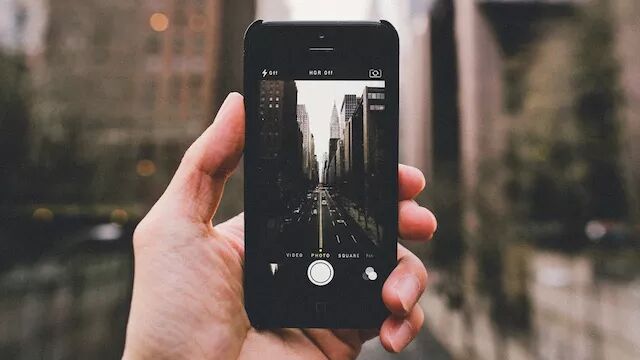
▲ As optical sensors continually evolved, phones gradually became our primary photography tool.
After the hardware upgrade, people began using their phones to take photos more and more frequently, and various commercial applications emerged: Meitu, Snapseed, Instagram, and other photo-editing apps. These applications transformed Chinese women who previously didn't much enjoy photography into people who basically all know exactly which angle to shoot from and how to retouch to look their best. Our modes of communication shifted accordingly, from pure text to a greater preference for sharing photos and videos.
With the iPhone X, sensors made another leap. The 12-megapixel sensor allows phone image quality to directly rival many professional cameras. More importantly, the TrueDepth camera system enabled camera functions to expand from the planar into the spatial realm.
The TrueDepth system's composition is complex: it includes an infrared camera, flood illuminator, proximity sensor, dot projector, and five other main components. The working principle roughly involves using the dot projector to cast over 30,000 invisible infrared dots, then determining the distance between each landing point and the camera based on the size and distortion of these dots on different parts of the face, thereby mapping facial contours to achieve Face ID. Simultaneously, by constructing spatial data models, the camera can simulate certain lighting effects when taking photos.
This will likely push our photo-taking volume to another level. Whether more advanced photography software, unlocking and payment technologies, or apps requiring AR effects — applications that currently seem impossible will gradually become possible, and new commercial applications will emerge accordingly.
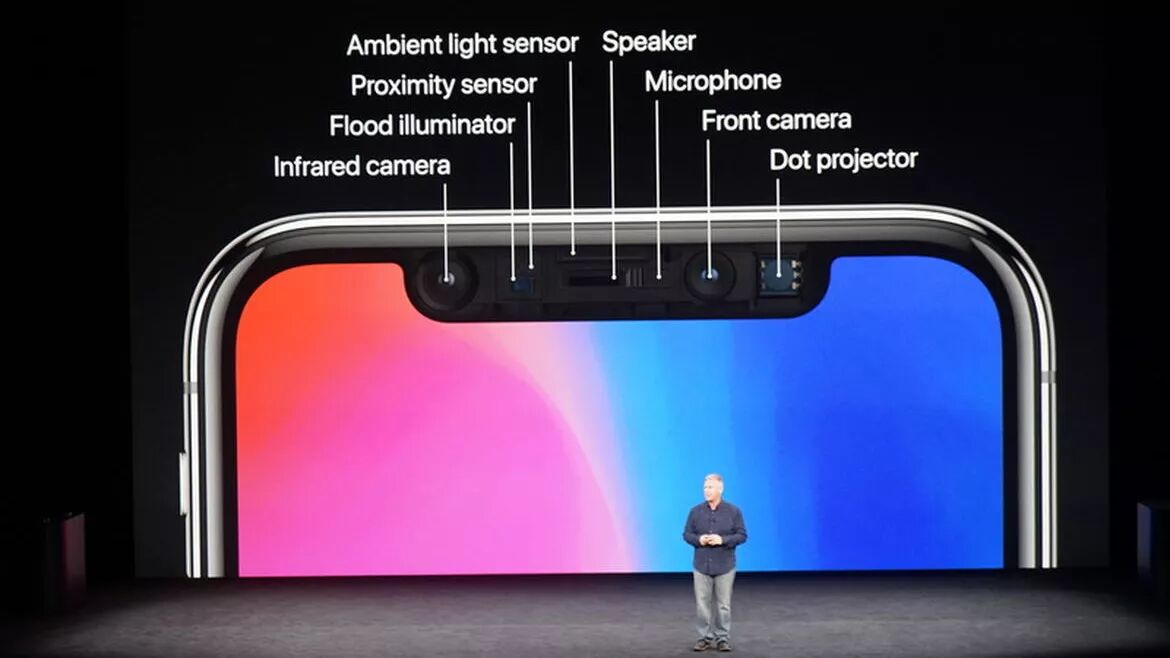
▲ The sensors in the iPhone X "notch" will spawn new commercial applications.
To briefly summarize this process: after sensors and sensor algorithms advanced to a certain degree and were applied to phones, phones completed the transition from traditional to intelligent, simultaneously spawning numerous commercial applications. The emergence of various map and navigation apps, Uber, DiDi, Mobike, and ofo also follows this logic. Their birth was predicated on advances in gyroscopes and positioning sensors that enabled phones to take on GPS functionality.
Q: Over the past decade, which devices have gradually become intelligent? What advances in key components drove this change? And what key components are currently advancing that could affect our lives in the future?
From "Online and Connected" to Artificial Intelligence
Beyond phones, progress in drones, autonomous vehicles, logistics, IoT, and smart homes also depends heavily on sensor breakthroughs. From our experience, solutions grounded in specific scenarios and based on specific needs will first become highly sought-after.
NVIDIA's R&D spending on deep learning dedicated chips has already exceeded $2 billion this year, and the wave of custom chips is gradually becoming apparent. We've also invested in several companies in this space. Kolmostar, for instance, has developed GPS sensors with low cost and energy consumption but high positioning precision, which will enable more devices to provide location information in the future. From sports watches to vehicles, it can cover every aspect of our lives and will spawn many new applications.
Another example is Xinyi Information, a company working on Narrowband Internet of Things (NB-IoT) chips based on cellular technology. Since the "brick phones" of the 1980s, mobile phone chips have transmitted signals through public network base stations, with coverage and stability issues. Xinyi Information is working to improve this. Their chips ensure low cost, deep coverage, and stable data transmission, with application potential in smart homes, smart buildings, utilities, industry, and agricultural environmental monitoring.
Gradually, sensors will enable devices intimately connected to our lives to become "online and connected," interacting with us. This is the critical step toward IoT and artificial intelligence.
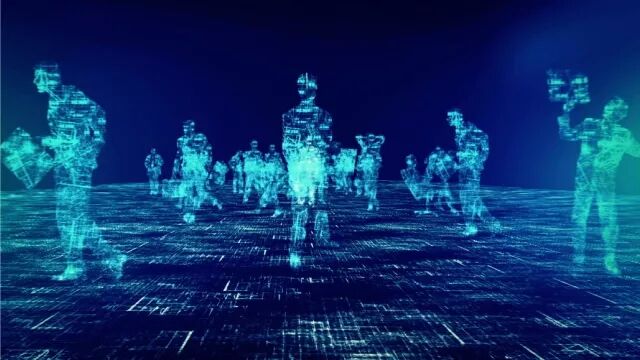
▲ By 2020, IoT device installations will reach 28.1 billion units. Our connection to the world will become even tighter.
The next step is extracting, computing, and optimizing data.
Take smart speakers, which have been particularly hot in the Chinese market since 2017, as an example. Voice recognition is an important gateway for intelligent interaction, so smart speakers can essentially be seen as an attempt to redefine the connection between humans and everything through voice recognition.
This isn't tech companies' first attempt to use voice recognition for human-machine interaction. In 2010, Apple acquired the intelligent voice assistant Siri and deployed it on the iPhone 4S released in 2011. Amazon and Google subsequently launched Alexa and Home, attempting to pioneer smart home and AI intelligent interaction terminals for the IoT era.
In 2016, we also invested in a company in this space — SoundAI Technology, which develops voice recognition-related chips. Their work is a typical hardware-software integration, involving microphone arrays, noise reduction algorithms, hardware platform configuration, and more. The goal is to determine what kind and how many microphones are needed to achieve clear voice recognition in different environments, with good audio pickup and noise cancellation.
At the time, this technology didn't seem to have particularly clear applications. But after the smart speaker boom erupted, it immediately found its place: since different environments have different background noises — traffic noise when driving, TV sounds at home in the evening — for speakers to recognize user voices and execute commands, they must achieve high-quality audio pickup and noise filtering. This requires using microphone array combinations for algorithms, forming modules to process data, filter noise, and extract key information.
Many smart speaker manufacturers found themselves unable to crack this technical challenge and turned to SoundAI for partnership. This is already a very typical application of artificial intelligence in a vertical domain.
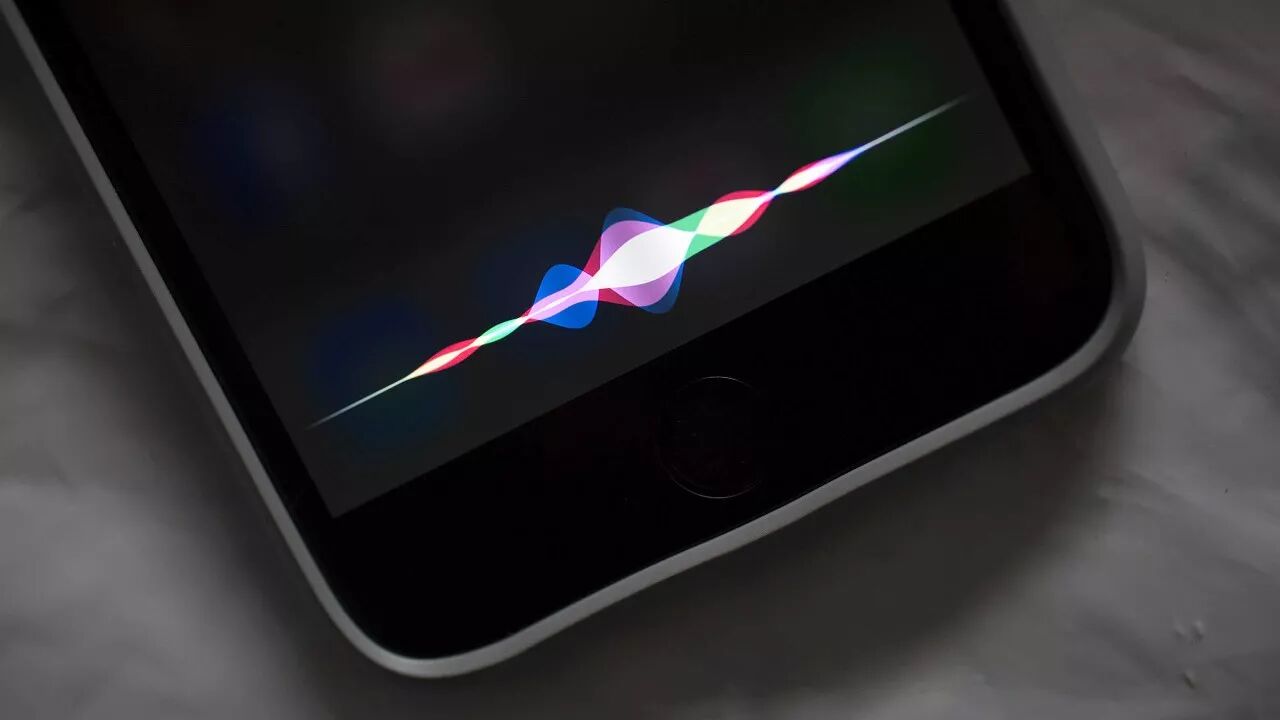
▲ From Siri to smart speakers, voice recognition has become an important gateway for intelligent interaction.
For AI applications, we have an internal criterion: when the cost of generating data in a domain drops dramatically and the degree of datafication increases significantly, that domain tends to give birth to new efficiency tools and opportunities for AI.
Take healthcare as an example. We continuously monitor medical projects combining with AI, and have invested in projects including XtalPi. XtalPi does computationally driven innovation in solid-state drug R&D, achieving highly accurate solid-state drug screening and design through computational physics, quantum chemistry, AI, and powerful cloud-based intelligent algorithms, dramatically shortening the time for drug design, polymorph screening, and drug formulation development.
This logic applies equally to industrial technology, new materials, new energy, and environmental protection. Over the past two years of investing, we've called this type of technology innovation combined with physical entities and real industry "deep tech" innovation.
Q: In which domains is the cost of generating data experiencing dramatic declines and the degree of datafication beginning to rise? How will AI function in these domains?
Technological Innovation and Value Return
Why is "deep tech" important, and why will it be a good investment opportunity?
From a macro trend perspective, there are three reasons.
Let's start with an interesting set of data we discovered while researching chips: over the past two years, China has spent $230 billion annually on chip imports, an amount that has already surpassed crude oil imports. Looking at the past decade, cumulative spending has exceeded $1.8 trillion. Even using exchange rates on the lower end of that period, this far exceeds 10 trillion RMB.
China's chip demand accounts for over 40% of global market share, and the vast majority of consumer electronics containing chips are manufactured in China. But the paradox is that despite such a massive market, domestic chip brands can only supply about 8% of domestic needs themselves. Chips with real margins and pricing power are mainly imported — for instance, American chip giant Qualcomm derived roughly 60% of its 2016 net profit from China.
From an economic structure perspective, this has become a problem that must be solved. Over the past couple of years, the government has established industry funds totaling hundreds of billions of RMB, aiming to transfer key technologies to China. Since the state is determined to spend heavily to gain industrial dominance and profits, this process will certainly contain enormous commercial opportunities.
The second reason starts with "Moore's Law," which the silicon chip industry has hotly debated for many years.
Intel co-founder Gordon Moore proposed in 1965 that the number of transistors per chip would roughly double every 12 months. In 1975, based on industry data, the law was revised: Moore extended the doubling period for both transistor count and performance to 24 months.

▲ The silicon chip industry once treated "Moore's Law" as a de facto industry target to strive toward.
But after entering the 21st century, this law gradually became less reliable. The reason: chip manufacturing costs nearly double every four years. The cost of making chips faster and smaller has become extremely high, and the pace has slowed considerably. Especially in recent years, the general consensus is that "Moore's Law" has neared its limit after a prolonged illness.
The result of this is that large chip companies who previously leveraged "Moore's Law" to capture market quickly have been affected, no longer needing to employ large numbers of engineers. Many R&D personnel have left voluntarily or involuntarily, with a significant proportion being Chinese. Coincidentally, China's industrial structure now needs these people to innovate, so they have gradually returned to China to begin R&D work on IoT-related intelligent devices.
Thus, both market demand and the talent conditions capable of achieving innovation have simultaneously fallen into place.
The third reason is somewhat more macro. If we shift our perspective to China's stage of economic development and review what has happened over the past 40 years, we find that across large and small domains, productivity gains have basically come from adjustments in production relations — from collective ownership to household contracting, township enterprises, private enterprises, joint-stock enterprises, and so on — repeatedly releasing productivity through labor relations, closely tying enterprises with owners, executives, and even all employees through production relations to mobilize everyone's enthusiasm.
Now, the transformation in production relations is largely complete, and labor cost advantages are gradually disappearing. The next round of efficiency gains can only come from improving productive forces, from finding ways through technological innovation.
Since technological innovation has become national policy, then for a period going forward, technology applications that can integrate with industry have the opportunity to become important and rapidly developing directions. The several domains of "deep tech" innovation basically conform to this pattern.
Take environmental protection as an example. When we conducted research in the Jiangsu and Zhejiang regions, we found that many local governments have already made environmental protection and GDP joint binding constraints, proactively regulating enterprise development within their jurisdictions. The less pollution emitted per unit of output value, the higher an enterprise ranks and the more government support it receives to grow stronger; lower-ranked enterprises may face exit.
Environmental protection is no longer something people only think about when they see smog, wastewater, and garbage. It has basically become a matter of enterprise survival and development, closely connected to economic trends. Some local governments have already deployed hundreds or even thousands of environmental monitoring instruments (sensors) within urban areas, to learn as quickly as possible where standards aren't met and where problems arise. The trend toward refined and data-driven management has also begun to emerge.
Policy dividends, a mature market, and new technology integrating with industry — iterating and interacting — have shaped environmental protection into a trillion-RMB market, and environmental enterprises with core technology have gradually moved to center stage.
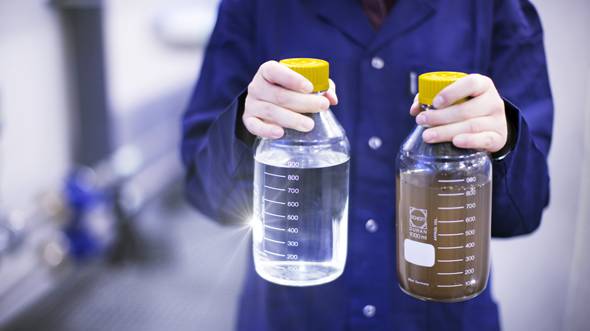
▲ Environmental protection and pollution control are beginning to truly enter the data-driven and refined stage. Quality environmental data is the basis for supervision and also evidence for due diligence and liability exemption.
We've also invested in several projects in this space. MicroHAOPs, for instance, has brought American wastewater advanced treatment and water reuse technology to China, doing highly specialized work: independently synthesizing innovative nano-aluminum oxide (HAOPs) as filter media, using entirely new membrane module design concepts. Their first equipment installation in Norway has already achieved unattended operation with fully automatic monitoring and operation. Their technology serves as pretreatment for reverse osmosis or ultrafiltration membranes, effectively solving previous pain points in membrane treatment — low flux and high cost. In the future, for situations requiring high water volume and high effluent quality, they can provide relatively ideal technical solutions.
In summary, from a macro trend perspective, we're very confident about investing in these types of "deep tech" enterprises. On one hand, technological innovation isn't easily capital-bubbled and won't readily deviate from value fundamentals; on the other hand, China now has market demand, policy support, and talent foundations in place. We believe that in domains where technological innovation can effectively integrate with physical entities and real industry, investment returns should be reasonably good, and the speed of value return should be fairly reasonable.
Q: Which industries and enterprises will meet the needs of China's economic restructuring in the coming years and have the capacity to develop rapidly?

▲ Li Feng Column | Shared Bikes Enter the IoT Track, Where Does the Data War Go Next?
▲ Li Feng: Why Uber's Move into Autonomous Vehicles Is Inevitable
▲ Pigs in the Wind All Fall to Their Deaths; Fortunately, Tech Entrepreneurship Lets Value Return to Reality