On the Eve of IPO, a Conversation with METiS Pharmaceuticals' Caida Lai: From Formulas on a Whiteboard to "The SpaceX of Pharma"
The story behind the investment.
On May 13, 2026, METiS Pharmaceuticals (7666.HK) listed on the Hong Kong Stock Exchange, becoming the world's first publicly traded company focused on AI-driven drug delivery, and the first HKEX-listed company in AI-powered large-molecule biopharmaceuticals. Founder and CEO Chris Lai, who led the team through six years of entrepreneurship, took METiS from founding to IPO faster than any other unicorn in China's AI drug discovery industry.
FreeS Fund was METiS's first institutional investor, participating in four consecutive funding rounds — leading the angel round in late 2019, followed by follow-on investments in the angel+ and Pre-A rounds in 2020, and the Series A in 2021.
FreeS has long valued talent networks at North American universities, and our team frequently travels to the US to source deals. Meanwhile, the intersection of AI and novel drug development has remained a core research focus. These two threads converged to introduce us to exceptional Chinese entrepreneurs like Shuhao Wen of XtalPi and Chris Lai of METiS Pharmaceuticals.
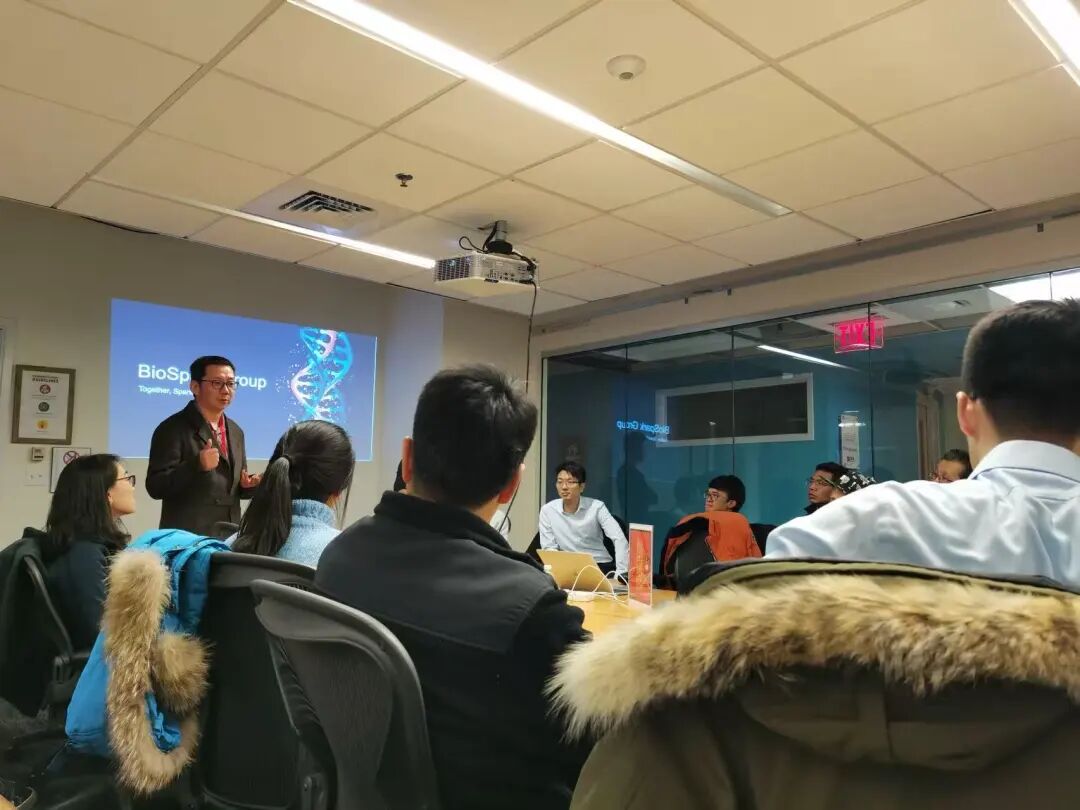
In November 2019, "Uncle Feng" gave a speech at a North American event organized by MIT BioSpark; Chris was in the audience.
FreeS's relationship with Chris Lai dates back roughly ten years. At the time, Lai was running a water treatment company called AquaFresco in Boston. According to Lai, when he first met Li Feng in Boston, Li told him: "Your technology is extremely impressive, but your market is too small. Next time you work on something with a billion-dollar market, I'll definitely back you."
In 2019, Lai pivoted to AI drug discovery — what would become METiS Pharmaceuticals. He came to FreeS to pitch the project, drawing the underlying principles on a whiteboard with formulas. Li Feng and Rui Ma decided to invest that same day.
But it took another month to actually close the deal. During that month, to secure the lead investor position, the FreeS team engaged in repeated discussions with Lai. Our biotech investment team and portfolio services team actively coordinated, connecting him with portfolio companies, introducing experts from the National Center for Pharmaceutical Formulation and university professors, and providing extensive support.
On January 10, 2020, METiS Pharmaceuticals was founded. On May 13, 2026, METiS listed on the Hong Kong Stock Exchange, closing its first day up more than 100%.
Shortly before METiS's IPO, FreeS Fund partner Rui Ma sat down with Chris Lai for a conversation. They discussed the story behind the investment, the underlying logic and endgame of AI drug discovery, key decisions in METiS's development, and what it felt like for a young man from Taiwan to build a company on the Chinese mainland.
We're presenting both the full video and an edited transcript. We welcome you to explore both.
Reader Engagement:
How do you understand the "rocket to the nanoworld"? Share your thoughts in the comments. By 5:00 PM on May 20, 2026, the two most thoughtful commenters will receive a free book.
/ 01 / First Meeting: Between Two Buckets
Rui Ma: We actually have quite a connection. My background is in water treatment; my PhD was in nanomaterials — relevant to both of your projects. The first time we met, you were still working on AquaFresco, a water treatment company. I'd just joined FreeS, covering environmental tech. By the time we actually invested in METiS, I'd shifted to focus on AI drug discovery. Let's recall that first video call.
Chris: That was very early on. I was still at MIT. Our lab was a converted warehouse in pretty rough shape — that's where we built our first prototype. I demonstrated it for you over video. Water regeneration isn't a particularly large market, but it was a true zero-to-one experience, actually turning science into a product. That was incredibly valuable for me.
Rui Ma: FreeS has always emphasized our North American network. We were frequently in the US back then, and I remember saying that MIT chemical engineering tech had to be solid.
I also remember asking to see your lab setup — a pretty technical request. We scheduled the video call for what was 6 PM my time, 5 AM yours. I remember it very clearly. You were standing between two large buckets, demonstrating to me what the adsorbent materials were, what the demulsification materials were. I was deeply impressed — this founder had real ideals, wanted to do something for the environment, something beneficial for humanity. Very tech-oriented, very engineering-driven, and extremely hardworking.
Rui Ma: Later, your direction changed dramatically. There's certainly internal logic behind it, but could you walk us through what happened? What led you from water treatment to AI drug discovery, and why did you believe in this path?
Chris: Actually, my entire PhD at the Novartis-MIT Center was drug-focused. My vision from the start was to use materials and computational approaches to disrupt pharmaceutical processes — I began working in this direction in 2011. Water treatment was more of a side project, another experiment in learning how to innovate and build products. But eventually I returned to my original purpose.
Especially around then, I connected with XtalPi's Shuhao Wen. We realized we were at a genuine inflection point. They had taken some academically discovered algorithmic tools and built what they called crystal form prediction — essentially, predicting how small molecules would assemble in space like Lego bricks, without experiments.
That was genuinely shocking to me. At the time, R&D in the industry still combined wet and dry lab work. A purely AI-driven breakthrough — that was the first time I'd seen it. From that point, I became convinced that AI would bring massive transformation to the entire pharmaceutical landscape. AI isn't just about acceleration; it's not merely an efficiency play. It can make previously undruggable targets druggable. Ultimately, we hope to reprogram every human cell like a tiny computer.
So I knew from the very beginning — this might be my life's calling.
/ 02 / The Investment Story: Whiteboard Pitch, Fighting for Allocation
Rui Ma: I remember it was 2019. I was running in the Olympic Forest Park when Shuhao suddenly added Li Feng and me to a group chat, saying there was an excellent project. Shuhao is chairman of XtalPi and also a FreeS portfolio founder.

October 2016: XtalPi Chairman Dr. Shuhao Wen (right) and METiS CEO Dr. Chris Lai (left) meet at an MIT event. (Source: XtalPi)
I looked — isn't this Chris? I opened the deck and saw Wen Shou was also involved — he would later become METiS co-founder. We'd actually seen Wen Shou's project in Boston too, called Inkbit, a 3D printing system with real-time visual control. Wen Shou was extremely gracious; after showing me that project, he treated me to Whole Foods and drove me to the airport. I thought, there are two people in this project that I already know — I absolutely had to talk to them.
Later we invited you to FreeS to discuss in detail with Li Feng. We decided that same day: we had to invest, no matter how many others were competing.
Though the decision was fast, our logic was clear. First, our advantage was at the intersection — we look at both AI and pharmaceuticals. When you said formulation, we immediately knew this could become novel drug development. Second, we'd seen many AI drug discovery companies, and their biggest problem was explaining how computational approaches could solve data problems — what we'd today call synthetic data. You gave an analogy: predicting crystal forms is like calculating AAABBB; predicting formulations is like calculating ABC.
We instantly understood: this is fundamentally more complex than crystal form prediction, but it's absolutely doable. Plus, with Hongming Chen's high-throughput platform and reinforcement learning for dimensionality reduction, you had a very complete story from day one.
And you conquered investors in a very scientist, very engineer way — standing up and drawing the principles on a whiteboard. That resonates deeply with FreeS. We love founders who can stand up and illustrate the fundamentals on a whiteboard.
Chris: Maybe because our deck was so terrible (laughs). But this is also where FreeS has a real advantage. Many investors truly need to see before they believe. But you all tend to believe first, then see that we can execute. That's a crucial element of angel investing.
Rui Ma: Shuhao also gave you extremely strong endorsement. His exact words: "Chris is somewhat like me, but more capable." We thought, Shuhao alone is worth a billion dollars — you might be worth more. That helped us decide.
Chris: Thank you so much! That reminds me — I first met Li Feng in Boston, back when I was still on my first water treatment project. After seeing it, he told me: "Chris, your technology is extremely impressive, but the market is too small. Next time, if you work on something with a billion-dollar market, I'll definitely support you."
Rui Ma: Though we decided that day, it took nearly a month to lock in the deal. During that month, you managed me quite well. Every time I asked, you'd politely say: "Most likely FreeS, but we need to discuss with colleagues." It reminded me of when you were doing water treatment — back then, you were the one frequently messaging me: "Eric, any good news? Can we push this forward?" Now the dynamic completely flipped.
Early-stage investing is a mutual selection process. There's a popular saying now: "Life isn't the same with just anyone." That month, we worked quite hard. I sent you quite a few long messages, trying to win your support. We also introduced some relevant portfolio companies and industry resources. But much of the time was excruciating waiting.
I had enough deal experience to know there must be other competitors making this so difficult to close. But why did you ultimately choose us?
Chris: There were indeed several firms competing for the angel allocation. But I was fairly certain early on that FreeS would be our primary angel investor — that wasn't a particularly difficult decision for me. I sensed early that FreeS was a long-term partner, not the type to grab allocation once and exit when someone else comes in later. A very long-term, first-principles-oriented investment firm.
You may not remember, but you specifically told me something back then. You said: "Chris, I think your current capabilities can probably take a company to roughly $200-300 million in valuation."
Rui Ma: I said something that emotionally unintelligent? (laughs)
Chris: (laughs) Then you told me what I'd need to do to reach a billion dollars. That was actually a plus for me. An investor isn't about flattering founders when competing for allocation — it's about genuinely helping founders think.
Angel investing is a companionship process. I'd just come out of school with little industry experience, clueless about management, corporate strategy, execution. Having an investor willing to tell me the truth was incredibly important. When you told me this, I wasn't discouraged — I was motivated. I kept thinking about how to become a CEO who could build a future unicorn.
Rui Ma: After closing, per FreeS's post-investment tradition, we help with the next round. I introduced you to Sequoia, and things moved very quickly. After that, METiS entered rapid growth, raising three to four rounds in 2020 alone. Every round, I fought with you to the limit for allocation — must have been hard to coordinate. Thank you for still giving us substantial allocation. We invested in four consecutive rounds.
Chris: Looking back at our WeChat history, it was genuinely difficult. FreeS's closing and Sequoia's closing were just over a month apart, very close. I actually had a major internal struggle about whether to just take Sequoia's money and cut FreeS out (laughs).
Rui Ma: I didn't realize that was a risk (laughs).
Chris: But it didn't feel right, so I didn't do it. I'm very grateful you introduced Sequoia for our angel+ round — that round was hugely instrumental in the market explosion that followed.
/ 03 / No Pivot, No Spin-Off: Focusing on Fundamentals Beneath Sentiment
Rui Ma: In my view, your fundraising ability rivals Shuhao's. It looks like every round went smoothly, but were any actually difficult? Or any you regret doing?
Chris: None were easy — they just looked easy. In 2020, we were running faster than our technology's fundamentals could keep up with. So 2021-2022 became harder; we had to rapidly advance our technology and deliver outputs matching what investors expected at our valuation.
By the middle, the capital winter became very apparent. Your output had to far exceed market valuation expectations to raise money. In 2022-2023, we felt our fundamentals far exceeded our valuation, yet it was still hard to raise. The market was extremely cold; no one knew how to exit or go public, and investors lacked clear vision of what our final products would look like. Meanwhile, many investors were transitioning from dollar to RMB funds — their focus and criteria were completely different. We had to over-deliver to secure their continued, larger-scale support.
Rui Ma: You've basically covered the full spectrum. Early on, you raised from early-stage funds like FreeS and Source Code Capital, then dollar funds like Lightspeed and Sequoia, then shifted to insurance capital, and finally pre-IPO state capital like Beijing and Daxing. You've been able to communicate your value and vision to every investor type — very impressive.
Chris: This aligns with our industrial layout. Whether cutting-edge nanotechnology or rapidly commercializable products, we've delivered on both. These two ends are precisely what dollar and RMB investors respectively focus on.
On the nano side, we've created first-in-class, best-in-class breakthroughs that are hard to understand but could open massive markets. Meanwhile, we have reformulated drugs like 004 that show patient results quickly. Many AI-driven science companies only do cutting-edge work without landing products that help patients. This gap makes it hard for dollar and RMB investors to enter the same project. Our chosen direction had both from the start — major innovations in autoimmune diseases and oncology, plus quickly commercializable products with strong clinical results. It's a dual-appeal layout; both sides can understand and support.
Rui Ma: From initial reformulated drugs, you shifted toward delivery, adapting to new drug modalities. Was this your vision from day one?
Chris: Our first deck actually included LNP (lipid nanoparticles). On that whiteboard, there was an arrow pointing from formulation toward nano. I wrote that nano was extremely difficult, impossible on day one. My blueprint was: start with formulation, first understanding simple small molecule-material interactions, then evolve that algorithm into nano capability. Step one: micelles. Then gradually larger LNP systems, then antibody conjugation, antibody-LNP systems. Our original PPT mapped a ten-year plan; we've achieved it in six.
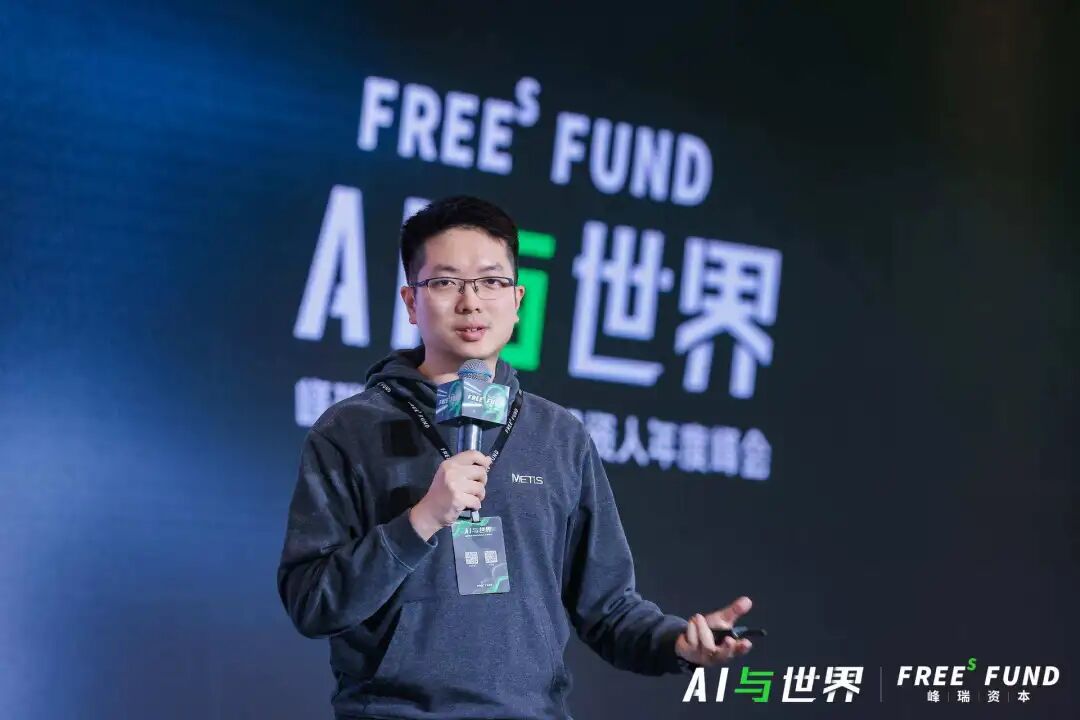
At FreeS's 2024 LP annual meeting, Chris Lai presented on "AI-Driven Drug Delivery and Drug Discovery."
Rui Ma: We also once discussed incubating a separate LNP company. XtalPi incubated METiS, so I suggested helping you incubate "DeliTai." But you ultimately kept it in-house, and it now supports a substantial portion of your market cap.
Chris: LNP failure rates are extremely high; building a standalone company was genuinely difficult at the time. Companies like Stemirna and Abogen had already emerged — how would we differentiate? We later realized it required long-term accumulation. We weren't building a me-too mRNA vaccine company, but genuinely pursuing in vivo therapeutics, delivery to different organs and tissues — not achievable in a day or two. Hard to truly incubate; what investors needed to see probably required the scale we've now reached.
A spin-off would have分散精力 [diverted focus], required separate fundraising and team-building — much lower success rate. We resolved to keep it in-house and execute well.
Later we realized this was absolutely correct. Developing a drug is genuinely difficult; good delivery technology alone isn't enough. You need strong medicinal chemistry, strong biological discovery, robust CMC, strong clinical execution — getting everything right is extremely hard. For an AI-native company like ours, building from zero to a product in humans is already enormously challenging. To succeed, this must be done with focused effort inside one company.
Rui Ma: After choosing mRNA, why were you able to stay the course? As you said, after COVID vaccines made it famous, it went downhill for a long time — domestic investors stopped looking at mRNA projects entirely. But you maintained remarkable strategic定力 [resolve], persisting until in vivo CAR-T, TCE, and other new modalities emerged. Where did this conviction come from?
Chris: We've always taken a first-principles approach. Every technology has an initial peak, then a correction, then gradual recovery. COVID was an extreme acceleration that pulled that peak extraordinarily high. Even then, we believed it would return to fundamentals beneath the sentiment.
Investors didn't agree at the time. Many said we shouldn't do mRNA, should do antibody-drug conjugates instead. In hindsight, they weren't necessarily wrong — ADCs are indeed hot now. But so many people are already doing ADCs; what value could I add? We've now found we should research ADC combination with other in vivo therapeutics, or next-generation payload design. So our current technology layout, from mRNA and LNP delivery as foundation to broader in vivo therapeutics to next-generation active targeting with more payloads — this opens METiS's next chapter.
The Endgame of AI Drug Discovery: Writing Code for the Human Body
Rui Ma: Your position is excellent. Let's talk about three generations of companies. First-generation AI used early deep learning, not particularly advanced, with limited AI-drug connection. Second generation developed good small molecules or bispecific antibodies, but weren't AI-native — built on biotech capabilities. I think you represent the third generation: AI-native companies.
And you chose an angle synchronized with drug modality evolution. Going forward, more mRNA, in vivo CAR-T, TCE, and other novel therapies will emerge. These therapies seem simple — just code programming — but the biggest problem is delivery: how to send them to the right time, right place, right tissue, right cell in the body to function. If we continue believing in first principles, METiS should be among the most promising of the "three dragons" (XtalPi, METiS, Insilico).
Chris: We firmly believe what you just described — AI drug discovery should be a process of programming the human body. Somewhat like creating digital twins: every organ has so many cells, each cell may have code errors causing disease, so we edit the code.
Editing code is relatively easy; the question is whether you can deliver to that organ to edit it. Truly treating humans as computers, performing code fine-tuning and repair, even personalized code repair — that's the endgame of pharmaceuticals. But the core pain point now is: can this rocket reach the right cell?
Rui Ma: Here's a slightly sharp question. AI keeps evolving — can you continue riding this wave?
Chris: I always tell the team: don't be surprised if Google becomes the world's largest pharmaceutical company someday. With such strong AGI capabilities, they can beautifully integrate multi-omics data with proteins.
But what we've found is that algorithmic breakthroughs require an underlying data engine. For vertical domains, our greatest strength is the data platform we've built in nano, combining wet and dry lab experimentation — something no one else has, at massive throughput. Based on this data, we've developed numerous algorithms covering every aspect of delivery according to first principles. This isn't something AGI can do — it lacks this data, lacks these first-principles algorithms to support rapid iteration.
Meanwhile, we benefit from improvements in external foundation models, which become our tools. We can leverage these excellent multi-modal base algorithms to dramatically improve our efficiency. So precisely because foundation models are rapidly iterating, our own algorithms and capabilities are also rapidly advancing.
Rui Ma: I think you and SpaceX are genuinely similar — both groups of highly idealistic, highly capable engineers with a target in space. You seem to maintain genuine idealism and commitment to drug development. Especially with a drug like 004, which is genuinely patient-centered — why such strong belief in pharmaceuticals?
Chris: The reason I pursued 004 was that an elder in my family had this disease very early. If such a drug had existed then, it would have dramatically improved their quality of life. So drug development was our original purpose. And AI isn't just cold strings of numbers — it can warm every patient. We are indeed very similar to SpaceX. We're the SpaceX of the nanoworld. Elon Musk transformed a rocket science problem into an engineering-solvable problem. We're transforming a nanoscience problem into a nanoengineering problem, into engineering problems that AI can solve one by one.
From Taiwan to Boston to Building a Company on the Mainland
Rui Ma: I genuinely didn't expect you'd go public so quickly. It seems you haven't made major mistakes; many decisions were quite remarkable. For example, returning full-time to build on the mainland without having studied or lived here. On corporate structure, many would keep the red-chip架构 [structure] for potential US listing, but you firmly dismantled it. What's the secret to these decisions? Slight detours, and it might not have gone so smoothly.
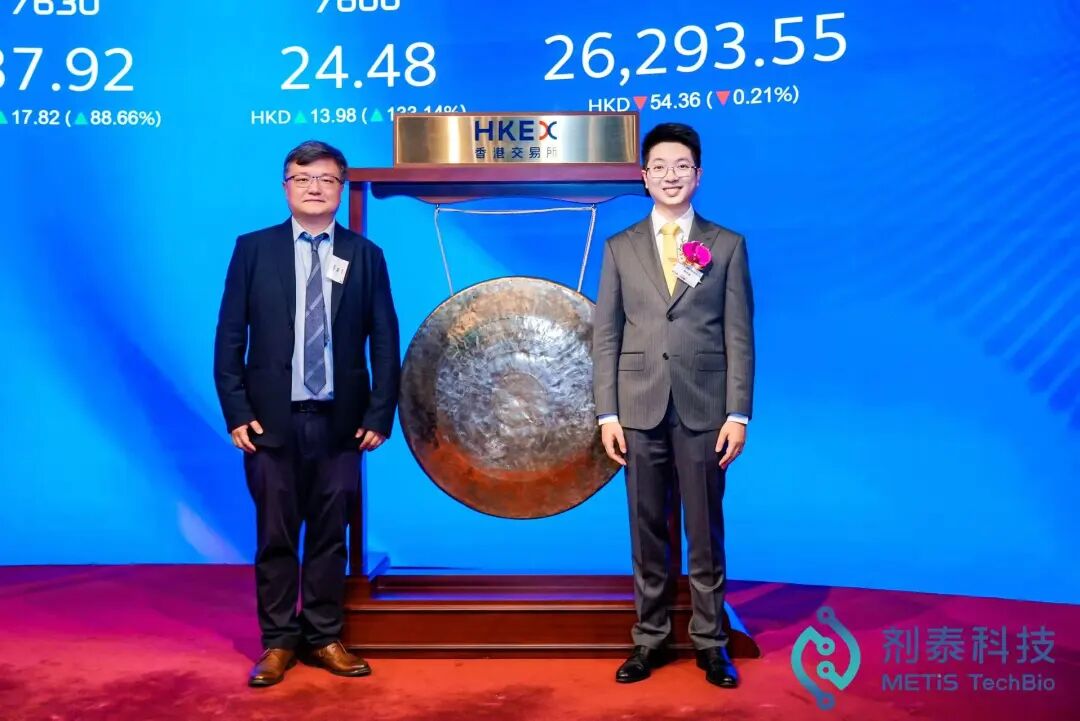
Rui Ma and Chris at the Hong Kong Stock Exchange bell-ringing ceremony.
Chris: Perhaps precisely because I grew up in Taiwan and studied in the US, without experiencing the mainland's rapid development firsthand, coming here was a cultural shock. Only when you actually arrive in Hangzhou, in Beijing, do you realize conditions far exceed what we saw from overseas. Haidian, for instance, probably surpasses Boston's Kendall Square.
I'd already observed a clear phenomenon: the US was moving toward slight封闭 [closure], with subsequent immigration policy shifts, while China was gradually opening — encouraging innovation, encouraging试错 [trial and error].
We initially had this misconception too — maybe put experimental staff in China, thinkers in the US. But after actually returning and talking with many people, I discovered that especially the post-95s and post-00s here have tremendous international视野 [vision], and are highly focused, wanting to accomplish important things.
Around 2022, I said at an all-hands meeting: Chinese biotech's combined market cap will eventually exceed US biotech's. Not yet — roughly a 10x gap remains. But I believe it will happen.
Rui Ma: Finally, let's discuss post-IPO plans. After listing, you'll have more money, people, and resources; government support will also be substantial.
Chris: Our favorite benchmark companies are BioNTech and Alnylam. Against their histories, we're still at baby steps. Beginning external platform partnerships, landing collaborations with big pharma, and seeing first breakthrough clinical data from our developed nano materials in humans — this is our true zero-to-one first step.
The IPO only helps us accelerate capital-wise, making this easier to accomplish. But we now stand at our industry's forefront, understanding what's next after mRNA vaccines, what else delivery can do beyond mRNA, whether we can achieve cellular reprogramming落地 [implementation]. This isn't a 5- or 6-year endeavor; it's a 10- to 20-year journey. But we're already seeing very promising signs, far exceeding what we described when we met in 2020. Based on the data I'm seeing, we should develop some truly great drugs — not just one, but opening an entire industry direction.