Jing Liu in Conversation with Li Feng: China's Economy Is Bottoming Out, Full of Opportunities

In the end, it's not about the moves — it's about the strength behind them.
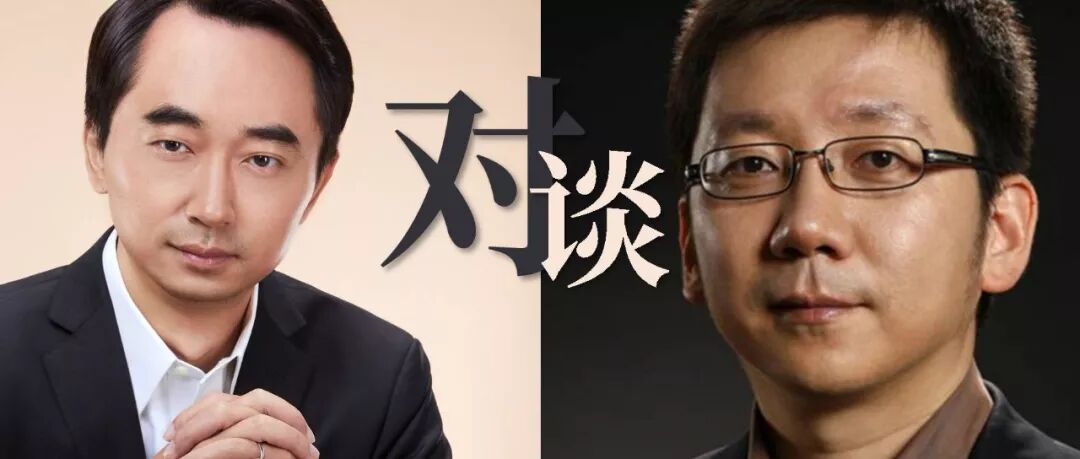
Today's piece is a conversation between Run Liu and Fengshu (Li Feng) from last weekend in Shanghai. Run Liu is the founder of Runmi Consulting, host of the 350,000-subscriber 5-Minute Business School, and a well-known business advisor in China. He provides strategic consulting to major companies including Haier, COSCO, Henderson Land, and Baidu.
It was a wide-ranging, free-flowing discussion that started in a café and continued at a bar after the café closed. They covered everything from macroeconomics to micro-level business strategy. If you're interested in any of these topics, read on:
- How should we view China's economy right now?
- China has long been the world's largest producer, and this year became the world's largest consumer — what opportunities does this create, and how do you seize them?
- What can we learn from traditional giants like Li-Ning and RT-Mart?
Hope you find it thought-provoking. Welcome to join the discussion.

Run Liu in Conversation with Li Feng: China's Economy Is Bottoming Out, Full of Opportunities
By Run Liu
Source: "Run Liu" WeChat official account (ID: runliu-pub)
I'm a business advisor. When do companies come to me? When they're sick, sometimes dying.
So most of the companies I work with are in deep water, fighting for survival.
Because I've seen so much life and death, my emotional instincts as an advisor can sometimes skew pessimistic about the economy. That's why I need to meet regularly with investors.
When do companies go to investors? At birth, or when they want to grow.
So the companies investors see are mostly full of vitality, with unlimited futures ahead.
Because they're constantly watching new life break through soil, sprout, bloom, and bear fruit, investors tend to be more optimistic about the economy.
I need investors' optimism to calibrate my pessimism.
Last night, the weather in Shanghai was pleasant. A small café near my home. Sitting across from me was Li Feng, founding partner of FreeS Fund.
Li Feng is one of China's most prominent young-generation investors. He led investments in Three Squirrels, HSTYLE, ZBJ.com, Bilibili, CreditEase, Dida Chuxing, 360 Finance, Club Factory, QingTao Development, Onion Math, and other projects.
Even among investors, Li Feng's deep thinking about both macroeconomics and micro-level business is rare.
He drank red wine, I drank coffee; he smoked, I rested my chin on my hand; he expansively laid out his views on trends, while I quietly adjusted my judgment of where opportunities lie.
We talked until the café closed, then moved to a bar, and talked until the bar closed.
Below, I'll share some of Li Feng's most valuable insights with you.
01 China's Economy Is Bottoming Out
As expected, Li Feng is very bullish on China's economy.
I asked why. China's GDP grew 6.4% in Q1, 6.2% in Q2, averaging 6.3% for the first half. That's well below the 8.5% average over 40 years of reform and opening up, and the downward pressure is obvious.
Ray Dalio of Bridgewater even warned that today looks eerily like the Great Depression that began in 1929.
So why are you so optimistic when everyone else is frowning?
Li Feng said: All the bad news is out. Everyone has prepared for the worst.
In 2018, debt risks accumulated to the point where even some bank wealth management products previously considered safe ran into trouble.
The government needed to see where the holes were in a 200 trillion yuan financial market. What to do?
Deleveraging. The essence of deleveraging is reducing corporate debt.
Because of deleveraging, suddenly it became very hard to borrow from banks.
But no one anticipated the massive chain reaction. Large numbers of companies couldn't get loans and their cash flows dried up; listed companies saw their pledged shares plunge and get liquidated.
All companies saw this, sensed the chill, and began making ample preparations.
Some laid off staff to survive the winter; some would only do cash-on-delivery business, no credit.
Everyone waited for winter to arrive.
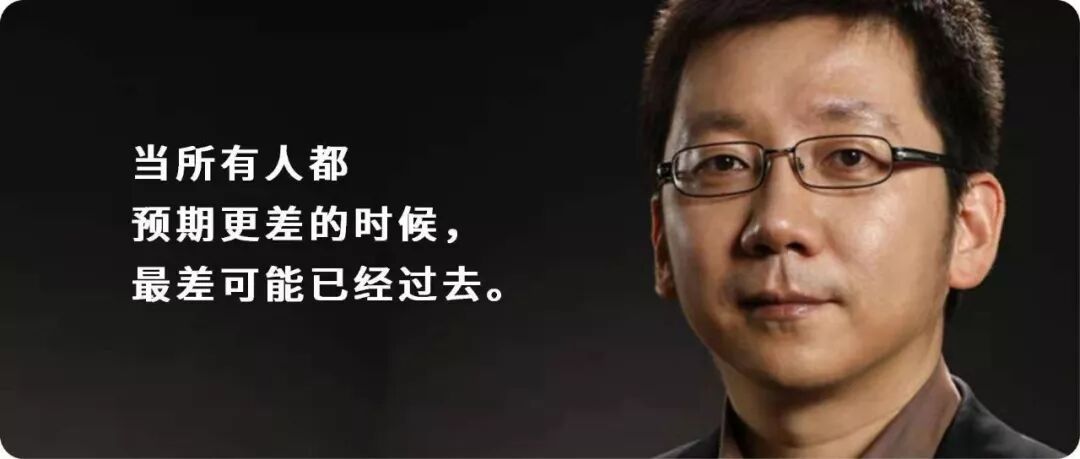
But when everyone expects things to get worse, the worst may already be past.
Li Feng said he saw one important signal: the government announced a "reserve requirement ratio cut."
On September 16, 2019, the central bank decided to lower the reserve requirement ratio for all banks by 0.5 percentage points; additionally, it would make further targeted cuts for city commercial banks totaling 1 percentage point.
What does this mean? It means about 900 billion yuan would flow from the central bank back to commercial banks, and from commercial banks into the real economy.
This is an important signal: the government is beginning to adjust course. The economy may be stimulated to rebound.
02 A Historical Opportunity: When the World's Largest Producer Meets the World's Largest Consumer
Where are our opportunities?
China has long been the world's largest producer. The world's factory.
But this year, a major shift is underway: China is overtaking the US to become the world's largest consumer.
In 2018, China's total retail sales of consumer goods reached 38.1 trillion yuan, up 9% year-on-year, equivalent to $5.76 trillion.
US consumer retail sales in the same period were $6.04 trillion — very close.
And in the first half of 2019, China's total retail sales of consumer goods already surpassed the US, making it number one globally.
What happens when the world's largest producer meets the world's largest consumer?
Li Feng gave an example.
Chris Anderson, former editor-in-chief of Wired magazine, founded a drone company called 3D Robotics, trying to take down China's DJI.
Anderson is probably well-known in China's internet circles. His two bestsellers, Free and The Long Tail, are bibles of the Chinese internet world.
So you can imagine, he quickly raised hundreds of millions of dollars.
But 3D Robotics went from star startup to rapid failure in about 12 months.
Why?
Li Feng said one important reason was that it was too far from the producer country.
The core of drones is flight control. This is a technology that requires constant iteration.
DJI, based in Shenzhen, could have an idea, organize suppliers for a meeting within a day, then produce experimental chips within days — try, fail, try again, fail again, finally succeed.
This process was measured in days.
But 3D Robotics, far from the producer country and supply chain, had to measure its product design cycle in months. You can imagine its reaction speed.
So when the world's largest producer meets the world's largest consumer, what happens?
Massive consumer demand will be rapidly translated into supply chain language by people with sharp consumer insights, then quickly fed back into products through the supply chain to meet that demand.
This is a huge opportunity that belongs only to China.
03 From Factory Brands to Brands That Translate Demand for the Supply Chain
How do you seize this opportunity?
From factory brands to brands that translate demand into supply chain language.
Li Feng said China's first wave of successful brands were all "factory brands" — factories that gradually built their own brands because they had production capabilities.
Examples include Haier, Midea, Gree, and so on.
But today's purchasing isn't driven by production capability; it's driven by consumer demand.
Future brands will be "translators" that can translate demand into supply chain language, not "producers" that own production lines.
At this point, we mentioned Viya, a Taobao livestreamer.
Viya is known as "Taobao's top streamer." On 2018's Singles' Day, she set a record of 267 million yuan in sales in a single livestream session.
Why did Viya succeed? Because she's pretty? There are plenty of pretty streamers.
Viya succeeded because she took emerging consumer demand on new traffic platforms, translated it into supply chain language, and reorganized production.
What you see is her front-end traffic; what she sees is the back-end supply chain.
Apparently at one product selection meeting, Viya looked at a beauty product.
After reviewing it, she said: This won't work. Your preservative dosage is too high, and the citrus extract is only this much — no good.
Today's Taobao streamers, especially the successful ones, aren't "traffic portals." They're demand translators and supply chain integrators starting from traffic.
04 AI Won't Happen That Fast; How Much Labor Value It Replaces Is What Matters
Think about how reversing technology has evolved.
At first, it beeped at you. Then millimeter-wave radar. Then backup cameras. Then automatic parking.
This process took 15 years. Full AI, autonomous driving, will take much longer.
So FreeS has invested in some chip companies to serve AI companies.
This is the "selling picks and shovels during a gold rush" approach.
Some areas of AI will move faster. Visual intelligence is one.
The evolution goes like this. First, phones all got cameras — that's data collection. Then cloud storage — that's data storage.
Collect, store, analyze, apply. The right timing for visual intelligence is that collection and storage are already in place.
At this point, analysis companies are bound to emerge, so IDG invested in SenseTime.
Now look at voice intelligence.
iFlytek's advantage is analyzing voice data collected and stored over more than a decade.
But now microphones, all kinds of new collection and storage devices, are causing an explosion of voice data.
AI needs data to feed on. Voice intelligence will also see many companies emerge fairly quickly.
Already many companies are using AI for their call centers.
Maybe not perfect yet. But with data, they can learn, and that happens very fast.
At first 20% of calls are handled by AI, then it'll quickly get smart enough to handle 80%.
The key here is: how much labor value does the AI replace?
Autonomous driving — using AI to replace cheap drivers — will be slow. The commercial value isn't obvious.
But using AI to replace doctors might happen quickly. Because good doctors are scarce and expensive.

05 Don't Underestimate Traditional Companies, Like Li-Ning and RT-Mart
Li Feng said, you know what? Besides investing in the primary market, I'm also watching the secondary market, using it to cross-check trends and judgments against primary market patterns and rules.
Oh? Who are you studying? I asked.
For example, Li-Ning. For example, RT-Mart.
Lots of internet companies, startups, just caught a wave of红利 and rose quickly, and traditional companies were stunned.
But this is like a 400-meter race. Traditional companies have already run 300 meters; you're just starting. Once they figure it out, overtaking you is easy.
Take Li-Ning.
Li-Ning the company is remarkable. From 2012 to 2014, China's entire sportswear sector hit bottom, wailing everywhere.
Li-Ning's management at the time made a major decision: spend 1.8 billion yuan on a channel revitalization plan, supporting distributors to clear inventory, buy back stock, rationalize sales networks, and develop targeted programs.
Why? Because Li-Ning knew it had to go direct-to-consumer eventually.
Later, Li-Ning himself returned as CEO. The bet he placed on the table was a lifetime's accumulation.
He began pushing hard on e-commerce and direct sales. Though still over 60% franchise today, the continuous increase in direct sales and e-commerce revenue share, combined with rising new product sales share, has further improved Li-Ning's profitability and overall operational efficiency.
Li-Ning gritted his teeth and shortened the channel, reaching consumers directly.
Over these years, Li-Ning's sales and stock price have both recovered.
Li-Ning came back to life.
When traditional companies figure out the playbook and flex their muscles, you can't stop them.
Another example: RT-Mart.
When Huang Mingduan sold RT-Mart to Alibaba, he famously said: "I defeated all my competitors, but lost to the era."
But Yong Zhang at Alibaba, after Huang Mingduan left, brought him back and opened an online portal for RT-Mart: Taoxianda.
Huang Mingduan made "Freshippo-style" transformations at RT-Mart, increasing fresh food's share, adding automated conveyor belts to make picking easier, switching products to smaller packages.
He also added dedicated picking areas for frequently ordered Taoxianda items, and set up special zones for Taobao Selection.
RT-Mart's e-commerce revenue surged.
Moreover, traditional supermarkets have some advantages that newcomers simply don't know how to play.
For example, apparently wherever RT-Mart goes, it leases a huge space, getting low rent.
Then RT-Mart subleases portions to complementary businesses — restaurants, laundry, kids' play areas, etc.
The sublease spread even covers its own supermarket rent.
This way, RT-Mart essentially operates rent-free.
Li Feng said he's very bullish on RT-Mart's resurgence.
Looking at the hottest fresh retail new retail model startups of the past two years, after RT-Mart completed new retail transformations at all stores by end of 2018, its mid-year report released in August this year disclosed:
In the first six months of this year, 486 stores averaged over 700 orders daily, targeting over 1,000 by year-end (meaning roughly 500,000 daily orders), with average order value of 62 yuan (meaning annual GMV of 10 billion yuan), fresh food share over 50%, on-time fulfillment rate and product availability rate both above 99.7%, and overall profitability!
Meanwhile, RT-Mart will expand delivery range to over 5 kilometers — this of course depends on its integration with Alibaba, but looking at this online fresh retail business alone, the results should be unprecedented.
The root of this capability comes from twenty years building China's number one retail supermarket, with super supply chain capability of over 20,000 SKUs per store, combined with accepting internet innovation.
Retail competition ultimately comes down to efficiency and supply chain capability. Successfully transformed traditional companies have long-term accumulation on these two fundamental issues — this is the hope and advantage of "traditional industries."
RT-Mart is formidable because it leveraged twenty years of accumulated supply chain capability, combined with internet innovation.
RT-Mart. Li-Ning. In the end, end, end, it's not about moves — it's about substance.
/ 06 /
Final Words: We Are in a Rare Historical Moment
The more we talked, the happier we got. We'd moved from the café to the bar.
Li Feng said, China's condition today is unprecedented in history. No single model can explain it.
China's condition today is the叠加 of many models.
China's demographic changes, US-China trade friction, economic cycles, technological development, the internet.
So many things intertwined — I feel excited to be in it, participating in some form.
Why?
Because only when numerous forces act on the same era does that era have unimaginable complexity.
Because of unimaginable complexity, those who can discern that complexity have opportunity.
Future China is full of opportunities.
These opportunities stand wide open before those who grasp business fundamentals, and remain tightly shut before those charging forward with eyes closed.
It was late. The bar was closing.
I called a car for Li Feng back to his hotel. I walked home slowly.
Thankful for Li Feng's optimism, thankful for Li Feng's sharing.
I looked up at the sky. As long as there's moon, as long as there are stars, those traveling by night can see hope.
- End -
P.S. This article was written by Run Liu, from the "Run Liu" WeChat official account. Run Liu is founder of Runmi Consulting, host of the 350,000-subscriber 5-Minute Business School, and a well-known business advisor in China. Follow his WeChat official account to jointly洞察商业本质.
Long press the QR code to follow Run Liu's WeChat official account



▲ Li Feng Column: Why Should We Thank Chinese Manufacturing?
▲ Li Xiang × Li Feng: 200 Million New Urban Residents' Consumer Awakening — Who Will "Harvest" It?
▲ Li Xiang × Li Feng: Remove the Emotion, What Does China in 2019 Look Like?
▲ Li Feng Column | Speculations on the Endgame of China's New Retail
▲ Li Feng Column | The Middle Path of New Retail
▲ Li Feng Column | The Essence of New Retail, in 10 Words
▲ Li Feng Column | US Dollar and Hong Kong Dollar Rate Hikes, and the Unicorn Winter