Li Feng Column: US Dollar and Hong Kong Dollar Rate Hikes, and the Unicorn "Winter"
Focus on the growth of a company's intrinsic value.
In the tenth installment of this column, we're talking about the capital markets over the past two and a half years and near-to-medium-term projections.
This actually comes from a presentation I gave at our internal monthly meeting last Friday, June 8. I covered roughly the following questions:
- From 2015 to now, what's been happening in the capital markets, and what have we been through?
- Over the past two-plus years, a common phenomenon in the equity investment market has been that the more expensive the unicorn, the more prominent the company, the easier it was to raise funding — even without stable profit expectations. Where did this money come from, and how did it flow into these largest, most expensive projects? Why might this good run be nearing its end?
- There's been a lot of movement in the capital markets these past six months. Signals of continued rate hikes from the Federal Reserve have been clear (note: early this morning, the Fed's monetary policy meeting announced a 25 basis point hike; a few hours later, the Hong Kong dollar also announced a 25 basis point hike). Domestic rhetoric around "deleveraging" has been frequent, and recently the new asset management regulations and CDRs took effect. What do these mean for those largest, most expensive unicorns? Whose opportunity is this, and whose challenge?
- In a cycle of tightening liquidity, how should VCs and entrepreneurs respond?
Some of what I said internally has already materialized; some observations and predictions still need to stand the test of time. I hope we can exchange ideas and discuss.

How Capital Markets Are Priced
Capital market pricing is essentially tied to just two things: a company's intrinsic value and liquidity premium.
The former relates to endogenous value growth — what we commonly call "value investing." The biggest opportunities here always come from the driving forces of the economic structure itself, i.e., the macro trends.
For example, from the mid-1990s to around 2010, anything real estate-related could make money. This is what we mean by structural opportunity — every country and economy experiences these at different stages. It means we need to identify, in each cycle, where the greatest momentum lies, find it, and ride it.
Liquidity premium refers to asset price fluctuations caused by whether there's too much or too little money in the market.
To use a familiar example: from 2008 to 2015, real estate was no longer a structural opportunity, but the money supply changed dramatically — money became abundant. So during those seven years, you still saw real estate prices rise sharply. For major asset classes, we call this kind of price movement a liquidity premium.
Every profitable financial product we see either captures one of these opportunities or a combination of both.
Most money made in finance comes from the latter — buying certain major asset classes when money is scarce, accumulating liquidity premium as monetary liquidity increases, and cashing out before the next downturn.
People who survive in finance long-term and keep growing do so by making money from the former and combining it with the latter. Because it's hard to make money when liquidity shifts from abundant to tight — risk premiums and liquidity premiums on financial assets both decline. At that point, only structural value can keep growing, offsetting the discount from declining liquidity.
For us in VC, "long-term investing" mainly means focusing on a company's intrinsic value. If a fund can operate for decades and keep growing, it must first be good at judging enterprise value, and certainly much better at that than at timing liquidity cycles.
Typically, we evaluate a liquidity cycle from when an economy starts raising or lowering interest rates.
Because interest rates represent expectations for risk-free or low-risk returns on capital, rate cuts mean lowering these low-risk and risk-free returns, thereby encouraging the market to take on more risk and flow money into riskier industries. This effectively promotes investment of all kinds, with one direct result being more money in the stock market.
Conversely, rate hikes mean the market's economic outlook has improved; to prevent inflation from too much money, rates are raised to pull liquidity back.
Simply put, when a long cycle of rate cuts begins, money in the market starts increasing and liquidity premiums rise. When a rate hike cycle begins, it means liquid funds in the market are decreasing.
From 2015 to Now: What's Been Happening in the Capital Markets, and What Have We Been Through?
We have to start from 2008. At that time, the US subprime mortgage crisis swept the globe, evolving into the most severe international financial crisis since the Great Depression of the 1930s. To stimulate the economy, the Federal Reserve cut the federal funds rate to an ultra-low range of 0 to 0.25%, and the US formally entered the zero interest rate policy era. This, to some extent, released monetary liquidity, allowing money to enter the economy. One result: there was a lot of money in the market.
However, by 2015, when we started our fund, the market had changed. In August 2015, we caught China's stock market crash, but what affected us most was an event at the end of 2015: the Federal Reserve raised interest rates, announcing a 25 basis point increase in the federal funds rate to a target range of 0.25%-0.5%.
That was the first US rate hike since 2006. That 0.25 percentage point adjustment ended the ultra-low near-zero interest rate policy the US had followed since the financial crisis.
We viewed this as the beginning of a new US rate hike cycle. At the time, we made a decision: except for Uber Global, which we had been in deep contact with and decided to invest in, we would not touch any other dollar-structured unicorns.
This was somewhat inconceivable at the time. Before Q4 2015, there were about 230 unicorn companies globally — unprecedented in history. Never had any historical cycle seen so many unlisted companies with such massive valuations simultaneously.
The spectacular unicorn landscape at that time actually benefited from the superposition of two cycles: the structural opportunity of the shift from PC to mobile,叠加 historically the largest liquidity cycle ever.
In retrospect, we guessed the ending correctly.
In Q1 2016, large and mid-sized US tech companies generally fell about 20% in stock price. In a mid-2016 financing trends report, KPMG noted that two-thirds of the ten largest IPOs of 2015 had fallen below their issue prices.
There was also a lot of news at the time about hedge funds managing massive amounts of capital making impairment adjustments to unicorns on their internal P&L statements.
This was actually market inertia. After entering a rate hike cycle, companies with high liquidity premiums would experience liquidity impairment issues. Simply put, companies whose valuations rose because of abundant market liquidity would be the first to see valuations fall when money in the market became scarce.
The impact of US rate hikes wasn't limited to North America; it had enormous effects on nearly all emerging markets, because money left emerging markets and returned to dollar markets. The 1997 Asian financial crisis and Japan's so-called 20 years of no growth were both results of the previous US rate hike cycle.
After the US rate hike at the end of 2015, emerging markets also faced pressure. In early 2016, China's macroeconomy was relatively pessimistic, and the entire year of 2016, we were stuck at an impasse.
Interestingly, 2016 saw a series of unexpected global events, such as Brexit and Trump's election as US President. These world-shaking events brought enormous uncertainty to the global economy and landscape, causing the expected continued US rate hikes to not materialize.
To some extent, this alleviated pressure on China.
Even so, the pressure had nowhere to hide. In May 2016, the growth rate of fixed asset investment by China's private sector hit a 10-year low. To boost the economy and stimulate capital liquidity, China once again loosened real estate restrictions in early 2016. Although tightening gradually followed, with concentrated tightening only in November, there were eight months of relatively loose real estate policy in between.
Another thing: starting from the end of 2016, China's central bank issued new rules tightening foreign exchange controls, strictly limiting personal and corporate overseas investment.
And so we made it through a two-year cycle of weakening liquidity. But what must come, will come.
Currently, US capital markets have risen continuously for more than a decade and are approaching a ceiling. The dollar already hiked rates once in March, and another hike may come in mid-June (note: today, June 14, the Fed announced the second rate hike of the year). Earlier, consensus expectations for three rate hikes in 2018 were quite high, and expectations for four hikes were as high as 70% to 80%.
A new rate hike cycle is arriving.
Springtime for Equity Investment vs. "Winter" for Unicorn Companies?
In 2015, when we started our fund, we were betting that in this long cycle, China would reduce corporate debt. But to stimulate the economy, the market still needed capital liquidity. Since this couldn't come through bank lending (indirect financing), it had to come through direct financing channels. Therefore, we concluded this was the best cycle for equity investment.
This hypothesis was validated this year. Recently disclosed figures show that in 2017, direct financing's share of total social financing approached 30%; the historical high had only been 15%.
What we didn't predict was that much of this money didn't go to VC, but rather to the largest, most expensive projects we could see. Over the past two-plus years, a common phenomenon in the equity investment market has been: the more expensive the project, the more prominent the company, the easier it was to raise funding.
This was caused by two factors. First, China's money was shifting from lending to investment at scale for the first time; lacking experience, people tended to invest in projects that seemed safer because enough others had invested in them. Second, money came in too fast and too much, easily flowing to where large sums could most easily be deployed.
This produced a result: by Q4 2017, about one-quarter of unicorns in the market were structured in RMB. Remember the data from before Q4 2015? Not a single unicorn globally was structured on anything RMB-related.
Though somewhat complicated, I'll try to explain how these massive amounts of RMB entered these largest, most expensive, but not necessarily profitable unicorn companies.
Much of this largest money came from financial institutions (banks, etc.). For example, you buy a wealth management product at a bank with embedded asset management channels. You hand your money to the bank, knowing only roughly what the annualized expected return looks like. This money enters a large capital pool containing all kinds of wealth management products.
Company A says it wants to do something and raise a certain amount of money, promising a certain rate of return. Company B says it wants to do something, raise money, also promising a certain rate of return... They have different return expectations, and descriptions of non-standard underlying assets are unclear.
In this capital pool, Fund A comes to the bank and says: we want to invest 600 million in a certain unicorn, lend us 400 million. This unicorn guarantees an IPO within two years; during these two years, I guarantee you 6% returns, guaranteeing the fixed-income expectations and floating returns for the embedded products in your capital pool.
Let's do the math. On 400 million at 6% annually, that's 24 million per year, nearly 50 million over two years. So Fund A prepares 50 million to pay back to the bank annually as fixed income. If Fund A earns more than 6% on that 400 million, all remaining earnings — say just 20% — the remaining 14%, meaning the 14% spread on 400 million, is all theirs.
This kind of play, in a sense, helped create what we've seen in the past two years: the more prominent, the more expensive the project, the easier it was to get money.
This situation likely cannot continue. In other words, those prominent companies with very high valuations but relatively high cash burn and uncertain profit expectations are going to have a hard time ahead.
Why do I say this?
Starting from the first half of this year, a frequently mentioned term has been "deleveraging." "Deleveraging" means reducing non-financial corporate debt; meanwhile, China began cleaning up systemic financial risks.
On April 27 this year, the new asset management regulations covering 100 trillion RMB formally took effect. The regulations can be summarized in two sentences: investing in non-standard assets must have clearly identifiable underlying assets; using capital pools to create mismatches is prohibited.
This means, to put it simply, the channel through which the aforementioned money entered the largest, most expensive projects via leverage has been closed. The reason: for the state, a major risk is that it has no idea where ordinary people's money ends up after entering these capital pools, so it doesn't know what might go wrong. And with these capital pools, there have been numerous maturity mismatches.
The new regulations have already started taking effect. Due to weak non-standard + credit bond financing, and on-balance-sheet loan growth that has been merely mediocre, in May this year, new social financing scale was cut in half, falling more than 500 billion yuan short of the 1.3 trillion market expectation. This means there's much less money now.
Another small thing: to prevent these massive sums from flowing out through off-balance-sheet assets, the state required banks to bring these off-balance-sheet items back on balance sheet — back onto the balance sheet proper.
This series of adjustments affects three things:
First, fund-of-funds will be affected, which ripples out to all of us.
Second, assuming the first point exists and persists, the money and leverage that kept pushing prominent companies to ever-higher valuations will be gone, and these companies will start facing valuation and refinancing challenges.
Third, if these companies have difficulty exiting in the near term, we'll soon see large-scale sales of existing shares, even at discounted prices, because the new regulations require non-standard capital pools to be cleaned up by the end of 2020 — the money that went in needs to get out quickly.
▍Where's the way out for these large-scale, high-valuation companies with uncertain profit expectations? Hong Kong stocks? CDRs?
In a cycle of weakening liquidity, with old capital wanting to exit, companies with large valuations but no certain profit expectations need to go public earlier.
The logic is simple: with less money in the market, companies that can't raise funding in the primary market will push hard toward IPO windows. Plans for listing in three to five years may be accelerated to within one to two years. Can't raise money in the primary market? Go raise in public markets — easy logic to understand.
US stocks and Hong Kong stocks have long been the exit routes for high-valuation, not-yet-profitable unicorn companies. In other words, for capital invested in these projects to exit, going to the US and Hong Kong has always been far more realistic than A-shares. In the current cycle, with US dollar rate hikes, going to US stocks isn't easy — so is Hong Kong a good exit?
My view: it's also becoming difficult.
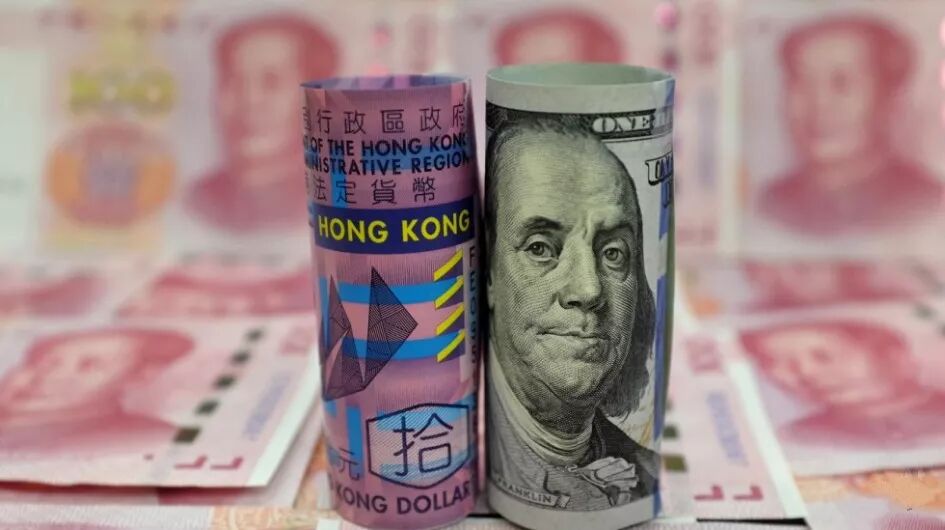
We all know Hong Kong stocks went through their best phase over the past year-plus. Hong Kong is an international market; international money can move freely there. But Hong Kong now faces pressure: money is planning to run from Hong Kong to the US. We already know why: the US is becoming an economy with good growth momentum; meanwhile, with the dollar raising rates and the Hong Kong dollar following, holding Hong Kong dollars is less attractive than holding US dollars.
There's a news item corresponding to this. In mid-April, the Hong Kong Monetary Authority intervened 13 times in eight days, spending 50 billion Hong Kong dollars to buy Hong Kong dollars that were actively flowing out. Hong Kong dollars were being sold because of expectations that the US might hike rates again, so people sold Hong Kong dollars to return to US dollar markets. With the Hong Kong dollar pegged to the US dollar, the HKMA had to buy large amounts of Hong Kong dollars to prevent the peg from breaking — but the effect lasted only a short time.
Mid-June is the US's second rate hike window. If this cycle of continuous US rate hikes is confirmed, the Hong Kong dollar may not be able to sustain it and will be forced to raise rates (note: after today's US rate hike, the Hong Kong dollar also announced a rate hike).
Remember what we said earlier about rate hikes pulling capital market liquidity back in?
Hong Kong dollar rate hikes certainly won't be positive for Hong Kong's capital markets. Hong Kong market liquidity pressure will mainly come from two sources: the liquidity impact from Hong Kong dollar rate hikes, and the impact of money leaving Hong Kong to return to the US. These two drains simultaneously will have significant effects on capital markets.
When Hong Kong's capital markets also enter a cycle of liquidity discount, it means unicorn companies will find exits and premiums in Hong Kong less favorable than before.
In the past quarter, unicorn companies that listed during Hong Kong's good window over the past year and a half — including China Literature Limited, Yixin, ZhongAn Insurance, and Ping An Healthcare and Technology Company Limited — have basically fallen 30% to 40% from their highs. The signals are already fairly clear.
With this IPO window in Hong Kong becoming less optimistic, those expensive companies with uncertain profit expectations will find it increasingly difficult to issue shares. Currently, 127 companies are queued for listing on the Hong Kong Stock Exchange; very likely, many will ultimately have to issue shares at large discounts. Even so, the range the market will ultimately accept is limited.
So how much can China's CDRs for unicorn companies help? I tend to believe that those who will benefit from CDR positives are definitely unicorn companies that can be profitable. Xiaomi is a good example because it's a high-valuation unicorn that can be profitable; RMB can provide some liquidity.
As for those unicorns with high valuations, relatively high cash burn, and no certain profit expectations — they'll likely become increasingly uncomfortable. For these companies, CDRs are no lifeline either.
▍Finding value growth aligned with economic structure
To summarize: when leverage is gone, new money can't get in, old leveraged money needs to get out, and both Hong Kong and US stocks are difficult to access — the impact on startups isn't hard to judge: unprofitable or profit-uncertain unicorns with high valuations will face enormous pressure. They'll find fundraising increasingly difficult, can't go public in the short term, overall market liquidity is tightening, and these companies keep burning cash with no way to stop (especially those whose high valuations were built on burning cash).
But money still has to flow. When money can no longer go, as it did in the past two years, without principle to those expensive but unprofitable companies, where will it go?
Find the antonym, or avoid those "high valuation but not profitable" companies. That is, money will gradually flow toward companies that appear to have reasonable valuations, certain profit expectations, and reasonable or good growth — smaller and mid-sized companies.
So at bottom, this is an era of value returning. In current market conditions, whether in entrepreneurship or investing, we should probably all think independently more, deliberately avoid chasing trends, and work hard to find value growth aligned with economic structure, focusing on endogenous enterprise value.
Summary
1 Over the past two and a half years, we determined that the present was a relatively good period for equity investment, and we saw that the largest, most expensive unicorns with uncertain profit expectations would face challenges. What we didn't expect was that massive capital from financial institutions would swarm to those largest, most expensive companies, causing more and more unicorns to be structured in RMB.
2 A new rate hike cycle is arriving, China has begun deleveraging, and new asset management regulations and CDRs have been introduced. For those expensive but profitable unicorns, this is positive; for those not yet profitable or even without visible profit expectations, it will be very difficult.
3 In current market conditions, whether in entrepreneurship or investing, we should all think more independently, deliberately avoid chasing trends, and work hard to find value growth aligned with economic structure.
Feel free to leave comments at the end sharing your views.
(Welcome to share to Moments. For reprinting, please reply "reprint" to learn reprint rules, and contact Feng Xiaorui [ID: freesfund] for authorization. Copyright belongs to FreeS Fund.)

Li Feng's Column | The China-US Tech Rivalry: China's Secret Weapon
Li Feng's Column | The Essence of New Retail, in 10 Words
▲ Li Feng's Column | The Origins and Future of ICO
▲ Li Feng's Column | From iPhone X and Smart Speakers to New Drug R&D and Environmental Monitoring: How I View Technology Innovation
▲ Li Feng's Column | Bike-Sharing Enters the IoT Track: Where Does the Data War Go Next?