Li Feng Column | The Trade War Gets a Comma, but China's Secret Weapon Is Just About to Show Its Edge

What makes China's economic experience distinctive is that much of it consists of "the unintended consequences of human action."
In the ninth installment of this column, we're talking about the US-China trade war and its impact on global trade relations.
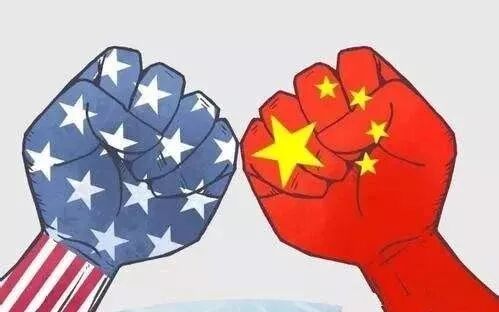
After months of stalemate, the trade war saw a breakthrough a couple days ago — a joint US-China trade statement of fewer than 500 words. To put it simply, the statement says no trade war. Warren Buffett's line about "the two smartest, most intelligent countries in the world" never doing "something very foolish" seems to have held true.
That said, trade disagreements persist. Rather than fixating on the short-term tactical moves along this protracted battle line, it's worth taking a longer view and looking for patterns in history.
The trade war's core is a tech war. Of course technology isn't the only battlefield — tech ultimately gets deployed across the real economy, including manufacturing. The last economic cycle has already proven that China has chips to play in this US-China tech rivalry. Its irreplaceable secret weapon, in a single word, is people.
To make this clear, we'll break it down into two questions:
- In the last economic cycle, how did China become the world's preeminent manufacturing power?
- Why, over the next five to ten years, does China stand a chance of replicating that success in the contest to become a global "center" of high technology?
A quick note upfront: this piece involves historical analysis, and history is always a contentious subject. The perspective offered here is just one analytical lens — take it as food for thought, and feel free to share your views in the comments.
The three most thoughtful commenters and the three most upvoted commenters will each receive a copy of Nobel laureate Ronald Coase's How China Became Capitalist. We also look forward to continued learning and exchange with deep tech entrepreneurs — business plans welcome at bp@freesvc.com.

How did China become the world's leading manufacturing power in the last cycle?
Ronald Coase, founder of new institutional economics and 1991 Nobel laureate in economics, wrote a well-known book called How China Became Capitalist. It was the final work of his life. Published in late 2012, it came out just ten months before Coase passed away at 102. This economist, who remained deeply engaged with China well into his twilight years, once offered an intriguing formulation — roughly put, China's economic experience had a distinctive quality that, in the classical economics sense, represented "the unintended consequences of human action."
If those quoted words feel a bit opaque, the phenomena and history I'm about to describe may help clarify.
In a March 2008 article titled "The New Colonialists," The Economist wrote: "No description of China's appetite for commodities is too lurid. With a fifth of the world's population, it is consuming roughly half its pork, half its cement, a third of its steel and over a quarter of its aluminum. Since 2000 it has accounted for four-fifths of the increase in the world's steel supply."
The whale-like consumption was matched by equally massive output. According to public data from China's Ministry of Commerce, in 2007 the country's total foreign trade volume surpassed $2 trillion for the first time, growing 23.5% and marking six consecutive years of 20%-plus growth. China remained the world's third-largest trading nation, with exports ranking second globally.
But to trace how China became a manufacturing powerhouse, we need to look back to the late 1970s and early 1980s.
It was 1978. Beyond the urban-centered reform and opening-up, an event with potentially more far-reaching consequences for China's economic landscape took place in a dilapidated thatched hut in Xiaogang Village, Fengyang County, Anhui. That winter, eighteen farmers who had long endured hunger pressed their red thumbprints onto a "household responsibility contract," vowing to "risk prison and execution to divide the land and go it alone." The failures of the "big pot" system had forced desperate peasants to blaze a trail that would unleash productive forces.
Yet despite Xiaogang's bumper harvest the following year, the "household responsibility system" wasn't publicly endorsed until a key speech by Deng Xiaoping in May 1980. Its institutional establishment came even later — on January 1, 1982, with the first-ever "Number One Document" in CCP history addressing rural issues, which explicitly recognized household-based production as a form of socialist collective economic responsibility system. Only then did the practice spread nationwide; by early 1983, 93% of production teams had adopted it.
Bear in mind that in 1980, rural labor accounted for over 70% of China's total workforce. Looking back, the fundamental challenge was how to mobilize this labor — such vast numbers were pinned to the land, unable even to feed themselves.
The new land policy first solved the age-old problem of putting food on the table. But there was another crucial dimension: by boosting the productivity of farmers — who comprised the largest share of China's workforce — rural labor was liberated. Surplus workers began fleeing the fields, naturally flowing toward other sectors in search of livelihood and development.
Following the principle of proximity, township and village enterprises (TVEs) — then still in a legal gray zone — were the first to absorb this labor. These small workshop-like operations were essentially the precursors to manufacturing. The massive pool of rural workers gave TVEs, despite their uncertain policy status, formidable vitality and growth momentum. In 1978, TVEs employed 7% of rural labor; following the 1984 Central Documents No. 1 and No. 4, which greenlit farmer-initiated collective and individual enterprises, policy propelled TVEs into takeoff. By 1985, their share of rural employment had reached 14%.
It was this decade from the early 1980s to the early 1990s — the explosive growth of TVEs — that transformed the outflow of rural labor into manufacturing workers, completing their skills training and turning peasants into industrial laborers. TVE value-added as a share of national GDP was in the single digits in 1978; by 1995, according to the China Township and Village Enterprise Yearbook, it had climbed to 25%, with industrial value-added accounting for 30.8% of national industrial value-added.
Subsequently, with the introduction of policies like the dual-track pricing system, and through scaling up, intensification, and rapid development, TVEs gradually evolved into the private and joint-stock enterprises of later years, forming the industrial foundation of China's rapid rise and laying the cornerstone of its manufacturing ascent.
In sum, it was through this critical process of mobilizing labor from rural areas — comprising over half of China's workforce — that vast numbers of workers completed skills training and transformation, in turn supplying manufacturing with the massive, job-ready, low-cost labor force it needed to take off.
Why revisit this story from the last cycle? What does it have to do with the trade war?
Returning to the trade war: its core is a tech war, but technology isn't the only battlefield, because tech ultimately must be applied to the real economy — that is, manufacturing and production. This necessarily involves industrial chains, which behind the scenes remains largely a question of labor factors, meaning talent.
Why do I say this?
A well-known quip refers to the vast ranks of tech developers as "code peasants." Though tongue-in-cheek, it contains truth: most tech industries ultimately depend on a certain quantity of educated, skilled workers to form their industrial base. You can think of it simply as tech industrial chains needing armies of "code peasants" to function and grow.
Just as China for decades after reform and opening-up served as the "world's factory," attracting labor-intensive industries like apparel and footwear; within high tech, there exist analogous nodes in the industrial chain. They require large pools of basic technical labor, offer relatively thin margins, and China was similarly their preferred destination in the global division of labor.
Take CROs (Contract Research Organizations) in pharmaceuticals — companies that provide outsourced R&D services. Constrained by high development costs, multinational drugmakers often strip out non-core portions of R&D and hand them to CROs, whose daily work involves hiring battalions of biology, medicine, pharmacy, and chemistry graduates — bachelor's, master's, and PhDs — to run experiments and validate results for pharmaceutical companies.
As some have analogized CROs' business model to Foxconn in consumer electronics, CROs are a vital link in the global pharmaceutical value chain, but absolutely one that is labor-intensive and not particularly high-margin.
On May 8, 2018, WuXi AppTec — the world's largest CRO — listed on the Shanghai Stock Exchange Main Board. As of today, May 22, it has logged eleven consecutive limit-up days. In fact, the rapid growth of China's CRO industry over the past decade traces to 2003, when the State Food and Drug Administration issued the Good Clinical Practice guidelines, formally recognizing CROs' role and status in new drug development.
Yet policy dividends still require people and momentum to materialize. If we examine the timing behind these phenomena from another angle, some interesting connections emerge.
We've seen how land reform thirty years ago converted rural labor into the workforce foundation for manufacturing, propelling the birth of a new "global manufacturing center." So what gave us the human capital advantage to absorb these critical high-tech industrial segments?
This, too, was an "unintended consequence" of a policy enacted many years earlier: the 1999 university expansion. Why was this policy introduced at that particular moment? After 1980, China had strictly enforced its one-child policy. By around 1999, the first generation of only children was reaching university age. Against a complex social backdrop — including layoffs from state-owned enterprise restructuring — the central government formulated an expansion plan aimed at "stimulating domestic demand, boosting consumption, promoting economic growth, and easing employment pressure."
What did university expansion mean in practice? 2003 marked the first graduating class of expanded undergraduate admissions. According to Ministry of Education data, 2.122 million students graduated from regular higher education institutions in 2003, up 46% from 2002. Before 1999, annual expansion growth averaged only about 8.5%. By 2017, regular higher education graduates exceeded 7 million, the gross enrollment rate reached 42.7%, and total higher education enrollment hit 36.99 million — one-fifth of global higher education enrollment, ranking first worldwide.
University expansion objectively accumulated a massive pool of relatively well-educated, skilled workers for China. And because this labor was relatively inexpensive, it helped China absorb substantial tech industry chain transfers and localizations over the past decade-plus. This process also saw vast numbers of graduates complete their skills transformation, becoming tech workers suited to industrial chain needs and laying the talent foundation for long-term sectoral development.
Of course some will ask: you're talking about basic R&D and technical personnel, but to achieve real dominance in cutting-edge fields like semiconductors, don't we still need so-called "top talent" — most of whom are abroad, especially in the US?
In fact, this landscape is already shifting.
First, against the backdrop of the US-China trade war, the policy push-pull has undoubtedly increased the odds of some top talent returning.
China is the largest source of international students at US universities. According to a late-2015 report by the US State Department and the nonprofit Institute of International Education, nearly one million international students enrolled in US higher education in the 2014–2015 academic year, with roughly one-third from China. And most of them previously preferred to stay in America after graduation.
But per a New York Times report dated April 30, 2018, the US government was considering restrictions on Chinese citizens, including bans on certain visa types and strict controls on Chinese researchers' involvement in military- or intelligence-related projects at companies or research institutions. The restricted fields were expected to cover "critical" manufacturing areas including advanced materials, chips, AI, and electric vehicles.
Tightening immigration and visa policies could directly impact employment and career prospects for Chinese graduate students, postdocs, and tech company employees in the US. Reports indicated that Baidu and other domestic tech giants had ramped up recruiting of Silicon Valley talent, with the period of policy turbulence even being viewed as an optimal window for Chinese companies to poach from Silicon Valley.
Meanwhile, various Chinese policies offering employment and entrepreneurship incentives for returning overseas talent have begun taking effect. According to Ministry of Education data, in 2016 the proportion of Chinese students in the US who returned immediately after completing their studies reached 80%.
Yet even absent the current policy divergences between the US and China, the return of overseas Chinese top talent appears to be an increasingly visible trend.
In recent years I've met many sea-turtle entrepreneurs — mostly well-educated abroad, having reached senior positions in foreign high-tech industries. They typically formulated plans to return and start businesses around age thirty-five, give or take a few years. Why?
Most were born in the 1970s and 1980s, strictly speaking China's first generation of only children. At this stage, their parents had reached around sixty. Many parents were unwilling to emigrate to the US, leaving these individuals facing the prospect of one person supporting two elderly parents, or one small family supporting four. Even without the industrial, demographic, and immigration policy factors mentioned above, many would choose to return simply due to eldercare pressures stemming from the one-child policy.
To briefly summarize: in the last economic cycle, the mobilization of labor from rural areas was a crucial factor in China becoming the "world's factory." In the new cycle, the university expansion policy has given us abundant tech talent reserves, which will undoubtedly increase China's chips in the future US-China tech rivalry — and may even help China win the tech war.
Key Takeaways
1 The distinctive feature of China's economic experience is that much of it represents "the unintended consequences of human action." Many policies and practices faced resistance and were difficult to implement at launch, only later proving correct.
2 The household responsibility system freed labor from rural areas. This critical process supplied manufacturing with the massive, job-ready, low-cost workforce it needed, and was a key factor in China becoming the global manufacturing center.
3 The university expansion policy objectively accumulated a massive pool of relatively well-educated, skilled workers for China. Because this labor was relatively inexpensive, it helped us absorb substantial tech industry chain transfers and localizations over the past decade-plus.
4 Against the backdrop of the US-China trade war, the combined effect of policy push-pull and the one-child policy's demographic legacy may rapidly accelerate the return of overseas top talent.
5 With foundational talent, top talent, accumulated industrial chain infrastructure, plus supporting environments and favorable policies, China holds increasingly more chips in the contest to become a future global technology center.
Comments welcome — share your views and perspectives. By this Friday (May 25), the three most thoughtful commenters and three most upvoted commenters will each receive a copy of Nobel laureate Ronald Coase's How China Became Capitalist. We also look forward to continued learning and exchange with deep tech entrepreneurs — business plans welcome at bp@freesvc.com.
(Feel free to share to Moments. For reprint permissions, reply "reprint" for guidelines and contact FreeS Little Rui [ID: freesfund] for authorization. Copyright: FreeS Fund.)

Li Feng's Column | What was the secret of history's only successfully transformed major power?
Li Feng's Column | The essence of new retail, in 10 words
Li Feng's Column | The origin and future of ICO
Li Feng's Column | Bike-sharing enters the IoT track — where does the data war go next?