Li Feng in Conversation with Academician Shao Feng: New Trends in Drug Discovery

How Can Basic Research Better Connect with Industry in Biomedicine, a Field Where "the Barrier to Entry Is Low, but the Courtyard Runs Deep"?
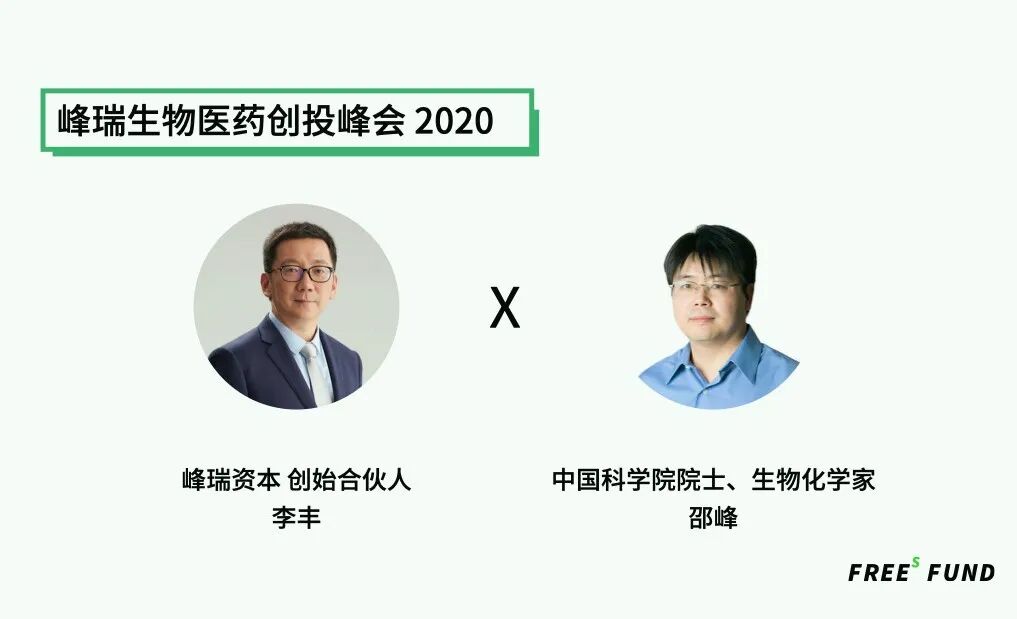
Not long ago, at the fourth session of the "FreeS Fund 2020 Biomedical Summit," we invited Shao Feng, academician of the Chinese Academy of Sciences and biochemist. Dr. Shao is one of the most accomplished international scientific leaders in innate immunity and pyroptosis. He and Li Feng, founding partner of FreeS Fund, engaged in a nearly two-hour deep conversation around "First In Class in China." The topics they explored included:
- From chemistry to biology: how did an academician pull off such a transition?
- From the US to China: what advantages does domestic research offer?
- What are the prerequisites for innovative research? What possibilities do "foreign invaders" hold?
- Why is biomedical research characterized by "a low threshold but a deep courtyard"? What does a deep courtyard imply?
- How should we view the pharmaceutical industry's development over the past decade and the problems behind it?
- From academia to industry to investment, what does new drug R&D most urgently need?
- How much opportunity does first-in-class have in China today?
We've included excerpts from the edited transcript, hoping it offers some inspiration.
We'll also be releasing highlight clips from this conversation on the FreeS Fund WeChat video channel. Here's the first:

Follow the FreeS Fund WeChat video channel to catch more content first 👆

/ 01 /
The Path to Academician: From Chemistry to Biology, From the US to China
Li Feng: Thank you all for coming. Shao Feng was my undergraduate classmate in the Department of Technical Physics at Peking University, class of '91. Let's start by asking Academician Shao to introduce himself briefly.
Shao Feng: My undergraduate major was applied chemistry. After graduating from Peking University's Department of Technical Physics in 1996, I began transitioning toward biology. For graduate school, I went to the Institute of Biophysics at the Chinese Academy of Sciences, focusing mainly on structural biology and protein crystallography. In 1999, after earning my master's degree, I went to the University of Michigan Medical School to pursue a PhD in biochemistry. After completing my doctorate in 2003, I did a postdoc at Harvard Medical School for just over a year. In July 2005, I returned to China and joined the National Institute of Biological Sciences (NIBS). Looking back, returning to China was one of the best decisions I've ever made.
At NIBS, our early work focused on the mechanisms of bacterial infection. In the middle period, we worked on the recognition of innate immunity or natural immunity against bacterial infection. In recent years, we've been in the field of pyroptosis, and lately we've also connected pyroptosis to tumor immunity while considering some industry development opportunities.
Li Feng: I have a question I'm quite curious about. How did you go from chemistry to biology, and then within biology pivot to your current direction in cells and immunity, and even become an academician? That's quite a跨界 leap — was it accidental or inevitable?
Shao Feng: It's true that among people I know, going from chemistry to biology is quite a distant leap. The reason is simple. Many people say the biomedical industry is very hot right now, but there's a reason for the heat — people's understanding of disease and pursuit of health is endless, it's a rigid demand. I realized this when I graduated from university.
Another reason is that compared to biology, I believed making original scientific discoveries in chemistry would be much more difficult. So after deciding to switch to biology, I first went to the Institute of Biophysics to work on protein structures after graduating — that was very close to chemistry — and then gradually shifted toward biology step by step. Later, I was accepted into Michigan's PhD program precisely because of my protein crystallography background. But once I got in, I decided to pivot toward biochemistry, and started doing research on inflammatory cell signal transduction.
Li Feng: I have a curious question. I dropped out of my PhD program in the US halfway through, leaving with a master's degree. Everyone knows how difficult it is to get a PhD abroad — you're working all the time, needing to produce results in the lab, and reporting progress at weekly meetings. Did you find it difficult to switch directions during your PhD?
Shao Feng: It was actually quite difficult. My advisor was the department chair, and his lab rarely took students. I basically squeezed my way in to become his student. He rarely managed students, but I'm the type who actively puts pressure on myself. I encountered many difficulties along the way, and at one point I even considered dropping out.
Li Feng: So even top students go through that phase.
Shao Feng: Back then, wanting to drop out wasn't because I didn't want to do this anymore — it was more despair. Our lab was very large, mostly postdocs. Everyone was under tremendous pressure, needing to publish a good paper to find a job. Very few people had time to help you. If you didn't have your own project, you could only assist others. But given my personality, I certainly wasn't willing to be subordinate to others, so after finishing my rotations, I went independent. But after becoming independent, for a long time I still didn't have my own project. I was still junior then, and basically any idea I could think of, others had already thought of. Initially, my boss asked me to work on protein structures. I didn't refuse, but that wasn't where my interest lay. After several months I still gave up, and my boss didn't have a new project for me.
I just had to keep searching. Finally, I took on a project about plague bacterial proteins. It was a very difficult project. I later learned that two postdocs before me had "died" on this direction (spent three to four years without making any progress). For the first year and a half, I did experiments day and night without making any headway. By American PhD standards, with an average graduation time of six years, having no progress by the end of year two is fairly normal. But because my previous academic path had been relatively smooth, the pressure was enormous. I thought: absolutely no data, definitely no hope of graduating. Moreover, my advisor was too senior with many administrative duties, making it difficult for him to engage with the details of research projects. He rarely provided substantive help, but he was generous with encouragement, telling me not to worry. Fortunately, a month or two later, I finally made some breakthroughs, and things went relatively smoothly after that.
/ 02 /
Doing Things with 51% Success Rate
Li Feng: So it really is key choices that determine life's trajectory. I also hit a wall in my second PhD year — no matter what experiments I did, nothing worked, so I gave up. I have another question: now that you've recruited many PhD students and postdocs, I've heard your lab has particularly high expectations for students. So how do you judge young people's academic potential?
Shao Feng: I think to do well in biology, intelligence isn't the most important factor. Taking myself as an example, I don't consider myself exceptionally smart — I'm probably just okay. More important than intelligence is your willingness to do something and your ability to persist. This also comes down to personality.

The pressure on students in our lab isn't something I impose — I never require students to arrive at a certain time or work a certain number of hours. Their pressure comes more from other students in the lab, that is, peer pressure. When you compare yourself to others, if they have progress and you don't, or if they know more than you when discussing research, naturally you'll feel pressure.
Of course, when selecting students, I tend to recruit those who have goals and strong self-drive. This drive isn't necessarily about what kind of papers you publish, but rather your willingness to challenge yourself, to tackle problems in the field that others can't solve or overcome difficulties that others can't overcome.
Additionally, I like to recruit students with stronger personalities — the "I must do this, I have to do this" type. If someone's personality is more "whatever works," I'm less likely to recruit them. Such students might be better suited for other fields rather than scientific research.
Finally, you need good psychological resilience. One of my personality flaws is that I'm not very good at encouraging people, because I don't like looking backward. I tell my students: whether you've failed or succeeded in the past, don't dwell on it. If you failed, you failed — think about what other approaches you can try. That's one aspect. On the other hand, you may have succeeded before, but that success was for that stage. If you keep immersing yourself in the pleasure of past success, that very success will actually inhibit your next success. So what's more important is looking forward — where's the next challenge?
Our lab has made four research direction shifts. At the beginning, with no projects to work on, I did some projects along the direction of bacterial toxins from my PhD stage, which was also a relatively leading direction internationally. Two or three years later, I used those project results to prove I could independently lead a research group. But I also realized that while those projects published good papers, their impact on medicine or translation wasn't large enough. So starting in 2008, I began shifting toward innate immunity, studying how our bodies recognize and distinguish bacteria.
There are two types of bacteria: those that infect from outside, and those that get inside cells. In 2007–2008, the biology field knew very little about this. Not to be immodest, but regarding intracellular innate immune receptors for bacteria, the vast majority of what the field knows today comes from our lab. Because in the innate immunity field, the most important class of work — the crown jewel, so to speak — is your ability to identify novel innate immune receptors.
After publishing three or four highly influential papers in this area, I began thinking about which direction to take next. Because immune responses lead to cell death, a phenomenon that had been long overlooked or even misunderstood. In 2015, we were the first to identify gasdermin D as the key substrate protein for pyroptosis, so we pivoted to studying pyroptosis and opened up an entirely new research direction in the Gasdermin protein family, making solid progress over the past few years. Then we started considering what pyroptosis really means and what disease problems it could solve, focusing specifically on sepsis and tumor immunity. This year we've already published two papers on pyroptosis and tumor immunity, which are drawing increasing attention in the field.

So by the time I reached tumor immunity, this was already the fourth major shift in my research direction. Over the past two months, I've roughly gone through immunology textbooks again. I never received formal foundational training in biology, and I never studied immunology. Working on innate immunity was still manageable — it was more about signal transduction — but now that I'm doing tumor immunity, I have to understand T cells, B cells, and the various mechanisms of immune recognition and immune response, filling in the gaps in my knowledge framework. I often tell my students: when you enter a new field, you have to become an expert in that field. The same applies to me — when necessary, I have to go back and learn from the most basic textbooks.
In biology, a major obstacle is that people are reluctant to leave their comfort zones. My reasons for doing so are twofold: on one hand, I hope my research can contribute to better understanding diseases and developing drugs; on the other hand, I believe that without learning new things and challenging your own boundaries, it's hard to find sufficient satisfaction.

People who know me are aware that I've published many top-tier papers. When I first published one or two, I was nervous and excited — I'd check my email almost daily after submission to see if I'd heard back from the editorial office. Now, I basically forget about a paper five minutes after submitting it, and even acceptance doesn't bring much satisfaction. By contrast, revealing a mechanism that no one has ever conceived of before, especially one that helps with disease or clinical applications, brings far greater satisfaction. This is why I keep challenging myself with new research directions.
Of course, these research areas are interconnected. If I had just started my lab, I wouldn't have been capable of studying the relationship between T cells, tumor immunity, and cancer — my understanding of biology, my knowledge framework, my research methods, and my intuitive feel for the work weren't sufficient to support that direction. But it was precisely the foundation I built through previous research directions that gives me the confidence and capability to tackle new ones now.
This also relates to my personality. I've told my students before: I got into Peking University from a small town. When I was filling out my college applications, my homeroom teacher and my father both wanted me to apply to Shanghai Jiao Tong University. My school had a recommendation quota that could reduce the required score by 30 points, and with my gaokao score, SJTU was already a safe bet — with an additional 30 points, it was practically guaranteed. But on the afternoon of the application deadline, I suddenly felt unwilling to settle and wanted to switch my application to Peking University.
There was no internet back then. You had absolutely no concept of where your score ranked. Rationally, I knew I was doing something extremely risky. So I asked my math teacher, who told me I probably had a 51% chance of getting into Peking University. Basically, maybe yes, maybe no — but the odds of getting in were just over half, meaning maybe 49% chance of failure, a significant challenge. That suited my personality perfectly, so I decided to take the challenge and came to Peking University. It's the same when choosing research directions — I like picking things with a 51% chance of success. That's just who I am.

/ 03 /
15 Years Back in China: The Advantages of Doing Research Here
Li Feng: I have two questions. First, you mentioned that deciding to return to China in 2005 was one of the best decisions you've ever made. Why is that? Second, you did your PhD and postdoc at top labs at the best foreign universities, then started your own lab in China after returning. What differences do you see between Chinese and foreign labs? Compared to top international labs, and looking at factors like budget and student quality, where do Chinese labs currently stand? What have you experienced over these 15 years back?
Shao Feng: My return in 2005 was due to family reasons, but also because I didn't particularly like the research direction of my postdoc lab. Beyond that, there were two other important factors.
One was that I sensed enormous development opportunities in China. When I went abroad in 1999, the physics department at Peking University was already the best lab in the country, yet its annual research funding was only 100,000 yuan. In 2002, when I came back to visit family, just three years later, the area around Peking University had already changed dramatically — China's annual GDP growth had reached over 10%.
I thought to myself: such a large country, growing so fast, will inevitably place increasing importance on basic research, especially in cities like Beijing and Shanghai, which will definitely ramp up investment in basic science. I realized I had to seize this opportunity quickly, or else I'd end up standing in line behind everyone else. This was the momentum I saw, and I went with the flow.
Second, this also relates to my personality. If I had chosen to stay in American labs, I could foresee my future life. Because I published very well during my PhD, by 2004 I was already thinking that in 20 years I'd definitely secure a professorship at a decent university. American society is very mature, and for immigrant foreigners, you can clearly see your professional status two or three decades out. For someone like me who pursues uncertainty and challenge, that was definitely not what I wanted.
After returning, I could directly feel the differences between China and the US. Conditions were much harder than they are now. The biggest problem was reagents. For the first three or four years, every night at 11 p.m. I'd be in the lab calling American companies to order reagents. In the middle of the night, speaking English — most Chinese students didn't have good enough English, so I was the only one in the lab who could do this.
But overall, doing research in China has major advantages. First, if you're at a decent research institution, compared to Chinese-American scholars in the US, your lab can grow much bigger and stronger — there are more students in China, and they're generally more hardworking. In the US, building a 15-person lab is very difficult, but in China, reaching that scale is easy.
Another advantage that many young PIs in China haven't realized: if you want to start a new lab in the US, your options are very limited. For over 95% of young PIs, the research projects you can pursue in the US basically continue your postdoc direction. If you want to choose based purely on personal interest, especially jumping to an entirely new field, you'll likely struggle to get funding. Others in that field may not welcome you — you're easily seen as an "outside invader."
Meanwhile, in America's mature system, when you apply for funding, whatever you write in your proposal is what you have to do, and you're expected to write it in great detail from the start. But China is different — talent funding is relatively abundant, and funding applications generally just require you to work in that direction with some flexibility.
So to summarize, China's research environment has at least two advantages: one is the ground system, the research support infrastructure you're in; the other is that China hasn't developed the rigid academic circle rules that exist in the US. As long as your logic is sound, your data is reliable, and your findings are valuable, you can publish papers and gain academic recognition.
If I were in the US, there would be absolutely no possibility of making four research direction transformations. In a mature system, your path is already written — you have to climb the stairs step by step along the predetermined route. But currently, many young PIs who got their PhDs in the US and then returned to China haven't made good use of this huge domestic advantage. So I encourage young PIs: if your curiosity points toward another field, you can also bravely step out of your original small circle.

Li Feng: That's interesting — I didn't know that before. Following what you just said, looking at pyroptosis from your professional field, and looking at today from five years in the future, what stage do you think your research has reached? What changes will it bring to human life?
Shao Feng: For the past two or three years, I've been thinking about this almost every day. As a PI, a major part of the job is constantly thinking about the function, significance, and future development of your chosen research direction.
Previously, traditional immunology's general view of inflammation was that interleukins, as cytokines for communication between white blood cells or immune cells, played an important role in information transmission during inflammatory responses. But our research found that beyond the validated cytokines, pyroptosis is also an important component of our body's inflammatory response. In fact, the vast majority of human diseases involve inflammatory responses to varying degrees, and this updated understanding can promote human comprehension of many diseases and may help researchers identify new drug targets in the future. There are many options for inflammatory diseases, and our lab can't do everything — I'm more interested in tumor immunity, so I've focused my main energy in that direction.
/ 04 /
The Prerequisite for Innovative Research: Breaking Free from Mental Constraints and Walking Your Own Path
Li Feng: Before my second question, there's one more thing I'm curious about. People recognized inflammatory responses long ago, but only recently has your team been able to discover new underlying causal relationships behind inflammation. What do you think is the main external factor that enabled your research breakthrough? Setting aside your team's capabilities, why did this discovery happen now?
Shao Feng: Two reasons, I'd say. First, many of us on the team come from chemistry backgrounds, so we're very rigorous about logical reasoning when framing scientific questions. A lot of people who studied biology from undergrad onward have a weakness — they think biology is just memorization and recall, without really asking why. If it's in a review, if an authority said it, if the textbook says it, they accept it completely. That kind of fixed mindset constrains how you see problems, and your training never developed your ability to question.
Second, there's another problem in biology: the traditional career trajectory makes it hard for people to step outside their small circles, so many become overly professionalized. The consequence of over-professionalization is that your scientific thinking gets locked in too. You take it for granted that a PhD should do this or that. You don't pursue innovation — you're content with being just slightly different from your peers.
In reality, each of us has different subfields and research backgrounds. Only by breaking free from the constraints of our established domains and thinking from the fundamentals can we truly produce innovations that others hadn't imagined before, something fundamentally different.
In the traditional general landscape of immunology, people had long overlooked — or at least not given enough weight to — the relationship between cell death and the immune system. I felt this direction was well worth studying. Our Science paper this year was about how granzyme T cells kill target cells, and it received enormous attention after publication because what people had learned from immunology textbooks wasn't this. We came from other fields, and I myself am not from an immunology background, so we weren't really bound by existing knowledge. That gave us more intellectual openness.
Li Feng: If we step outside your specific research direction and look at biological sciences as a whole, what stage do you think we're at now? Looking back from ten years in the future, where do we stand today?
Shao Feng: Actually, this is a tough question. Going forward, the world will increase its emphasis on the biological sciences. With Biden in office, the US will pay more attention to this area. China goes without saying — the next decade will see continued investment increases. As long as there's funding and enough people getting involved, there will definitely be progress, even breakthroughs.
That said, while the macro environment is optimistic, the specific challenges remain substantial.
From the 1950s, when humans first discovered the DNA double helix, biological research entered the molecular biology era. To this day, we're still advancing within that framework. If we tried to gauge our understanding of organismal biology as a percentage, it's hard to give a precise answer. In my view, it's neither 70-80% nor 5-10%. Probably somewhere between 20% and 40%. There's still so much humans don't understand. And this lack of understanding doesn't mean we're completely ignorant of every gene or protein — it's about the relationships between these molecules, and by extension the relationships between cellular and tissue structures. So this brings us back to what we call innovative research.
If you're constantly operating in fields others have already carved out, following the logic of predecessors, it's very hard to discover truly unusual problems, let alone solve unsolved mysteries and achieve fundamental breakthroughs. Take systemic lupus erythematosus — a very complex disease. The reason we haven't conquered it is because we're like blind men touching an elephant. Only by thoroughly exploring the parts others haven't touched can you possibly complete the missing pieces of the puzzle and develop a comprehensive, deep understanding.
/ 05 /
What Changes Can Interdisciplinary Approaches Bring to Biomedicine?
Li Feng: Speaking of which, I have a related question. To use an imperfect analogy, your academic career could be summarized as an outsider doing insider work — and doing it better than the insiders. You also mentioned that an important reason you could outperform insiders was how the logic and knowledge from different fields created change when brought into a new domain.
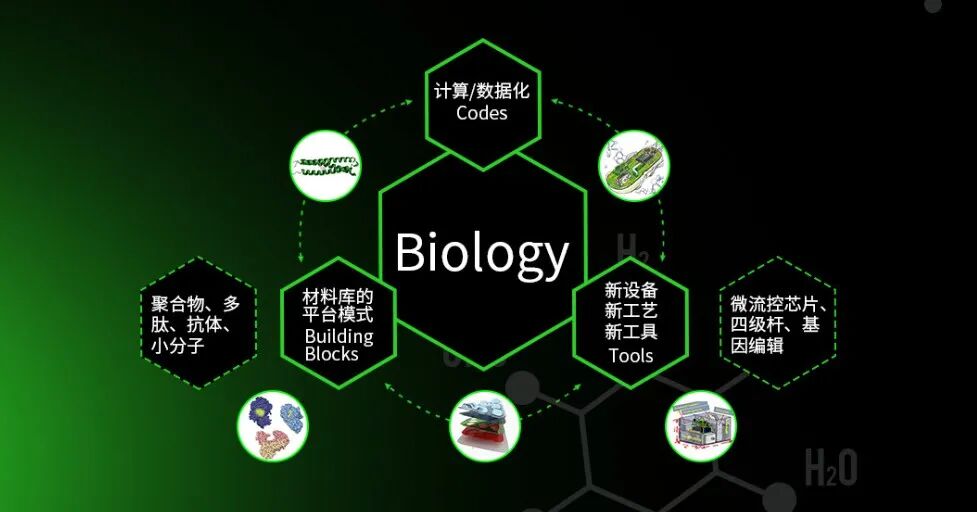
In recent years, our biotech investments have also encountered some interdisciplinary projects — intersections involving tools, computational methods, detection technologies, and so on. For example, gene sequencing technology development has digitized all kinds of information. We can compute and extrapolate based on these massive new datasets, which helps us discover more mechanisms and causal relationships, improve experimental efficiency, and make industry breakthroughs more likely. My question is: how do you view this trend? In three to five years, how will these disciplinary intersections change biomedical research?
Shao Feng: Li Feng is a very optimistic person. In recent years, improved data processing has indeed helped us discover things we couldn't find before. But I'm usually pessimistic when I look at things — that is, I tend to assume something won't work first.
Li Feng: You like to pick 51%, which proves deep down you must lean optimistic.
Shao Feng: That's fair. But when I take on a new direction, or make a choice, design a project, or plan an experiment, I always assume the result will fail. Only by first thinking about failure can you think about how to respond to it — if this path doesn't work, what other approaches can you use?
Li Feng: Like when you brought chemistry and other logical frameworks in — won't more people from different disciplines entering biological research, bringing different research tools, achieve some different biological research results?
Shao Feng: I think it'll still be quite difficult. A colleague at our institute put it really well: the characteristic of biomedical research is that the threshold is low, but the courtyard is deep.

What does "threshold is low" mean? If you came to my lab for a few months, you could do some work, publish some papers. Biology's barrier isn't as high as math or physics. In biology, you can imitate others' methods and have some small findings.
So why is the courtyard deep? Because people's understanding of a specific scientific question or experimental system can vary enormously. When everything comes together, the differences between people become very pronounced.
Take myself as an example. As a PI and doctoral advisor, my most important work isn't doing experiments — it's making judgments.
First, judging whether this path can solve the problem. More importantly: absolutely do not take that path. Second, judging whether this direction might lead to important, valuable discoveries in the future. Third, judging existing experimental data. Biological information or data differs from many other disciplines. In chemistry or physics, if you measure 37.2°, it's 37.2°. But in biology, if you take a cell and do an experiment, different people might get vastly different results — so how do you judge this data? Furthermore, the same data can mean completely different things in different problem contexts.
So if technological advances generating massive data bring linear development to physics, chemistry, and similar fields, in biology it's more complicated.
06
Hidden Concerns Behind Rapid Industry Growth: Bubbles and Homogenization
Li Feng: Mm, cross-disciplinary technologies can provide higher discovery efficiency, not create discoverers. As you said, when we have more data, discerning the causal relationships behind it still requires people with professional know-how.
Next are two related questions. Over the past year and a half, various policy tailwinds have been driving medical and pharmaceutical R&D and biotech development. Meanwhile, capital markets have also provided significant support — including the Hong Kong Stock Exchange's 2018 amendment to its Listing Rules introducing Chapter 18A, allowing unprofitable biotech companies to list in Hong Kong, and the STAR Market removing profitability requirements in 2019. This has made Hong Kong capital market performance for novel drug R&D companies very hot over the past year and a half. My two questions are:
First, as a scientist, how do you view the current fever around novel drug R&D in China and the capital market heat generated by novel drug R&D companies going public? Second, what do you think China's novel drug R&D companies and capital markets will become in the future?
Shao Feng: Actually, over the past ten years, China's novel drug R&D companies have developed very rapidly. If we went back ten years, it would have been very difficult to do novel drug R&D in China. So the past decade has been revolutionary for the industry. This includes regulatory policy changes, returnees coming back from overseas, plus talent cultivated through progress in domestic basic research.
Now, you can see many biotech and novel drug R&D companies queuing up to go public. This is a very good thing. For example, Hengrui's immunotherapy drug PD-1 has been priced down to 50,000–60,000 RMB per year, and it may go lower. Without the developments I mentioned above, foreign drugs might still be maintained at several hundred thousand. So it's definitely a good thing.
Of course, there are also two hidden concerns behind this. On one hand, development comes with bubbles. On the other, homogenized competition is very severe. Because this round represents the first wave of explorers, it's hard to expect people to make decisions with complete clarity about the next ten to twenty years. The vast majority still reference what people around them are doing.

Li Feng: So there are 60 PD-1s.
Shao Feng: Right. But many companies back then didn't consider future commercialization. If commercialization doesn't work out, there's no advantage. Looking ahead, the heat and bubbles in this space will likely grow even larger. On one hand, the state is pushing the development of the big health industry. On the other, COVID-19 has made everyone from the public to government to capital increasingly aware of health's importance. The country also needs 0-to-1 foundational original scientific progress. When it comes to diseases and drug R&D specifically, society-wide resource investment will increase more and more, and future development will accelerate.
Overall, the industry's scale will grow larger and larger. But for individual companies, you need to think clearly: what are you going to do? What is your positioning in the industry? Different companies, different people — their goals differ.

For example, large companies in the future don't necessarily have to do the most original things — wait until others have done most of the work, then acquire. But for startups, do you absolutely have to do commercialization yourself? Behind commercialization lies a lot of regulation, including medical insurance, sales, distribution, and so on. As a novel drug R&D startup, do you have this capability? Does your capability match your ambition? These are questions worth thinking about.
07
What Opportunities Does First-in-Class Have in China?
Li Feng: At this point, among the first wave of Chinese companies to go public with substantial clinical pipelines, there aren't many genuinely committed to original new drug development. Do you think this wave of biotech innovators could become a major force in first-in-class drug R&D? Is the timing right, or should we wait and see?
Shao Feng: I think "First In Class" is definitely worth exploring. Our traditional drugs have mostly been small molecules, with large molecules like antibodies and some peptides. FIC covers many categories. The riskiest kind involves entirely new therapeutic modalities — cell therapies, PROTAC, ADC, and so on. There are also newer approaches, like the team at Fudan University led by Boxun Lu using lysosomal degradation pathways to target "undruggable" proteins. That's a completely novel drug development path — exactly the kind of high-risk, extremely rare, and extraordinarily difficult FIC we're talking about.
Another way to discuss FIC is whether something is technically druggable. Say you discover a protein in your research, and through mouse models, you hypothesize it's related to some disease and worth pursuing. Can you find a molecule to modulate its activity through some mechanism? That's a huge hurdle. But you don't necessarily have to clear it yourself. If an American company has already reached Phase I clinical trials, they've essentially proven the target can be modulated by a small molecule or drug. You know it's feasible, and you can build on their work. But there's a catch: they're already in Phase I while you're just starting, so you're already behind.
There's another FIC scenario. Basic research may have established that a target is related or potentially related to a disease, but no one has proven you can develop a small molecule against it. Take Ras proteins, which have been hot lately. People have known about Ras and cancer for over 30 years — someone even won a Nobel Prize for it. So why did it take until now for drug developers to identify targets like RasV12 and G12D? Because no one had been able to get a small molecule to inhibit its activity.
So First In Class actually breaks down into several subtypes. If someone has already proven a target can be modulated by a small molecule but hasn't yet produced a viable drug, and it's still in testing, the difficulty for you is substantially reduced.
08
Whether Investing or Founding, China's Drug R&D Industry Needs Conviction
Li Feng: Next question. Let's say you're not a scientist anymore — you've gone into early-stage equity investing, focused on new drug R&D. At China's current stage, what kinds of projects would you choose to invest in?
Shao Feng: Investing requires risk assessment, but I'd definitely lean toward mechanism-based originality. Those projects are hard to come by. In my view, whether in investing or industry, you need your own principles. Don't let yourself be swept along by market sentiment or others' opinions. You do something because you believe in the value behind it — and that value isn't just about how many multiples of return it will bring you. If you're thinking "I'll put in 100 million this year and turn it into 500 million in three years," this probably isn't the right industry for you.

China's new drug R&D industry desperately needs this kind of conviction. Industry and investment pull each other along. If people are willing to take risks and invest in this direction, then naturally people in the field will be motivated to do disease-relevant basic research. Otherwise, they'll just publish papers and have no incentive for any downstream translation. From the national level on down, we should give more encouragement and guidance to people doing basic medical research.
Li Feng: Next question — something ordinary people care a lot about. COVID vaccines. China already has five vaccines in Phase III trials. Earlier, Pfizer's vaccine demonstrated over 90% efficacy among 94 trial participants who were infected with SARS-CoV-2 and showed at least one symptom. How should we interpret these developments, and the current discussion around COVID vaccines?
Shao Feng: I'm curious — what's driving your interest in this?
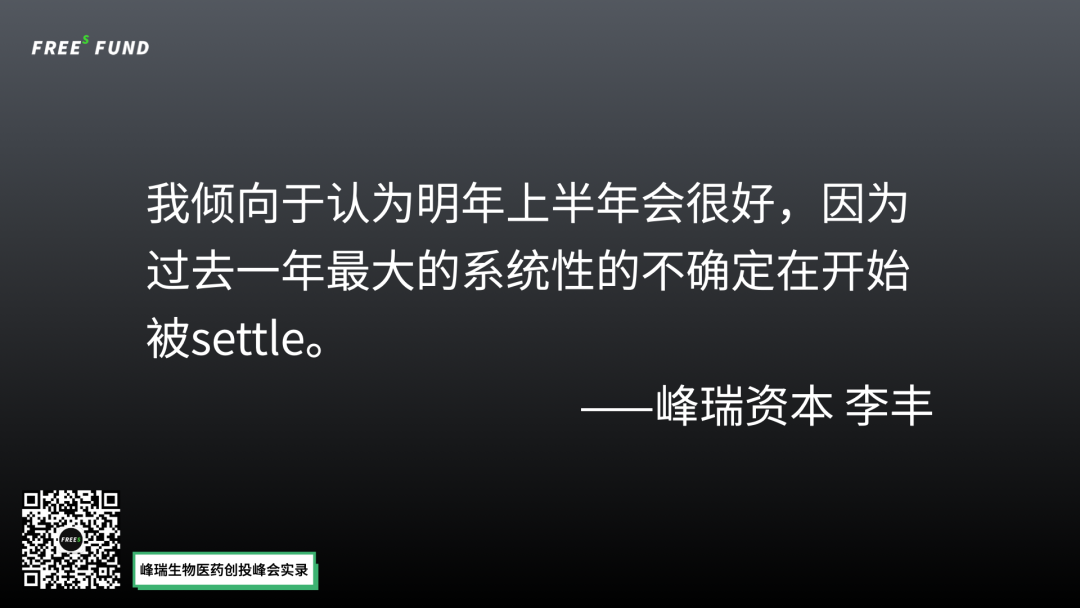
Li Feng: The greatest human fear comes from uncertainty. Over the past year, we've been living with several enormous uncertainties simultaneously: the pandemic, US-China relations, the international situation. But in recent months, as domestic outbreak control has improved, our lives have gradually stabilized. Successful vaccine development will further help us psychologically relieve that uncertainty. It's human nature. And psychological stability shifts expectations. So to some extent, I'm inclined to think the first half of next year will be quite good, because the largest systemic uncertainty of the past year is beginning to settle.
09
The Biggest Challenge Comes from Industry Participants' Aversion to Risk
Li Feng: Next question. What's the one thing you most want to accomplish today, or what do you most wish to have?
Shao Feng: First, from a scientific research perspective, there are still many important questions worth exploring. I mentioned earlier that pyroptosis triggers inflammation, regulates the immune system, and that there's an important connection between cell death and the immune system. But if you ask me for specifics, I couldn't tell you — there's still a vast blank area to explore, and of course the difficulty is very high. Because often, advances in research technology don't fully solve the problem. Many questions lack any system to study them. Take systemic lupus erythematosus — we can't find good models to study it. So going forward, we'll probably spend considerable effort continuing to explore the relationship between pyroptosis and immune response.
On another front, we're also committed to translating pyroptosis discoveries into new drug development applications. If we can make that happen, it would be very meaningful for me personally. After all, this was a fundamental, original discovery made in our Chinese laboratory.
This brings us back to FIC in China. Overall, I'm cautiously optimistic. Optimistic because of the macro trends: government prioritization, capital inflows, public demand, a growing pool of capable talent, and Chinese startups' very strong execution capability — our desire to get things done is stronger than in the US.
But looking specifically, at the micro level, there are still substantial challenges. The biggest challenge comes from ourselves. Whether as investors, entrepreneurs, or basic researchers, our shared trait is an unwillingness to take risks.
Take drug development. Entrepreneurs fear risk too. Do you choose a path someone else has already validated, copy and tweak it slightly? Or do you take the risk of blazing an entirely new trail? This is where many people hesitate.
We Chinese aren't afraid of hardship. But we want to be at least 80-90% sure the effort will pay off after we've endured it. If we give 120% effort and the result is zero or negligible, we're unwilling to do it. This is actually a major weakness in our culture.
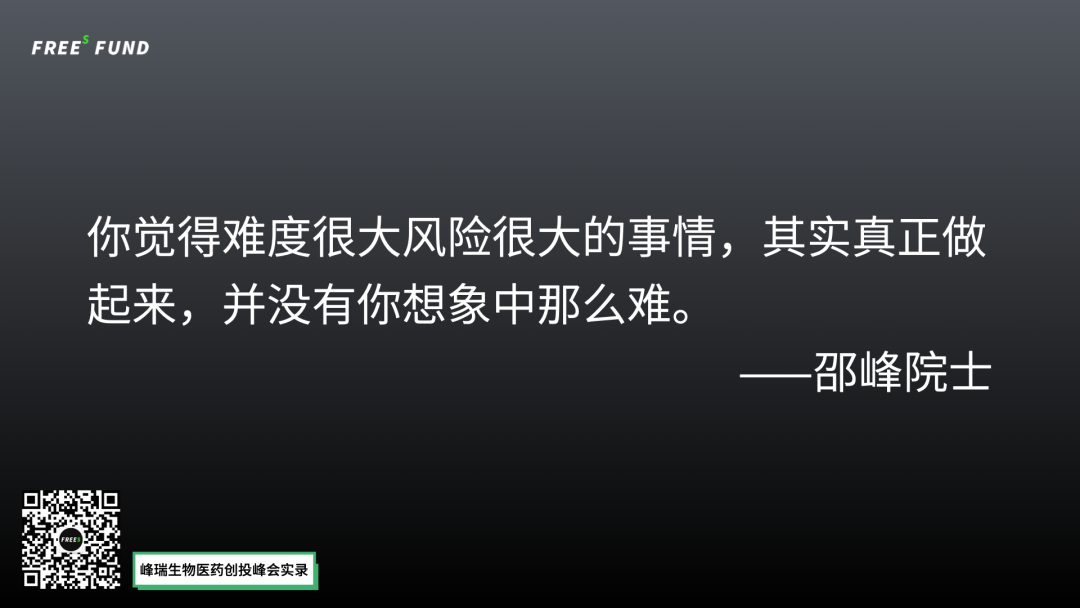
So I think the basic research industry currently needs a certain amount of cultural development. Whether as entrepreneurs or investors, we should treat accomplishing something genuinely challenging as our value standard — not how many papers I published or what investment returns I achieved. Of course this also relates to our scientific evaluation systems. If everything is judged by publications, then when choosing research directions, people will avoid areas that don't produce papers easily or yield results quickly. I've personally experienced this in my own research: things that seem extremely difficult and risky often turn out to be less daunting than you imagined once you actually do them.
Li Feng: Last question. We've invested in many biotech companies. The founders work incredibly hard — it's very difficult to balance family and work. They're basically never home, working from dawn to dusk. As an investor, I have it a bit easier, but I travel a lot too. I'm curious — as a scientist and academician, can you balance work and family well?
Shao Feng: I think it's okay. I'm a very hardworking person, but not to a crazy degree. I basically go home for dinner every night. After 10 p.m. when my family is asleep, I might do some of my own work. Of course, I spend most weekends in the lab. I think it's fine — without these things, I'd feel empty and bored.
I'm quite efficient. A very important thing is being willing to let things go. If you're always agonizing over whether to pursue this project or attend to that data, you'll be constantly tense. Actually, no matter what field you're in, when you look back, you've wasted 80% of your time. Being willing to let go makes balance easier to achieve.
(Feel free to read, share, and hit "like." For reprint permission, reply "转载" for reprint guidelines and contact FreeS XiaoRui [ID: freesfund] for authorization. Copyright belongs to FreeS Fund.)

▲ Wang Liming: AI Protein Structure Prediction Breaks Through Again — What Does It Mean? ▲ Why Is AI Drug Discovery So Hot, and Why Now? | FreeS Biomedical & Healthcare VC Summit Transcript ▲ How to Harness Interdisciplinary Power to Drive Innovation? | FreeS Biomedical & Healthcare VC Summit Transcript ▲ Blue Ocean Strategy: How Can Early-Stage Biotech Startups Break Through and Win Alongside Big Pharma? | FreeS 2020 Biomedical Summit Session 3 Registration ▲ Beyond the "Narrow Gate": Real Cases of Early-Stage Frontier Biotech Entrepreneurship in China | FreeS 2020 Biomedical Summit Registration Opens ▲ Li Feng: One Chart to Understand Biotech Innovation Opportunities | FreeS 2020 Biomedical Summit Full Guide ▲ Standing at the Forefront of Gene Therapy | FreeS Research ▲ Hammer and Dance: Investment Opportunities in Healthcare's Next Wave Amid the Pandemic | FreeS Research ▲ FreeS Report 16: The Truth About Early-Stage Healthcare Investing and China Speed | FreeS Research ▲ FreeS Report 15: Life's Gamble — The Risky Journey of Drug Development | FreeS Research